Google’s AI Overviews and other AI answer boxes are accelerating the rise of zero-click searches, where users get everything they need directly on the SERP and never reach your site. At The Rank Masters, B2B SaaS SEO Agency, we’re seeing this pattern across B2B SaaS markets every week.
💡 Studies show that when AI Overviews appear, click-through rate for the #1 organic result can drop by roughly 30–35%. That’s a huge hit to your visibility, traffic, and pipeline—especially if you’re not already investing in the Best AI SEO tools and smarter tracking for Brand visibility in AI search.
In this guide, you’ll learn which AI-powered SEO tools can actually help you:
- Find the zero-click queries that matter most to your SaaS pipeline
- Connect rankings to impressions, clicks, and measuring SaaS brand visibility in AI search results
- Prioritize where to fight back with content, where to adapt for AI answers, and where to lean in with intent-rich SERP coverage
👉 If you’d rather shortcut the trial-and-error, our Answer engine optimisation services can help you build a zero-click SERP plan that protects demand and keeps qualified buyers landing on your site.
TL;DR – The Best Tools for AI-Driven Zero-Click Detection
- Best overall stack for mid-to-large sites: Semrush + Ahrefs + Google Search Console + GA4
- Semrush & Ahrefs: Identify keywords with AI Overviews / AI answer features and track ranking & SERP changes.
- GSC & GA4: Confirm CTR drops, impressions vs. clicks, and on-site behavior.
- Best for enterprise & SERP-level intelligence: seoClarity, STAT, Sistrix
- Deep SERP sampling, AI Overview detection, and trend reporting for large keyword sets.
- Best lightweight / free AI Overview detectors:
- SEOmator AI Overview Keywords Checker – Free tool to see which of your domain’s keywords trigger AI Overviews.
- Sitechecker AI Overview Checker – Detects where AI Overviews appear and whether your site is cited.
- Best for AI-era visibility & AEO (Answer Engine Optimization):
- AEO-Agent Free AEO Checker, Peec AI, Keyword.com AI Overviews Tracker – Focused on AI search visibility and answer engine optimization, including zero-click and voice queries.
1. Google Search Console (GSC)
What it does?
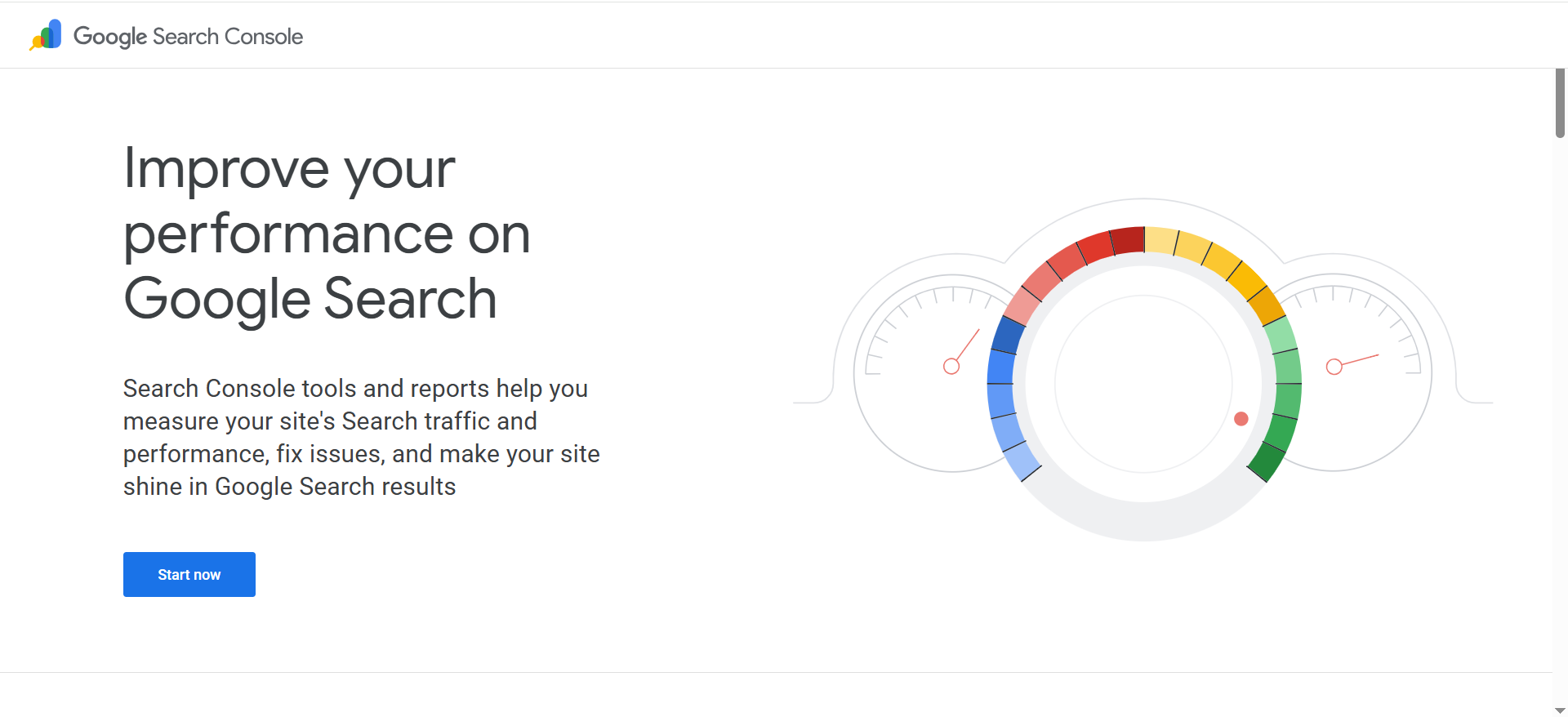
Google Search Console shows how your site performs in Google Search: impressions, clicks, CTR, and average position. It also reports coverage, indexing, Core Web Vitals, and structured data issues so you can fix them.
Why teams use it?
Teams use GSC as their source of truth for search performance. It’s the fastest way to see which queries still drive clicks and which have quietly gone zero-click.
Who is this tool for (ICP)?
GSC is essential for anyone with a website, especially:
- In-house SEO and content teams
- Agencies and freelance SEOs
- Dev/product teams responsible for site health
How this tool fits in this AI-first era?
GSC is how you spot AI/zero-click impact: impressions stay high while CTR and clicks drop. By comparing query trends over time, you can see which topics are being answered directly by AI features and adjust strategy accordingly.
In this era, GSC helps you:
- Find high-impression, low-CTR queries
- Separate AI/zero-click impact from ranking drops
- Check that content and technical basics are strong enough to be used in AI answers
How does Google Search Console work?
You verify your site, then Google aggregates search and crawl data for your property. You explore that data via reports or exports, and optionally connect it to dashboards.
Free tier?
Yes – fully free.
Strengths?
- First-party data from Google
- Great for query/page-level trends
- Strong coverage and indexing diagnostics
Weaknesses?
- 16-month data window
- Limited export size without API
- No explicit “AI Overview” reporting
Key Capabilities?
- Search performance (query, page, device, country)
- Coverage, sitemaps, indexing
- Core Web Vitals & experience reports
Pricing snapshot?
- Single plan: Free
Best for?
Best as the baseline SEO analytics tool for any site. You’ll pair it with other tools, but you can’t replace it.
2. Semrush
What it does?
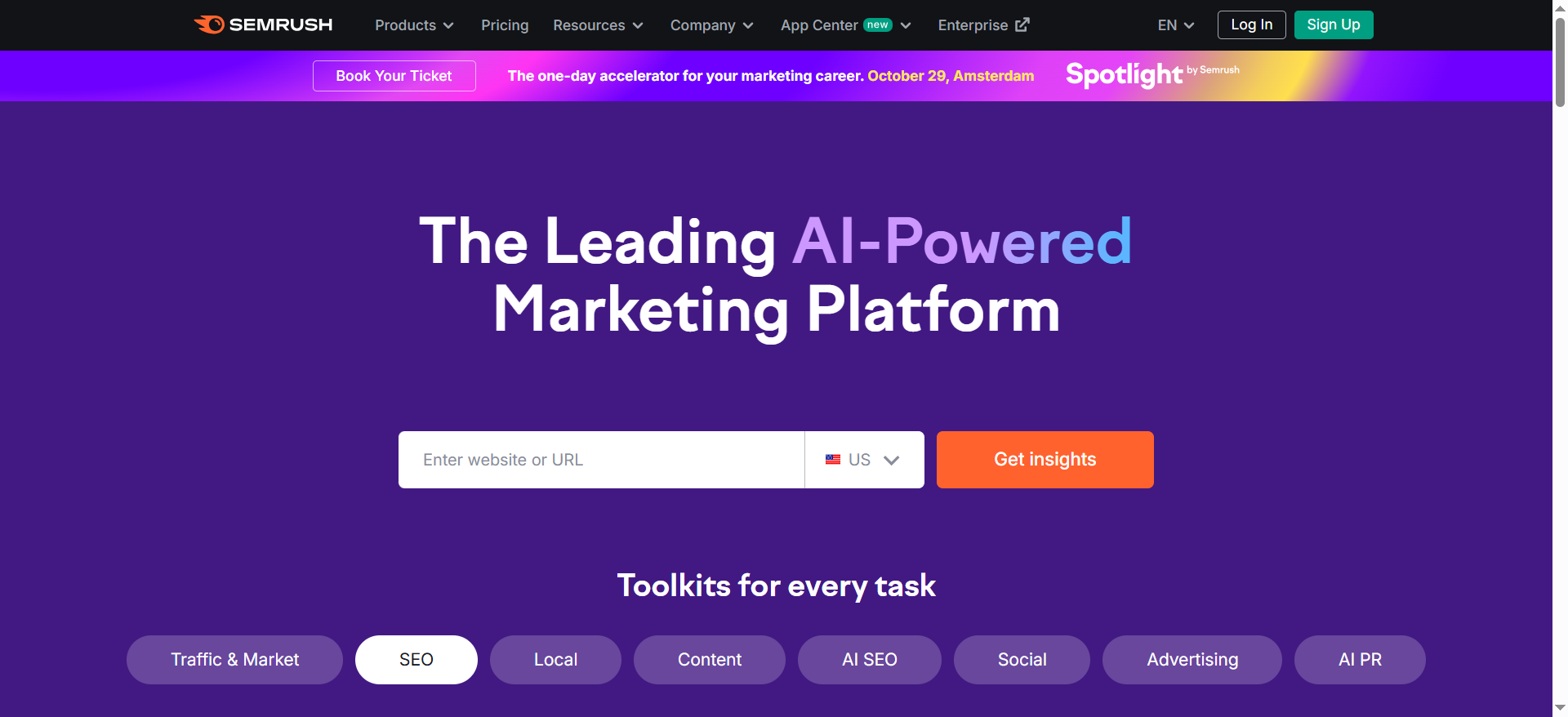
Semrush is an all-in-one SEO, PPC, and content suite with huge keyword and competitive databases. It now includes AI-visibility features that show how brands appear in AI answers and AI-impacted SERPs.
Why teams use it?
Teams use Semrush to handle keyword research, rank tracking, content audits, and competitor analysis in one place. Agencies love it for reporting; in-house teams love it for prioritizing what to fix or create next.
Who is this tool for (ICP)?
- Growth-oriented in-house teams (SaaS, ecommerce, marketplaces)
- SEO / performance agencies
- Content & demand-gen teams that want integrated data
How this tool fits in this AI-first era?
Semrush adds AI visibility on top of classic SEO metrics, so you can see both rankings and where you show up in AI search (AI Overviews, ChatGPT/Gemini style experiences). It helps you understand when traffic is falling even though rankings look fine, often due to AI or other SERP features.
In this era, Semrush helps you:
- Track SERP features and AI-affected keywords
- Blend AI-visibility metrics with classic SEO performance
- Run zero-click and AI-impact analysis at scale
How does Semrush work?
You create projects, add domains and keywords, and Semrush pulls in rankings, traffic estimates, backlink data, and technical issues via its crawlers. AI-related modules layer on visibility in AI search and AI-rich SERPs.
Free tier?
Limited free account / trial; real usage is paid.
Strengths?
- Very comprehensive SEO + marketing feature set
- Large keyword & competitor databases
- Strong reporting and client-friendly visuals
- Early investment in AI visibility analytics
Weaknesses?
- Expensive for small teams
- Interface can feel complex at first
- Some metrics are modeled, not first-party
Key Capabilities?
- Keyword research & rank tracking
- Site audits & backlink analysis
- AI visibility index / AI search visibility tools
Pricing snapshot?
- Pro – entry plan for small teams
- Guru – for growing in-house teams and agencies
- Business – for larger and multi-site setups
- AI-focused “Semrush One” bundles at higher tiers
Best for?
Best for teams that want one main SEO + AI-visibility platform instead of multiple point tools, and have budget to match.
3. seoClarity
What it does?
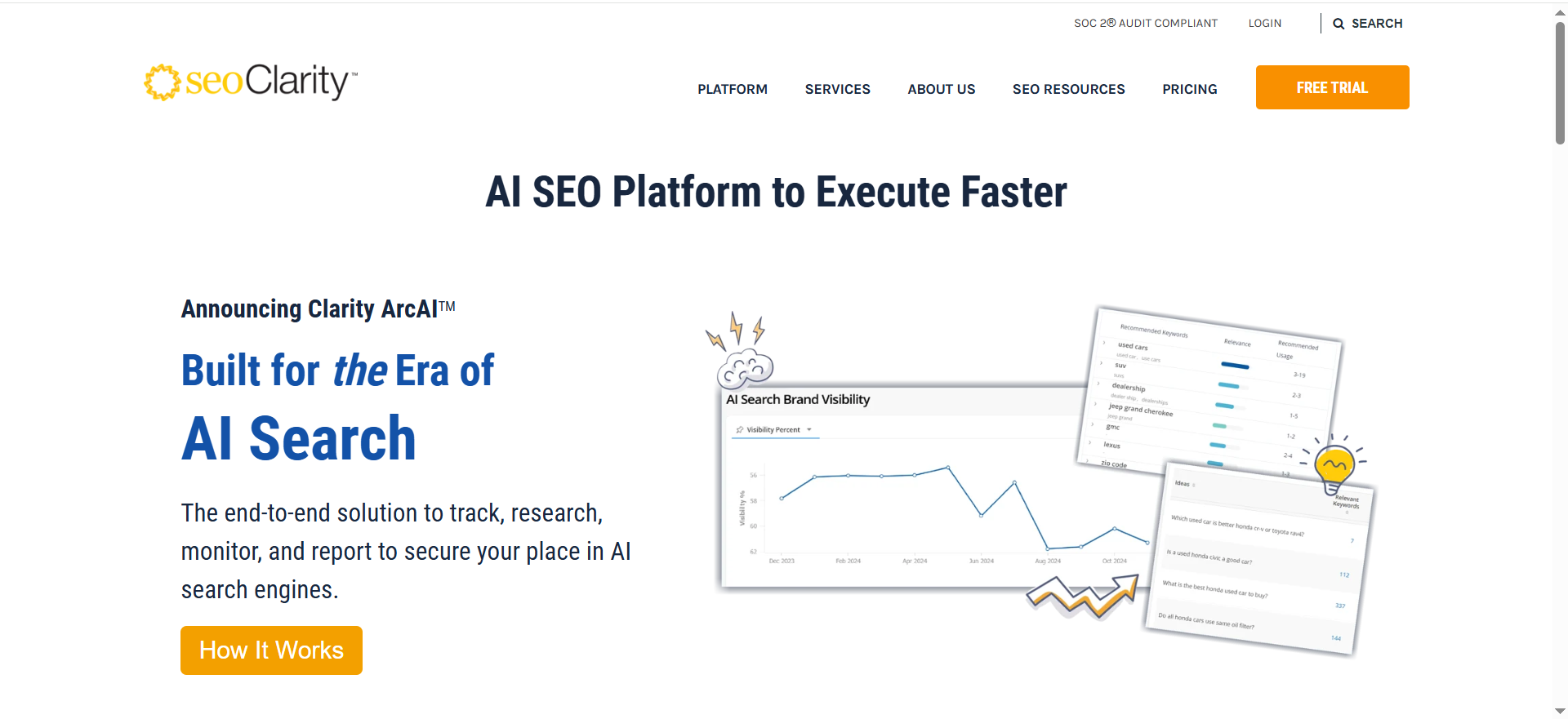
seoClarity is an enterprise SEO platform with AI-powered analysis and reporting. It combines rank tracking, site audits, content intelligence, and AI search insights for very large sites.
Why teams use it?
Enterprise teams use seoClarity as a command center for SEO across markets, sites, and teams. Its AI components (like Sia and ArcAI) surface prioritized recommendations rather than just raw data.
Who is this tool for (ICP)?
- Large enterprise SEO teams (ecommerce, travel, finance, publishers)
- Big agencies running multi-brand / multi-market SEO
- Data-driven orgs that want SEO tightly integrated with BI
How this tool fits in this AI-first era?
seoClarity has dedicated AI Overviews tracking, showing where AI Overviews appear, when you’re cited, and how that affects CTR. Its AI search modules help you understand how AI systems are using your content and brand.
In this era, seoClarity helps you:
- Track AI Overviews at enterprise scale
- Link AI presence to ranking and traffic changes
- Turn AI search insights into prioritized SEO actions
How does seoClarity work?
It ingests ranking, crawl, analytics, and log data into one platform, then uses AI to highlight issues and opportunities. AI Overviews and AI search modules sit on top, giving visibility into AI-driven changes to the SERPs.
Free tier?
No – enterprise, custom-priced platform.
Strengths?
- Built for massive, complex sites
- Strong AI-powered recommendations (not just charts)
- Enterprise-grade governance and workflows
Weaknesses?
- High cost and long sales cycles
- Steep learning curve
- Overkill for small/medium sites
Key Capabilities?
- Enterprise rank tracking & technical SEO
- AI-driven insights via Sia / ArcAI
- AI Overviews and AI search visibility tracking
Pricing snapshot?
- Custom enterprise contracts, typically in the thousands per month
- Pricing scales with domains, data volume, and modules
Best for?
Best for large enterprises that need AI-aware SEO management across many countries, domains, and stakeholders.
4. Keyword.com
What it does?
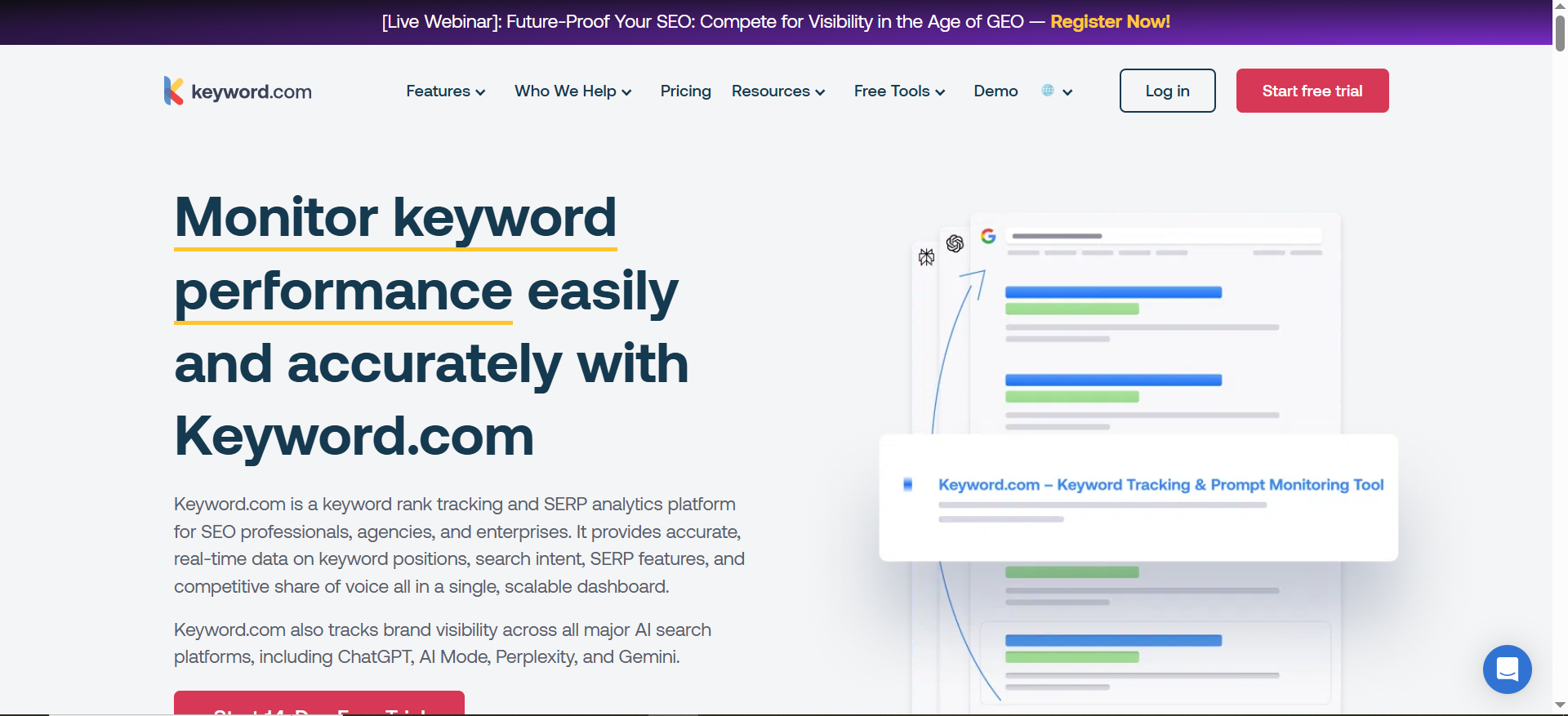
Keyword.com is a focused rank tracker that monitors keyword positions daily across locations and devices. It’s built for accuracy and simple reporting rather than being a full SEO suite.
Why teams use it?
Teams use Keyword.com when they want clean, reliable ranking data without buying a giant platform. Agencies especially like its client-friendly dashboards and straightforward pricing.
Who is this tool for (ICP)?
- SEO agencies needing clear rank reports
- In-house SEOs at SMB/mid-market companies
- Freelancers and consultants on a budget
How this tool fits in this AI-first era?
By tracking rankings alongside GSC/GA4 data, Keyword.com shows when rankings stay steady but clicks drop—often a sign of AI Overviews or richer SERPs. It also flags SERP features so you can see when organic results are crowded.
In this era, Keyword.com helps you:
- Spot “rank is fine, traffic is down” patterns
- Monitor SERP volatility post-AI updates
- Overlay rank, impressions, and sessions for zero-click analysis
How does Keyword.com work?
You add keywords and projects with locations/devices, and it checks rankings daily. Integrations let you blend those ranks with GA4 and GSC for performance context.
Free tier?
No full free plan; very low-cost entry tiers and trials.
Strengths?
- Very accurate, frequent rank updates
- Simple UI and shareable reports
- Affordable and easy to scale
Weaknesses?
- Not an “all-in-one” SEO tool
- Limited AI-specific reporting vs. larger suites
- You’ll still need other tools for audits/content/backlinks
Key Capabilities?
- Daily rank tracking by keyword/location/device
- SERP feature detection
- Integrations with GA4, GSC, Looker Studio
Pricing snapshot?
- Entry: low monthly cost for small keyword sets
- Business tiers: scale with keyword volume
- Enterprise/API: custom pricing
Best for?
Best as a pure rank tracker for agencies and SEOs who already rely on GSC and maybe one other major SEO tool.
5. Sistrix
What it does?
Sistrix is an SEO and visibility platform known for its Visibility Index, particularly strong in European markets. It offers rank tracking, competitor analysis, on-page checks, and now AI Overviews and AI-search tracking.
Why teams use it?
Teams use Sistrix to benchmark visibility across countries and competitors, and to watch long-term SEO trends. Its AI modules help you see where AI Overviews appear and when your domain is cited.
Who is this tool for (ICP)?
- European-focused SEO teams and agencies
- International brands active in EU/DACH markets
- Teams prioritizing visibility metrics over “just rankings”
How this tool fits in this AI-first era?
Sistrix includes AI Overview filters and AI tracking modules that show which keywords trigger AI Overviews and whether you’re mentioned inside them. It also explores brand mentions across AI systems like ChatGPT and Gemini.
In this era, Sistrix helps you:
- Measure AI Overview and AI-search visibility
- Track visibility shifts from blue links to AI boxes
- Understand AI’s impact on your Visibility Index in key markets
How does Sistrix work?
You add domains and keywords, and Sistrix uses its databases to show rankings, visibility scores, and competitor benchmarks. AI modules overlay information about AI Overviews and AI-system mentions.
Free tier?
No ongoing free tier; free trials available.
Strengths?
- Highly trusted Visibility Index
- Strong European data and market focus
- Built-in AI Overviews and AI-search tracking
Weaknesses?
- Less of an all-in-one marketing platform than Semrush
- Pricing can be high for very small teams
- Data focus strongest in Europe vs. some other regions
Key Capabilities?
- Visibility Index and rank tracking
- Competitor and domain comparison
- AI Overviews filters and AI trackers (ChatGPT, Gemini, etc.)
Pricing snapshot?
- Start – entry plan
- Plus – for small teams
- Professional – for agencies/growing businesses
- Premium – for large enterprises
Best for?
Best for EU-centric brands and agencies who want visibility as their main KPI—and want to see how AI Overviews and AI systems affect that visibility over time.
What Are Zero-Click Queries in the Age of AI Answers?
In the past, “zero-click” searches were mostly simple: Google answered basic questions directly on the SERP (featured snippets, knowledge panels, instant answers like time or weather), so users never needed to click through.
Today, AI Overviews and other AI answer blocks have created a more dangerous form of zero-click. Instead of one quick fact, AI surfaces rich, multi-source summaries that:
- Sit above the organic results
- Pull from multiple websites (often with weak or no click attribution)
- Satisfy complex informational queries in a single AI-generated paragraph or chat-style answer
For a deeper breakdown of how to shape your targeting around these results, see how we approach a full zero-click SERP keyword strategy.
Classic Zero-Click vs. AI-Driven Zero-Click
▶️ Classic zero-click usually involved:
- Branded navigational queries (e.g., searching your name and clicking the knowledge panel)
- Simple fact lookups (time, weather, currency, definitions)
- Featured snippets that answered a basic question in one line
▶️ AI-driven zero-click is different because it:
- Cannibalizes clicks on high-value, research-mode queries
- Aggregates and paraphrases content from multiple domains
- Keeps users in the AI surface longer, instead of moving them into your funnel
This shifts the battle for Brand visibility in AI search from “who ranks #1” to “who gets cited, mentioned, or shown inside the AI answer.”
Why Zero-Click Queries Matter for SEO & Revenue
AI-driven zero-click queries hurt more than just vanity metrics:
- Reduced organic clicks from queries where you previously dominated page one
- Messy attribution for top-funnel content—you may still be educating buyers without getting the session
- Higher competition for visibility inside the AI answer itself (citations, mentions, images, brand callouts)
For many SaaS brands, zero-click doesn’t just mean “fewer visits.” It means:
- Fewer net-new leads entering the pipeline
- Smaller remarketing and retargeting audiences
- Less control over how your category, product, and competitors are framed in front of buyers
If you’d rather not reverse-engineer this alone, our Answer engine optimisation services are built specifically to win citations and demand from AI answers—not just blue links.
How to Tell If a Query Is Zero-Click Because of AI Answers
▶️ Core Signals to Watch
For each keyword you care about, compare:
- Impressions up, clicks flat or down (in Google Search Console)
- CTR dropping vs. historical norms (via GSC and rank trackers)
- Presence of an AI Overview / AI answer block above organic results
- Tools like Semrush, Ahrefs, Sistrix, STAT, seoClarity, and the newer wave of Best AI SEO tools can surface this at scale
If you see stable or rising impressions, declining CTR, and an AI Overview present, that keyword is a strong candidate for “AI-driven zero-click.”
▶️ Behavioral & Analytics Clues
Inside GA4 (connected to GSC), watch for:
- Rising organic impressions from GSC, but sessions not growing proportionally
- Shorter engagement duration for AI-affected keywords (less “deep research” behavior, more quick answers)
- A shift in landing pages—more branded or navigational queries, fewer generic informational ones making it to your site
Taken together, these signals show where AI is absorbing demand that used to reach your content, and where you’ll need both measurement and a clearer Brand visibility in AI search strategy to win back that attention.
Key Criteria for Choosing AI Tools to Detect Zero-Click Queries
When you’re evaluating AI SEO tools, don’t just skim feature lists. In an AI-first, zero-click world, your stack has to prove impact. If you’re still assembling your toolkit, start with the right mix of Best AI SEO tools and measurement frameworks that can handle AI Overviews at scale.
Your stack needs to do five critical jobs:
What Your Stack Must Be Able to Do
When you’re evaluating tools, don’t just skim feature lists. Your stack needs to do four critical jobs in an AI-first, zero-click world:
1. Detect AI Features in the SERPs
Your tools should reliably tell you when and where AI shows up in search results:
- Identify when AI Overviews / AI answers appear for your tracked keywords
- Flag other attention-grabbing SERP features (featured snippets, PAA, knowledge panels, etc.) that contribute to zero-click behavior
2. Connect Keyword-Level Data to Real Performance
Seeing “AI present” in the SERP is only half the story—you need to know what it’s doing to pipeline and revenue:
- Tie each keyword to CTR, clicks, and impressions from Google Search Console
- Map that to sessions, conversions, and revenue in GA4 (or your analytics platform)
- Spot the tell-tale pattern: impressions up, rankings stable, clicks down = likely AI-driven zero-click
If you want this view across your whole funnel, use a Brand visibility audit with LLMs to reveal where AI is quietly siphoning off demand that used to be yours.
3. Track Your Visibility Inside AI Answers
It’s not enough to know AI Overviews exist—you need to know if you’re in them and how often:
- Check whether your domain is cited in AI Overviews and other AI answer blocks
- See which competitors are being referenced instead, and for which topics
- Monitor how often your brand appears over time using tools focused on Brand visibility in AI search and measuring SaaS brand visibility in AI-first SERPs
This is how you move from “we’re losing clicks” to “we’re winning mindshare even when users don’t click.”
4. Scale Across Large Keyword Sets
AI impact isn’t visible on a handful of keywords. Your tools must work at thousands-of-queries scale:
- Run SERP and AI-feature sampling across large keyword portfolios
- Track historical trends as AI rollout widens and SERP layouts evolve
- Segment keywords by intent, business value, and AI impact so you know where to defend, where to maintain, and where to let go
This is where a structured, visibility-first framework (like your zero-click SERP keyword strategy) becomes non-negotiable.
5. Support Answer Engine Optimization (AEO)
Finally, your stack should help you earn a place inside the answers, not just under them:
- Audit direct answers on your pages (clear, concise, quotable explanations in the first 1–3 paragraphs)
- Review and improve schema markup, E-E-A-T signals, and content structure
- Highlight which pages are best positioned to become the “default answer” for AI engines and AI Overviews
If you want a done-with-you implementation, our Answer engine optimisation services are built to turn your site into a reliable source for AI Overviews and other answer engines.
Step-by-Step – How to Use These Tools to Find AI-Driven Zero-Click Queries
Step 1 – Build Your Data Foundation (GSC + GA4)
Start by grounding everything in first-party data:
- From Google Search Console, export:
- Queries, clicks, impressions, average position, CTR
- From GA4, export:
- Sessions, conversions, and revenue per landing page
Together, these exports give you a baseline for “what used to work” vs. “what’s happening now” at the query and page level.
Step 2 – Overlay AI Overview / AI Answer Presence
Next, bring in your AI-aware SEO tools (e.g. Semrush, Ahrefs, Sistrix, STAT, seoClarity, keyword.com, Sitechecker, SEOmator, plus any specialist AI search ranking tools).
👉 From these tools, export lists showing:
- Keywords where AI Overviews / AI answers appear
- Whether your site is cited inside those AI blocks (and how often)
Then join this data to your GSC export by keyword. Now you can see, for each query, both your performance and its AI exposure.
Step 3 – Flag High-Risk Zero-Click Queries
For each keyword in your combined dataset:
- Mark AIO_present = TRUE / FALSE
- Calculate CTR_now vs. CTR_before (e.g., year-over-year or pre-AIO vs. post-AIO)
Then prioritize keywords that meet all three criteria:
- High impressions
- AIO_present = TRUE
- Significant CTR drop (e.g., >30%)
These are your zero-click risk queries—terms where AI answers are most likely eating into your clicks.
Step 4 – Segment & Decide How to Respond
Don’t treat all AI-impacted queries the same. Break them into strategic buckets:
1. Must-win brand / product queries
- Invest heavily in AEO, content quality, and structured data
- Goal: get cited in AI answers and protect high-intent clicks
2. Low-value informational queries
- Accept that many will remain zero-click
- Optimize for brand recall and authority, not raw traffic volume
3. Opportunities where you’re not cited at all
- Create or rework content to directly answer the query
- Strengthen schema, E-E-A-T, and topical coverage to earn citations and links from AI summaries
Once you’ve tagged each keyword into these segments, you have a clear AI-era roadmap: where to defend, where to lean into visibility, and where to move on.
When you’re ready to operationalize this across your SaaS funnel, Speak with our SEO strategists at The Rank Masters, B2B SaaS SEO Agency and we’ll help you turn AI-driven zero-click risk into an advantage.
What to Do After You’ve Identified AI-Driven Zero-Click Queries
Once you know which keywords are being eaten by AI answers, the goal shifts from “recover every click” to winning visibility, authority, and demand anyway.
Double Down on Answer Engine Optimization (AEO)
Use AEO best practices to target AI and zero-click surfaces—not just blue links:
- Structure content with clear question–answer blocks that AI can easily quote.
- Add FAQ, HowTo, and other structured data to help AI parse and reuse your answers.
- Strengthen E-E-A-T signals (author bios, references, credentials, evidence).
If you want this done with a clear playbook, our Answer engine optimisation services are built to make your pages the “default answer” for AI Overviews and other answer engines.
Optimize for Brand Visibility, Not Just Clicks
In a zero-click world, success isn’t only “sessions.” It’s being visible inside the answer itself:
- Aim for brand mentions and citations inside AI Overviews.
- Get your logos, images, and entity mentions into the answer so prospects remember you even if they don’t click.
- Treat AI surfaces as a new kind of impression: fewer visits per query, but stronger brand recall when they eventually reach you through other channels.
To operationalize this at scale, use a framework for Brand visibility in AI search and pair it with a Brand visibility audit with LLMs so you know exactly where you’re already showing up—and where you’re invisible.
Re-Design Your Content Funnel for Fewer Clicks
If AI keeps more users on the SERP, your site needs to do more with the clicks you still get:
- Move more education, social proof, and comparison content onto product and feature pages.
- Use owned channels (email, communities, social, YouTube) to offset lost search visits and keep demand warm.
- Treat AI and zero-click SERPs as top-funnel awareness that pre-qualifies future visitors, not just as “lost traffic.”
This is where a visibility-first approach—like your zero-click SERP keyword strategy—helps you decide which queries to defend, nurture, or let go.
Frequently Asked Questions
Can these tools show me exactly how many clicks AI Overviews are stealing?
Do I need an expensive enterprise tool to track AI zero-click queries?
Are zero-click queries always bad for my business?
How often should I audit my AI-affected keywords?
Can Answer Engine Optimization (AEO) really help with zero-click queries?
Final Thoughts
Zero-click isn’t a glitch in the matrix anymore – it is the matrix.
Google’s AI Overviews and other AI answer engines are not going away. They’re already rewriting how people search, how often they click, and which brands they trust by default. If you want to stay visible, you need a plan for Brand visibility in AI search, not just traditional rankings.
You can either watch your CTR graph slide south… or start treating AI answers as a new channel you can measure, optimize, and win.
With the right stack – GSC + GA4 as your source of truth, layered with AI-aware tools like Semrush, Ahrefs, Sistrix, seoClarity, STAT, SEOmator, Sitechecker, keyword.com, and the Best AI SEO tools – plus AEO-focused platforms, you can:
- Spot which queries have quietly gone zero-click
- See exactly where AI answers are hijacking your visibility
- Re-engineer your content and schema to become the answer, not just another blue link beneath it
From there, frameworks like your zero-click SERP keyword strategy and a deeper Brand visibility audit with LLMs give you a roadmap: which topics to defend, where to earn citations, and where to let AI handle low-value queries.
The brands that win this next era won’t be the ones obsessing over every lost visit. They’ll be the ones who understand that attention > clicks, that answers are the new rankings, and that AEO is the new SEO—backed by specialised Answer engine optimisation services that turn your site into a go-to source for AI.
If you already know which queries AI is stealing, you’re one step ahead. The next step is simple:
Measure the impact. Rebuild your content for AI. Claim your place inside the answers.
🤙 When you’re ready to turn that plan into a pipeline, Speak with our SEO strategists at The Rank Masters, B2B SaaS SEO Agency.