Quick answer: If you want the quickest “best overall” short list:
- ElevenLabs: best overall voice realism and long-form narration controls.
- Fish Audio: best for expressive voice cloning and author narration with fine-grained emotion controls
- Murf AI: best beginner-friendly studio for non-technical teams.
If you’re publishing directly on a retail platform, also look at platform-native options like Google Play Books auto-narration and Apple Books digital narration (where available).
Looking for the best AI voice generator for audiobooks? Readers are shifting from text to audio, and today you can turn a book or long-form asset into an audiobook with AI narration / TTS tools in hours.
In this 2026 guide, we’ll show you how to convert your book into an audiobook and compare the best tools (like ElevenLabs, Play.ht, and Murf) by voice realism, long-form controls, voice options, and commercial rights, so you can pick the right fit.
▶️ Traditionally, producing an audiobook required expensive studios, professional narrators, and weeks of editing. But today, AI-powered narration tools make it possible to turn any book, guide, or long-form asset into a high-quality audiobook in just hours — at a fraction of the cost (and often after an initial AI content audit software passes to spot issues that will surface in audio).
The audiobook market is booming, and AI tools are making it easier than ever for authors to convert their written works into audiobooks. This surge in demand means there’s never been a better time to leverage AI for audiobook production.
Whether you’re an author looking to bring your story to life or a content-led B2B brand aiming to repurpose ebooks and reports into engaging audio, AI tools are rewriting the rules of production and accessibility.
If you’re thinking about the foundation first, here’s a how to do a content audit guide that ensures your text is structurally sound before narration.
👉 In this 2025 guide, we’ll explore the best AI tools to turn your book into an audiobook comparing their voice quality, ease of use, pricing, and platform compatibility. You’ll also learn how these tools work, what to look for, and how to create a professional audiobook that sounds every bit as natural as a human narrator.
If you’d rather have a partner build the content engine around your audio strategy, our SaaS content marketing services can help align topics, formats, and distribution.
By the end, you’ll know exactly which tool fits your goals, and how to use AI narration to scale your content, extend your brand voice, and connect with audiences who prefer to listen, not read.
▶️ Ready to deploy an AI-first content strategy? Book your consultation with The Rank Masters
Hiring a professional narrator can be expensive, typically costing between $50 to $400 per finished hour of audio.
Quick Picks: Best AI Voice Generators for Audiobooks (Tool Reviews)
In 2025, AI audiobook creation has matured from robotic voiceovers into expressive, high-fidelity storytelling. The right platform can save 80-90% of production time compared to hiring a human narrator, while still delivering studio-level quality.
Below are the top AI tools worth your time (and budget). Each has been evaluated for realism, usability, pricing flexibility, and commercial scalability, critical for content-led SaaS teams repurposing long-form assets into voice formats.
| If you want | Pick this | Why |
|---|---|---|
| Most human, emotional narration | ElevenLabs | Strong realism and directing controls for long-form audio. |
| Multilingual, expressive narration | Fish Audio | Strong emotional voice output and cross-lingual cloning; good for character-rich or globally distributed audiobook content. |
| Easiest “studio” experience | Murf AI | Beginner-friendly editor; easy pacing and tone tweaks. |
| Enterprise polish, consistent voice output | WellSaid Labs | Studio-quality voices and workflow controls for teams. |
| Testing short-form audio (blogs, guides) | Speechify | Quick browser/app workflow; best for shorter pieces. |
| Publish via platform-native AI narration | Google Play Books / Apple Books | Built-in narration programs designed for their ecosystems. |
1. ElevenLabs — Best Overall for Realistic, Emotional Narration
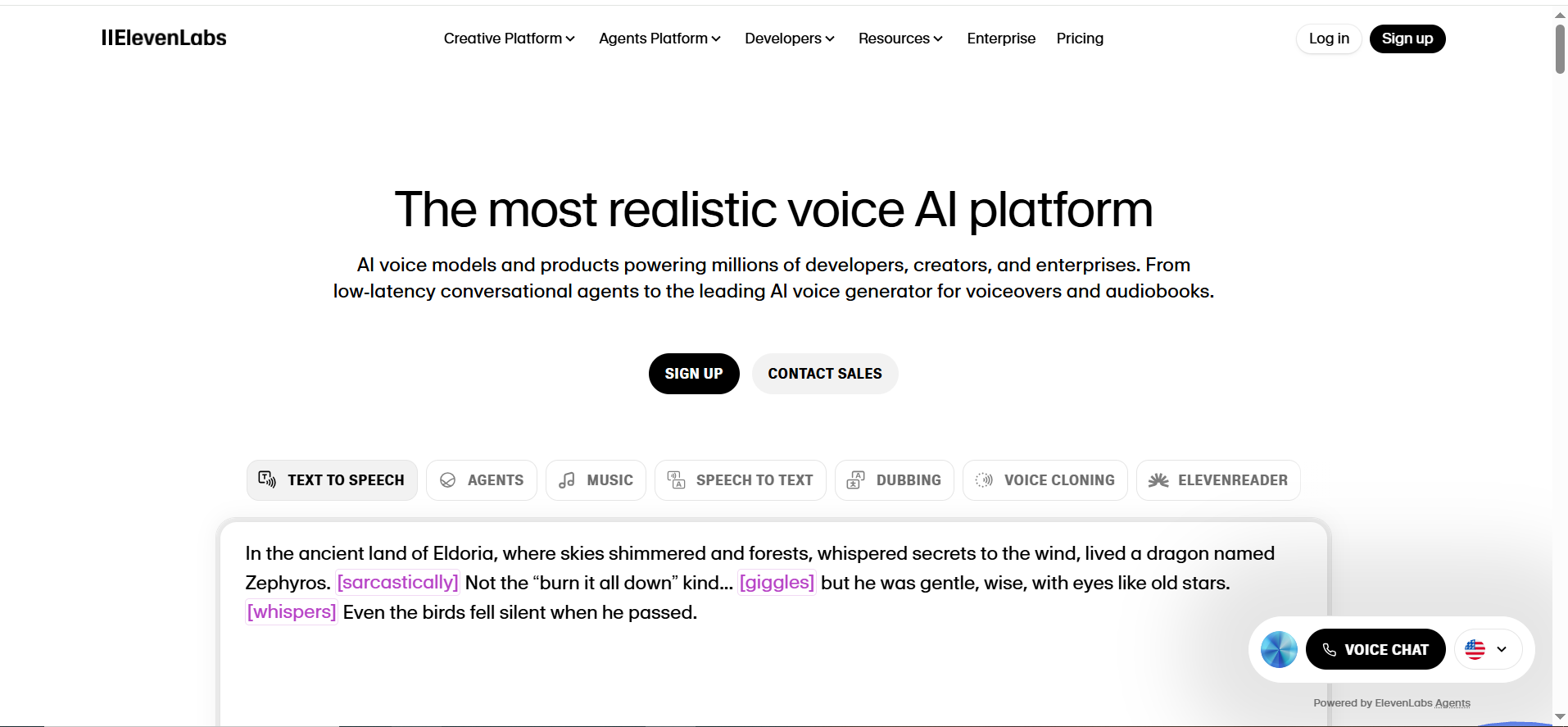
Best for: authors and publishers who want the most human-sounding AI narration.
Why it stands out
- High realism voices with expressive delivery
- Controls for pacing, pauses, and emphasis
- Useful for long-form narration where consistency matters
Watch-outs
- Always test a long sample (2–3 pages) before committing
- Check voice rights/licensing carefully for commercial use
Good fit if…
- You’re aiming for a “premium audiobook” sound without hiring a full voice cast.
Pro Tip: Many SaaS founders use ElevenLabs to convert long-form essays, webinars, or case studies into brand podcasts, perfect for awareness and retention in content-led growth motions.
ElevenLabs supports over 30 languages, enabling authors to reach a global audience with localized narration.
2. Fish Audio — Best for Expressive Voice Cloning and Author Narration
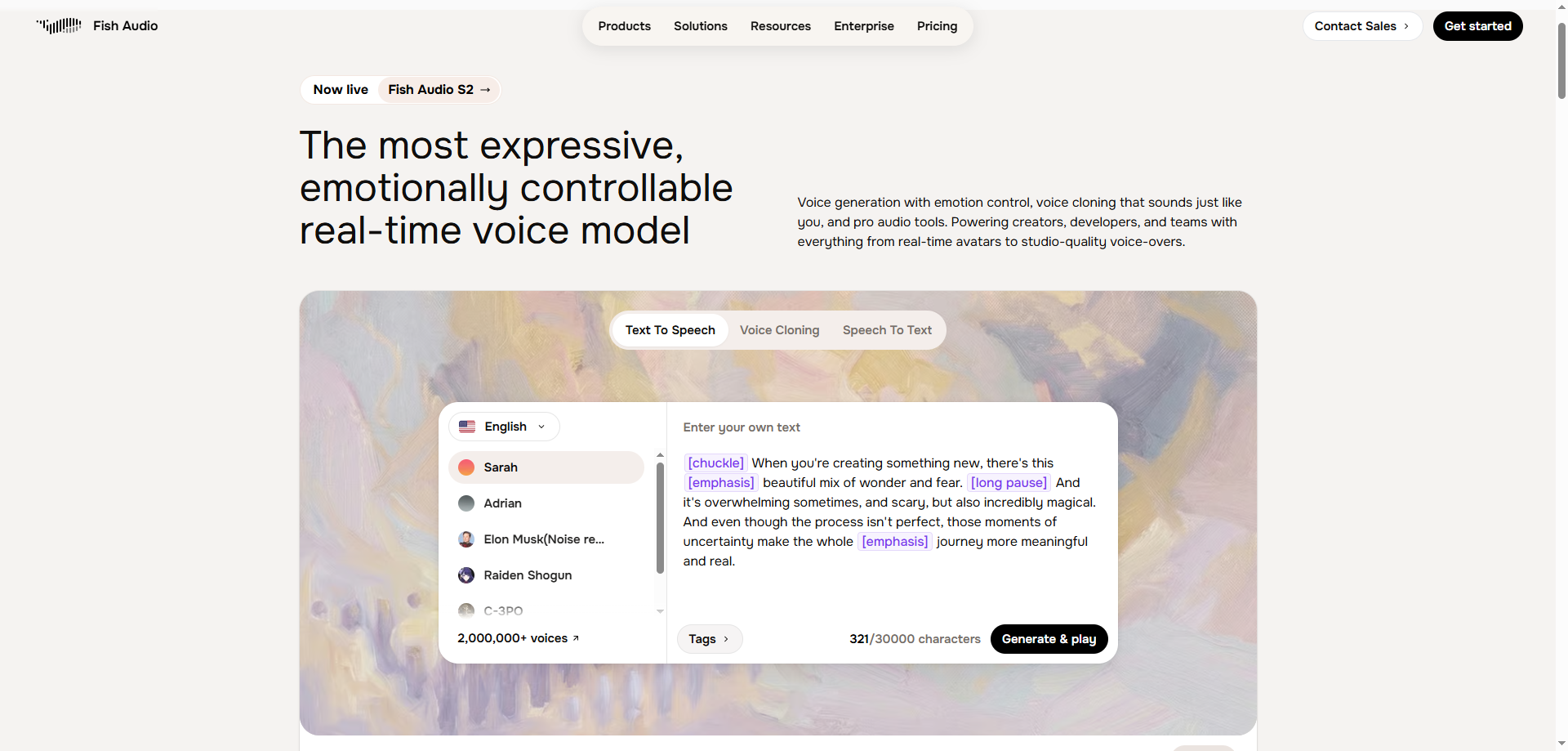
Best for: Authors who want to narrate in their own voice, or precisely control emotional delivery chapter by chapter through long-form content.
Why it stands out
- Ranked #1 for voice cloning naturalness based on ELO benchmarks — outperforms ElevenLabs, PlayHT, and other alternatives in both naturalness and expressiveness
- Clone any voice from a 15-second sample across 80+ languages, including cross-lingual cloning (record in English, narrate in French or Spanish)
- Fine-grained emotion tags ([excited], [whispering], [sad], [calm]) give you precise delivery control at every scene break — not a black box
- Fully adjustable speaking rate, emotion intensity, and tone; critical for maintaining consistency across hours of narration
- ~$15/1M characters via API (roughly 10x less than ElevenLabs); 2M+ community voice library included
Watch-outs
- Free tier covers 7 minutes/month — run a full chapter test on a paid plan before committing to a full title
- Commercial use of the open-weights S2 model requires a paid license; same consent and rights rules apply as any voice cloning platform
Good fit if...You want to publish in your own voice, match emotional tone to specific chapters (tense, calm, dramatic), or produce multiple audiobook titles at scale without the per-hour cost of human narrators. Fish Audio is especially strong for fiction and memoir where character authenticity matters.
Quick Comparison: Fish Audio vs. key competitors
| Function | Fish Audio | ElevenLabs | Play.ht |
|---|---|---|---|
| Voice cloning naturalness | #1 (ELO benchmarks) | Strong | Moderate |
| Expressiveness | Fine-grained emotion tags | Good | Limited |
| Controllability (speed, tone, emotion) | All adjustable | Moderate | Basic |
| Cross-lingual cloning | Yes (15s sample, 80+ languages) | Yes (limited languages) | Limited |
| API pricing per 1M characters | ~$15 | ~$165 | ~$65 |
3. Murf AI — Best for Beginners and Non-Technical Teams
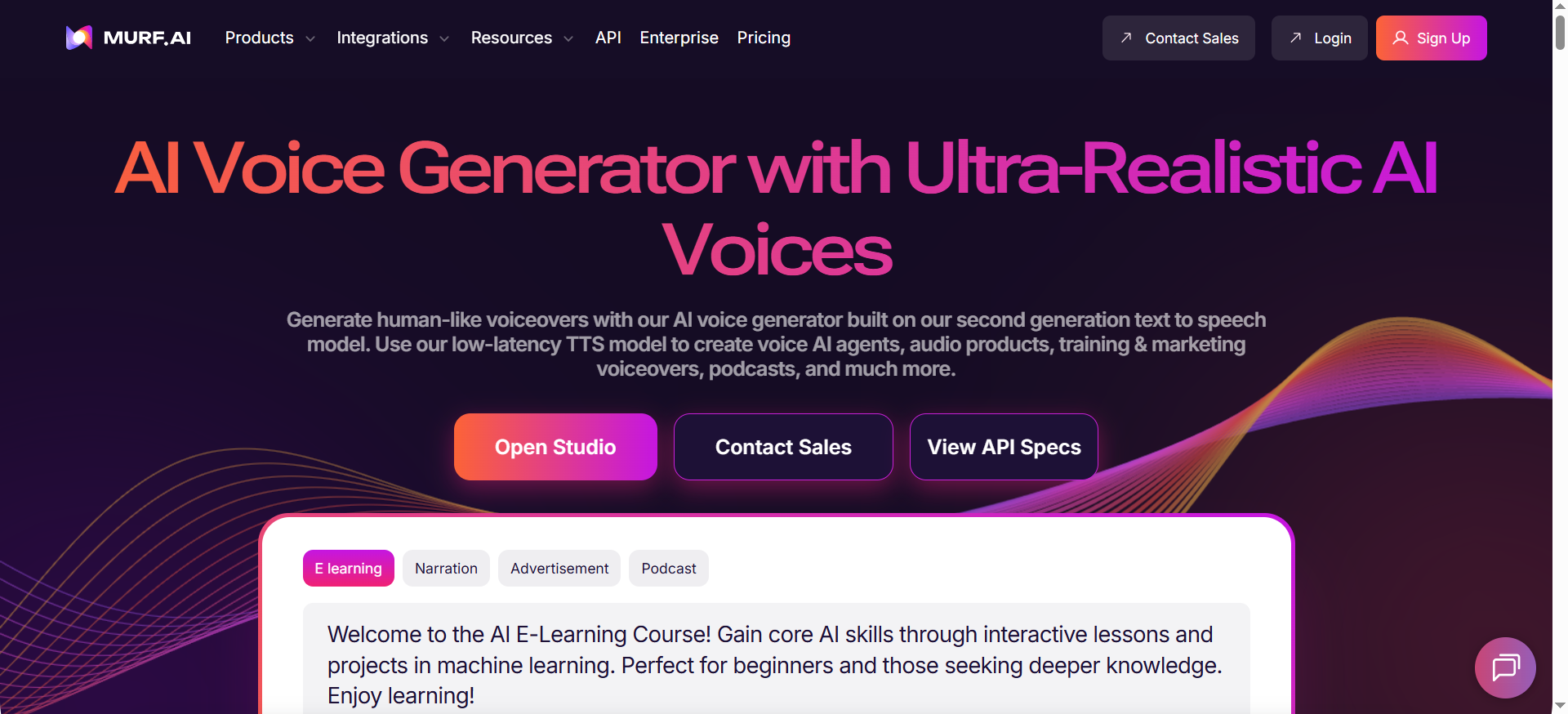
Best for: users who want an easy editor and a straightforward workflow.
Why it stands out
- Simple studio editor with a timeline workflow
- Easy adjustments for pacing and emphasis
- Good for non-technical creators
Watch-outs
- For very long audiobooks, you still need a solid QA/editing pass
- Voice nuance may vary by selected voice
Good fit if…
- You want a guided “studio” interface and simple exports.
Micro-Checklist:
✅ Upload your manuscript
✅ Choose the tone (informative, storytelling, friendly)
✅ Add optional background audio
✅ Export your ready-to-publish audiobook.
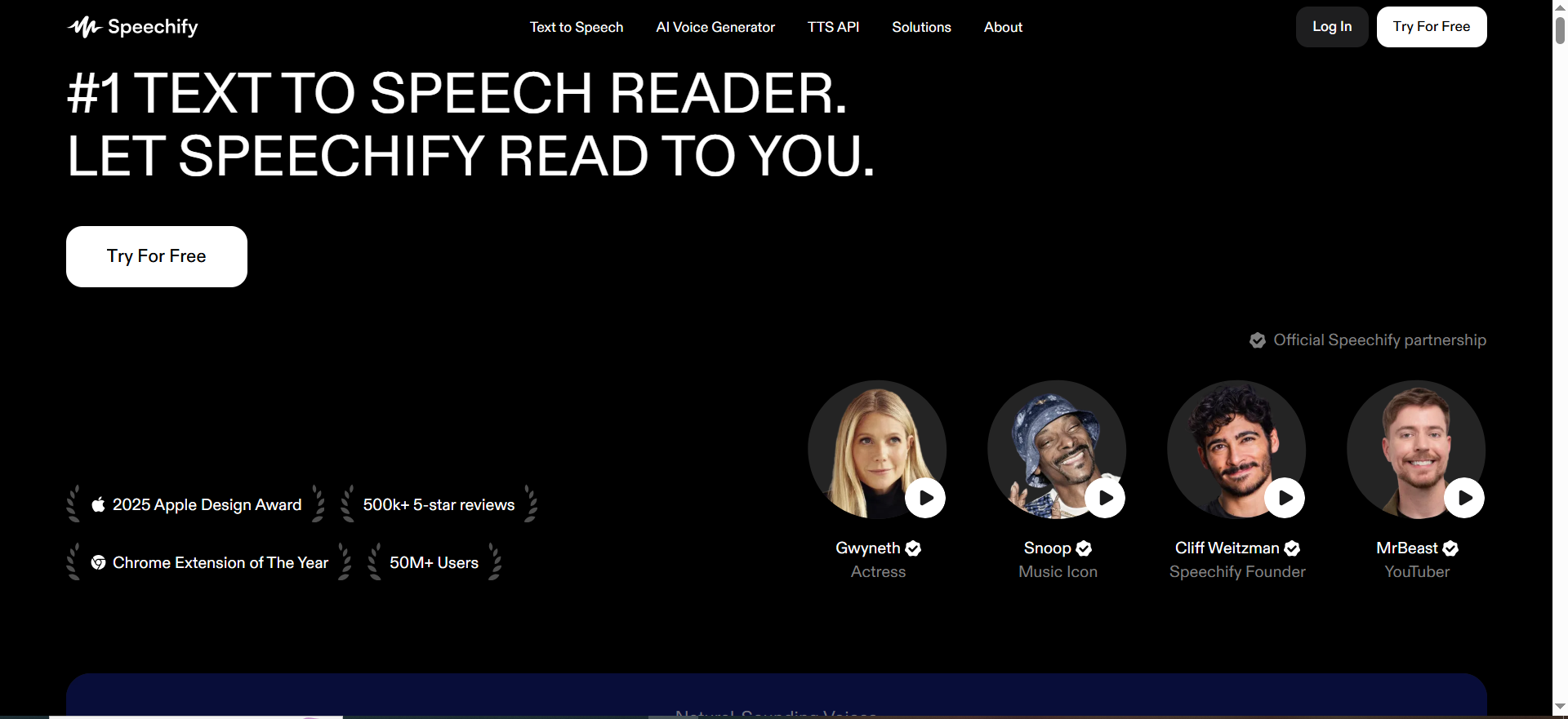
4. Speechify — Best for Short-Form or Lightweight Projects
Best for: business narration, consistent “brand voice,” and enterprise workflows.
Why it stands out
- Clean, studio-style voices
- Consistency across content
- Workflow features for teams (and API options for automation)
Watch-outs
- Best suited to non-fiction/brand narration; fiction performance may feel flatter
- Licensing/enterprise plans vary; verify fit for audiobook distribution
Good fit if…
- You’re producing non-fiction audiobooks, training, or branded audio series.
Heads-up: Voice quality is improving rapidly but may still sound slightly synthetic for multi-hour narrations or fiction works.
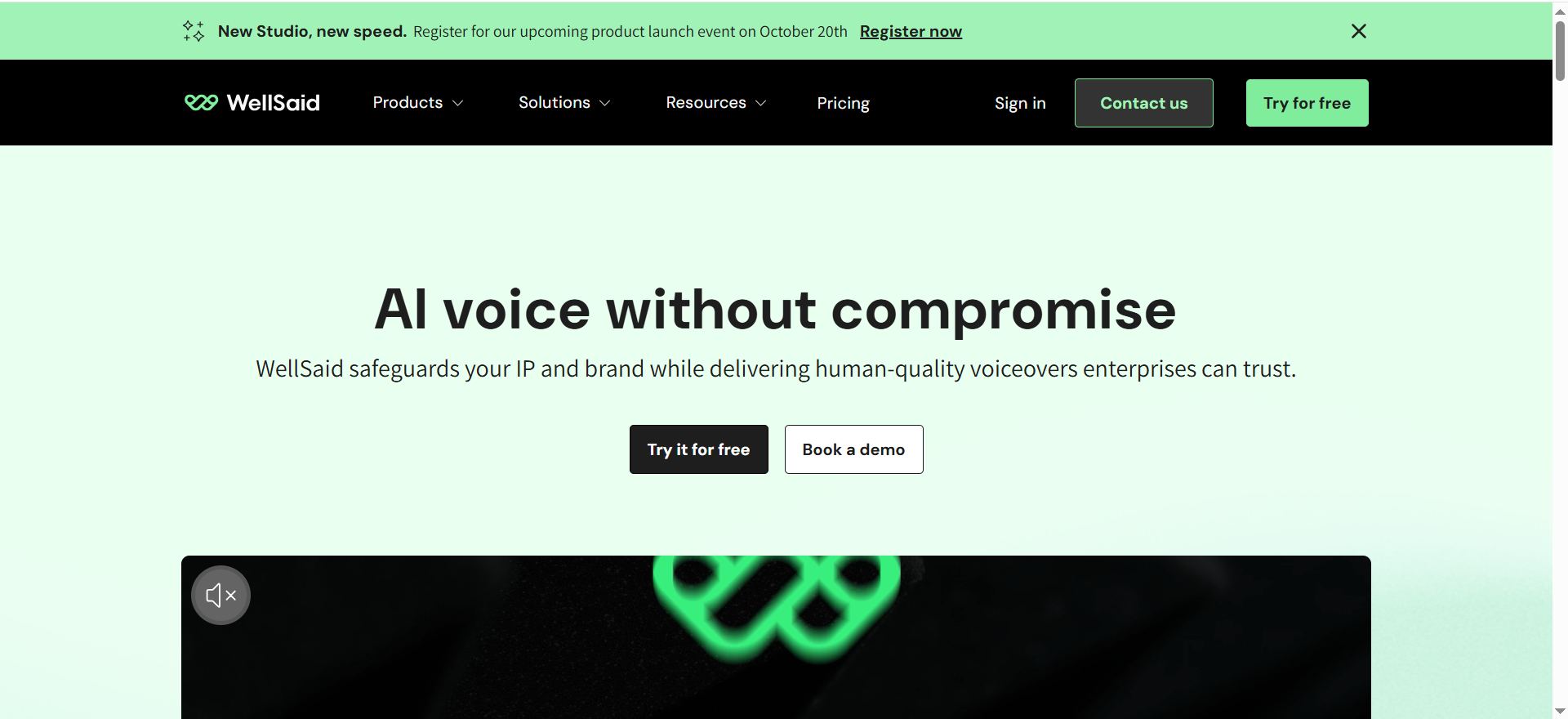
5. WellSaid Labs — Best for Studio-Quality, Professional Narration
Best for: quick narration, experiments, and shorter content.
Why it stands out
- Fast to start (app + browser workflows)
- Useful for testing audience demand before investing in full production
Watch-outs
- Not always ideal for long-form audiobook production at scale
- Output/controls can be more “reader” than “narrator” depending on plan/voice
Good fit if…
- You’re experimenting with audio versions of blogs, guides, and short ebooks.
Pro Insight: WellSaid Labs is ideal for companies seeking brand consistency across all spoken assets — from podcasts to training modules. While WellSaid Labs is unmatched in studio realism, ElevenLabs is widely regarded as an industry leader for high-quality, professional-grade AI audiobooks due to its advanced voice synthesis technology.
Bonus: Apple Books & Google Play AI Narration
Some authors prefer platform-native options because they’re designed for that ecosystem’s publishing workflow. These can be especially useful for non-fiction, backlist titles, or quick releases—just confirm eligibility, distribution limits, and disclosure requirements before publishing.
- Great for self-publishers looking for simple, free narration tools.
- Limited voice variety and customization.
- Excellent for frictionless distribution — no external uploads or file conversions required.
- Authors can distribute their audiobooks through platforms like Google Play Books and Kobo, which accept AI narration.
💡 Quick Take: Ideal for testing audiobook formats on small titles or using as a secondary channel for exposure.
AI Audiobook Generator vs AI Audiobook Reader
People search for “AI audiobook generator” and “AI audiobook reader” but mean different things.
- An AI audiobook generator is a tool you use to create narration audio files for publishing (chapters, mastered audio, export packages).
- An AI audiobook reader is a tool that reads text aloud for listening (often in an app) but may not give you production-ready files for retail distribution.
If your goal is to sell or distribute an audiobook, you usually want a generator (with export controls, chapter management, and licensing for commercial use).
What Readers Are Really Searching For
To match real search intent (and earn clicks), this guide covers:
- The best AI voice generators specifically for audiobook narration
- AI narration tools that support long-form output (hours, not minutes)
- Voice cloning for audiobooks (and the consent/rights steps)
- How to turn a manuscript into an audiobook step-by-step
- How to convert blog posts/ebooks into audiobooks as a repeatable workflow
- Where you can (and can’t) publish AI-narrated audiobooks
How AI Audiobook Tools Work
AI audiobook tools use next-generation text-to-speech (TTS) and neural voice synthesis technologies to transform written words into lifelike narration. Modern AI audiobook tools produce human-like voices by replicating human speech patterns, resulting in natural-sounding audiobooks that closely mimic real human narration. AI voice generators employ deep learning models to convert written text into spoken words with uncanny realism.
AI audiobook conversion relies on sophisticated Text-to-Speech (TTS) technology powered by deep learning and neural networks. If you want to automate pre-flight checks for readability and tone consistency, explore AI content audit software to catch issues before you hit “generate.”
You simply upload your manuscript — typically as a PDF, DOCX, or EPUB — choose a voice, and the AI automatically converts the text into audio that sounds smooth, natural, and expressive. What sets modern tools apart is their ability to capture emotion, pacing, and tone variation. Instead of flat robotic voices, these systems can express curiosity, excitement, or calm depending on the context of your writing.
Teams that want a fast, guided path from “rough draft” to “ready for narration” can leverage our SaaS content audit & fix sprint to tighten copy and reduce post-production edits.
And the best part?
You don’t need to be a sound engineer or have studio experience. Platforms like ElevenLabs and Play.ht make it possible for anyone “authors, marketers, or SaaS teams” to generate professional-quality narration in minutes.
Advanced AI tools can even:
- Differentiate characters in dialogue-heavy text
- Pronounce brand names or technical terms correctly
- Match emotion and rhythm to the mood of your story
In short, AI audiobook creation has become as simple as exporting a PDF — but with the storytelling power of a studio-quality voice actor.
AI Narration vs Human Narration
When it comes to creating audiobooks, the choice between AI narration and human narration is more relevant than ever. Thanks to advances in text to speech technology, AI voices can now produce natural sounding ai voices that rival traditional voice actors in clarity and consistency. AI narration uses sophisticated algorithms to transform your manuscript into high quality audio files, making it possible to create audiobooks quickly and affordably.
AI narrated audiobooks are ideal for authors and publishers who want to produce audio content at scale, meet tight deadlines, or experiment with different narration styles. With AI, you can select from a range of voices, adjust pacing, and even generate audio in multiple languages—all without the need for a recording studio or professional narrator. This approach is especially effective for non-fiction, business guides, or educational content where a clear, consistent delivery is key.
On the other hand, human narration brings a unique emotional depth and personal touch to the audiobook experience. A skilled voice actor can interpret subtle cues in the text, deliver nuanced performances, and connect with listeners on a deeper level. This makes human narration a strong choice for fiction, memoirs, or any project where character and emotion are central to the story.
Ultimately, the decision between AI narration and human narration depends on your goals, budget, and the type of content you’re producing. If you need to create audiobooks efficiently and cost-effectively, AI narrated solutions offer a compelling path with natural sounding ai voices and fast turnaround.
For projects that demand a more intimate or dramatic performance, human narration remains the gold standard. Either way, today’s technology ensures you can deliver a professional, engaging audiobook to your audience.
AI-generated audiobooks can lack emotional nuance or character voice depth compared to human narration.
Step-by-Step: How to Turn Your Book Into an Audiobook with AI
Converting your manuscript into an audiobook isn’t just about hitting “generate.” This is where the audiobook creation process comes in—a streamlined, technology-assisted workflow that makes production easy and ensures high-quality audio output.
Creating an audiobook involves several steps, including preparing the text, selecting a narration style, and recording the audio. It’s about preparing content that sounds natural, flows smoothly, and aligns with your brand or author voice.
Here’s a simple 5-step playbook to help you produce a professional AI-narrated audiobook — from draft to distribution.
Step 1: Prepare Your Manuscript (Set the Foundation)
Before you upload anything, spend a few minutes cleaning your text. For a structured pre-flight, this helps you standardize headings, spacing, and readability so narration sounds clean.
AI tools read exactly what's on the page, every typo, punctuation mark, and stray hyperlink can disrupt the flow.
Think of this step as “soundproofing” your manuscript before the AI voice starts recording.
How to do it:
- Break your book into logical chapters or sections (helps pacing and file management).
- Remove all images, hyperlinks, and footnotes — they don't translate well into audio.
- Standardize punctuation, paragraph breaks, and headings for clear pauses and tone shifts.
✅ Checklist:
- Clean formatting (no HTML clutter)
- Consistent punctuation and spacing
- Separate chapters into individual files or headings
Pro Tip: Tools like Grammarly or Hemingway help polish your text before upload — smoother text equals smoother narration.
Step 2: Choose the Right AI Tool (Your Production Engine)
Not all AI narration tools are built the same. Some focus on speed and affordability (like Play.ht), while others deliver emotional storytelling (like ElevenLabs). The right tool depends on your goal: is it to publish on Audible, create branded voice assets, or test audiobook demand?
If you prefer a process-first approach, this AI SEO tools agile workflow shows how to evaluate tools within a repeatable production loop.
How to do it:
- Compare voice demos — pay attention to tone, warmth, and clarity.
- Check each platform's licensing terms if you plan to sell the audiobook commercially.
- Factor in budget, export options, and text length limits.
✅ Checklist:
- Tool supports long-form content
- Voice tone matches brand personality (friendly, serious, inspiring)
- Commercial rights are included
Pro Tip: Run a short 1-page test with 2–3 voices before committing — what sounds “real” in a 10-second demo can differ over 6 hours of narration.
Step 3: Upload and Generate (The Fun Part)
Now it's time to bring your manuscript to life.
Upload your text or import your document (DOCX, EPUB, or plain text). Choose a narrator voice that fits your genre — calm and educational for non-fiction, expressive and dynamic for fiction.
How to do it:
- Paste or upload your text into the editor.
- Select a voice and adjust speed, tone, and pacing.
- Many tools allow pauses, emphasis, and pronunciation tweaks — use these to mimic human rhythm.
- Generate a short sample first to test the flow before rendering the full audiobook.
✅ Checklist:
- Correct voice and pacing chosen
- Custom pauses or emphasis applied where needed
- Sample test sounds smooth and natural
Pro Tip: Label each section (e.g., “Chapter 1 – Introduction”) in the editor so the AI automatically adds pauses between sections.
Step 4: Review & Edit (Quality Check Pass)
Don't skip this step — it's the difference between an average AI audiobook and a professional one.
Even advanced AI narrators sometimes mispronounce names, emphasize the wrong words, or sound rushed in transitions.
How to do it:
- Listen to every chapter and note inconsistencies.
- Fix mispronunciations using phonetic spelling or pronunciation editors.
- Adjust emphasis for key sentences — emotion matters as much as accuracy.
- Ensure smooth transitions between chapters (avoid abrupt starts or silence gaps).
✅ Checklist:
- Mispronunciations corrected
- Chapter openings and endings sound seamless
- Background noise or clipping removed
Pro Tip: Have a friend or team member listen to one chapter fresh — they'll catch tone or pacing issues your brain has tuned out.
Step 5: Export and Distribute (Go Live)
Once you’re happy with the final version, it’s time to share your creation with the world — or your target audience. Each platform (Audible, Spotify, Google Play Books, etc.) has specific technical requirements, but most accept standard MP3 or WAV files.
If you are using AI narration, it’s important to note that many audiobook platforms do not allow the publication of audiobooks generated using AI. For example, ACX does not accept AI-narrated audiobooks, which limits distribution options for AI-generated content. However, you can distribute AI-narrated audiobooks on platforms like Findaway Voices and Authors Republic. These services act as non-exclusive distributors, allowing you to distribute your own audiobook widely across multiple retailers such as Spotify, Apple Books, and Kobo. F
Findaway Voices is a popular choice for authors who want broad exposure and it accepts AI narration. Always check each platform’s policy to ensure they accept AI-narrated audiobooks before distributing.
If part of your strategy includes discoverability through assistants and voice experiences, skim voice search SEO for SaaS to align titles, descriptions, and script snippets with conversational search.
How to do it:
- Export your audiobook in 44.1kHz MP3 or WAV format.
- Add proper metadata: author name, book title, short description, and cover art.
- Upload to your chosen platform(s) or host on your website for gated access.
- Promote it through your SaaS content channels, newsletters, blogs, or podcast feeds.
✅ Checklist:
- Audio files exported in correct format and quality
- Metadata and cover art added
- Uploaded to desired platforms
- Distribution links added to marketing campaigns
Pro Tip: Repurpose your audiobook, share snippets on social media, use clips in paid ads, or gate the full version as a lead magnet for demo signups.
Workflow: Convert Blog Posts or Ebooks into an Audiobook
If you’re repurposing content (blogs, newsletters, ebooks), use this repeatable workflow:
- Collect and organize content into a single manuscript (or themed “seasons”).
- Rewrite lightly for listening:
- Shorter sentences
- Fewer parentheses and long lists
- Add “signposting” (e.g., “Next, we’ll cover…”)
- Create intros/outros and calls-to-action (optional).
- Generate audio in batches and QA each batch.
- Publish as:
- A short audiobook
- A podcast-style feed
- A serialized “audio newsletter”
Long-form Narration Settings that Matter
For audiobooks, these settings make or break listener experience:
- Pacing / speaking rate: Too fast feels robotic; too slow drags.
- Pauses: Add natural pauses after paragraphs and scene breaks.
- Emphasis: Use sparingly to avoid “salesy” delivery.
- Pronunciation dictionary: Essential for names, fantasy terms, brands, and foreign words.
- Consistency across chapters: Keep the same voice, tone, and settings across the full book.
- Noise/artifacts: Even small glitches are magnified over hours of listening.
Voice Cloning for Audiobooks (Consent + Rights Checklist)
Voice cloning can be powerful, but it’s also the highest-risk area. Use this checklist:
- Get explicit written consent from the voice owner.
- Confirm you have the right to use the voice for commercial audiobook distribution.
- Avoid cloning voices that imitate a celebrity/public figure without rights.
- Store voice data securely and limit access.
- Disclose AI narration where required by platforms or law.
- Keep a record of:
- Consent
- Licensing terms
- The exact voice model/source used
- Where and how it’s published
When in doubt, use a licensed stock voice instead of a clone.
Editing and Export Checklist (Quality + Files)
- Listen start-to-finish (not just random spots).
- Fix mispronunciations, repeated words, skipped lines.
- Ensure consistent loudness across chapters.
- Check for clicks, pops, robotic artifacts, or abrupt cuts.
- Use consistent file naming (e.g.,
01_Chapter_01.mp3). - Confirm export settings (format, bitrate, sample rate) for your chosen platform.
Where Can You Publish or Sell AI-Narrated Audiobooks?
Policies change frequently, so treat this as a starting point:
- Some platforms allow AI narration with disclosure.
- Some may restrict AI narration or require special approval.
- Some distribution partners may accept AI-narrated content but not all retail endpoints do.
Before you commit to producing a full audiobook, verify:
- Whether AI narration is allowed
- Whether disclosure is required
- Whether your tool’s license allows commercial audiobook distribution
Official Platform Policy Links (Verify Before Publishing)
Platform rules for AI-narrated audiobooks change, and acceptance can differ by retailer and distributor. Before you generate a full audiobook, use the official pages below to confirm:
- whether AI/digital narration is allowed
- whether disclosure is required
- what audio specs and metadata you must follow
- any restricted content or review/approval steps
Official links:
- Google Play Books (auto-narration): Auto-narrated audiobooks Google Play
- Apple Books (digital narration): Digital narration (Partner Support)
- Kobo Writing Life (AI narration / metadata): AI narration & audiobooks kobowritinglife.zendesk.com
- Author’s Republic (AI narration distribution): AI Voice audiobook distribution authorsrepublic.zendesk.com
Quick Tip: If you’re distributing through an aggregator, check both (1) the aggregator’s AI policy and (2) each retailer’s policy. A distributor may accept AI narration, but a specific retailer may not—or may require different labeling.
Common Mistakes to Avoid
| Mistake | Why It’s a Problem | How to Avoid It |
|---|---|---|
| Choosing robotic or monotone voices without testing samples | Flat or mechanical narration reduces listener engagement and credibility, especially for long-form books. | Always preview multiple AI voices before generating the full audiobook. Choose expressive or natural tones that match your content style. |
| Ignoring pronunciation issues (especially for names or brands) | Mispronounced company names or jargon break immersion and hurt brand perception. | Use your AI tool’s pronunciation editor or phonetic spelling options to fix problem words before final export. |
| Not checking file quality before distribution | Poor audio quality (pops, inconsistent volume, or clipping) can cause listener drop-off and rejections from platforms like Audible. | Always listen to the full export and check bitrate (44.1kHz MP3/WAV). Test playback on multiple devices. |
| Violating usage rights of the AI tool | Some AI tools restrict commercial or resale use of generated voices. Ignoring this can lead to legal issues or takedowns. | Review each platform’s license terms. Choose tools that grant full commercial rights for audiobook distribution. |
Distribution Models: Exclusive vs Non-Exclusive
Choosing the right distribution model is a crucial step in bringing your ai audiobook to market. Authors and publishers can opt for exclusive distribution, where the audiobook is available only on a single platform—such as Audible or ACX. This approach often comes with higher royalty rates and prominent placement within that platform’s ecosystem, making it attractive for those seeking maximum earnings per sale. However, exclusive distribution limits your audiobook’s reach, as listeners can only access it through that specific service.
Non-exclusive distribution, by contrast, allows you to publish your audiobook across multiple audiobook platforms, including Google Play Books, Apple Books, and more. This model gives you the flexibility to reach global audiences and tap into different markets, increasing your audiobook’s visibility and potential sales. While royalty rates may be slightly lower, the broader reach can often compensate for this difference.
With the rise of ai audiobook generators and customizable voices, non-exclusive distribution is becoming increasingly popular among indie authors and publishers who want full control over their content and marketing. Platforms like Google Play and Apple Books make it easy to upload ai generated audiobooks, ensuring your work is accessible to listeners wherever they prefer to buy or listen.
When deciding between exclusive and non-exclusive distribution, consider your target audience, marketing strategy, and long-term goals. If you value higher royalties and a streamlined approach, exclusive distribution may make sense. If you want to maximize reach and retain flexibility, non-exclusive distribution is the way to go. Either model can work well with today’s ai audiobook tools, so choose the path that aligns best with your vision for your audiobook.
Monetization and Marketing for Your AI Audiobook
Successfully monetizing and marketing your ai audiobook requires a blend of smart platform choices, creative promotion, and leveraging the latest ai voice technology. Start by selecting audiobook platforms that align with your goals—whether it’s ACX, Google Play Books, Apple Books, or emerging ai platforms. Each offers different pricing models, royalty structures, and opportunities for exclusive or non-exclusive distribution.
To maximize your audiobook market potential, consider offering your ai generated audiobooks in multiple formats and languages. Voice cloning and voice customization features let you tailor the narration style, add background music, or even use your own voice for a unique listening experience. High quality audio and natural sounding narration are key to standing out in a crowded audiobook industry.
Marketing your ai audiobook goes beyond simply uploading it to a platform. Use social media, email newsletters, and audiobook blogs to build buzz and connect with audiobook enthusiasts. Create engaging audio content—like YouTube videos, podcast interviews, or behind-the-scenes clips—to showcase your narration style and reach new listeners. Offering limited-time discounts, free trials, or bonus content can encourage reviews and word-of-mouth promotion.
Don’t forget to optimize your audiobook file with proper metadata, cover art, and compelling descriptions. Tools like audio editors and editing software can help you polish the final product, ensuring a professional listening experience. By combining effective monetization strategies with creative marketing, you can turn your ai narrated audiobook into a true game changer—reaching global audiences, building your brand, and generating ongoing revenue in the evolving audiobook market.
The Future of AI Audiobooks
The world of AI audiobooks is evolving fast. What started as basic text-to-speech has now turned into multi-voice, emotionally aware storytelling
Modern tools like ElevenLabs and WellSaid Labs are introducing multi-character narration, allowing you to create full-cast audiobook experiences where each character has a unique, expressive voice. Some platforms even detect emotional tone automatically — shifting from calm to excited or serious depending on the text. Forward-looking teams also think about how these audio assets surface in AI results; investing in answer engine optimization services ensures your audio pages are structured for AI overviews and assistants.
Voice cloning is another major leap forward. Authors and brands can now use their own voices to narrate their books, maintaining authenticity while scaling production. This opens doors for founder-led storytelling, product explainers, or even audio-based customer education programs. If you're planning large-scale rollouts (multiple playbooks, product lines, or locales), programmatic SEO services can help you build the landing and support pages that connect listeners to next steps.
Even major platforms like Audible and Apple Books are exploring AI narration, signaling that synthetic voices are becoming mainstream. This shift will redefine how content is produced and consumed. For growth-stage teams, pairing audio with a strong SaaS SEO agency strategy turns passive listening into qualified traffic across docs, changelogs, and help hubs.
Turning existing content “like product guides, case studies, or whitepapers” into narrated audio versions allows you to reach audiences who prefer to listen, not read. It's a new layer of content repurposing that extends reach, boosts engagement, and compounds ROI across channels. To capture that interest inside your product and docs, consider CRO for product-led content to guide listeners toward trials, demos, or feature adoption.
💡 Example: A B2B SaaS company turns its 40-page onboarding guide into a 25-minute “Welcome Audio Walkthrough.” It becomes part of their onboarding emails, YouTube playlist, and Spotify feed — instantly multiplying the content's lifespan and impact.
Frequently Asked Questions
Can AI narration sound professional enough for audiobooks?
Can I sell AI-narrated audiobooks on Audible?
Are AI audiobooks legal to sell?
Which AI voices sound most natural?
Can I use my own voice for AI narration?
How long does it take to produce an AI-narrated audiobook?
Do I need to disclose AI narration?
Conclusion: Choosing the Right Tool for You
If you want the best overall audio quality for long-form narration, start with ElevenLabs.
If you need scalable production for multiple titles or repurposed content,
Play.ht is a strong fit.
If you want a beginner-friendly studio workflow, Murf AI is often the easiest place to start.
And if you’re building studio-quality brand assets, WellSaid Labs is unmatched in realism.
No matter which tool you choose, the biggest differentiator is quality control: long-form testing, pronunciation management, and a full end-to-end listening pass.