

💡 Quick Takeaway
Enterprise SEO isn’t just rank tracking "it’s how large SaaS and multi-site brands turn organic search into a predictable growth channel". In 2025, platforms like BrightEdge, Conductor, Botify, seoClarity, Semrush Enterprise, and Ahrefs Enterprise help you:
- Centralize technical, content, and reporting workflows across thousands of URLs and markets.
- Automate audits and insights so your team fixes what actually moves SQLs and ARR.
- Prove SEO’s impact to leadership with executive-ready dashboards tied to pipeline and CAC.
The “best” tool depends on your size, tech stack, and whether your biggest constraint is technical SEO, content velocity, authority, or executive reporting—this guide shows which platforms fit each scenario.
Managing SEO at the enterprise level is less about tweaking metadata on a handful of pages and more about coordinating a system. We’re talking thousands of URLs spread across products, geographies, and languages, plus the added complexity of aligning growth, engineering, and content teams under one strategy.
As businesses scale, the stakes get higher: one misconfigured canonical tag or inefficient crawl path can waste crawl budget and suppress entire markets. That’s why forward-thinking teams lean on technical SEO audit tools for SaaS websites to catch technical breakdowns early, and pair them with AI content audit automation to accelerate content operations without sacrificing quality.
👉 The real danger? Choosing the wrong SEO stack. An underpowered platform slows down SQL generation and inflates CAC as paid channels are forced to pick up the slack. To sanity-check priorities before you scale, use a B2B SaaS content audit checklist to surface the highest-leverage fixes.
By 2026, the enterprise SEO playbook has shifted. Automation, cross-site reporting, and seamless integrations aren’t nice-to-haves “they’re the baseline”.
Modern leaders aren’t asking “How do we rank?” They’re asking: “How do we show SEO’s direct influence on pipeline, efficiency, and shareholder value?” That’s where automated SEO platforms for SaaS step in, unifying technical SEO, content velocity, backlink strategy, and board-ready reporting into one growth engine.
🤙 Ready to evaluate your stack? Book a 30-min strategy call with The Rank Masters and map your path forward.
What Is an Enterprise SEO Suite (and Why It Matters)?
An enterprise SEO suite is an all-in-one platform built for large or multi-site teams to crawl and monitor sites at scale, track rankings, analyze content, manage technical issues, and report performance to stakeholders in one place.
You’d use an enterprise SEO suite when:
- You’re managing thousands of URLs / multiple domains or regions.
- You need reliable, shared data for SEO, content, product, and leadership.
- You must prove SEO’s impact on pipeline and revenue, not just traffic.
To choose the right platform:
- Define use cases and users (SEO, content, product, leadership).
- Audit your current data sources (GSC, analytics, CRM, BI).
- Shortlist 3 vendors that fit your scale and stack.
- Run a 14–28 day trial with real workflows and stakeholders.
- Score each on ROI vs. cost and requirements before you commit.
The Tools Behind Enterprise SEO Success in 2026: Deep-Dive Comparisons
Choosing the right enterprise SEO platform isn’t about chasing brand names “it’s about aligning features, automation, and reporting depth with your growth bottlenecks”.
Below, we break down the leading tools of 2026, their real strengths, tradeoffs, and the SaaS scenarios where they deliver the most ROI.
| Tool | Best For | Stand-out Feature | Pros | Cons |
|---|---|---|---|---|
| Surfer | AI-driven on-page content optimization for content-led teams | NLP-powered Content Editor + Surfer AI for ready-to-rank drafts | Fast, data-backed content briefs that scale; easy for writers and agencies to adopt | Limited technical SEO |
| Conductor | Content operations | Writer/brief workflows | Strong support | Implementation time |
| Botify | Technical at scale | Log file analysis | Depth | Cost/complexity |
| seoClarity | Scalable platform | Content Fusion AI | Automation | Cost/fit varies |
| SE Ranking | Comprehensive SEO workflows | Organic search visibility tracking | Broad optimizational suite | Not for log-file scale |
| Semrush | All-in-one suite | Competitive intel | Easy start | Broad, not deepest |
| Lumar (Deepcrawl) | Technical & QA | CI/CD checks | Dev-friendly | Seats can add up |
| SEOmonitor | Forecasting & reporting | Budget/forecast tools | Exec reporting | Needs setup |
| Screaming Frog / Sitebulb | Audits | Flexible crawls | Value | Not a “suite” |
| GSC + Looker Studio | Free stack | Baseline data & dashboards | Free | Manual setup |
📋 Get Listed / Advertise
We refresh this guide monthly. Want your tool featured, benchmarked, or cited? Email: [email protected]
• Subject: “Rank Tracker Listing – TRM”.
1. Surfer – Best Overall Enterprise SEO Platform
Surfer is an enterprise-ready SEO and AI content platform that brings strategy, content creation, and optimization into one workflow. It’s built for brands that publish at scale and need consistency in quality, brand voice, and results across hundreds or thousands of pages.
Enterprise SEO and content teams can use Surfer SEO to centralize research, creation, and optimization, while keeping everyone aligned on the same data, guidelines, and processes.
Brand Knowledge, Custom Voices & Templates
Surfer lets you build Brand Knowledge and Custom Voices, so the platform “learns” your tone, messaging, and rules. This means AI-generated drafts feel on-brand even when multiple writers and markets are involved.
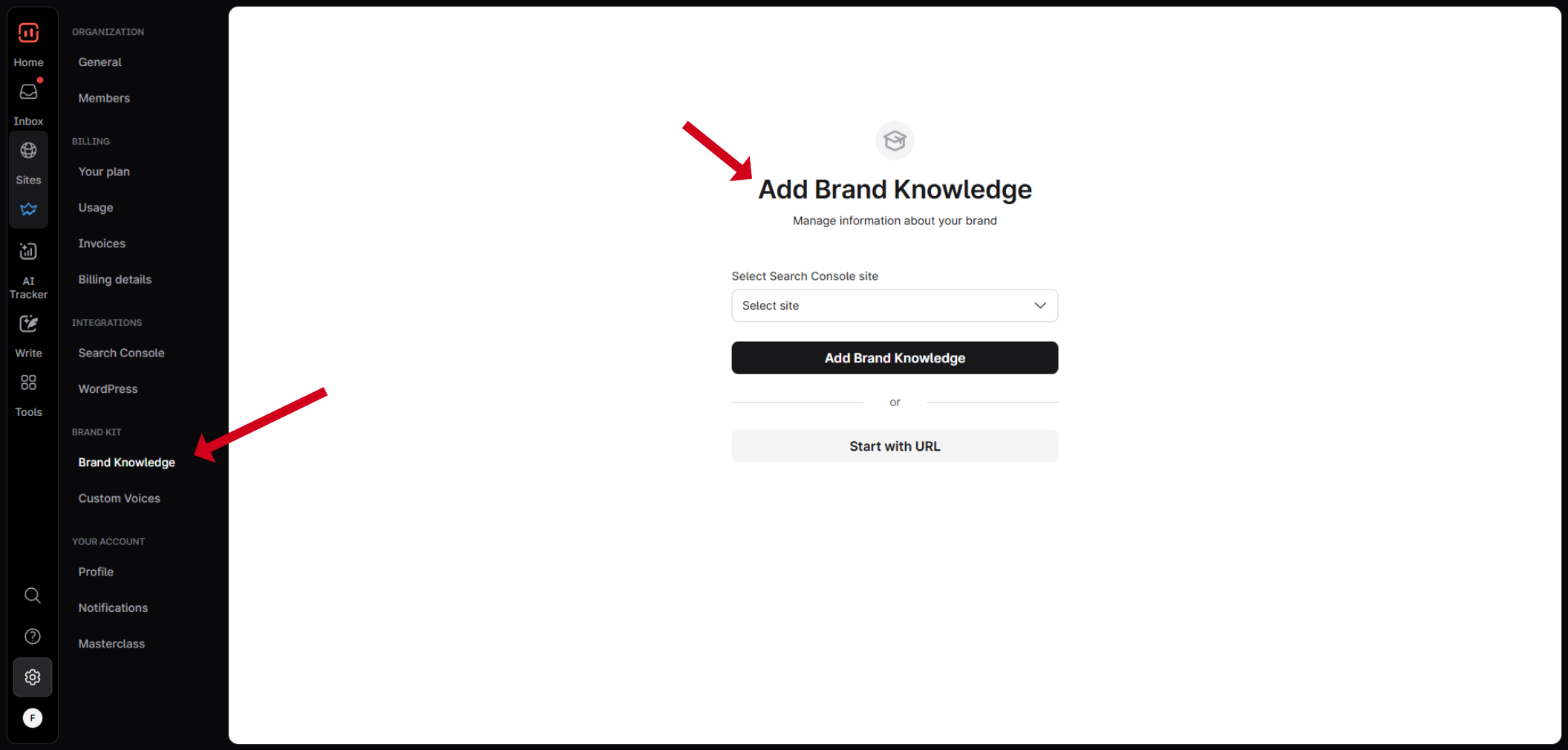
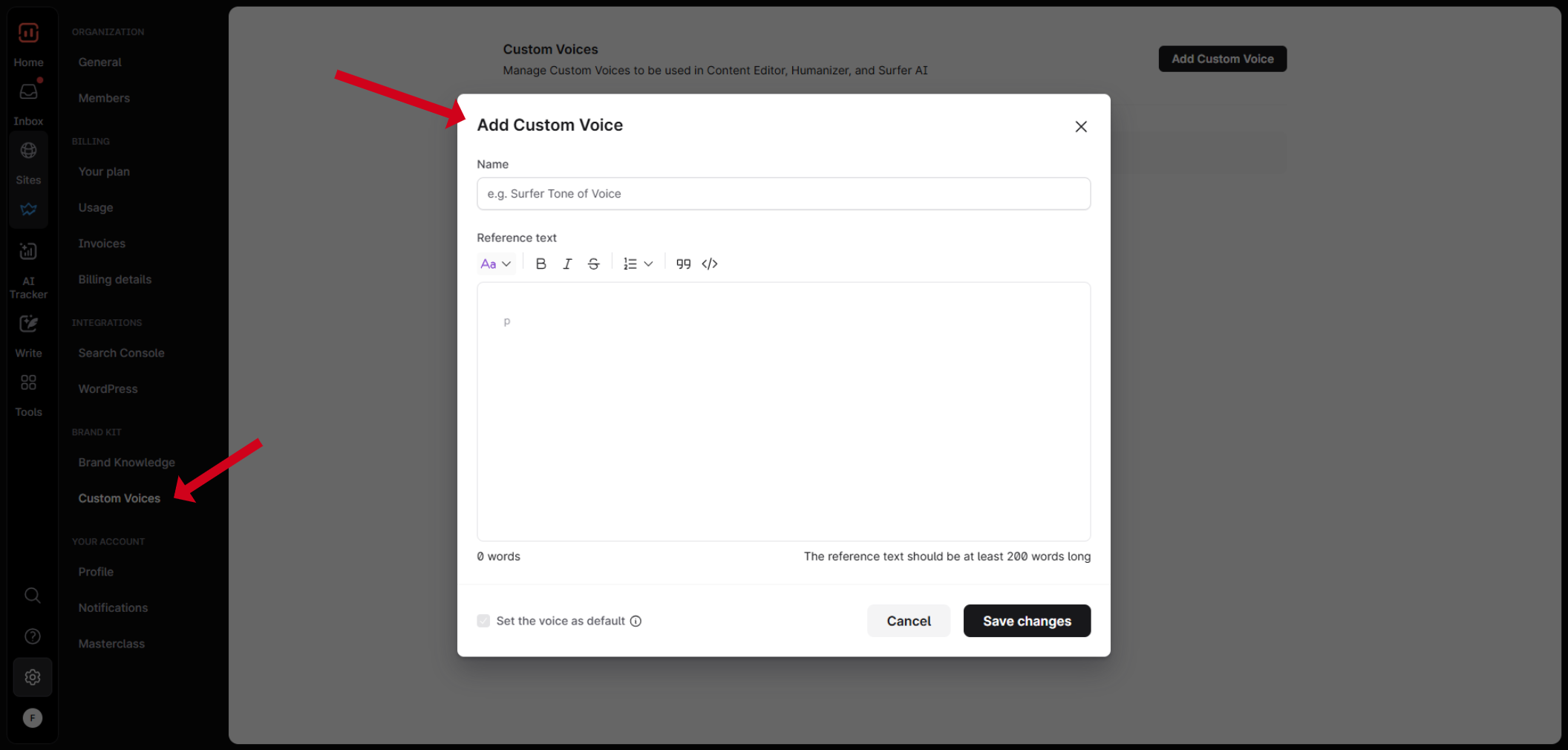
You can also create Custom Templates for different content types (blog posts, landing pages, product/category pages, etc.). At enterprise scale, this is crucial for keeping structure, quality, and SEO requirements consistent across large content volumes.
Content Editor (Built for Google & LLMs)
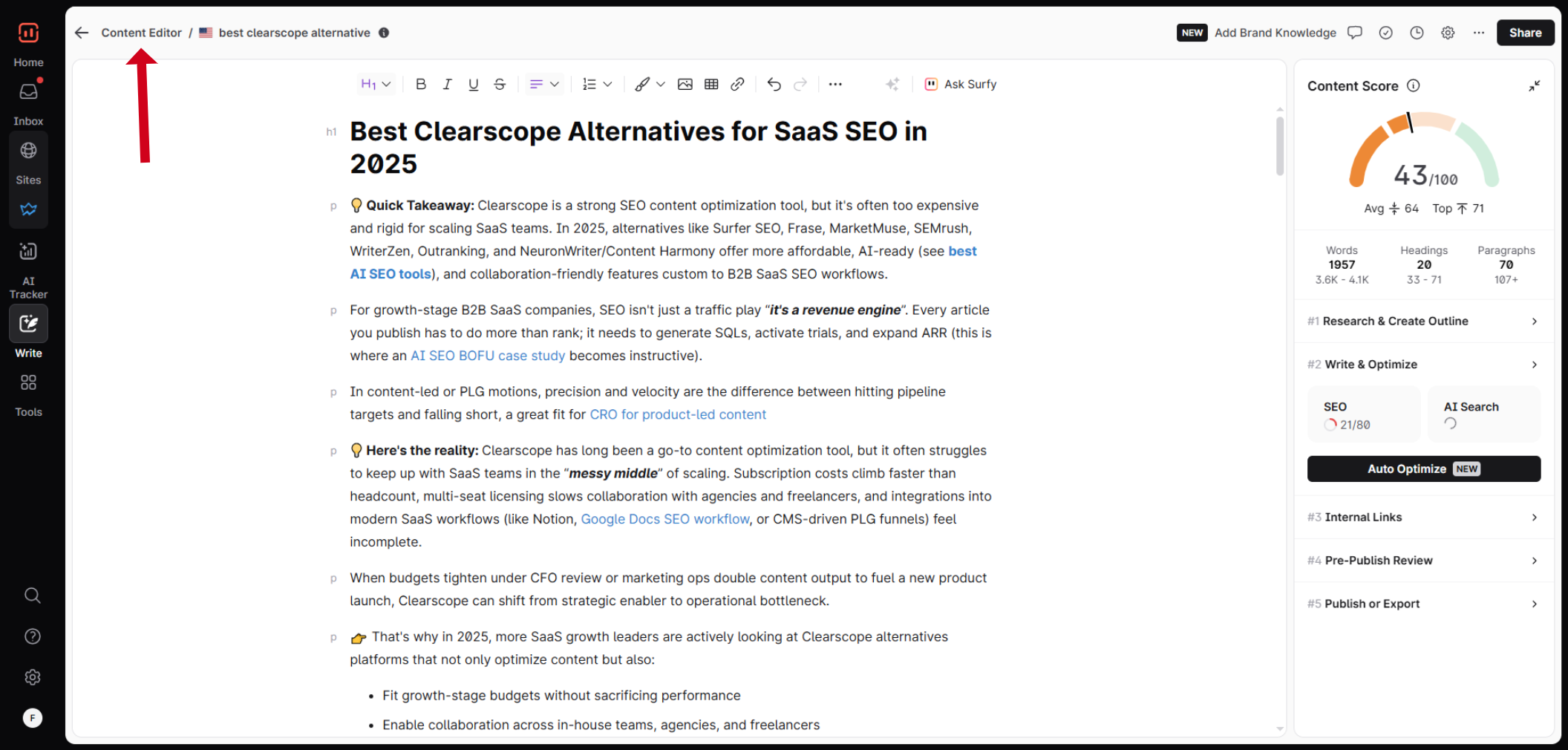
Surfer’s Content Editor is where writers and SEOs spend most of their time. It helps you:
- Shape the right structure with headings and word count
- Include relevant entities and terms based on real SERP & LLM data
- Automated Internal links insertion & 1-click article optimization
- Add the kind of factual depth that both Google and modern LLMs/AI Search systems respond to
Instead of guessing what to include, your team gets a clear, data-backed brief inside the editor so each new piece is easier to rank and easier for AI systems to understand.
Surfer AI & Surfy: Bulk, AI-Assisted Content
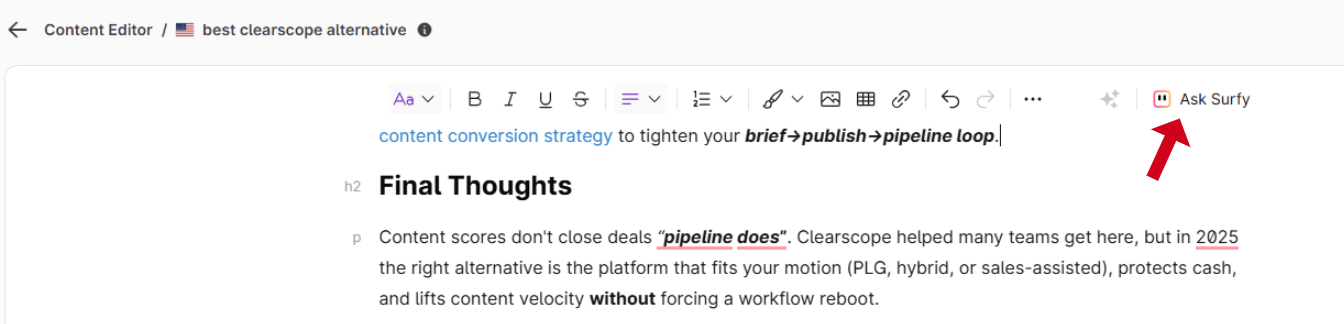
For teams that need to publish at scale, Surfer AI and Surfy generate full, ready-to-optimize articles directly inside the Content Editor. The AI is guided by Surfer’s data, so content is created with rankings in mind from the start, plus you can add your own Brand Knowledge & Custom Voices to make sure content is completely aligned with your brand.
This is especially useful when you’re building out large topic clusters or supporting many product categories and need first drafts fast, without sacrificing structure or optimization.
AI Tracker & Optimization for AI Search
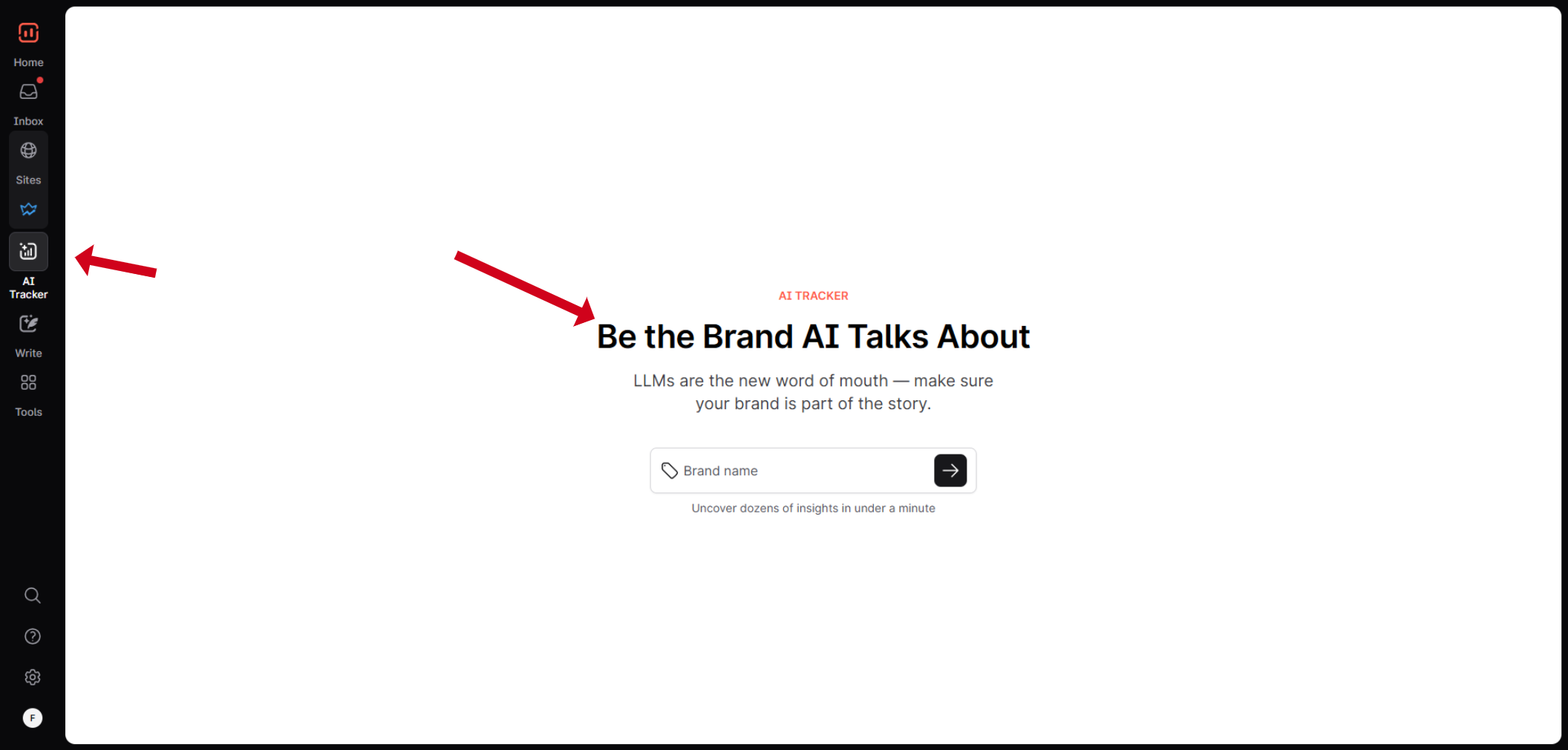
As AI-driven experiences grow (AI answers, AI overviews, chat-based search like in ChatGPT, etc.), AI Tracker helps you understand how and where your pages show up in those environments.
Instead of guessing how AI systems are using your content, you can:
- See where you already appear
- Spot gaps and opportunities
- Adjust key pages so they’re more likely to be surfaced in AI responses
- Spot sources which are mentioned and build off-site strategy
For enterprise brands planning long-term, this is important protection against losing visibility to AI-first experiences.
Content Audit & Topical Map
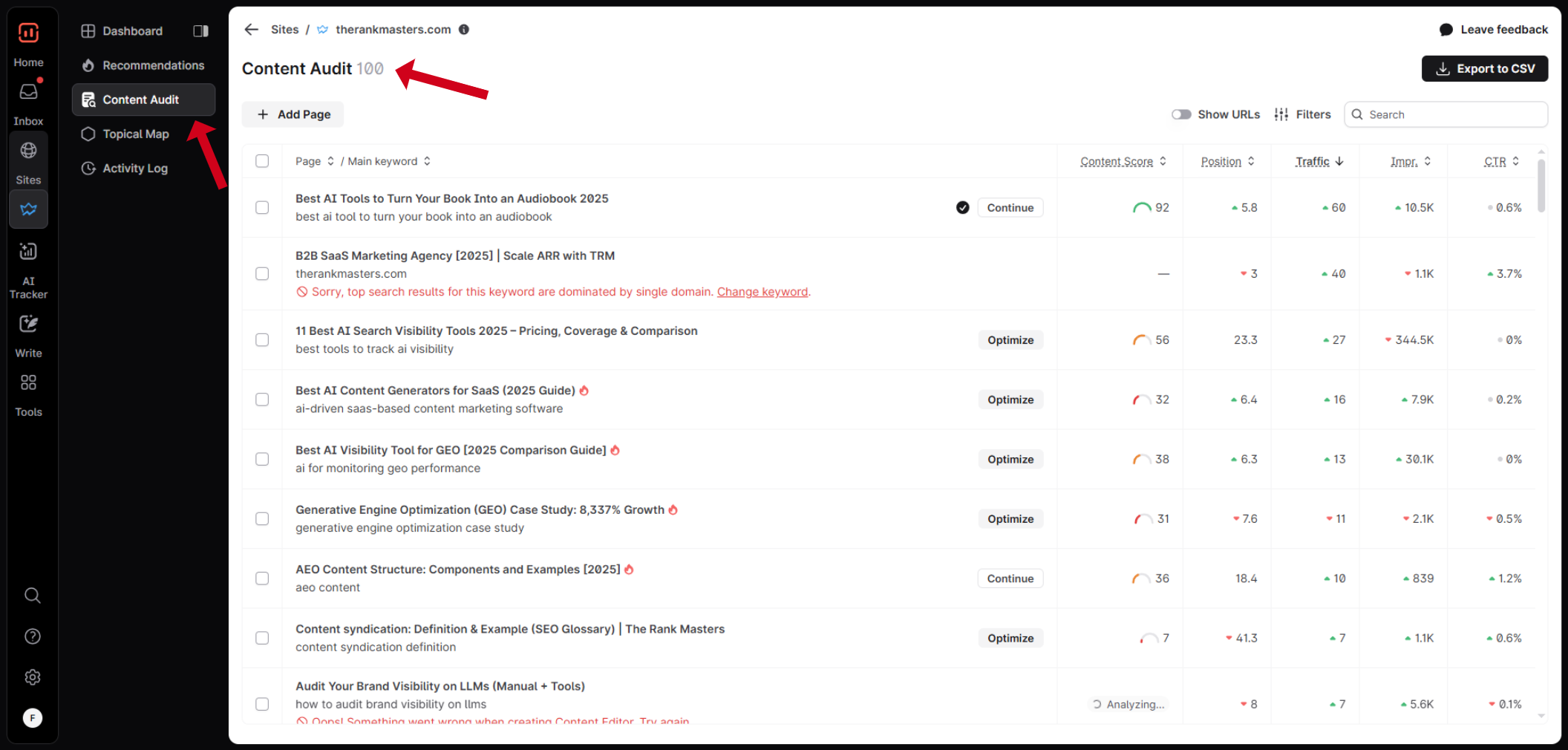
On large sites, updating existing content is often the biggest lever. Surfer’s Content Audit helps you quickly identify pages that:
- Lost rankings or traffic
- Need fresh content or better on-page optimization
- Would benefit from stronger internal links
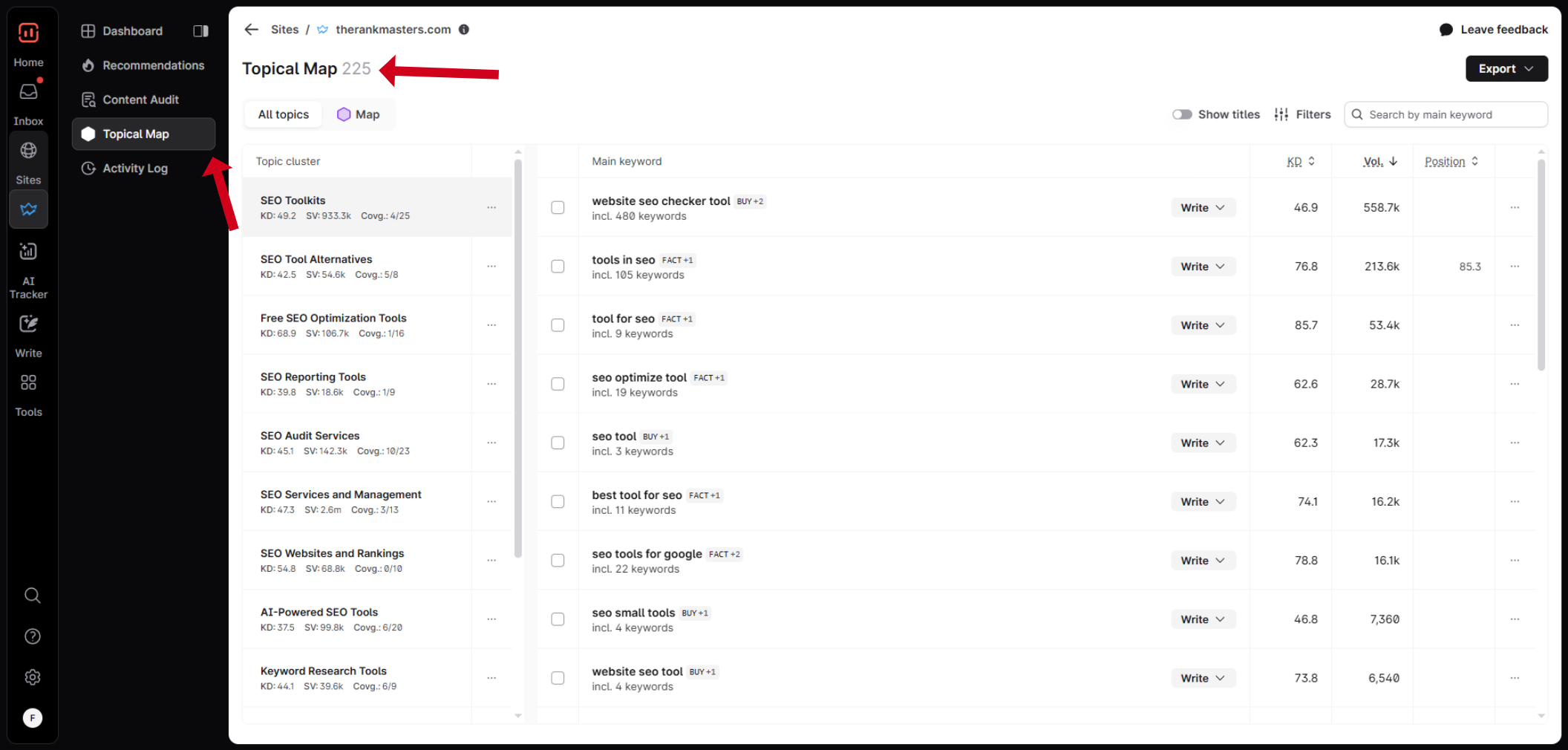
Paired with Topical Map, you can plan entire clusters and topical authority around the themes that matter most to your business, then keep those clusters healthy over time with targeted refreshes.
Free Tools for Enterprise Teams
Even if you’re just testing Surfer, there are a couple of free tools that plug nicely into enterprise workflows:
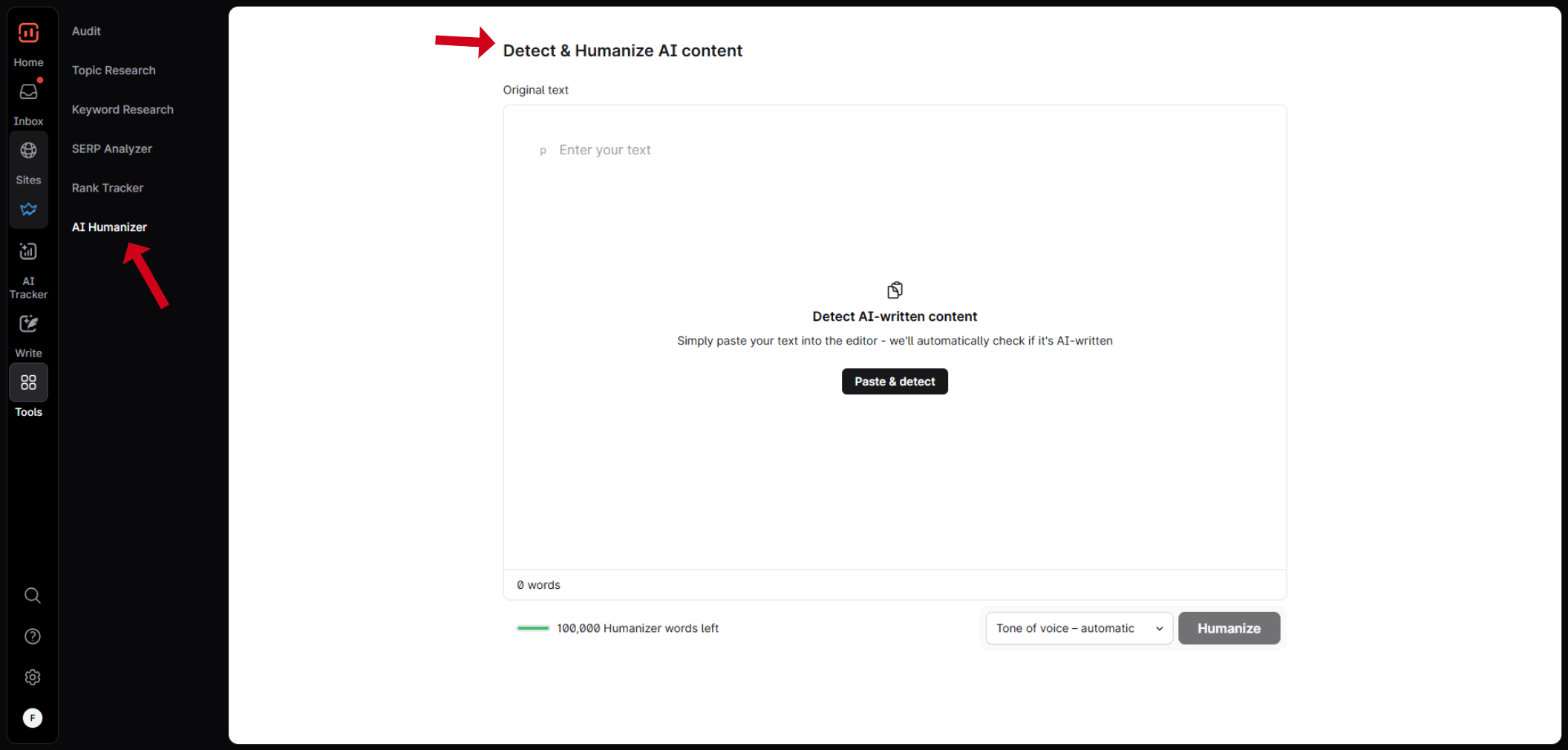
AI Humanizer – Helps you refine AI-generated content so it reads naturally and aligns better with human expectations.
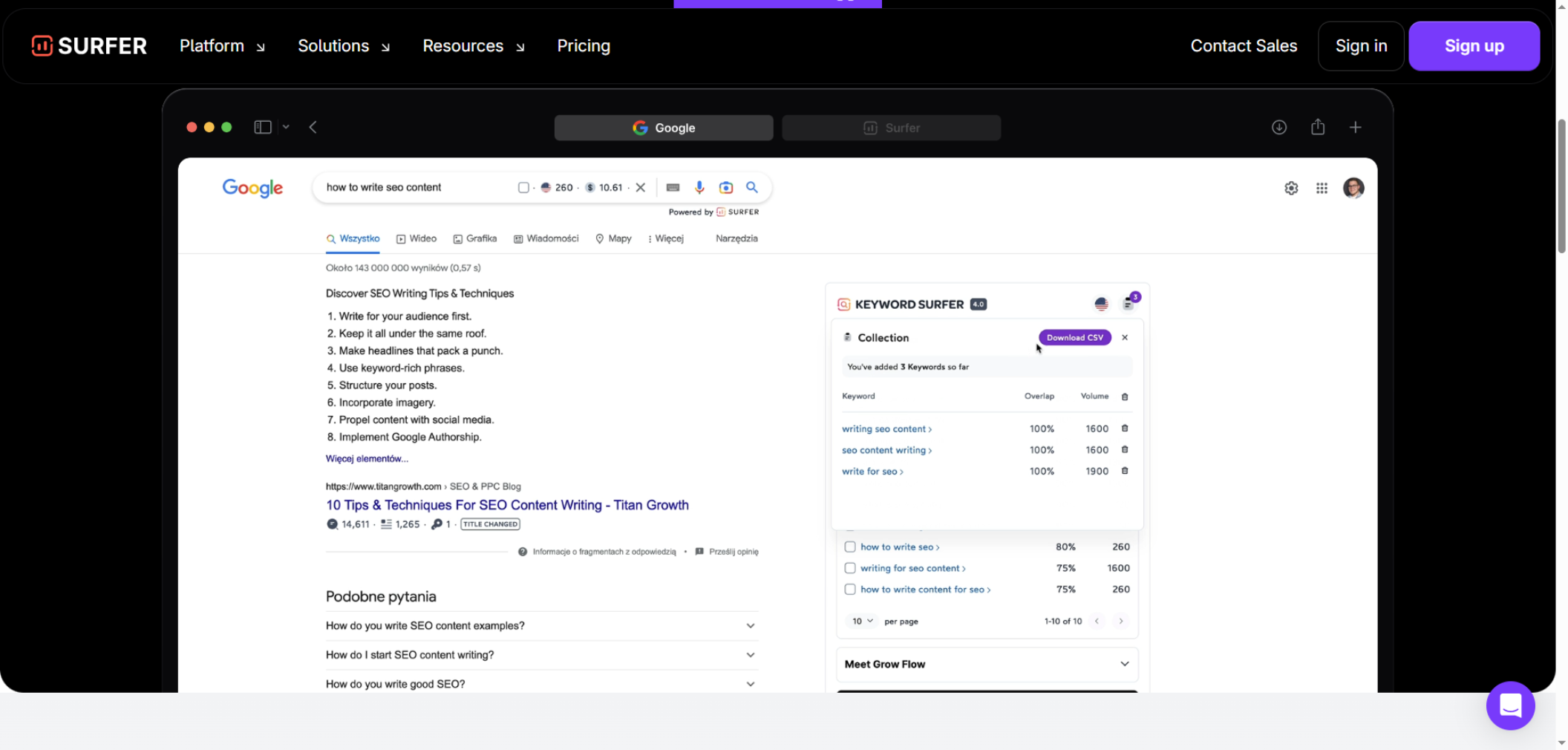
Keyword Research Chrome Extension – Lets SEOs and strategists explore keyword ideas as they browse, useful when working across many markets and product lines.
These free tools give teams a feel for Surfer’s approach before fully rolling it out.
Pricing & Plans
Surfer offers several plans that scale with your needs, from smaller SEO teams up to custom Enterprise setups. Pricing mainly depends on:
- How many articles you want to create and optimize each month
- How many audits and tracked pages you need
- How many team members and workspaces you’re managing
For most large organizations, the Enterprise plan is the natural fit, because it’s tailored to your specific volume, workflows, and support needs. To see the current tiers and what’s included at each level, send readers to the pricing page via your affiliate link:
👉 Check Surfer’s current pricing and Enterprise options
This keeps the user on your affiliate link while still positioning Surfer as transparent and scalable on cost.
Free Demo
Not sure if Surfer is the right fit for your team? Book a demo and see it first hand.
You’ll see how to explore the Content Editor, generate a few AI articles, run some audits, and see how it impacts your rankings before you commit long term.
Who Surfer Is Best For
Surfer is a strong fit if you:
- Run or support a large content operation (enterprise brand, publisher, or big SaaS)
- Need strict brand consistency across many writers, languages, and regions
- Want a data-backed workflow that covers research, content creation, optimization, internal linking, and ongoing audits
- Are preparing for a future where both Google’s SERPs and AI Search experiences matter for organic visibility
If you want a single platform that ties strategy, AI-assisted writing, optimization, and performance monitoring together, Surfer deserves the top spot on any enterprise SEO tools list.
2. Conductor: Driving Alignment Between SEO, Content, and Demand-Gen Teams
▶️ Best fit: Series B–C SaaS companies scaling PLG or content-led motions where alignment between content + SEO teams is the bottleneck.
What it does: Conductor brands itself as the collaboration-first SEO platform. It’s designed not just for SEOs, but to align SEO, content marketing, and demand-gen teams around shared workflows, insights, and performance dashboards. Think of it as the bridge between content strategy and organic performance.
Strengths:
- Excellent cross-team workflows.
- Content performance reporting for non-SEO marketers.
- Smooth CMS integrations (Adobe, Sitecore, WordPress).
- Strong enablement and customer support.
Limitations:
- Pricing isn’t transparent.
- Limited depth in technical SEO automation.
- More suited for marketing teams than dev-heavy orgs.
Free tier: No
Risk if misused: Over-relying on Conductor for growth while ignoring underlying technical SEO debt. You’ll scale content without fixing structural bottlenecks.
Pricing Snapshot:
- Custom enterprise only; quote-based, scaled by domains, keywords & modules.
3. Botify: Solving Crawl Efficiency and Technical SEO Bottlenecks at Scale
▶️ Best fit: SaaS companies scaling internationally where crawl budget and technical SEO bottlenecks impact growth.
What it does: Botify is the technical SEO engine for enterprise sites. Its core strength lies in log file analysis, crawl optimization, and large-scale site audits, making it a go-to for companies managing millions of URLs, complex architectures, or multi-country rollouts.
Strengths:
- Best-in-class log file analysis.
- Crawl optimization to prioritize high-value pages.
- Scales to millions of URLs.
- Automation for technical audits and fixes.
- CDN integrations for crawl performance.
Limitations:
- Setup-heavy, requires SEO engineers or technical leads.
- Expensive for smaller SaaS teams.
- Not intuitive for content teams.
Free tier: No
Risk if misused: Buying Botify without dedicated technical SEO + dev resources. It will sit idle if your team can’t act on the insights.
Pricing Snapshot:
- Starter – $500/month
4. seoClarity: A Unified SEO Operating System for Global, Multi-Site Brands
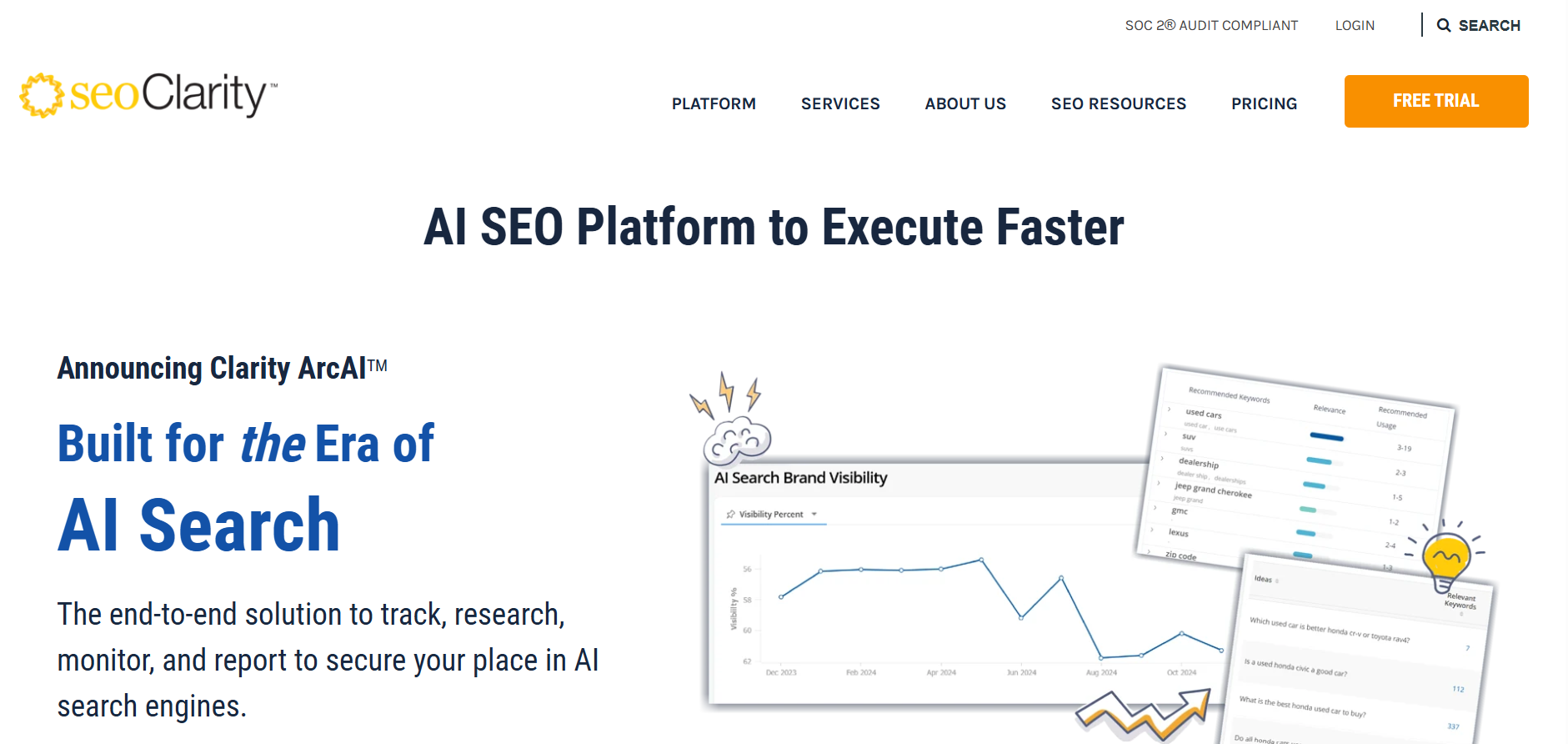
▶️ Best fit: SaaS brands preparing for global expansion where both technical SEO and content scaling are equally critical.
What it does: seoClarity is the all-in-one SEO operating system. It covers both technical SEO and content optimization while layering in AI-driven insights and exec reporting. Its strength lies in scalability “handling multi-site, multi-region SEO programs while giving both execs and SEOs custom dashboards”.
Strengths:
- AI-driven recommendations across tech + content.
- Seamless multi-site scalability.
- Content Fusion AI for NLP-driven optimization.
- Customizable dashboards for both execs and SEO managers.
- Enterprise-grade security & governance.
Limitations:
- Complex UI → steep learning curve.
- Price point may be too high for growth-stage SaaS.
- Feature bloat if you only need specific modules.
Free tier: No
Risk if misused: Paying for seoClarity’s breadth but only using a fraction of it, you’ll burn budget without driving ROI.
Pricing Snapshot:
- Core: Starts at $2,500/month
- Professional / Agency: from ~$4,500/mo+
- The exact price is still custom by usage & modules.
5. SE Ranking: Comprehensive SEO Delivery for Agencies and In-House Teams
▶️ Best fit: Established agencies and mid-market SEO teams running repeatable SEO programs across many clients or sites.
What it does: SE Ranking covers rank tracking, keyword and competitive research, backlinks, technical audits, content, local, and client reporting in one system. It offers API and MCP access on every plan, supports GA4 anf GSC integrations, and connects with automation tools like n8n, Make, and more. For AI search, SE Ranking offers SE Visible, which is a stand-alone AI-visibility platform that tracks visibility, prompts, sentiment, and cited sources across ChatGPT, Gemini, Perplexity, AI Overviews, and AI Mode, with competitor benchmarking.
Strengths:
- Broad single-platform SEO coverage.
- White-label reporting, client seats, and Lead Generator.
- API and MCP included in every plan.
- Pre-built connectors for Make.com, n8n, and Data Studio.
- AI-search visibility available through SE Visible by SE Ranking.
Limitations:
- Built for site-audit workflows rather than log-file analysis and crawl-budget engineering.
- Some databases are smaller than those of the largest incumbents.
- Depth works against casual use. It rewards systematic, ongoing programs rather than occasional checks.
Free tier: No. 14-day free trial with full functionality.
Risk if misused: It's built for SEO delivery, not deep-technical crawl engineering. Match it to a content, research, or reporting bottleneck.
Pricing Snapshot:
- Core: $129/mo
- Growth: $279/mo
- Enterprise: custom limits and terms, sales-assisted
- Agency Pack add-on from $69/mo (annual billing)
6. Semrush Enterprise: A Versatile SEO Toolkit for Growth-Stage SaaS Teams
▶️ Best fit: Growth-stage SaaS companies running content-led or PLG motions where speed, agility, and competitor insights matter most.
What it does: Semrush is the Swiss Army knife of SEO. While not built originally as an enterprise-only tool, its Enterprise plan adds scalability, collaboration features, and integrations, making it a favorite for growth-stage SaaS scaling content velocity and competitor research.
Strengths:
- World-class keyword research with global SERP coverage.
- Easy-to-use content optimization tools.
- Competitive intelligence (keyword gaps, SERP tracking, competitor moves).
- Affordable relative to enterprise-only tools.
- Broad ecosystem of integrations (GA4, HubSpot, Looker).
Limitations:
- Technical SEO automation isn’t deep.
- Dashboards not C-suite polished.
- May require add-on tools for global scale.
Free tier: Yes
Risk if misused: Treating Semrush as a complete enterprise suite. Without supplemental technical SEO tools, it won’t scale to multi-site/global demands.
Pricing Snapshot:
- Starter: $165.17/mo
- Pro: $248.17/mo
- Enterprise: $455.67/mo
- Technical SEO bottleneck → Botify or seoClarity.
- Content velocity bottleneck → Semrush or Conductor.
- AI search visibility bottleneck → SE Ranking.
- Exec reporting bottleneck → BrightEdge.
📋 Get Listed / Advertise
We refresh this guide monthly. Want your tool featured, benchmarked, or cited? Email: [email protected]
• Subject: “Rank Tracker Listing – TRM”.
Why Do You Need an Enterprise SEO Solution?
You don’t buy an enterprise SEO suite to “track more keywords.”
You buy it because the way you do SEO changes at scale.
You need an enterprise solution when:
- You manage complex sites
Multiple products, domains, and regions, thousands of URLs, constant releases—basic tools miss issues and can’t crawl fast or deep enough. - Data is fragmented across teams
SEO, content, paid, product, and RevOps all look at different reports. You need a single source of truth tied into analytics, CRM, and BI. - You must move fast without breaking things
Manual audits and spreadsheets can’t keep up with weekly sprints. You need automated monitoring, alerts, and workflows so issues are caught early. - You have to prove impact on leadership
Traffic isn’t enough. Enterprise platforms help you connect SEO to pipeline, revenue, and CAC, so SEO holds up in budget conversations. - You need governance, not just “access”
Permissions, approvals, change history, SSO, SLAs—enterprise teams need control and security, not just another login. - You’re coordinating many people, not one SEO
Content, dev, product, and regional teams all touch SEO. A suite gives you shared dashboards, prioritized backlogs, and repeatable processes.
You can turn this last line into a closing sentence if you want it more punchy:
At that point, “a few point tools” stop being enough—you need an enterprise SEO suite that can actually run the system.
TL;DR Decision Table
| If you need… | Start with | Why | Watch-outs |
|---|---|---|---|
| Enterprise content intelligence + workflows | Conductor / BrightEdge | Strong content briefs & governance | Enterprise pricing, setup time. |
| Deep technical crawling at scale | Botify / Lumar (Deepcrawl) | Logs + JS rendering + automation | Seats/cost add up. |
| Broad suite + market/PR tracking | Semrush | All-rounder; fast onboarding | Can feel “jack-of-all-trades.” |
| Link intelligence & SERP research | Ahrefs | Best-in-class backlink index | Limited enterprise workflow. |
| Manager-friendly reporting | SEOmonitor / Looker Studio | Forecasting & budgeting | Needs good data plumbing. |
| All-in-one SEO delivery + agency reporting | SE Ranking | SEO breadth with white-label reporting; API & MCP in every plan | Not a log-file/crawl-budget suite; AI-search visibility is a separate product (SE Visible) |
Defining Enterprise SEO: Core Capabilities That Separate Tools Built for Scale
When SaaS brands hit scale “thousands of indexed pages, multiple product lines, international rollouts, the SEO challenges multiply fast”.
At that point, “enterprise” isn’t just a higher license fee. It’s about whether the tool can actually orchestrate SEO as a growth channel across people, platforms, and regions.
Here’s what separates true enterprise-grade SEO software from point solutions:
1. Scalability That Matches Global Growth
You’re not tracking 50 keywords anymore “you’re tracking 50,000 across regions, languages, and product categories”. Teams at this stage often pair platform capabilities with programmatic SEO services to scale landing-page creation without hand-coding. A proper enterprise tool should be able to:
- Handle 10K+ URLs per crawl without choking.
- Run multi-region rollouts with localized keyword tracking.
- Centralize reporting across 5+ business units or markets.
2. Advanced Reporting That Ties to Revenue
Your CMO doesn’t care about keyword density—they care about pipeline influence and ARR lift. Enterprise SEO platforms should:
- Build C-suite dashboards showing organic’s contribution to SQLs and revenue (see SEO analytics dashboards for SaaS).
- Model ROI forecasts that justify budget allocation.
- Push data into BI tools (Tableau, PowerBI, Looker) for cross-channel visibility.
3. Workflow Management for Large Teams
Enterprise SEO is no longer one manager with a spreadsheet. It’s SEO managers, content teams, and agencies working in parallel. Tools must:
- Enable project management natively (or integrate with Asana, Jira, Monday).
- Assign tasks from audits directly to content or dev teams.
- Provide collaboration layers that track who owns what, when, a repeatable SEO content operations framework keeps everyone aligned.
4. Automation That Handles the Heavy Lifting
At enterprise scale, manual audits and checks are impossible. You need automation that doesn’t just flag issues but prioritizes them. Look for:
- Automated site audits that identify crawl errors, indexing issues, or broken links at scale.
- Log file analysis to understand how Googlebot interacts with your site.
- Rank tracking across geographies and SERP features with the best SEO rank tracking tools.
- Content optimization recommendations powered by NLP/AI.
5. Integrations to Prove SEO’s Business Impact
The CFO isn’t logging into your SEO tool. Enterprise platforms must integrate with the wider stack:
- CMS integrations (HubSpot, WordPress, Webflow, custom CMS).
- CRM + MAP integrations (Salesforce, HubSpot, Marketo) to tie SEO to pipeline.
- BI connectors so performance data flows into the same dashboards used for paid and product analytics.
✅ Micro-checklist: If a tool can’t handle 5+ sites, executive dashboards, and automated audits, it’s not enterprise-ready.
Choosing the Right Enterprise SEO Platform: Key Questions for SaaS Leaders
Selecting the right enterprise SEO platform isn’t just about comparing feature checklists; it’s about aligning the tool with your growth model, revenue goals, and team workflows.
For mid-market and growth-stage SaaS companies, the wrong decision often leads to overpaying for shelfware or under-investing in capabilities that directly influence SQLs, ACV expansion, and ARR growth.
Here’s a practical framework: 👇
1. Company Size & Needs
Ask yourself: Do you run 5 sites or 50? Are you scaling into new regions or consolidating global properties?
- If you’re an early growth SaaS scaling content velocity, you may need a tool optimized for keyword research, content workflows, and competitor insights (e.g., Semrush Enterprise).
- If you’re a Series C brand with global sites, choose tools that excel in multi-region reporting and technical SEO automation (e.g., Botify, seoClarity). For a buying overview that maps features to growth stages, review an ROI-first SEO tool stack for SaaS.
2. Reporting Requirements
Your exec team doesn’t need a keyword dump “they need visibility into pipeline contribution and ARR impact”.
- Tactical SEO reporting → For SEO managers optimizing content calendars.
- Executive dashboards → For CMOs/boards who want SEO’s share of SQLs, influenced revenue, and CAC efficiency.
👉 If the tool can’t generate ARR-linked dashboards or push data into BI tools (e.g., Tableau, Looker), it won’t win budget renewals, shortlist SaaS SEO reporting tools that already support these outputs.
3. Workflow Match
Ask: Does my team need deep collaboration or just reporting?
- SaaS orgs running PLG + content-led motions benefit from tools that integrate with Jira, Asana, or Monday, so SEO tickets don’t die in the backlog. Teams running lean need lightweight automation + simple task assignment instead of full PM platforms baked into SEO software. Use systems that reinforce collaborative SEO content planning so ownership and timelines are crystal clear.
4. Budget vs. ROI
Enterprise tools range from $30K to $150K+ per year. Align spend with your growth levers:
- If your ACV is $50K+ and organic drives SQLs, a premium platform is justified.
- If your CAC pressure is high, start with a mid-tier enterprise tool and reinvest savings into link building or content ops.
Always model: Will this tool unlock enough incremental pipeline to cover its cost within 2–3 quarters? For guardrails on planning, see content ROI for Series A startups.
5. Trial or Pilot First
Never buy off the demo deck. Enterprise SEO is highly context-driven: what works for a Fortune 500 won’t map 1:1 to a Series B SaaS with PLG.
- Run a pilot on one region or product line.
- Measure impact on crawl efficiency, rankings, and influenced SQLs.
- Scale org-wide once you see ROI signals.
✅ Micro-checklist for SaaS leaders:
- Pilot with 1 region/site → track SQLs + ARR impact → scale across all properties.
- Always model tool ROI vs. ACV uplift.
- Ensure BI + CRM integrations are non-negotiable.
Citation Audit Workflows for Enterprise Teams (mini how-to)
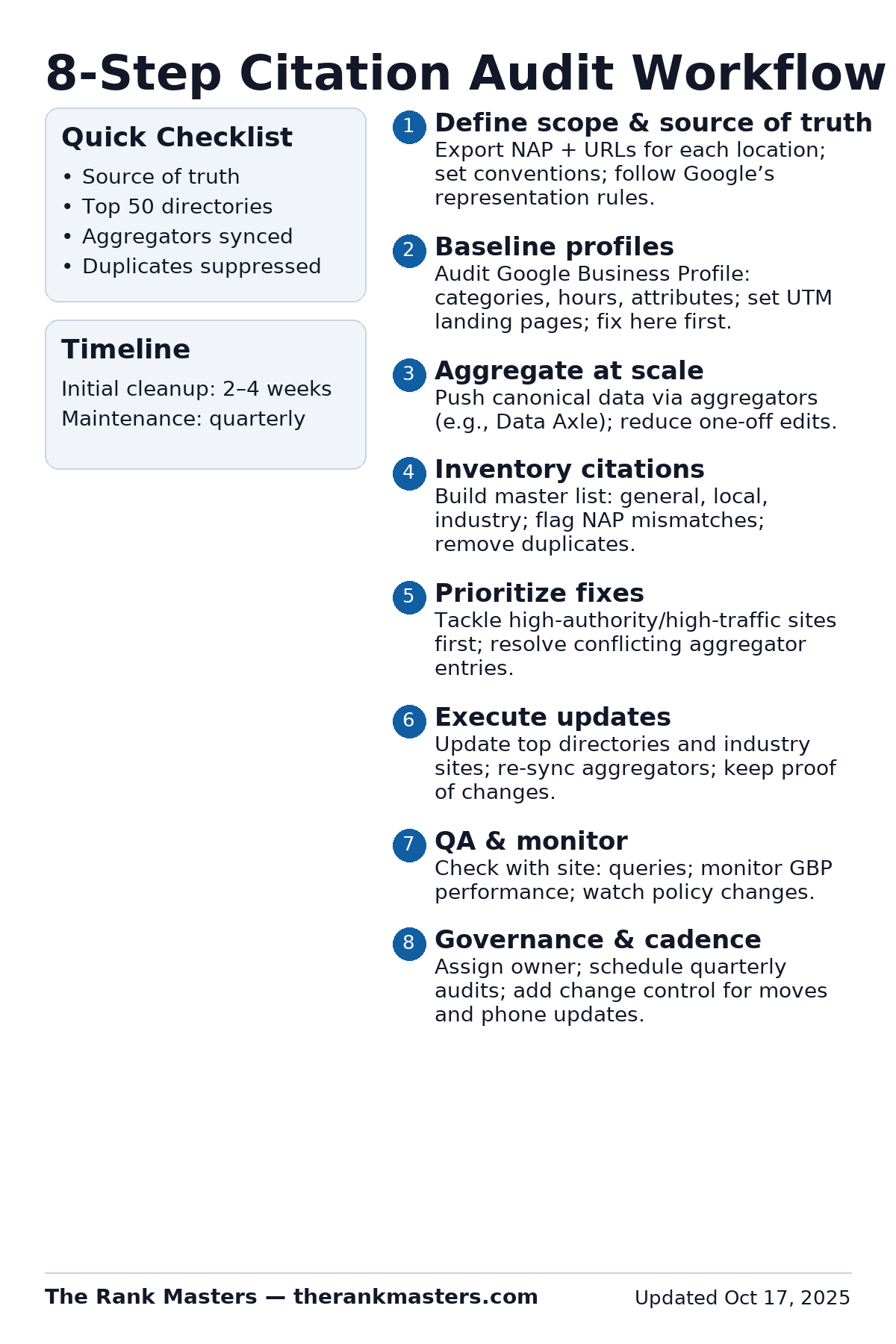
- Define scope & source of truth: Export brand-approved Name, Address, Phone (NAP) and URLs for every location; follow Google’s representation guidelines to avoid inconsistencies.
- Baseline your profiles: Verify Google Business Profile details first (categories, hours, site links); fix here before syndicating.
- Aggregate at scale: Push canonical data via data aggregators (e.g., Data Axle); this feeds hundreds of endpoints and reduces one-off edits.
- Inventory citations: Build a master sheet of existing listings using curated lists (general + location-specific) and flag NAP mismatches and duplicates.
- Prioritize fixes: Tackle high-authority/high-traffic directories and conflicting aggregator entries first; enforce a brand NAP style guide.
- Execute updates: Correct NAP/URL on top directories and industry sites, then re-sync aggregators; document proof (screenshots/confirmation emails).
- Quality assurance: Spot-check in Google (site: queries), monitor GBP performance, and watch for fake-review crackdowns that may affect visibility.
- Governance & cadence: Assign an owner, quarterly audits, and change-control (e.g., openings/moves/phone changes). For multi-location brands, schedule bulk updates before seasonal campaigns.