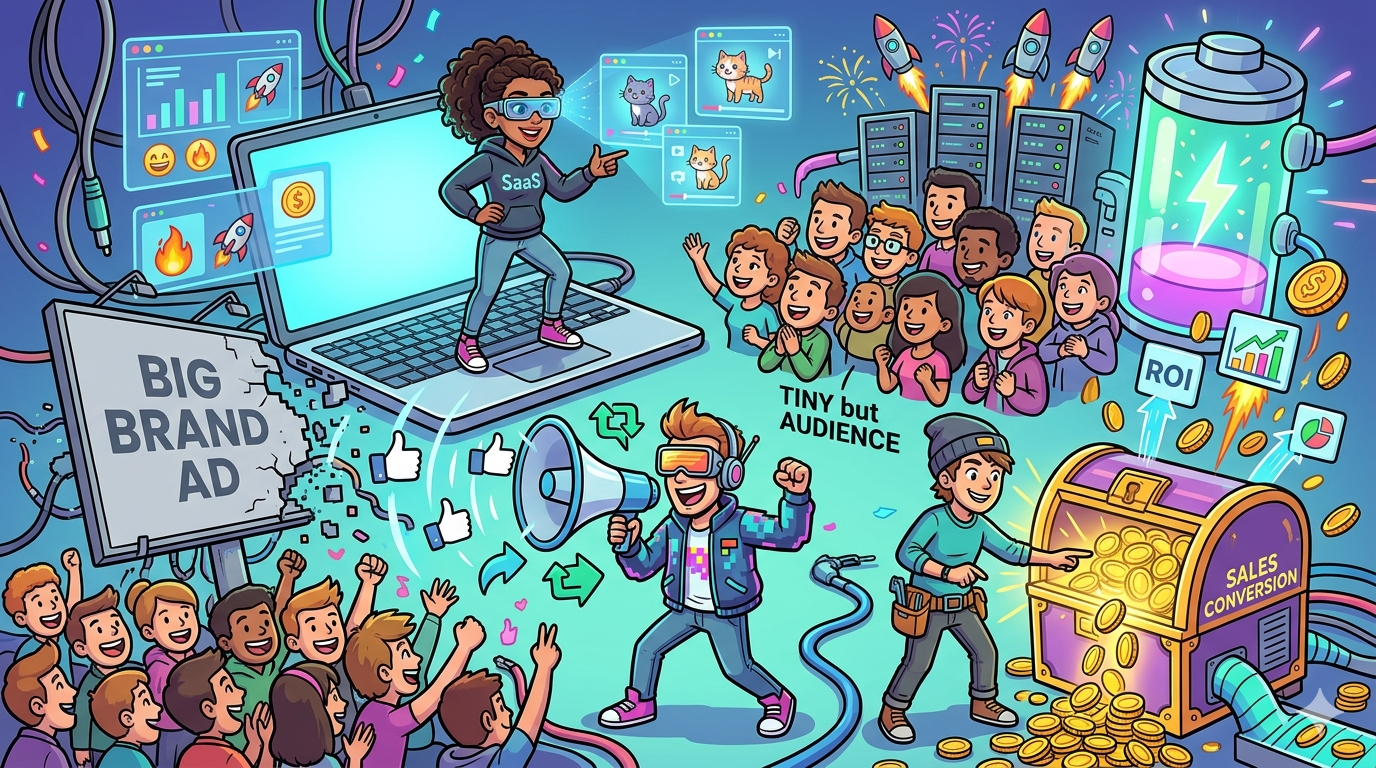
In the glitzy early days of social media marketing, the strategy was simple: go big or go home. Brands scrambled to sign six-figure deals with celebrities and "mega-influencers" boasting millions of followers, assuming that massive reach automatically equated to massive sales.
But as we move through 2026, the digital landscape has shifted. The "bigger is better" myth has been debunked by a more potent, localized force: the micro-influencer. These creators, typically defined by having between 10,000 and 100,000 followers, are no longer the "budget option"; they are the primary engine driving high-conversion marketing.
Whether you are a startup founder using an AI flyer designer to kickstart your local promotion or a global marketing director reallocating millions in ad spend, understanding the gravity of this shift is essential for survival in today’s attention economy.
The "Trust Gap": Why Small is the New Big
The most significant advantage micro-influencers hold over their celebrity counterparts isn't their price tagit’s their relatability.
Recent data shows that as a creator’s follower count increases, their engagement rate paradoxically tends to drop. While a mega-influencer might see engagement rates hover around 1.2%, micro-influencers often boast rates between 3% and 7%. On platforms like TikTok, some "nano" and micro-creators are even touching 11% engagement.
Why does this happen?
- Direct Interaction: A creator with 20,000 followers can still reply to comments, engage in DMs, and build a genuine community. To their audience, they aren't a distant billboard; they are a trusted peer.
- Niche Authority: Micro-influencers don't try to be everything to everyone. They are the "vegan baker in Seattle," the "mechanical keyboard enthusiast," or the "ethical fashion minimalist." When they recommend a product, it carries the weight of an expert endorsement.
- The End of "Polished" Content: In 2026, audiences are suffering from "aesthetic fatigue." They are scrolling past high-production, studio-lit ads in favor of raw, phone-shot content that feels authentic. Micro-influencers excel at this "lo-fi" storytelling.
Breaking Down the ROI: The Numbers Don't Lie
For brands, the shift toward smaller audiences is a matter of pure math. Influencer marketing now returns an average of $5.78 for every $1 spent, but micro-influencer campaigns specifically often push that ROI to $7.14 or higher.
| Metric | Micro-Influencers (10k-100k) | Mega-Influencers (1M+) |
|---|---|---|
| Engagement Rate | 3% – 7% | 1% – 1.5% |
| Cost Per Post | $100 – $1,200 | $10,000 – $100,000+ |
| Trust Factor | High (Relatable peer) | Moderate (Aspirational/Paid) |
| Conversion Rate | High (Targeted niche) | Lower (Broad reach/Vague intent) |
By spreading a $10,000 budget across 10–15 micro-influencers instead of blowing it on one mid-tier celebrity, brands gain diversified reach. This allows you to test different messaging, reach distinct sub-demographics, and generate a mountain of User-Generated Content (UGC) that can be repurposed for your own social channels.
Actionable Strategies for Partnering with Micro-Influencers
If you're ready to tap into this hidden power, don't just "spray and pray." Success in 2026 requires a surgical approach.
1. Prioritize "Vibe" Over "Vanity"
Stop looking at the follower count. Instead, look at the comment-to-like ratio. Are the followers actually talking? Are they asking questions about the products shown? If a creator has 50,000 followers but only gets three generic comments per post, those followers are likely "ghost" accounts or bought bots.
2. Move from "One-Offs" to "Ambassadors"
The "one-and-done" sponsored post is dying. Consumers need to see a brand multiple times before trust is established. The most successful brands are signing micro-influencers to long-term partnerships (3–6 months). This allows the influencer to integrate the product naturally into their life, making the recommendation feel like a genuine preference rather than a script.
3. Grant Creative Freedom
The biggest mistake brands make is handing a creator a rigid script. Micro-influencers know their audience better than you do. Give them a creative briefnot a teleprompter. Tell them the key benefits you want to highlight, but let them choose the music, the lighting, and the "hook."
Pro Tip: Ask your influencers to share their "analytics" screenshots from the last 30 days before signing. You want to see the "saves" and "shares" metrics, as these are much stronger indicators of intent than simple likes.
The Future: AI and the Micro-Influencer Ecosystem
As we look toward the rest of 2026, the barrier to entry for influencer marketing continues to drop. Brands are now using AI tools not just for finding influencers, but for optimizing the content they produce.
From using AI to analyze which video hooks perform best to utilizing automated platforms that track ROI in real-time, the "small audience" strategy is becoming more scientific. Interestingly, some brands are even finding success by partnering with virtual micro-influencers AI-generated personalities that offer 100% brand safety and high engagement within specific digital subcultures.
Conclusion: The Power is in the Connection
The "Hidden Power" of the micro-influencer isn't a secret anymore, it's a proven standard. In a world where we are bombarded by thousands of ads daily, we have learned to tune out the noise and tune into the people we trust.
For brands, the message is clear: Stop chasing the spotlight and start chasing the connection. By investing in the small but mighty voices of the internet, you aren't just buying an ad; you're joining a conversation. And in 2026, the conversation is where the profit lives.
How is your brand approaching influencer marketing this year? Are you still betting on the big names, or are you finding success in the niches?