

If you’ve ever stared at your Surfer SEO invoice and thought, “Is this really my best option?” it’s a signal to explore what else is out there.
Surfer helped kick off the era of data-driven content optimization, but pricing, limits, and the explosion of AI SEO tools mean it’s no longer the default choice for every team.
Today, there are Surfer SEO alternatives that are cheaper, more flexible, or simply a better fit for how modern content teams work especially in an AI-first world where you need to rank in Google and show up in AI overviews and SGE.
If you’re also rethinking your stack for AI search, this blog pairs nicely with our breakdown of Best AI SEO tools.
In this guide, we’ll break down the best Surfer SEO alternatives by what they do, who they’re for, and how they plug into an AI-powered content workflow.
From premium editors like Clearscope to budget-friendly options like NeuronWriter and specialist tools like PageOptimizer Pro, you’ll see exactly which tool matches your team, your budget, and your growth goals without wasting months testing the wrong software.
And if you’d rather have a specialist run the entire stack for you, you can always hand this off to a dedicated SaaS SEO agency.
💡 Key Takeaway
- You have plenty of strong Surfer SEO alternatives - AI-first tools (Rankability, Frase), premium editors (Clearscope), all-in-ones (SE Ranking, Semrush), and budget options (NeuronWriter, Dashword).
- Choose based on your stage and needs: solo/freelancer, in-house team, or agency/enterprise—not on hype or brand.
- Keep your stack small but sharp, test 2–3 tools on real content, and stick with the one your team actually uses and that reliably improves rankings.
Table of Contents
What Is Surfer SEO & Why Look for Alternatives?
Surfer SEO is a data-driven content optimization platform that analyzes top-ranking pages and gives you on-page recommendations: word count, headings, NLP terms, internal links, and more. It’s popular with agencies and content teams because it ties keyword research, content briefs, and optimization into one workflow.
But Surfer isn’t perfect for everyone. Common reasons people look for alternatives include:
- Pricing (especially for small teams and freelancers)
- Limits on content editors or users per plan
- Feature overlap with existing tools (Semrush, Ahrefs, etc.)
- Desire for more AI writing features or a simpler interface
Alternatives fall into two broad buckets:
- Content optimization tools (closest to Surfer: Frase, Clearscope, MarketMuse, NeuronWriter, etc.)
- All-in-one SEO platforms with writing assistants (SE Ranking, Semrush, SEOmator, Ahrefs, SEO.ai, etc.)
If your real goal is to future-proof your content for AI overviews and answer engines “not just blue links” consider pairing whichever tool you choose with dedicated Answer engine optimisation services so your best pages are engineered to show up in AI results too.
Best Surfer SEO Alternatives at a Glance in 2025
Rankability – Best overall Surfer alternative for AI-era content optimization
Frase – Best for combining AI writing with SEO editor
Clearscope – Best for ultra-polished content for competitive SERPs
SE Ranking – All-in-one SEO platform that can replace multiple tools
Semrush Writing Assistant – Best if you already live inside Semrush
MarketMuse – Enterprise content strategy and topic clusters
NeuronWriter – Best budget-friendly / “freemium” Surfer alternative
Content Harmony – Best for content briefs & workflows
Dashword – Simple, lean content optimization for growing teams
PageOptimizer Pro – On-page SEO testing for serious tinkerers
SEOmator, SEO.ai, Ahrefs & others – Great if you want broader SEO capabilities with some content help
1. Rankability
What it does?
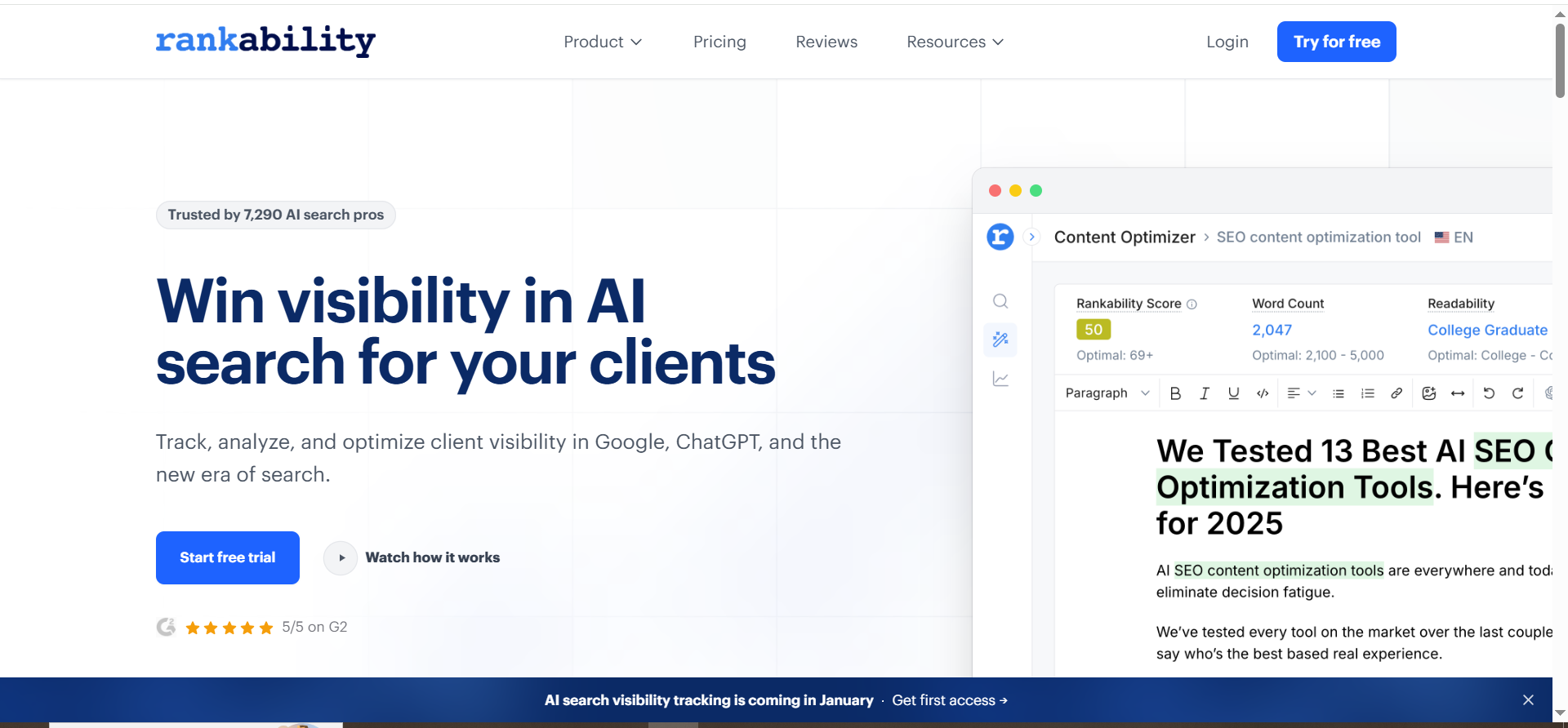
Rankability is an AI-powered SEO content optimization platform built for agencies and in-house teams. It combines keyword research, SERP and AI-search analysis, content briefs, and a content editor into one workflow. The goal is to help you win visibility in both Google search and AI answer engines.
Why teams use it?
Teams use Rankability to replace a patchwork of Surfer-style tools, spreadsheets, and manual research. It gives clear, plain-language recommendations instead of raw data dumps, so writers and SEOs can collaborate easily. Agencies like the credit-based plans and collaboration features that scale across many clients.
Who is this tool for (ICP)?
Best suited to teams that already care about SEO and content quality:
- SEO and content agencies managing multiple clients
- In-house content teams publishing at scale
- SEO consultants wanting a Surfer alternative with AI-search focus
How this tool fits in this AI-first era?
Rankability is built around the idea that you must show up in search results and AI overviews. It analyzes both SERPs and AI answer surfaces, then bakes that into briefs and optimization scores. That makes it a good “control center” for AI-era SEO.
- Tracks and optimizes for AI search visibility
- Emphasizes topical and entity coverage over keyword stuffing
- Uses AI to speed research and briefs while keeping humans in charge
How does Rankability work?
You enter a keyword, Rankability analyzes top results (and AI answer surfaces where available), then generates a brief and optimization report. Writers draft in the editor (or paste content in) and improve an SEO score by hitting recommended headings, terms, and intent. Dashboards and credits control usage across projects and clients.
Free tier?
No permanent free plan, but free trial available.
Strengths?
- AI-search focused optimization, not just blue links
- Intuitive briefs and scoring that writers actually use
- Very strong user ratings on G2 and Capterra (5.0/5).
Weaknesses?
- Newer brand vs. legacy SEO platforms
- Fewer integrations and tutorials than Semrush/Ahrefs
- Credit-based usage needs a bit of planning for very high volume teams
Key capabilities?
- AI-powered content editor with topic/entity suggestions
- Content briefs and SERP + AI-search analysis
- Content performance and AI visibility tracking
Pricing snapshot?
- Core – from $149/mo
- Pro – around $249/mo
- Agency – around $449/mo
Best for?Rankability is best for agencies and serious in-house teams that want a Surfer-style editor updated for the AI era. If you care about being cited by AI tools as well as ranking in Google, this is one of the most focused platforms available.
2. Frase
What it does?
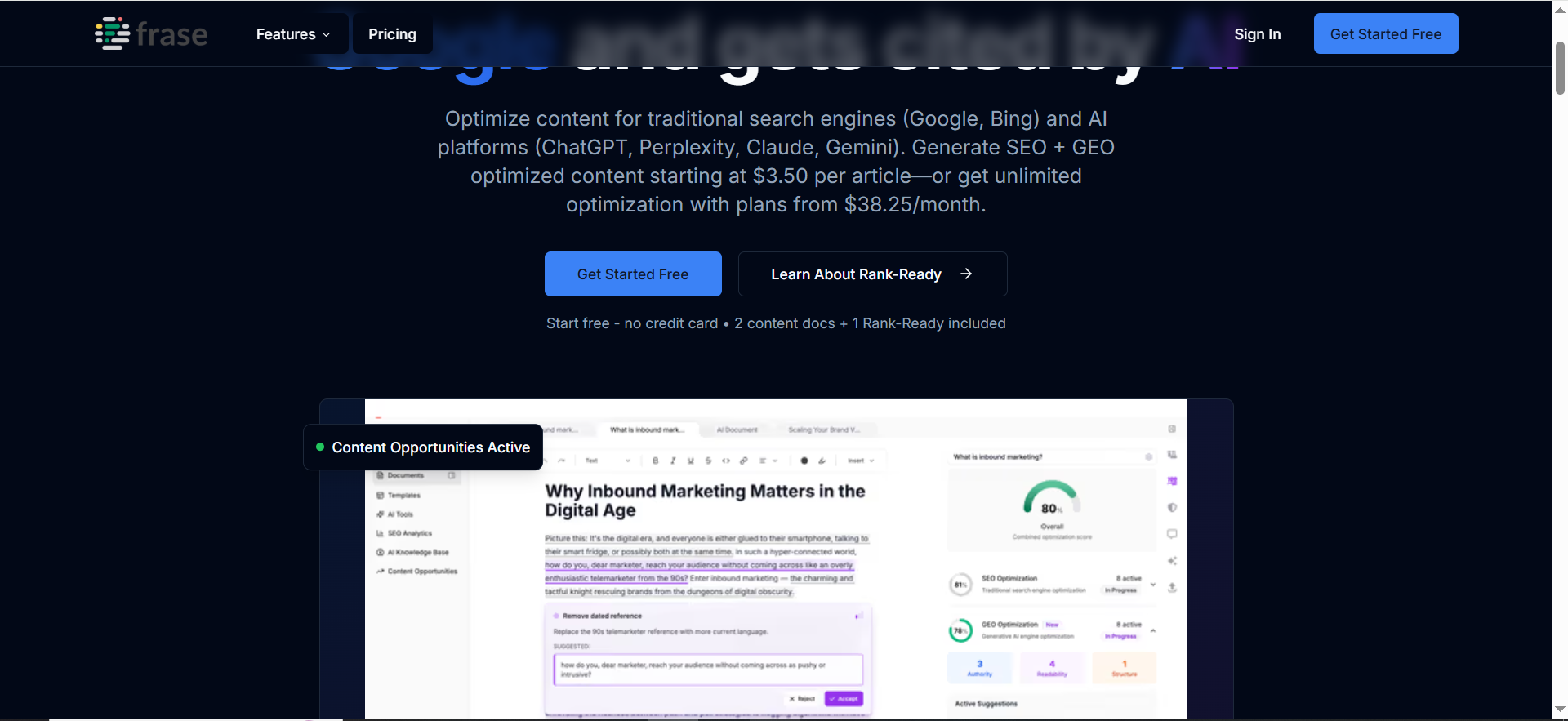
Frase is an AI SEO platform that helps you research, outline, write, and optimize content in one interface. It scrapes top-ranking results, extracts headings and questions, then turns them into briefs and an AI-assisted editor. It’s designed to cut SERP research from hours to minutes.
Why teams use it?
Teams use Frase to tie together keyword research, SERP analysis, and AI writing. Strategists create briefs, writers draft in the editor with AI, and SEOs monitor performance and opportunities. It’s especially popular with content teams that publish lots of blog posts and landing pages
Who is this tool for (ICP)?
- Solo creators and freelancers wanting an all-in-one AI + SEO writer
- Content teams who want briefs + editor + AI in one place
- Agencies that need to produce optimized long-form content at scale
How this tool fits in this AI-first era?
Frase leans hard into “rank in Google and AI search”, positioning itself around AI search tracking and AI-aware optimization. It turns SERP + AI insights into concrete outlines and content scores, so your AI-assisted drafts still align with real demand.
- Tracks where your pages are cited in AI tools (higher plans)
- Uses AI heavily but anchors it in SERP data
- Reduces manual SERP research for every new article
How does Frase work?
You plug in a keyword, Frase builds a research doc with competitor content, headings, and questions. From there, you generate a brief or outline, then write in the editor with AI assistance and an SEO score. Higher tiers add content analytics and AI search tracking.
Free tier?
- No permanent free plan
- Start-free / trial available (no card for initial trial).
Strengths?
- All-in-one flow: research → brief → AI draft → optimize
- Strong AI tools tuned for SEO, not just generic copy
- Very high user satisfaction (G2 4.8/5).
Weaknesses?
- Busy interface for brand-new users
- Not as deep in technical SEO as full suites
- Best value when you really lean on it as your main content hub
Key capabilities?
- SERP-based briefs and topic research
- AI content editor with SEO scoring
- Question mining, topic clusters, content opportunities
- Optional AI search tracking
Pricing snapshot?
- Starter – about $45/mo
- Professional – about $115/mo
- Scale – about $195/mo
Best for?
Frase is best for teams who want one primary place to plan, write, and optimize SEO content using AI. If your main output is blog posts and informational content, it can easily replace Surfer + a separate AI writer.
3. Clearscope
What it does?
Clearscope is a premium content optimization tool focused on best-in-class content grading and term suggestions. It analyzes top-ranking pages, surfaces relevant topics and entities, and scores your content from F to A++. It integrates directly with Google Docs and WordPress.
Why teams use it?
Teams use Clearscope when content quality is non-negotiable and budgets can support a premium tool. Writers love the clean, distraction-free editor; SEOs love the accuracy of term suggestions. Many enterprise and high-competition sites standardize on Clearscope to keep content consistently excellent.
Who is this tool for (ICP)?
- Mid–large content teams with multiple writers
- SaaS, finance, health, and other competitive verticals
- Agencies producing premium articles and pillar content
How this tool fits in this AI-first era?
Clearscope focuses on semantic coverage and search intent, which both Google and LLMs care about. You can generate drafts with general AI tools, then run them through Clearscope to ensure they cover the right entities and topics.
- Ideal “second step” after AI draft creation
- Helps your pages look authoritative to AI overviews
- Keeps writer workflow in Docs/WordPress while adding data-driven guidance
How does Clearscope work?You create a “report” for a keyword, get a list of recommended terms and competitors, then write in the Clearscope editor (or its Docs/WordPress add-ons) to hit an A-level grade. Reports are the main usage unit, so teams plan around how many pieces they optimize each month.
Free tier?
- No ongoing free plan
- Demo/trial usually available on request.
Strengths?
- Extremely accurate, intent-focused term suggestions
- Very writer-friendly UI and integrations
- Top-tier reputation and ratings (G2 4.9/5).
Weaknesses?
- Higher pricing than many alternatives
- Not a full SEO suite (no link/technical tools)
- AI writing features are lighter than newer AI-first tools
Key capabilities?
- NLP-powered topic and term discovery
- Letter-grade scoring with readability cues
- Google Docs and WordPress add-ons
- Content inventory features on higher tiers
Pricing snapshot?
- Essentials / Starter – around $189/mo
- Business – around $399/mo+
- Enterprise – custom
Best for?
Clearscope is best for teams where each piece of content has to justify its cost and compete in tough SERPs. If you already have keyword and technical tools and just want the strongest content editor, this is often the pick.
4. SE Ranking
What it does?
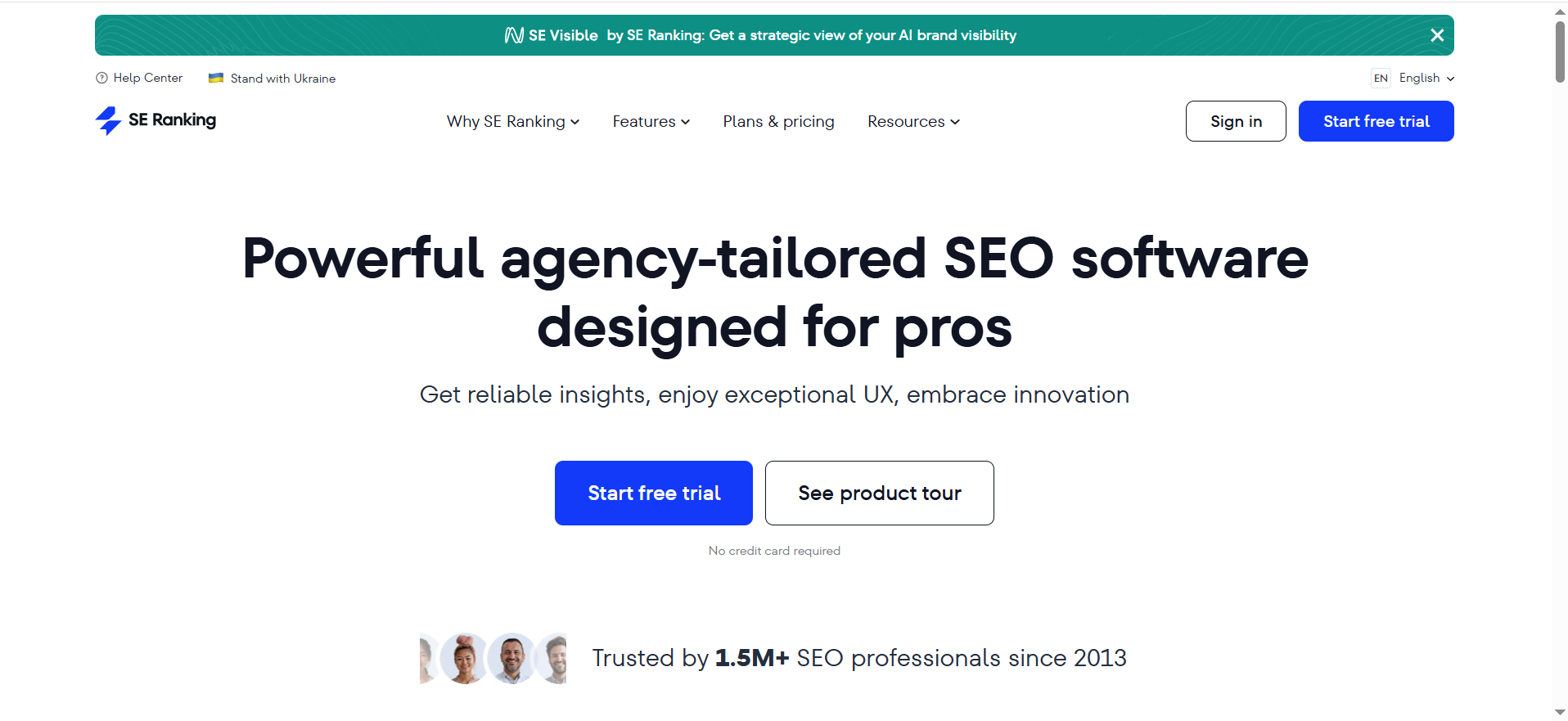
SE Ranking is an all-in-one SEO platform that includes rank tracking, keyword research, site audits, backlink monitoring, and on-page/content tools. It aims to give SMBs and agencies a single hub for most SEO tasks.
Why teams use it?
Teams use SE Ranking because it combines many separate tools (rank tracker, audit, research, reporting) into one subscription at a mid-range price. It has a reputation for being powerful but less overwhelming than enterprise suites. Agencies like the white-label reporting and project structure.
Who is this tool for (ICP)?
- Freelancers and agencies needing a full SEO toolkit
- In-house SEOs at SMBs and mid-market companies
- Teams wanting rank tracking + audits + content tools in one place
How this tool fits in this AI-first era?
SE Ranking acts as the data backbone in AI-heavy SEO stacks. While AI tools help you create content, SE Ranking tracks rankings, visibility, and technical health so you know what’s actually working.
- Solid rank tracking as SERPs get more AI-driven
- On-page checker and content tools to support AI-written pages
- Good reporting layer to communicate results to stakeholders
How does SE Ranking work?
You create projects (sites), add keywords to track, and run audits from the dashboard. From there you can dig into keyword and competitor research, on-page recommendations, and build reports. Content tools help you optimize specific pages using data from its audits and SERP analysis.
Free tier?
- No free plan, but free trial is offered.
Strengths?
- Broad feature coverage in one tool
- Strong reporting and multi-project support
- High G2 rating (4.7/5) and “easiest to use” style awards.
Weaknesses?
- Data depth can still trail Ahrefs/Semrush in some niches
- Content editor is simpler than dedicated Surfer-style tools
- Costs rise with large keyword sets and frequent tracking
Key capabilities?
- Rank tracking and SERP monitoring
- Site audits and on-page checker
- Keyword and competitor research
- Basic content optimization and reporting
Pricing snapshot?
- Essential – from about $52–65/mo
- Pro – from about $95–119/mo
- Business – from about $207–259/mo
Best for?
SE Ranking is best for teams that want one main SEO tool with enough breadth to handle daily work, plus light content optimization. Pair it with a stronger content editor or AI writer and you have a very capable, affordable stack.
5. Semrush SEO Writing Assistant (SWA)
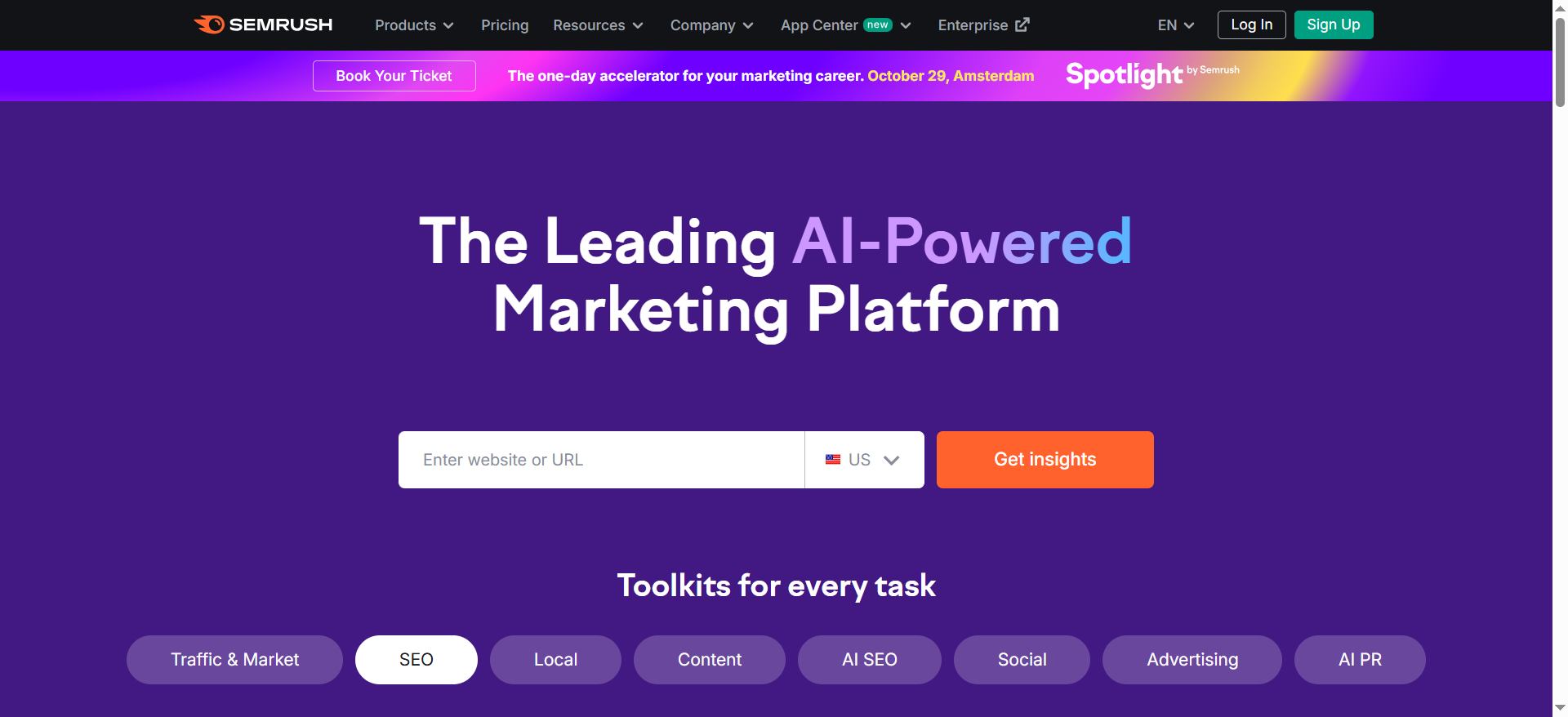
What it does?
The Semrush SEO Writing Assistant is a smart editor that scores your text for SEO, readability, tone, and originality. It uses Semrush’s keyword data to suggest improvements as you write, and works in Google Docs, WordPress, and Semrush.
Why teams use it?
Teams already paying for Semrush use SWA to bring SEO recommendations directly into writers’ workflows. It reduces back-and-forth brief documents and keeps content aligned with keyword strategy in real time. For many, it’s an easy Surfer-style layer without another vendor.
Who is this tool for (ICP)?
- Existing Semrush customers with active content programs
- In-house teams writing mostly in Docs/WordPress
- Agencies that already report and research in Semrush
How this tool fits in this AI-first era?
SWA adds SEO guardrails to AI-assisted writing built on top of Semrush’s deep SERP and keyword data. As SERPs get more AI-heavy, keeping drafts aligned with real intent and competition data matters more.
- Great “check layer” for AI-generated drafts
- Ties content quality to broader Semrush insights
- Helps unify SEO and writing teams under one platform
How does Semrush SWA work?
You connect SWA to your Semrush account and open the add-on in Docs, WordPress, or in-app. Set a target keyword, and the assistant shows an SEO score, recommends semantically related terms, and flags readability or tone issues while you write.
Free tier?
- No full free SWA plan; available via Semrush plans and trials.
Strengths?
- Seamless add-on for teams already using Semrush
- Multi-metric scoring (SEO, readability, tone, originality)
- Backed by Semrush’s huge keyword/SERP database.
Weaknesses?
- Lighter in on-page detail than dedicated Surfer-style tools
- Only truly makes sense if you’re paying for Semrush anyway
- Pricing can be high if you just want SWA alone
Key capabilities?
- Real-time SEO scoring and term suggestions
- Readability and tone feedback
- Plagiarism checks on supported plans
- Integrations with Docs, WordPress, Semrush editor
Pricing snapshot?
- Pro – from about $139.95/mo
- Guru – about $249.95/mo
- Business – from about $499.95/mo
- (SWA is included as part of Semrush’s content toolkit on these plans.)
Best for?
SWA is best for teams that have already standardized on Semrush as their main SEO platform. If that’s you, it’s usually smarter to lean into SWA first before adopting a separate Surfer-style tool.
6. MarketMuse
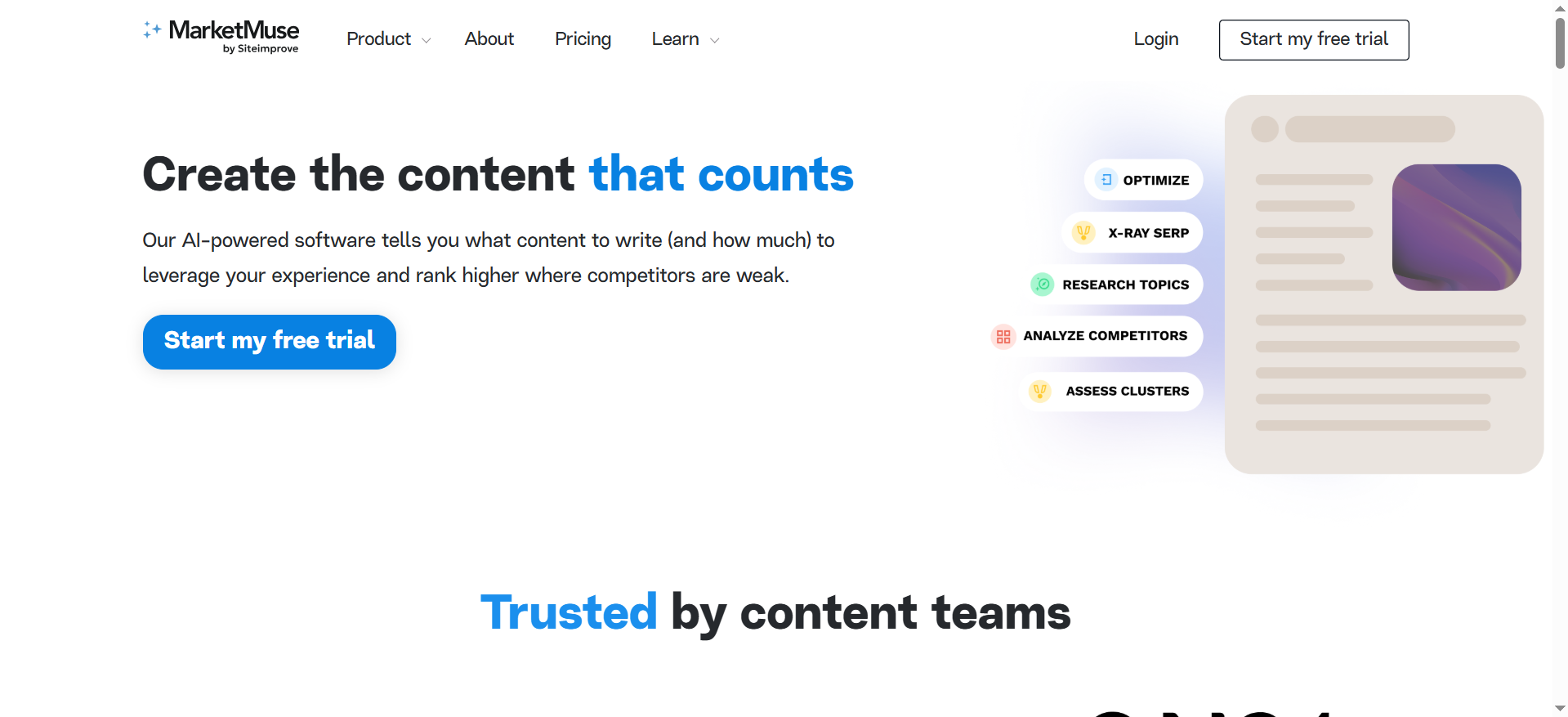
What it does?
MarketMuse is an AI-driven content strategy and optimization platform. It analyzes your entire content inventory, maps topic clusters, and tells you what to write or update to build topical authority. It also generates briefs and offers a content editor.
Why teams use it?
Teams use MarketMuse when they have lots of content and need strategic direction, not just page-level tweaks. It helps prioritize which topics and URLs will deliver the most impact. Enterprise and high-volume publishers rely on it as a “content brain” for their roadmap.
Who is this tool for (ICP)?
- Enterprise content and SEO teams
- Publishers with hundreds/thousands of URLs
- Agencies offering deep content audits and strategy
How this tool fits in this AI-first era?
MarketMuse is all about topical authority and prioritization, which map closely to how both search engines and AI models decide whose content to trust. Instead of churning generic AI content, it tells you what topics and updates will actually move the needle.
- Maps clusters and authority so AI tools see you as an expert source
- Highlights updates and consolidations, not just new posts
- Pairs well with AI writers as the strategic planning layer
How does MarketMuse work?
You connect your site or upload URLs, and MarketMuse analyzes them alongside target topics. It builds topic models, scores pages, and surfaces opportunities. For specific terms, you can generate briefs and optimize in its editor.
Free tier?
- Yes – Free plan with limited queries and 1 user.
Strengths?
- Deep strategic insights for large content libraries
- Strong topic modeling and cluster analysis
- Well regarded by advanced SEO/content teams.
Weaknesses?
- Pricing and complexity can be heavy for smaller teams
- Learning curve to fully leverage its strategy features
- You’ll still want other tools for links/technical SEO
Key capabilities?
- Content inventory and topic mapping
- Briefs and optimization editor
- Difficulty/opportunity scoring and topic clusters
Pricing snapshot?
- Free – $0, 1 user, 10 queries/moOptimize/Standard – around $119–149/mo
- Higher tiers (Research/Strategy/Enterprise) – custom pricing
Best for?
MarketMuse is best for sites with a lot of content and a serious budget. If your challenge is deciding what to write or update to grow organic and AI visibility, it’s one of the strongest strategic tools available.
7. NeuronWriter
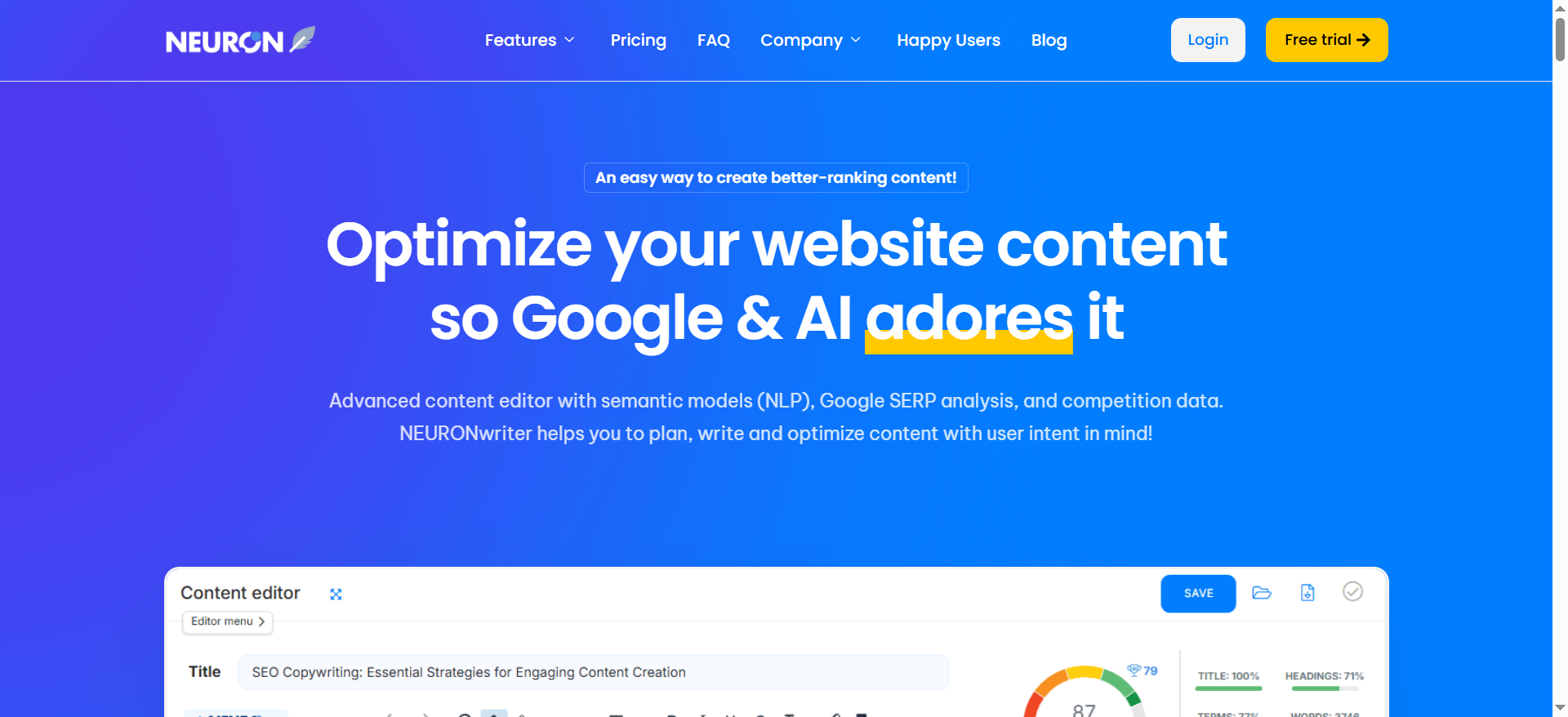
What it does?
NeuronWriter is a budget-friendly SEO content editor + AI writer. It analyzes SERPs, suggests NLP terms and structure, and lets you generate or rewrite content with AI. It’s often pitched as a cheaper Surfer/Clearscope alternative.
Why teams use it?
Teams use NeuronWriter because it offers solid optimization at lower price points. It’s praised for combining usability with enough depth for most SEO content tasks. Freelancers and small agencies find it easy to justify vs. more expensive editors.
Who is this tool for (ICP)?
- Freelancers and solo creators
- Small agencies and micro content teams
- SMB marketers with limited budgets
How this tool fits in this AI-first era?
NeuronWriter blends SERP analysis with AI-writing so small teams can ship lots of content without losing SEO alignment. It nudges you toward semantic coverage that LLMs and search engines both value.
- Affordable way to experiment with AI + SEO workflows
- Entity- and topic-focused suggestions for AI-age SEO
- High ratings across G2, AppSumo, Capterra, Trustpilot
How does NeuronWriter work?
You start with a keyword, NeuronWriter pulls in competitor data and recommended terms, then you write or paste content into its editor. As you adjust headings and content and optionally use AI to draft sections, the optimization score improves.
Free tier?
- No free plan, but free trial available.
Strengths?
- Excellent price/value balance
- Good NLP and optimization guidance
- Very strong user sentiment (often 4.7–4.9/5).
Weaknesses?
- UI is less polished than some premium tools
- Fewer deep integrations and ecosystem resources
- Some advanced features feel lighter vs. enterprise tools
Key capabilities?
- SERP-based content editor with NLP suggestions
- AI-assisted outlining and writing
- Multi-project and multi-language support
Pricing snapshot?
- Lower tiers – from about €19/mo
- Mid tiers – up to about €57/mo
- Top tier – up to about €97/mo
Best for?
NeuronWriter is best for SEOs and writers who understand the basics and just need a capable, affordable editor. If Surfer or Clearscope pricing is the main blocker, this is one of the strongest “value” alternatives.
8. Content Harmony
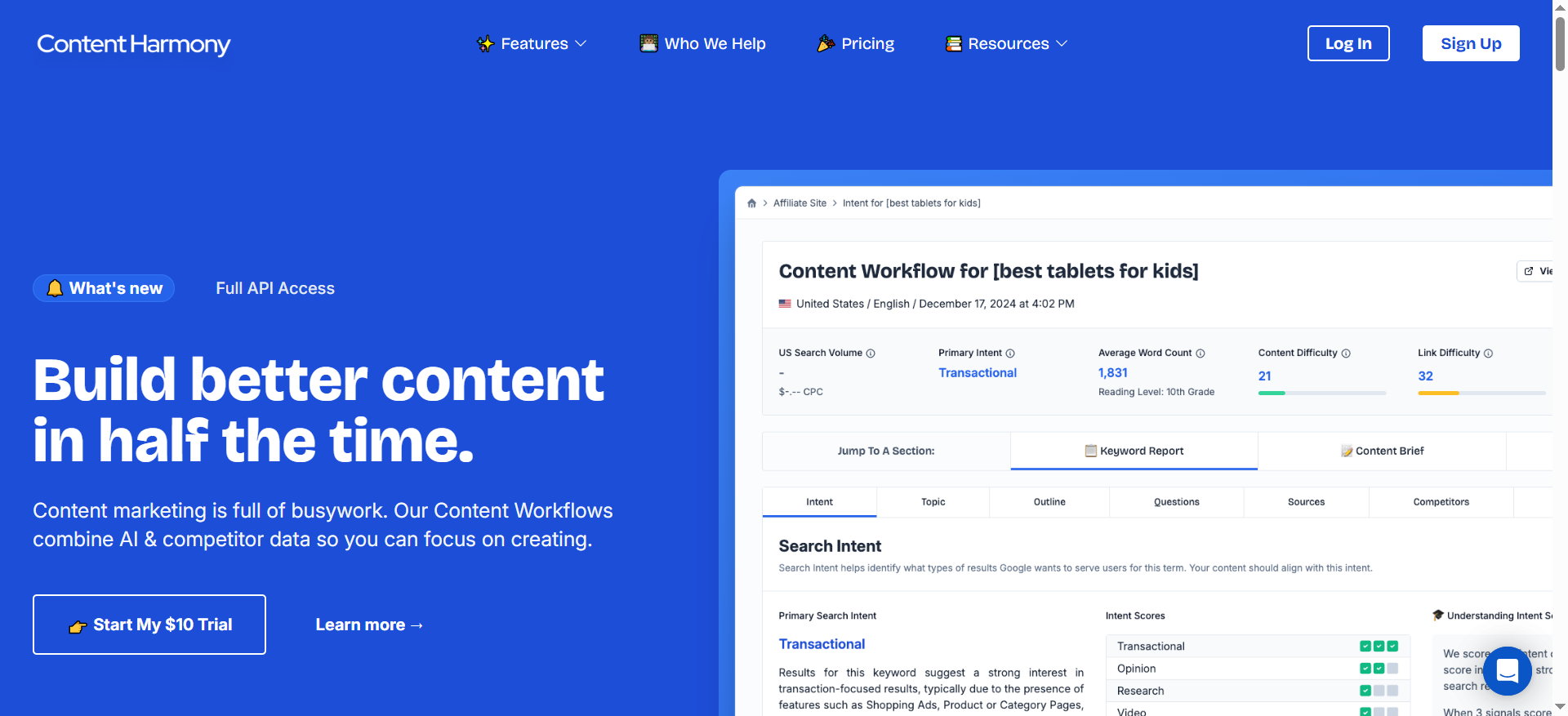
What it does?
Content Harmony is a content research and brief-building tool. It turns a keyword into a detailed report with SERP intent, headings, questions, sources, and outline ideas, plus a grader to check the finished content.
Why teams use it?
Teams use Content Harmony to standardize and speed up the content brief process. It saves strategists hours per keyword and gives writers a consistent, thorough template to follow. Agencies love it for keeping output from many writers aligned and high quality.
Who is this tool for (ICP)?
- Agencies and studios that rely on strong briefsIn-house teams with multiple writers or freelancers
- SEO/content strategists who do lots of SERP research
How this tool fits in this AI-first era?
In an AI-first world, solid briefs are what separate generic AI sludge from truly differentiated content. Content Harmony ensures briefs capture intent, questions, and angles deeply enough that even AI-assisted writing can produce something unique.
- Anchors AI writing in real SERP and user-intent research
- Great “planning layer” between keyword research and AI/editor tools
- Helps maintain editorial standards across many writers
How does Content Harmony work?You enter a keyword, get a research report, and then convert it into a standardized brief. Writers use the brief to draft content, and you can run a final grading pass to check how well it matches the plan and SERP intent.
Free tier?
- No free plan; paid test / trial option instead.
Strengths?
- Excellent, time-saving briefs
- Strong search-intent and question research
- High ratings on G2 and Capterra (≈4.8–4.9/5).
Weaknesses?
- Not a full SEO suite or AI writer
- Feels redundant if your team already has a strong manual brief process
- Pricing can be a stretch for very small teams
Key capabilities?
- Keyword/SERP intent reports
- Brief templates and grader
- Unlimited projects/users per plan
Pricing snapshot?
- Standard – from about $50/mo (5 workflows)
- Pro – about $299/mo (50 workflows)
- Enterprise – from about $1,000/mo
Best for?
Content Harmony is best for teams whose bottleneck is strategy and briefs, not writing. If you manage multiple writers and want every piece to start from a solid, research-backed plan, this is a very strong pick.
9. Dashword
What it does?
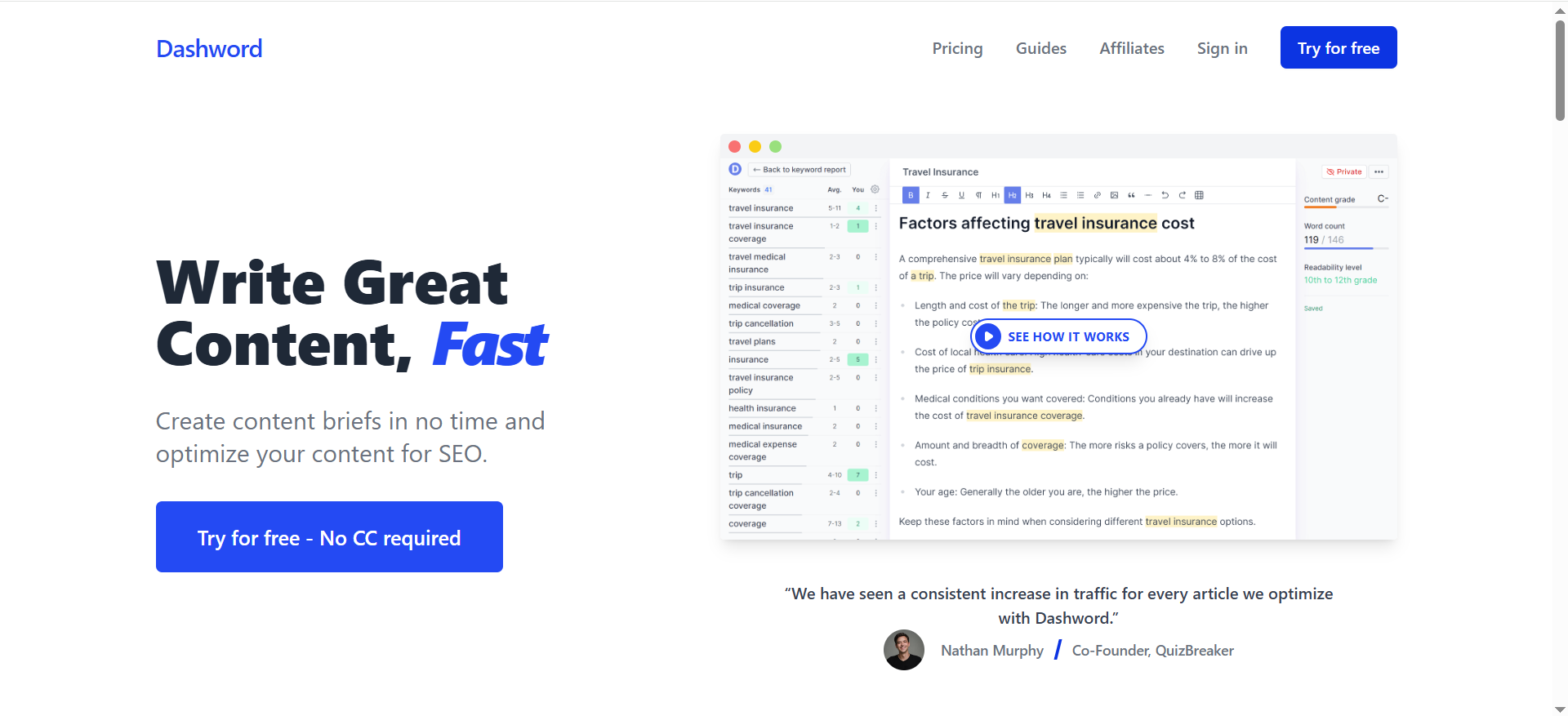
Dashword is a simple SEO content optimization + brief tool with AI assistance. It helps you generate briefs, optimize drafts with a content score, and monitor performance for key articles. It’s intentionally focused on doing content optimization very well, not being a full SEO suite.
Why teams use it?
Teams use Dashword because it’s fast, easy for non-SEOs, and focused on blog-style content. Writers can go from keyword to brief to optimized draft without feeling overwhelmed. Small teams appreciate the straightforward pricing and “SEO without bloat” feel.
Who is this tool for (ICP)?
- Bloggers and small content teams
- Agencies that want a lightweight optimizer for writers
- Marketers who prefer a minimal, easy interface
How this tool fits in this AI-first era?
Dashword gives non-technical marketers a gentle way into AI + SEO content. By pairing AI writing with clear, SERP-based briefs and scores, it keeps AI output aligned with real search opportunities.
- Great for teams experimenting with AI content without a heavy toolstack
- Focused on content optimization instead of trying to be “everything SEO”
- Well-suited as a simple layer on top of general AI models
How does Dashword work?
You enter a keyword, generate a report/brief, then write in Dashword’s editor with a live content score and suggested terms. It also offers basic monitoring to flag underperforming content that needs re-optimization.
Free tier?
- No free plan, but first report is free / trial with some offers.
Strengths?
- Very easy to learn and use
- Solid briefs and optimization for blog content
- Good user sentiment; G2 rating around 4.3 / 5.
Weaknesses?
- Limited pricing tiers and advanced features
- Not a full SEO suite (no deep research, backlink tooling)
- Some users find it basic vs. more comprehensive alternatives
Key capabilities?
- Content brief and outline generation
- Real-time content scoring and NLP suggestions
- AI writer for sections and outlines
- Simple performance monitoring
Pricing snapshot?
- Startup – about $99/mo (≈30 reports, 5 seats)
- Business/Enterprise – from about $349/mo (more reports/seats)
Best for?
Dashword is best for smaller teams and agencies that want a straightforward content optimization tool that writers will actually adopt. If you don’t need a huge SEO suite and just want better blog content faster, it’s a great fit.
10. PageOptimizer Pro (POP)
What it does?
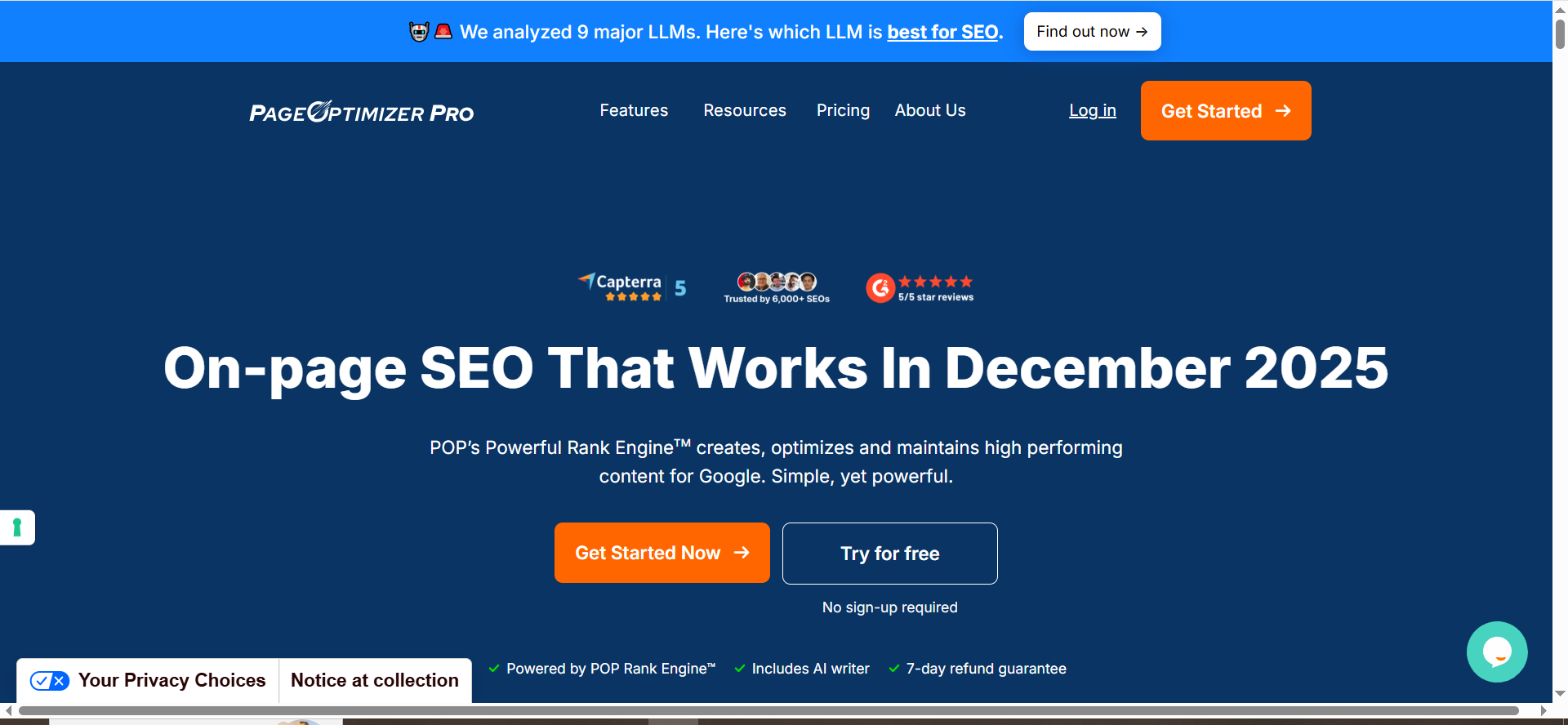
PageOptimizer Pro is a tactical on-page SEO tool. It compares your page to top competitors and produces detailed, correlation-based recommendations on headings, term usage, structure, and more. It’s less about AI writing and more about squeezing extra ranking performance from important pages.
Why teams use it?
Teams use POP when they’re fighting for very competitive keywords and want data-backed on-page adjustments. It’s popular among advanced SEOs who like testable, granular recommendations rather than generic best practices. Many use it as a “finishing tool” after content is already written.
Who is this tool for (ICP)?
- Advanced SEOs and technical marketers
- Agencies with high-value landing pages or “money pages”
- Teams comfortable interpreting detailed on-page reports
How this tool fits in this AI-first era?
Even with AI-dominated SERPs, on-page optimization still moves rankings. POP gives you a precise checklist of changes AI writers won’t catch by default, helping you climb a few spots where it matters most.
- Ideal “optimization step” after AI or human writing
- Especially useful for high-ROI pages and tough SERPs
- Fits neatly as a specialist tool in larger AI + SEO stacks
How does PageOptimizer Pro work?
You enter your URL and keyword, pick competitor pages, and POP runs an analysis. It outputs a score and specific recommendations (e.g., H1/H2 tweaks, term counts, content length). Credits and plan limits control how many reports you can run.
Free tier?
- No free plan; paid membership with 7-day refund and optional credit bundles.
Strengths?
- Highly granular, testable recommendations
- Very strong reviews from pro SEOs
- Great for final tuning of important pages.
Weaknesses?
- Steep learning curve for beginners
- Not a writer or full SEO suite
- Overkill for everyday blog posts
Key capabilities?
- Single-page and multi-page on-page analysis
- Rank Engine recommendations for headings and terms
- Credit system for flexible usage
Pricing snapshot?
- Basic – about $34/mo
- Premium – about $47.50/mo
- Unlimited – about $61/mo
- Teams – around $120/mo
Best for?
PageOptimizer Pro is best for advanced practitioners who already have content and just want to win tight ranking battles. If you’re comfortable with detailed on-page SEO and want an edge on high-value keywords, it’s one of the most respected tools in that niche.
Which Surfer SEO Alternative Is Best for You?
1️⃣ If You’re a Solo Blogger or Freelancer
Top picks: NeuronWriter, Frase, Dashword
- You need low cost, easy UX, and AI help to publish more.
- Frase gives you a strong all-in-one writer + editor; NeuronWriter/Dashword are great if budget is tight but you still want SERP-based guidance.
:If you’re not ready to lock into a tool yet, you can still level up your stack with our roundup of AI content optimization tools for SaaS, starting with this guide on Best AI SEO tools.
2️⃣ If You Run an In-House Content Team
Top picks: Clearscope, Rankability, Content Harmony
- You care about consistency, editor-friendly UX, and collaboration.
- Clearscope or Rankability for the primary editor; Content Harmony for standardized briefs and SERP research.
If you’re an in-house SaaS marketing or content team that wants an external partner to run the whole system, consider working with a specialized SaaS SEO agency instead of juggling tools alone.
3️⃣ If You’re an Agency
Top picks: Rankability, SE Ranking, Semrush
- You need multi-site support, reporting, and client-friendly dashboards.
- SE Ranking or Semrush can replace multiple tools; Rankability gives you a solid content editor that scales across projects.
If your client base is mostly B2B SaaS, partnering with a dedicated B2B SaaS SEO Agency can plug you into proven playbooks while you stay focused on strategy and relationships.
4️⃣ If You’re Enterprise / Managing Hundreds of URLs
Top picks: MarketMuse, Ahrefs + a content editor
- MarketMuse for inventory, topic clusters, and prioritization.
- Pair Ahrefs with a lighter editor (e.g., Clearscope, Frase, or Rankability) for execution.
If you’re sitting on hundreds of under-performing SaaS pages, a focused SaaS content audit & fix sprint is often the fastest way to turn that inventory into an AI-search-ready asset.
How to Migrate from Surfer SEO to a New Tool (5 Simple Steps)
1. Audit How You Currently Use Surfer
List out:
- Which features you rely on (Content Editor, audits, keyword research, etc.)
- How many documents per month you use
- Who in your team touches Surfer (writers, editors, SEOs, clients)
This tells you which features your chosen alternative must replicate so you don’t break existing workflows.
💡 If this feels overwhelming, this is exactly what we do inside our SaaS content audit & fix sprint: map current usage, find gaps, and design a cleaner AI-era stack.
2. Shortlist 2–3 Tools Based on Your Use Case
Using the earlier sections, pick 2–3 tools that best match:
- Your budget
- Your team size
- Your workflow (Docs vs in-app, AI writing needs, etc.)
3. Rebuild Your Templates & Briefs
During trial periods:
- Recreate a few Surfer-style content briefs in the new tool
- Create one standard brief template (sections, questions, internal links)
- Test with real writers and gather feedback
If you’d like a more done-for-you approach to templates, our SaaS content marketing services come with tested brief frameworks your team can plug into immediately.
4. Run a Simple A/B Test
Pick a small set of pages:
- Optimize half with Surfer, half with the new tool
- Keep everything else equal (writer, topic difficulty, publishing cadence)
- Track rankings, clicks, and time-to-publish over 4–8 weeks
5. Roll Out & Document Your New Workflow
Once you’re confident:
- Document your new SOPs: “How to create a brief,” “How to optimize,” “How to hand off drafts.”
- Train your writers and editors on the new interface.
- Phase out Surfer gradually as you shift to the new stack.
When you’re ready to go beyond tool migration and into full-funnel growth, you can always reach out via the The Rank Masters contact form to see how we’d structure your SaaS SEO and content engine end-to-end.
Frequently Asked Questions
Yes, Surfer is still a strong tool - especially for teams that like its integrated workflow across keyword research, clustering, and optimization. But many businesses can get similar or better results with cheaper or more specialized alternatives like Rankability, Frase, or NeuronWriter depending on their needs.
In terms of feature set (SERP analysis + content editor + AI), the closest 1:1 alternatives are Frase, Clearscope, Rankability, and MarketMuse. They all offer NLP-based recommendations and content scoring similar to Surfer.
NeuronWriter, Dashword, and some plans of Frase generally offer more affordable entry points while still providing SERP-based optimization. For ultra-low budgets, combining a basic SEO plugin with general AI tools can also work.
Most top-tier tools (Clearscope, Rankability, Frase, MarketMuse) use similar approaches: scraping SERPs, running NLP on the content, and turning results into topic suggestions and grades. Accuracy differences are usually small; the bigger differences are UX, speed, and pricing.
Yes, if you choose something like SE Ranking, Semrush, or SEOmator, which combine keyword research, rank tracking, site audits, and content tools. The trade-off is that their content editors sometimes feel lighter than dedicated optimization platforms.
Some newer tools, such as Frase and Rankability, explicitly track AI search citations or optimize for AI answer engines, not just Google’s blue links. This is becoming a bigger differentiator across tools
Final Action
Surfer SEO might have been your first step into data-driven content, but it doesn’t have to be your last. Whether you need a modern, AI-native optimizer like Rankability, an all-in-one content hub like Frase, a premium editor like Clearscope, or a budget workhorse like NeuronWriter, there’s now a Surfer SEO alternative for almost every team and budget.
👉 The key is to stop chasing “the best tool” in the abstract and match the right alternative to where you are right now:
- Solo creator or small team? Start with NeuronWriter or Dashword to keep costs down while still getting SERP-driven guidance.
- Growing in-house team or agency? Shortlist Rankability, Frase, SE Ranking, or Semrush SWA as your primary content engine.
- Managing a huge content library? Use MarketMuse or POP as your strategic + tactical edge for prioritization and on-page wins.
From here, you have two options:
- DIY route: Pick 2–3 contenders, spin up free trials, and run a simple head-to-head test on real articles. Watch which tool helps you publish faster, rank better, and ship content your team is proud of, then standardize your workflow around that winner.
- Done-with-you route: If you’d rather skip months of trial and error, partner with a specialist SaaS SEO agency that already knows how to build an AI-first SEO stack for B2B SaaS.
🤙 When you’re ready to turn this comparison into a concrete growth plan, Contact The Rank Masters to map out which tools fit your funnel, where Surfer should be phased out, and how to turn your content into a true acquisition channel.