Most of us prefer images to plain text. Even if you cannot fully agree with this claim right away, you cannot deny the biology — the human brain processes visual information faster and easier than textual information.
That unique trait makes images a highly appealing target and an instrument for link-building. Linking back to an image happens naturally, meaning less outreach effort and a higher likelihood of being shared.
If you’re not yet leveraging image link building, you’re significantly hampering your SEO potential. But you can start right away and get results faster than you expect.
Buckle up, let’s turn images into powerful backlink magnets together!
What Is Image Link Building and Why It Works
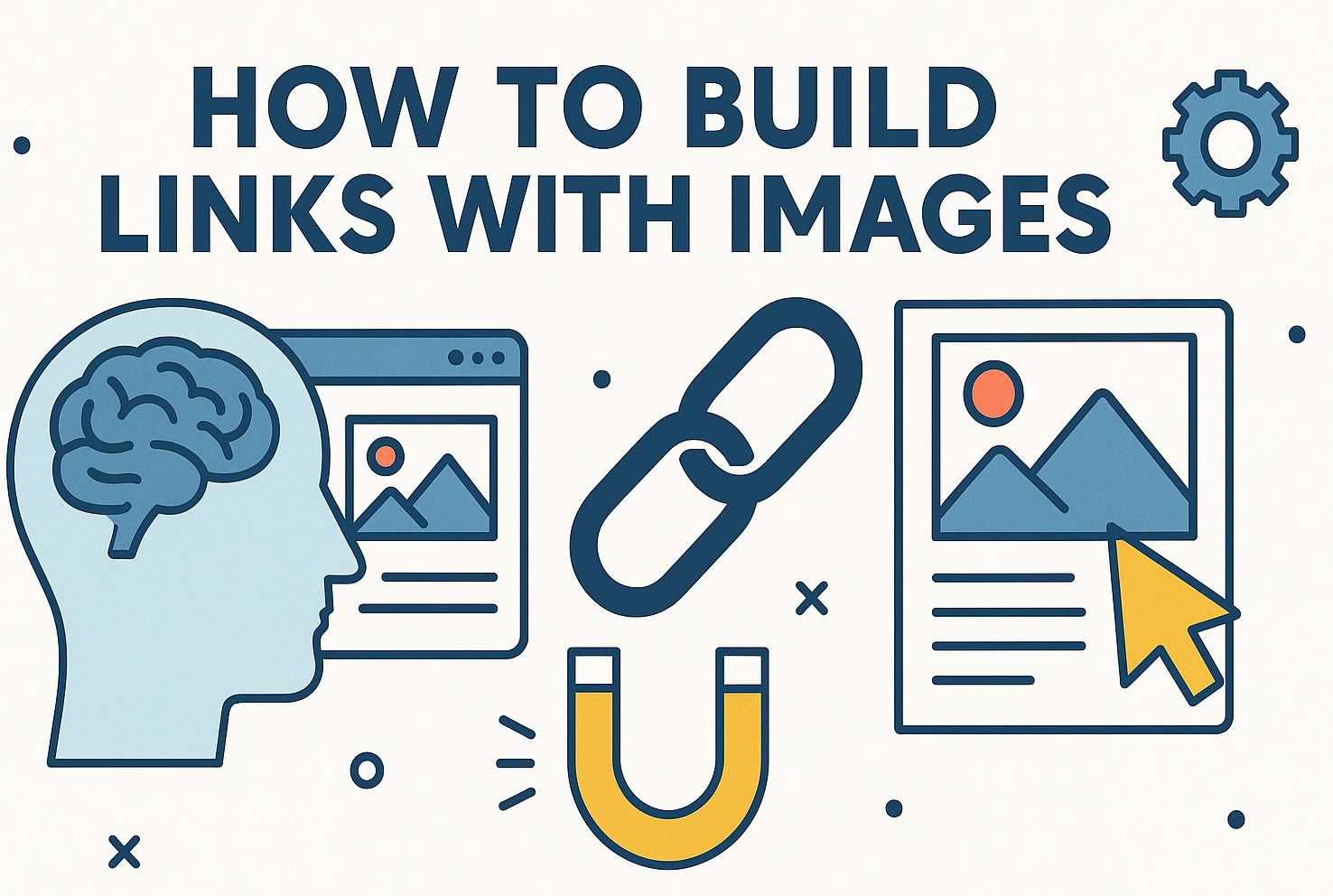
The idea of image link-building is simple: using images as link magnets. A typical process involves creating unique, fresh, informative, and appealing images and posting them on authoritative resources or encouraging others to borrow your images and link back to your website/page.
Unlike blog posts, images don’t require readers to commit time or energy. They communicate value instantly, which is why creators are always looking for visuals to include in their content. If your image helps someone support their point or explain a concept faster, they will use it — and link to you as the source.
Image link building turns your website into a resource hub. The more you contribute helpful visuals, the more your site becomes a reference point across your industry.
Benefits of using images for link building:
- Builds image backlinks from editorial content naturally.
- Positions your brand as an expert source.
- Supports thought leadership without heavy text production.
- Reduces the cost of link acquisition compared to guest posting.
⚠️ Important note: Image link-building is about using full-fledged images like photos, infographics, graphs, etc., and not about using emojis, as some confuse these two.
In short, images work because they solve a problem instantly — and the websites that offer solutions are the ones that get linked.
Types of Images That Attract Backlinks
Not all images are equal in their backlink-attracting power, so to speak. Some image types attract links better than others, for example:
- Infographics and Visual Data.
- Original Photos and Graphics.
- Memes, GIFs, and Viral Visuals.
- Charts and Data Visualizations.
- How-To Graphics and Process Diagrams.
- Maps and Geographic Visuals.
Why do these image types have the ability to naturally generate more links? Because they are the top-performers in these domains: offering unique value, solving informational needs, or visualizing complex topics. No text can compete with them.
For a holistic picture (and for your better understanding), below are the image types that are less effective for backlinks. Avoid them at all costs:
- Generic Stock Photos (offer no informational value worth citing).
- Low-Quality Graphics (reduce trust and are rarely reused).
💡 Bottom line: images that educate, explain, or present original insight perform best.
Next, we’ll cover how to distribute them so they start attracting backlinks on autopilot.
Image-Centered Link Building Strategies You Can Implement
Images are quick to capture attention, and this very feature allows you to get quick results from your link-building efforts utilizing images. Let’s review what you can do already today to start driving traffic to your website or page.
Reverse Image Search Outreach
Don’t let the title intimidate you; it’s actually simpler than it looks. What it means is reclaiming what’s already yours out there. You basically find images made by you, which are used by someone else without proper acknowledgement of your work, i.e., they don’t bother indicating a source.
What you can do is reach out to those resource owners or administrators and politely ask them to link back to your website. The keywords are politely and link back to you.
Here are the most effective steps you can take with this method:
- Identify uncredited usage: Use Google Images or Bing Visual Search to find your visuals across the web.
- Reach out with a simple credit request: Send an email with a polite request to accompany each image with a proper attribution. Luckily, this is not hard for them to cite a source, so your chances of success are decent.
- Offer updated visuals in exchange for a link: Wherever possible, power-up your request with a generous offer to add an updated image with better graphics (both good for you and good for the hosting resource).
The relationship you’ve established can be further capitalized by offering collaboration on joint content creation, including pictures, infographics, and videos.
Through blogger outreach and collaboration with content makers, you gain a lasting competitive SEO advantage. In simple terms, this approach helps you build a network of site owners who now view you as a visual content provider rather than just another site owner asking for image links.
Submitting Images to Visual Directories
If the previous image link building strategy was somewhat reactive, this one is more proactive. It stipulates disseminating your images and photos across niche-relevant directories, thus maximizing their visibility and reach.
More potential clients can see and borrow your images; however, this time, they’ll be obliged to acknowledge your work and link back to you as part of the directory policy, making this a clear demonstration of how to generate links passively using distribution platforms.
The beauty of this approach is that many centralized directories distribute images automatically. Some directories also provide embed codes, which ensure the credit link points directly to your site.
Best practices when using directories include:
- Submit visuals to industry-relevant platforms: Relevance means exposure to your target audience with more potential high-value customers.
- Use SEO-friendly metadata: This includes meta titles, descriptions and informative alt text. The gains are higher search engine visibility and ranking.
- Leverage directories with built-in embed tools: Opt for directories that integrate links into every download.
- Upload multiple image formats: Some image formats are better suited for desktop usage, while others for mobile. By diversifying formats, you maximize your reach.
Submitting images to visual directories is a highly scalable strategy that allows you to upload a single image to an industry-relevant directory in different formats, and it will work by itself, attracting customers and sending you referral traffic.
Best Practices to Optimize Images for Link Acquisition
Besides the visual characteristics and appeal, there are several other things you can do to maximize the SEO potential of your visuals. Namely, giving your images clear names and descriptive alt text.
Using SEO-Friendly File Names and Alt Text
Compared to humans, search engines actually read file names and image alt text. That’s how they complement their knowledge about an image, as their current pattern recognition abilities are not perfect. That means you must give your images clear names and descriptive alt texts, for the sake of SEO results.
When your image is indexed, the URL for an image also becomes a searchable asset, so make sure it includes recognizable keywords instead of random characters.
For instance, if you upload a file called IMG_00293.png, you’re missing an opportunity to rank that image in search and attract links from people looking for visuals on that topic.
🧠 Pro tip: Describe what the image helps the reader do. That small shift — from “what it looks like” to “what it does” — is what makes editors reach for your asset and include a credit.
Also, consider a few other practical tips:
- Name files clearly: Use topic + format.
- Write an alt text = short use case: “Infographic showing the computing power of AI.”
- When naming your images, mirror audience search terms (speak their language!).
- Skip filler words: Be precise.
All the above recommendations equally apply to the meta titles and descriptions. When you finally tidy your metadata, your images will become easier for editors to credit. That tiny clarity nudges reuse and reduces the friction between “I like this” and “I’ll link to it.”
Tracking and Scaling Your Image Link Building Results
After discovery, you want to treat signals as directions. Which images get traction? Which formats convert impressions into links? Use simple logs to answer those questions.
Focus on replication over invention. Once you spot a winning visual, double down and place it where people are already hunting for assets.
🧠 Pro tip: You’ll earn more authority by linking to established resources, which builds trust and encourages others to credit your images with backlinks. This practice will make your visuals feel part of an accountable research ecosystem: rewarding for you personally and good for your brand or product visibility in search results.
Consider implementing these small, repeatable tactics:
- Track image formats that earn the most placements (provided you cared about our earlier advice and published your assets in various formats).
- Build slight variations of winners. People like the variability that comes with what they already like and trust.
- Keep promoting your best images to places where people already look (e.g., sharing those images on platforms, directories, or blogs that feature trusted visual resources).
The Future of Image Link Building
With a high degree of certainty, the future, or the near future, of using images for link building is closely connected with AI-generated visuals. As tools like DALL·E, Midjourney, and open-source diffusion models get exponentially more powerful, anyone will be able to create, replicate, and modify images on the fly.
This has three major implications for the use of images in link-building:
- The value of images will drop. When creation is fast and cheap, anyone, including bots, can do it. For your images to generate links, they must provide exclusive value, for example:
- proprietary data visualizations;
- real-world photos from locations/events;
- research-based infographics.
- Link building will be more about visual authority and less about visual content. AI can create visually perfect graphics, but it cannot create authority. Those creators who own the knowledge and expertise behind visuals will win. What can you do? Several things:
- embed your brand name;
- include unique data sources;
- or use visuals as summaries of complex topics.
- Protection will shift from copyright to traceability. This means that while you cannot protect your creations from being copied and reused by AI, you can still ensure that:
- your original image becomes the canonical reference source;
- copies are detectable via pixel-level fingerprinting or invisible watermarking;
- you retain authority in Google’s index as the originator.
The rise of AI search will continue transforming off-page SEO strategies, making image-based links more valuable than ever. Your success recipe is staying on top of the AI wave, learning new tools and generative models, so that they become the extension of your creative skills.
💡 Bottom line: Either you upskill and learn new AI tools, or your competitors will; the future of image link building belongs to those who act now.
The Key Takeaways
Building links with the help of images is an interesting and emotionally charged topic. It’s a fruitful SEO strategy as well, and we’ve done our best to cover the quick gains (outreach and image reclaiming), and some proactive strategies like using SEO-friendly names and scaling your image link-building results.
Below are the core ideas you should take from this guide:
- Images earn links because they convey value instantly and solve informational needs.
- The best visuals for backlinks are those that contain unique insight, data, or expertise.
- Simple optimization, like file naming and alt text, doesn’t just improve visibility — it directly increases your chances of earning high-authority image backlinks.
- Distributing images through outreach and directories turns them into passive backlink generators.
Finally, as AI systems become more and more capable, only creators with original data and authority will keep earning links. If you own the knowledge and expertise behind visuals, you will win.