

If your ideal customer asks ChatGPT or Perplexity for “the best tools in your category” and your brand doesn’t appear, you’re losing deals long before they ever hit your website. AI assistants have become the new research layer for SaaS buyers—they build vendor shortlists, shape perception, and confidently repeat whatever story they can find about you (accurate or not).
👉 The real problem?
Most SaaS teams still live inside traditional SEO dashboards and have zero visibility into how AI models talk about their product, category, or competitors.
That’s where a new wave of AI visibility tools and specialized Answer engine optimisation services comes in. These platforms track how often, where, and how your brand shows up inside ChatGPT, Perplexity, Google’s AI experiences, and other assistants, and give you clear guidance on how to close the gaps so you’re not silently written out of the shortlist.
In this guide, we’ll walk through the best AI tools for monitoring SaaS brand visibility across ChatGPT and Perplexity, who they’re for, what they’re great at, and how they fit into an AI-first growth stack. We’ll also point you to resources that help you Compare AI SEO tools so you don’t waste budget on the wrong platform.
▶️ By the end, you’ll know exactly which tool (or combo) to use for your stage, budget, and go-to-market strategy, and when it makes sense to bring in The Rank Masters, B2B SaaS SEO Agency for a done-with-you AI visibility plan.
Table of Contents
Best AI Tools for Monitoring SaaS Brand Visibility in ChatGPT & Perplexity
These tools help SaaS companies see when, where, and how ChatGPT and Perplexity mention their brand, competitors, and category - then give you data and recommendations to improve your chances of being recommended in AI-generated answers.
▶️ LLMrefs – Best for:SEO-led SaaS and B2B teams that want keyword-style AI rank tracking across ChatGPT, Perplexity and other engines.
▶️ AIclicks – Best for:SaaS marketers who want AI visibility + concrete GEO/content recommendations, not just dashboards.
▶️ Otterly AI – Best for:Teams that need simple, reliable, cross-engine monitoring (especially Google AI Overviews + ChatGPT + Perplexity) with strong exports.
▶️ Scrunch AI – Best for:B2B/SaaS brands that care about narrative control and fixing misinformation in AI answers.
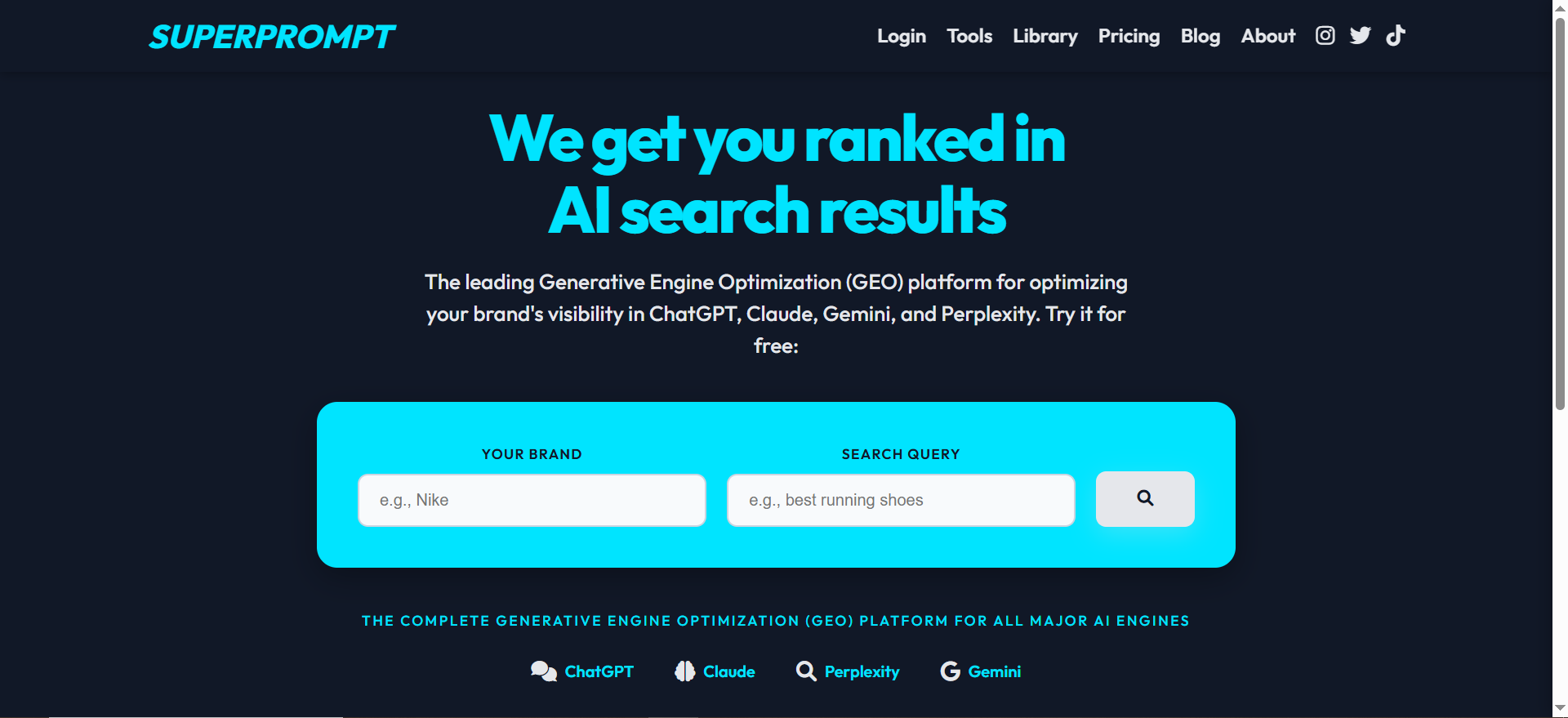
▶️ Superprompt.com – Best for:AI-mature orgs and agencies running multi-assistant experiments across many LLMs (ChatGPT, Claude, Perplexity, Gemini, Copilot, etc.).
▶️ Sight AI – Best for:Content-heavy SaaS teams that want AI visibility insights to directly drive their content roadmap.
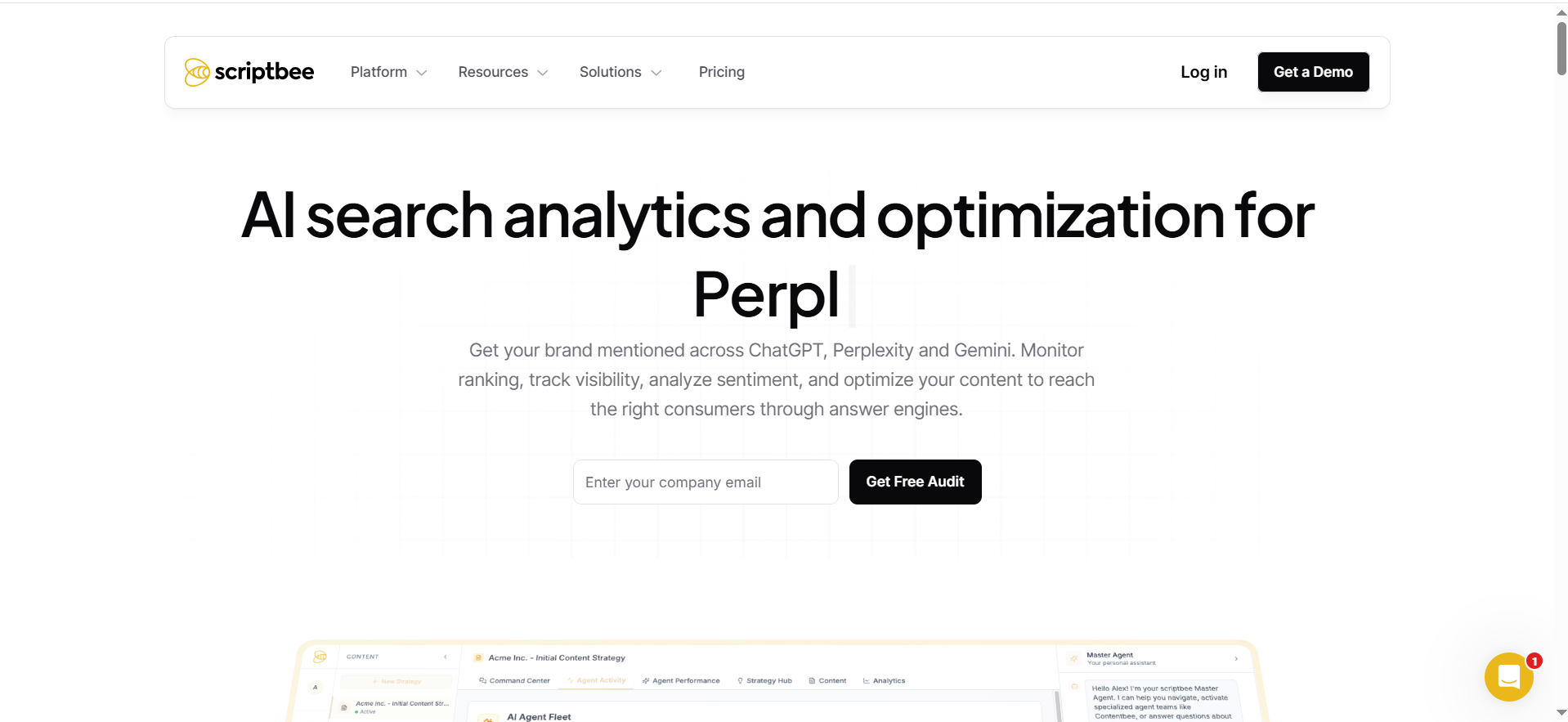
▶️ Scriptbee – Best for:Lean SaaS teams and agencies wanting an all-in-one AI marketing OS (SEO, GEO, content, social) powered by AI agents.
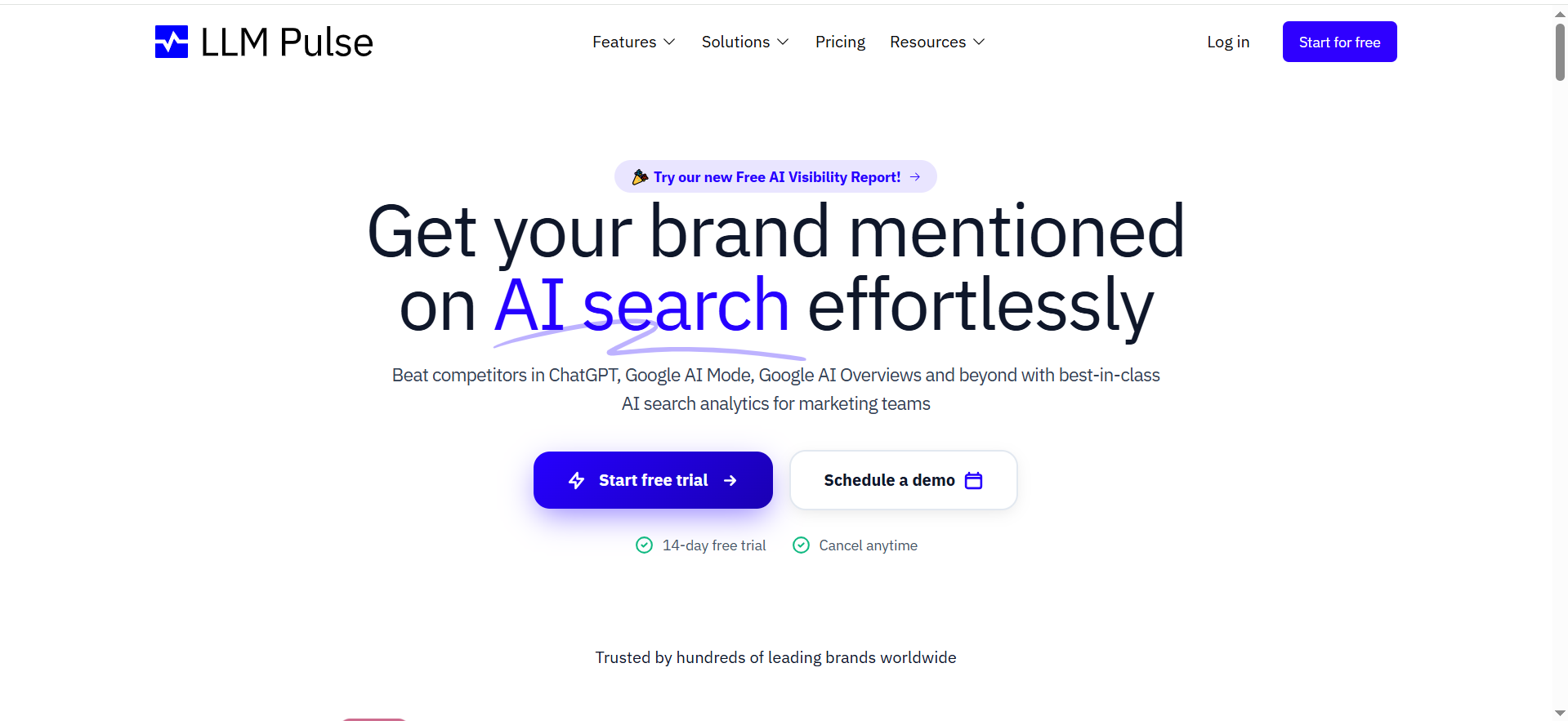
▶️ LLM Pulse – Best for:Brands and agencies that need structured, affordable GEO rank tracking across ChatGPT, Perplexity and Google AI.
▶️ Profound – Best for:Large / enterprise brands that need daily, multi-engine AI visibility with APIs, governance and exec-level reporting.
▶️ Semrush AI Visibility – Best for:Teams already using Semrush who want AI visibility baked into their existing SEO stack without adding a new core vendor.
▶️ Ahrefs Brand Radar – Best for:Ahrefs users who want a lightweight, multi-channel view of brand visibility across AI search, YouTube and Reddit.
▶️ HubSpot AEO Grader – Best for:Any SaaS/B2B team that wants a free, fast snapshot of how AI tools see their brand.
▶️ GenRank – Best for:Budget-conscious or early-stage teams that want a ChatGPT-only visibility starter before investing in bigger GEO platforms.
1. LLMrefs
What it does?
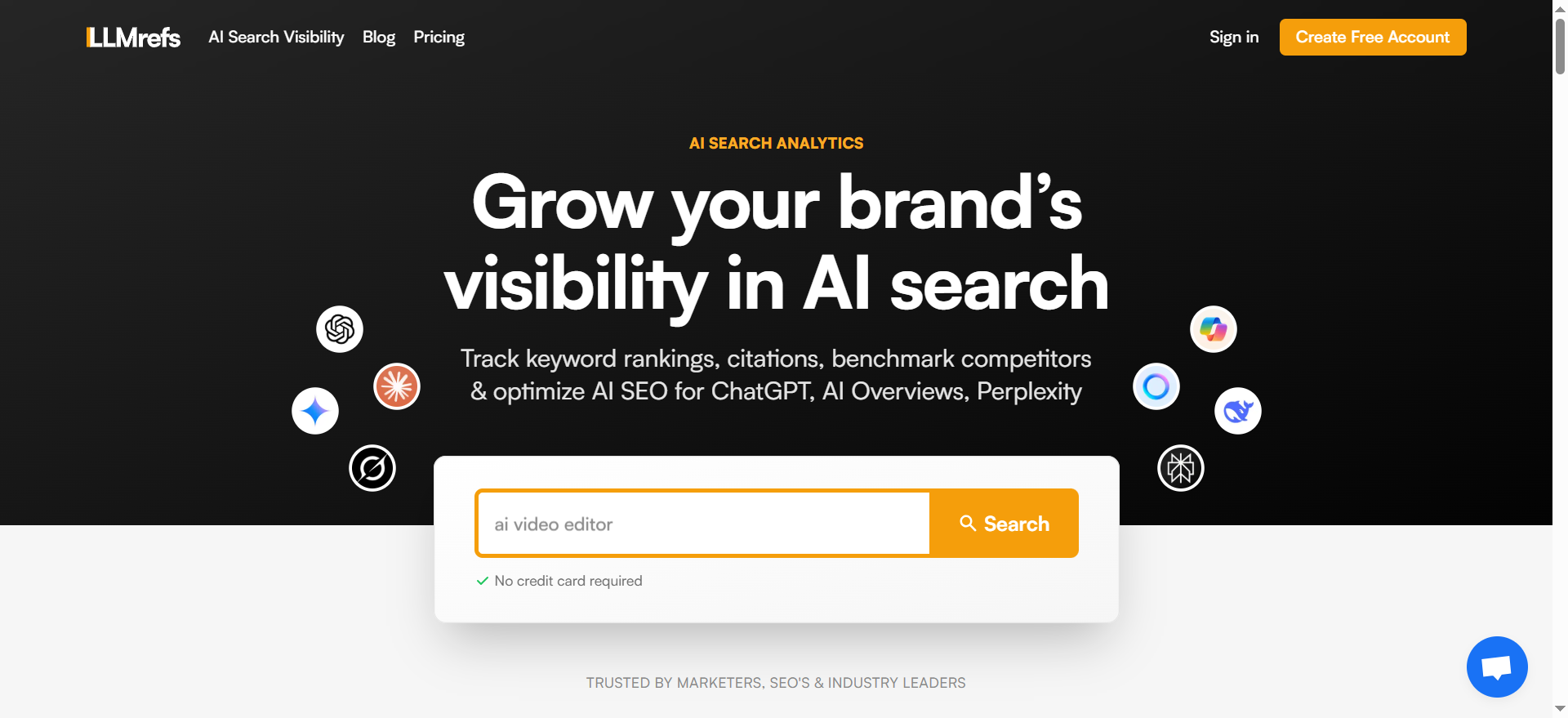
LLMrefs is an AI search analytics and “rank tracking” tool for ChatGPT, Perplexity, Google AI Overviews/Mode, Gemini, Claude and more. It maps your SEO keywords to AI visibility, showing which brands and URLs get cited for each query.
Why teams use it?
Teams use LLMrefs when they want AI visibility to look and feel like classic SEO rank tracking. It’s easy to plug in existing keyword lists, see cross-engine rankings, and export data for reporting.
Who is this tool for (ICP)?
Best for SEO-driven, multi-market teams.
- SEO teams at SaaS/B2B companies
- Growth/content teams working with keyword roadmaps
- Agencies needing AI visibility reporting for multiple clients
How this tool fits in this AI-first era?
LLMrefs gives you a “rank tracker for AI,” so you can see how generative engines treat your important topics, not just Google. That helps you align content and link strategies with AI answers, not just SERPs.
- Extends SEO programs into AI search
- Normalizes AI visibility into scores and keyword reports
- Makes AI performance easy to show in SEO dashboards
How does LLMrefs work?
You add keywords and markets; LLMrefs runs prompts across multiple AI engines, logs mentions/citations, and turns that into rankings and share-of-voice. Data is refreshed on a recurring schedule with CSV export.
Free tier?
Yes.
Strengths?
Great if you think in keywords and rankings.
- SEO-native interface and workflow
- Wide engine + geo/language support
- Easy exporting for custom BI dashboards
Weaknesses?
- Less narrative/sentiment focus
- Can feel rigid if you plan content by “jobs to be done” instead of keywords
Key Capabilities?
- Keyword-based AI rank tracking
- Brand/competitor share-of-voice
- Weekly keyword reports and exports
Pricing snapshot?
- Free – 1 keyword
- Pro – ~$79/mo
- Enterprise – custom
Best for?
LLMrefs is best for SaaS and B2B brands with mature SEO programs that want a direct extension of rank tracking into AI search.
2. AIclicks
What it does?
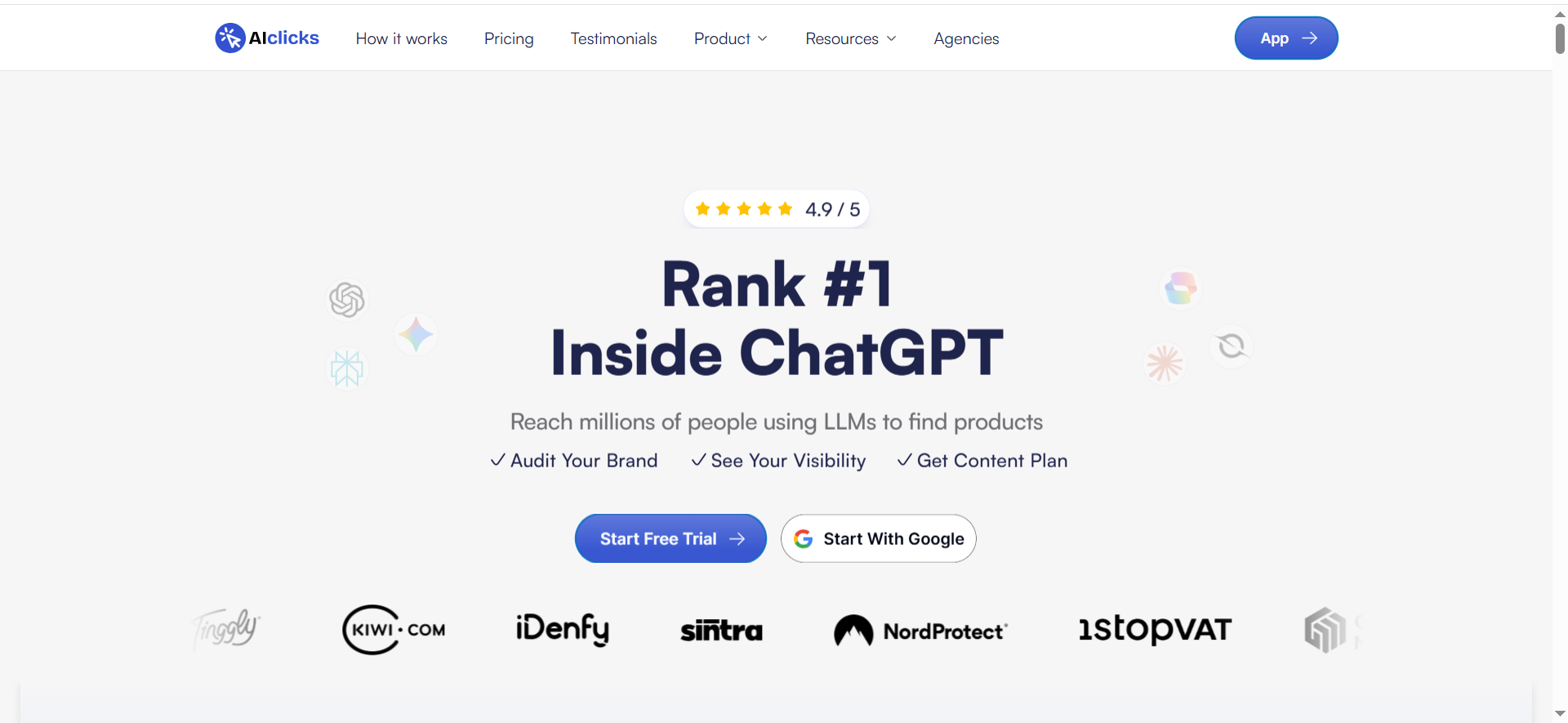
AIclicks is an AI search optimization and visibility tool for ChatGPT, Perplexity and Gemini. It tracks where you appear in AI answers and suggests content and GEO actions to boost your share-of-voice.
Why teams use it?
Teams choose AIclicks when they want visibility data and clear “what to do next.” It’s built around real buyer prompts like “best X tools” and “[tool] alternatives,” which maps nicely to SaaS research.
Who is this tool for (ICP)?
- SaaS marketing and growth teams
- SEO/content agencies selling AI visibility services
- B2B brands focused on comparison and category prompts
How this tool fits in this AI-first era?
AIclicks treats AI assistants as a new “page one” and helps you fight for those top AI recommendations. It shows how often you’re recommended, who’s ahead of you, and which content changes can move the needle.
- Prompt- and topic-based visibility tracking
- Multi-engine coverage (ChatGPT, Perplexity, Gemini)
- Built-in content and GEO recommendations
How does AIclicks work?
You define prompts, keywords and competitors. AIclicks queries AI engines, measures mentions/citations, compares you against competitors, and surfaces optimization opportunities.
Free tier?
No (paid plans + trial).
Strengths?
- Clear, action-focused recommendations
- Strong for “best tools” and “alternatives” prompts
- Good for marketers who want guidance, not just charts
Weaknesses?
- No permanent free tier
- Overkill if you just need a simple visibility sanity check
Key Capabilities?
- Multi-engine AI rank tracking
- Competitor benchmarking
- GEO-informed content suggestions
Pricing snapshot?
- Starter – ~$39/mo
- Pro – ~$89/mo
- Business – ~$189/mo
Best for?
AIclicks is best for SaaS teams seriously competing for top spots in AI answers and wanting a “monitor + optimize” tool in one.
3. Otterly AI
What it does?
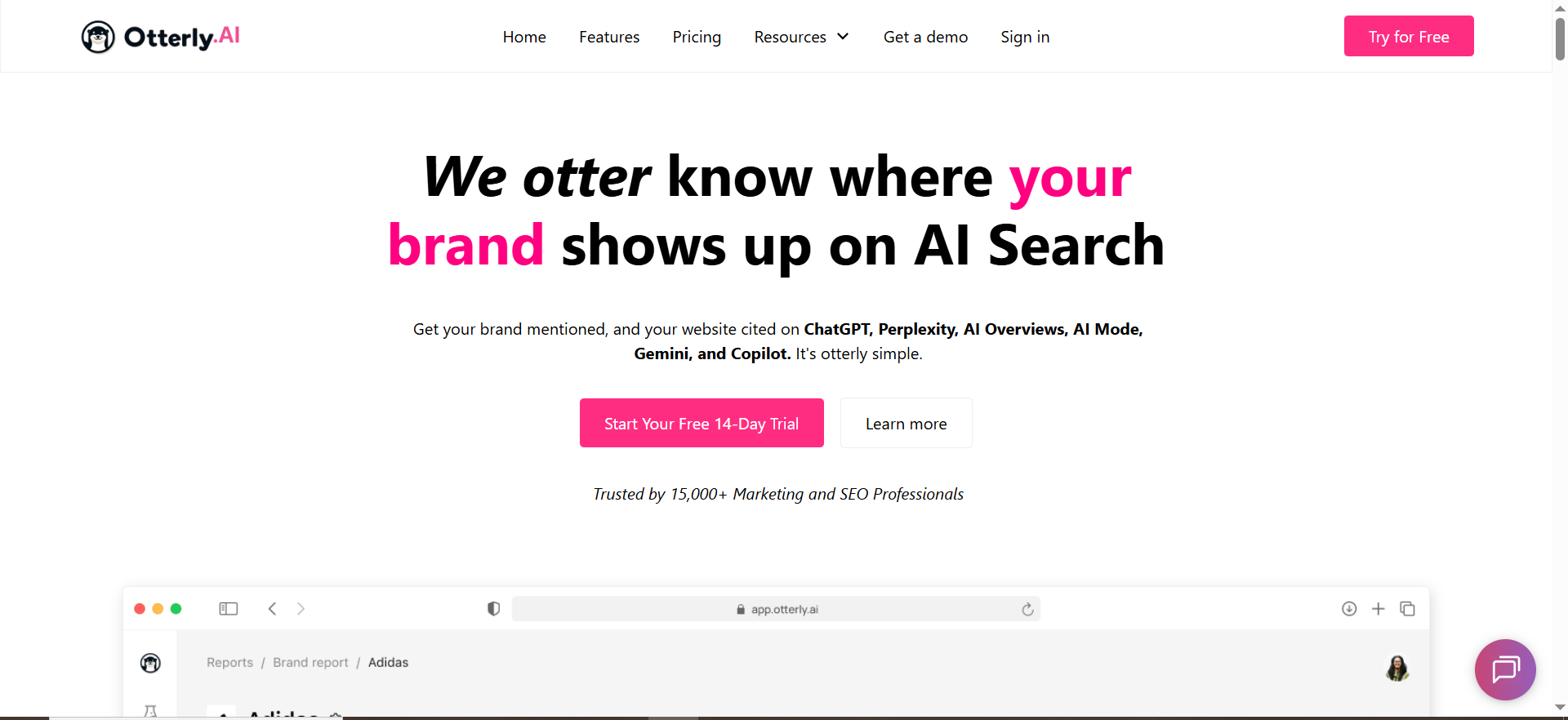
Otterly monitors how your brand appears in Google AI Overviews/Mode, ChatGPT, Perplexity, Gemini and Copilot. It focuses on prompt tracking, brand mentions and URL citations.
Why teams use it?
Teams like Otterly for clear, cross-engine dashboards and predictable prompt-based pricing. It’s straightforward to set up and easy to plug into reporting and BI.
Who is this tool for (ICP)?
- In-house SaaS SEO/marketing teams
- Agencies monitoring multiple brands
- Ops/analytics-minded teams who want exports
How this tool fits in this AI-first era?
Otterly acts like a “rank tracker” for AI surfaces such as AI Overviews and ChatGPT. It shows when you appear, when you disappear, and when competitors replace you, so you’re not flying blind as AI layers evolve.
- Daily/regular checks on key prompts
- Multi-engine coverage in one view
- Exportable data for your own dashboards
How does Otterly AI work?
You add prompts to track; Otterly queries supported AI engines on a schedule and logs where your brand and URLs appear, plus changes over time.
Free tier?
No.
Strengths?
- Simple, prompt-based pricing
- Good engine coverage (Google AI + assistants)
- Strong CSV/reporting focus
Weaknesses?
- Limited “what to publish next” guidance
- Prompt limits can feel tight on smaller plans
Key Capabilities?
- Prompt tracking across major AI engines
- Brand / citation visibility dashboards
- Daily tracking on higher tiers
Pricing snapshot?
- Lite – from ~$29/mo (15 prompts)
- Standard – ~>$150–200/mo
- Premium – higher limits (~400+ prompts)
Best for?
Otterly is best for teams who mainly need reliable AI monitoring (especially Google AI Overviews + ChatGPT/Perplexity) without a heavy optimization layer.
4. Scrunch AI
What it does?
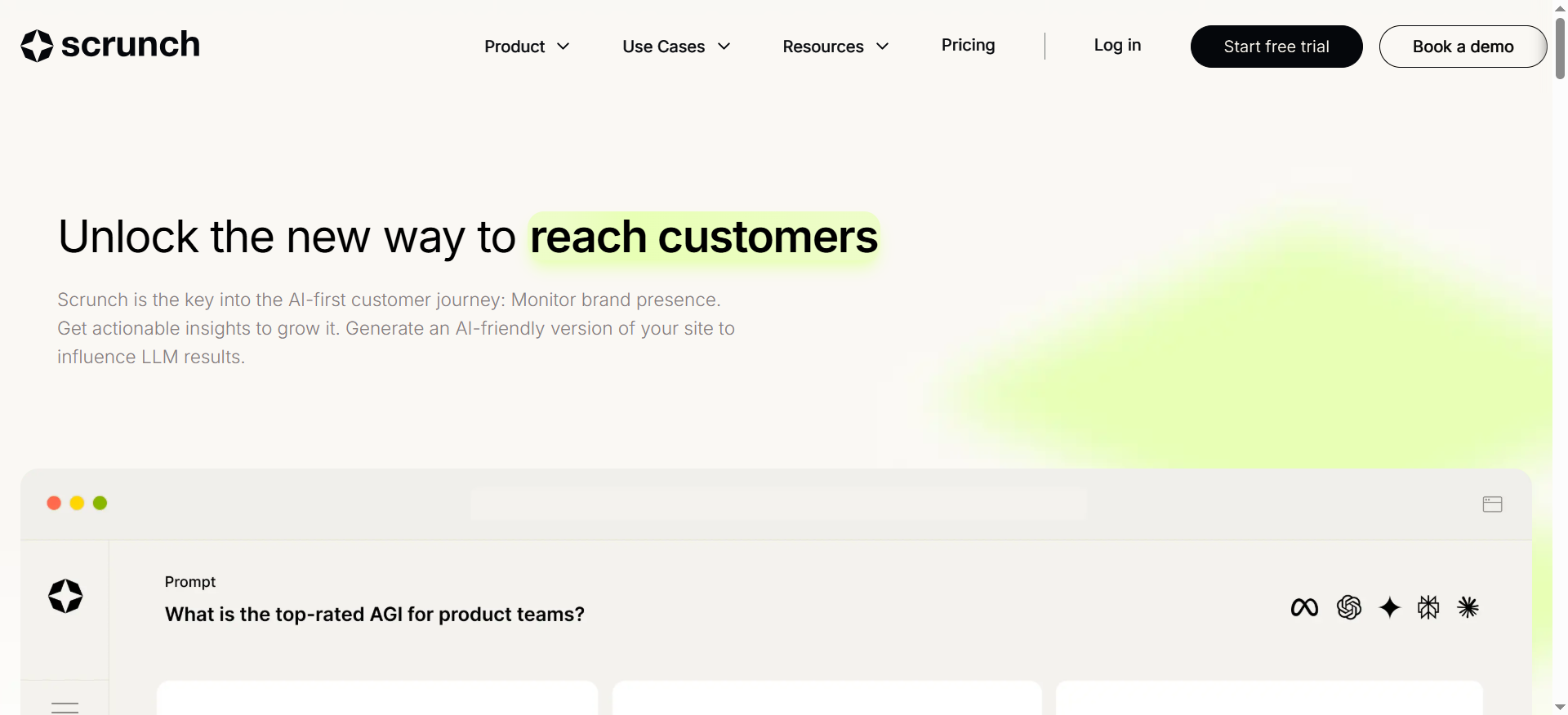
Scrunch AI monitors and improves how AI tools describe your brand across ChatGPT, Perplexity, Google AI Overviews and more. It also helps generate AI-friendly site content and spot outdated or incorrect AI descriptions.
Why teams use it?
Teams use Scrunch when they care about narrative and accuracy, not just visibility. It’s very appealing for SaaS and B2B brands worried about old pricing, wrong ICP, or outdated feature descriptions being repeated by AI.
Who is this tool for (ICP)?
- Mid-market and enterprise SaaS
- Product marketing and brand teams
- PR/comms teams in B2B tech
How this tool fits in this AI-first era?
Scrunch helps you manage your brand story inside AI models. It shows how AIs describe you, flags bad or stale info, and helps you create content that steers models toward the right narrative.
- Surfaces misinfo / outdated AI facts
- Connects AI behavior back to messaging and content
- Lets you build AI-friendly versions of key pages
How does Scrunch AI work?
You connect your site and define brand details. Scrunch scans AI outputs, identifies how you’re described, highlights problems, and supports generating AI-aligned content and site versions, tracking improvements over time.
Free tier?
No.
Strengths?
- Strong narrative and reputation focus
- Great for fixing outdated or wrong AI information
- Customized to SaaS and B2B tech
Weaknesses?
- Higher starting price vs lighter tools
- More “brand/messaging” than pure SEO analytics
Key Capabilities?
- AI brand/narrative monitoring
- Misinfo detection and suggestions
- AI-aligned content/site generation
Pricing snapshot?
- Starter – ~$300/mo
- Higher tiers – custom / sales
Best for?
Scrunch is best for SaaS brands where how AI talks about you matters as much as whether you’re mentioned at all.
5. Superprompt.com
What it does?
Superprompt.com tracks how your brand and prompts perform across many AI assistants (ChatGPT, Claude, Perplexity, Gemini, Copilot, etc.). It provides AI search visibility, rankings and context, plus education on AI prompting.
Why teams use it?
Teams pick Superprompt when they want multi-assistant rank tracking and are experimenting across several models. It’s popular with AI-forward teams and agencies building multi-LLM strategies.
Who is this tool for (ICP)?
- AI-heavy SaaS teams
- Agencies running multi-assistant experiments
- Growth teams needing cross-assistant visibility
How this tool fits in this AI-first era?
Superprompt treats AI search as multi-model by default. It helps you understand how different assistants surface your brand and content, revealing cross-model differences and optimization opportunities.
- Tracks many AI platforms in one place
- Great for multi-LLM experimentation
- Combines analytics and best practices
How does Superprompt.com work?
You set up brands, prompts and assistants. It queries across platforms, logs mentions, citations and sentiment, then surfaces rankings and gaps.
Free tier?
No (enterprise-style pricing).
Strengths?
- Wide AI assistant coverage
- Good for experimentation and advanced teams
- Strong educational / thought-leadership angle
Weaknesses?
- Overkill if you only care about ChatGPT + Perplexity
- Higher starting price vs mid-market tools
Key Capabilities?
- Rank tracking across 15+ AI platforms
- Citation/sentiment context
- Prompt analytics and recommendations
Pricing snapshot?
- Enterprise plans – from ~$497/mo+
Best for?
Superprompt is best for AI-mature orgs that want deep, cross-assistant visibility and are already investing heavily in AI experiments.
6. Sight AI
What it does?
Sight AI tracks how ChatGPT, Perplexity, Gemini, Claude and Google talk about your brand and topics, then helps you create AI-optimized content in response. It’s a visibility + content engine.
Why teams use it?
Content teams use Sight AI to turn AI gap insights into blog posts, guides and resources within one tool. It’s handy if you want AI to inform your editorial calendar.
Who is this tool for (ICP)?
- Content-led SaaS and B2B teams
- Agencies doing content + AI visibility
- Marketing teams with strong publishing cadence
How this tool fits in this AI-first era?
Sight AI supports a “listen → find gaps → publish” workflow. It listens to AI engines, spots missing topics or weak coverage, and lets you draft content tailored to how AI answers those questions.
- Finds topic and question gaps in AI results
- Turns gaps into content ideas and drafts
- Tracks impact as you publish
How does Sight AI work?
You define your brand and topics; Sight AI scans AI engines for how they answer and where you’re missing. Then you use its AI writer to create optimized content and monitor visibility changes.
Free tier?
No.
Strengths?
- Tight visibility + content loop
- Multi-engine coverage
- Topic/question-centric, not just keyword-centric
Weaknesses?
- Less ideal if you already have strong content ops + separate writers
- More expensive than bare-bones trackers
Key Capabilities?
- AI visibility tracking
- Topic and gap analysis
- AI-assisted content drafting
Pricing snapshot?
- Tiered plans – pricing via sales (per brands/queries)
Best for?
Sight AI is best for teams that want AI visibility to directly drive their content roadmap.
7. Scriptbee
What it does?
Scriptbee is an AI-powered marketing platform that combines SEO, GEO (AI search), content, social and ads into AI agent workflows. It includes AI search analytics to improve visibility in ChatGPT, Gemini and others.
Why teams use it?
Teams choose Scriptbee when they want one AI platform to automate a big chunk of marketing, not just track AI visibility. It’s attractive for lean teams who want AI agents doing research and publishing across channels.
Who is this tool for (ICP)?
- Early- to mid-stage SaaS teams with small marketing headcounts
- Agencies running SEO + content + AI search
- Growth marketers leaning into automation
How this tool fits in this AI-first era?
Scriptbee embraces the idea that AI can both analyze visibility and execute content. Instead of juggling many tools, you use Scriptbee’s agents to research, draft, publish and track performance across SEO and AI search together.
- Wraps GEO into broader AI marketing automation
- Reduces manual work for research + publishing
- Helps unify SEO + AI visibility tactics
How does Scriptbee work?
You configure AI agents with goals (e.g., improve AI visibility for certain topics, publish X pieces/month). Scriptbee connects to your tools, runs research and content workflows, then reports back on performance.
Free tier?
No.
Strengths?
- All-in-one AI marketing automation
- AI agents for SEO, GEO, content and social
- Good leverage for lean teams
Weaknesses?
- Overkill if you only want visibility tracking
- Per-user pricing can add up
Key Capabilities?
- AI search analytics for ChatGPT/Gemini
- SEO + content AI agents
- Social/ads automation
Pricing snapshot?
- Potion (entry) – ~$250/mo per profile
- Higher tiers – more automation & features
Best for?
Scriptbee is best for lean teams and agencies that want a single AI “OS” to handle SEO, AI visibility and content/social.
8. LLM Pulse
What it does?
LLM Pulse tracks brand visibility in ChatGPT, Perplexity, Google AI Mode and AI Overviews. It gives you weekly visibility scores, prompt tracking and citation analysis.
Why teams use it?
Teams use LLM Pulse as a focused GEO rank tracker with clear pricing. It’s popular with brands and agencies that want prompt-based AI visibility without enterprise complexity.
Who is this tool for (ICP)?
- SaaS brands treating AI visibility as a core KPI
- SEO/PR/brand teams wanting weekly snapshots
- Agencies managing multiple brands
How this tool fits in this AI-first era?
LLM Pulse gives you a simple way to answer “How visible are we in AI search?” across the main engines. It turns AI visibility into a score and weekly reports you can put into standard marketing reporting.
- Focuses on ChatGPT, Perplexity and Google AI
- Visibility Score simplifies cross-engine performance
- Tags and exports for reporting and analysis
How does LLM Pulse work?
You set up prompts, brands and competitors. LLM Pulse queries AI engines weekly (or more often on higher tiers), logs mentions/citations, and surfaces visibility scores and trends.
Free tier?
No (14-day trial).
Strengths?
- Clear GEO-only product
- Transparent, mid-range pricing
- Strong starter choice for serious GEO work
Weaknesses?
- Weekly by default; daily = higher tiers/custom
- Narrower engine set than huge enterprise suites
Key Capabilities?
- Prompt tracking with tags
- Visibility score and share-of-voice
- Citation and answer analysis + exports
Pricing snapshot?
- Starter – €49/mo
- Growth – €99/mo
- Scale – €299/mo
Best for?
LLM Pulse is best for brands and agencies that want structured, affordable GEO tracking across ChatGPT, Perplexity and Google AI.
9. Profound
What it does?
Profound is an enterprise GEO platform that tracks AI visibility across many models (ChatGPT, Perplexity, Gemini, Claude, Copilot, Meta, Grok, etc.) with daily data and deep analytics.
Why teams use it?
Large brands use Profound when AI visibility is board-level and they need scale, governance, SLAs and API access. It’s also used by big agencies handling global clients.
Who is this tool for (ICP)?
- Enterprise and public companies
- PR/comms and digital teams in large orgs
- Agencies serving global brands
How this tool fits in this AI-first era?
Profound aims to be the system of record for AI visibility at enterprise scale. It plugs AI visibility data into BI, risk and marketing systems so leadership can treat AI search as a measurable, managed channel.
- Daily cross-engine tracking
- Strong compliance and security posture
- Rich APIs and data exports
How does Profound work?
You work with Profound to define brands, prompts and markets. It runs large prompt sets daily across many engines, aggregates results, and exposes metrics and insights via dashboards and APIs.
Free tier?
No.
Strengths?
- Very broad engine coverage
- Daily, high-volume tracking
- Enterprise-grade data and support
Weaknesses?
- Too heavy/expensive for small teams
- Longer onboarding and setup
Key Capabilities?
- Daily GEO tracking across many models
- Sentiment and narrative analysis
- Competitive and regional breakdowns
- APIs for BI integration
Pricing snapshot?
- Lite/Core – from ~$499+/mo (annual)
- Enterprise – custom multi-thousand/mo contracts
Best for?
Profound is best for large enterprises that need AI visibility wired into analytics, risk and executive reporting.
10. Semrush AI Visibility
What it does?
Semrush’s AI Visibility features track how often your brand appears in AI results (ChatGPT, Perplexity, Gemini, etc.) and wrap this into an AI Visibility Index.
Why teams use it?
Semrush customers like that they can add AI visibility to their existing SEO stack instead of buying a new tool. It’s a natural extension of keyword and rank tracking.
Who is this tool for (ICP)?
- Existing Semrush users
- SEO and content teams
- Agencies reporting through Semrush
How this tool fits in this AI-first era?
Semrush positions AI visibility as a parallel metric to SEO, letting you see AI visibility and SERP performance side by side. That’s helpful for planning content that works in both worlds.
- Adds AI visibility into the same dashboards as SEO
- Shows where SEO and AI diverge
- Good bridge into more advanced GEO work
How does Semrush AI Visibility work?
You add domains/brands; Semrush scans AI platforms, calculates an AI visibility score and shows prompts where you appear or don’t.
Free tier?
No (part of paid plans/add-ons).
Strengths?
- Seamlessly integrated with Semrush
- Easy adoption for SEO teams
- One vendor for SEO + AI visibility
Weaknesses?
- Less specialized than dedicated GEO platforms
- Requires Semrush subscription
Key Capabilities?
- AI Visibility Index and trends
- Prompt lists with/without your brand
- SEO + AI visibility side-by-side reporting
Pricing snapshot?
- AI Visibility – from ~$99/mo/domain
- Bundled with SEO Classic via Semrush One
Best for?
Best for teams already in Semrush who want basic AI visibility without adding another core platform.
11. Ahrefs Brand Radar
What it does?
Ahrefs Brand Radar tracks how brands show up across AI search, YouTube and Reddit. On AI, it covers platforms like ChatGPT, Perplexity, Gemini and Copilot.
Why teams use it?
Ahrefs users use Brand Radar to extend brand monitoring into AI search without leaving Ahrefs. It’s handy for competitive and multi-channel visibility checks.
Who is this tool for (ICP)?
- Ahrefs-based SEO and content teams
- Agencies using Ahrefs as their main tool
- Brands wanting AI + social/community visibility
How this tool fits in this AI-first era?
Brand Radar recognizes that brand discovery now spans AI, video and communities. It gives SEO teams a quick way to see whether AI and social channels are telling the same story as SERPs.
- Adds AI visibility to Ahrefs’ toolkit
- Combines AI, YouTube and Reddit monitoring
- Good for early AI visibility experiments
How does Brand Radar work?
You add brands; Brand Radar checks AI, YouTube and Reddit for mentions and trends, then surfaces visibility and sentiment in simple dashboards.
Free tier?
Yes (for free + paid Ahrefs users, with limits).
Strengths?
- Very easy if you already use Ahrefs
- Multi-channel visibility in one tool
- Free access path
Weaknesses?
- Less deep on GEO specifics than dedicated tools
- AI coverage is still evolving
Key Capabilities?
- AI search brand visibility
- YouTube and Reddit monitoring
- Competitor and trend tracking
Pricing snapshot?
- Included in Ahrefs (free + paid tiers)
Best for?
Brand Radar is best for Ahrefs users wanting a lightweight, multi-channel view of brand visibility including AI.
12. HubSpot AEO Grader
What it does?
HubSpot’s AEO Grader is a free tool that scores your brand’s AI visibility across ChatGPT, Perplexity and Gemini, including recognition, sentiment and share-of-voice.
Why teams use it?
Teams use it as a quick, no-cost diagnostic to see if AI tools even know their brand and how they describe it. It’s perfect for internal awareness and pitching AI visibility work.
Who is this tool for (ICP)?
- Small and mid-sized SaaS/B2B
- HubSpot users
- Agencies doing initial audits
How this tool fits in this AI-first era?
AEO Grader helps you get a fast snapshot of your AI presence—no setup, no subscription. That’s crucial when many orgs still don’t know how AI talks about them.
- Zero-friction AI visibility check
- Great “before/after” benchmark
- Helps sell the need for deeper GEO tools
How does AEO Grader work?
You enter your company and competitors; the tool queries AI platforms and generates a simple report with scores and recommendations.
Free tier?
Yes (free forever).
Strengths?
- Completely free and fast
- Easy to understand for non-experts
- Great for early-stage and internal education
Weaknesses?
- Not a continuous monitoring solution
- Limited customization and depth
Key Capabilities?
- AI visibility grading (score)
- Competitor comparison
- High-level improvement tips
Pricing snapshot?
- Free tool – no subscription needed
Best for?
AEO Grader is best as a starting point for anyone exploring AI visibility, before choosing a paid platform.
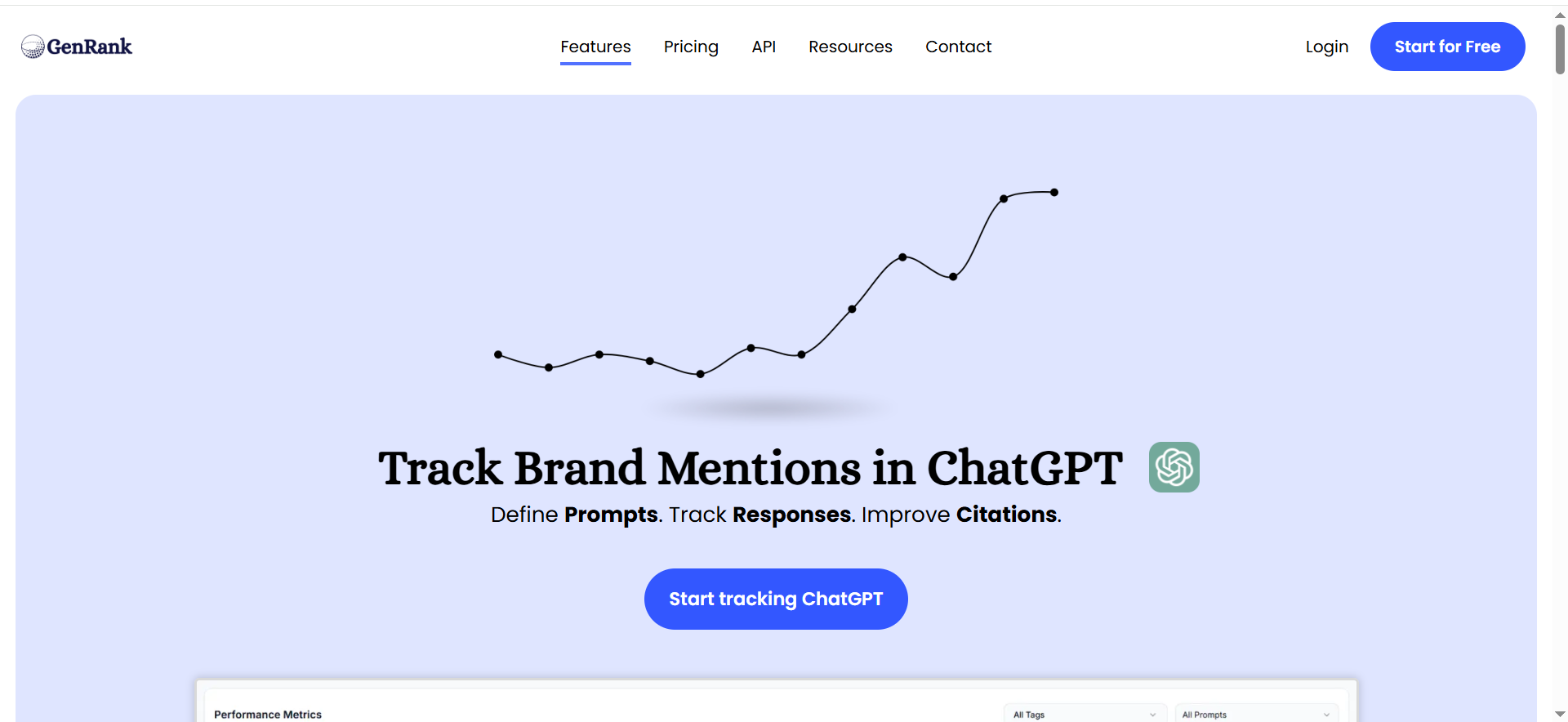
13. GenRank
What it does?
GenRank tracks brand mentions and citations in ChatGPT for a set of prompts. It’s a ChatGPT-focused AI visibility tool.
Why teams use it?
Teams use GenRank when they want a cheap, simple way to see how often ChatGPT mentions them vs competitors, without paying for broad multi-engine coverage.
Who is this tool for (ICP)?
- Small SaaS/B2B teams
- SEO/marketing teams testing GEO
- Agencies needing low-cost monitoring
How this tool fits in this AI-first era?
GenRank offers a pragmatic “ChatGPT only” entry point into AI visibility. For many brands, that’s where most AI research happens first, so it’s an easy MVP tool.
- Focuses on a single, high-impact assistant
- Very low barrier to entry
- Good stepping stone toward larger stacks
How does GenRank work?
You define prompts and brands; GenRank runs them in ChatGPT, records mentions/citations, and shows basic visibility trends.
Free tier?
Yes.
Strengths?
- Free + low-cost plans
- Very simple to set up
- ChatGPT-centric for focused use cases
Weaknesses?
- No Perplexity/Gemini/AI Overviews support
- Limited analytics vs larger platforms
Key Capabilities?
- Prompt-level ChatGPT monitoring
- Competitor comparison
- Basic reporting/export
Pricing snapshot?
- Free – small prompt set
- Pro – ~$39/mo
Best for?
GenRank is best for budget-conscious teams who want to start with ChatGPT visibility only and prove the value of GEO before investing more.
Why AI Search Visibility Matters for SaaS Brands
If you’re not showing up in ChatGPT and Perplexity, you’re disappearing from the SaaS buyer journey.
From SEO to AEO / GEO
- SEO = optimizing pages to rank in classic search results.
- AEO / GEO (Answer / Generative Engine Optimization) = optimizing so AI assistants like ChatGPT, Perplexity, Gemini and Google AI Overviews reliably cite your brand and content in their answers. If you’re serious about Brand visibility in AI search, AEO/GEO is no longer “nice to have”—it’s part of your core growth strategy.
- This is where SaaS buyers now ask things like:
- “Best [category] tools for remote teams?”
- “Alternatives to [your-brand]?”
- “What is [category], explained simply?”
If AI doesn’t mention you, your competitor owns that intent, even if you’re #1 in Google.
👉 Want help building an AEO playbook? Our Answer engine optimisation services are built specifically for B2B SaaS.
Why ChatGPT & Perplexity Are So Critical for SaaS
- ChatGPT and Perplexity are now default “research copilots” for marketers, founders and buyers.
- Perplexity is especially influential for “compare tools / best tools” queries because of its citation-heavy, search-like experience.
- Early data from multiple vendors shows AI-referred traffic often converts better than classic organic because users arrive later in the journey already pre-educated.
For SaaS, this touches everything: category creation, competitive positioning, pricing perception, and “who’s in the shortlist.”
Key AI Visibility Metrics You Should Track
Most AI visibility tools give some version of:
- Share of voice in AI answers (how often you’re mentioned vs competitors).
- Citation coverage (which of your URLs are cited in answers).
- Prompt / query coverage (which questions actually trigger your brand).
- Sentiment / positioning (how AI describes your product: strengths, weaknesses, pricing, ICP).
- Trendlines (gains & losses across ChatGPT vs Perplexity over time).
How AI Brand Visibility Monitoring Tools Actually Work
▶️ Prompt Sampling & Answer Collection
Most platforms:
- Maintain a large library of prompts around your category (e.g. “best log monitoring tools,” “SOC 2 compliant CRM”).
- Run them at scale against engines like ChatGPT and Perplexity (often 100s–100k prompts per month).
- Parse responses to detect:
- Brand mentions
- Links and citations
- Sentiment and context
- Which competitors appear alongside you.
▶️ Multi-Engine Coverage (ChatGPT, Perplexity & Friends)
Modern tools rarely monitor just one engine. Typical coverage:
- ChatGPT (GPT-4/4o + browsing)
- Perplexity
- Google AI Overviews / AI Mode
- Gemini, Claude, Microsoft Copilot, etc.
For SaaS, you’ll want tools that at minimum support both ChatGPT and Perplexity with engine-specific reporting.
If you’re planning content around this, our guide to Structuring AI-era content walks through how to make SaaS pages easier for AI models to quote.
▶️ Dashboards, Alerts & Reporting
- Central dashboards showing share of voice, rankings, and citations across engines.
- Alerts when:
- You drop out of key prompts
- A competitor overtakes you
- Misinformation appears (old pricing, wrong features).
- Exports / integrations so SEO, content, RevOps, and leadership all see the same truth.
▶️ Limitations & Privacy Considerations
- Tools can’t see private 1:1 chats users have with ChatGPT/Perplexity; they rely on prompt libraries and/or anonymized prompt streams where available.
- Coverage is only as good as:
- The prompts you track
- How often checks run (daily vs weekly vs monthly).
- Some vendors rely heavily on region-specific datasets; if you sell globally, ask how they handle localization.
Evaluation Criteria for SaaS-Focused AI Visibility Tools
Engine Coverage with a ChatGPT & Perplexity Bias
For SaaS, your non-negotiables are:
- ChatGPT + browsing (so you see how you show up in real web-powered answers)
- Perplexity (crucial for “best tools” and “alternatives” searches)
- Clear, engine-level reporting – visibility broken down by ChatGPT vs Perplexity, not one blended score
If a tool doesn’t nail this, move on.
SaaS-Fit Features
Generic “brand monitoring” isn’t enough. For B2B / SaaS, look for:
- Workspace / multi-project support for product lines, regions and sub-brands
- The ability to tag prompts by funnel stage (awareness, compare tools, alternatives)
- The ability to tag prompts by ICP (SMB, mid-market, enterprise)
- Strong support for B2B-style prompts like:
- “SOC 2 compliant log management tools”
- “Best PLG analytics platform for SaaS startups”
If you’re not sure how to map prompts to funnel and ICP, this guide on Brand visibility in AI search is a great starting point.
Data Freshness & Alerting
You can’t wait months to notice you’ve been pushed out of the answers. Aim for:
- Daily or near real-time checks on your highest-value prompts
- Email/Slack alerts when:
- You drop out of a key prompt
- Perplexity suddenly recommends a competitor over you
This is where SEO strategies using AI visibility tools really shine—proactive alerts let your team fix issues before they hit pipeline.
Integrations & Workflow
Ideal stack plugs into:
- SEO tools (Semrush, Ahrefs, etc.) for joined SEO + AI visibility reporting.
- Analytics & CRM so you can correlate AI visibility with signups, pipeline and revenue.
- Collaboration: comments, saved views, exports for product marketing + leadership decks.
If you’re comparing platforms, use a structured framework like this Compare AI SEO tools guide so you don’t get lost in feature lists.
Pricing & Scalability
- Startup-friendly tiers (or free plans) for early-stage SaaS.
- Higher tiers that unlock:
- More prompts
- More engines
- SSO, audit logs, and security requirements for enterprise.
How to Build an AI Visibility Monitoring Stack for Your SaaS
Instead of randomly buying tools, build a simple, staged stack.
Step 1 – Define AI Use Cases & Stakeholders
Start by mapping where AI impacts your funnel:
- Awareness – “best tools for [problem]”
- Solution comparison – “[category] tools compared”
- Alternatives – “alternatives to [brand]”
Then align the people who care: SEO, content, product marketing, RevOps and customer success. Everyone should agree which AI moments actually matter.
Step 2 – Build a Prompt Map Around the SaaS Buyer Journey
Cluster prompts into:
- Category – “best error monitoring tools for SaaS”
- Job-to-be-done – “how to reduce churn in B2B SaaS”
- Competitive – “[brand] vs [competitor]”
- Risk / trust – “is [brand] GDPR compliant?”
Most tools let you import keyword lists or generate prompt sets automatically. For structure inspiration, see how we organize topics in our Structuring AI-era content playbook.
Step 3 – Choose a Primary Monitoring Tool
Match tool complexity to your stage:
- Early-stage SaaS
- Start with HubSpot AEO Grader + GenRank + manual checks
- Goal: “Do we show up at all in AI answers?”
- Growing / mid-market SaaS
- Pick a dedicated visibility tracker (AIclicks, LLMrefs, Otterly, Scrunch, Superprompt, etc.)
- Goal: “How do we increase share-of-voice vs competitors?”
- Enterprise SaaS
- Layer enterprise suites like Profound, Semrush AI Visibility and GEO-focused tools
- Goal: “How do we govern AI visibility across markets, brands and exec reporting?”
If you’re not sure which route fits, our deep dive on the best AI visibility tools for SEO is a good companion read.
Step 4 – Connect Monitoring to Content & Product Strategy
Don’t let your dashboards become AI vanity metrics. Use insights to:
- Fix misinformation (wrong pricing, old brand name, outdated features)
- Create content targeting high-value prompts where you’re missing or weak
- Update docs, comparison pages, integration pages and customer stories to match how buyers actually ask
This is where a structured AI-era AEO content playbook pays off—your pages become easier for AI to quote accurately.
Step 5 – Report to Leadership with Clear Metrics
Translate AI visibility into numbers execs care about. Track:
- AI share of voice vs your main competitors
- Number of prompts where you rank in the top 3 recommendations
- AI-sourced traffic, demos and pipeline
Over time, you can fold these into your broader SEO and growth dashboards so AI visibility isn’t treated as a side project—it’s part of how your SaaS wins the market.
Practical Examples & SaaS Playbooks
Example 1 – PLG SaaS Invisible in AI Answers
Scenario: You rank top-3 in Google for “product analytics for SaaS,” but ChatGPT and Perplexity never mention you.
Playbook (condensed):
- Use AIclicks or LLMrefs to confirm missing coverage for key prompts.
- Identify which competitors are cited, and which pages/URLs AI is pulling from.
- Create / upgrade:
- Comparison pages,
- “Best tools for…” guides,
- Integration pages.
- Re-check visibility weekly until your brand appears consistently.
Example 2 – Enterprise SaaS with Narrative Drift
Scenario: AI tools keep describing you as “SMB-only,” but you’ve moved upmarket.
Playbook:
- Use Scrunch AI or Profound to detect where this positioning appears across engines.
- Update:
- Homepage messaging
- Pricing / plan pages
- Case studies emphasising enterprise wins.
- Feed new content and structured docs that better reflect your ICP; monitor sentiment shift.
Example 3 – Monitoring Compliance & Security Perception
Scenario: You’re in a sensitive space (security, finance, healthcare), and misstatements could hurt trust.
Playbook:
- Build a “risk prompt set”:
- “Is [brand] PCI compliant?”
- “Is [brand] HIPAA compliant?”
- Track answers via Otterly / Superprompt / AIclicks.
- Coordinate with legal and compliance to correct inaccuracies and publish clarifying docs.
Common Mistakes SaaS Teams Make with AI Visibility Monitoring
Even if you’re using the right tools, a few common mistakes can quietly kill your AI visibility. Here’s what to avoid (and what to do instead).
Only Tracking Branded Searches
If you only monitor “[brand] reviews” or “what is [brand],” you’ll miss:
- “Best [category] tools”
- “Alternatives to [competitor]”
- “Tools that do X for SaaS companies”
Non-branded, problem-based prompts are usually where Perplexity and ChatGPT influence vendor shortlists most.
▶️ Fix this: build a prompt set around category, use case and alternatives, not just your brand name. Our guide on Brand visibility in AI search walks you through that step by step.
Ignoring Perplexity’s Search-Like Behavior
Perplexity heavily surfaces sources and citations; it often behaves like “Google + Chat.” SaaS teams sometimes:
- Focus only on ChatGPT
- Forget that for “comparison” and “best tools” queries, Perplexity is often the first stop for power users.
Your monitoring approach should treat Perplexity as a top-of-funnel discovery engine, not a minor add-on.
▶️ If you’re choosing tools, use this framework to Compare AI SEO tools and make sure Perplexity coverage isn’t an afterthought.
Treating AI Like Classic SEO
Common missteps:
- Over-optimizing single pages instead of consistent entity-level clarity across docs, pricing, help center, and blogs.
- Expecting month-long lag times like SEO, when AI visibility often moves faster.
Not closing the loop between AI insights and product & messaging decisions.
Frequently Asked Questions
Yes, just not as a blue link. Instead, you “rank” by: Being mentioned in the answer Being linked / cited as a source Being framed as a top recommendation vs competitors. AI visibility tools translate this into share-of-voice and ranking-style metrics.
For most SaaS teams: Core prompts (category, competitors, alternatives): daily or weekly. Long-tail prompts: weekly or monthly. After major launches, pricing changes, or rebrands: increase cadence for 4–6 weeks.
A simple starter stack: HubSpot AEO Grader to see how top engines interpret your brand. A free/low-cost tracker (e.g. GenRank or entry tier from AIclicks/LLMrefs). A recurring calendar reminder to: Review insights Add missing prompts Feed findings into content & messaging.
They rely on: Prompt libraries they run themselves at scale. Public datasets, search integrations, and, in some cases, anonymized aggregated prompt streams where available. They do not see private, user-specific conversations.
Sometimes, but not always. Strong content + authority helps, because AI often cites well-ranked pages. But AEO also cares about: Entity clarity (brand, product, use cases) Structured explanations Up-to-date facts across docs, help center, and pricing pages. That’s why most vendors recommend SEO + AEO combined, not one replacing the other.
Use tools that expose citations and source URLs, such as Otterly, AIclicks, and Scriptbee: They highlight which domains/URLs are being cited You can then reverse-engineer why (structure, clarity, authority).
Final Thoughts
AI assistants have quietly become the new front door to your SaaS brand—often long before someone lands on your site or sees your ads. ChatGPT and Perplexity are already telling a story about your product. The real question is: are you measuring it, and are you shaping it, or just hoping for the best?
The tools in this guide cover every stage: from free graders and lightweight trackers to full AI marketing platforms and enterprise-grade GEO suites. You can start small with a basic ChatGPT visibility check, or go all-in with cross-engine tracking, narrative control and AI-informed content.
The SaaS teams who win will treat AI visibility like SEO and CRO “a core, measurable part of their growth engine, not a side experiment”. Start by seeing how AI talks about you today, then use the right mix of tools and a focused Answer engine optimisation strategy to ensure the next answer, the next shortlist and the next recommendation actually includes your brand.
And if you’d rather not figure it out alone, you can always bring in a specialist B2B SaaS SEO agency that lives and breathes AI search.