

If Similarweb’s price tag or feature set has you second-guessing your subscription, you’re not the only one.
Many SEO teams, growth marketers, and agencies realise they’re paying enterprise prices for data they only partially use when a focused, ROI-driven stack would do the job better. If you’re a SaaS team, a specialist partner like The Rank Masters, B2B SaaS SEO Agency can help you cut through the noise fast.
▶️ In this guide, you’ll see exactly how the best Similarweb alternatives stack up “what they actually do, why real teams rely on them, and which type of business each tool is built for, from enterprise growth machines to lean agencies and solo consultants”.
Treat these tool cards as your side-by-side decision cheat sheet so you can quickly shortlist a ROI-first SEO tool stack for SaaS that matches your stage, resources, and revenue targets.
You’ll also see how each option supports brand visibility in AI search, so you’re not just swapping one tool for another, but choosing a setup that helps you win in AI Overviews, SERP features, and all the new surfaces where customers now discover SaaS brands.
Table of Contents
What Is Similarweb & Why Look for Alternatives?
Similarweb is a digital intelligence platform that combines web analytics, competitive traffic data, and market research. It estimates traffic, traffic sources, engagement, top pages, and audience behavior for millions of websites and apps, making it popular with enterprises and agencies.
On top of traffic analysis, Similarweb now bundles:
- SEO tools (keyword research, rank tracking, backlink analytics, site audit)
- Market intelligence (industry trends, category-level share, audience segments)
- AI features such as AI SEO strategy agents and AI trend detection, aimed at understanding how brands appear in AI search and chat assistants.
All of that is powerful—but if your day-to-day job is shipping SEO wins, managing PPC, or driving product growth, you may be paying for a wide market-intel suite when what you really need is a focused execution stack and a specialist SaaS SEO agency to help you use it. That’s where more specialised Similarweb alternatives come in.
Common Pain Points With Similarweb
From recent reviews and comparison posts, a few recurring issues push teams to look for a Similarweb replacement:
- High pricing for “core” usage – Starter plans sit around $199/month, with many SEO and advanced features locked behind higher tiers or custom quotes. For a lot of SEO or growth teams, that’s a big slice of the marketing tools budget that could be redirected into content, links, or a smarter SEO analytics dashboard.
- Shaky accuracy on smaller sites – Similarweb tends to be more reliable on big, high-traffic domains. For niche or low-traffic SaaS products, traffic estimates can be off enough that teams hesitate to base reporting or strategy on those numbers alone, preferring cleaner data from rank trackers and a solid SaaS keyword research guide.
- Heavy, enterprise-leaning UI – The interface is excellent for deep market intelligence, but it can feel like overkill if your real need is fast, practical workflows for SEO, PPC, and content. That slows adoption across non-technical team members who just want a straightforward SEO rank tracking software comparison and clear action items.
- Limited free usage – The free experience is effectively a demo. Smaller teams, solo consultants, and early-stage SaaS companies quickly hit limits and go hunting for tools with more generous free or entry-level plans and simpler reporting.
If you mainly need SEO, paid search intelligence, or product analytics, you might get a better fit (and price) with more focused tools.
Best All-in-One SEO & Traffic Intelligence Alternatives
These platforms are the closest like-for-like replacements for Similarweb if you care mainly about SEO + competitor research, with some market intelligence.
| Tool Name | 3 Key Features | Best For |
|---|---|---|
| Semrush | All-in-one SEO + PPC + content suite Deep keyword & backlink databases Site audit and powerful reporting | Teams wanting a single powerhouse platform for SEO, PPC, and content marketing |
| Ahrefs | Industry-leading backlink index Advanced keyword & SERP analysis Robust site audit tools | SEO-first teams focused on organic search and link-driven growth |
| SE Ranking | Accurate rank tracking (incl. local) Site audits & on-page checker White-label, automated reporting | Agencies, freelancers, and SMBs needing high value at flexible pricing |
| Search Atlas | AI-driven content & on-page optimization Local SEO & link-building automation Multi-site/agency-friendly reporting | AI-heavy SEO programs and agencies consolidating multiple tools |
| Moz Pro | Keyword Explorer with DA/KD metrics Site crawl & on-page recommendations Link Explorer for backlink research | Marketers who want accessible, education-focused SEO tooling |
1. Semrush
What it does?
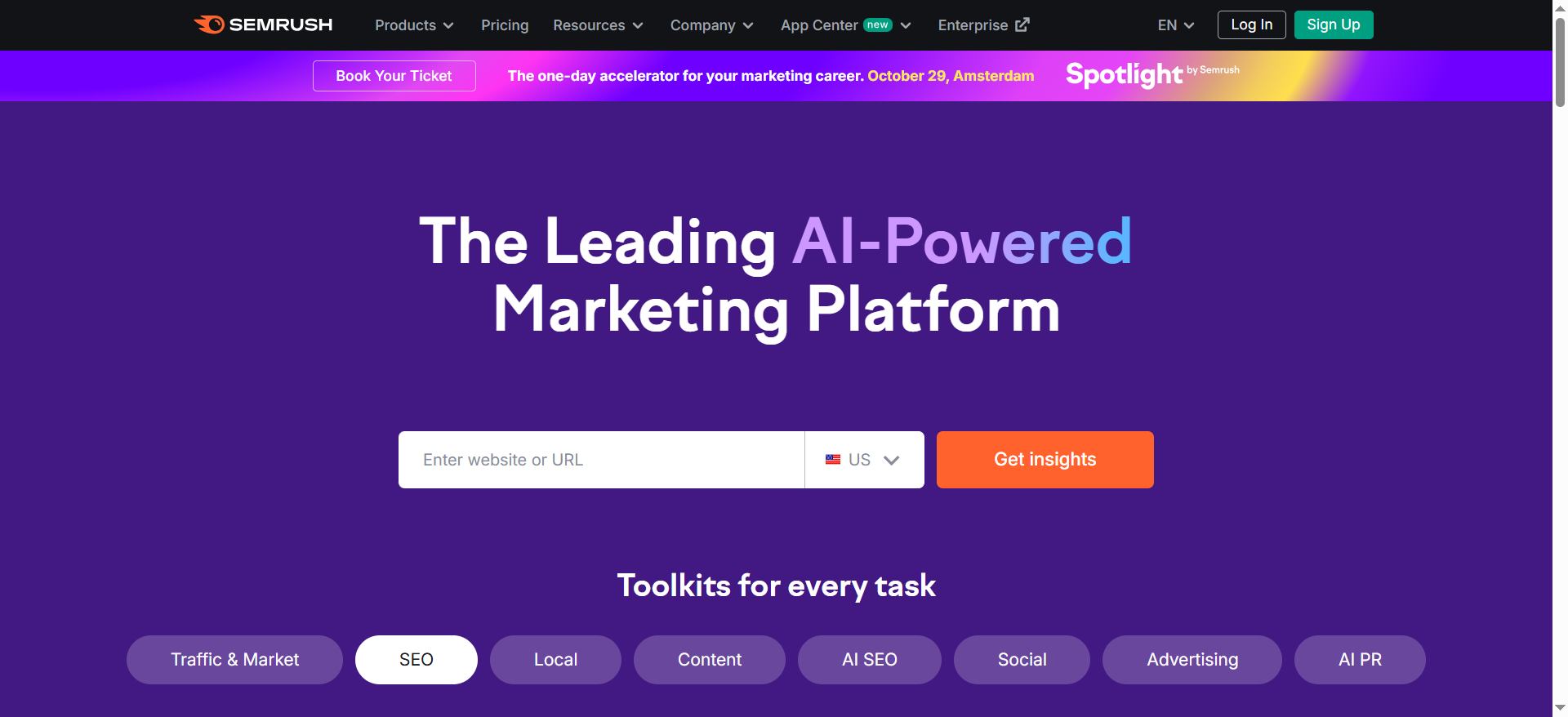
Semrush is an all-in-one SEO and visibility platform that covers keyword research, rank tracking, site audit, competitive analysis, PPC, and content marketing. It also has a dedicated AI Visibility toolkit to track how brands show up in AI Overviews and other AI-driven SERP features. The platform is built for ongoing monitoring, opportunity discovery, and reporting across multiple channels.
Why teams use it?
Teams use Semrush to centralize SEO, content, and paid search workflows in one place instead of juggling multiple tools. Agencies lean on its reporting, multi-project management, and white-label dashboards. In-house teams like the breadth of keyword and backlink databases plus competitive intel for organic and paid campaigns. Overall, it’s often chosen as the “default” enterprise SEO suite.
Who is this tool for (ICP)?
Semrush is ideal for teams that want a broad, data-rich marketing platform.
- In-house marketing teams at SMB, mid-market, and enterprise
- SEO / performance agencies and consultants
- Growth teams at SaaS, marketplaces, and e-commerce brands
- Companies consolidating multiple SEO/PPC tools into one
How this tool fits in this AI-first era?
Semrush is repositioning around AI visibility, helping teams see where they appear in AI Overviews and other generative search features, not just classic blue links. It also embeds AI into keyword research, clustering, and content briefs, turning big datasets into fast, actionable recommendations.
- Tracks visibility across AI search surfaces via the AI Visibility Index
- Uses AI to cluster keywords, map intent, and surface topic gaps
- AI helpers generate outlines/briefs grounded in live SERP and competitor data
How does Semrush work?
You create “projects” for each site, set target regions and keywords, and connect integrations (GSC, GA, etc.). Semrush then crawls your site, tracks rankings, monitors competitors, and surfaces issues and opportunities. You use reports and dashboards to prioritize fixes, content ideas, and campaigns, then export or schedule those reports for stakeholders.
Free tier?
Yes – a limited free account with caps on queries and projects, plus periodic trials on full plans.
Strengths?
- Very broad feature set (SEO, PPC, content, social)
- Large, frequently updated keyword and backlink databases
- Strong reporting and multi-project management
- Growing AI-specific visibility and insight features
Weaknesses?
- Pricing scales up quickly as you add users, projects, and add-ons
- Can feel overwhelming for beginners due to depth of features
- Some specialized tasks (e.g., very advanced analytics) still require other tools
Key Capabilities?
Semrush covers almost every SEO/visibility task out of the box.
- Keyword research, topic clustering, SERP/feature analysis
- Site audit, on-page SEO checker, log-style crawling insights
- Backlink analytics and link-building prospecting
- Position tracking, competitor benchmarking, and automated reporting
Pricing snapshot? (monthly list, approximate)
- Pro / Starter: from ~$139.95–$165+/mo
- Guru / Pro+: around $249.95+/mo
- Business / Enterprise / Semrush One: $500+/mo or custom
Best for?
Semrush is best for teams that treat search and content as core growth levers and want a unified platform. Agencies with many clients, and companies that need both SEO and PPC insights, typically get the most out of it. If your budget allows and you value breadth over ultra-minimal stacks, Semrush is a strong top-tier choice.
2. Ahrefs
What it does?
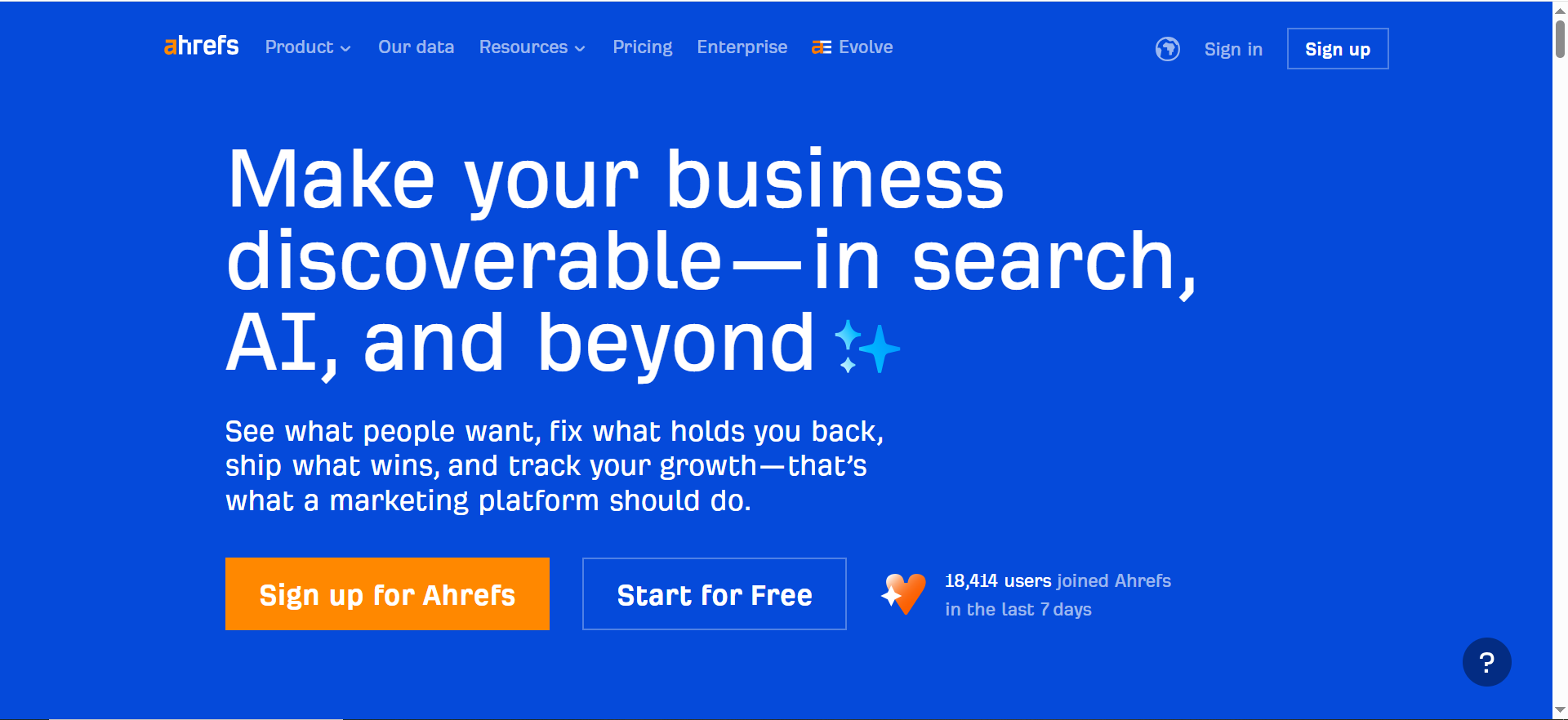
Ahrefs is a big-data SEO and AI marketing platform best known for its huge backlink and keyword indexes. It covers site audits, keyword research, rank tracking, content analysis, and competitive research. Recently, it’s added AI-powered insights and “brand visibility across AI search” on top of its classic SEO modules.
Why teams use it?
Teams use Ahrefs when they need deep, accurate data on backlinks and SERPs to drive serious SEO. Many SEOs treat Site Explorer and Keywords Explorer as daily tools for link prospecting, opportunity analysis, and content planning. Its interface is powerful but still relatively straightforward, making advanced research workflows fast once you learn the basics.
Who is this tool for (ICP)?
Ahrefs is made for teams where SEO is a primary growth channel.
- SEO specialists and technical SEOs
- Agencies focused on link building and organic growth
- Publishers and content-heavy sites scaling long-tail search
- Advanced marketers who need granular, fresh SERP/link data
How this tool fits in this AI-first era?
Ahrefs positions itself as “AI behind your critical marketing tasks,” using AI to summarize insights from enormous keyword, SERP, and link databases. It also tracks brand visibility across AI search and LLM surfaces, helping teams see how generative results affect traffic and competition.
- AI-generated insights and summaries over large SEO datasets
- Brand visibility tracking across AI search, SEO, and content
- Particularly valuable link data as a trust signal in an AI-flooded content world
How does Ahrefs work?
You verify your site, then use Site Explorer for your domain and competitors to see backlinks, keywords, and traffic estimates. Keywords Explorer finds and evaluates keyword ideas, while Site Audit scans for technical issues. Rank Tracker monitors positions, and Content Explorer reveals link-worthy content and gaps.
Free tier?
Yes – Ahrefs Webmaster Tools gives limited Site Audit and Site Explorer access for verified sites; full functionality requires paid plans.
Strengths?
- Industry-leading backlink index and link intelligence
- Deep competitive keyword/SERP analysis
- Strong site audit and content discovery capabilities
- Trusted across the SEO industry for data quality
Weaknesses?
- Higher price point vs. more budget-friendly tools
- Fewer PPC/social features than platforms like Semrush
- Credits/limits on lower-tier plans can feel restrictive for heavy users
Key Capabilities?
- Site Explorer for backlinks, organic keywords, and competitors
- Keywords Explorer for multi-locale keyword research
- Site Audit and Rank Tracker
- Content Explorer and AI-assisted reporting
Pricing snapshot? (typical ranges)
- Lite: from about $99/mo (lower with annual)
- Standard / Advanced: mid-hundreds per month
- Enterprise: up to ~$999+/mo or custom
Best for?
Ahrefs is best for teams that care deeply about link quality, keyword difficulty realism, and competitive SEO. If your priority is winning organic visibility in competitive niches and you can afford a premium tool focused on SEO rather than “all marketing,” Ahrefs is often the go-to choice.
3. SE Ranking
What it does?
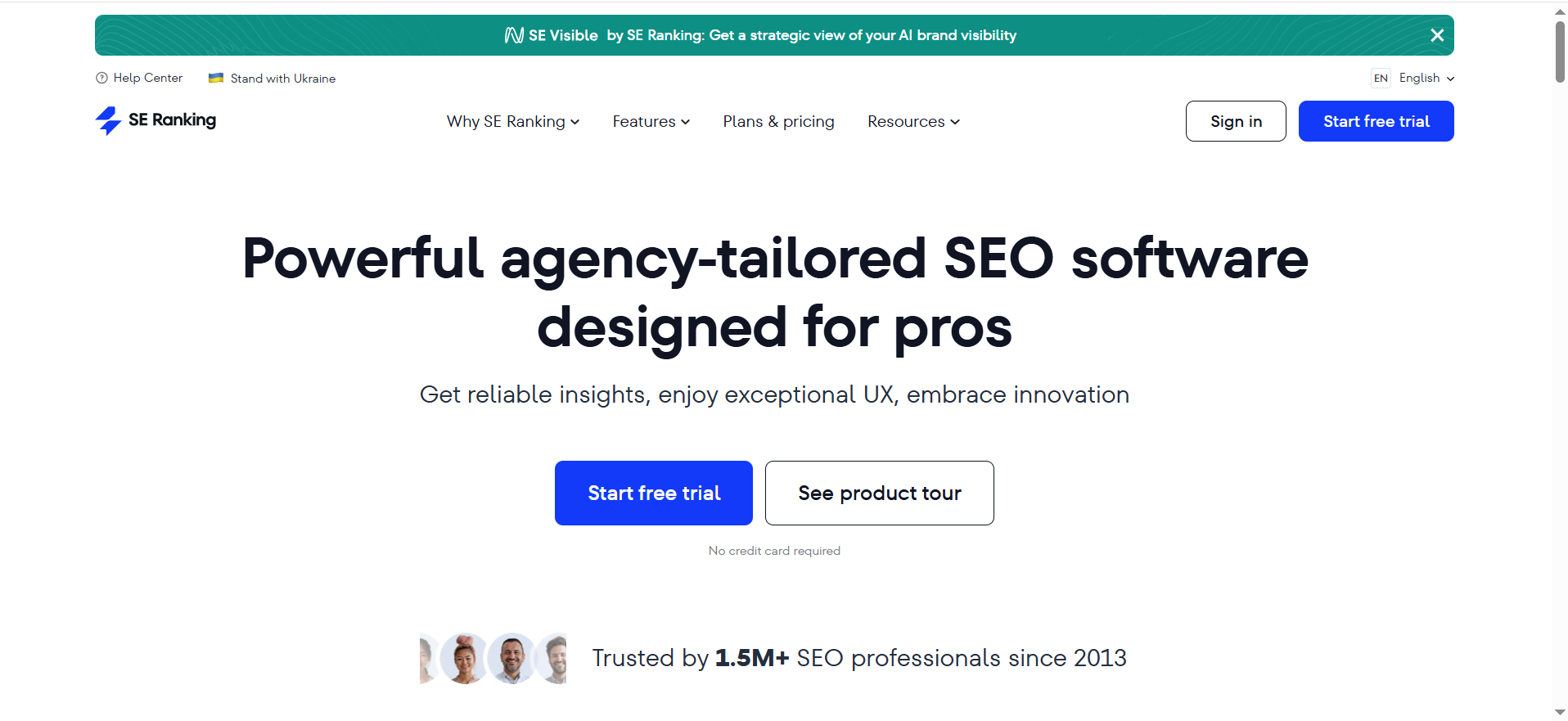
SE Ranking is an all-in-one SEO platform with strong rank tracking, keyword research, site audits, and competitor and local SEO tools. It focuses on accurate data and very flexible pricing compared to “big” SEO suites. Newer features also bring in AI search visibility tracking and AI-assisted recommendations.
Why teams use it?
Teams choose SE Ranking when they need serious SEO tooling but don’t want enterprise-level pricing or complexity. Agencies appreciate its white-label reporting and multi-project management. Freelancers and in-house marketers like that it’s easy to learn while still offering enough depth for advanced analysis.
Who is this tool for (ICP)?
- Freelance SEOs and boutique agencies
- SMB / mid-market in-house SEO teams
- Agencies looking for white-label SEO reports
- Teams wanting AI search visibility + classic SEO in one place
How this tool fits in this AI-first era?
SE Ranking adds AI search visibility and AI helpers on top of its rank tracking and audits, so teams can see how they perform in AI-influenced SERPs, not just organic listings. Its AI features focus on summarizing opportunities and simplifying planning rather than pure auto-writing.
- AI search visibility metrics layered on traditional rank tracking
- AI-assisted keyword, content, and audit insights
- Strong value for AI-aware SEO teams that can’t justify big-suite pricing
How does SE Ranking work?
You set up projects, add target keywords and locations, and let SE Ranking track rankings, audit your site, and compare you to competitors. Local SEO, backlink data, and on-page tools feed into customizable dashboards and white-label reports for clients or stakeholders.
Free tier?No permanent free plan, but SE Ranking offers a free trial across paid tiers.
Strengths?
- Very strong value vs. larger suites
- Accurate rank tracking with local capabilities
- Good white-label and reporting options for agencies
- Easy enough for beginners, deep enough for pros
Weaknesses?
- Databases can be slightly shallower than Semrush/Ahrefs in some niches
- Fewer non-SEO modules (e.g., limited PPC/social)
- Some advanced users may outgrow certain limits over time
Key Capabilities?
- Rank tracking (global and local)
- Keyword and competitor research, backlink monitoring
- Site audit, on-page SEO checker
- Reporting center with automation and white-labeling
Pricing snapshot? (monthly, from vendor site)
- Essential: from $65/mo (≈$52/mo annually)
- Pro: from $119/mo (discounted on annual)
- Business / API: from $259+/mo depending on quotas
Best for?
SE Ranking is best for agencies, freelancers, and small to mid-size companies that need a real SEO platform without enterprise pricing. If you care most about rank tracking, audits, and straightforward reporting—and you’re AI-curious but cost-sensitive—it’s a very strong pick.
4. Search Atlas
What it does?
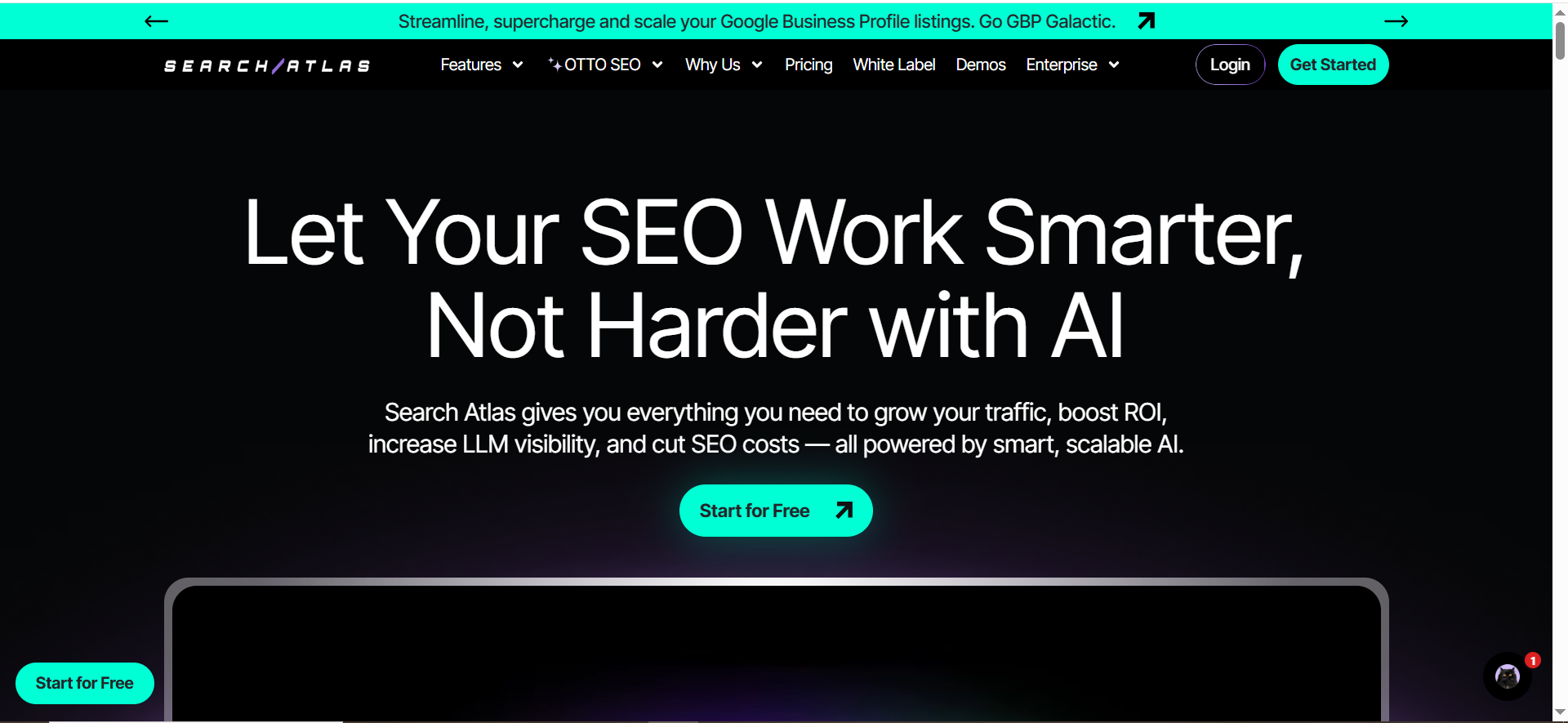
Search Atlas is an AI-first SEO platform that combines AI content generation, on-page optimization, local SEO, link building, and reporting. It’s designed to replace multiple AI writers, SEO tools, and link services with one integrated suite. The platform includes automation features like OTTO SEO and “Hyperdrive” credits for links and press-style promotion.
Why teams use it?
Teams use Search Atlas when they want to run modern, AI-heavy SEO programs without manually gluing together a dozen point solutions. Agencies value its multi-site management, reporting, and built-in production (content + links + local). Awards and high user ratings help de-risk adopting a newer platform.
Who is this tool for (ICP)?
Search Atlas is aimed at teams leaning hard into AI-driven SEO.
- SEO and content agencies scaling content + links for many clients
- In-house SEO/content teams managing large content roadmaps
- Local/multi-location brands needing AI-assisted local SEO
- Teams replacing separate AI writing, on-page, and link tools
How this tool fits in this AI-first era?
Search Atlas is built around AI from day one, with AI embedded in planning, writing, optimization, and authority building. Its goal is to let teams orchestrate AI content and SEO moves from one place while still keeping human review in the loop.
- AI content tied directly to SEO data (keywords, SERPs, competitors)
- Automated OTTO SEO and AI-assisted recommendations across sites
- AI-supported local SEO, link building, and reporting for agencies
How does Search Atlas work?
You onboard your domains, connect analytics/search console if needed, and let the tool analyze your site and target keywords. From there, you use AI modules to plan content, generate drafts, optimize existing pages, and manage local citations and link campaigns. Dashboards consolidate rankings, traffic, and campaign output across all sites.
Free tier?
No permanent free plan, but 7-day free trial and starter tiers are available.
Strengths?
- AI-native workflow across content, on-page, links, and local
- Designed to replace several separate tools
- Strong agency-oriented features and reporting
- Very high user ratings and recent industry awards
Weaknesses?
- Smaller ecosystem/community vs. long-standing suites
- Heavy AI use requires strong editorial standards and QA
- Pricing sits in mid-to-premium range vs. budget tools
Key Capabilities?
- AI content and on-page optimization based on live SEO data
- OTTO SEO automation and AI recommendations
- Local SEO, citations, and reputation tools
- Hyperdrive links/PR and consolidated multi-site reporting
Pricing snapshot?
- Starter / Core: from around $99/mo
- Growth / Advanced: roughly $199–$399/mo based on quotas
- Enterprise: custom bundles with higher AI and link limits
Best for?
Search Atlas is best for agencies and in-house teams that want to run AI-driven SEO at scale and reduce their tool stack. If you’re already spending separately on AI writing, link vendors, local tools, and an SEO platform, consolidating into Search Atlas can make operational and financial sense.
5. Moz Pro
What it does?
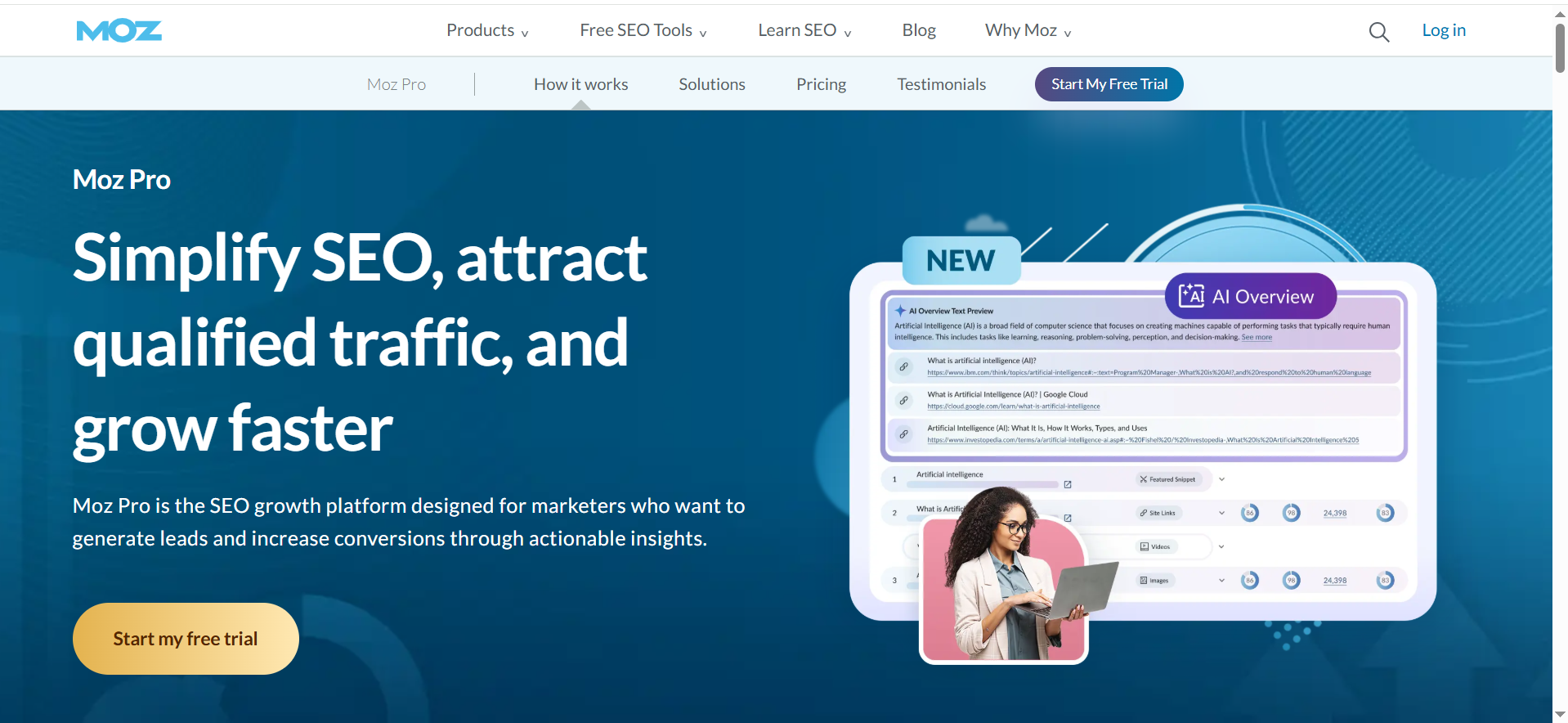
Moz Pro is an SEO growth platform that focuses on keyword research, site audits, rank tracking, and link analysis wrapped in a very approachable interface. It’s designed to make SEO understandable for marketers, not just specialists. Newer features add AI-powered suggestions and AI Overviews by keyword, plus metrics like Brand Authority.
Why teams use it?
Teams use Moz Pro when they want trustworthy metrics and clear guidance rather than raw data firehoses. Domain Authority, Spam Score, and Keyword Difficulty are widely understood across SEO and marketing teams, making collaboration easier. Moz’s educational content (blog, academy, guides) is also a big draw for teams ramping up SEO skills.
Who is this tool for (ICP)?
Moz Pro is for marketers who value clarity and education.
- In-house marketers at SMBs and mid-market orgs
- Content teams starting to professionalize SEO
- Agencies that onboard non-technical clients to SEO
- Teams who want built-in training alongside tools
How this tool fits in this AI-first era?
Moz uses AI to enhance SERP analysis and keyword discovery while keeping its UX and explanations simple. It helps marketers understand AI-driven SERP changes and opportunities using familiar metrics and visualizations.
- AI Overviews by keyword and AI-powered suggestions in keyword tools
- Clear metrics (DA, KD, Spam Score) to interpret noisy AI-era SERPs
- Strong thought leadership on algorithm and AI-search shifts
How does Moz Pro work?
You create a campaign, connect integrations, and Moz Pro crawls your site on a schedule. Keyword Explorer and Link Explorer support research and prospecting, while Site Crawl and On-Page Grader highlight technical and on-page issues. Rank tracking and reports keep stakeholders up to date on progress.
Free tier?
No full free Moz Pro plan, but there’s a free trial plus several free standalone tools (DA checker, limited keyword lookup, etc.).
Strengths?
Moz Pro stands out for ease of use and education.
- Very intuitive interface for non-specialists
- Widely recognized metrics (Domain Authority, Spam Score)
- Solid all-round SEO toolkit for many use cases
- Excellent blog, guides, and Moz Academy training
Weaknesses?
- Databases can be smaller/less fresh than Ahrefs or Semrush in some markets
- Power users may find advanced workflows more limited
- Higher-tier plans can add up for very small teams
Key Capabilities?
- Keyword Explorer with SERP and difficulty analysis
- Site Crawl and technical issue prioritization
- Rank tracking and on-page optimization suggestion
- Link Explorer for backlink research and monitoring
Pricing snapshot? (list prices, before promos)
- Starter: from $39–$49/mo (discounts common)
- Standard: about $99/mo
- Medium: about $114–$179/mo
- Large / Premium: $239–$299+/mo
Best for?
Moz Pro is best for teams that want SEO to be accessible and teachable across marketing, not just in an SEO silo. If you’re building internal SEO capabilities and need tools plus education, Moz Pro is a very good fit, especially for small to mid-sized orgs.
Which Similarweb Alternative Is Best for You?
Not every team needs the same kind of Similarweb replacement. The smartest move is to match your tool choice to how you actually acquire and convert customers, then plug it into a ROI-first SEO tool stack for SaaS instead of bloated, overlapping software.
If You’re an SEO-First Team
Choose:
- Semrush – if you want one powerhouse suite for SEO, PPC, and content
- Ahrefs – if backlink and organic search analysis matter most
- SE Ranking / Serpstat / Search Atlas – if you want high value and flexible pricing
👉 If you’re not sure which route fits your stage and model, a specialised SaaS SEO agency can help you pick and implement the right mix.
If You’re a Performance Marketer or Advertiser
Choose:
- SpyFu – for deep historical PPC and competitor ad data, down to keywords and ad copy themes.
- Semrush + .Trends – for integrated SEO + paid + market insights, plus reporting that resembles dedicated Best SEO reporting software.
If You Need Market & Audience Intelligence
Choose:
- Crayon – for competitor strategy and marketing intelligence across web, product, and sales moves.
- Quantcast – for demographic and psychographic audience insights that complement your Brand visibility in AI search.
If You Care Most About On-Site Behavior
Choose:
- Clicky – for real-time traffic and engagement that lets you react quickly to campaigns and content spikes.
- Woopra or Mixpanel – for journeys, funnels, cohorts, and lifecycle analytics that pair nicely with a solid SaaS keyword research workflow.
🤙 If you’d like a second opinion on which bucket you fall into, The Rank Masters, B2B SaaS SEO Agency can review your funnel and recommend a lean, high-ROI stack.
How to Choose the Right Similarweb Alternative
Step 1 – Clarify Your Primary Use Case
Different tools win in different scenarios. Before comparing features, decide what you care about most:
- SEO-centric – keyword research, rank tracking, backlinks, content planning, and dashboards (often powered by your core tools plus Best SEO rank tracking tools and Best SEO reporting software).
- PPC & ad intelligence – competitor ads, historical PPC data, keyword bidding strategy, SERP share.
- Market/audience intelligence – demographic and psychographic profiling, category share, media planning.
- Analytics / product – user journeys, funnels, cohort analysis, in-app behaviour and activation.
Most top alternatives lean heavily toward SEO + competitive analysis, with a smaller group focused on audience or product analytics.
Step 2 – Key Evaluation Criteria
When comparing tools, prioritize:
- Data scope & freshness
- Number of keywords and backlinks in their databases
- Markets and languages covered
- How frequently data is refreshed
- Core feature set
- SEO: keyword research, rank tracking, site audits, backlink analysis
- Competitive intel: traffic estimates, keyword/traffic gap analysis, ad intel
- Analytics: event tracking, funnels, user journeys (for product tools)
- Ease of use & onboarding
- How quickly can a non-expert start getting insights?
- Pricing & scalability
- Transparent pricing vs. “talk to sales” for basics
- Limits on projects, users, keywords, and reports as you scale
- How cleanly it fits into an ROI-first SEO tool stack for SaaS without blowing up your budget
- Integrations & ecosystem
- GA, GSC, ad platforms, CMS, CRMs, BI tools
- Support & learning resources
- Documentation, academy content, community, templates
▶️ If you want to sanity-check your shortlist before signing any long-term contracts, you can Contact The Rank Masters to run a quick tool stack review and make sure you’re investing in the platforms that actually move revenue, not just dashboards.
Frequently Asked Questions
In 2025, widely recommended alternatives include Semrush, Ahrefs, SE Ranking, Moz Pro, Search Atlas, Ubersuggest, Nightwatch, and SpyFu. These tools combine SEO, competitor intel, and traffic analysis, with varying strengths in PPC and content.
For SEO-heavy workflows, Semrush and Ahrefs are usually considered the leaders thanks to their massive keyword and backlink databases, powerful content tools, and robust site audits. Serpstat, SE Ranking, Moz Pro, and Search Atlas are also strong choices with more flexible pricing.
If cost is your main constraint, look at: Ubersuggest (very cheap with lifetime options) Mangools (good SEO feature set with low entry pricing) SpyFu (affordable PPC/SEO intel) SEOmator (cost-effective for audits and analysis)
No third-party tool is perfectly accurate. Similarweb tends to be more reliable for high-traffic sites and broader trends, but reviewers and competitive analyses note that estimates for small or niche sites can be off. That’s a common reason people cross-check with tools like Semrush, Ahrefs, and proprietary analytics.
Yes, to a degree. Tools like Semrush, Ahrefs, SE Ranking, Serpstat, and Search Atlas provide estimated organic traffic, top pages, and competing sites. Semrush’s .Trends and some competitor “traffic analytics” modules get closer to Similarweb’s multi-channel views, though pure panel-based reach estimates are more of a Similarweb specialty.
Conclusion
Choosing a Similarweb alternative isn’t about finding a clone, it’s about picking a tool that matches how your SaaS actually grows: SEO-first, PPC-heavy, content-led, product-led, or a mix of all four. Semrush, Ahrefs, SE Ranking, Search Atlas, Moz Pro and the rest each solve a slightly different problem for a slightly different type of team, which is why there’s no true “one-size-fits-all” winner.
The smartest move right now is to shortlist 2–3 tools that fit your ICP, spin up trials, and test them on your real keywords, domains, and competitors. Within a few weeks, you’ll see which platform gives you the clearest signal in the AI-era noise and which one overcomplicates things. Use that learning to build a ROI-first SEO tool stack for SaaS instead of an expensive collection of overlapping dashboards.
If you want to fast-track that decision, partner with The Rank Masters, B2B SaaS SEO Agency and book a “Rank Stack Review.” We’ll look at your niche, competitors, and current tools, then design a lean, AI-ready stack that’s built to grow pipeline and ARR, not just vanity metrics.
▶️ Ready to move from tool confusion to a clear plan? Contact The Rank Masters and let’s fix your stack before your next renewal hits.