

💡 Quick Answer: The best AI tools for SaaS content generation and SEO in 2026 are Jasper AI, Copy.ai, Writesonic, Content at Scale, Surfer SEO, Rytr, Hypotenuse AI, and Scalenut. These platforms help B2B SaaS teams create SEO-ready blogs, landing pages, and social posts at scale (while keeping costs low and conversion funnels healthy).
The best AI content generators for SaaS combine workflows with writing:
1) Build a brief (keywords, angles, outline)
2) Draft long-form with brand-voice controls
3) Optimize headings and internal links
4) Fact-check and add sources
5) Publish and measure.
Choose a tool that covers briefs, long-form, optimization, and collaboration.
If you’re running a content-led or product-led growth (PLG) motion at your SaaS company, you already know the challenge: your funnel needs more top-of-funnel content, faster, without ballooning your team’s headcount.
Growth targets keep rising, but headcount and budgets rarely keep pace, making it crucial to calculate posts needed for SaaS traffic so you can plan output realistically without waste.
💡 And here’s the kicker: Content without SEO alignment is just noise. Publishing 20 blogs a month means nothing if they don’t rank for the right terms “start with a SaaS keyword research guide to align topics with ICP demand and SERP intent”.
▶️ Traffic alone doesn’t equal revenue, conversions do. That requires content that’s consistent, optimized, and mapped to growth KPIs like SQLs, ACV, and trial-to-paid velocity, paired with CRO for product-led content to turn visits into trials and demos.
This post will walk you through the best AI content generator tools for SaaS marketers in 2026, plus the SEO automation tools that keep production scalable. You’ll see which tools are worth the spend, how to deploy them in your workflow, and how to avoid the pitfalls that stall funnel efficiency and kill trial-to-paid conversions.
Best AI Content Generators for SaaS: Quick Decision Guide
| If you need… | Use a… | Why it fits | Example tools |
|---|---|---|---|
| Briefs + SEO outlines | Brief/optimizer | SERP-driven structure with H2s & questions | Clearscope, Surfer, Frase |
| Long-form blog drafts | Long-form writer | Section control + brand voice memory | Jasper, Writesonic, Claude, ChatGPT |
| Marketing copy & variants | Copy generator | Short-form, tones, channels | Copy.ai, Anyword |
| Research & citations | AI search/chat | Live web + citations | Perplexity, Bing Copilot |
| Team workflow + CMS | Suite | Roles, approvals, brand kits | Notion AI, Grammarly Business |
The Top AI Content & SEO Tools Every Growth-Stage SaaS Team Should Know in 2026
Choosing the right AI tool isn’t just about speed “it’s about how well the tool integrates into your growth engine”. SaaS marketing leaders don’t want filler blogs; they want scalable, SEO-ready content that drives demos, trials, and revenue.
Below, we break down the top tools, why they matter, and how to deploy them in a SaaS context. 👇
📋 Get Listed / Advertise
We refresh this guide monthly. Want your tool featured, benchmarked, or cited? Email: [email protected]
• Subject: “Rank Tracker Listing – TRM”.
| Tool | Best Use Case(s) | Strengths | Limitations |
|---|---|---|---|
| Jasper AI | Long-form SaaS blogs, landing pages | High-quality, consistent brand voice, volume-capable | Higher cost vs. entry-level tools |
| Copy.ai | Social media, ad copy, short-form content | Fast generation, creative outputs, great for experimentation | Lacks depth for long-form SEO content |
| Writesonic | Blog posts, landing pages, marketing copy | Versatile across formats, cost-effective | Requires editing for polish and accuracy |
| Content at Scale | SEO-driven long-form content at scale | Deep SEO integration, built for evergreen content | High pricing barrier for smaller teams |
| Surfer SEO + AI | SEO optimization + content alignment | Data-driven briefs, SERP insights, content optimization | Needs a writing tool to pair with, less creative output on its own |
| Rytr | Lightweight content (intros, short blogs) | Very affordable, multi-language support | Limited in SEO sophistication, weaker for competitive niches |
| Hypotenuse AI | Product copy, ads, release notes | Structured outputs, consistent messaging assets | Not designed for long-form blogs |
| Scalenut | Keyword strategy + content execution | Combines keyword planning + writing in one tool | Slight learning curve for non-SEO operators |
1. Jasper AI - Best for Long-Form SaaS Blogs
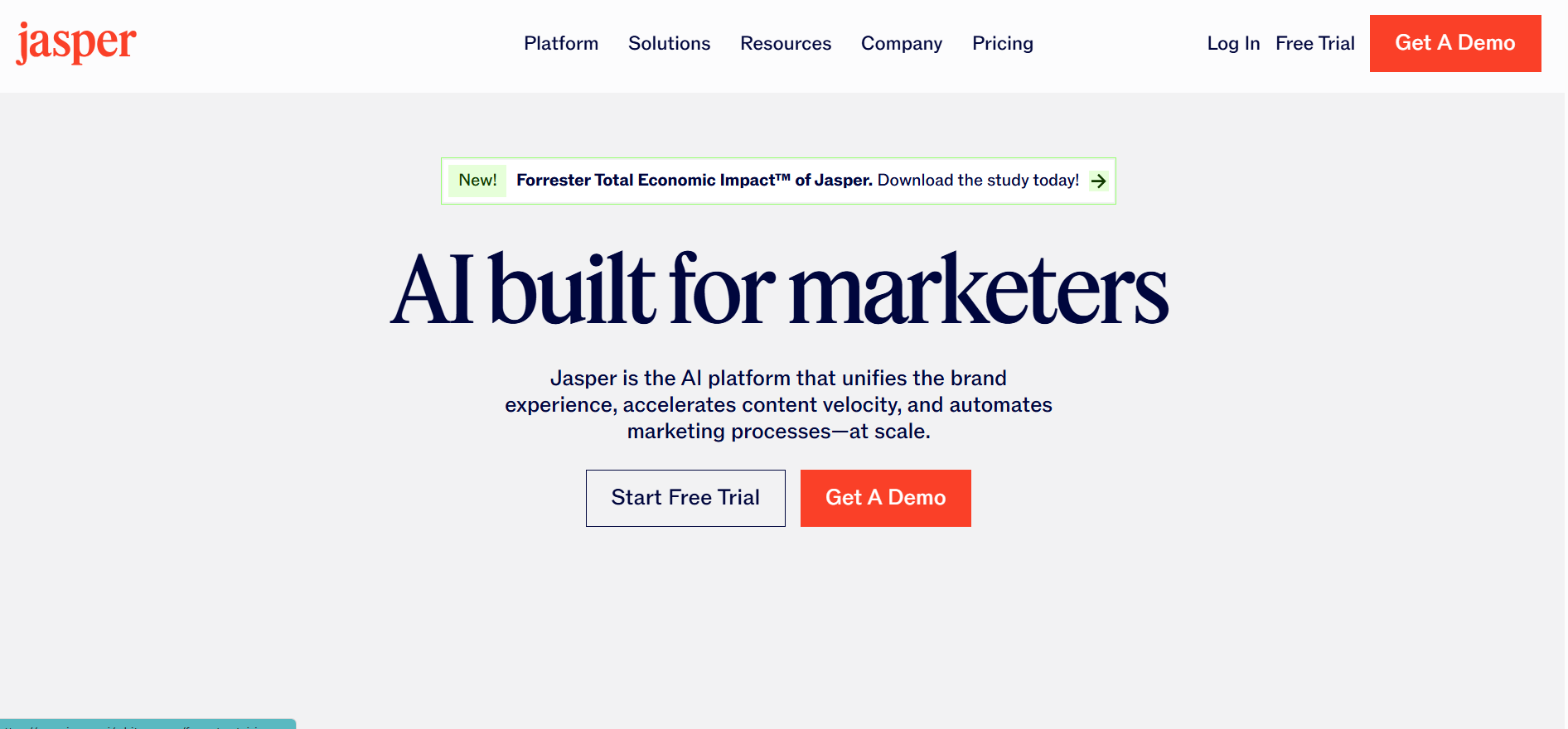
Jasper is one of the leading AI content generators built for long-form content creation. It allows SaaS teams to set a brand voice profile and generate blogs, landing pages, and emails that remain consistent with company tone. With SEO-friendly templates and integrations, it’s a go-to for teams running content-led growth.
▶️ Why it matters for SaaS: Scaling TOFU blogs and MOFU landing pages is critical for SaaS companies trying to drive trials and demos. Jasper’s ability to deliver high-quality, structured long-form output makes sure teams don’t just publish more, they publish content that attracts the right search traffic and aligns with product messaging.
Use cases: TOFU blog posts designed to rank for industry keywords, MOFU landing pages, SaaS case studies, product announcements.
Pros: High-quality outputs, consistent brand voice, scalable for multi-author teams.
Cons: Higher price compared to budget tools.
Micro-checklist:
- Configure Jasper with SaaS-specific brand voice before writing.
- Pair with Surfer SEO for better search alignment.
- Use for cornerstone TOFU blogs and mid-funnel content like product landing pages.
2. Copy.ai - Best for SaaS Social Media & Ads
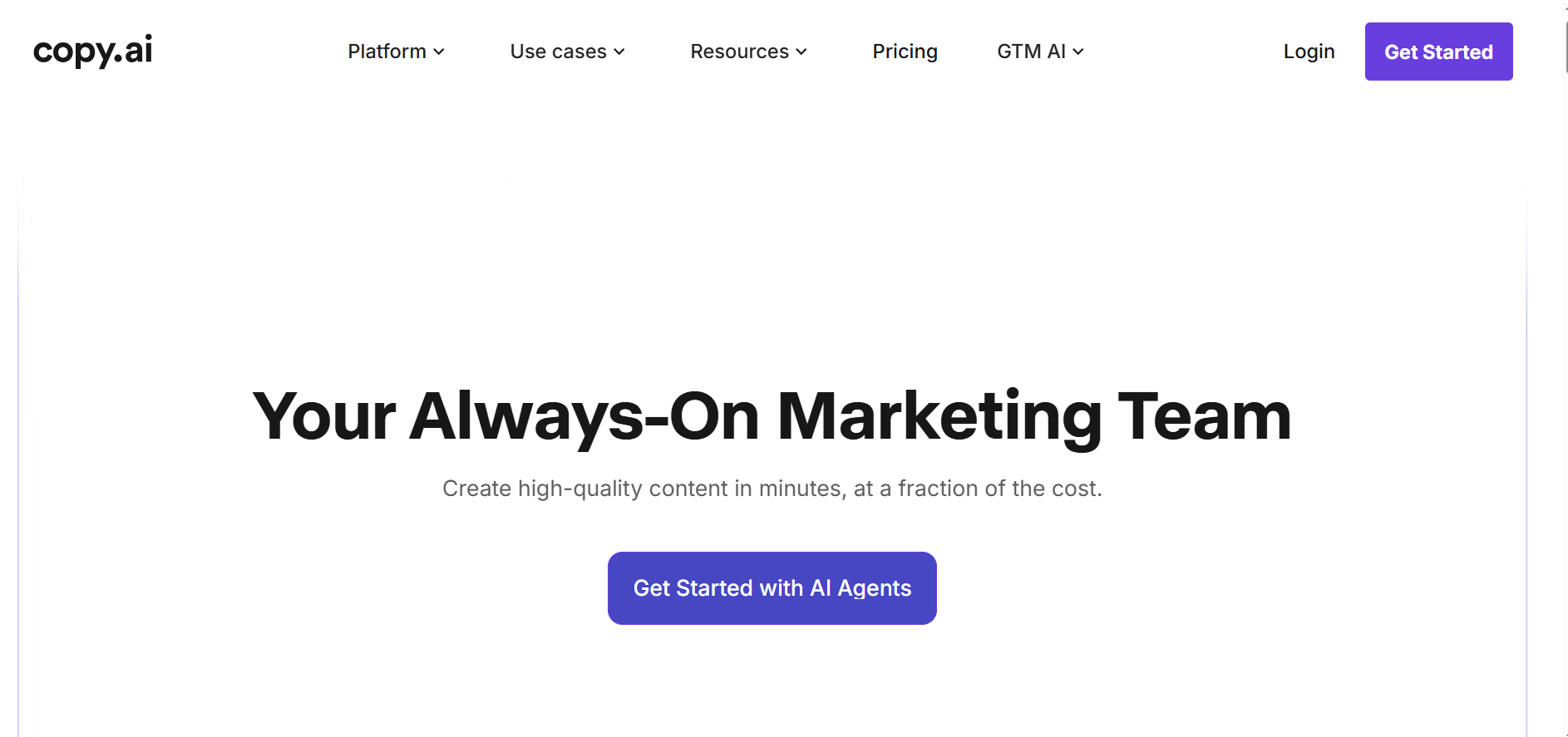
Copy.ai is designed for short-form, creative, and promotional content. It excels at generating ad copy, email subject lines, and social posts in seconds, giving SaaS marketing teams multiple variations to test quickly.
▶️ Why it matters for SaaS: In competitive SaaS categories, teams need to experiment with messaging across social channels and paid ads to identify what resonates with buyers. Copy.ai helps reduce the creative bottleneck, allowing teams to test dozens of campaign variants without over-reliance on a large copywriting team.
Use cases: LinkedIn campaign posts, Google Ads, nurture email subject lines, retargeting ad copy.
Pros: Fast, intuitive, excellent for brainstorming variations.
Cons: Limited for long-form SEO-driven content.
Micro-checklist:
- Use for TOFU and BOFU campaigns where speed of iteration matters.
- Run multiple ad variations and test CTR results.
- Deploy in social-led acquisition campaigns.
3. Writesonic - Best Budget Option for SaaS Teams
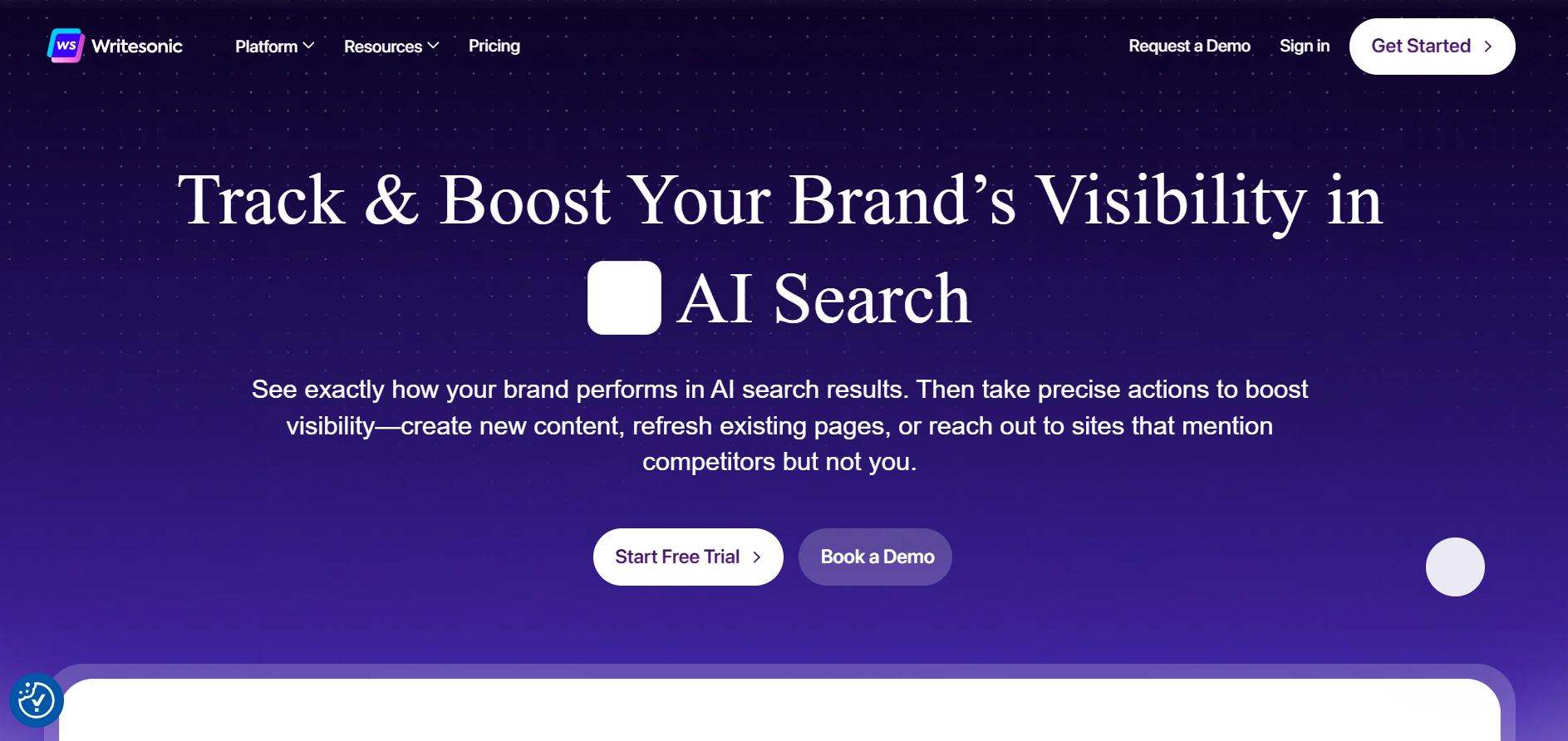
Writesonic is an affordable AI writing platform that covers a broad range of content formats, including blogs, landing pages, and marketing copy. It’s particularly appealing for smaller SaaS teams that need high-volume content without high costs.
▶️ Why it matters for SaaS: Early-stage or lean growth teams need to maintain consistent content publishing to stay competitive. Writesonic makes it possible to scale SEO-driven blogs and landing pages at volume while keeping expenses under control, though editing is essential to refine the final output.
Use cases: Regular blog production, SaaS product feature pages, promotional copy for campaigns.
Pros: Versatile, cost-effective, supports multiple formats.
Cons: Requires human editing for polish and precision.
Micro-checklist:
- Use for TOFU content where speed is prioritized.
- Assign internal editors to refine SaaS positioning and accuracy.
- Deploy for scaling blog cadence during growth pushes.
4. Content at Scale - Best for SEO-Led Growth Motions
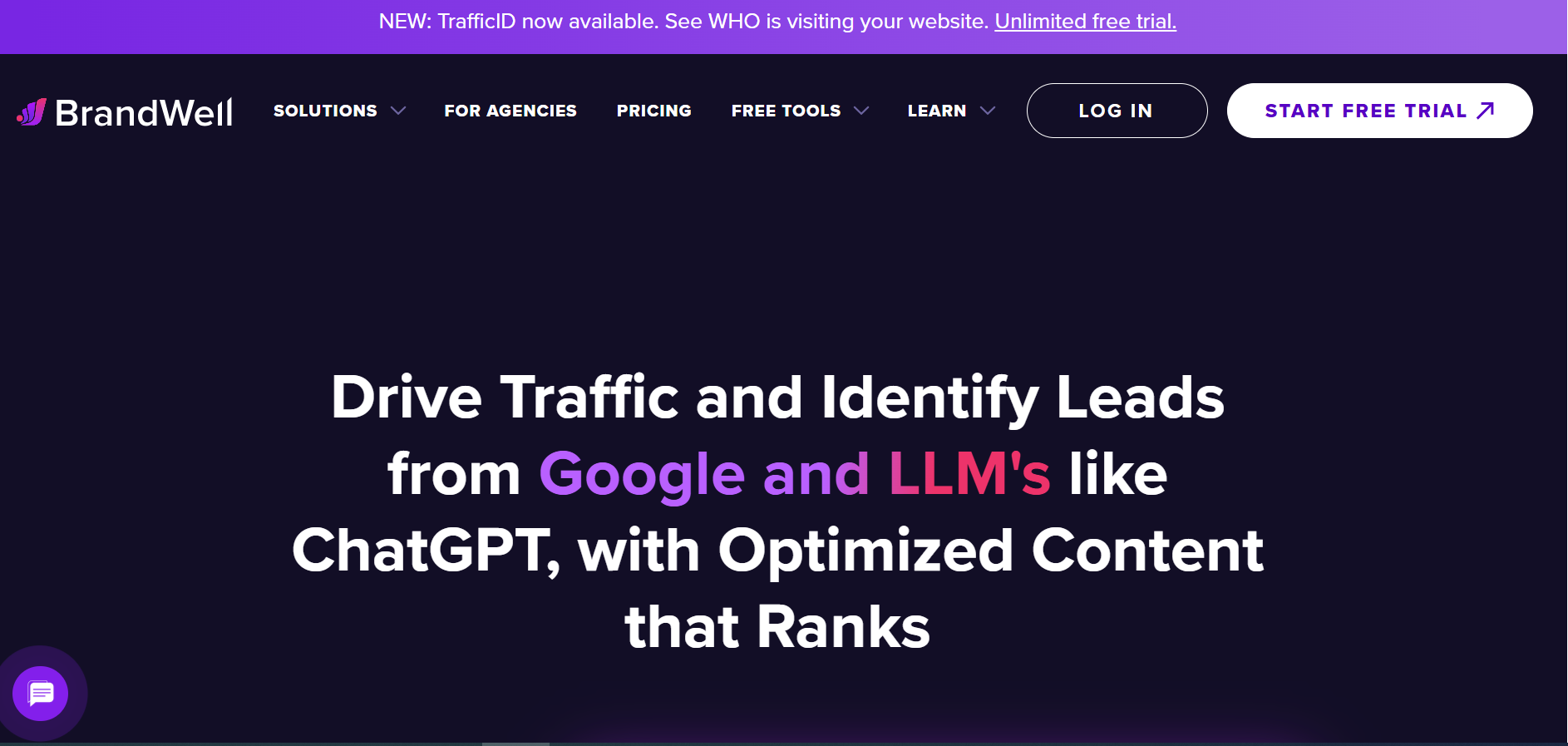
Content at Scale (BrandWell) is custom for teams that prioritize long-form, SEO-rich articles. It generates structured, search-optimized content with features like plagiarism checks and fact verification, making it valuable for scaling high-authority blog content.
▶️ Why it matters for SaaS: For companies betting on inbound, capturing high-intent search traffic is non-negotiable. Content at Scale helps deliver large volumes of evergreen blogs and knowledge hubs designed to rank and support PLG growth.
Use cases: Cornerstone articles, SEO-driven educational content, PLG knowledge bases.
Pros: SEO-focused, fact-checking built-in, ideal for scale.
Cons: High pricing, better suited for mid-market SaaS vs. startups.
Micro-checklist:
- Deploy for cornerstone TOFU content targeting high-intent queries.
- Track rankings and conversions in GA + GSC.
- Use as the foundation of content-led SEO strategy.
5. Surfer SEO + AI Writer - Best SEO Optimization Combo

Surfer SEO is an optimization platform that integrates with AI writing tools to deliver data-driven, search-ready content. It provides SERP analysis, keyword density targets, and content briefs to ensure blogs are competitive.
▶️ Why it matters for SaaS: Writing without optimization leads to wasted effort. Surfer ensures that every blog or landing page your SaaS team publishes is technically aligned with search intent and capable of ranking against competitors.
Use cases: On-page SEO for new blogs, refreshing older articles, competitive keyword optimization.
Pros: Strong SEO alignment, precise recommendations.
Cons: Requires pairing with AI tools; less useful standalone.
Micro-checklist:
- Run every AI-generated draft through Surfer before publishing.
- Use quarterly for updating blog archives and regaining lost rankings.
- Assign ownership to your SEO lead or content strategist.
6. Rytr - Best for Startups on a Tight Budget
Rytr is a lightweight AI writing solution for SaaS teams that need low-cost, basic content generation. It supports blogs, emails, and social copy in multiple languages but lacks advanced SEO features.
▶️ Why it matters for SaaS: Pre-Series A startups often don’t have the resources for high-end content platforms. Rytr keeps them visible online with consistent publishing, though its limitations mean it’s best for supplementary content.
Use cases: Blog intros, simple TOFU articles, email campaigns.
Pros: Extremely affordable, multi-language support, easy to use.
Cons: Limited SEO depth, weaker outputs for competitive industries.
Micro-checklist:
- Use for filler or supplementary content.
- Avoid cornerstone or competitive SEO posts.
- Upgrade as content goals become more ambitious.
7. Hypotenuse AI - Best for SaaS Product & Ad Copy
Hypotenuse AI specializes in generating structured product content, ad copy, and release notes. While it isn’t built for long-form SEO, it’s excellent for consistent product marketing messaging.
▶️ Why it matters for SaaS: Product launches and feature rollouts require multiple assets (ads, landing pages, release notes). Hypotenuse ensures consistency and speed, helping teams scale BOFU and campaign messaging.
Use cases: Product-led GTM content, ads, feature pages, BOFU landing pages.
Pros: Excellent structured copy, SaaS and e-commerce friendly.
Cons: Limited flexibility for long-form blogs.
Micro-checklist:
- Deploy during feature launches.
- Use alongside GTM campaigns to keep copy consistent across assets.
- Ideal for BOFU and product-led content.
8. Scalenut - Best for Content + Keyword Strategy
Scalenut combines AI-powered content generation with keyword research and planning tools. It enables SaaS teams to plan cluster-based SEO strategies and execute them at speed.
▶️ Why it matters for SaaS: Growth-stage companies need more than content, they need content tied to demand capture. Scalenut helps map keywords to ICP pain points, generate optimized drafts, and scale campaigns systematically.
Use cases: Keyword cluster campaigns, TOFU/MOFU blog planning, SEO-driven content strategies.
Pros: Combines keyword strategy and execution.
Cons: Slight learning curve for non-SEO operators.
Micro-checklist:
- Build keyword clusters before writing.
- Assign execution to SEO lead + content team.
- Deploy for multi-keyword SaaS content campaigns.
📋 Get Listed / Advertise
We refresh this guide monthly. Want your tool featured, benchmarked, or cited? Email: [email protected]
• Subject: “Rank Tracker Listing – TRM”.
Matching AI Tools to SaaS Funnel Stages: TOFU, MOFU, BOFU, and Beyond
Not every AI content tool is built for the same job. A VP of Marketing or Head of Content at a SaaS company doesn’t just need more words, they need content mapped to funnel stages, tied directly to SQLs, demos, and trial-to-paid conversions, a lifecycle content strategy guide keeps teams aligned across TOFU, MOFU, and BOFU.
Here’s how to think about tool selection:
▶️ For TOFU (Top-of-Funnel) blogs → Jasper, Writesonic, Content at Scale
These platforms help you generate long-form, keyword-driven content that actually ranks.
If your growth motion depends on organic acquisition, you’ll need a tool that can balance search intent + readability + scale.
▶️ For SEO optimization → Surfer SEO, Scalenut
It’s not enough to just generate blogs. You need them to rank and stay ranked.
Surfer and Scalenut act like the instrumentation layer “analyzing SERPs, suggesting keywords”, and ensuring every piece isn’t just written but engineered to drive traffic that converts; compare AI content optimization tools for SaaS to see which platforms elevate on-page outcomes.
▶️ For social + ads → Copy.ai, Hypotenuse AI
Growth-stage SaaS teams can’t rely on blogs alone. You also need social proof, campaigns, and product messaging that gets clicks and sign-ups.
These tools are optimized for short-form, high-impact copy “think LinkedIn campaigns, retargeting ads, or product announcements” when you need cross-channel execution, consider SaaS content marketing services to scale production without losing voice.
▶️ For budget-conscious teams → Rytr, Writesonic
If you’re an early-stage or lean marketing team, Rytr and Writesonic give you a low-cost way to keep content velocity high.
They won’t replace a robust SEO stack, but they keep you publishing and testing while headcount is lean.
The SaaS Operator’s Checklist for Choosing the Right AI Content & SEO Tool
Choosing an AI content generator for your SaaS company isn’t just about speed. Your content isn’t a blog post for the sake of publishing “it’s a growth lever tied directly to ARR, demo rates, and CAC efficiency”.
Here’s how to evaluate tools through a SaaS operator’s lens:
✅ SEO-First Features (Rankability Over Raw Output)
Look for tools that go beyond stringing words together. A real SaaS-ready AI platform should help you map to search intent, suggest keywords, and structure content for rankings, starting with a practical roundup of best AI SEO tools to understand which platforms actually drive visibility.
If the tool can’t generate content that has a fighting chance of driving organic traffic → SQLs, it’s not reducing CAC, it’s just adding noise.
✅ Integration-Ready (Fits Your Stack, Not Another Island)
AI won’t replace your stack; it should enhance it. Ask:
- Does this tool plug into WordPress, HubSpot, or your CMS?
- Can it sync with Surfer SEO, Clearscope, or SEMrush?
If your team has to copy-paste every draft into Google Docs to optimize manually, you’re burning time that could be spent on scaling campaigns, use an ROI-first SEO tool stack for SaaS buying framework to evaluate integrations and rollout plans.
✅ Content Quality (SQL-Level, Not Vanity Blogs)
Many AI tools can produce words, but few can create content that actually moves someone from reader → demo request → trial → paid. Content quality here means:
- Brand voice consistency (no robotic tone).
- Fact-checked, plagiarism-free copy.
- Optimized readability for your ICP (decision-makers in SaaS).
If you’re still rewriting 80% of what the tool produces, it’s not a fit. Apply SEO copywriting best practices so outputs are structured to rank and convert.
✅ Scalability (Multi-Channel, Multi-Motion)
Your growth motion isn’t one-dimensional. You’re not just publishing blogs “you’re shipping landing pages, feature pages, nurture emails, LinkedIn posts, and sales collateral”.
The right AI tool should help your team scale across formats while keeping tone + SEO alignment intact. Scalability isn’t about volume “it’s about volume + consistency + conversion”.
If you’re ready to operationalize this at scale, explore programmatic SEO services to cover more intent surfaces without sacrificing quality.
✅ Value vs. Cost (Impact on CAC & Conversion Metrics)
Finally, think in metrics:
- Does this tool reduce the cost of producing SQL-grade content?
- Does it accelerate trial-to-paid conversion by improving funnel velocity?
A cheap tool that creates fluff isn’t cheap at all, it's a wasted budget. Conversely, a higher-priced tool that cuts weeks off campaign launches may be the lever that improves ACV and reduces CAC.
👉 In short: Don’t just pick an AI tool because it’s popular. Pick one that integrates into your growth engine, improves SEO outcomes, and drives measurable revenue impact.
The Gaps AI Can’t Fill in SaaS Marketing (and Why Human Strategy Still Matters)
| Limitation | Why It Matters for SaaS Teams | Operator Takeaway |
|---|---|---|
| Generic content if prompts are weak | AI follows inputs literally. Vague prompts = filler content that won’t rank or resonate with your ICP. | Always use structured briefs and keyword frameworks before hitting “generate.” |
| Risk of fact-checking errors | AI doesn’t know your product details, compliance rules, or SaaS-specific nuances. Wrong info erodes trust. | Layer in human QA to validate data, stats, and product positioning. |
| Cannot replace human strategy, voice, or editing | AI can produce words, but it can’t create narrative, positioning, or brand differentiation. | Treat AI as a production accelerator, not a strategist. Keep humans in the loop. |
👉 That’s why the winning play is AI + strategy + human operators. Tools create velocity, but strategy ensures ARR growth, CAC efficiency, and trial-to-paid conversion impact.
How The Rank Masters Helps SaaS Teams Win with AI + SEO
At The Rank Masters, we don’t just help SaaS companies pick shiny tools. We help you operationalize them inside a growth framework that:
- Audits your content funnel → Identify leaks in your TOFU → MOFU → BOFU journey with a targeted SaaS content audit & fix sprint.
- Recommends the right AI + SEO stack → Custom to your ICP, sales motion, and ARR goals—guided by SaaS SEO software recommendations.
- Builds a scalable publishing workflow → So your team can ship high-quality content at velocity, powered by scalable SEO automation.
- Optimizes for sign-ups, not just clicks → Because traffic means nothing if it doesn’t move the needle on demo rates, trial-to-paid, and ACV growth—via product-led content CRO services.
We’re not here to just get you “AI content.” We’re here to make sure your content pipeline is a revenue engine.
How to Build an AI Content Workflow for SaaS (7 Steps)
Use this 7-step process to turn AI content generator tools into publish-ready SaaS articles that rank. It bakes in briefs, E-E-A-T, internal links, and schema so you can win snippets and improve CTR.
1) Define the brief (keyword → intent → audience)
Goal: Create a clear SEO content brief aligned to business goals.
Actions: Pick the primary keyword (e.g., “best AI content generator tools”), list 3–5 secondary terms, define search intent, audience (ICP, pain points), POV, and success metric.
Deliverables: Working title, angle, target word range, 5–8 H2/H3 ideas, questions to answer (from PAA + your GSC).
💡 Pro tip: Include 3 competitor URLs and the internal posts you’ll link to in the first scroll.
2) Lock the structure (H2/H3s + questions)
Goal: Satisfy intent with a scannable outline that mirrors SERP expectations.
Actions: Finalize H2/H3s, map each heading to a user question, assign one internal link per major section, add a short intro and a 40–80-word “answer box.”
Deliverables: Outline with anchors, list of internal links, target snippet text.
💡 Pro tip: Front-load decision tables or checklists to reduce pogo-sticking.
3) Draft with AI (section-level prompts + voice)
Goal: Get a high-quality first draft without generic fluff.
Actions: Prompt per section (not whole article), provide voice cues, product truths, and sources to cite. Ask for numbered steps, bullets, and short sentences.
Deliverables: Draft with citations/placeholders, consistent brand voice, examples specific to SaaS.
💡 Pro tip: Keep prompts constrained: role, audience, constraints, source list, and “do not hallucinate.”
4) Review for accuracy (fact-check + sources)
Goal: Upgrade the draft to trustworthy, expert content.
Actions: Verify every claim; swap vendor claims for primary sources; add screenshots/data where useful; ensure author byline and expertise are visible.
Deliverables: Corrected copy, source list, image notes/captions.
💡 Pro tip: Add 1–2 unique insights (process, mini case, dataset) to earn links and LLM citations.
5) Optimize for SEO (headings, terms, links, meta)
Goal: Make it rankable and clickable.
Actions: Refine H1/H2s with keywords, incorporate relevant terms, add 6–12 internal links (first within 200–300 words), write a benefit-led title tag and meta, compress and name images with descriptive alt text.
Deliverables: Final headings, internal link map, title tag (≤60 chars), meta (120–155 chars).
💡 Pro tip: Include a simple TL;DR decision table and a tools list—these win PAAs and “Things to know.”
6) Publish with trust signals (schema + freshness)
Goal: Improve discoverability and SERP features.
Actions: Add Article + FAQ (and optional HowTo) schema in your CMS schema field, set dateModified, include author bio, and ensure a clean URL.
Deliverables: Live URL with schema, updated date, author box, FAQs at the end.
💡 Pro tip: Place a “Get Listed / Advertise” box mid-article and near the end for partnerships.
7) Measure & iterate (GSC feedback loop)
Goal: Lift CTR and capture missed queries.
Actions: In GSC, pull queries with high impressions/low CTR (avg position ≤12). Mirror phrasing in new H2/H3s, expand FAQs, and test 1–2 title variants. Refresh snippet text every update.
Deliverables: Update log, added FAQs, revised title/meta, internal link additions.
💡 Pro tip: Schedule a 30-day refresh and request indexing after each update.
🏅 Outcome: A repeatable AI content workflow for SaaS that ships faster, captures snippets/PAAs, and compounds rankings through structured updates.