If your site used to show up as a cited source in AI answers, and now it doesn’t, you need citation-loss alerts. The best tools for this are the ones that (1) run your prompt set on a schedule, (2) store the exact cited URLs and answer snapshots, (3) highlight what changed (diffs), and (4) notify you fast enough to react before the loss becomes permanent.
For most teams:
- OtterlyAI is a strong “get started fast” pick with citation analysis and affordable entry pricing.
- Peec AI is great if you want clean dashboards + daily prompt runs with a marketing-team workflow.
- Profound is the enterprise choice when governance, deeper insights, and scale matter.
- Promptmonitor is a budget-friendly option when you mainly want monitoring + visibility signals.
Conductor fits orgs that want AI visibility inside a broader enterprise SEO/AEO platform, use a buyer guide for AI visibility platforms.
📋 Get Listed / Advertisement
We update this guide monthly. Want your tool featured? Contact: [email protected].
Best AI Visibility Tools for Citation Loss Alerts (Quick Comparison)
| Tool | Best for | Alert strength (Change/Diff/Anomaly) | Starting price |
|---|---|---|---|
| OtterlyAI | SMBs + agencies needing fast, multi-engine tracking | Strong / Medium / Medium | From ~$29/mo |
| Peec AI | Marketing teams who want clean daily monitoring + dashboards | Strong / Medium / Medium | Starter €89/mo |
| Profound | Enterprise AI visibility + governance + deeper analytics | Strong / Strong / Strong | Starter $99/mo (enterprise tiers) |
| Promptmonitor | Low-cost monitoring + visibility tracking | Medium / Medium / Low–Med | ~$29/mo |
| Conductor | Enterprise teams combining AI visibility + SEO workflows | Medium–Strong / Medium / Medium | Contact sales (varies) |
1.OtterlyAI
What it does
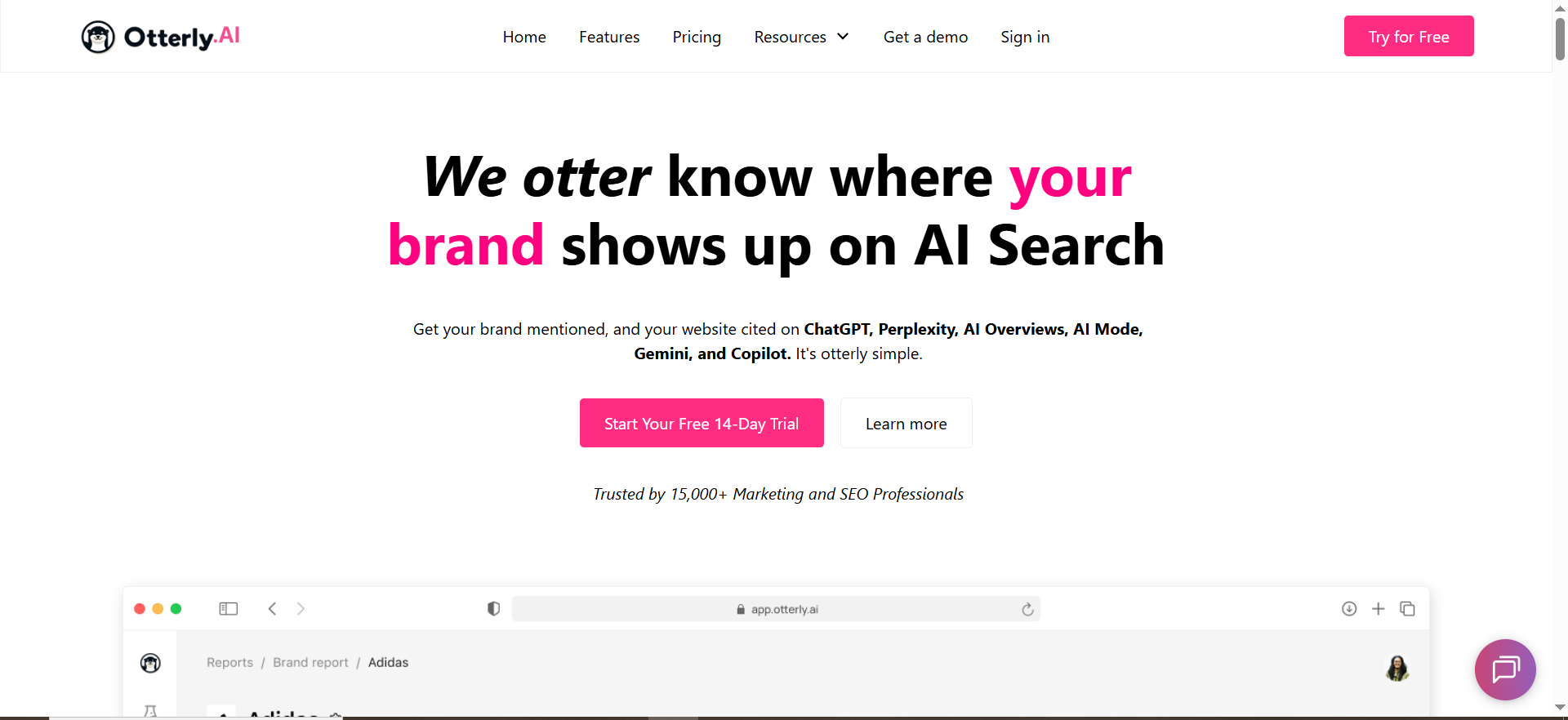
OtterlyAI positions itself as an AI search monitoring / AI visibility tracker, monitoring how your brand and content appear across major AI answer surfaces and tracking citations/links over time.
Why teams use it
Because it’s one of the more approachable ways to start tracking prompts → AI answers → cited sources, with pricing that works for smaller teams and a workflow that doesn’t require a data team to get value.
What it’s good for
- Daily monitoring of a curated prompt set (core category prompts, competitor comparisons, “best X” lists).
- Tracking whether your domain appears as a linked citation and how that changes over time.
- Early-stage GEO/AEO programs where your biggest need is “tell me when something changed.”
When it’s a good fit
- You need alerts and evidence without heavy setup.
- You’re running GEO experiments and want fast feedback loops.
When it’s not a good fit
- You need deep enterprise controls (SSO, granular governance, complex multi-brand reporting).
- You want fully automated root-cause attribution (few tools truly do this well today).
How to use it for citation-loss alerts
A simple, reliable workflow:
- Create prompt clusters: (a) brand + category, (b) “best tools” prompts, (c) “X vs Y” comparisons, (d) “how to” intent prompts, then keep your prompts structured like an AI-era AEO content system.
- Track daily for the clusters that drive the pipeline (your BOFU prompts).
- Configure alerts for:
- Citation count drop (your domain cited less often)
- Prompt coverage drop (you appear in fewer prompts)
- For each alert, capture:
- the answer snapshot
- which URLs replaced you
- whether the model stopped citing sources entirely or just stopped citing you
Key capabilities to look for
OtterlyAI’s pricing page references features like daily tracking and link citations analysis, which are exactly what you need for “disappeared from sources” detection.
Pricing
OtterlyAI’s pricing starts at $29/month.
Free tier?
OtterlyAI doesn’t offer a free tier, but it does offer a free trial.
Downsides / limitations
- Like all AI visibility tools, the data can be volatile because AI answers vary run-to-run, so it helps to ground changes with an evergreen visibility mindset for AI search.
- If you’re managing dozens of brands, you may outgrow the “simple dashboard” model.
2. Peec AI
What it does
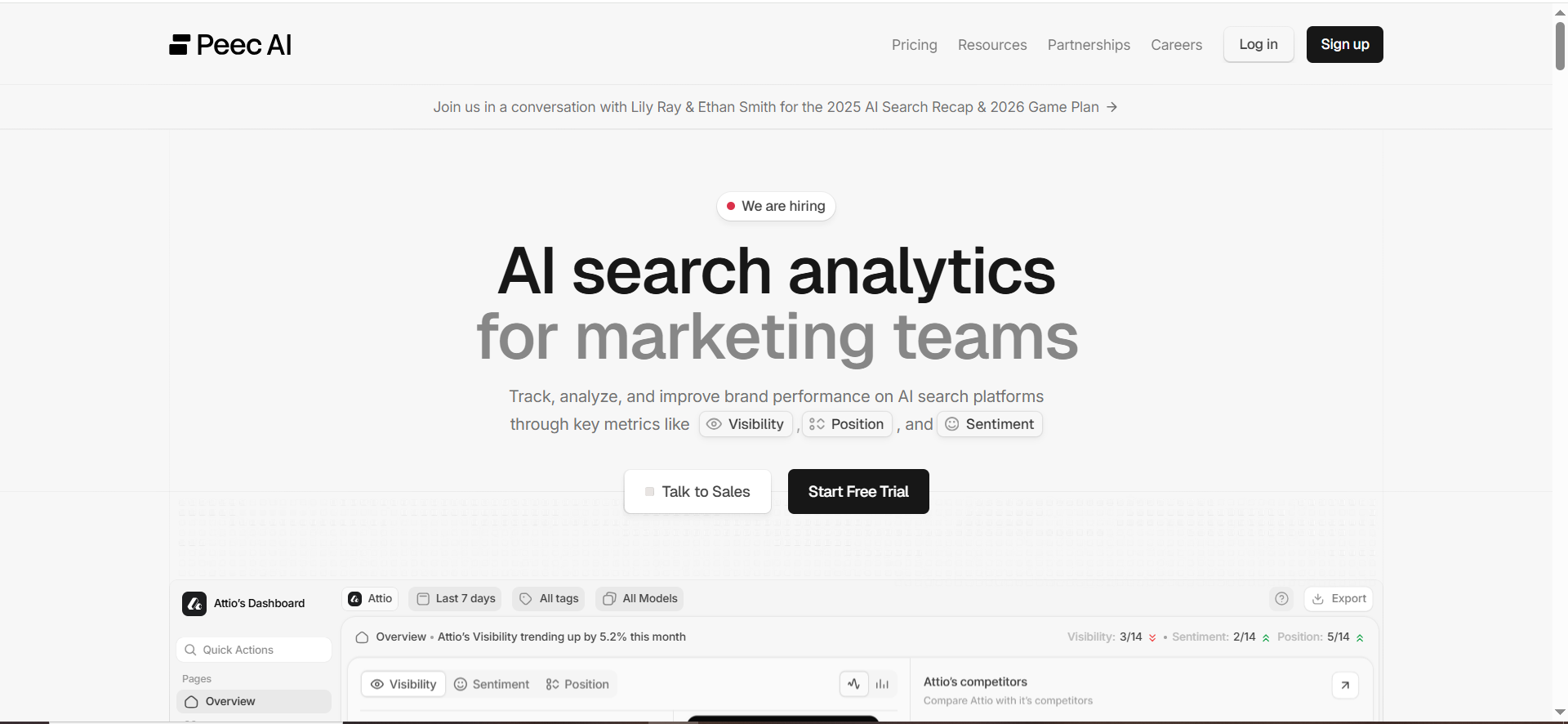
Peec AI is built for AI search analytics: tracking brand performance across AI systems (e.g., ChatGPT, Perplexity, and Google AI Overviews) with daily prompt runs and visibility reporting for marketing teams.
Why teams use it
Peec is often chosen because it’s:
- designed around marketer-friendly dashboards
- focused on prompt tracking and citations
- built to support ongoing monitoring without drowning users in “SEO suite bloat”
What it’s good for
- Daily prompt monitoring with a clean workflow.
- Tracking how AI answers mention your brand and which sources are surfaced.
- Making “AI visibility” a weekly reporting line item alongside SEO is much easier when you already have a solid SEO reporting software stack.
When it’s a good fit
- You want a tool your team will actually use weekly.
- You need unlimited seats so stakeholders can self-serve insights.
When it’s not a good fit
- You want extremely deep engineering integrations out of the box (some teams prefer purpose-built observability tooling for that).
- You want the lowest possible cost per prompt at large scale.
How to use it for citation-loss alerts
Peec-style setup that works:
- Start with ~25 prompts (their Starter tier supports that scale).
- Tag prompts by:
- product line / use case
- funnel stage
- “must-win” (revenue-critical) vs “nice-to-have”
- Configure alert logic around:
- “Our domain no longer appears in citations for BOFU prompts”
- “Competitor X replaced us in citations for Y prompt cluster”
- For every major drop, run a manual re-check (same prompt, same region) to confirm it wasn’t a one-off, then document the result as part of your brand visibility audit in LLMs.
Key capabilities
Peec’s pricing page highlights daily intervals for prompts and prompt limits by plan, which matters because citation loss is easier to catch when you’re not waiting a week to find out.
Pricing
Peec AI’s pricing starts at €89/month.
Free tier?
Peec AI doesn’t offer a free tier, but it does offer a free trial (it lists “Start for free” on its pricing page).
Downsides / limitations
- If you need deeper “diff views” (what sentence changed, which citation moved), you may need to pair Peec with a process that stores snapshots and runs validations.
- Some advanced engines/features may be add-ons.
3. Profound
What it does
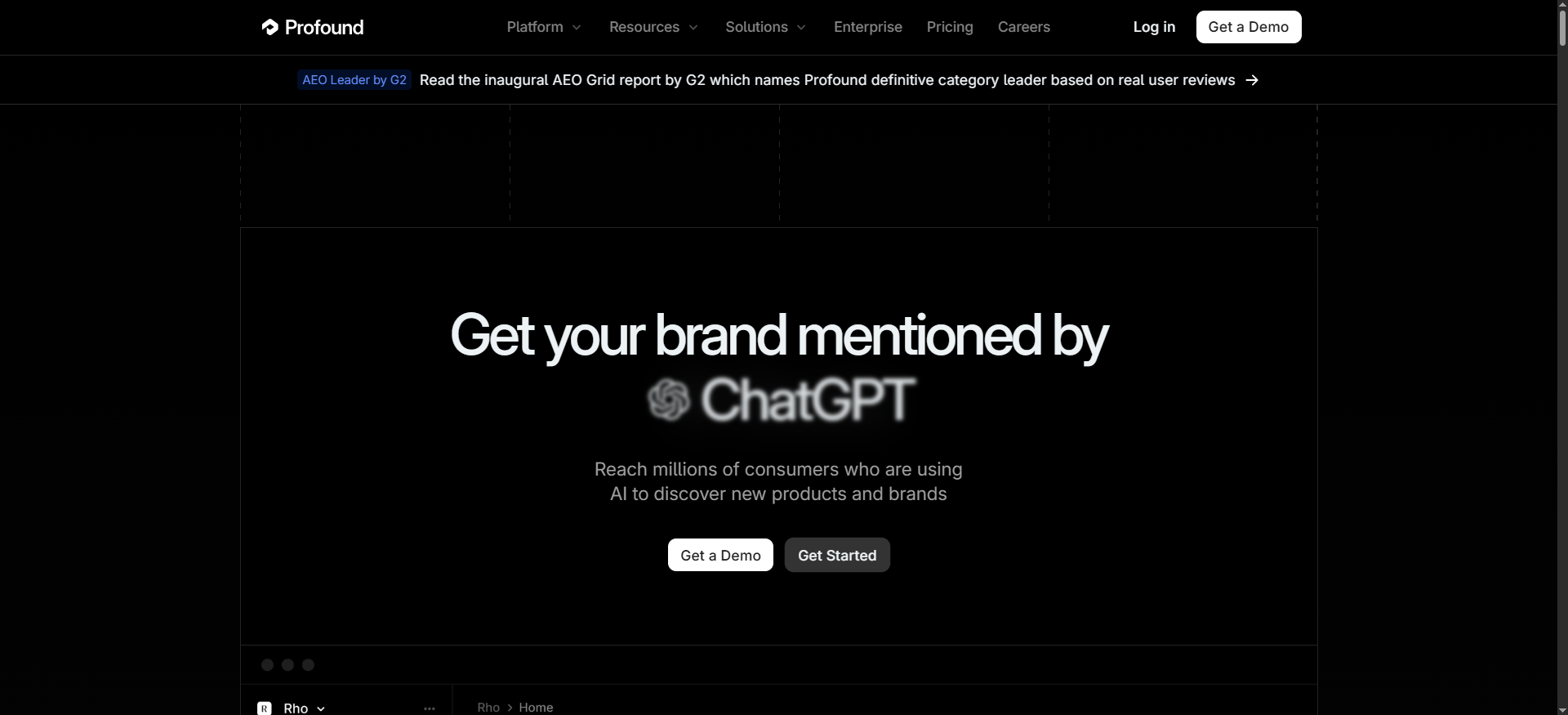
Profound is positioned as an AI visibility platform focused on understanding how AI talks about your brand, including citation discovery and enterprise-ready capabilities.
Why teams use it
Profound is commonly selected by enterprise teams because it emphasizes:
- deeper insight into AI responses
- governance/security positioning (e.g., SOC 2 statements)
- scaling across more complex org needs
What it’s good for
- Large organizations that need more than “alerts”, they need analysis, reporting, and governance.
- Programs where AI visibility is treated like a strategic channel, not an experiment.
When it’s a good fit
- You need enterprise features and expect multiple stakeholders, regions, or product lines.
- You want more sophisticated “what changed and why” investigation capability, this is where an AE SEO playbook for citations helps you turn alerts into repeatable fixes.
When it’s not a good fit
- You’re a small team and mainly need lightweight alerts.
- You have a tight budget and only want to track a small prompt set.
How to use it for citation-loss alerts
A “Profound-style” incident workflow:
- Build a prompt portfolio by category + funnel stage.
- Track share of citations (not just mentions) using a share-of-voice approach for AI answers.
- When an alert triggers:
- pull the “before/after” answer snapshots
- identify which sources replaced you
- classify the loss:
- content relevance loss (your page no longer matches intent)
- authority loss (competitors became more citable)
- technical loss (indexing/canonical/blocked resources)
- Generate a remediation ticket with:
- target page
- missing section/entities
- internal links to add
- external citations/outreach targets
Key capabilities
Profound’s own messaging emphasizes citation discovery and enterprise readiness, which is aligned with large-scale citation loss monitoring.
Pricing
Profound’s pricing starts at $99/month.
Free tier?
Profound doesn’t advertise a free tier; it does offer demos, and free-trial availability isn’t publicly listed on its main pricing pages.
Downsides / limitations
- Price and complexity can be more than you need if your only requirement is “tell me if I disappeared from citations.”
- You still need a strong internal workflow, tools and surface signals, but recovery requires content + technical + authority work, use the most effective AI visibility strategies as your remediation checklist.
4. Promptmonitor
What it does
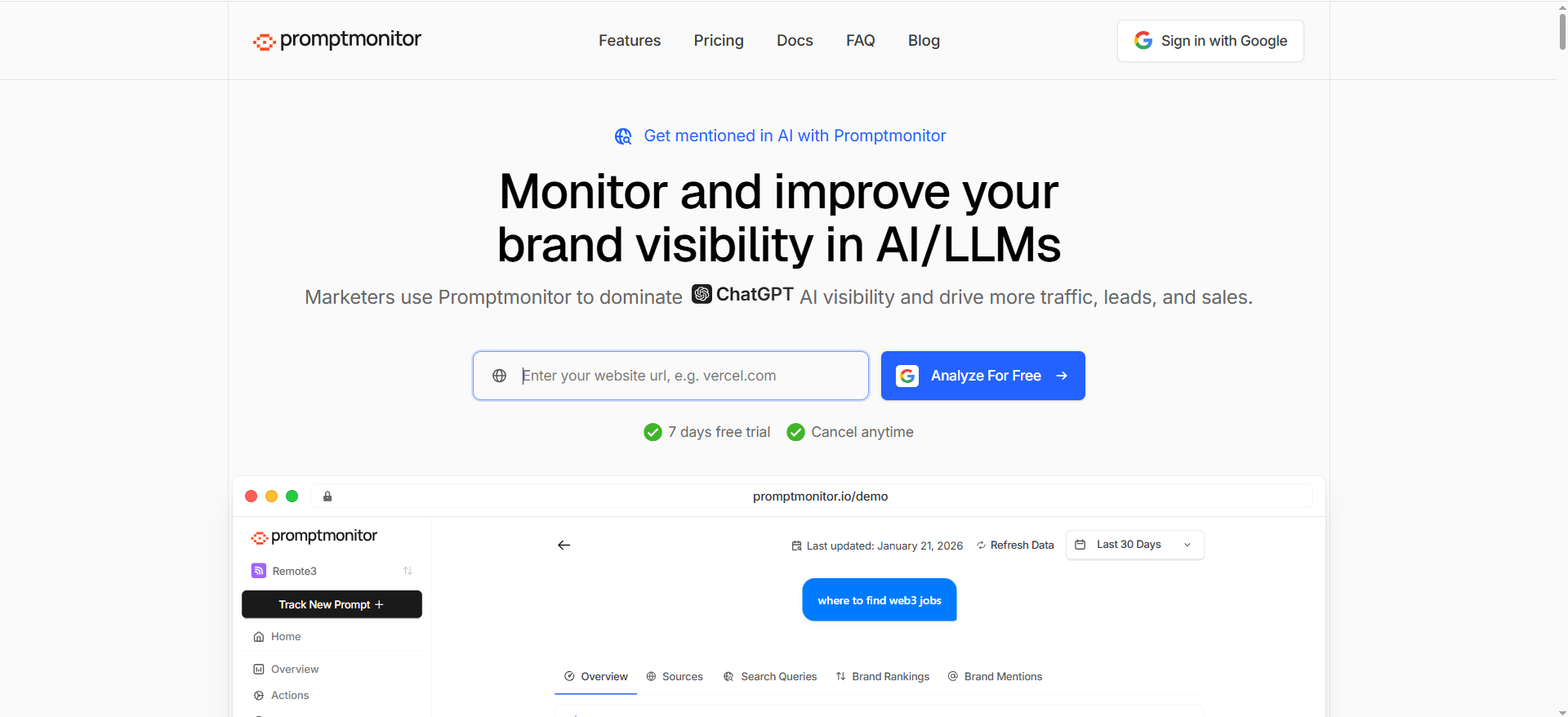
PromptMonitor focuses on monitoring and optimizing brand visibility across AI platforms (tracking mentions/visibility signals tied to prompts).
Why teams use it
Because it can be a budget-friendly way to start monitoring, and it’s especially attractive when your goal is:
- build a baseline visibility view
- detect changes early
- run lightweight GEO experiments without buying an enterprise platform
What it’s good for
- Small teams that need “good enough” monitoring and a simple alert habit.
- Agencies that want to offer an AI visibility add-on for smaller clients.
When it’s a good fit
- You have a defined set of prompts and want weekly/daily monitoring signals.
- You mostly need to know: “Are we being mentioned/cited more or less?”, tie that to consistent definitions using AI visibility metrics benchmarks.
When it’s not a good fit
- You need robust anomaly detection and deep diffing across many engines/regions.
- You need strong enterprise integrations and governance.
How to use it for citation-loss alerts
Practical setup:
- Start with 20–50 prompts that matter commercially (category + “best” + “vs” prompts), and prioritize them the same way you pick keywords in zero-click SERPs.
- Create a simple alert threshold:
- “Alert me if we lose citations on >20% of prompts in a cluster week-over-week.”
- Maintain a manual “evidence log” (screenshot/answer snapshot + cited sources) for big changes, treat it like a lightweight content audit checklist for B2B SaaS.
Key capabilities
Third-party writeups describe Promptmonitor’s approach to tracking AI visibility and scoring/coverage across multiple AI platforms.
Pricing
Promptmonitor’s pricing starts at $29/month.
Free tier?
Promptmonitor offers a free plan (its “Agency Plan”), and it also offers a 7-day free trial on paid plans.
Downsides / limitations
- As with many lower-cost tools, you may need to supplement with a workflow for storing snapshots and validating volatility.
- Reporting depth may be lighter than enterprise platforms.
5. Conductor
What it does
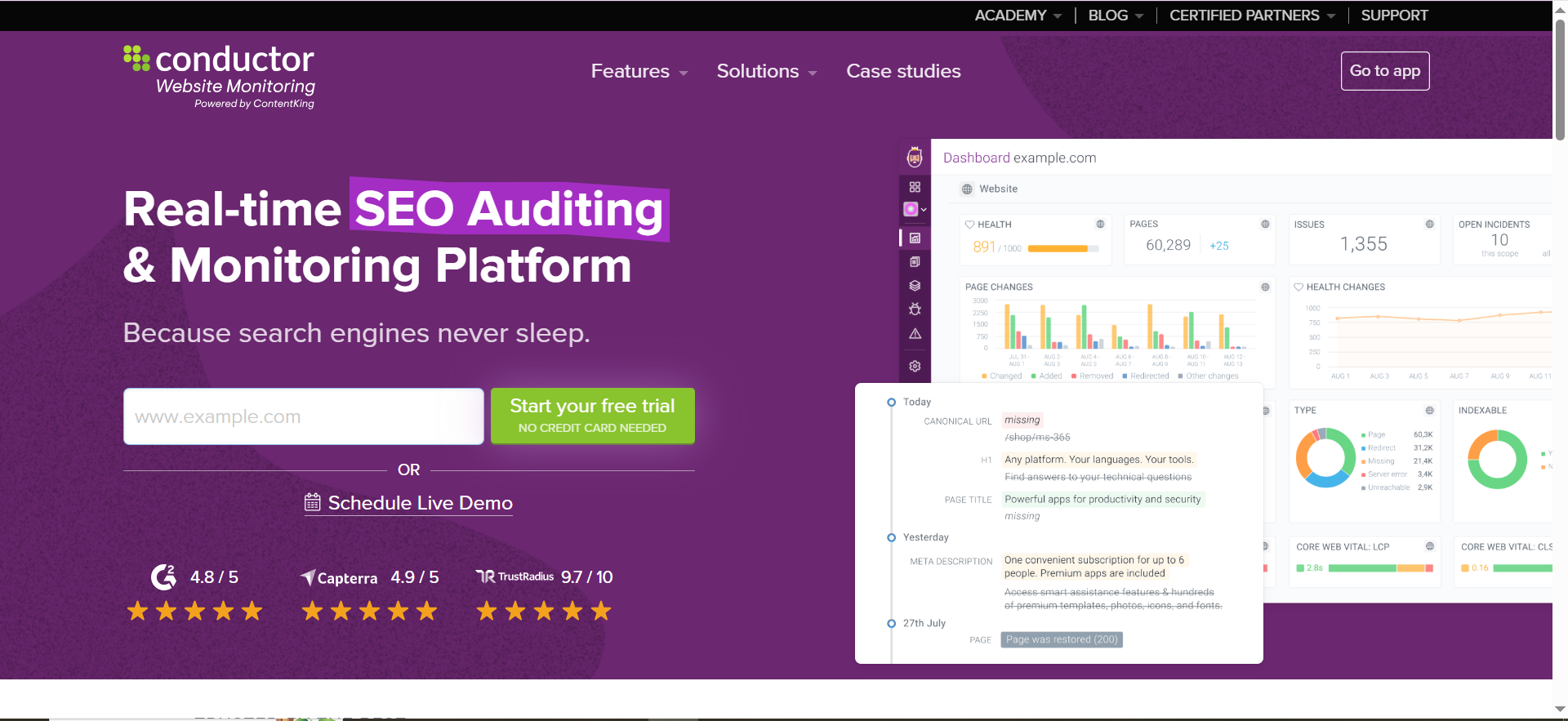
Conductor is an enterprise SEO platform that now emphasizes getting brands found in AI search, positioning itself as an enterprise AEO platform.
Why teams use it
Because they’re already operating at enterprise scale and want:
- AI visibility intelligence connected to broader SEO workflows
- stakeholder-ready reporting
- vendor maturity and ecosystem depth
Conductor has also publicly discussed bringing AI search intelligence directly into ChatGPT workflows, reinforcing its focus on operationalizing AI visibility insights.
What it’s good for
- Orgs that want AI visibility to sit alongside:
- enterprise SEO
- content performance
- competitive intelligence
- governance and reporting
When it’s a good fit
- You have an established SEO program and want AI visibility added as a first-class layer, not a separate tool.
When it’s not a good fit
- You’re a small team looking for the cheapest “citation-loss alerts only” solution.
How to use it for citation-loss alerts
Enterprise workflow pattern:
- Connect AI visibility tracking to your existing reporting cadence (weekly exec dashboards + monthly reviews)
- Configure “watchlists”:
- BOFU prompts
- priority product pages
- competitor comparison prompts
- Create a triage system:
- Severity 1: “Lost citations on revenue prompts”
- Severity 2: “Lost citations on category prompts”
- Severity 3: “General mention volatility”
- Route alerts into your existing SEO ticketing process.
Key capabilities
Conductor’s messaging emphasizes AI visibility, citation share, sentiment, and competitive insights in AI surfaces, useful context when investigating why you dropped.
Pricing
Pricing is not publicly listed; it’s available by quote.
Free tier?
Conductor doesn’t offer a free tier, but it does offer a “try for free” option and a demo.
Downsides / limitations
- Can be heavier than needed if you only want a lightweight “lost citations” alarm.
- Best results come when you already have a mature workflow for remediation.
What “citation loss” actually means (and why it happens)
“Citation loss” is not one thing. It usually shows up in three ways:
- You’re still mentioned, but not cited.The AI answer names your brand but stops linking to or citing your site.
- Your URL is no longer included as a source.This is the classic “you disappeared from sources” moment.
- You’re absent entirely (no mention, no citation).This is often the highest-severity version, especially if it happens on BOFU prompts.
Why it’s messy: different AI systems cite sources differently. For example, Perplexity explicitly shows numbered citations in answers. (Perplexity AI) And Google’s AI features (including AI Overviews) are treated as an AI-driven search experience from a site owner perspective, where inclusion and presentation can change as Google evolves the feature.
The biggest underlying cause: volatility
AI answers can vary run-to-run. Some tools address this by running prompts multiple times to produce more reliable averages in AI search visibility.
So: the best “citation loss alert” systems aren’t just “notify me when I’m gone.” They also support:
- multi-run validation
- before/after snapshots
- diffs that show what changed
- thresholding and anomaly detection to reduce false alarms
What to look for in citation-loss alerting
The Excel topic briefly calls out three alert categories that matter most here: change alerts, diffs, and anomaly detection (plus the broader “volatility play” of tracking sources over time). Here’s how to evaluate them.
1) Change alerts (the trigger)
Minimum viable alerting:
- “Brand mention rate dropped week-over-week.”Better:
- “Our domain dropped from cited → not cited on these 7 BOFU prompts.”
What you want:
- prompt-level alerts
- engine-level alerts (ChatGPT vs Perplexity vs AIO)
- URL-level alerts (which page disappeared)
2) Diffs (what changed, not just that it changed)
Diffs answer:
- Which source replaced you?
- Did the answer structure change (list vs narrative)?
- Did the model stop citing sources entirely?
Even if a tool doesn’t have perfect diffing, you can build it operationally:
- store answer snapshots
- store “top cited URLs” per prompt
- compare before/after every run
3) Anomaly detection (reduce noise, catch incidents)
This matters when:
- you track hundreds of prompts
- you need to detect “something is wrong” across a whole topic cluster
Good anomaly detection flags:
- “We lost citations across 30%+ of prompts in Category A overnight.”
- “Competitor X surged across multiple prompts at once.”
A practical monitoring workflow (the “volatility play”)
This is the operational model that turns tools into outcomes.
Step 1: Build a prompt portfolio (not a random list)
Use three layers:
Layer A — Revenue prompts (BOFU)
- “best [category] tool for [use case]”
- “[your product] vs [competitor]”
- “alternatives to [competitor]”
Layer B — Category prompts (MOFU)
- “how to choose [category]”
- “what is [category]”
Layer C — Authority prompts (TOFU)
- definitions, frameworks, checklists
Step 2: Establish baselines and thresholds
Start simple:
- Baseline over 2–4 weeks.
- Alert if:
- citations drop by X% for a cluster
- your domain disappears from BOFU prompts
- competitor replaces you consistently
Step 3: Validate alerts to avoid chasing ghosts
Whenever you get a high-severity alert:
- re-run the prompt (same region/language)
- if possible, run multiple times and compare variance (some tools do this automatically).
Step 4: Triage by cause (use buckets)
Bucket the issue quickly:
Bucket 1 — Relevance gap
- competitor content matches intent better
- your page lacks key entities/sections
Bucket 2 — Technical gap
- canonical issues, indexing, blocked resources, rendering
Bucket 3 — Authority gap
- competitor is “more citable” (brand mentions across web, strong references)
Bucket 4 — Surface/format change
- AI started favoring a different format (lists, tables, first-hand results)
Step 5: Respond with a playbook
A high-velocity response loop often looks like:
- Update or create a “citation-ready” page:
- clear definitions
- structured sections
- comparison table
- FAQ block
- Strengthen internal links to that page (from relevant cluster pages).
- If competitors replaced you, analyze:
- what they cover that you don’t
- what proof or examples they provide
- Outreach where appropriate:
- get cited by the publications AI surfaces most often in your niche
- improve off-site references
Step 6: Report like an operator
Track:
- Prompt coverage % (how many prompts you appear in)
- Citation rate % (how often your domain is cited)
- “Critical prompt” visibility (your BOFU list)
- Competitor share-of-citations trend
What does “citation loss” mean in ChatGPT vs Perplexity vs Google AI Overviews?
“Citation loss” generally means: a prompt that previously cited you no longer cites you (your domain/URL disappears from the visible sources list). But the symptom differs by platform UI and behavior:
Citation loss in Perplexity
Perplexity is the most straightforward to diagnose because it usually shows numbered citations.A loss here typically looks like:
- your domain was in the numbered citations yesterday
- today, it’s replaced by different domains, or your citation number disappears entirely
What to log: the prompt, the before/after citation list, and which domains replaced you.
Citation loss in ChatGPT (when web search is used)
ChatGPT search can show links to relevant web sources when it performs a web search.
Citation loss here commonly looks like:
- the answer still mentions your brand, but the links now point elsewhere
- the answer provides fewer links than before
the model returns a response without searching (fewer/no sources displayed)
What to log: whether the answer used web search, and the linked sources shown.
Citation loss in Google AI Overviews
Google’s AI Overviews are part of Google Search’s AI features, and inclusion can vary by query context.
Citation loss here often looks like:
- your URL is no longer among the linked sources in the overview
- your URL still ranks organically but stops being pulled into the overview sources
- the overview appears less often (or changes format), which changes the source set
Important reality: source visibility doesn’t always equal clicks; users can click less when an AI summary appears, and deeper citations can be effectively invisible.
Why do AI citations change day-to-day (volatility) and how do you reduce noise?
AI citations change more than classic rankings because the answer layer is influenced by multiple moving parts:
Why volatility happens
- System updates + experimentation: providers iterate quickly; source selection can fluctuate.
- Retrieval variability: even if the prompt is the same, the system may pull different supporting documents.
- Answer formatting shifts: if the model changes the structure (list vs narrative), the citation set can change.
- Competition effects: if another source becomes more “citable” (clearer, more complete, better referenced), it can displace you.
Industry analyses regularly describe AI citation landscapes as notably volatile.
How to reduce noise (and avoid false alarms)
Use a “volatility-safe” monitoring method:
- Multi-run validation for critical promptsIf a BOFU prompt triggers a severe alert, rerun it 2–3 times and compare source overlap before escalating.
- Alert on clusters, not single prompts: A single prompt can fluctuate. A cluster dropping (e.g., “best X”, “X vs Y”, “X alternatives”) is a stronger signal when building an AI search visibility strategy.
- Track both “mention” and “citation”: If citations drop but mentions stay stable, you likely have a URL-level issue, not a brand relevance collapse.
- Separate “format change” from “replacement”
- format change: fewer/no sources shown
- replacement: competitors listed instead of you
- Version your evidence: Save snapshots: prompt, date/time, engine, region, answer text, and the cited URLs, so you can prove it’s real and spot patterns during AI search visibility audits.
What’s the difference between “brand mention loss” and “URL citation loss”?
These two problems look similar (“we disappeared”), but they require different fixes.
Brand mention loss
The AI answer no longer names your brand (or names you less often).
Usually caused by:
- weaker topical relevance for that query intent
- competitor becoming the “default brand” for the category
- lack of authoritative references to your brand across the web
Typical fixes:
- expand topical coverage (cluster strategy)
- improve comparative content (“X vs Y”, “alternatives”, “best for”)
- strengthen off-page references (PR, reviews, directories, credible mentions)
URL citation loss
The answer still mentions your brand, but stops citing/linking to your domain (or stops citing a specific page).
Usually caused by:
- page mismatch (wrong page for the intent)
- content structure not “citable” (hard to extract)
- technical/indexing issues for that URL
- competitor page becoming a clearer reference
Typical fixes:
- refresh the right page to match the prompt intent
- add structured sections that AI answers can quote/cite
- improve internal linking so the “right” page is discoverable and reinforced
How do you detect which URL disappeared vs the brand still being mentioned?
This is the key diagnostic step when a team gets the dreaded message: “You disappeared from sources,” and it’s the foundation of a proper LLM visibility audit.
A practical detection checklist
For each alert, record these fields:
- Is the brand mentioned in the answer text?
- Yes → likely URL citation loss
- No → likely brand mention loss (or full visibility loss)
- Is the domain cited anywhere in the sources list?
- Domain absent → domain-level citation loss
- Domain present but different URL → URL swap (page-level issue)
- Which URL did you have before? Which URL appears now?
- If a different page on your site appears: you may need to consolidate/canonicalize or better target intent.
- Which competitor domains replaced you?Replacement domains often reveal the missing “shape” of content (tables, definitions, step-by-step frameworks).
- Did the platform stop showing sources entirely?If sources vanish rather than swap, it may be a product/format shift (not a competitive displacement).
Two fast “root cause” signals
- Brand still mentioned + no URL citations: you likely need a more citable page for the prompt intent.
- No brand mention + competitor cited repeatedly: you likely need topical/authority expansion plus better comparative positioning.
What are the most useful metrics: Share of voice, mention rate, citation rate, first-citation position?
If you only track one metric, you’ll miss what’s actually happening. A useful dashboard separates presence from attribution and prominence.
Core metrics worth tracking
1) Prompt coverage (Presence)
- % of tracked prompts where you appear at all (mentioned or cited)
2) Mention rate
- % of prompts where your brand is named in the answer textUse this to detect “brand mention loss.”
3) Citation rate
- % of prompts where your domain/URL appears in sourcesThis is the headline metric for “citation loss.”
4) Share of voice (SOV) across citations
- Of all citations across your prompt set, what % belong to you vs competitors?This is the best competitive view because it normalizes volatility.
5) First-citation position (Prominence)
If a platform orders sources (or visually emphasizes some), track whether you’re in the top 1–3 sources.This matters because engagement drops sharply as citations get buried.
Practical “alert thresholds” tied to metrics
- Severity 1 (BOFU): citation rate drops to 0% on revenue prompts
- Severity 2 (Cluster): share of voice drops >20% week-over-week in a category cluster
- Severity 3 (Noise): single-prompt citation flaps without cluster movement (log, don’t panic)
How do you recover citations (refresh, consolidate, add structured sections, improve internal linking)?
Citation recovery is usually a combination of better intent matching, better extractability, and better authority signals.
1) Refresh the “right” page for the prompt
If the lost citation was for a specific prompt type, align to that intent:
- “Best X for Y” → comparison + decision guide + pros/cons
- “X vs Y” → side-by-side table + verdicts by use case
- “How to…” → step-by-step instructions + pitfalls + examples
2) Consolidate overlapping pages (reduce ambiguity)
If multiple pages compete for the same intent:
- merge or clarify positioning
- ensure canonical tags are correct
- redirect thin/duplicate pages to the strongest version
3) Add structured, citable sections (make the page easy to reference)
AI systems “like” content that is easy to quote and justify:
- tight definitions near the top (“What is X?”)
- bullet lists for criteria
- clear headings and subheadings
- summarized “answer blocks” after each section
- FAQs that match real prompt language
4) Improve internal linking (so the best page wins)
Internal linking isn’t just for PageRank, it helps systems understand:
- which page is the “hub” for a topic
- which page is the best match for a specific intent
Practical steps:
- link from high-authority pages to your “citation target” page
- add contextual anchors that match the prompt phrasing
- build a topic cluster with a clear pillar page
5) Validate recovery with controlled re-checks
After changes:
- re-run the prompt set
- compare before/after sources
- look for cluster-level improvements, not just one prompt flipping back
How does authority/off-page presence influence citations?
Even perfect on-page structure can lose citations if the wider web doesn’t treat your brand as a credible reference.
Why off-page matters in the AI citation layer
AI systems often surface sources that are:
- widely referenced
- consistently published
- clearly authoritative for the topic
- frequently linked and discussed
Research on Google AI summaries has shown that commonly cited sources include major “reference” and community platforms (e.g., Wikipedia, YouTube, Reddit), which underscores that citation selection is shaped by broad web signals, not just your site.
Practical authority levers that improve citation likelihood
- Earn mentions in places AI engines frequently cite for your niche (industry publications, credible directories, standards bodies, reputable communities) by improving your PR + brand messaging.
- Publish original data (benchmarks, studies, datasets) that others cite.
- Strengthen E-E-A-T signals: named authors, credentials, editorial standards, and transparent sourcing.
- Build “reference density”: get your concepts and brand tied to the topic across multiple independent domains.
How to tell if it’s an authority problem (vs content problem)
It’s likely authority-driven when:
- your page matches intent and is well-structured
- you rank well organically (where applicable)
- but AI citations consistently choose competitors with stronger third-party validation
In those cases, the fix is often less about rewriting one page, and more about building a web-wide footprint that makes you the “default” reference.
FAQs
What is a “citation” in AI search?
What does “you disappeared from sources” usually mean?
Are citation-loss alerts reliable given AI volatility?
Should I monitor daily or weekly?
What’s the difference between “brand mention loss” and “citation loss”?
What’s the fastest way to recover lost citations?
Do Google AI Overviews always include sources?
How many prompts should I track?
What’s the most important feature: alerts, diffs, or anomaly detection?
Can I do this without a paid tool?
📋 Get Listed / Advertisement
We update this guide monthly. Want your tool featured? Contact: [email protected].