

No single ZoomInfo alternative replaces it outright. The right pick depends entirely on why you are leaving. Apollo.io is the pick for price and built-in outbound. Cognism is the pick for international coverage and compliance. Lusha is the pick for contact accuracy. LeadIQ is the pick for CRM workflow fit. And Hunter.io is the pick for teams that just need cheaper email finding.
This match holds for 10-200 person B2B sales and marketing teams replacing or supplementing ZoomInfo for contact data and prospecting. It does not hold for enterprise accounts that need a full intent-data and ABM platform.
None of these vendors publish per-seat dollar prices on their own pricing pages. Confirm current cost directly with the vendor before you commit budget.
If you are rethinking your SEO and AI-visibility stack at the same time as your contact-data stack, our GEO + SEO Growth Programme covers both. Take a look when you are ready.
📋 Get Listed / Advertise
We update this guide monthly. Want your tool featured? Contact: [email protected].
ZoomInfo Competitors At A Glance
Apollo.io answers the price objection with a free plan that never expires and outbound tooling built into the same product. Cognism answers the coverage objection with mobile-verified international data and a dedicated compliance tier. Lusha answers the accuracy objection with cheap per-reveal credits and its own published verification test. LeadIQ answers the CRM-sync objection with a native Salesforce package and direct links into Salesloft, Outreach and Gong. Hunter.io answers the cost-and-complexity objection by doing only email finding and verification, at a fraction of the price.
| Tool | Best For (Reason For Leaving ZoomInfo) | Entry Price | Best Fit |
|---|---|---|---|
| Apollo.io | Price and built-in outbound | Free, no time limit | Small to mid-size teams that want a GTM platform, not just a database |
| Cognism | International coverage and compliance | Pricing on request | Teams prospecting outside the US that need verified mobile numbers |
| Lusha | Contact accuracy | Free, up to 40 credits per month | Lean teams where every reveal needs to be right |
| LeadIQ | CRM workflow fit | Free; Pro at $200/month for up to 5 users | Teams of up to five reps running Salesforce or HubSpot |
| Hunter.io | Cheap, simple email finding | Free, 50 credits per month | Teams that only need email finding and verification |
If five tools feels like too short a list, TRM's broader roundup of tools for finding B2B contact information covers more ground beyond this shortlist.
1. Apollo.io: Best For Price And Built-In Outbound
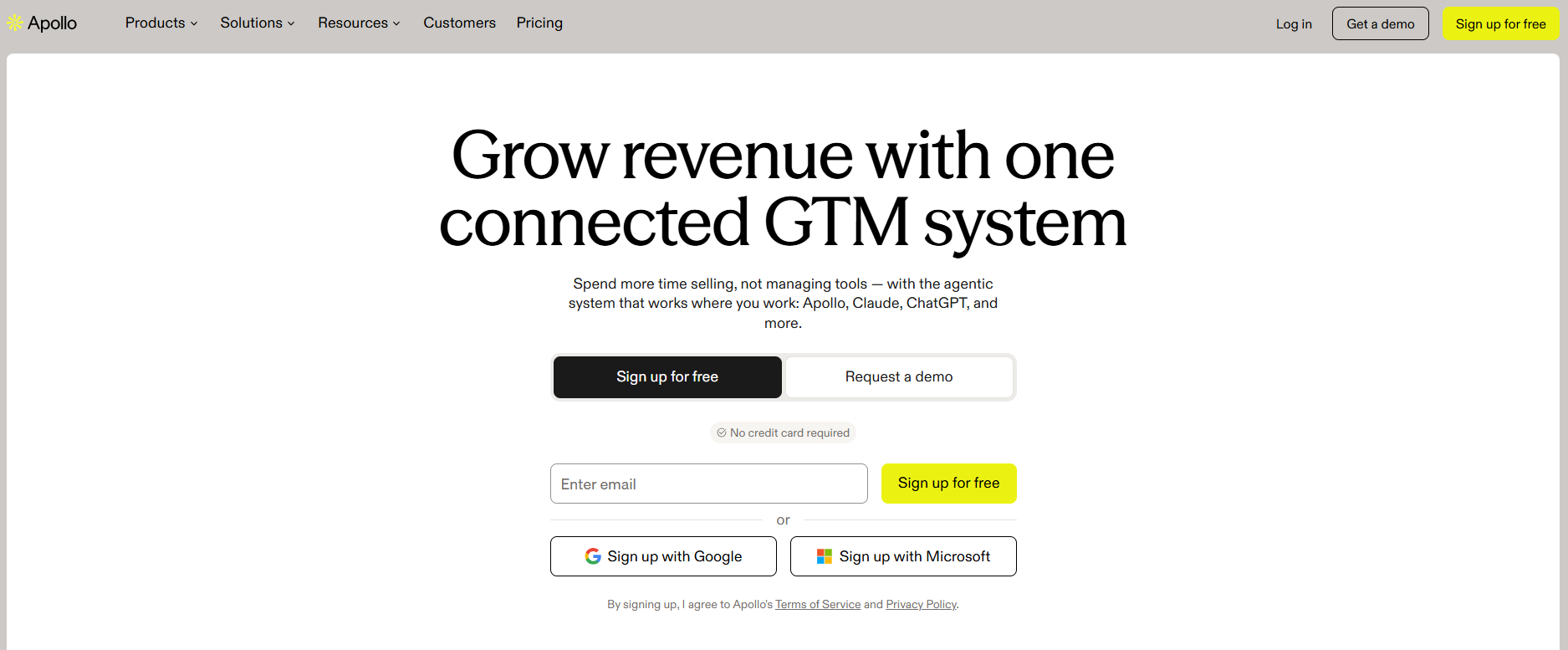
Apollo.io is a sales engagement platform that happens to include a contact database, not a database with outbound bolted on. It pairs its own data with sequencing and dialer tools in one product. That is the opposite of ZoomInfo's structure, where the data is licensed separately and most teams still wire it into a different outbound tool.
Apollo.io fits teams leaving ZoomInfo primarily over cost, and secondarily over wanting fewer vendors in the stack. Apollo.io's own numbers put its database at 240M+ contacts and 30M+ accounts, with 200+ integrations connecting it to the rest of a sales stack.
| Plan | Price | Credits | Notes |
|---|---|---|---|
| Free | $0, no time limit | Pooled, granted each billing cycle | No credit card required to start |
| Basic | Pricing on request | Pooled, granted each billing cycle | Entry paid tier |
| Professional | Pricing on request | Pooled, granted each billing cycle | Mid paid tier |
| Custom | Pricing on request | Negotiated | For larger teams, contact sales |
Apollo.io's own pricing page lists Basic, Professional and Custom as the paid tiers above Free, with every credit pool granted upfront each billing cycle and no rollover, but it shows no per-seat dollar figure for any of them.
Strengths:
- Free forever: The Free plan has no time limit, so a small team can run on it indefinitely instead of trialing against a clock.
- Outbound built in: Sequencing and dialer tools sit in the same product as the data, so teams drop a tool rather than add one.
- Integration breadth: 200+ integrations mean Apollo slots into most existing CRM and sales stacks without custom work.
Trade-offs:
- No public per-seat price: Basic, Professional and Custom all require a quote, so budget planning starts without a number.
- Credits reset, no rollover: Unused credits are lost at the end of each cycle, so a quiet month wastes allocation.
- One pool for the team: Heavy individual users can burn through a shared allocation faster than a per-seat model would allow.
Key capabilities:
- 240M+ contacts and 30M+ accounts, per Apollo.io's own figures.
- 200+ native integrations.
- Sequencing and dialer tools included in the base product, not sold separately.
Good fit:
- Teams that want outbound sequencing and contact data in one subscription.
- Teams leaving ZoomInfo mainly over cost, willing to trade a published enterprise number for a product that is free to start.
Not a fit:
- Teams whose main complaint about ZoomInfo is international mobile coverage, where Cognism fits better.
- Teams that want a specific, published accuracy figure before they commit, which Lusha provides and Apollo does not.
The real limitation is pricing opacity. Every paid tier above Free needs a sales conversation before you know what it costs.
2. Cognism: Best For International Coverage And Compliance
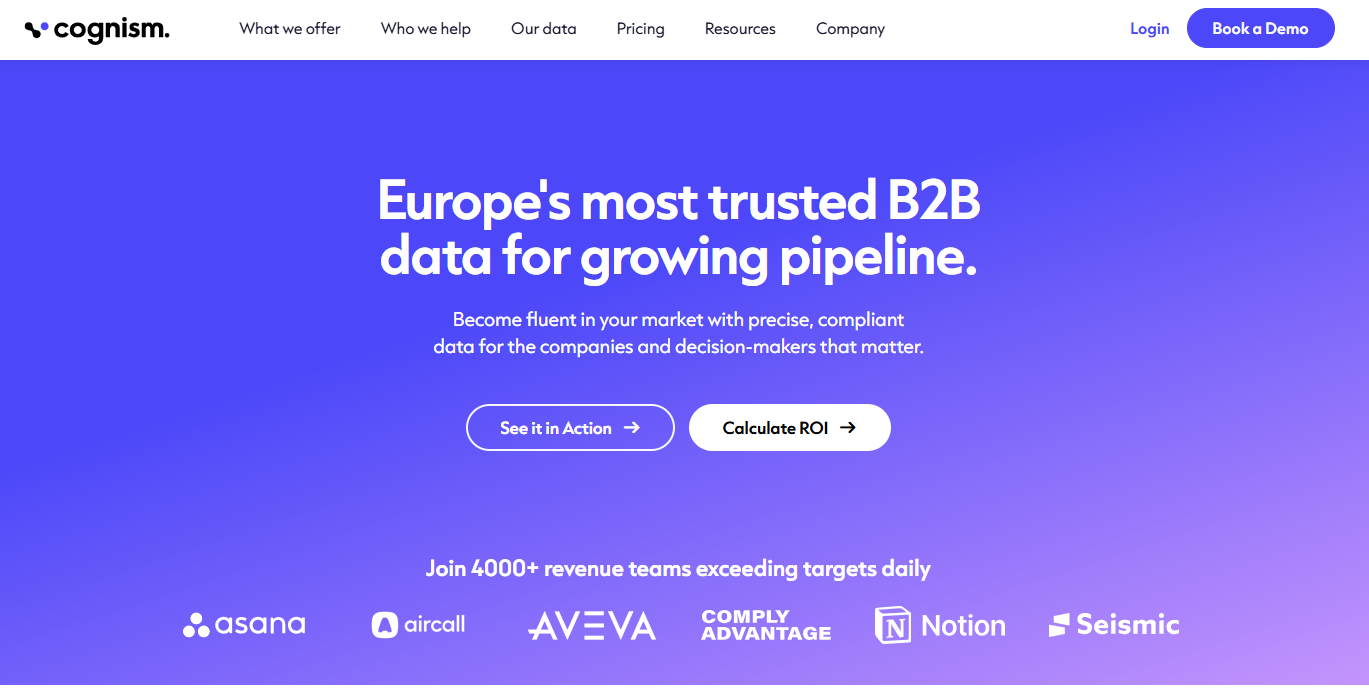
Cognism is built around the part of ZoomInfo switching that hurts most outside the US. It gets verified mobile numbers and compliant data in markets where consent rules are stricter than in the US. Standard and Pro plans each include 5 seats, and every credit spent reveals exactly one contact.
The Pro plan adds on-demand mobile verification and buying-intent prioritization on top of Standard, and the CRM Enrichment plan only re-enriches a record when a key detail changes, such as a job move, rather than re-charging for data that has not moved. That re-enrichment logic is the detail that matters for teams prospecting company contacts across multiple regions, where records go stale at different rates by market.
| Plan | Price | Seats Included | What It Adds |
|---|---|---|---|
| Standard | Pricing on request | 5 | Credit-based contact reveals, 1 credit per contact |
| Pro | Pricing on request | 5 | Adds on-demand mobile verification and buying-intent prioritization |
| CRM Enrichment | Pricing on request | 5 | Re-enriches a CRM record only when a key detail changes |
Cognism's pricing page names these three tiers and what each one adds, but publishes no dollar figure for any of them.
Strengths:
- On-demand mobile verification: The Pro plan checks mobile numbers at the point of reveal rather than relying on a static, aging database.
- Smarter re-enrichment: CRM Enrichment only touches a record when something real has changed, so teams are not paying to refresh records that have not moved.
- Built-in seats: Standard and Pro both include 5 seats, which covers a typical outbound pod without an add-on fee.
Trade-offs:
- No published price at any tier: Even Standard requires a sales conversation.
- Seat cap built in: 5 seats is generous for a small pod but a hard ceiling for anything bigger without an upgrade conversation.
- Overkill for US-only prospecting: Mobile verification and international compliance tooling add cost that a domestic-only team may not need.
Key capabilities:
- One credit equals one revealed contact, so cost scales with usage, not seats alone.
- On-demand mobile verification and buying-intent prioritization on Pro.
- CRM Enrichment that re-checks a record only when a key detail, such as a job change, actually moves.
Good fit:
- Teams prospecting outside the US that need mobile numbers verified rather than guessed.
- Teams that need their CRM enrichment logic to avoid re-charging for unchanged records.
Not a fit:
- Teams prospecting only within the US, where the mobile-verification premium buys little.
- Price-sensitive teams that want a number before they talk to sales.
The real limitation is that Cognism publishes no price at all, not even an entry figure, so every budget conversation starts from zero information.
3. Lusha: Best For Contact Accuracy
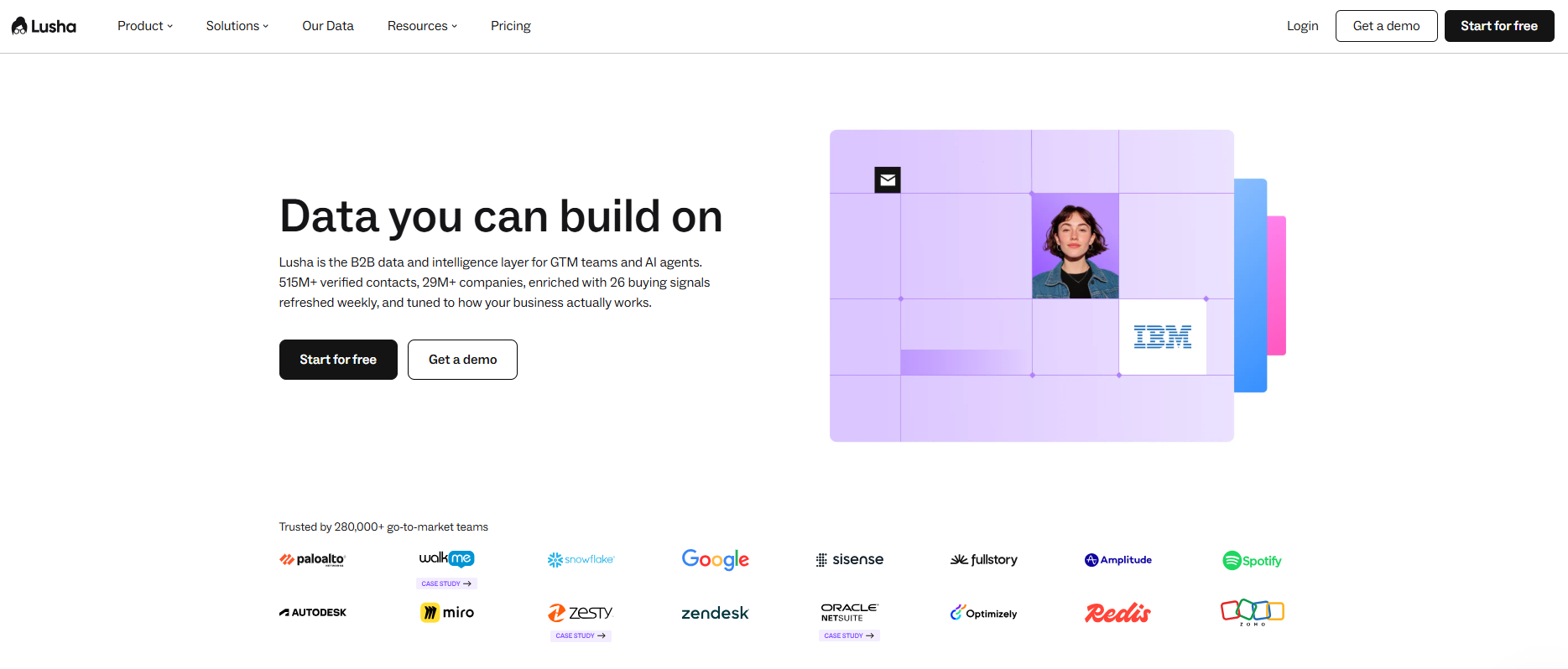
Lusha's pitch for teams leaving ZoomInfo over stale or wrong contacts is simple. Fewer, cheaper credits, and a published test of its own accuracy. The Free plan gives up to 40 credits a month, where a verified email reveal costs 1 credit and a phone reveal costs 5.
Lusha's own July 2026 test of 322 US contacts returned a usable work email for every single one of them and a mobile number for 97.5%, on top of a platform-wide claim of 98% email accuracy and 86% phone accuracy. That is a vendor-run figure on the vendor's own contacts, worth weighing against your own list rather than taking as a universal guarantee, but it is the only tool in this group that publishes a test like it at all. Teams that want a wider shortlist on this exact dimension can look at TRM's roundup of contact discovery tools.
| Plan | Price | Credits | Notes |
|---|---|---|---|
| Free | $0 | Up to 40 per month | 1 credit per email reveal, 5 credits per phone reveal |
| Scale (5+ users) | Pricing on request | Custom | Teams over 5 users are directed to contact sales |
Lusha's own pricing page lists further tiers between Free and Scale, but none of them carry a public dollar figure, so this table only shows the two tiers where terms are confirmed.
Strengths:
- Low per-reveal cost: 1 credit for an email and 5 for a phone number is cheap relative to credit systems that charge more per reveal.
- Published accuracy test: Lusha is the only tool here with a named, dated verification test of its own data.
- Integration range: Native Salesforce and HubSpot integrations, plus monday, Zoho, Pipedrive and Bullhorn, and a full API.
Trade-offs:
- Pricing above Free is opaque: Teams over 5 users have to contact sales with no published figure to anchor the conversation.
- Credit cap on Free: 40 credits a month is workable for light use but runs out fast for an active prospecting team.
- Accuracy claim is self-reported: The 322-contact test is Lusha's own, on its own sample.
Key capabilities:
- 1-credit email reveals and 5-credit phone reveals.
- Native integrations with Salesforce, HubSpot, monday, Zoho, Pipedrive and Bullhorn, plus a full API.
- A published, dated internal verification test rather than an unsourced accuracy percentage.
Good fit:
- Teams whose main complaint about ZoomInfo is stale or wrong contact records.
- Small teams that fit inside the Free plan's 40 credits or can predict usage against a known per-reveal cost.
Not a fit:
- Teams over 5 users that want a published price before they talk to sales.
- Teams that need deep international mobile coverage, where Cognism's on-demand verification goes further.
The real limitation is that once a team outgrows the Free plan's 5-seat ceiling, pricing becomes a sales conversation with no public anchor.
4. LeadIQ: Best For CRM Workflow Fit
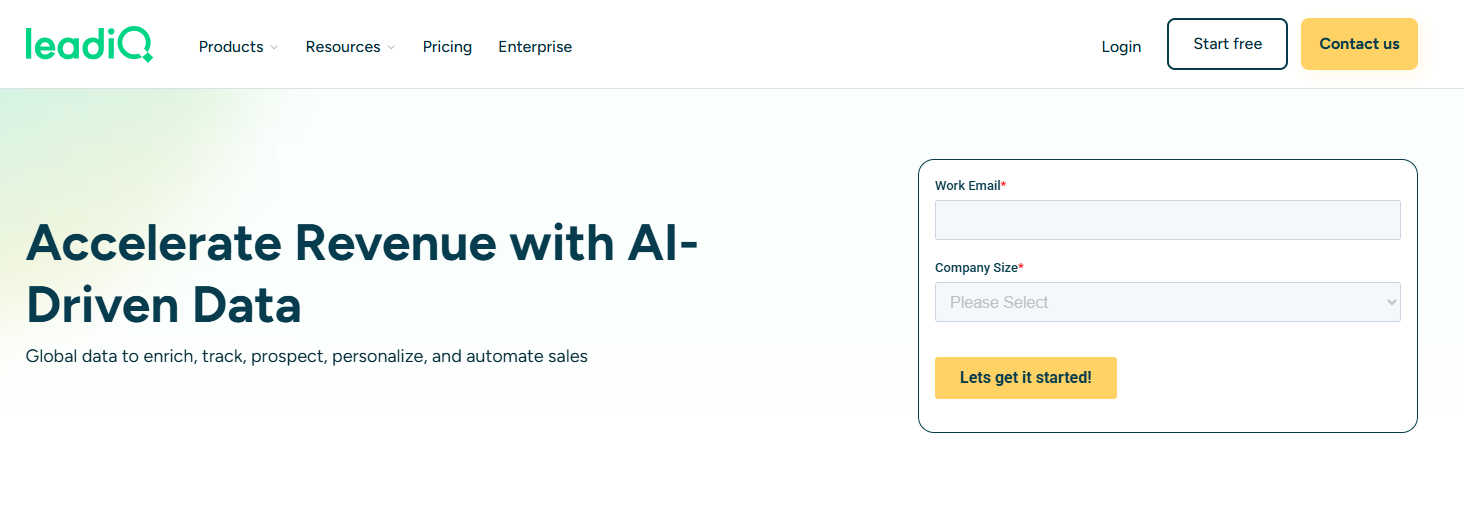
LeadIQ is built for teams whose actual complaint about ZoomInfo is not the data itself but what happens after the reveal, when a record needs to land cleanly in the CRM and the sequencing tool without manual cleanup. The Free plan caps total credit usage at 50, and the Pro plan is $200 a month for up to 5 users.
Credit costs are specific. 1 credit for an email, 10 for a phone number, 11 for email plus phone together, and 3 for account enrichment. Enterprise is annual-only and custom-quoted, with no self-serve option. The CRM fit shows up in the integrations list, which runs through a native Salesforce Managed Package, HubSpot through Workato, and direct connections to Salesloft, Outreach, Gong, Zapier and Clay. Teams that need exactly this kind of workflow but at a different price point can compare TRM's shortlist of email finder tools for sales teams.
| Plan | Price | Users | Credit Costs |
|---|---|---|---|
| Free | $0 | Not specified | Capped at 50 credits total |
| Pro | $200/month | Up to 5 | Email 1, phone 10, email + phone 11, account enrichment 3 |
| Enterprise | Custom, annual only | Contact sales | Contact sales |
LeadIQ's pricing page confirms these three tiers and the exact per-action credit costs above.
Strengths:
- Published Pro price: $200/month for up to 5 users is a real, public number, not a quote request.
- Native Salesforce package: A Managed Package integration is a deeper connection than a generic sync.
- Sequencing tool reach: Direct links into Salesloft, Outreach, Gong, Zapier and Clay cover most of the tools a sales team already runs.
Trade-offs:
- Hard 5-user cap on Pro: A sixth rep forces a move to Enterprise and a custom quote.
- Phone reveals cost more: At 10 credits per phone number, a phone-heavy workflow burns through an allocation fast.
- Enterprise is annual-only: There is no month-to-month option once a team outgrows Pro.
Key capabilities:
- Credit costs per action: 1 for email, 10 for phone, 11 for both, 3 for account enrichment.
- Native Salesforce Managed Package integration.
- Direct connections to Salesloft, Outreach, Gong, Zapier and Clay.
Good fit:
- Teams of up to five reps that live in Salesforce or HubSpot and want records to flow straight into sequencing.
- Teams that value a published, predictable Pro price over a larger unknown enterprise quote.
Not a fit:
- Teams larger than five reps that are not ready for an annual Enterprise commitment.
- Teams that lean heavily on phone numbers, where the 10-credit cost adds up quickly.
The real limitation is the 5-user wall on Pro. Growing past it means negotiating Enterprise with no public price to start from.
5. Hunter.io: Best For Cheap, Simple Email Finding
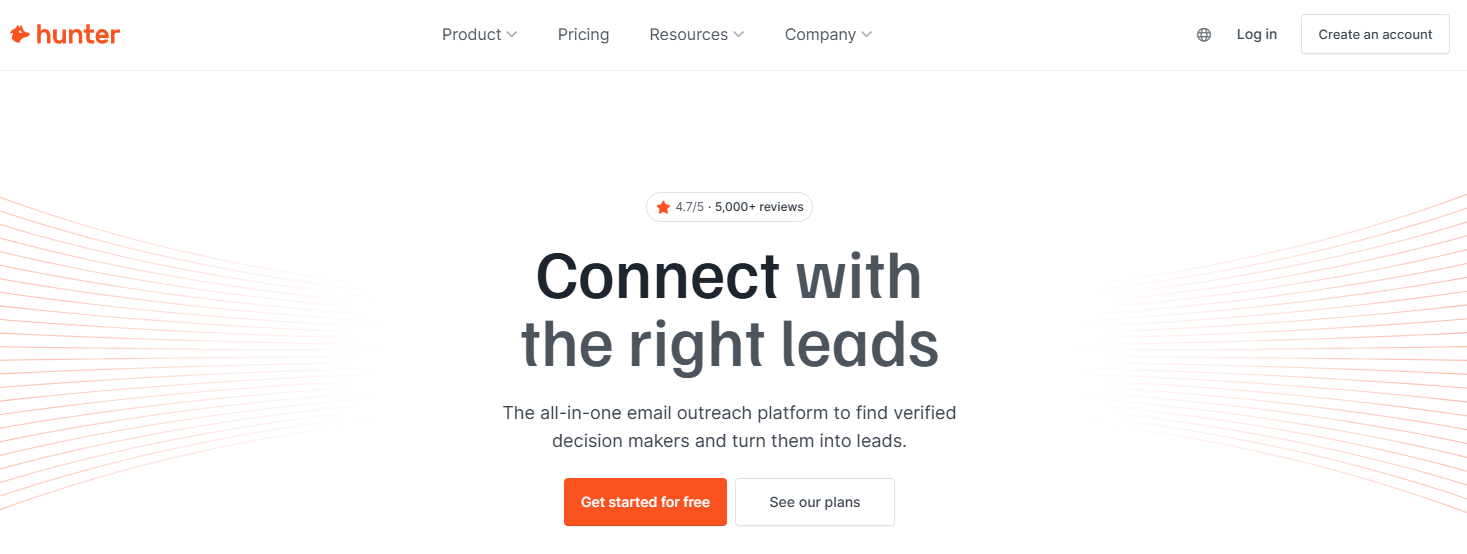
Hunter.io is not trying to be a ZoomInfo replacement for everything ZoomInfo does. It only finds and verifies email addresses, which is exactly the point for a team whose complaint about ZoomInfo is that it pays for a full platform to do one job.
The Free plan gives 50 credits a month and 1 connected email account. Starter is $49/month, or $34/month billed yearly, with 2,000 credits a month and 3 connected accounts. Growth is $149/month, or $104/month billed yearly, with 10,000 credits a month. Scale is $299/month, or $209/month billed yearly, with 25,000 credits a month. Every plan, including Free, allows unlimited team members sharing the same credit pool. For teams that want to go narrower still, TRM has a dedicated list of Hunter.io alternatives for email finding.
| Plan | Monthly Price | Annual Price | Credits Per Month |
|---|---|---|---|
| Free | $0 | Not applicable | 50, with 1 connected email account |
| Starter | $49 | $34/month billed yearly | 2,000, with 3 connected accounts |
| Growth | $149 | $104/month billed yearly | 10,000 |
| Scale | $299 | $209/month billed yearly | 25,000 |
Hunter.io's pricing page confirms all four tiers above, and every plan shares its credit pool across unlimited team members.
Strengths:
- Fully published pricing: All four tiers, monthly and annual, are listed with no quote required.
- Unlimited team members on every plan: Even Free allows any number of users sharing the credit pool.
- Cheap verification: The Email Verifier checks validity at 0.5 credit per email, half the cost of a reveal.
Trade-offs:
- Email only: No phone numbers, no mobile verification, no account-level intent signals.
- Connected-account limits on lower tiers: Free allows 1 and Starter allows 3, which matters for teams running multiple inboxes.
- No CRM enrichment depth: Integrations exist but do not match LeadIQ's enrichment-specific feature set.
Key capabilities:
- Native integrations with HubSpot, Zoho, Salesforce and Pipedrive, plus 5,000+ apps through Zapier.
- Email Verifier at 0.5 credit per verified email.
- Unlimited team members on every plan, including Free.
Good fit:
- Teams that only need email finding and verification, not a full data platform.
- Teams that want predictable, published pricing at every tier.
Not a fit:
- Teams that need phone numbers or international mobile verification.
- Teams that want account enrichment or buying-intent signals alongside the contact data.
The real limitation is scope. Hunter.io only finds and verifies emails, so a team that also needs phone data or intent signals will end up paying for a second tool anyway.
If you want comparison pages like this one built for your own site, pulling in the same buyer-intent traffic ZoomInfo's competitors are fighting over, that is what our SaaS Content Marketing service does. Take a look at how we structure these programmes.
📋 Get Listed / Advertise
We update this guide monthly. Want your tool featured? Contact: [email protected].
What Counts As A ZoomInfo Alternative
A ZoomInfo alternative is a standalone tool a team could run in place of ZoomInfo for contact data, prospecting or enrichment, not a narrower point solution that only does one slice of that job. That is why this list excludes generic sales-intelligence surveys and single-pairing comparison pages that cover one feature rather than the full job ZoomInfo does.
Domain search tools for email finding sit just outside that definition. It solves one piece of the job, not the whole one, so it belongs in its own category rather than this one.
Why Teams Actually Leave ZoomInfo
Price is the most common reason, and it is not subtle. Leadfeeder's research puts ZoomInfo's annual contracts starting from about $15,000 a year, with custom quotes above that. Apollo.io answers this one directly, with a Free plan that never expires.
Contact accuracy is the second reason, and the evidence for why it matters is structural rather than anecdotal. B2B contact data decays at roughly 2.1% a month, a figure attributed to Cleanlist research. A database that is not actively re-verified gets stale fast, and clean contact data improves outbound performance in a way stale records cannot. Lusha answers this one, with its own published verification test and cheap per-reveal credits.
Data coverage and compliance outside the US is the third reason. Teams prospecting into Europe or APAC need mobile numbers that are actually verified, not guessed, and need that verification handled in a way that holds up under local consent rules. Cognism answers this one, with on-demand mobile verification built into its Pro tier.
CRM sync is the fourth reason. ZoomInfo defines one credit as one export of a company or contact profile, which says nothing about what happens to that record once it lands in a CRM. LeadIQ answers this one, with a native Salesforce Managed Package and direct links into the sequencing tools teams already run.
Outbound tooling is the fifth reason. Teams tired of paying for a data platform and a separate sequencing tool want them in one place. Apollo.io answers this one too, alongside the price objection, since both come from wanting fewer vendors rather than more data.
This is why a flat top-ten ranking misses the point. The right alternative is not the one with the biggest database. It is the one that answers the specific reason you are actually leaving. Teams that decide the real gap is distribution, not data, tend to need a dedicated content programme more than another prospecting tool.
How To Choose And Test The Right ZoomInfo Alternative For Your Team
- Name the job you are actually replacing. Write down the single reason you are leaving ZoomInfo, whether that is price, accuracy, coverage, CRM sync or outbound tooling, before you look at a single alternative.
- Run a data test against your own target list. Pull a real list of 50 to 100 target accounts and contacts from your own pipeline and run it through the shortlisted tool, not a demo list the vendor provides.
- Check signals, not just record counts. A large contact count means little if the records are stale. Compare how fresh the data is on the accounts you actually sell into, not an aggregate claim.
- Test CRM activation end to end. Push a handful of enriched records into your CRM and sequencing tool, and confirm nothing needs manual cleanup before it reaches a rep.
- Compare total cost including credit usage, not just the sticker price. Credit costs vary sharply by vendor. Lusha charges 1 credit for an email and 5 for a phone, LeadIQ charges 1 for email, 10 for phone and 11 for both, and Hunter.io's verification runs 0.5 credit per email. A low plan price with expensive credits can cost more than a higher plan price with cheap ones.
- Run a measurable pilot before signing anything annual. Set a specific target, such as a reply rate or a number of qualified meetings, over a fixed 30-day window before committing budget.
If your shortlist is really just about email finding rather than a full platform, TRM's roundup of best email finder tools in 2026 is a narrower starting point. Vendor selection is not a one-time decision either. Teams that treat it as ongoing work, the same discipline behind TRM's own ongoing SEO and AI-visibility programme, revisit the choice at every renewal instead of defaulting to whatever they signed last time.
When ZoomInfo Is Still The Right Choice
Switching is the wrong move for a large enterprise team already running ZoomInfo's intent and ABM modules on negotiated multi-year terms. ZoomInfo's own pricing page lists Marketing Demand and ABM Lite and Enterprise packages alongside its Professional and Copilot tiers, and none of the five alternatives in this list replace that breadth. A point-solution alternative would mean losing functionality the team already uses and has already built workflows around, for the sake of a cheaper contact database alone. If intent data and ABM are doing real work in your stack today, the honest move is to negotiate the ZoomInfo renewal rather than replace the whole platform.
FAQs
Is ZoomInfo Expensive?
Does ZoomInfo Have A Free Version?
Is There A Free ZoomInfo Alternative?
Is Apollo.io A Replacement For ZoomInfo?
Is ZoomInfo Better Than Apollo?
Is LinkedIn Sales Navigator A ZoomInfo Alternative?
How Do Credits Work In ZoomInfo?
Is ZoomInfo GDPR Compliant?
How Should Companies Compare Data Accuracy Between ZoomInfo And Its Alternatives?
What Is The Easiest ZoomInfo Alternative To Switch To Without A Long Contract?
If you would rather have a founder walk through which of these fits your stack before you commit budget, book a thirty-minute call. You leave with a shortlist of two, not five.