
If you need voice AI + phone verification, you’re usually combining two layers:
- Verification layer (CPaaS): handles OTP/2FA, number validation, fraud checks, and deliverability.
- Voice layer (AI/programmable voice): handles the conversational call, routing, and workflow automation.
In 2026, the best “phone verification support” typically comes from CPaaS providers that offer both verification APIs and voice APIs, so your workflow stays reliable and compliant.
Top picks:
- Twilio — best overall for flexible verification + voice workflows
- Vonage — strong enterprise comms stack and verification options
- Sinch — good global scale and verification building blocks
- MessageBird (Bird) — solid workflow automation for messaging/verification
Plivo — simpler CPaaS option for teams that want voice + SMS primitives
📋 Get Listed / Advertisement
We update this guide monthly. Want your tool featured? Contact us: [email protected].
Best Voice AI Services with Phone Verification Support (Quick Comparison)
| Tool | Verification options | Voice capabilities | Best for |
|---|---|---|---|
| Twilio | SMS/voice OTP, Verify workflows | Programmable Voice, call control | Teams building custom verified call flows |
| Vonage | Verification + comms APIs | Voice APIs + enterprise comms | Enterprise teams needing vendor depth |
| Sinch | Verification + messaging APIs | Voice APIs (varies by region) | Global verification-heavy programs |
| MessageBird (Bird) | Messaging + workflow verification patterns | Voice (via platform integrations) | Omnichannel workflows + automation |
| Plivo | SMS + phone number features (build-your-own verification) | Voice APIs | Simpler CPaaS stacks, cost-aware teams |
📔 Note: “Voice AI” here refers to enabling verified calling workflows that can be paired with AI agents. Some teams run the AI layer separately and use these providers for verification + telephony.
1. Twilio
What it does
Twilio provides verification workflows (OTP by SMS or voice) plus programmable voice APIs to build custom calling experiences.
Why teams use it
Teams choose Twilio for flexibility: you can verify numbers, then run calls through Twilio Voice and plug in your AI agent logic.
What it’s good for
- Voice + verification workflows in one ecosystem
- Multi-step onboarding flows that require OTP
- High-control call routing and event logging
When it’s a good fit
If you want the most developer-friendly option and expect to iterate on verification and calling logic.
When it’s not a good fit
If you want a “single UI” voice agent product with verification built-in and minimal engineering.
How to use it
- Use Verify API to send OTP (SMS first, voice fallback if needed)
- Confirm verification result via webhook
- Trigger outbound call via programmable voice
- Connect the call to your AI agent layer (streaming audio, IVR logic, or agent platform)
Key capabilities
- OTP workflows, retries, and rate limits
- Programmable Voice call control
- Webhooks + logging for analytics
- Global messaging/voice footprint
Pricing
Twilio’s Verify pricing starts at $0.05 per successful verification, plus standard channel fees (for example, SMS delivery fees).
Free tier?
Twilio doesn’t offer a free tier, but it does offer a free trial with a small preloaded balance for testing.
Downsides / limitations
- Cost can rise at scale if verification volume is high
- Requires implementation work for a full “voice AI agent” experience
2. Vonage
What it does
Vonage offers communications APIs that can support verification plus voice/messaging building blocks.
Why teams use it
Enterprise teams often prefer vendors with broader comms portfolios and support options.
What it’s good for
- Enterprise comms + verification needs
- Teams that want vendor consolidation
- Global programs that need support and reliability
When it’s a good fit
If you want an enterprise-friendly provider that can handle verification and voice at scale.
When it’s not a good fit
If you want the fastest “plug-and-play” experience with minimal vendor complexity.
How to use it
- Implement verification step before enabling calling
- Use voice APIs for outbound/inbound call handling
- Add AI layer on top for conversational experience
Key capabilities
- Verification and messaging APIs
- Voice APIs for calling workflows
- Enterprise support options
Pricing
Vonage Verify pricing starts at $0.0572 per successful verification (or €0.052), plus messaging and voice usage rates.
Free tier?
Vonage doesn’t offer a free tier, but it does offer free evaluation trials.
Downsides / limitations
- Implementation details vary by region and product bundle
- May require more vendor coordination for complex stacks
3. Sinch
What it does
Sinch provides communications APIs often used for verification-heavy programs and global messaging.
Why teams use it
Teams pick Sinch when verification and deliverability are central and they need a provider built for scale.
What it’s good for
- Global verification programs
- SMS-first OTP flows with optional voice fallback
- Fraud-reduction workflows via number intelligence patterns
When it’s a good fit
If your main “job” is verification performance and coverage across many markets.
When it’s not a good fit
If you want one integrated “voice AI agent product” without assembling components.
How to use it
- Use verification APIs for OTP and number checks
- Only enable calling flows after verification success
- Run voice calls through Sinch voice capabilities (where available) or pair with another voice layer
Key capabilities
- Verification primitives and messaging scale
- Regional coverage focus
- Analytics hooks (implementation dependent)
Pricing
Sinch’s Verification API pricing is not publicly listed; it’s billed per verification request, with SMS costs varying by country/operator and fixed fees for flash-call attempts.
Free tier?
Sinch doesn’t offer a free tier that’s clearly documented for its Verification API, but it does offer a free trial/“try for free” signup.
Downsides / limitations
- Voice capabilities can be region-dependent
- Might require pairing with other tooling for a complete voice AI stack
4. MessageBird
What it does
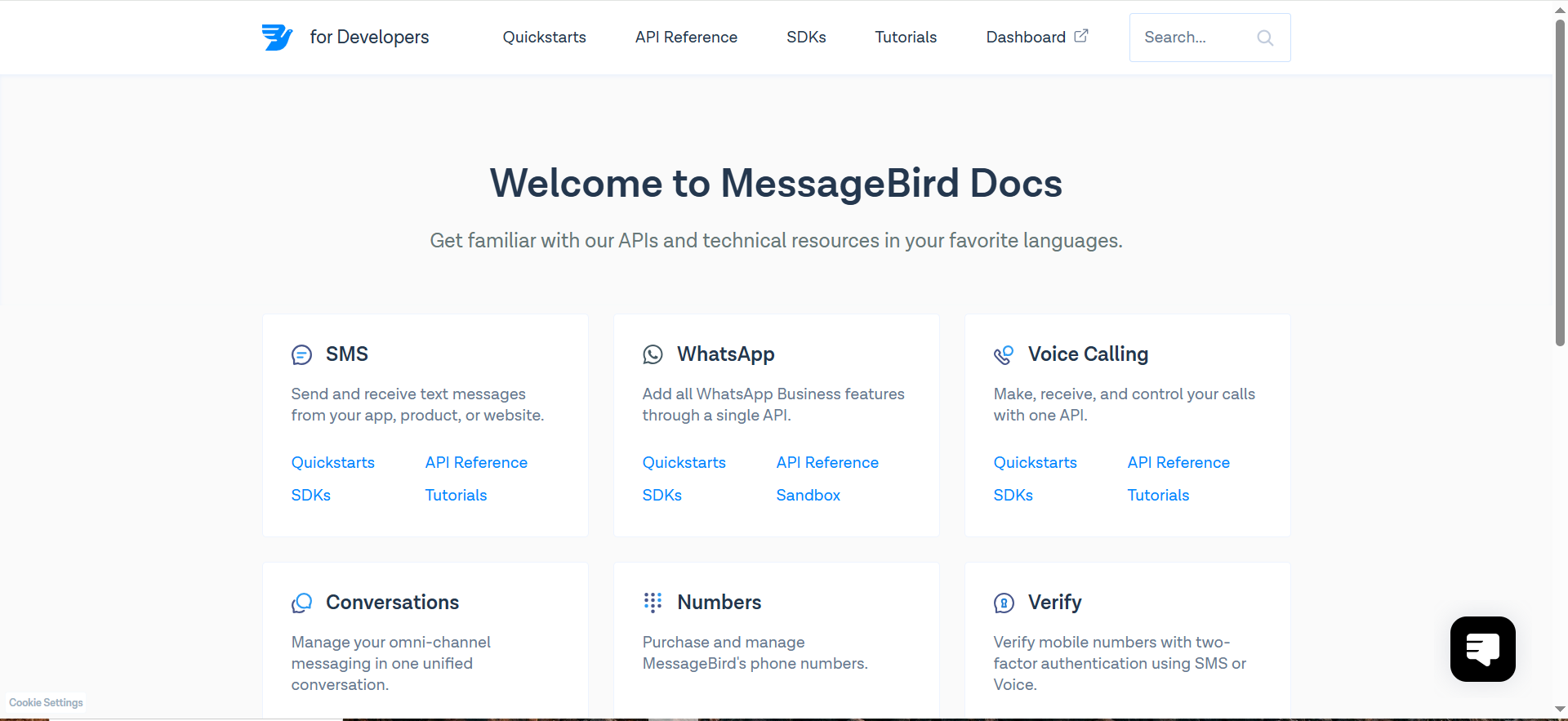
Bird focuses on omnichannel communications and workflow automation that can support verification patterns.
Why teams use it
Teams that run multi-channel programs like having verification as part of a broader automation layer.
What it’s good for
- Omnichannel verification flows
- Workflow automation for messaging and routing
- Programs that coordinate SMS, email, and messaging apps
When it’s a good fit
If you want to orchestrate verification inside a broader customer comms workflow.
When it’s not a good fit
If you need deep programmable telephony control for advanced call logic.
How to use it
- Build a verification workflow in the orchestration layer
- Trigger voice calls via integrations or platform voice features
- Plug in AI agent logic in your voice layer
Key capabilities
- Workflow automation patterns
- Messaging channels + orchestration
- Reporting hooks (implementation dependent)
Pricing
Bird’s API pricing is pay-as-you-go, and SMS pricing varies by country; pricing for the Verify API isn’t publicly listed as a separate, fixed rate.
Free tier?
Bird doesn’t clearly publish a free tier for its APIs, and free-trial details aren’t clearly stated on its pricing pages.
Downsides / limitations
- “Voice AI” may require integrations depending on your architecture
- Best for workflows, not always deepest telephony primitives
5. Plivo
What it does
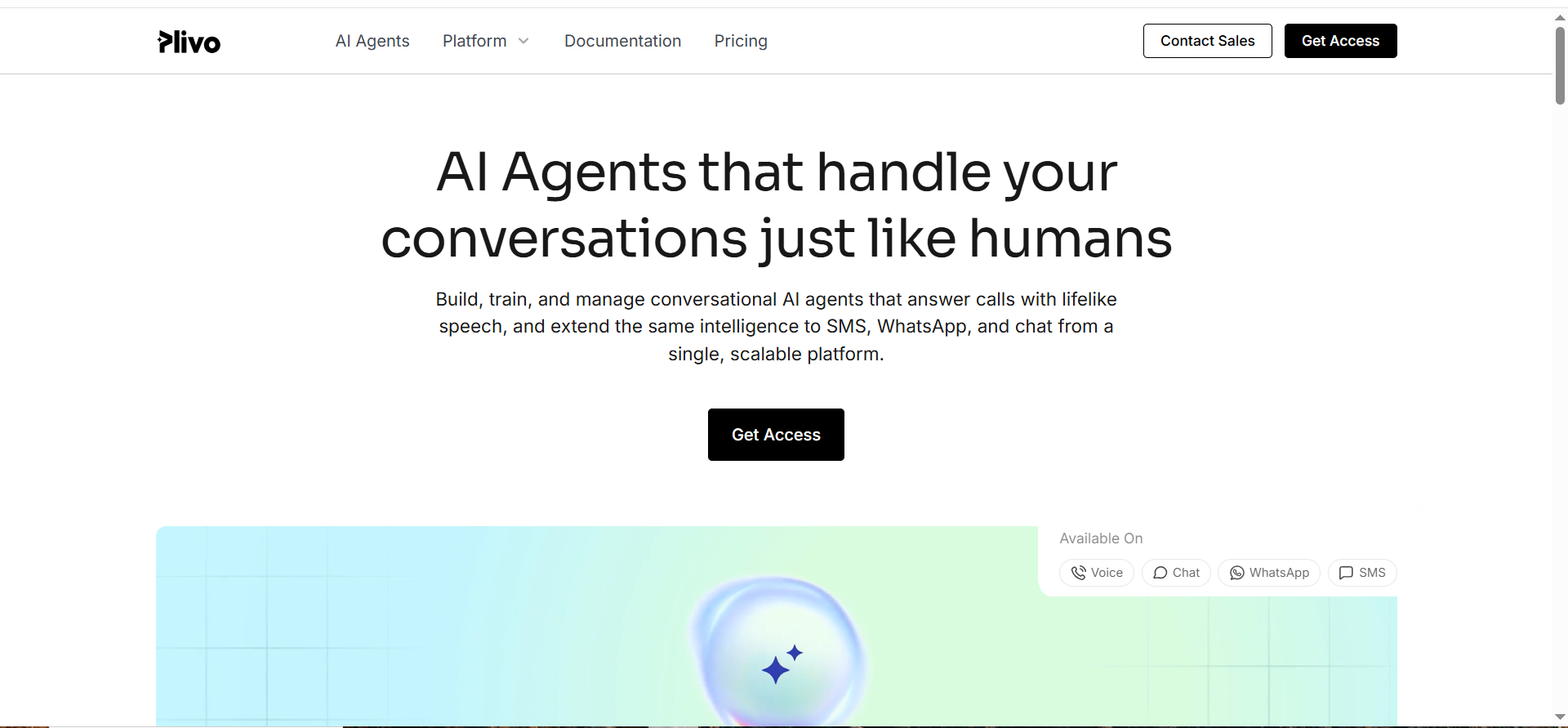
Plivo offers voice and messaging APIs that can be used to build phone verification (SMS OTP, voice OTP) and calling workflows.
Why teams use it
Teams use Plivo when they want a leaner CPaaS with core primitives and straightforward implementation.
What it’s good for
- Simple OTP flows (SMS and/or voice)
- Cost-aware teams that still need voice + messaging
- Basic verified calling architecture with fewer moving parts
When it’s a good fit
If you want a clean CPaaS option and you’re comfortable building the verification logic.
When it’s not a good fit
If you need an advanced verification product with many built-in fraud controls.
How to use it
- Send OTP over SMS (or voice call)
- Validate code server-side
- Trigger outbound/inbound voice flows after verification success
Key capabilities
- Voice APIs
- SMS APIs
- Build-your-own verification logic
Pricing
Plivo Verify has a $0 verification fee, and OTP delivery pricing starts at $0.0070 per SMS in the U.S. (with voice OTP starting at $0.0100/min).
Free tier?
Plivo doesn’t offer a free tier, but it does offer trial credits when you sign up.
Downsides / limitations
- Fewer “opinionated” verification workflows compared to dedicated verification products
- You may need to build more guardrails yourself
How “phone verification support” works for voice AI
Verification types: SMS OTP, Voice OTP, KYC, verified caller ID
Phone verification can mean different things depending on the workflow:
- SMS OTP / 2FA: Send a code by SMS to confirm a user controls the number.
- Voice OTP: Read the OTP via a phone call (helpful when SMS delivery fails).
- Number intelligence / validation: Detects line type (mobile/landline/VoIP), carrier, or risk signals.
- Verified caller identity: Improve trust and answer rates by reducing “spam likely” labeling (this is not the same as OTP verification).
- KYC / identity verification add-ons: Confirm the person behind the phone number (often separate from telephony vendors).
Where verification sits in the stack
Most “voice AI with verification” implementations look like:
- User enters phone number
- Verification API sends OTP (SMS/voice) and confirms result
- Only after verification you trigger the AI call flow (or unlock calling features)
- Voice system (programmable voice / AI agent) places/receives calls
- Analytics tracks verification + call outcomes end-to-end
If you’re doing outbound, verification may also include:
- validating numbers before dialing
- compliance checks + consent tracking
- caller identity best-practices to avoid labeling
How to choose (decision checklist)
Compliance and consent
- Do you need explicit opt-in tracking for outbound calls?
- Do you require opt-out handling or regional compliance workflows?
- Will you store verification logs for audit needs?
Coverage and deliverability
- Which countries/regions matter most?
- Do you need voice fallback if SMS fails?
- Do you need carrier-grade routing and high deliverability features?
Integrations and implementation
- Are you integrating with an AI agent platform or building your own?
- Do you need webhooks, event logs, and programmable call control?
- Do you want one vendor for verification + voice, or best-of-breed?
Pricing model fit
- Volume-based verification can get expensive fast.
- Compare per-verification pricing, message/call costs, and minimum commits.
📋 Get Listed / Advertisement
We update this guide monthly. Want your tool featured? Contact us: [email protected]
FAQs
What does “phone verification support” mean for a voice AI service?
Can voice AI tools send OTPs via voice calls (voice OTP) instead of SMS?
What’s the difference between verified caller ID and phone number verification?
How do I add verification to an outbound calling workflow?
Which providers have the best global coverage for SMS/voice OTP?
How do pricing models differ for verification?
📋 Get Listed / Advertisement
We update this guide monthly. Want your tool featured? Contact us: [email protected].