

If you started with ZipTie and liked the simplicity, that makes sense. The product is built around lightweight AI visibility monitoring, answer snapshots, optimization help, and quick tracking across major AI search environments. ZipTie positions itself as a way to track visibility in ChatGPT, Perplexity, Google AI Overviews, Gemini, and Microsoft Copilot, with features like answer monitoring, AI success scoring, prompt suggestions, and country-based tracking. Pricing starts at $69 per month, with a 14-day free trial.
But that same simplicity is usually why teams eventually outgrow it.
The moment you need more operational reporting, deeper trend visibility, better competitor views, more flexible exports, broader prompt coverage, or a platform that works across multiple stakeholders, you start looking for stronger AI visibility platforms. For most teams, the best Ziptie alternatives are LLMrefs, Peec AI, AthenaHQ, Otterly AI, and Profound, especially if you are comparing the best tools for tracking brand visibility in AI search. Each one solves a slightly different problem. Some are better for agencies, some are better for in-house growth teams, and some are clearly built for enterprise workflows.
Short version: If you want the closest thing to a more serious day-to-day upgrade, start with LLMrefs. If you want a clean, reporting-first workspace, look at Peec AI, particularly if your team is building a broader AI search visibility strategy. If you want a bigger command center with broader workflows and integrations, consider AthenaHQ. If budget matters, Otterly AI is worth a hard look, especially for teams comparing best free and paid AI marketing tools. If you are buying for a large brand with enterprise ambitions, Profound belongs on the shortlist.
📋 Get Listed / Advertisement
We update this guide monthly. Want your tool featured? Contact: [email protected].
Best Ziptie alternatives at a glance
| Tool | Best for | Why choose it over ZipTie | Starts at |
|---|---|---|---|
| LLMrefs | SEO teams and agencies that want a stronger operational workflow | Keyword-based tracking, competitor benchmarking, citations, exports, API, and unlimited projects/seats on paid plan | $79/mo |
| Peec AI | Teams that care about answer visibility plus reporting and data workflows | Daily prompt execution, source analysis, sentiment, exports, API, and Looker support on higher plans | Custom / tiered plans with Starter, Pro, Advanced, Enterprise |
| AthenaHQ | Teams that want a broader AI search command center | AI visibility tracking plus workflow, integrations, and enterprise support beyond basic snapshots | $295/mo self-serve |
| Otterly AI | Smaller teams that want more coverage without enterprise pricing | Low entry price, multi-engine tracking, reports, citations, GEO audit, and optional add-ons | $29/mo |
| Profound | Large brands that need enterprise-grade AI search intelligence | Broader platform vision around answer engine insights, prompt volumes, agents, and analytics | From $99/mo on official pricing page, with enterprise custom options |
1. LLMrefs
What it does
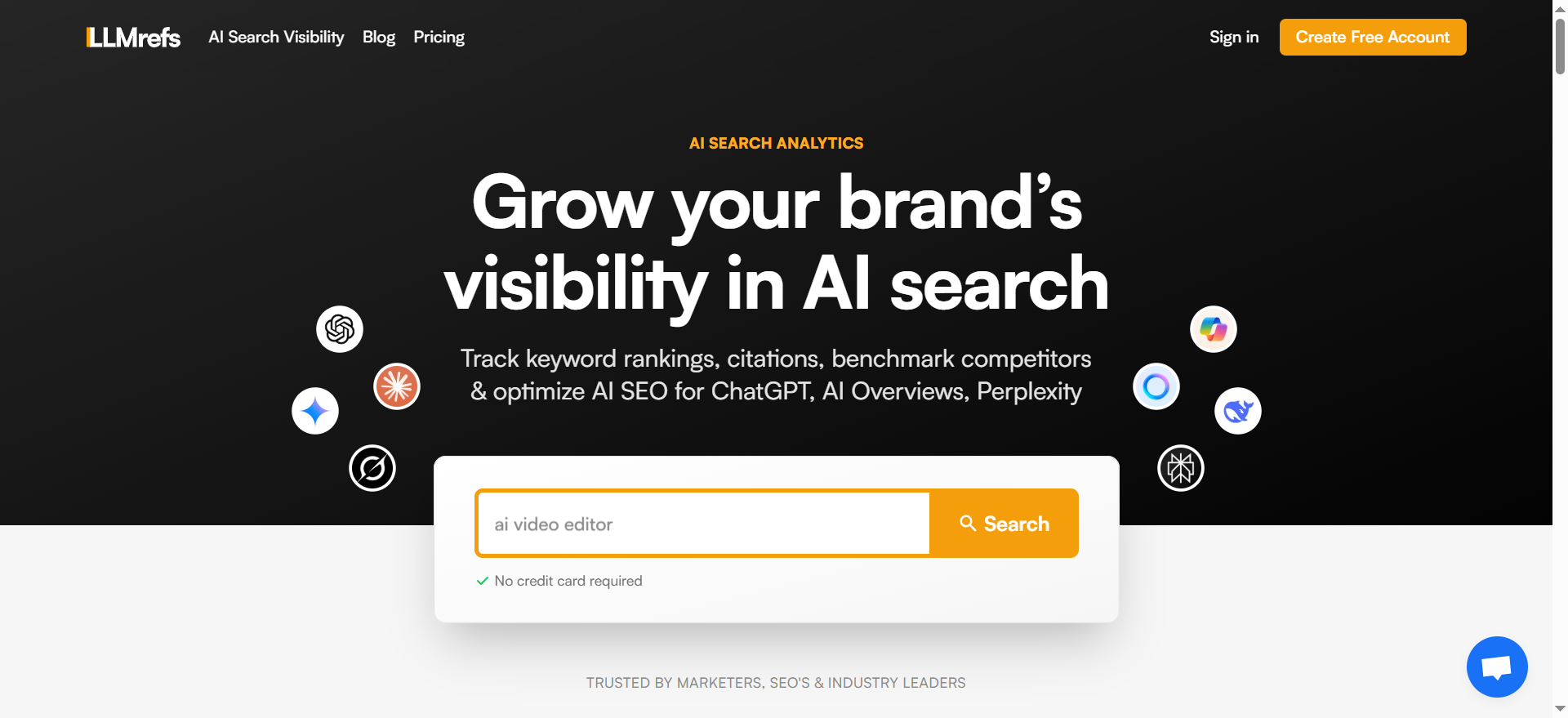
LLMrefs is one of the strongest Ziptie alternatives for teams that want to move from lightweight monitoring into something more repeatable and SEO-friendly. The product is built around keyword-first AI visibility tracking, which makes it relevant for teams exploring how to monitor SaaS brand visibility in ChatGPT and Perplexity. Instead of thinking only in terms of a few prompts, it lets teams start with keywords, generate related prompts, monitor appearances across major models, and benchmark competitors at scale, which lines up well with a stronger keyword research workflow.
Why teams use it
Teams use LLMrefs because it feels closer to an operational SEO workflow than a lightweight testing tool. If your team already thinks in terms of keyword groups, recurring reporting, competitor benchmarking, and exports, it is a very natural step up for a more mature AI-first content workflow. It also supports multiple countries and languages, which matters once AI visibility becomes something you report on consistently, not just something you check occasionally, especially if you are measuring share of voice in AI answers.
What it’s good for
LLMrefs is especially good for agencies, in-house SEO teams, and content teams that want to answer a simple question every month: Are we becoming more visible in AI answers for the topics that matter most? It also works well if competitor comparison is central to your workflow, because the platform explicitly includes benchmarking and citations tracking, which makes it relevant for teams comparing AI citation tools at the URL level.
When it’s a good fit
Choose LLMrefs if you want a more serious ongoing workflow than ZipTie, but you do not want to jump all the way into heavyweight enterprise software, especially if you are comparing AI visibility tools with prompt templates. It is a strong fit for teams that need:
- broader prompt generation
- consistent weekly tracking
- competitor comparisons
- easy exports
- API access
- flexible multi-client or multi-project usage
Its paid plan also includes unlimited projects and seats, which makes it unusually attractive for agencies or growing teams.
When it’s not a good fit
If you want the most enterprise-heavy account support, advanced custom onboarding, or a wider platform story beyond tracking and reporting, another option may suit you better. Also, if you only need very light monitoring and a few checks per month, the added structure may be more than you need.
Key capabilities
LLMrefs supports major AI models, weekly refreshes at minimum, automated prompt fan-out from keywords, competitor benchmarking, source and citation analysis, exports, and API access, which makes it relevant for teams researching how to get cited in AI answers. That combination is exactly why it stands out as a practical ZipTie upgrade, especially for teams comparing AI visibility tools for prompt variation testing. It keeps the core AI visibility use case, but adds more operational depth for teams evaluating best AI visibility solutions for content optimization teams.
Pricing
LLMrefs’ pricing starts at $79/month for its All in One plan.
Free tier?
LLMrefs doesn’t appear to offer a permanent free tier, but it does offer a 7-day free trial. Its site also lets you create a free account to get started.
Downsides / limitations
The main limitation is that LLMrefs is still a focused AI visibility tool, not a giant all-in-one marketing platform. That is a strength for many teams, but if you want a much broader enterprise stack story, you may prefer AthenaHQ or Profound. Still, for most teams graduating from ZipTie, LLMrefs is probably the cleanest upgrade path.
2. Peec AI
What it does
Peec AI is an AI visibility platform built around daily tracking, answer analysis, source visibility, and reporting, which makes it relevant for teams comparing AEO tools for AI Overviews. The platform tracks brand and competitor visibility, position, sentiment, and sources across monitored prompts, and it emphasizes reliable collection by scraping user interfaces rather than depending only on APIs.
Why teams use it
Teams use Peec AI because it combines AI answer tracking with clearer reporting workflows. It is one of the better options if you care not just about whether your brand appeared, but also about how your appearance changed over time and how that information flows into dashboards or executive reporting. The availability of exports, API access, and Looker integration on higher tiers makes that especially useful for more mature dashboarding environments.
What it’s good for
Peec AI is good for in-house growth teams, SEO managers, and analytics-minded marketers who want a clean product with a stronger reporting backbone than lightweight tools usually provide, especially if they already rely on marketing analytics tools. It is also attractive if your organization already works heavily in dashboarding environments and wants AI visibility data to live alongside broader AI visibility metrics.
When it’s a good fit
Peec AI makes sense if you want:
- daily prompt execution
- visibility and sentiment tracking
- source-level analysis
- cleaner reporting workflows
- a path into API or Looker-based reporting, which makes it relevant for teams evaluating AI visibility tools with bulk prompt upload and tagging
- unlimited users on published pricing tiers
That last point matters. Many teams outgrow simple tools not because the core feature is missing, but because cross-functional usage becomes painful. A platform with broader user access and more structured reporting often solves that, especially for teams building real-time dashboards for AI visibility reporting. Peec’s published plans include unlimited users, which is a meaningful differentiator.
📋 Get Listed / Advertisement
We update this guide monthly. Want your tool featured? Contact: [email protected].
When it’s not a good fit
If you want the cheapest possible starting point, Peec AI may not be the first tool you test. If your main need is a simple self-serve product with minimal setup, Otterly AI may be easier to start with, especially for teams evaluating best AI tools for small business marketing. Peec is better when reporting maturity matters.
Key capabilities
Peec AI tracks brand and competitor visibility, answer positions, sentiment, and sources, which makes it a strong fit for teams comparing AI brand mention tracking tools. It runs prompts daily, supports exported data, offers API access on higher plans, and supports Looker integration on more advanced plans. It also supports multi-country tracking in higher tiers and expands model availability at enterprise level, which matters when comparing AI visibility tools by engine coverage.
Pricing
Peec AI’s current public pricing page shows Starter, Pro, Advanced, and Enterprise plans, but the plan prices are not clearly publicly listed in readable page text. Enterprise pricing is custom.
Free tier?
Peec AI doesn’t show a permanent free tier, but it does offer a free trial.
Downsides / limitations
Peec AI is a strong reporting-oriented option, but some teams may find the plan structure more limiting than tools that lean into unlimited projects or more generous packaging. It also makes the most sense when you will actually use the reporting depth, not when you just want a simple glance at answers.
3. AthenaHQ
What it does
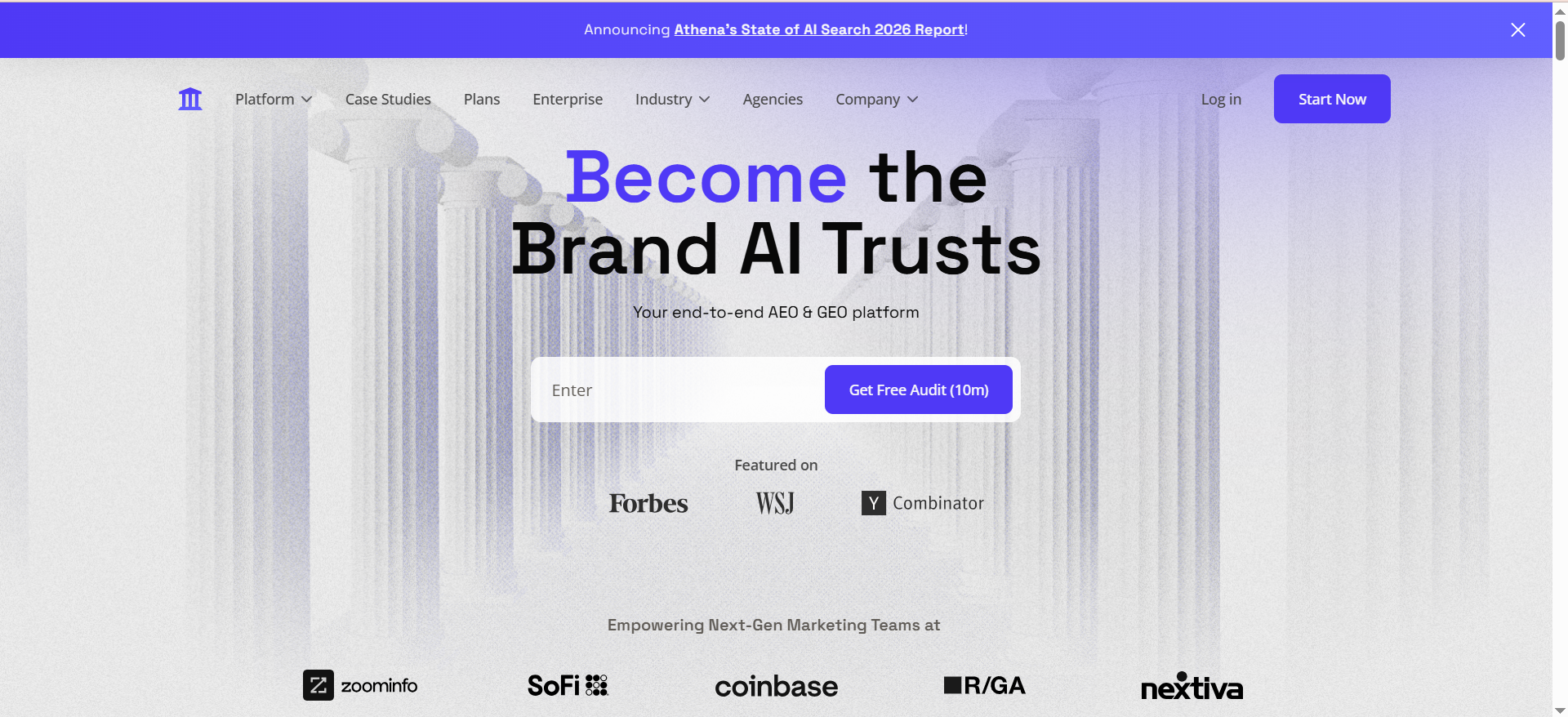
AthenaHQ is one of the more ambitious Ziptie alternatives in this category, and it fits naturally into broader conversations about the most effective strategies for AI visibility enhancement. Rather than acting like a lightweight answer checker, it positions itself more like an AI search operating layer, which lines up well with guides on structuring content for the AI era and AEO. Its materials highlight visibility monitoring, workflow support, integrations, and broader AI search management capabilities across search environments.
Why teams use it
Teams use AthenaHQ when they want more than screenshots and citations. They want systems. They want integration. They want a product that feels like a command center, not just a monitoring panel. AthenaHQ is particularly relevant if AI search visibility is becoming a formal reporting line and operational function inside your team.
What it’s good for
AthenaHQ is good for growth-stage and enterprise teams that want broader workflows, especially when AI visibility needs to connect with other data or business systems, which is a common need when comparing AI visibility platforms. The official materials also point to integrations with GA4, GSC, Shopify, and more, which gives it a larger role in the stack than a narrow answer tracker and makes it relevant for teams comparing an AI marketing stack.
When it’s a good fit
AthenaHQ is a good fit if you need:
- a more advanced AI visibility command center
- support for multiple teams or stakeholders
- stronger integration potential
- enterprise support options
- a product that can grow with process complexity
This is the kind of platform you look at when your question is no longer just, “Did we show up?” but also, “How does this become part of our operating rhythm?”
When it’s not a good fit
If you mainly want a simple, inexpensive, self-serve alternative, AthenaHQ may be overkill. It starts at a much higher price point than ZipTie and some of the lighter alternatives. That alone will put it outside the budget of smaller teams.
Key capabilities
AthenaHQ’s public materials point to AI search visibility capabilities, broader workflow features, enterprise support, and multiple integrations, which makes it worth considering in an AI visibility platform showdown. It also separates self-serve and enterprise packages, which usually signals a stronger fit for teams that expect complexity, stakeholder coordination, or custom requirements.
Pricing
AthenaHQ’s pricing starts at $295/month for its Self-Serve plan. Enterprise pricing is custom.
Free tier?
AthenaHQ doesn’t list a free tier or free trial on its pricing page.
Downsides / limitations
The biggest downside is obvious: price and complexity. If you are just moving past basic AI answer checks, AthenaHQ may be more platform than you need. But for teams that already know they need a more serious operating layer, that is exactly the point.
4. Otterly AI
What it does
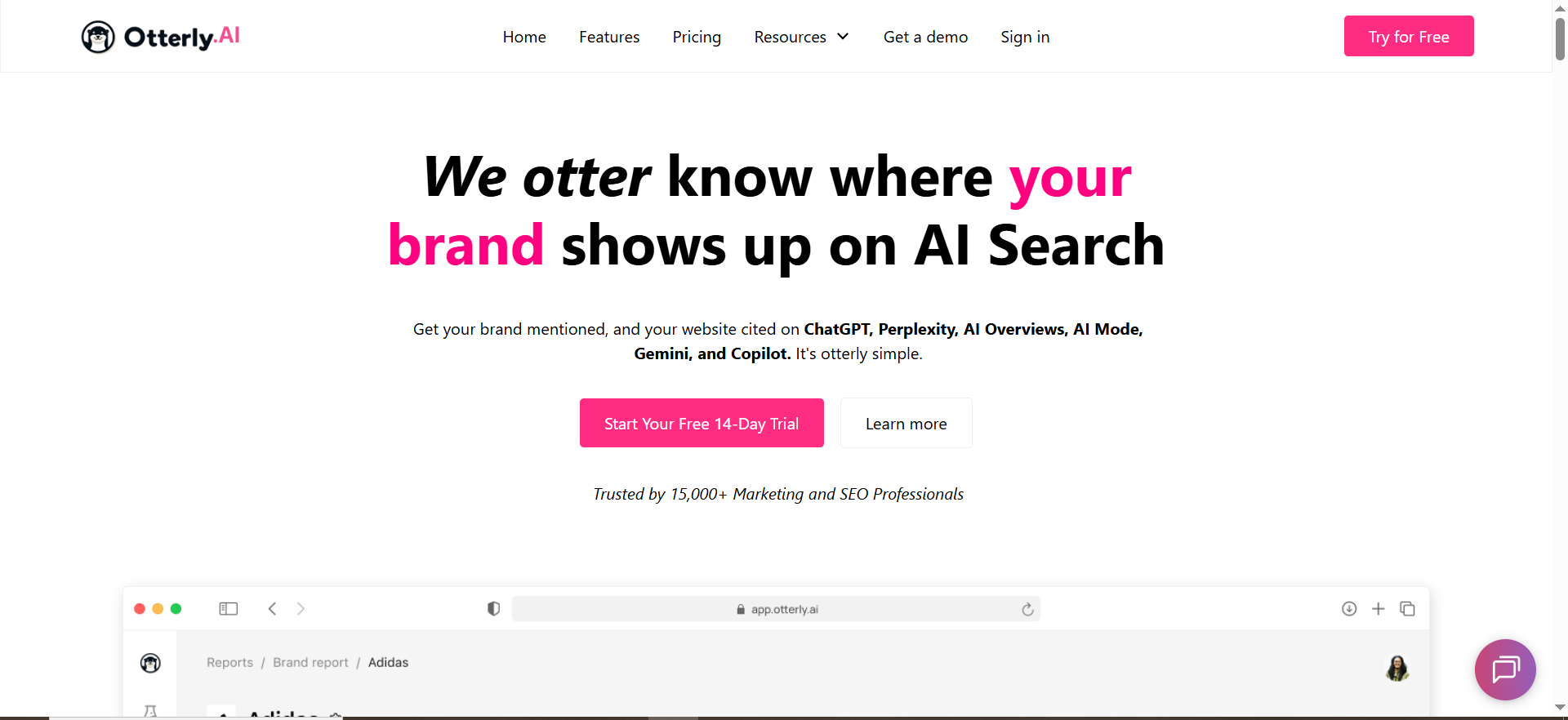
Otterly AI is one of the most practical Ziptie alternatives for smaller teams, especially for teams comparing the best AI visibility tools for GEO. It tracks visibility across platforms like ChatGPT, Google AI Overviews, Perplexity, and Copilot, and includes features like citations tracking, reporting, a Brand Visibility Index, and a GEO audit.
Why teams use it
Teams use Otterly AI because it gives them more than the bare minimum without asking them to buy into enterprise software. It is one of the easiest options to justify if you want broader reporting and visibility features than ZipTie but still need to stay cost-conscious, especially if you are also reviewing best free SEO tools.
What it’s good for
Otterly AI is good for small in-house teams, consultants, early-stage SaaS companies, and content-led teams that want AI visibility tracking to become a normal monthly reporting line, especially if they are looking at SEO tools for small businesses. It is also appealing for agencies that want a lower-risk tool to test before expanding further.
When it’s a good fit
Choose Otterly AI if you want:
- a low monthly starting price
- multi-engine tracking
- reports and exports
- citation tracking
- optional higher-tier reporting features
- add-ons as your needs grow, which also makes it relevant for teams reviewing the best SEO strategies for AI visibility tools.
Otterly is especially strong when you are trying to move from “we should probably start monitoring this” to “we can actually report on this every month,” without making a huge budget commitment, which is why it fits well in guides to best AI visibility tools with daily prompt runs.
When it’s not a good fit
If you already know you need enterprise support, deep custom workflows, or a more advanced multi-team platform, you may outgrow Otterly AI too, which is why some buyers move toward best enterprise SEO tools. It is best thought of as an affordable, capable middle ground, not the most advanced system in the category.
Key capabilities
Otterly AI’s plans include tracking across major AI answer environments, citations, Brand Visibility Index, GEO audit, reports, exports, multi-country support on higher tiers, Looker integration, and optional add-ons including Google AI Mode or Gemini coverage, which lines up well with guides to GEO prompt monitoring tools.
Pricing
Otterly AI’s pricing starts at $29/month for the Lite plan. It also offers a custom Enterprise plan.
Free tier?
Otterly AI doesn’t offer a free tier, but it does offer a free trial.
Downsides / limitations
Otterly AI is budget-friendly, but the lower tiers are naturally more constrained. If you need lots of prompts, broader team usage, or custom enterprise workflows, the cost advantage may narrow as you move up plans. Still, for smaller teams, it is one of the most attractive options on the list.
5. Profound
What it does
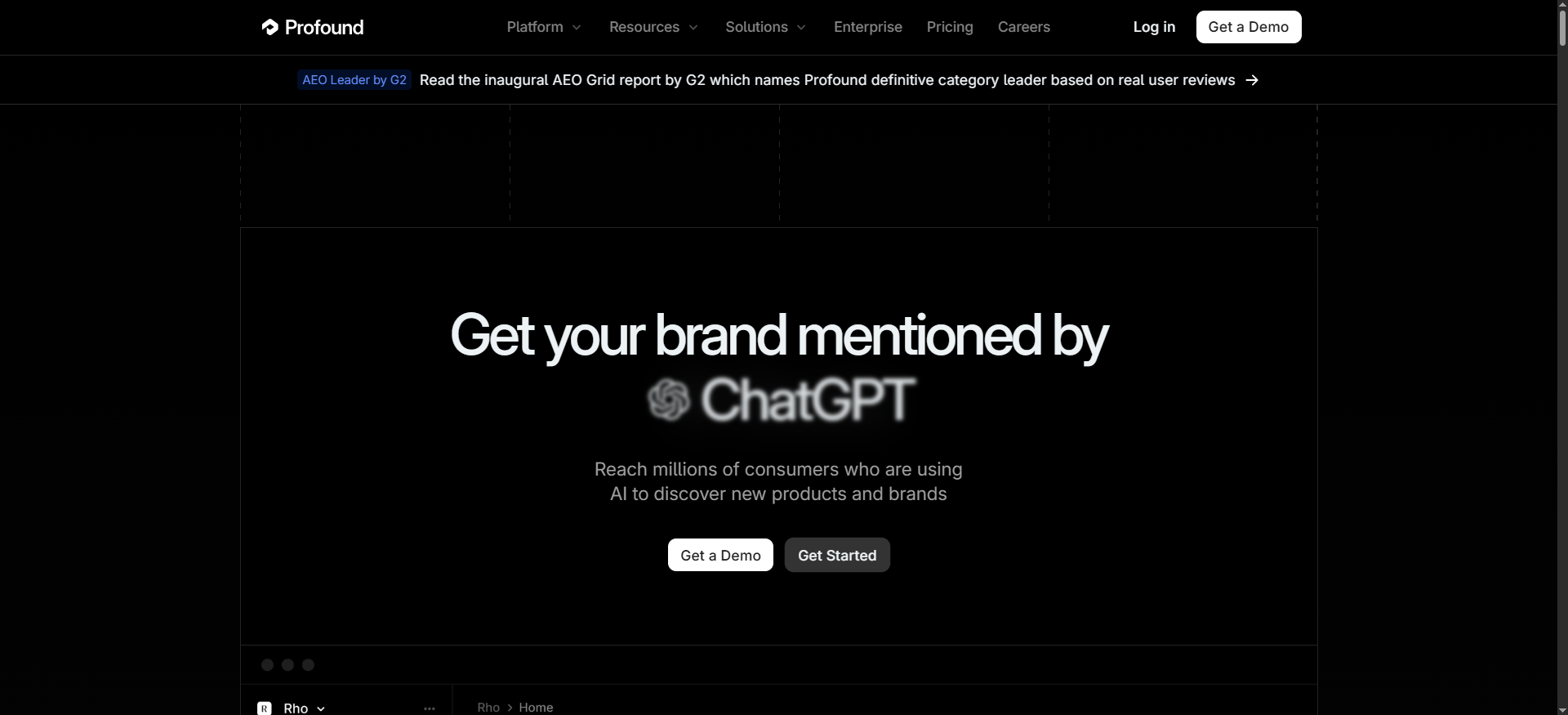
Profound is the most enterprise-oriented name on this list, which is why it belongs in conversations about which platform excels in AI visibility metrics. The company positions itself around a broader AI search intelligence platform that includes products such as Prompt Volumes, Answer Engine Insights, Agents, and Agent Analytics, which is relevant if you are researching best AI search engines. In other words, it is not just selling answer snapshots. It is pitching a deeper system for understanding how brands show up across answer engines and how those environments are evolving.
Why teams use it
Large brands use Profound because they want more than monitoring, and that often overlaps with a broader AI strategic visibility effort. They want market intelligence, internal visibility, broader AI search signals, and a product they can justify at the executive level. That makes Profound relevant when AI visibility becomes strategic enough to involve multiple departments.
What it’s good for
Profound is best for enterprise marketing teams, large publishers, major ecommerce players, and brands with serious reporting requirements. If you are trying to build a long-term AI search function, not just a monthly report, Profound is one of the more obvious platforms to evaluate alongside a broader AI visibility platform buyer guide.
When it’s a good fit
Profound is a good fit if you need:
- enterprise-grade AI search visibility
- a broader platform story than basic answer tracking
- advanced market and answer engine insights
- a vendor built for large organizational complexity
The company’s public positioning makes it clear that it is thinking beyond the lightweight end of the category. That is exactly why it belongs in a Ziptie alternatives list for mature teams.
When it’s not a good fit
If you are a startup, a small content team, or an agency that mostly needs straightforward monitoring, Profound may be too much of a platform. It may also be harder to justify if your workflow is still early and exploratory rather than operationalized.
Key capabilities
Profound’s public materials highlight Answer Engine Insights and related modules such as Prompt Volumes, Agents, and Agent Analytics. Its official pricing page also indicates plan structure that includes broader engine coverage and enterprise custom options.
Pricing
Profound’s self-serve pricing starts at $99/month. Enterprise and agency pricing are custom.
Free tier?
Profound doesn’t appear to offer a free tier or free trial. It offers a demo and some no-cost tools or reports on its site.
Downsides / limitations
The likely downside is the same reason enterprise buyers like it: breadth. Smaller teams may find the product heavier, more strategic, and potentially more expensive than they need. If your main issue with ZipTie is just “we need a little more reporting,” Profound may be farther upmarket than necessary.
Why teams start looking for Ziptie alternatives
ZipTie is not a bad product. In fact, it is easy to see the appeal. It covers major engines, offers answer monitoring, AI success scoring, prompt suggestions, and country support, and keeps pricing relatively approachable at the low end.
The problem usually is not whether ZipTie works. The problem is what happens after the first stage of adoption.
Most teams start wanting alternatives because they need reporting that fits real workflows, and that usually leads them to compare best tools for tracking brand visibility in AI search.
1. They need better tracking over time
It is one thing to take snapshots and another to build a real trend line, which is why many teams also explore AI search visibility audit tools. Once stakeholders start asking whether visibility is improving month over month, lightweight monitoring starts to feel thin.
2. They need stronger competitor views
AI visibility is a relative game, and teams trying to close that gap often start with AI citation gap analysis tools. If your competitors appear more often, appear earlier, or get cited more often, that matters. Tools with stronger benchmarking and competitor analysis become more valuable fast.
3. They need reporting that fits real workflows
Marketing teams do not just need answers on screen, and teams working through that shift often benefit from stronger SEO reporting software. They need exports, dashboards, recurring reports, and sometimes API access. That is where more operational tools start pulling away from lighter products.
4. They need broader internal usage
A tool may work fine for one curious SEO manager and then become frustrating the second content, growth, leadership, or analytics teams want access too. Packaging, seat policies, and reporting workflows start to matter more.
5. They want a platform, not just a checker
Eventually, AI visibility becomes a recurring business function, and that is usually when teams start investing in a more formal answer engine optimization approach. At that point, teams look for software that feels more like infrastructure than a test tool.
That is the real frame for this list.This is not “what is the absolute cheapest thing that sort of overlaps with ZipTie,” but rather what you should evaluate when ZipTie feels too lightweight for the next stage of your AI search visibility.
How to choose the right Ziptie alternative
The fastest way to make the wrong choice here is to compare feature checklists without thinking about workflow maturity, which is also why a solid AI visibility audit matters before choosing a platform.
Instead, use this simple framework.
If you are an SEO team that wants a stronger recurring workflow
Pick LLMrefs.
It is the cleanest match for teams that think in keywords, clusters, prompts, competitor visibility, and recurring reporting. It feels like a serious operational upgrade without forcing you into enterprise territory immediately.
If reporting and dashboards matter most
Pick Peec AI. Peec AI is a strong fit for teams building a more mature AI visibility metrics framework.
Peec AI stands out when the job is not only to monitor answers, but to feed that data into a more mature reporting system, which is why it fits naturally alongside the best marketing analytics tools. If you already work heavily in data tools, Peec makes a lot of sense.
If you want a broader AI search operating system
Pick AthenaHQ.
AthenaHQ is a better fit when you know AI visibility is becoming a bigger organizational function and you need a platform that reflects that, especially if you are building a formal AI search visibility strategy.
If budget is the biggest constraint
Pick Otterly AI.
Otterly AI is one of the best lower-cost ways to get into this category without settling for an overly basic tool, which is why it fits well in roundups of best cheap SEO tools. It gives smaller teams a realistic on-ramp.
If you are buying for a large enterprise brand
Pick Profound.
Profound belongs on the shortlist when scale, internal visibility, and broader AI search intelligence matter more than simple self-serve affordability, especially for teams reviewing best AI tools for enterprise SaaS marketing.
When Ziptie is still the right choice
It would be misleading to act like everyone should leave ZipTie.
ZipTie is still a reasonable pick if your needs are genuinely lightweight, but teams comparing next-step options often also read about the best AI visibility tool for GEO. Its product covers major AI engines, offers answer monitoring, includes optimization help, and starts at a comparatively accessible entry price. If you only need a simple system for checking visibility and taking action on a limited set of queries, it may still be enough.
Stick with ZipTie if:
- you are early in AI visibility tracking
- one or two people will use the tool
- you do not need advanced reporting or API access
- you mainly want quick answer monitoring and suggestions
- your budget is tight and your workflow is still simple
Move on when those statements stop being true.
That is the real dividing line.
Which Ziptie alternative is best for agencies?
For agencies, the best Ziptie alternative is usually Peec AI or LLMrefs, depending on how you deliver client work. Peec AI is especially agency-friendly because it has dedicated agency pricing, lets teams allocate credits across multiple client projects, supports flexible prompt allocation, and is built around managing several brands under one account, which makes it a strong fit for agencies. Its agency plans scale from smaller shops to larger portfolios, and higher tiers add API access for custom workflows.
If your agency wants a cleaner SEO-style workflow with competitor tracking, exports, and a simpler path to recurring AI visibility reporting, LLMrefs is still a strong option. But if the question is specifically about managing multiple clients, reassigning resources across accounts, and building an agency service line around AI visibility, Peec AI has the clearer agency-specific packaging and positioning.
Which Ziptie alternative is best for enterprise teams?
For enterprise teams, the best Ziptie alternative is Peec AI Enterprise, with AthenaHQ and Profound also worth a serious look depending on how broad the use case is, especially if you are comparing enterprise SEO tools. Peec AI’s enterprise tier includes unlimited projects, API access, SSO, support for all models, and dedicated support, which makes it a much better fit than lightweight tools once AI visibility becomes a formal cross-functional workflow.
AthenaHQ looks stronger when you want a broader operational platform with integrations and a more command-center style setup, while Profound is better aligned with large brands that want AI search intelligence to sit at a more strategic level. By contrast, ZipTie is still positioned as a lighter self-serve tool, with pricing starting at $69 per month and a simpler feature set centered on answer monitoring and optimization.
Which Ziptie alternative is best for startups?
For startups, the best Ziptie alternative is usually Otterly AI. Its entry plan starts at $29 per month, includes daily tracking, unlimited brand reports, unlimited team members, multi-country support, link citation analysis, exports, and a GEO audit. That makes it a very practical option for early-stage teams that need more than basic monitoring without paying for enterprise complexity.
A startup that is very reporting-focused could also consider Peec AI Starter, which includes 50 prompts, 3 models, daily tracking, unlimited users, and 1 project. But for most smaller teams comparing value against price, Otterly AI has the easier low-cost entry point and a broader self-serve appeal.
Is there a cheaper alternative to Ziptie?
Yes. Otterly AI is a cheaper alternative to Ziptie. Otterly AI starts at $29 per month, while ZipTie starts at $69 per month. On price alone, that makes Otterly the clearest budget-friendly alternative in this category.
That said, cheaper does not automatically mean better for every team. ZipTie may still be enough if you want a lightweight self-serve tracker and a simpler setup. But if your goal is to spend less while still getting daily tracking, exports, citation analysis, and broader reporting features, Otterly AI is the better value pick.
What is the best alternative to Ziptie for operational reporting?
For operational reporting, the best Ziptie alternative is Peec AI. Its positioning is clearly tied to analytics workflows, and its more advanced plans include multi-project support, multi-country tracking, and integrations with GSC, GA, and Looker.The enterprise tier adds API access, unlimited projects, SSO, and dedicated support, which makes it particularly strong for teams that need AI visibility data to flow into recurring dashboards and a broader AI visibility service strategy.
Otterly AI is also a good reporting option at a lower price point because Standard and above include a Google Looker Studio connector, detailed reports, and exports. But if the question is specifically about the best choice for a more mature operational reporting setup, Peec AI is the stronger recommendation because its product and plan structure are more clearly built around reporting depth and scalable analytics workflows.
FAQs
What is the best alternative to Ziptie?
Is there a cheaper alternative to Ziptie?
Which Ziptie alternative is best for agencies?
Which tool is best for enterprise AI visibility tracking?
Do these tools track citations and sources in AI answers?
What should I look for in a Ziptie alternative?
Is Ziptie still good for smaller teams?
Final verdict
If you want the short answer, here it is:
- Best overall Ziptie alternative for most teams: LLMrefs
- Best for reporting-heavy teams: Peec AI
- Best for broader operational depth: AthenaHQ
- Best budget-friendly option: Otterly AI
- Best for enterprise brands: Profound
The reason this comparison matters is simple: ZipTie is useful when you want lightweight AI answer evidence, but teams making that shift often also compare generative engine optimization case studies.
For most readers, the smartest move is to shortlist LLMrefs, Peec AI, and Otterly AI first, then evaluate AthenaHQ or Profound if your reporting complexity and budget are clearly higher.
📋 Get Listed / Advertisement
We update this guide monthly. Want your tool featured? Contact: [email protected].