
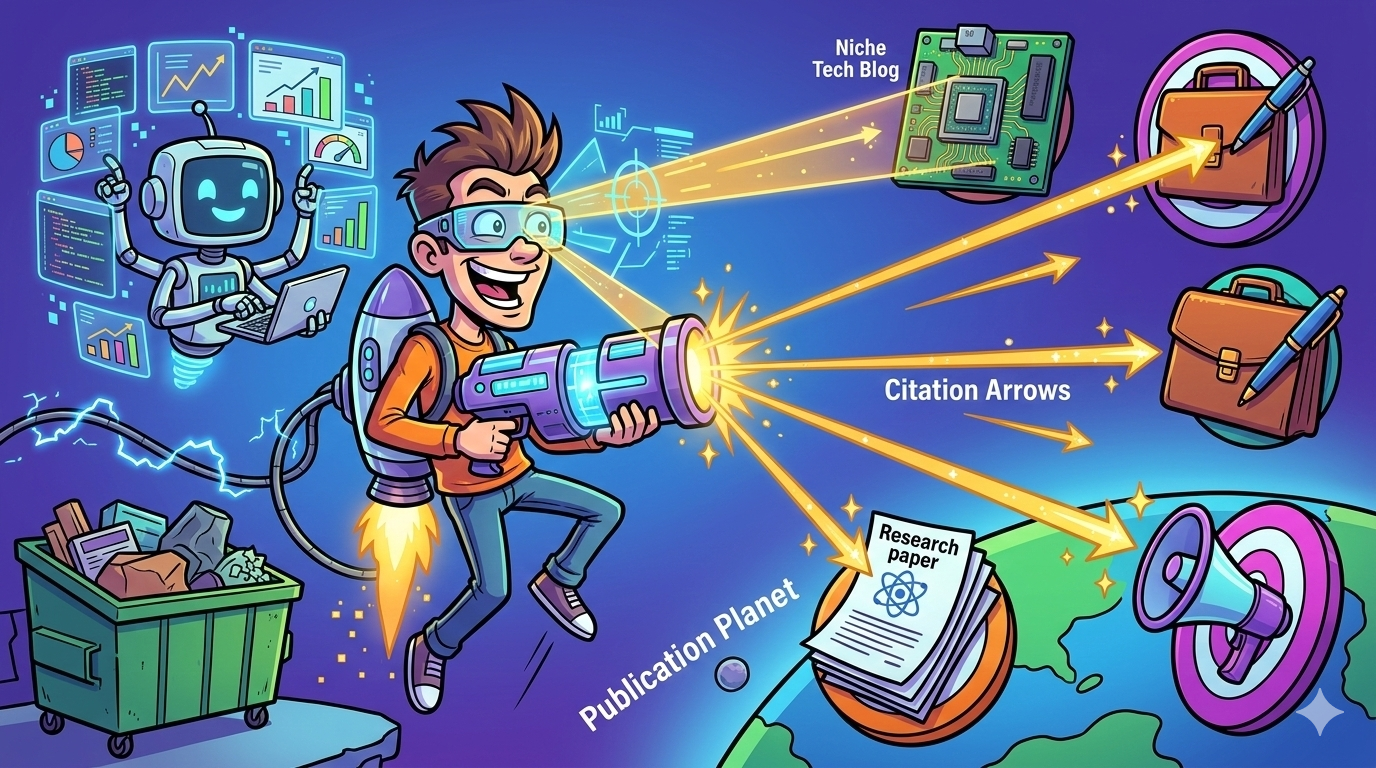
If your goal is more citations inside AI answers, you need tooling that does two things well: (1) reveals the domains AI is already using as evidence for your key prompts, and (2) turns those domains into “source targets”, a prioritized list of places to publish, pitch, or outrank via Answer Engine Optimization.
For most teams, Promptmonitor is the most direct “where should we get mentioned?” solution because it explicitly shows sources AI cites and frames them as outreach opportunities with contact details/SEO metrics.If you’re running multi-surface monitoring and want consistent citation logging across platforms, tracking brand visibility in AI search becomes essential for ongoing reporting.
If you want “scan citation sources → build authority” as a structured workflow, RankPrompt’s platform showdown framing helps teams operationalize prompt monitoring and citation-source analysis.
📋 Get Listed / Advertisement
We update this guide monthly. Want your tool featured? Contact: [email protected].
Best 5 Tools for Citation Source Targeting (Quick Comparison)
| Tool | Best for | Source-targeting strength | Pricing signal* |
|---|---|---|---|
| Promptmonitor | Turning citation sources into an outreach list fast | Shows sources AI cites and frames them as actionable “opportunities” for outreach (who to pitch / where to get included) | Pricing varies by edition; verify on official pricing page |
| OtterlyAI | Continuous tracking across AI platforms | Tracks mentions + website citations across multiple AI search surfaces for ongoing monitoring/reporting | Starts around $29/mo (vendor-stated; confirm latest) |
| Profound | Enterprise AI search visibility + citation insights | Enterprise-grade prompt intelligence + ability to uncover citations (which sites drive AI answers) | Custom enterprise pricing |
| Akii | Visibility scoring + competitor benchmarking + citations | Tracks how AI perceives/recommends/cites brands; useful for benchmarking + prioritizing targets | Pricing varies; check vendor / listings |
| RankPrompt | Citation source scanning + prompt-level monitoring | Highlights AI citation sources and ties them to authority/backlink strategy and monitoring workflows | Plans listed publicly; confirm latest on pricing page |
📋 Get Listed / Advertisement
We update this guide monthly. Want your tool featured? Contact: [email protected].
▶️ Explore
1. Promptmonitor
What it does
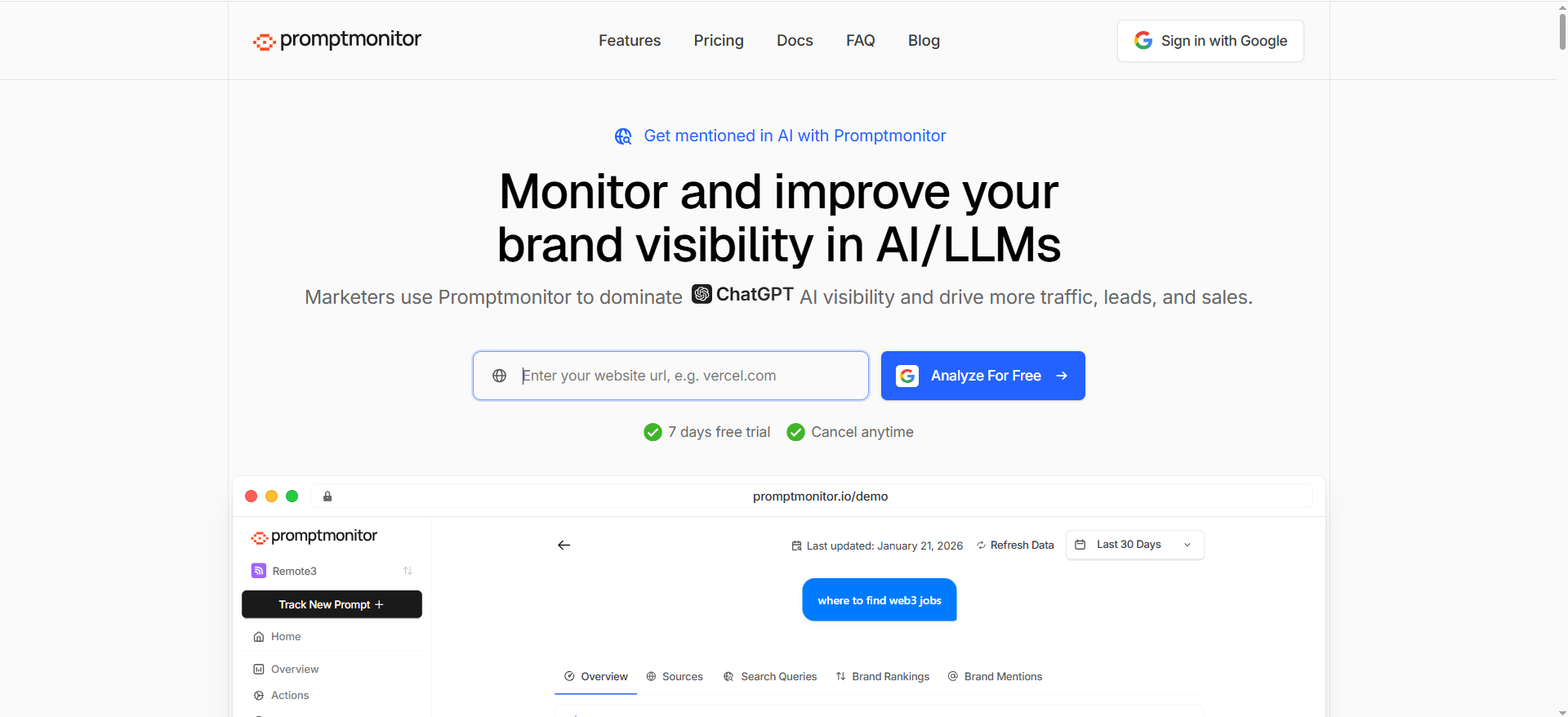
PromptMonitor is designed to help you get mentioned in AI answers by tracking AI visibility and, crucially for this guide, showing which sources AI is using to answer your prompts, so you can target those publishers.
Why teams use it
Because it turns the “AI cited these domains” problem into an actionable workflow: Promptmonitor emphasizes source/citation aggregs-style list of sources that don’t mention you yet, plus useful context like authority/metrics and contact details so you can pitch.
What it’s good for
- Building a “where to publish” list from citation sources (your niche’s most-cited domains).
- Outreach-first citation wins: getting included in roundups, directories, reviews, “best tools” posts, or reference pages that models consistently cite.
- Deciding outreach vs outrank: Promptmonitor explicitly frames the decision: reach out to the cited source, or create content that outranks it.
When it’s a good fit
- You’re a B2B SaaS team (or agency) and your primary goal is more AI citations, not just “monitoring for curiosity.”
- You want fast leverage: you’d rather win by getting featured on the sites AI already trusts than waiting months for your own pages to become the default sources.
When it’s not a good fit
- You only need high-level dashboards and don’t intend to do outreach/content updates.
- You’re looking for deep enterprise governance, compliance controls, and global workflows (you may outgrow into a platform like Profound).
How to use it
- Start with 25–50 “money prompts.” Don’t start with keywords. Start with the actual recommendation-style queries buyers ask as part of an AI search visibility strategy (e.g., “best X for Y industry,” “X vs Y,” “alternatives to X”).
- Run prompts and export citation sources using a dedicated AI visibility tracking service so you can build a clean, actionable target list.
- Bucket sources by “type”:
- Editorial lists (best-of roundups)
- Product directories (category pages)
- Communities (forums/Q&A)
- Standards/reference (glossaries, definitions, guidelines)
- News/analyst (coverage)
- Choose a tactic per source: outreach to be included, partnership for a listing, or create a superior page to outrank.
- Re-run prompts weekly/monthly to see whether citations shift after your placements or content updates.
Key capabilities (for “where to publish” decisions)
- Source and citation aggregation (the foundational “source target” dataset).
- Opportunities list for sources that don’t mention you yet, with outreach-friendly data (contacts/metrics).
- A practical decision model: outreach vs. outrank framing built into the product narrative.
Pricing
Promptmonitor’s pricing starts at $29/month.
Free tier?
Promptmonitor doesn’t offer a free tier, but it does offer a 7-day free trial.
Downsides / limitations
- Like all AI visibility tools, it’s only as good as your prompt set: bad prompts = noisy source targets.
- If your org needs heavier governance (SSO, formal security posture, global workflows), you may want an enterprise-first platform.
2. OtterlyAI
What it does
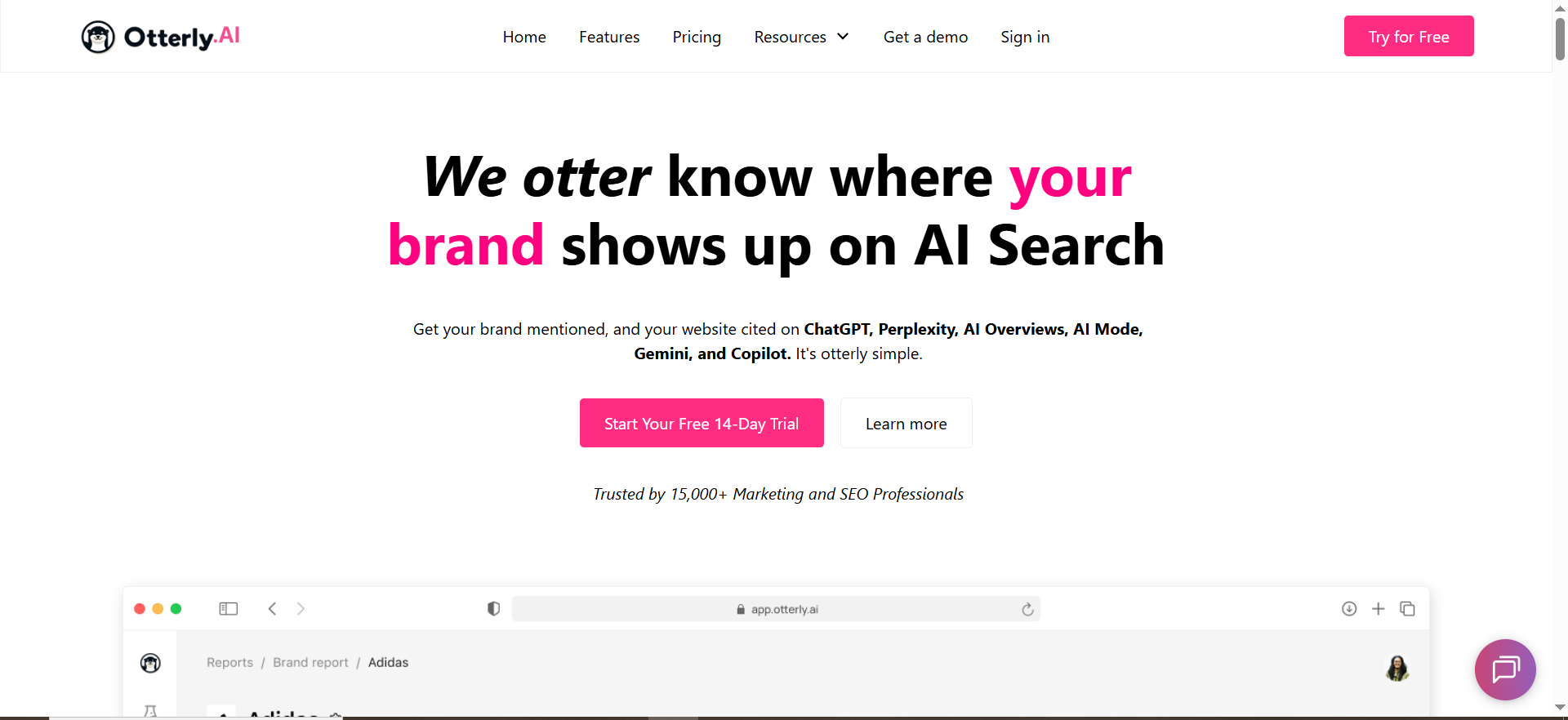
OtterlyAI monitors brand visibility across major AI search surfaces and logs mentions and website citations so you can see where you’re showing up, and where you’re not.
Why teams use it
OtterlyAI is positioned as a multi-platform monitoring dashboard. If your citation strategy depends on ongoing tracking across several AI surfaces, OtterlyAI’s coverage and reporting emphasis is the draw.
What it’s good for
- Ongoing “citation logging”: collecting which prompts produce citations and which domains/pages get cited.
- Multi-surface monitoring: tracking visibility across assistants/surfaces that behave differently.
- Country/geo tracking (useful when your “source targets” differ by region).
When it’s a good fit
- You need a repeatable monitoring layer that supports monthly reporting and visibility tracking for multiple prompts/markets.
- You want to build a source target list per market (US vs UK vs EU often cite different publications).
When it’s not a good fit
- You want the most explicit “publisher outreach list with contact details” orientation, Promptmonitor is more directly framed around that.
How to use it
- Create a prompt library that matches your sales conversations (category prompts, competitor prompts, “best” prompts).
- Track citations over time to see which domains are repeatedly cited for your category.
- Export or document the top recurring citation sources (your real “source targets”).
- Pair each source with a tactic:
- If the source is an editorial list: pitch inclusion or provide data.
- If it’s a directory: secure/upgrade listing and ensure category alignment.
- If it’s a reference page: publish a stronger canonical resource on your site.
Key capabilities
- Tracks mentions and citations across multiple AI search platforms.
- Emphasizes automated monitoring + reporting (useful for programmatic “citation ops”).
Pricing
OtterlyAI’s pricing starts at $29/month (Lite plan).
Free tier?
OtterlyAI doesn’t offer a free tier, but it does offer a 14-day free trial.
Downsides / limitations
- Monitoring is only half the battle: you still need a repeatable process to turn citation logs into specific publishing/outreach targets. (Use the framework later in this guide.)
3. Profound
What it does
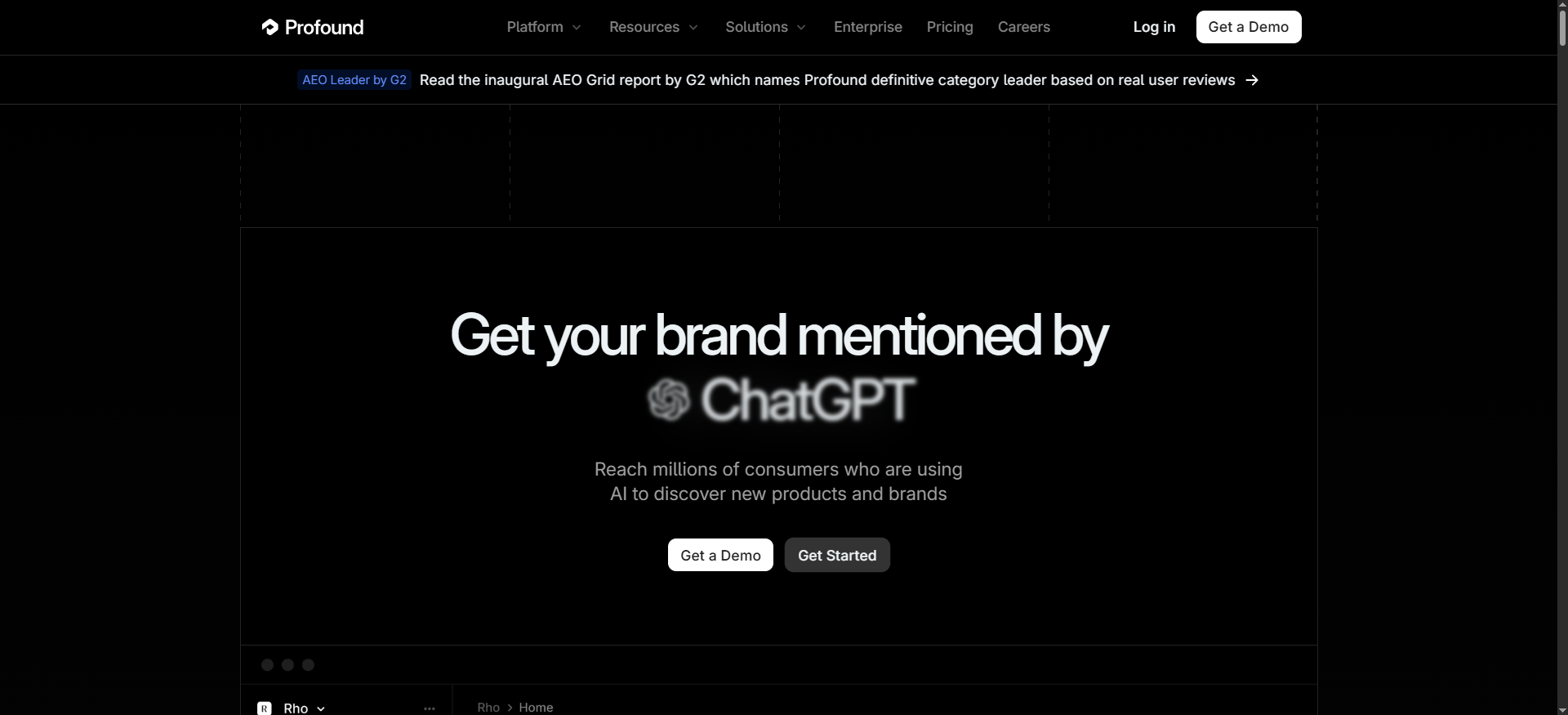
Profound positions itself as an AI search visibility platform with modules like Answer Engine Insights and explicitly calls out the ability to uncover citations, i.e., identify which websites drive AI answers about your brand/topics.
Why teams use it
Profound leans enterprise: it’s designed for teams who want more than tracking, think workflows, integrations, and prompt intelligence at scale.
What it’s good for
- Enterprise source intelligence: identifying citation sources across large prompt sets, markets, and segments.
- Strategy + execution loops: insights → workflows → publishing pipeline.
- Prompt discovery (“prompt volumes”): discovering what audiences actually ask AI, useful for building the prompt set that generates the citation sources you then target.
When it’s a good fit
- You have a large site/content operation and need system-level visibility and governance.
- You need security/compliance posture and enterprise features (SSO/security posture are explicitly mentioned).
When it’s not a good fit
- You’re a smaller team that just needs “give me the source targets and let me pitch”, a lighter tool may get you there faster.
How to use it
- Start by mapping your core topics → prompts → segments (industry, product line, region).
- Use citation insights to identify:
- Which domains repeatedly appear as sources for your category
- Which competitor domains are being cited instead of you
- Convert that into a source targeting backlog:
- “Get featured on X” targets (outreach)
- “Publish the canonical resource for Y” targets (outrank)
- Connect the work to a content pipeline (templates, QA, publishing cadence).
Key capabilities
- “Uncover citations” (identifies websites driving AI answers).
- “Prompt volumes” / prompt intelligence for building robust prompt sets.
- Enterprise positioning and controls.
Pricing
Pricing starts at $99 per month.
Free tier?
Profound doesn’t advertise a free tier; it’s positioned around requesting a demo.
Downsides / limitations
- If you don’t need enterprise-level workflows, you might pay for operational depth you won’t use.
4. Akii
What it does
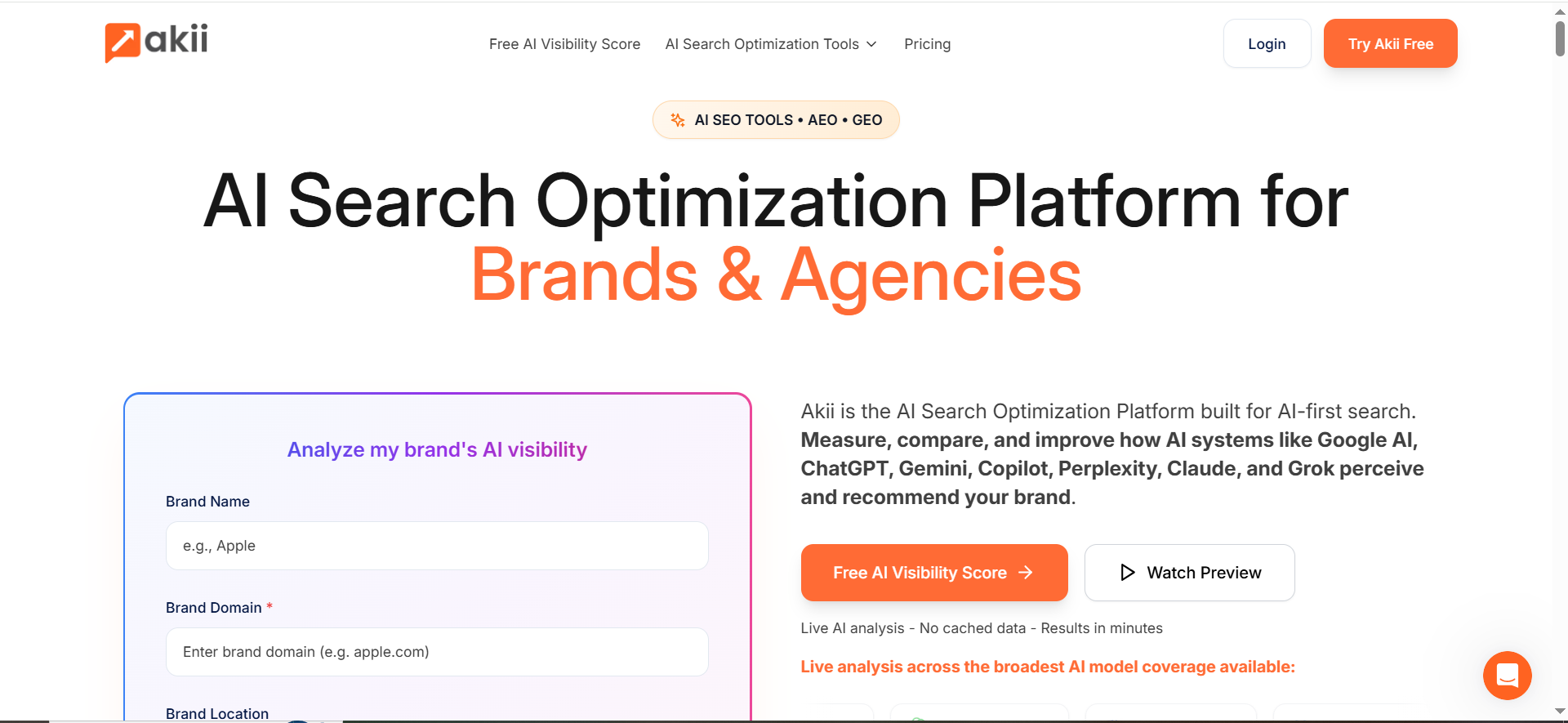
Akii focuses on analyzing how AI systems perceive, recommend, and cite brands, including an “AI Search Tracker” that monitors mentions/citations across major AI search engines.
Why teams use it
Akii is helpful if you want visibility scoring + competitive context, not just raw citation logs. The product frames results in dimensions like trust/authority/relevance and citation likelihood.
What it’s good for
- Competitive “who AI recommends instead of you” analysis that directly informs where you need third-party support or better canonical pages.
- Identifying gaps in “citation likelihood” factors and mapping fixes.
- Creating a “source target” strategy when you need to explain prioritization to stakeholders (score + benchmark style reporting).
When it’s a good fit
- You’re a growth/enterprise team needing dashboards + competitor context to guide outreach and content investments.
- You want a broader “AI search optimization” suite approach, not only tracking.
When it’s not a good fit
- You just want a lightweight “find the publishers AI already trusts → pitch them” engine.
How to use it
- Track your brand for a prompt set that mirrors pipeline-driving questions.
- Compare against competitors to identify where you’re absent and which competitors are cited.
- Build a target list from the domains/pages being cited and categorize them:
- “Influential editorial sources” (pitch)
- “Directory/category sources” (listing optimization)
- “Reference sources” (publish canonical)
- Use visibility/citation likelihood insights to decide whether you need:
- Better third-party mentions (outreach)
- Better on-site “citation-ready” resources (outrank)
Key capabilities
- AI Search Tracker monitors mentions/recommendations/citations across multiple AI surfaces.
- Competitive benchmarking (who AI recommends instead of you).
Pricing
Akii’s paid plans start at $49/month.
Free tier?
Akii offers a free AI Visibility Score (free analysis tool), and it also offers a 14-day free trial for the paid platform.
Downsides / limitations
- You still need a publishing/outreach process to turn insights into citations (see the framework below).
5. RankPrompt
What it does
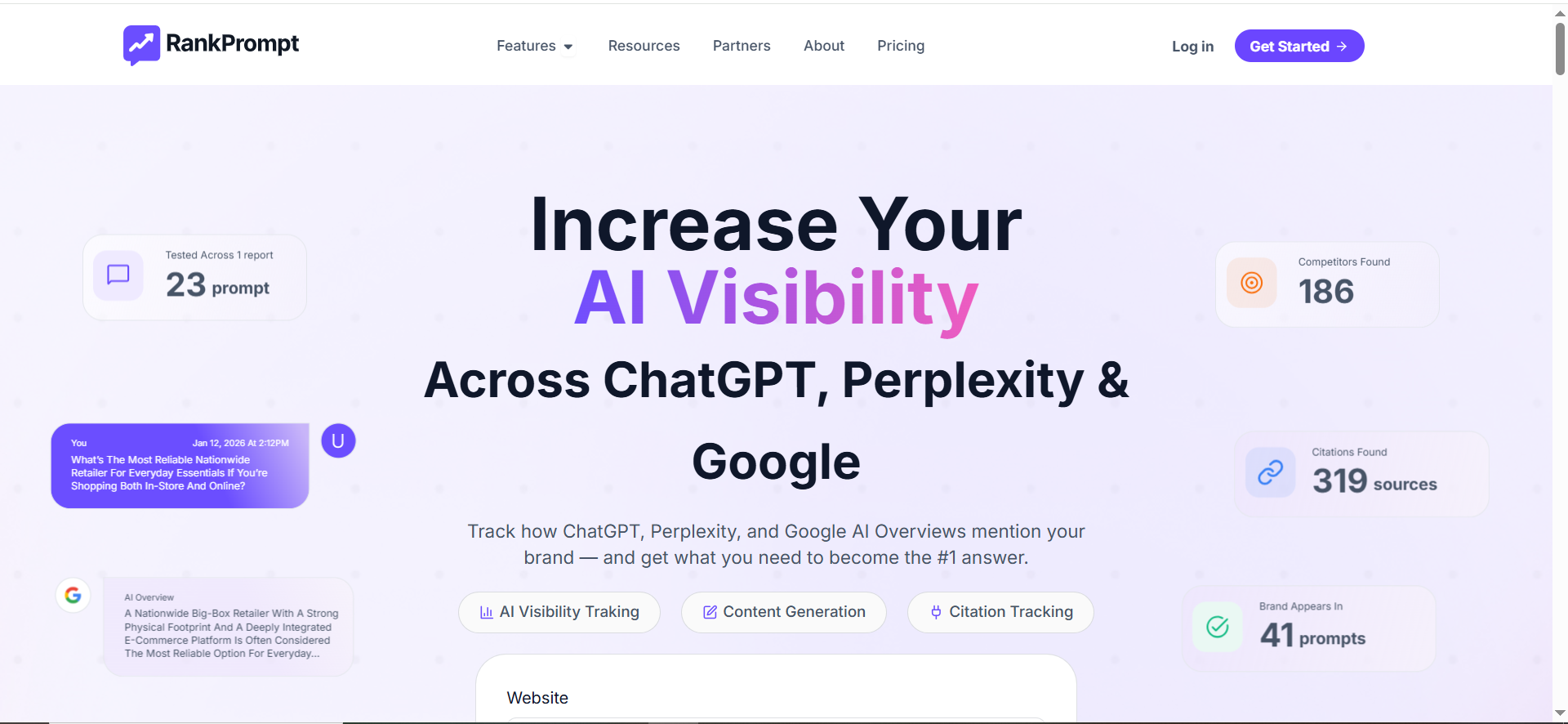
RankPrompt positions itself as an AI visibility and monitoring tool with a clear workflow step devoted to analyzing AI citations, identifying the sources LLMs reference and using that to drive citation/backlink strategy.
Why teams use it
Because it’s built around a simple loop: track prompts → scan citation sources → measure impact, which maps nicely to “where should we publish” decisions.
What it’s good for
- Identifying the domains, listings, and sources AI models use, then converting that into a source target list.
- A structured citation “authority” workflow (good for teams that want a repeatable playbook).
- Geo-aware tracking in some positioning (helpful when source targets differ by locale).
When it’s a good fit
- You want a tool that is explicit about citation source scanning and making it part of the optimization workflow.
- You’re an agency/consultant and need a clear, repeatable process.
When it’s not a good fit
- You need enterprise-level governance, or you need a tool that is specifically framed around outreach contact extraction (Promptmonitor is more direct on that point).
How to use it
- Track prompts that map to buying intent: “best X,” “X vs Y,” “alternatives,” “for industry Z.”
- Use citation scanning to identify frequently cited domains and pages.
- Prioritize sources that show up across multiple prompts (recurrence > one-off).
- Decide outreach vs outrank for each (framework below).
- Measure impact after placements/content updates.
Key capabilities
- “Scan AI citation sources” + citation/authority framing.
- Prompt monitoring + visibility tracking positioning.
Pricing
RankPrompt’s pricing starts at $49/month (Starter plan).
Free tier?
RankPrompt doesn’t offer a free tier, but it does offer a 7-day free trial.
Downsides / limitations
- Like every tool here: without a disciplined “source targeting” process, data becomes dashboards.
What “source targets” really means (and why it’s the fastest path to AI citations)
A source target is any third-party domain (and often a specific page on that domain) that AI systems repeatedly cite when answering prompts that matter to your business, so you can measure progress using clear AI visibility metrics.
That’s important because, in practice, AI engines don’t cite “the best page on the internet.” They cite what they can retrieve, trust, and extract cleanly, and those sources tend to cluster into predictable buckets:
- Comparative listicles (“Best X for Y”)
- Glossaries and definitions
- Directories and category pages
- How-to guides and checklists
- Authoritative references (standards, well-structured explainers)
This isn’t a theoretical point: research and industry observations repeatedly highlight that list-style pages and comparative formats are heavily represented among citations, because they’re easy to extract into answers.
So “suggest where to publish” really means:
- Identify the domains AI already trusts in your niche
- Decide whether you should get featured on them (outreach) or replace them (outrank)
- Build a measurable loop to increase your share of citations over time
The Source Targeting Framework: Outreach vs. Outrank
The unique angle for this topic is source targeting, choosing between two paths:
Path A: Outreach (get included where AI already cites)
You win citations by getting mentioned on existing pages that AI already uses as evidence.
Best for:
- “Best tools” roundups and software lists
- Industry directories
- Vendor comparisons
- “Top companies” lists
- Resource pages
Why it works:
If the AI already cites that domain/page, inclusion can be an immediate citation lift, sometimes faster than waiting for your own content to become the canonical source.
Tool support:
PromptMonitor is the clearest match here because it explicitly frames “sources AI is using” plus outreach decisioning (including contact extraction/SEO metrics).
Path B: Outrank (publish the page AI should cite)
You build the best “citation-ready” asset on your own site and compete to become the cited source.
Best for:
- Definitions and “what is” explainers
- Original data studies
- Benchmarks and research
- Step-by-step implementation guides
- Canonical comparison pages (X vs Y, alternatives, pricing, integration guides)
Why it works:
You’re not renting space on someone else’s domain. Over time, you build a library of assets that can be cited repeatedly.
Tool support:
Profound and RankPrompt both explicitly orient around citations and insight-to-action workflows; OtterlyAI supports ongoing tracking so you can verify whether outrank efforts change citation patterns.
The decision rule (simple, practical)
Use this quick rule per target source:
- Outreach if: the page is a list/directory you can realistically be added to in <30 days, and it’s cited across multiple prompts.
- Outrank if: the page is informational/reference and you can create a substantially better canonical asset on your own site, validated with a structured content audit checklist.
How to build a “where to publish” list from citation data (step-by-step)
This is the operational heart of the guide, how you turn tools into targets.
Step 1: Build your “money prompt” set (25–100 prompts)
Include:
- Category prompts: “best [category] for [use case]”
- Comparison prompts: “[you] vs [competitor]”
- Alternatives prompts: “alternatives to [competitor]”
- Problem prompts: “how to do [job] without [pain]”
- Trust prompts: “is [category] secure/compliant?”
Why: source targets are only useful if they’re tied to prompts that influence buying.
Step 2: Run prompts across surfaces and collect citations
Your goal is a table with:
- Prompt
- AI surface/model
- Cited domains
- Cited URLs (if available)
- Your inclusion: Y/N
- Competitors included: who?
Tools in this guide all support some version of this, and several explicitly call out citation tracking/uncovering.
Step 3: Create a “Source Target Backlog”
For each cited domain/page, capture:
- Source type (listicle, directory, reference, community, analyst/news)
- Recurrence score (how often it appears across prompts)
- Relevance score (how close it is to your category)
- Inclusion difficulty (can you be added?)
- Tactic (outreach vs outrank)
Step 4: Convert backlog → weekly execution
A practical weekly cadence:
- 2 outreach targets/week (pitch, apply, request inclusion)
- 1 outrank asset/week (publish or substantially upgrade)
- 1 refresh/week (update an existing asset to make it more “citation-ready”) often easiest to execute with a content audit fix sprint.”
Step 5: Re-run prompts and measure delta
This is where tools pay for themselves: re-run the same prompt set and track:
- Citation frequency changes
- New sources appearing
- Lost citations (and what replaced you)
- Competitor share changes
SOP-wise, this becomes your update mechanism for a guide like this (monthly refresh).
What to publish to earn citations (formats AI extracts easily)
If you choose the outrank path, you need to publish assets that AI systems can extract cleanly, starting with a strong information architecture for structuring AEO content. The best-performing formats tend to share traits:
1) Listicles + comparisons
- “Best X for Y” (with clear criteria)
- “X vs Y” (with a table)
- “Top alternatives to X”Profound even highlights templates/formats designed to drive citations like listicles and comparisons.
2) Glossary/definition pages
- “What is [term]?”
- “AI visibility metrics: definitions”Make them skimmable: definitions, bullet points, examples, FAQs, especially when you’re building pages that behave like a practical SEO glossary.
3) Benchmarks and research pages
Even simple original data, like “we analyzed 200 prompts and found the most-cited domains in [niche]”; can become a citation magnet because it’s uniquely quotable.
4) “How to” playbooks with checklists
AI loves step-by-step structures that can be summarized. Publish:
- A 10-step checklist
- A decision tree
- A scoring rubric
5) “Source leaderboards”
If you want to win citations about citations, publish:
- “Top cited domains in [category]”
- “Which directories AI cites for [category]”
- “Editorial sites AI pulls from for [industry]”
Scoring model: Prioritize targets that actually move visibility
Not all “high authority” sites matter for AI citations. Some never show up in AI answers for your niche.
Use a simple scoring model (0–3 each):
- Citation recurrence (0–3): Does it appear across many prompts?
- Prompt proximity (0–3): Is it cited on buyer-intent prompts (“best,” “vs,” “alternatives”)?
- Inclusion feasibility (0–3): Can you realistically get added or featured?
- Evidence density (0–3): Does the page contain structured comparisons, definitions, clear claims?
- Category fit (0–3): Is it truly about your category (not generic tech news)?
Prioritize anything scoring 11+ for immediate action.
This is also how you keep your team from wasting cycles on “nice-to-have PR placements” that don’t show up in citation logs.
Operational checklist
A repeatable monthly rhythm (simple enough to run forever):
- Refresh prompt set (add new competitor names, new use cases).
- Re-run prompts across your tracked AI surfaces.
- Export citation sources and update your recurrence counts.
- Identify:
- New source targets
- Lost ci - Competitor gains
- Execute:
- Outreach sprint (top 10 outreach targets)
- Content sprint (top 4 outrank assets)
- Report:
- Citation count trend
- Share of citations vs competitors
- Top new sources earned
- Next month’s targets
This matches the SOP’s intent: content that ranks, earns AI citations, and converts via a consistent CTA and structure.
📋 Get Listed / Advertisement
We update this guide monthly. Want your tool featured? Contact: [email protected].
What is a “source target” for AI citations?
A source target is a website (and usually a specific page on that website) that AI systems repeatedly use as evidence when answering prompts in your category. In practice, when an AI answer includes a citation/link, it’s pointing to a source target.
Think of source targets as the shortlist of publishers the AI already trusts for your topic.
There are two layers:
- Domain-level source target: The site itself (e.g., a directory, a publication, a standards org, a niche blog).
- Page-level source target: The exact URL that tends to be cited (e.g., “best tools for X,” “X vs Y,” glossary definition, how-to guide).
Why this matters: if you know the exact pages AI cites, you can stop guessing and do one of two things:
- Get included on those pages (outreach), or
- Replace them with a stronger page (outrank).
Can these tools suggest where to publish vs. just what you’re missing?
Most AI visibility tools don’t “recommend publishers” like a PR agency would. Instead, they do something more valuable and objective:
They show you where AI is already getting its information.
That becomes your “where to publish” list after you interpret it.
Here’s the distinction:
- “What you’re missing” insight = “You’re not being mentioned/cited for these prompts, competitors are.”
- “Where to publish” insight = “These domains/pages are repeatedly cited for those prompts, target them.”
The best tools for where to publish are the ones that:
- surface citation sources by prompt,
- let you export sources,
- show recurrence (how often a source shows up), and
- make it easy to turn sources into an action list (outreach vs outrank).
So: tools don’t magically pick publishers for you; they reveal the publisher ecosystem AI already rewards, which is exactly what you need to decide where to publish.
How do I turn citation sources into an outreach list?
Use this simple workflow to convert raw citations into a pitch-ready outreach list:
1) Collect citations for your “money prompts”
Run prompts that reflect buyer intent:
- “best [category] for [use case]”
- “[your brand] vs [competitor]”
- “alternatives to [competitor]”
- “top [category] tools”
- “how to [job-to-be-done]”
Export the citations (domains + URLs).
2) De-duplicate and rank by recurrence
Create a spreadsheet with columns:
- Domain
- URL
- Prompt count (how many prompts cite it)
- Surface(s) (which AI platforms cite it)
- Type (listicle/directory/reference/community)
- “Mention us?” (Y/N)
- Notes
Sort by prompt count first. Recurrence beats one-off citations.
3) Classify each source by “inclusion pathway”
This determines how you pitch:
- Listicles / “Best tools” pagesPitch angle: updated information + positioning + short proof points.
- Directories / category pagesPitch angle: listing request + correct category + profile completeness.
- Reviews / comparisonsPitch angle: offer data, screenshots, benchmarks, differentiators.
- Communities (Reddit, forums, Q&A)Pitch angle: contribute helpfully; don’t spam.
- Reference pages / glossariesPitch angle: often not outreach, better to outrank.
4) Decide Outreach vs Outrank per target
- Outreach if you can realistically be added/featured (clear editorial pathway).
- Outrank if it’s a locked reference page or the site doesn’t update lists.
5) Outreach checklist (what to send)
For listicles/directories, prepare a “one-pager”:
- 1–2 sentence product positioning
- 3 bullet differentiators
- Ideal use case + who it’s for
- Pricing/plan note (if public)
- Proof: customer logos, ratings, security/compliance, awards (only if real)
- Suggested blurb they can paste
That’s your outreach list: top recurring cited sources where you’re currently absent, prioritized by recurrence and inclusion feasibility.
Which content formats earn the most citations (listicles, comparisons, how-tos)?
AI systems tend to cite content that is:
- easy to extract,
- structured, and
- answers the prompt directly.
These formats consistently perform well for citations:
1) Listicles (“Best X for Y”)
Why they get cited: they map cleanly to recommendation prompts.
What to include:
- clear criteria
- short “best for” callouts
- pros/cons
- a comparison table near the top
2) Comparison pages (“X vs Y” and “Alternatives”)
Why: they’re compact evidence packages.
What to include:
- side-by-side table (features, pricing, ideal use case)
- “When to choose X” vs “When to choose Y”
- honest tradeoffs (credibility helps)
3) How-to guides with steps + checklists
Why: structured steps are easy to summarize.
What to include:
- step list
- screenshots/examples
- troubleshooting section
- “quick checklist” box
4) Definitions / glossaries (canonical “What is…”)
Why: AI often needs a definitional anchor.
What to include:
- 1-paragraph definition
- key concepts
- examples
- FAQs
5) Original research / benchmarks
Why: unique data becomes “citation-worthy.”
What to include:
- methodology (brief)
- key findings in bullets
- charts/tables
- downloadable dataset summary (optional)
How do I avoid chasing “high-DA” sites that never get cited in my category?
High authority ≠ high citation likelihood.
Avoiding the trap comes down to one rule:
Prioritize “citation recurrence” over “domain authority”
A niche directory that shows up in AI answers 30 times is more valuable than a famous publication that never appears for your prompts.
Use this filtering system:
1) Build a “Top Cited Sources” leaderboard
From your prompt set, count:
- how many times each domain is cited
- how many times each URL is cited
2) Create a minimum recurrence threshold
Example:
- Only treat something as a “source target” if it appears in ≥ 3 prompts (or ≥ 5, if your prompt set is large).
3) Validate with prompt proximity
Give extra weight to sources cited for:
- “best”
- “vs”
- “alternatives”These are the prompts most tied to purchase decisions.
4) Watch for “generic DA bait”
Some huge sites get cited for definitions, not recommendations. They might be irrelevant to your commercial prompts.
5) Add a “fit” score
Score 0–3:
- category fit
- inclusion feasibility
- recurrenceThen prioritize.
Result: your publishing/outreach list becomes evidence-based, not reputation-based.
How do I track citations across multiple AI platforms?
To track citations across platforms reliably, you need consistency:
1) Standardize your prompt set
Use the same prompts across platforms so you can compare apples-to-apples.
Store prompts in a master sheet with:
- prompt text
- intent type (best/vs/how-to/definition)
- product line/segment
- priority
2) Track at the “prompt run” level
Each run should capture:
- platform/surface (e.g., “Platform A”, “Platform B”)
- date/time
- citations (domains + URLs)
- your presence (mentioned? cited?)
- competitor presence
3) Normalize citations
AI platforms may cite:
- domains only
- full URLs
- multiple sources in different formats
Normalize to:
- domain
- canonical URL (strip tracking parameters)
- content type
4) Track changes over time
The value comes from trends:
- new citations gained
- citations lost
- sources that keep appearing (core targets)
5) Measure “share of citations”
For your category prompts, compute:
- % of prompts where you are cited
- % of total citations that go to you vs competitors
- top 10 cited domains and your overlap
That gives you a multi-platform view that’s actually actionable.
How do I find “citation gaps” vs. competitors?
A citation gap is any situation where:
- competitors are being cited for your priority prompts, and
- you are not.
Here’s a practical method:
1) Run your prompt set and log results
For each prompt:
- list cited domains/pages
- note whether your brand is cited
- note which competitors are cited
2) Build a competitor overlap matrix
Columns:
- Prompt
- Cited domains
- Competitor A cited? (Y/N)
- Competitor B cited? (Y/N)
- You cited? (Y/N)
Now filter:
- prompts where competitors = Y and you = N
3) Identify the gap type
Most gaps fall into one of these:
Gap A: “Third-party placement gap”
Competitor is listed on an editorial list/directory that’s being cited.
✅ Fix: outreach / listing upgrade / category correction.
Gap B: “Canonical content gap”
Competitors are cited from their own content page (comparison, guide, glossary).
✅ Fix: build a better citation-ready asset (outrank).
Gap C: “Entity understanding gap”
AI doesn’t “know” you belong in the category (positioning ambiguity).
✅ Fix: strengthen category clarity across your site + consistent descriptions across trusted third parties.
4) Prioritize by commercial intent + recurrence
Start with:
- “best,” “alternatives,” “vs” prompts
- sources cited across multiple prompts
That’s where closing the gap moves revenue, not vanity metrics.
How do I find “citation gaps” vs. competitors? (duplicate query, expanded angle)
If you want a slightly more advanced approach, use two gap views:
View 1: Prompt-level gaps
For each prompt:
- Who is cited?
- Who is missing?This tells you what to fix.
View 2: Source-level gaps
For each source target domain/page:
- Which brands are included?
- Are you included?
- How many priority prompts cite this source?
This tells you where to publish/pitch.
Source-level gap example:
“If Domain X is cited in 18 prompts and includes Competitors A/B/C but not us → Domain X becomes a top outreach priority.”
This view creates a clean outreach roadmap:
- Top 10 cited sources where competitors are present and you’re absent
- Next 10 sources to outrank (if inclusion is unlikely)
FAQs
What’s the difference between an AI “mention” and an AI “citation”?
Do these tools literally tell me “publish on X,” or do they show citation sources I should target?
Outreach vs outrank: which is faster for winning citations?
Should I prioritize domain authority when choosing source targets?
How often should I refresh citation source research?
Can I do this without any tools?
What should I publish first if I choose the “outrank” path?
📋 Get Listed / Advertisement
We update this guide monthly. Want your tool featured? Contact: [email protected].