

Perplexity is unusually citation-forward compared to many other AI experiences: it often shows sources, links, and references prominently, so if you want to win Perplexity, you need to track sources first (which domains and which of your pages Perplexity trusts), not just “did we get mentioned. Research comparing citation behavior across major AI platforms highlights that Perplexity’s sourcing patterns differ from other systems, making citation-aware monitoring especially valuable.
If you want the fastest, most practical Perplexity visibility tracking stack in 2026, start with OtterlyAI (strong all-around monitoring across Perplexity and other answer engines), use Profound if you’re an enterprise that wants deeper analysis and workflows, pick Akii for quick “start tracking free” brand visibility checks, choose Prompt Monitor when you want budget-friendly prompt + competitor monitoring, and go with RankPrompt if you like a lightweight, credit-based workflow with a free trial.
📋 Get Listed / Advertisement
We update this guide monthly. Want your tool featured? Contact: [email protected].
Best 5 Tools for Perplexity Visibility Tracking (Quick Comparison)
| Tool | Best for | What you can track for Perplexity | Pricing / free tier |
|---|---|---|---|
| OtterlyAI | Broad AI search monitoring | Mentions + citations across Perplexity (and other engines) | Free trial; pricing starts around $29/mo |
| Profound | Enterprise-grade analysis | Mentions, citations, sentiment + source insights (multi-engine) | Pricing varies; public comparisons cite a Starter tier around $99/mo |
| Akii | Fast “get started” tracking | Visibility trends across Perplexity + others; mentions/citations | “Start tracking free”; third-party listings cite starting price around $99/mo |
| Prompt Monitor | Budget prompt + competitor monitoring | Daily monitoring, position tracking, competitor analysis | Free plan; Pro $49/mo on pricing page |
| RankPrompt | Lightweight, credit-based tracking | Prompt-level visibility reports across Perplexity + others | Free trial (50 credits) + plans from $29/mo (third-party listings) |
📋 Get Listed / Advertisement
We update this guide monthly. Want your tool featured? Contact: [email protected].
▶️ Explore
1.OtterlyAI
What it does
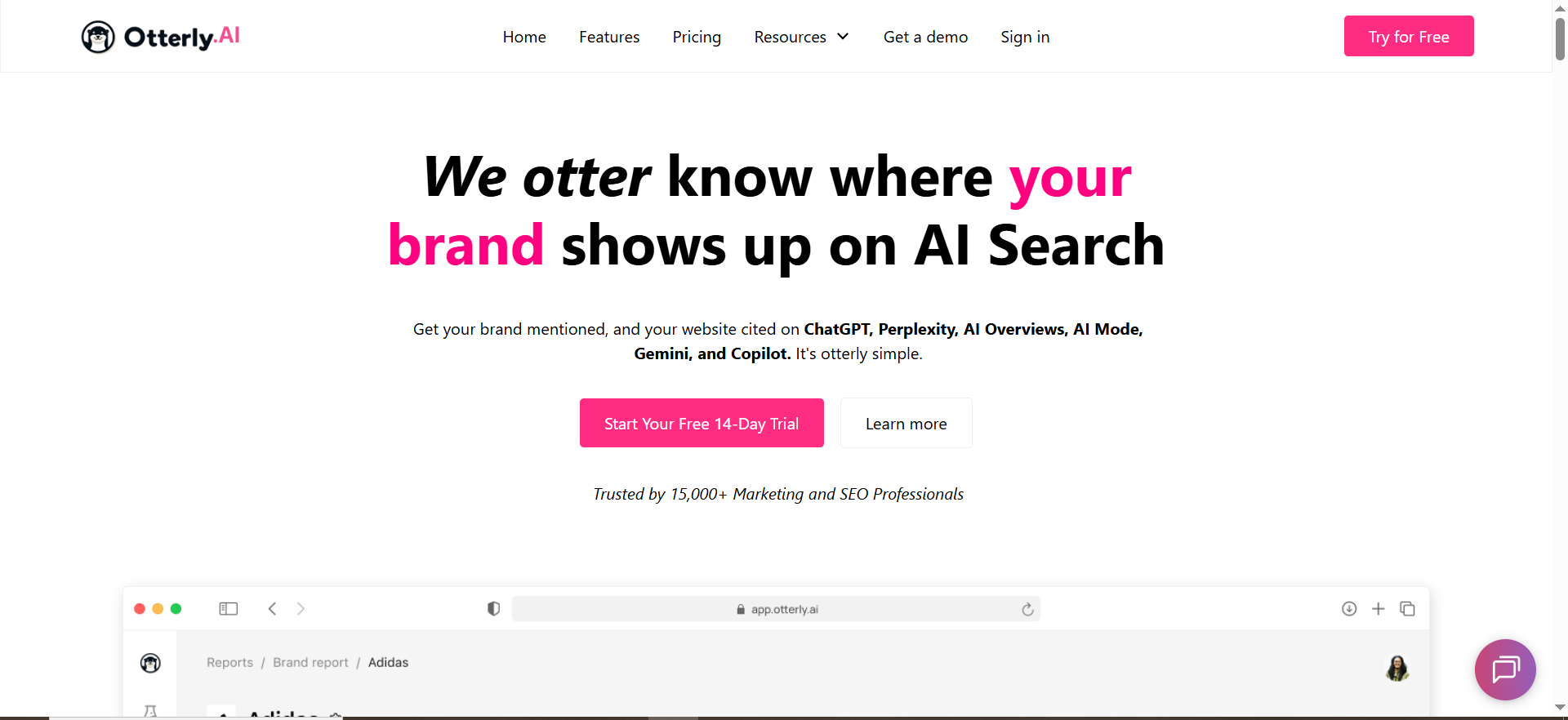
OtterlyAI positions itself as an AI search monitoring platform that tracks how your brand and content appear across AI answer engines, including Perplexity, and specifically calls out tracking brand mentions and website citations across multiple AI platforms.
Why teams use it
Most teams start with OtterlyAI when they want a single place to answer:
- “Are we being mentioned in Perplexity answers?”
- “Which of our URLs are being cited?”
- “How does this change over time after we publish / update content?”
Because Perplexity often displays sources in-line, being able to monitor citations alongside mentions is a practical shortcut to “what should we improve next?”
What it’s good for
- Perplexity mention + citation monitoring as part of a broader AI visibility program.
- Teams that want to track multiple engines (so Perplexity isn’t isolated from the rest of your AEO/GEO picture).
- Agencies that need repeatable reporting across clients (prompt sets, dashboards, trends).
When it’s a good fit
- You’re building a weekly tracking cadence and want a tool that can grow with your prompt library.
- You care about cited URLs telling you what to build next.
- You want a “good default” if you’re not sure which specific tracking style you’ll prefer yet.
When it’s not a good fit
- You only care about Perplexity and want a Perplexity-only specialist (some teams prefer a dedicated Perplexity tracker product category).
- You want deep enterprise governance features out of the box (some orgs end up moving to enterprise suites later).
How to use it
- Start with 25 prompts across your top 5 topic clusters (5 prompts per cluster).
- For each prompt, define: persona (e.g., “CMO”), stage (evaluation vs purchase), and intent (research vs vendor shortlist).
- Add 3 competitors to every prompt run (to see if Perplexity “recommends instead”).
- Track changes weekly; escalate to daily only for high-volatility clusters.
Key capabilities
- Mentions vs citations split (do we show up, and are we linked?).
- Engine coverage that includes Perplexity alongside other answer engines.
- Prompt-level history so you can correlate changes to content updates.
Pricing
OtterlyAI’s pricing starts at $29/month.
Free tier?
OtterlyAI doesn’t offer a free tier, but it does offer a free trial.
Downsides / limitations
- Like most trackers, it can tell you what changed and where you’re missing, but you still need a content + authority workflow to fix the gaps.
2. Profound
What it does
Profound is positioned as a platform to track AI visibility, understand how AI mentions your brand, and uncover citations (which websites drive AI answers).
Why teams use it
Enterprises often choose Profound when they need:
- A more complete, multi-stakeholder view of AI visibility (brand, comms, SEO, content).
- Deeper analysis of citations and sources, especially useful in citation-forward environments like Perplexity.
What it’s good for
- Enterprise AI visibility programs (multiple business units, large prompt libraries).
- Teams that want to go beyond tracking into insights (e.g., “which sources drive Perplexity answers about us?”).
- Building a citation-first strategy informed by differences in how platforms cite sources.
When it’s a good fit
- You’re already investing in AEO/GEO and want an analytics layer to prioritize work.
- You need stakeholder-ready dashboards and a more governed workflow.
When it’s not a good fit
- You want a low-cost starter tool with transparent self-serve pricing (Profound’s pricing is often quote-based).
- You only need a small set of prompts and simple presence checks.
How to use it
- Build prompt sets by buyer intent (research → shortlist → comparison → implementation).
- Track brand visibility and citations across a defined set of engines and regions.
- Export a monthly “source gap” report: sources that appear frequently in Perplexity answers for your category but don’t mention or cite you.
Key capabilities
- Visibility tracking (how often you appear).
- Response analysis (what AI says about you).
- Citation discovery (what sources AI uses).
Pricing
Profound pricing starts at around $99/month (availability and inclusions can vary, so verify directly).
Free tier?
Profound doesn’t offer a free tier, but it does offer a demo.
Downsides / limitations
- Enterprise suites can be more than you need if you’re early in AEO/GEO.
- If your team can’t act on the insights (content, PR, technical SEO), you risk paying for reporting without follow-through.
3. Akii
What it does
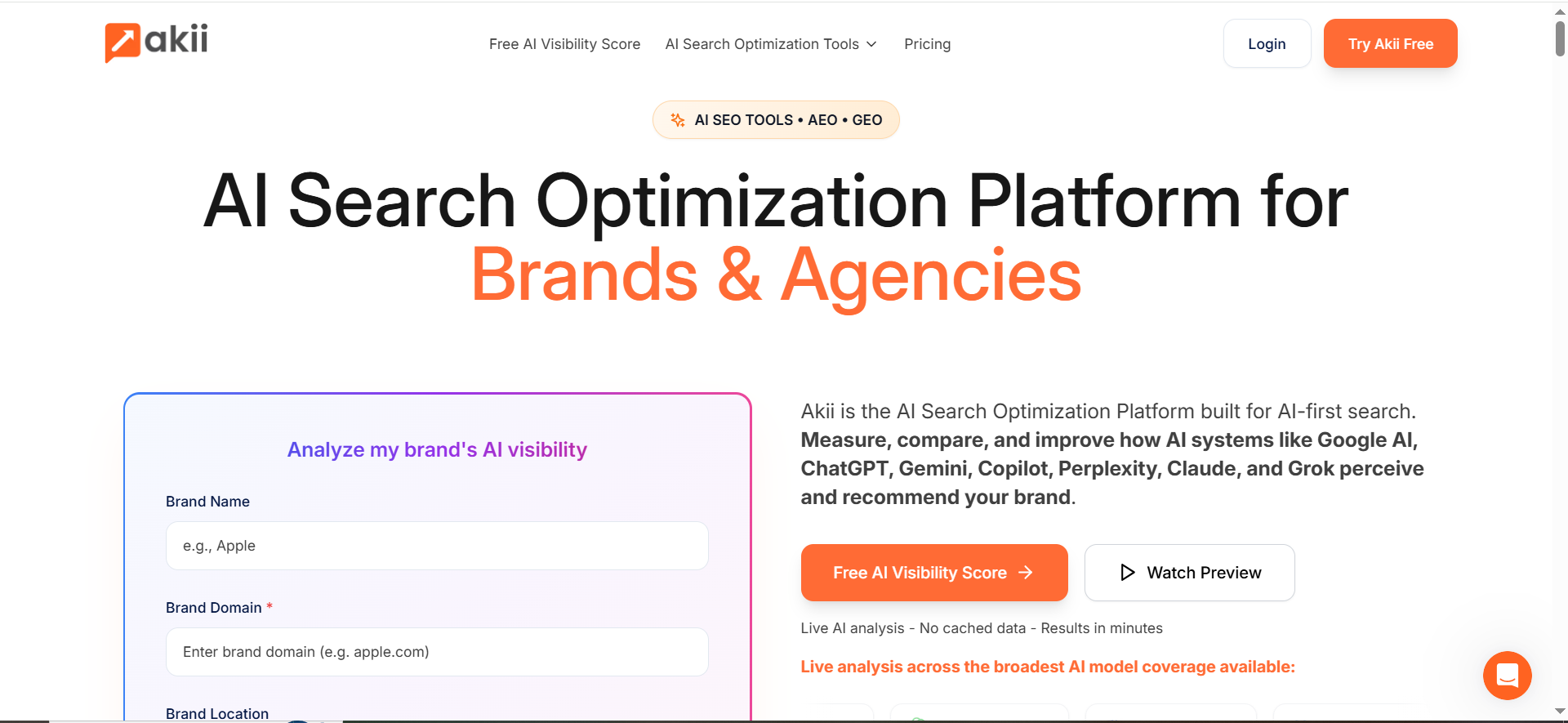
Akii describes itself as an AI search tracker that monitors how often AI models mention, recommend, or cite your brand, and it explicitly lists Perplexity among the platforms it tracks.
Why teams use it
Akii is attractive when you want quick time-to-value: it promotes a “start tracking free” flow and is framed as a straightforward way to establish a baseline.
What it’s good for
- Baseline monitoring: “Do we show up in Perplexity at all?”
- Trend tracking over time as you ship new content or adjust messaging.
- Lightweight competitor comparisons.
When it’s a good fit
- You want a quick setup to start collecting data this week.
- You need a tool that’s simple enough for a small team to run consistently.
When it’s not a good fit
- You require highly customizable enterprise governance and workflow controls.
- Your program depends on extremely granular source/citation analytics (varies by plan).
How to use it
- Add your brand name + primary domain (and common misspellings).
- Define 15–30 prompts across your top customer questions.
- Track weekly and annotate major changes (site launches, PR, new pillar pages).
- Each month, pick one cluster where you’re absent in Perplexity and run a focused “source-first” remediation: build the page, add supporting references, and pursue authority links.
Key capabilities
- Brand visibility across Perplexity + other AI search experiences.
- Mention/recommend/cite tracking.
- Time-series visibility trends (critical for before/after measurement).
Pricing
Akii’s paid plans start at $49/month.
Free tier?
Akii doesn’t offer a free tier, but it does offer a 14-day free trial and a free AI visibility test.
Downsides / limitations
- As with many tools, you may still need manual review for nuanced cases (brand name ambiguity, partial citations, “soft mentions” without direct links).
4. Prompt Monitor
What it does
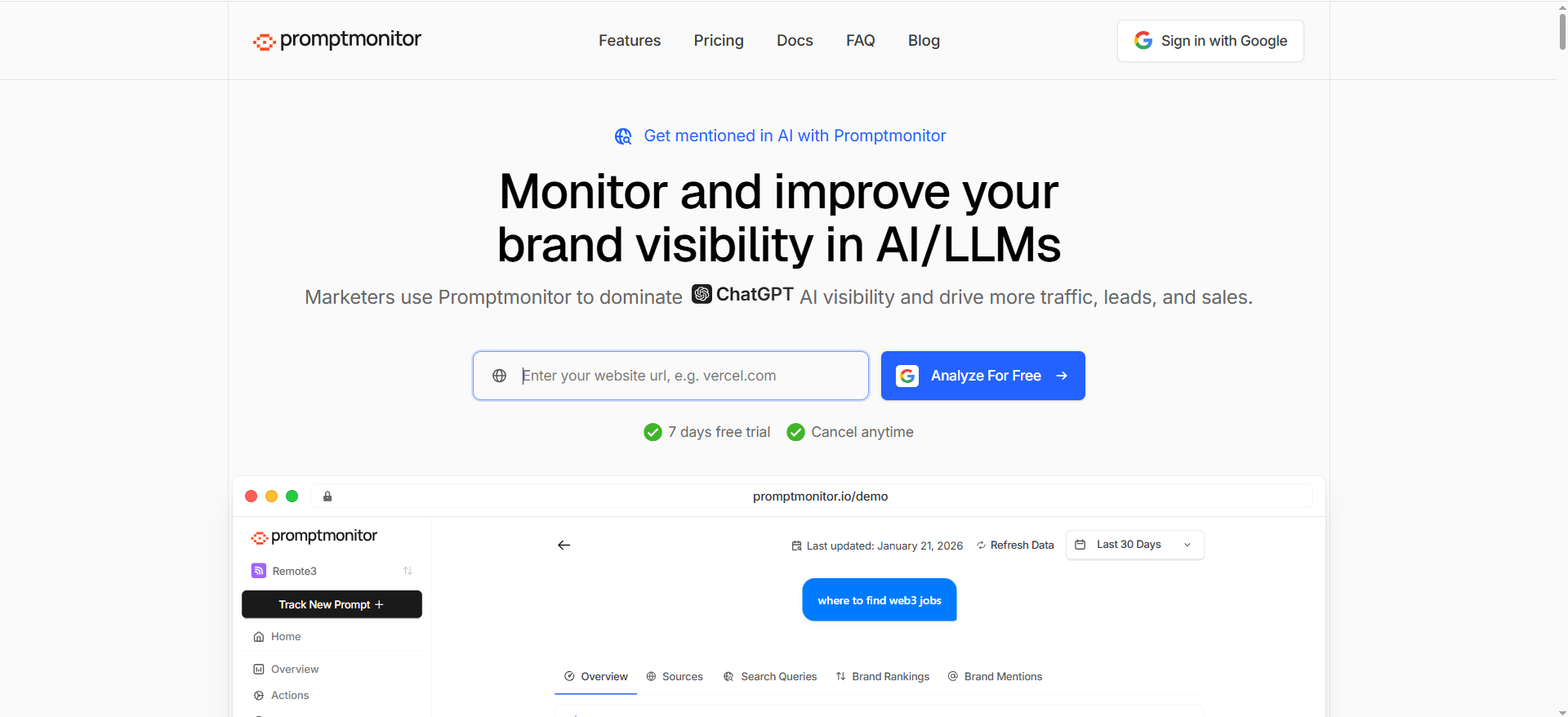
Prompt Monitor positions itself as a way to monitor your brand across LLMs, with real-time monitoring and competitor analysis.
Why teams use it
Two reasons:
- It’s often more budget-accessible than enterprise suites, and
- It’s structurally aligned to the day-to-day reality of AEO/GEO: prompts, competitors, and repeat runs.
What it’s good for
- Small teams that want daily monitoring without enterprise overhead.
- Competitive baselines (“Are we improving vs Competitor A?”).
- Prompt-level workflows (track the exact queries your buyers ask).
When it’s a good fit
- You’re starting with 10–50 prompts and need consistent runs.
- You want transparent pricing and a free plan to test the workflow.
When it’s not a good fit
- You need advanced enterprise integrations and multi-team governance.
- You need heavy customization or very large prompt libraries.
How to use it
- Start with the prompts that map to your revenue pages (product, category, comparison).
- Add competitors to each prompt.
- Run daily for two weeks to establish volatility and “normal ranges,” then reduce to weekly for steady-state monitoring.
- Export monthly summaries for leadership.
Key capabilities
Prompt Monitor’s pricing page lists:
- Daily monitoring
- Position tracking
- Competitor analysis
Pricing
Prompt Monitor’s pricing starts at $49/month.
Free tier?
Prompt Monitor offers a free tier.
Downsides / limitations
- Lower-cost tools may require more manual interpretation (e.g., judging whether a mention is “prominent” vs buried).
- Always validate a few sample prompts manually to ensure what the tool counts as “position” matches how your team defines Perplexity prominence.
5. RankPrompt
What it does
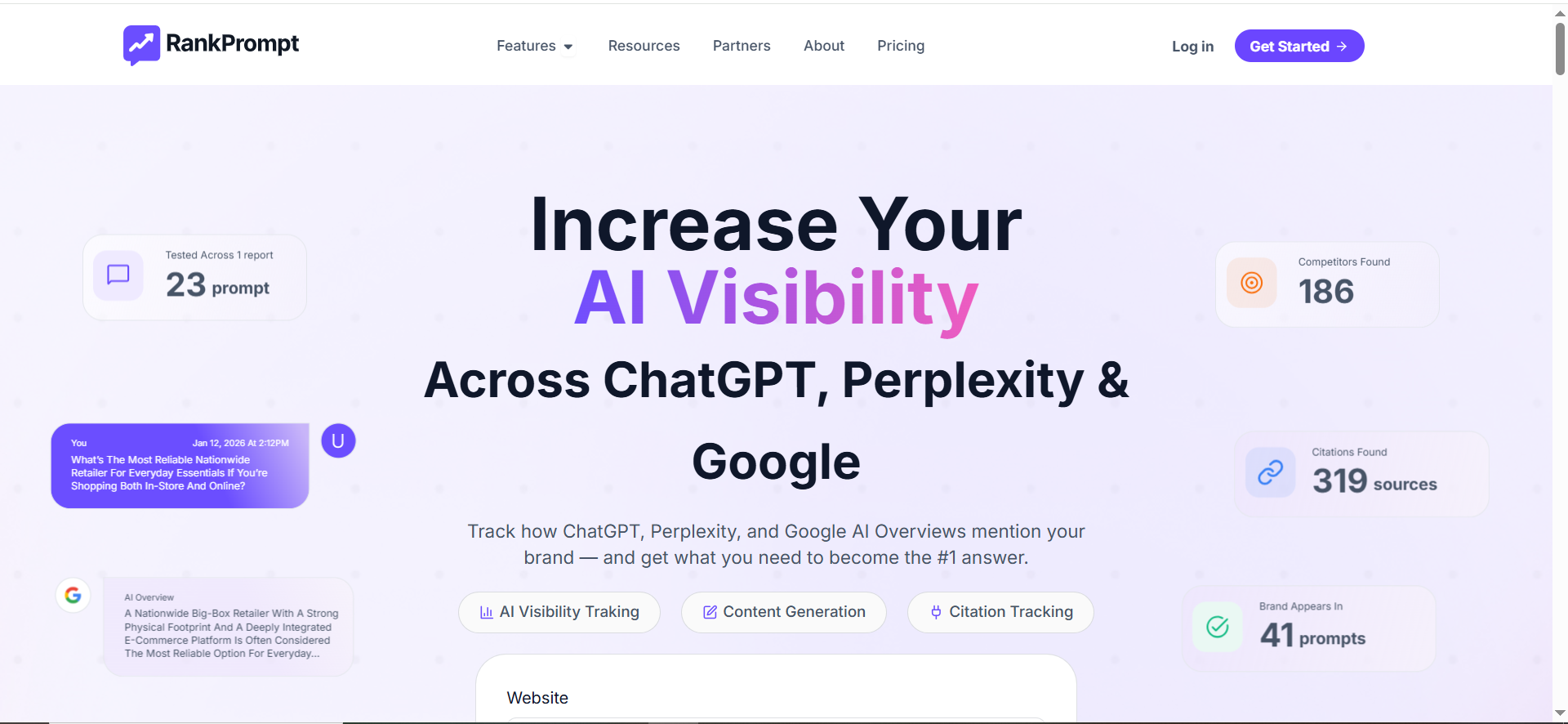
RankPrompt frames AI visibility as tracking whether you appear in AI-generated answers and offers monitoring across platforms that include Perplexity.
Why teams use it
RankPrompt tends to appeal to:
- Solo marketers, consultants, and agencies who like a credit-based model
- Teams that want lightweight reporting and quick competitive scans
- People who want to test with a free trial before committing
What it’s good for
- Prompt-level monitoring where you can budget credits around the prompts that matter most.
- Quick audits before/after a content update or PR push
- Agencies: repeatable checks for multiple brands
When it’s a good fit
- You have a clear prompt list and want a cost-controlled workflow.
- You want a short trial to validate the UX and outputs.
When it’s not a good fit
- You need heavy enterprise workflow controls and cross-team governance.
- You need extremely high-volume daily monitoring across hundreds of prompts (cost/credits can add up).
How to use it
- Build a “money prompt” list: prompts tied to conversion pages (pricing, alternatives, comparisons).
- Run weekly reports for those prompts; run monthly for informational clusters.
- Allocate extra credits during launches or major campaigns.
- Track competitor inclusion: “who does Perplexity recommend instead of us?”
Key capabilities
- Scheduled/recurring reports and trend monitoring (recommended cadence weekly/bi-weekly in the product guidance).
- Cross-engine scanning that includes Perplexity.
Pricing
RankPrompt’s pricing starts at $49/month.
Free tier?
RankPrompt doesn’t offer a free tier, but it does offer a 7-day free trial.
Downsides / limitations
- Credit-based models are great for control, but you must be disciplined about prompt lists and cadence.
- If you track too broadly without prioritization, you’ll spend credits on prompts that don’t map to revenue.
Perplexity visibility asks: “When someone asks Perplexity, does it mention us, and does it cite us?”
Traditional SEO asks: “Where do we rank?”
Perplexity visibility asks: “When someone asks Perplexity, does it mention us, and does it cite us?”
Perplexity-specific visibility trackers describe the key difference clearly: Instead of keyword positions in SERPs, you’re monitoring how your brand and website appear in Perplexity’s AI-generated answers, including brand mentions, linked pages, and presence trends.
Why the “citations first” framing matters:
- Mentions without citations are fragile. If Perplexity mentions you but consistently cites other domains, you’re not being reinforced as a source of truth.
- Cited URLs tell you what to build next. If Perplexity cites competitor category pages and third-party reviews for your core topic, that’s a roadmap: your site is missing a citable asset.
- Sources reveal the real competition. Often, your Perplexity competition isn’t a direct competitor, it’s a high-authority explainer site, a directory, or a standards body.
Research and commentary comparing AI platforms emphasizes that citation behavior differs significantly across platforms, which means you can’t just copy “Google SEO reporting” into Perplexity reporting.
Metrics that matter: Mentions, citations, sources, and “prominence”
When you evaluate a tool, ask if it can measure these four layers:
1) Presence (mentions)
- Are you mentioned at all?
- Are you mentioned consistently across time?
2) Citations (linked sources / cited URLs)
- Is Perplexity linking to your domain or your competitors’ domains?
- Which exact pages are being cited?
3) Source share (who Perplexity trusts)
- Which external domains are cited repeatedly for your category?
- Are those domains controllable (your site) or influenceable (PR/links)?
4) Prominence (how “visible” the mention is)
Prominence is the difference between being cited as the first source vs being cited in a footnote. Some products call this “position,” “ranking,” or “prominence weighting.” The important thing is to standardize your definition internally.
A Perplexity tracking product category often emphasizes features like brand mentions, linked pages, and presence trends, which map nicely to a layered metric model.
A repeatable setup: Prompts, countries, competitors, and cadence
Here’s a field-tested way to set up Perplexity visibility tracking without drowning in data.
Step 1: Build a “buyer prompt” library (start with 25)
Create 5 clusters (5 prompts each):
- Category discovery (“best tools for…”)
- Vendor shortlists (“top platforms to…”)
- Comparisons (“X vs Y”)
- Implementation (“how to set up…”)
- Troubleshooting (“why is Perplexity not citing…”)
Step 2: Add competitors (always)
Perplexity answers often recommend alternatives. You need competitor baselines or you’ll misread your own progress.
Step 3: Define regions only if you’ll act on them
If you sell globally, track at least one non-home region. If you only sell in one market, don’t add complexity yet.
Step 4: Set cadence by intent
- Money prompts (pricing, alternatives, comparisons): weekly
- Info prompts (education, definitions): monthly
- Daily only when you’re actively optimizing or when volatility is unusually high
Step 5: QA your dataset (avoid false confidence)
- Validate 10% of prompts manually each month
- Watch for entity ambiguity (brand name collisions)
- Ensure the tool’s “position” aligns with your definition of prominence
Turning insights into action: Citation-first content + authority plan
Tracking is useless unless it changes what you do next week. Here’s a practical playbook.
The citation-first loop
- Pick a prompt cluster where you’re absent.
- Look at what Perplexity cites instead. (Domains + page types)
- Create the missing asset (or upgrade an existing one):
- Strong definitions
- Tables that compare options
- Clear methodology
- Evidence hooks (sources and examples)
- Strengthen authority signals: internal links, references, distribution, PR/links.
- Re-run the prompts weekly and watch for (a) first mentions, then (b) citations.
What to build
From Perplexity tracker descriptions, what’s consistently captured is “linked pages” and “source links,” which tells you Perplexity is mapping topics to URLs, not just brands.
So the fastest wins often come from creating citable page types:
- “Best X” pages with methodology + comparison tables
- “X vs Y” pages with neutral language and structured pros/cons
- “How to” pages with step-by-step + screenshots
- Glossaries / definitions for category terms
- Original data (benchmarks, research, or even small experiments)
The “source gap” concept (simple, powerful)
A source gap is:
A domain that Perplexity cites frequently for your category, but that doesn’t cite or reference your brand (or your site lacks an asset that competes with it).
Your outreach and content roadmap should prioritize closing the largest source gaps first.
Reporting templates
Weekly exec summary (copy/paste)
Perplexity Visibility (Week of ____):
- Presence rate: __% (up/down __ points)
- Citation rate: __% (up/down __ points)
- Top cited URL(s) for us: ____
- Top 3 competitor cited domains: ____
- Biggest opportunity cluster: ____
- Next actions (2 bullets): ____
Source gap checklist
For each priority topic cluster, document:
- Top cited domains (top 5)
- Page type Perplexity cites (blog, directory, docs, research)
- Do we have an equivalent asset? (Y/N)
- If yes: does it have clear definitions, tables, and scannable structure?
- If no: build spec + publish deadline
- Distribution plan (newsletter, PR pitch, partner share)
How do I track my brand mentions in Perplexity?
Tracking “brand mentions” in Perplexity is about answering one simple question: when someone asks Perplexity category-relevant prompts, does your brand appear in the response, and how often does that happen over time? A Perplexity tracking category typically measures brand mentions plus “linked pages” and visibility trends.
Step-by-step method
1) Define your “brand entity” cleanly
- Your official brand name
- Common misspellings
- Product names (if they’re searched independently)
- Your primary domain (and subdomain if docs/live on a separate host)
2) Build a starter prompt set (25 prompts)
Use prompts that mirror how buyers actually search:
- “Best ___ for ___”
- “___ alternatives”
- “___ vs ___”
- “What is ___ and how does it work?”
- “How to implement ___”
(You can expand later, but 25 prompts is enough for a baseline signal.)
3) Run prompts on a consistent cadence
- Weekly for “money prompts” (alternatives/comparisons)
- Monthly for informational prompts
- Daily only during a launch or active optimization sprint
4) Capture mention data in a tool (or a sheet)
A typical AI visibility tracker will store:
- Prompt
- Date/time run
- Whether you were mentioned (Y/N)
- Competitors mentioned
- Any cited links (your domain vs others)
- Notes (why the answer may have changed)
Tools in this category (like Perplexity trackers) are often designed specifically to capture mentions and trends over time.
Pro tips to avoid false positives
- Disambiguate entity collisions: If your brand name is also a common word, include context in your prompts (“brand X software,” “brand X platform”) and track those separately.
- Track synonyms: If Perplexity describes you without using your exact brand name (e.g., “a leading workflow automation platform”), you may need manual review or a “synonym list” inside your reporting notes.
- Always log competitors in the same run: Otherwise, “we lost a mention” might actually be “competitor gained relevance.”
How do I track citations and cited URLs in Perplexity answers?
If mentions tell you “are we present,” citations tell you “are we trusted.” Perplexity is known for surfacing sources, and research highlights that citation behavior varies across AI platforms, so tracking Perplexity citations specifically is worth doing.
What to track (minimum viable citation dataset)
For every prompt run, capture:
- Cited domains (e.g., yoursite.com vs competitor.com vs third-party sites)
- Exact cited URLs (the specific page Perplexity references)
- Citation count (how many citations point to you vs others)
- Citation prominence (first citation vs buried)
- Answer volatility (did citations change week-to-week?)
Step-by-step workflow
1) Choose “citation-first” prompts
Start with prompts where citations matter most:
- “best ___ tools”
- “top ___ platforms”
- “___ vs ___”
- “___ pricing / cost” (even if Perplexity doesn’t cite pricing pages often, it may cite reviews)
2) Run in a tracker that captures citations
Many AI visibility tools explicitly position themselves around tracking website citations and sources across AI engines (including Perplexity).
3) Build a “source gap” report
After 2–4 weeks, export your runs and ask:
- Which domains get cited repeatedly for our category?
- Which page types are being cited (comparisons, glossaries, docs, reviews, research)?
- Do we have an equivalent citable asset?
4) Tie citations back to content actions
If Perplexity cites competitor comparison pages and independent review sites, the remediation is usually:
- Build a superior comparison page (neutral tone, methodology, table)
- Improve internal linking to that page
- Strengthen authority (distribution + backlinks/mentions)
Common patterns you’ll see (and how to respond)
- Perplexity cites third-party listicles more than vendor sites: create a best-in-class “best tools” page + pursue inclusion on those third-party pages.
- Perplexity cites documentation for “how-to” prompts: improve docs structure, add clear steps, and publish implementation guides.
- Perplexity cites Wikipedia/knowledge bases: build definitional pages that are actually worth citing.
How do I track Perplexity visibility by country or region?
Regional tracking matters when:
- You sell in multiple markets
- Your brand presence differs by language or local competitors
- Your content is geo-targeted (e.g., localized pricing, compliance, regional landing pages)
What “regional visibility” changes
By region, you may see:
- Different competitors being recommended
- Different sources being cited
- Different answers due to local context
Practical setup
1) Pick 2–3 priority regions
Don’t track 15 countries unless you can act on the results. Start with:
- Your core market
- Your biggest growth market
- One “test” market (where you’re unsure how you show up)
2) Localize prompts lightly
Keep intent the same, but add region context:
- “Best ___ tools in the UK”
- “Top ___ software for EU compliance”
- “Best ___ platforms in Pakistan” (or your target market)
3) Track localized URLs separately
If you have:
- /uk/ /eu/ subfolders
- region subdomains
- localized language pages…track which ones Perplexity cites, and whether it cites the right region page.
4) Compare “source share” by region
This is the fastest insight:
- Region A cites mostly US tech blogs
- Region B cites local directories, media, or government references
A Perplexity tracking category often emphasizes tracking “linked pages” and trends, which becomes especially useful when you want to know which localized page is showing up.
Action plan when a region underperforms
- Build/upgrade region landing pages with local proof points (customers, compliance, pricing format)
- Add internal linking from region nav and relevant content
- Pursue regional mentions/links (partners, media, associations)
How do I connect Perplexity visibility to business outcomes (pipeline)?
This is the part leadership cares about: does higher Perplexity visibility correlate with more qualified traffic, signups, and revenue?
The reality check
Perplexity visibility tools tell you presence and citations, but pipeline attribution usually requires you to connect:
- analytics (GA4 / product analytics)
- CRM (HubSpot / Salesforce)
- and a simple reporting model
A clean measurement model (works even if attribution is messy)
Layer 1: Visibility metrics (leading indicators)
- % of prompts where you’re mentioned
- % of prompts where you’re cited
- Share of citations vs competitors
Layer 2: Demand signals (mid indicators)
- Referral traffic from Perplexity (if available as a referrer)
- Branded search lift
- Direct traffic lift to cited URLs
- Demo/pricing page visits after citations increase
Layer 3: Pipeline (lag indicators)
- Leads where “Perplexity” appears as first touch or assisted touch (if captured)
- Pipeline influenced after Perplexity visibility improvements
- Win-rate or deal velocity changes for accounts engaging with cited pages
The simplest implementation (do this first)
- Tag the pages you want cited (category pages, comparisons, implementation guides).
- Watch whether those pages:
- start getting cited more, and
- see traffic and conversion lift in the same period.
- Add one “How did you hear about us?” field option: Perplexity / AI Search.
What to report monthly to execs
- “We increased Perplexity citation rate from X% → Y% on money prompts”
- “Cited URLs saw +__% growth in demo assists / signups”
- “__ deals referenced AI Search in discovery notes”
This framing turns “AI visibility” into a business story: we became a cited source, which increased qualified engagement, which influenced the pipeline.
What’s the minimum budget tooling to start tracking Perplexity visibility?
If you’re starting lean, the goal is not perfection; it's a repeatable signal.
Option A: $0–$50/mo (starter)
- Prompt Monitor offers a Free tier and a Pro plan listed at $49/mo, which can work for prompt-based monitoring without enterprise cost.
- Use a spreadsheet to log:
- prompt
- mention (Y/N)
- cited URLs
- competitor presence
- notes
Option B: ~$29/mo entry point
- Tools like OtterlyAI publicly cite pricing starting around $29/mo, with a free trial, and are positioned specifically around tracking mentions and website citations across AI engines including Perplexity.
Minimum viable stack checklist
- A prompt library (25–50 prompts)
- A tracker/tool (or sheet) that captures mentions + cited URLs
- A weekly reporting cadence
- A monthly “source gap” action plan
Where most teams waste money
- Tracking 500 prompts with no plan to act
- Paying for an enterprise platform before they have a content + authority workflow
- Ignoring citations and only watching “mentions”
What’s the best tool if I only care about Perplexity (not other engines)?
If Perplexity is your only focus, prioritize tools that do three things extremely well:
- Prompt-level tracking (repeat runs, trend history)
- Citation and cited URL capture (not just mentions)
- Easy reporting (exportable insights, competitor comparisons)
Practical recommendations by team type
If you want the simplest Perplexity-only workflow (small team):
- A prompt-centric tool with transparent pricing can be enough. Prompt Monitor publishes a Free tier and a $49/mo Pro plan, and emphasizes daily monitoring + competitor analysis, useful if your only job is to run Perplexity prompts consistently.
If you want Perplexity tracking but also want citations captured cleanly (and might expand later):
- OtterlyAI is positioned around tracking mentions and website citations across engines that include Perplexity, and can be a strong default even if you’re currently Perplexity-first.
If your enterprise and want deeper analysis (even if Perplexity is priority):
- Profound is positioned as AI visibility analytics including citation discovery and “what sources AI uses,” which can matter when you’re trying to influence Perplexity’s source set through content + PR.
The “only Perplexity” decision rule
Choose the tool that best supports your next 90 days:
- If your next step is building a monitoring baseline, choose the simplest prompt tracker.
- If your next step is closing citation gaps, choose the tool that makes cited URLs and source gaps easiest to analyze.
- If your next step is enterprise reporting and cross-team alignment, choose the suite built for that.
If you want, I can also turn these H2s into fully expanded sections with internal linking suggestions and “examples of prompts” blocks under each one (to drop straight into your blog).
FAQs
What’s the difference between Perplexity “rank tracking” and visibility tracking?
Why are citations more important than mentions in Perplexity?
How many prompts do I need to start tracking Perplexity visibility?
How often should I monitor Perplexity prompts?
Which tool is best if I want a free option to start?
Which tool is best for enterprise teams?
Can these tools tell me why Perplexity isn’t citing my site?
What’s the fastest way to improve Perplexity visibility?
📋 Get Listed / Advertisement
We update this guide monthly. Want your tool featured? Contact: [email protected].