

A “winning” AI marketing stack in 2026 is less about buying every new tool and more about building a clean system that creates demand, captures demand, and proves impact.
If you’re building from scratch, prioritize in this order:
- System of record (CRM + automation) to track lifecycle and pipeline
- Measurement (analytics + reporting) to prove what works, supported by reliable SEO reporting software
- Visibility & capture (SEO + AI visibility workflows) to grow demand
- Content ops (briefs + optimization) to scale production without losing quality, especially if you’re exploring programmatic SEO
- Automation glue (integrations + workflow automation) to reduce manual work
Below is a short list of top tools to consider and a framework to avoid tool sprawl.
📋 Get Listed / Advertisement
We update this guide monthly. Want your tool featured? Contact: [email protected].
Best Tools for a 2026 AI Marketing Stack (Quick Comparison)
| Tool | Category | Best for | Notes |
|---|---|---|---|
| HubSpot | CRM + Marketing automation | Lifecycle + pipeline tracking | Central system of record for marketing + sales alignment |
| Google Analytics 4 | Measurement | Journey + performance analytics | Core web measurement layer; pair with dashboards |
| Ahrefs | SEO research | Competitive intel + keyword strategy | Strong for planning and prioritizing visibility work |
| Clearscope | Content optimization | Briefs + on-page optimization | Helps standardize content quality and coverage |
| Zapier | Automation/integrations | Fast workflow automation | Connects tools quickly without heavy engineering |
📋 Get Listed / Advertisement
We update this guide monthly. Want your tool featured? Contact: [email protected].
1. HubSpot
What it does
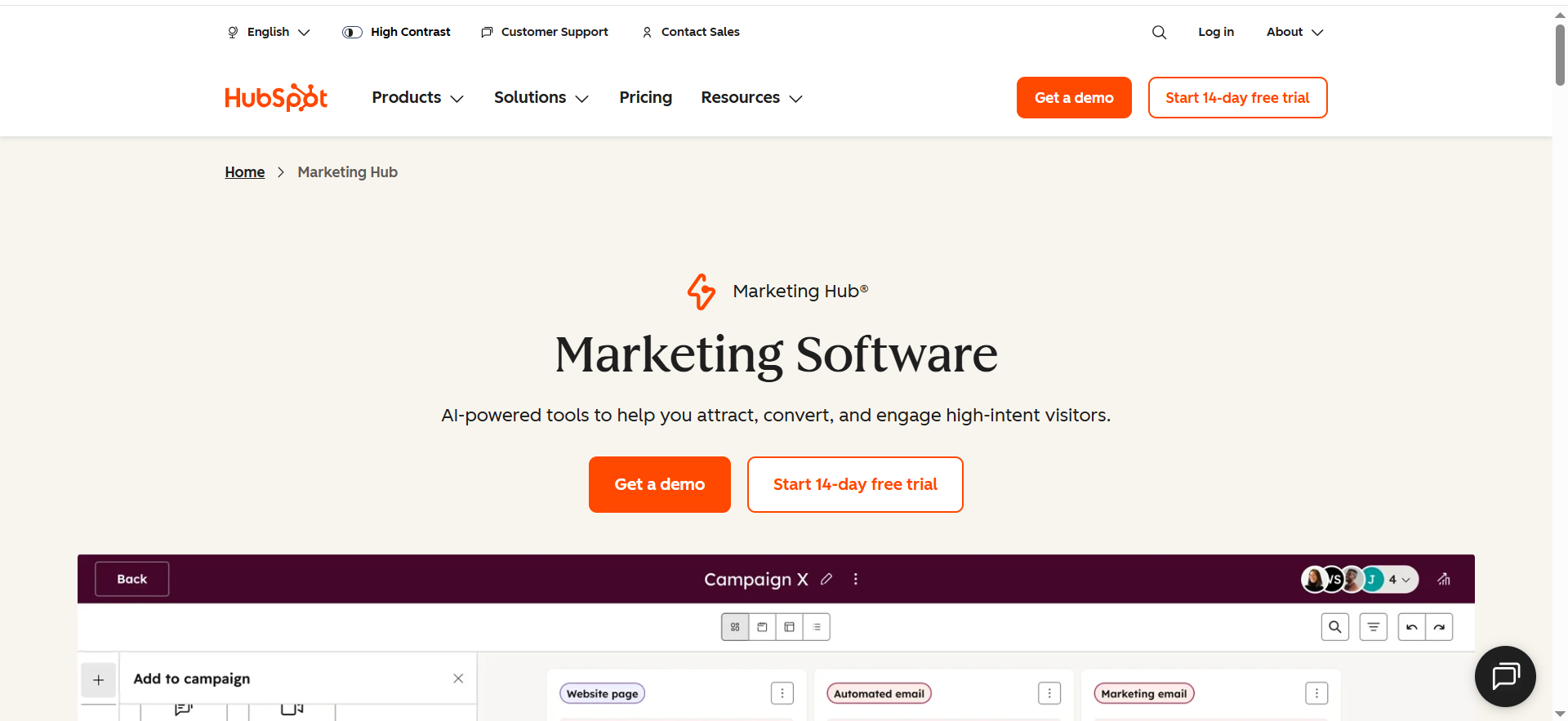
HubSpot combines CRM, email marketing, landing pages, lead capture, basic attribution, and sales pipeline tracking into one platform.
Why teams use it
Because a stack fails when nobody agrees on the “source of truth.” HubSpot becomes the place where lifecycle stages, leads, and pipeline are defined consistently.
What it’s good for
- Lead capture and nurture sequences
- Lifecycle tracking (MQL → SQL → Opportunity)
- Sales/marketing alignment with shared objects and reporting
When it’s a good fit
If you’re growth-stage to enterprise B2B SaaS and want a single platform that can run lifecycle programs without heavy custom engineering.
When it’s not a good fit
If you need extremely custom data models, advanced attribution, or you already have a mature CRM + automation setup you won’t replace.
How to use it
Start with: lifecycle stage definitions → lead capture forms → 1–2 nurture workflows → basic pipeline dashboards.
Key capabilities
CRM, email automation, forms, landing pages, segmentation, reporting, sales pipeline objects, integrations.
Pricing
Varies by plan and seats; most B2B teams use paid tiers for automation and reporting.
Free tier?
Yes, includes basic CRM, contact management, and limited tools.
Downsides / limitations
Costs can rise quickly with seats and advanced features. Also: reporting and attribution can be “good enough” but not best-in-class for complex journeys.
2. Google Analytics 4
What it does
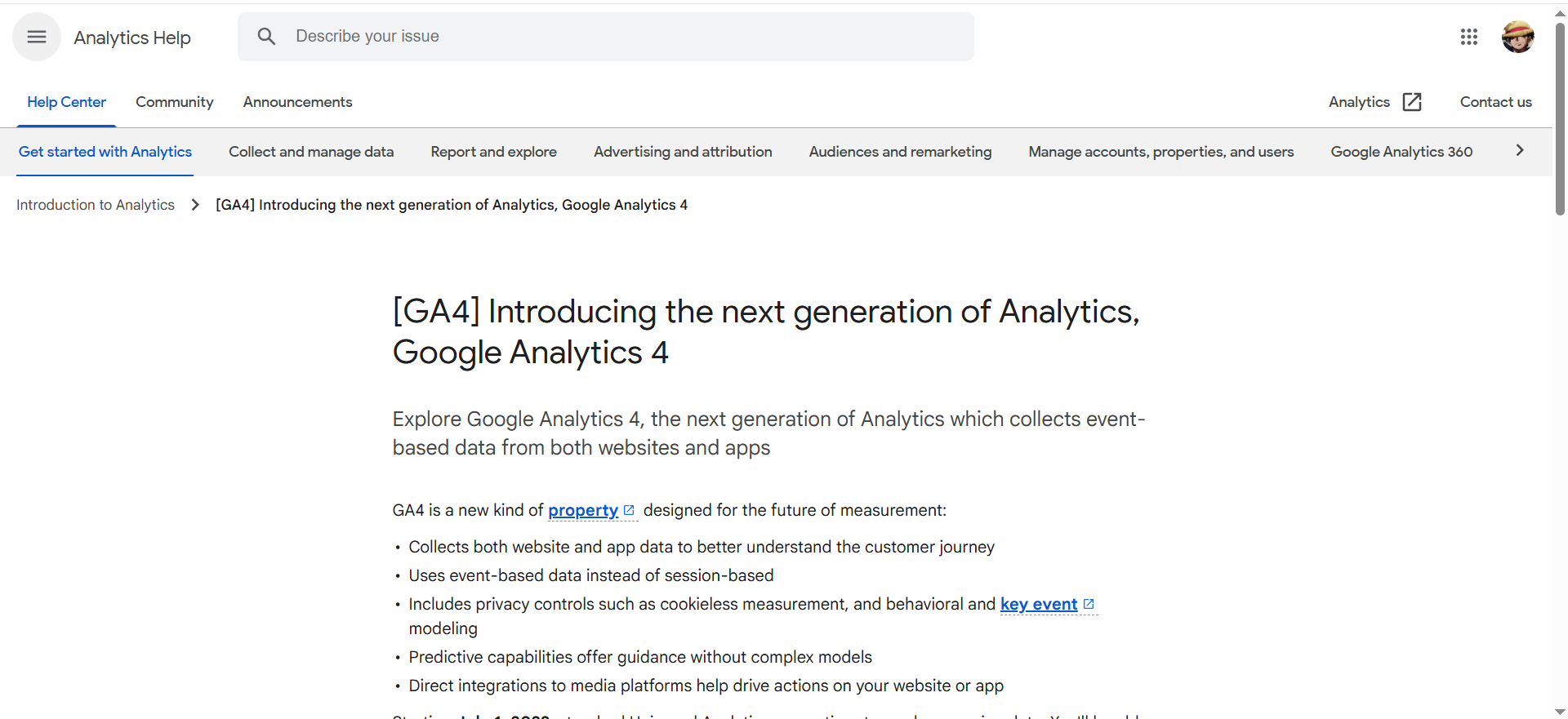
GA4 tracks site/app behavior using events, enabling analysis of traffic sources, engagement, and conversion paths.
Why teams use it
Because without a baseline measurement layer, you can’t prove ROI or identify what’s actually driving growth.
What it’s good for
- Website measurement (sessions, events, conversions)
- Channel performance analysis
- Journey insights and funnel analysis
When it’s a good fit
For most teams as a default analytics layer, especially if you need a standard tool that stakeholders recognize.
When it’s not a good fit
If you need deep product analytics, advanced identity stitching, or full multi-touch attribution without additional tooling.
How to use it
Define 5–10 core events (signup, demo request, key CTA clicks), set conversions, validate tracking, and connect to your reporting layer.
Key capabilities
Event tracking, funnels, explorations, attribution models (basic), integrations with ad platforms.
Pricing
Free for most usage.
Free tier?
Yes, GA4 is free; paid analytics options exist via Google ecosystem depending on enterprise needs.
Downsides / limitations
Implementation quality matters.If events aren’t defined consistently, GA4 becomes noisy and hard to trust, which is why teams invest in real-time dashboards for leadership reporting.
3. Ahrefs
What it does
Ahrefs helps you research keywords, analyze competitors, track backlinks, and find content opportunities, especially when you’re building a keyword research workflow.
Why teams use it
Because SEO decisions should be prioritized by real opportunity: what competitors rank for, what’s feasible to win, and what drives the pipeline.
What it’s good for
- Keyword research and prioritization
- Competitive analysis and content gap discovery
- Backlink auditing and opportunity discovery
When it’s a good fit
If SEO is a meaningful growth channel, you need a strong research tool to guide strategy and content planning.
When it’s not a good fit
If you don’t plan to execute consistently on SEO (tool won’t fix lack of process), or you only need very basic keyword research.
How to use it
Pick 20–50 target topics, map them to funnel stages, identify ranking competitors, and build a monthly content + optimization roadmap.
Key capabilities
Keyword explorer, site explorer, content gap, backlink tools, rank tracking (depending on plan).
Pricing
Paid, tiered plans.
Free tier?
No (typically limited free access or trials depending on current offers).
Downsides / limitations
Great research, but you still need an execution process (briefs, publishing cadence, internal linking, and updates).
4. Clearscope
What it does
Clearscope helps create content briefs and optimize drafts for coverage and relevance against a target query/topic set.
Why teams use it
Because scaling content with AI can create a quality problem.“Optimization tools help standardize “what good looks like” across writers and editors.
What it’s good for
- Content briefs and topic coverage guidance
- On-page optimization workflows
- Editorial QA for consistency and completeness
When it’s a good fit
If you publish regularly and need repeatable briefs + optimization to improve rankings and content quality.
When it’s not a good fit
If you publish infrequently, rely heavily on unique research, or your content isn’t query-driven.
How to use it
Build briefs for your top 10 pages, optimize updates first (quicker wins), then apply the same workflow to new content.
Key capabilities
Brief creation, optimization scoring, term/topic guidance, workflow collaboration.
Pricing
Paid.
Free tier?
No.
Downsides / limitations
Optimization is not a strategy, it helps execution quality but won’t replace strong positioning, original insights, and distribution.
5. Zapier
What it does
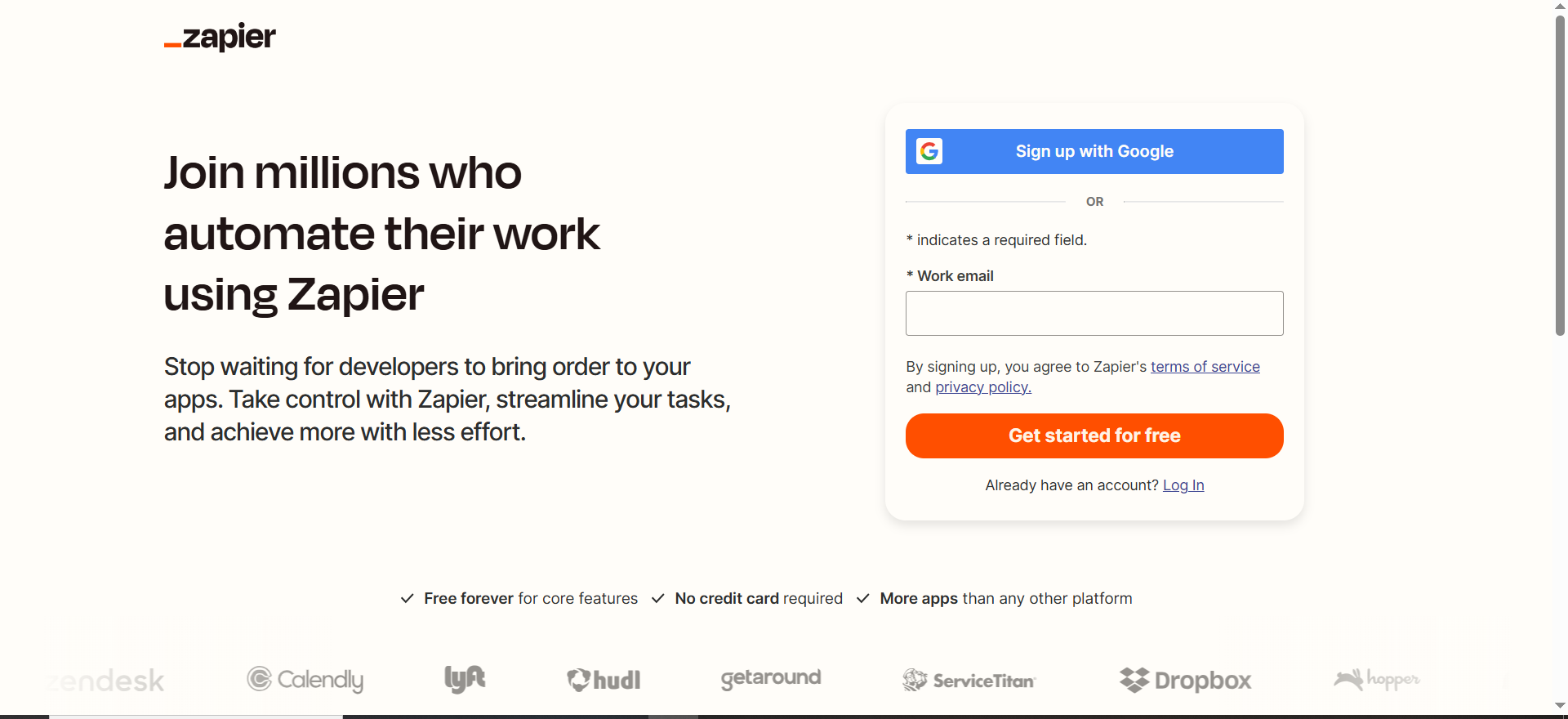
Zapier connects tools via triggers/actions so you can automate repetitive workflows without heavy engineering.
Why teams use it
Because stacks fail when work becomes manual: copying data, chasing approvals, moving docs, and updating spreadsheets.
What it’s good for
- Routing form fills to CRM + Slack + sheets
- Content ops automation (status updates, task creation)
- Simple multi-tool integrations
When it’s a good fit
If you need fast time-to-value and your team is comfortable with lightweight automation.
When it’s not a good fit
If you need complex data transformations, strict governance, or enterprise-level integration management.
How to use it
Start with 3 automations: lead routing, content status updates, and dashboard refresh workflows.
Key capabilities
App integrations, multi-step workflows, webhooks (depending on plan), basic logic.
Pricing
Tiered paid plans (with free tier limitations).
Free tier?
Yes, limited tasks and features.
Downsides / limitations
Automations can become brittle if you don’t document workflows and audit them monthly.
The framework: Categories every stack needs (so you don’t buy duplicate tools)
A clean 2026 AI marketing stack has five layers. If a tool doesn’t clearly fit one layer, it’s a red flag.
System of record (CRM + marketing automation)
Where lifecycle, pipeline, and contact truth live. Without it, you can’t align sales + marketing.
Measurement & attribution
Where you define events, conversions, and reporting. If you can’t measure reliably, you can’t improve reliably.
Visibility & demand capture (SEO / GEO / AEO)
Where you plan, publish, and optimize content so you show up in search engines and AI-powered discovery surfaces.
Content operations (briefs, QA, publishing)
Where you standardize briefs, quality checks, and publishing cadence so output scales without chaos.
Workflow automation & integrations
Where you reduce manual work and keep data consistent across tools.
How to choose the right tools? (a simple scoring rubric)
Use a 1–5 score for each category below. The goal is not “highest score”, it’s least overlap + fastest time-to-value.
Fit (use cases + ICP)
Does it solve your real workflows today, or is it “nice to have”?
Data quality (tracking + governance)
Will you trust the data enough to make decisions?
Workflow friction (time-to-value)
How quickly can your team adopt it without creating extra work?
Integration depth
Does it connect cleanly with your system of record and reporting?
Cost & consolidation potential
Does it replace multiple point solutions or add another subscription?
FAQs
What is an AI marketing stack in 2026?
What’s the minimum viable AI marketing stack for a growth-stage B2B SaaS?
How do you avoid tool sprawl when adopting AI tools?
How do you measure AI-driven content performance?
Which layer should you prioritize first?
Do I need separate “AI visibility” tools?
Final recommendation + next step
f you want a stack that wins in 2026, keep it simple: one system of record, one measurement layer, and a repeatable visibility + content workflow. Then add automation to remove manual work.
📋 Get Listed / Advertisement
We update this guide monthly. Want your tool featured? Contact: [email protected].