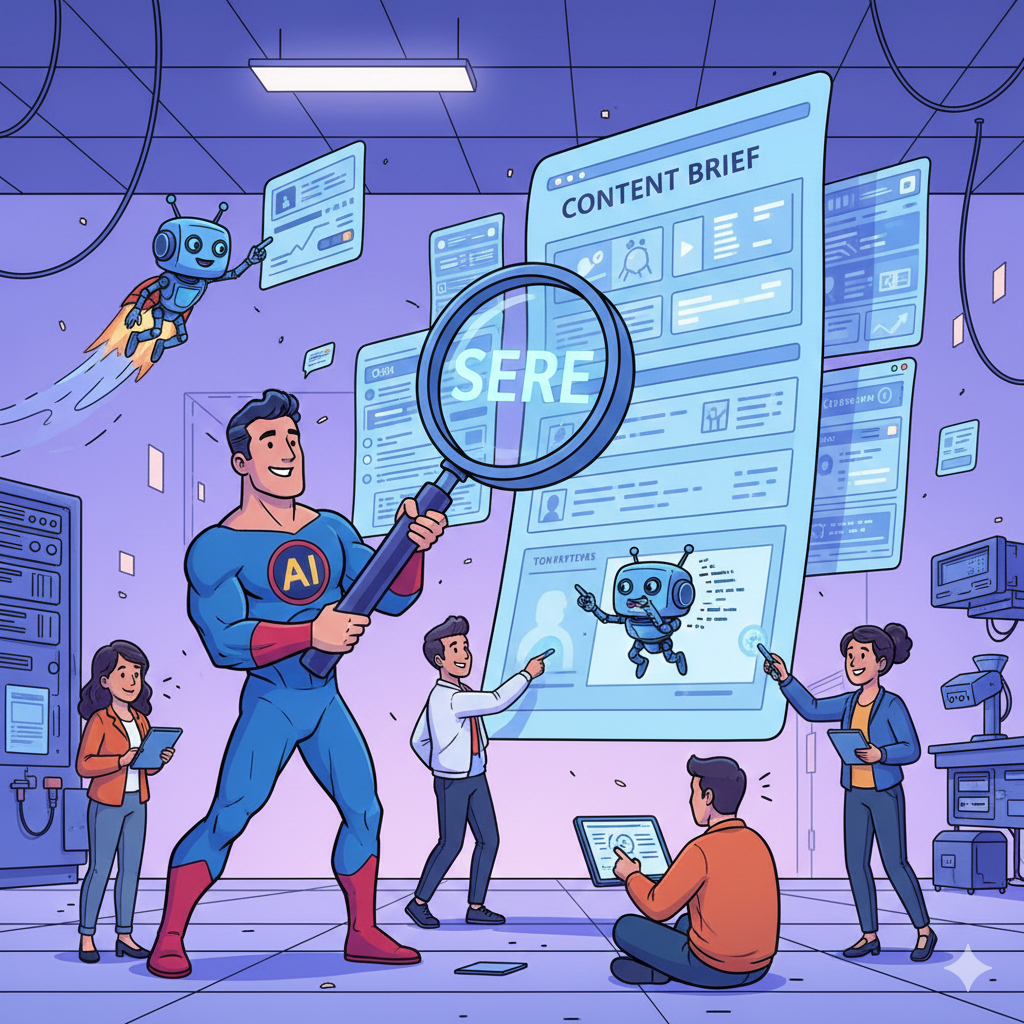
If you want SERP-based briefs that are fast, structured, and writer-ready, start with Frase for SERP + question extraction, Surfer for real-time optimization guidance, and Clearscope for editorial-grade content reports. If your workflow is Semrush-first, its writing/SEO toolkit can keep briefs and drafting in one ecosystem. And if you want pure SERP extraction and competitor structure, Thruuu is a great “research layer” to build better briefs faster.
📋 Get Listed / Advertisement
We update this guide monthly. Want your tool featured? Contact: [email protected].
Best AI Tools for SERP-Based Content Briefs (Quick Comparison)
| Tool | Best for | What it’s great at in a brief | Free trial? |
|---|---|---|---|
| Frase | Research-first briefs | SERP analysis, competitor breakdown, outlines, question research | Often available (varies) |
| Surfer | Writer workflow + scoring | Real-time, competition-based guidelines; content editor briefs | No free plan; sometimes guarantees/trials vary |
| Semrush | All-in-one SEO stack | Writing assistant + SEO content tooling inside Semrush | Trial depends on plan |
| Clearscope | Editorial-grade optimization | NLP-guided recommendations + optimization workflow | Typically demo-based |
| thruuu | Pure SERP extraction | One-click SERP scrape + content brief workflow | Free trial available |
What “SERP-based” briefs mean in 2026 (and why AI summaries changed the bar)
A SERP-based content brief is built from what the current top results are doing: the intent, structure, subtopics, entities, and questions that search engines appear to reward. A good SERP analysis looks at the top-performing pages and SERP features to understand intent and the “requirements” for ranking.
But the bar is higher now because you’re not only writing for blue links. You’re also writing for extractive AI surfaces (like AI Overviews and other AI answer experiences) that pull:
- Clear definitions
- Direct answers
- Well-labeled sections
- Evidence and citations
- Structured comparisons (tables)
That’s why your Excel angle matters: “Briefs that win both SERP and AIO citations. In practice, that means your brief needs to guide writers toward coverage + clarity + proof, not just “include these keywords.”
1. Frase
What it does
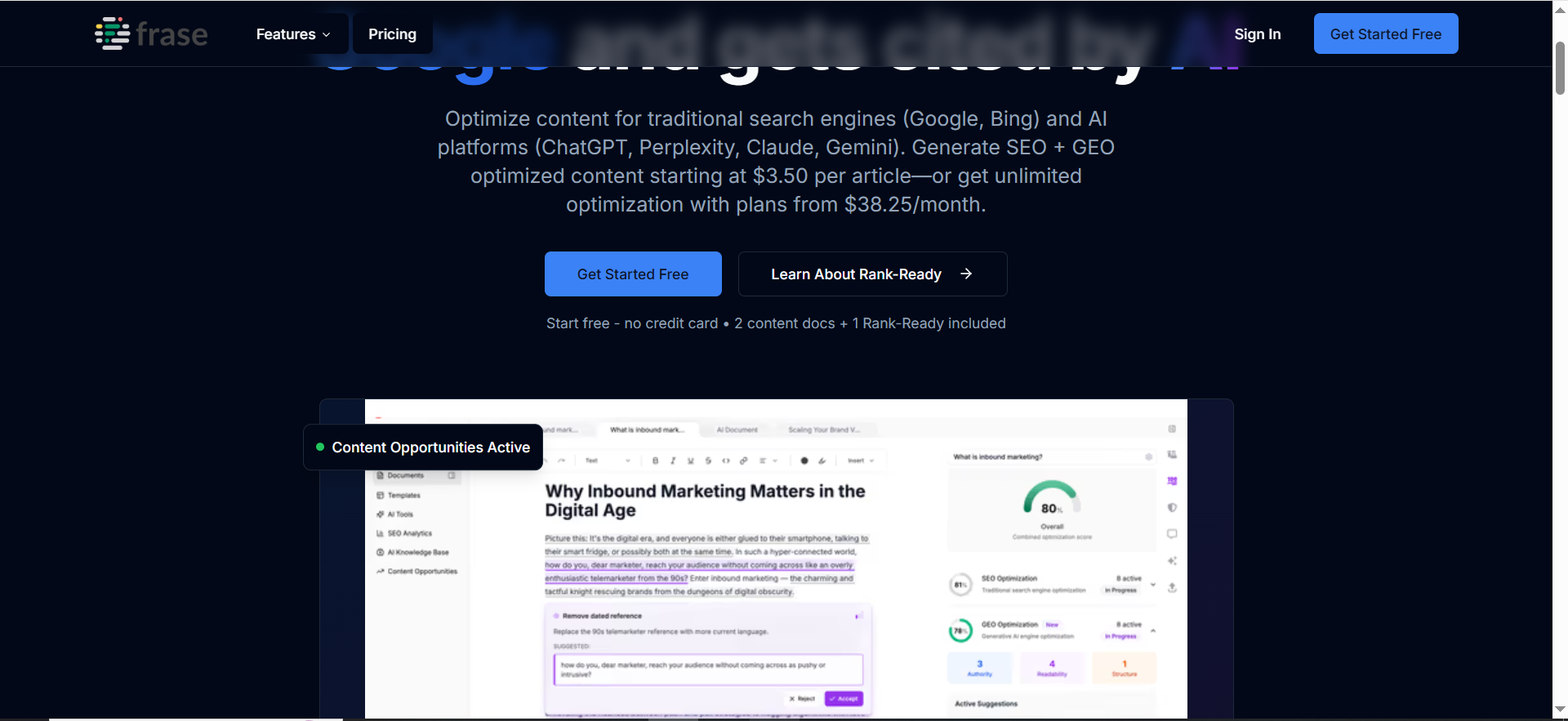
Frase positions itself as a tool for SERP breakdown, and AI-generated outlines so you can not write.
What it’s good for
- Building a first-pass brief: headings, subtopics, questions, competitor takeaways
- Agencies producing many briefs per month (repeatable workflow)
When it’s a good fit
- You want SERP-first briefs with a strong question search-oriented workflow where the brief comes before drafting.
When it’s not a good fit
- If your team demands very strict editorial scoring and style workflows (you may pair it with another optimizer).
How to use it
- Create a document for your target query.
- Run SERP analysis and review top results and common section patterns.
- Export an outline + questions into your brief template.
- Add “unique angle” notes: what you’ll do better than the top 3.
Key capabilities to look for
- SERP analysis + competitor structure insights
- Question research / clustering
Pricing
Frase’s pricing starts at $39/month (billed annually) for its Starter plan.
Free tier?
Frase doesn’t offer a free tier, but it does offer a free trial (7 days).
Downsides / limitations
- Briefs can drift toward “average of competitors” unless you add a differentiator section (framework, proof, examples).
2. Surfer
What it does
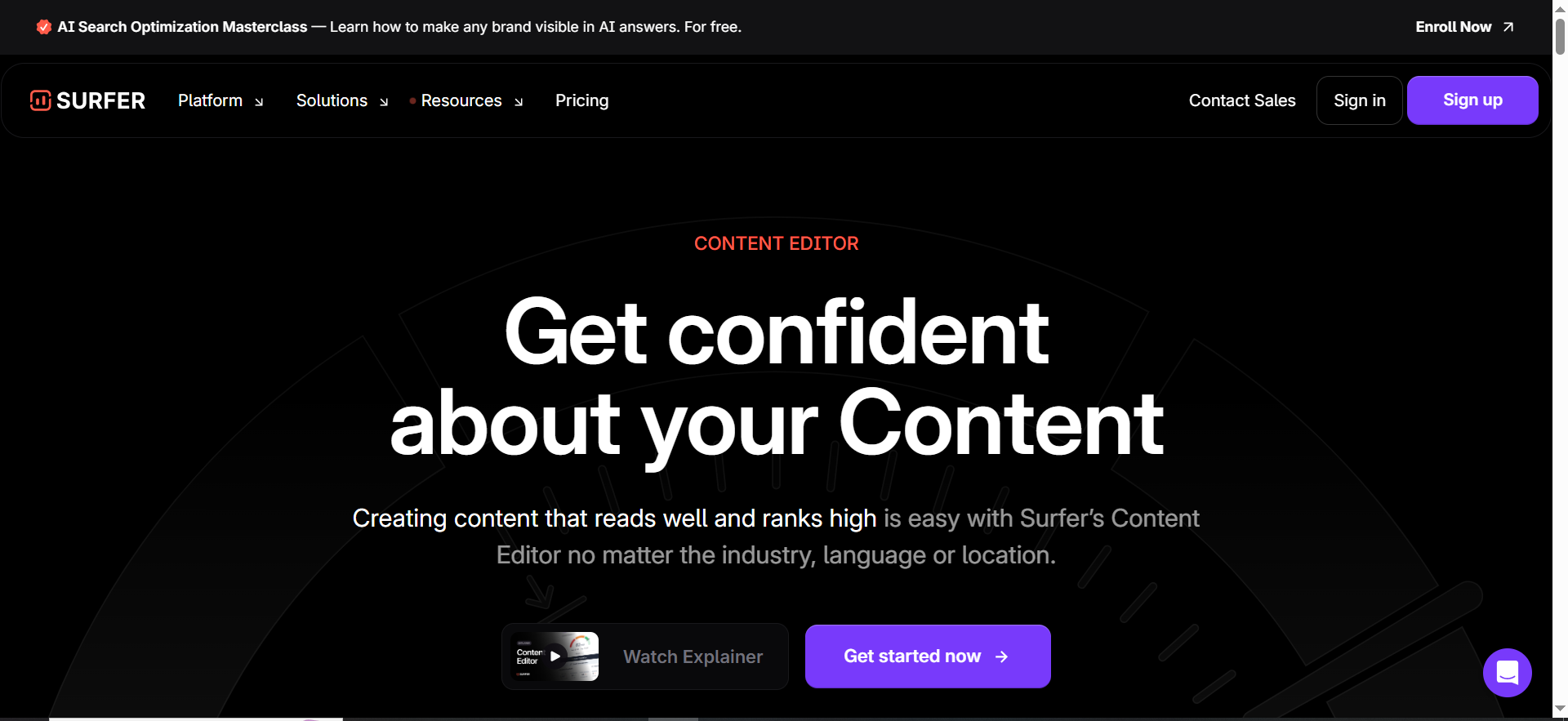
Surfer is an SEO content optimization platform that provides competition-based, real-time guidelines and a content editor workflow built around what’s happening on page one.
Why teams use it
- Writers like having clear, real-time targets (length, terms, structure guidance).
- It operationalizes briefs into a writing + optimization loop.
What it’s good for
- Teams that want the brief and the draft to live in the same “editor experience”
- On-page teams doing consistent updates and refreshes
When it’s a good fit
- You want to standardize writer output with “rules” derived from the SERP.
- You need collaboration and shareable editor access (useful for agencies).
When it’s not a good fit
- If you only need SERP extraction/brief research and don’t want a scoring editor layer.
How to use it
- Create an editor for the target keyword.
- Capture suggested structure targets (word count ranges, terms, headings).
- Translate those into your brief sections: “required H2s,” “entities to include,” “FAQs/questions.”
- Add a QA checkpoint: writers must hit the brief and remain readable (don’t overfit).
Key capabilities
- Content editor guidance based on page-one patterns
- Competition-based methodology (signals + NLP/ML)
Pricing
Surfer’s pricing starts at $49/month (billed annually) for its entry plan.
Free tier?
Surfer doesn’t offer a free tier, but it does offer a free trial in some cases (availability can vary).
Downsides / limitations
- Teams sometimes chase the score and lose originality. Your brief should include a “unique value” section to prevent copycat content.
3. Semrush
What it does
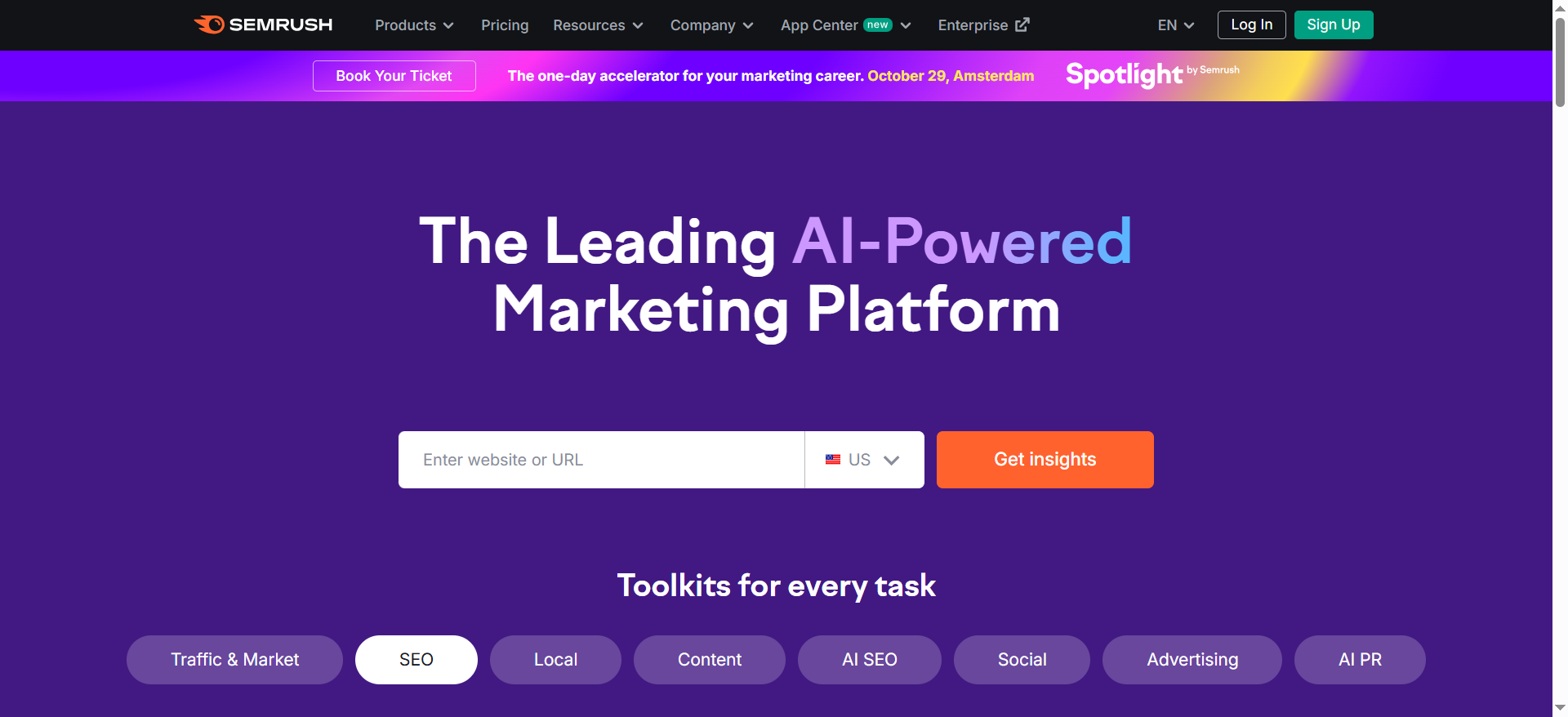
Semrush offers a writing assistant and broader content tooling designed to help optimize copy for SEO and engagement, with AI-powered features inside its ecosystem.
Why teams use it
- If you already run SEO ops in Semrush, it’s efficient to keep briefs/drafts connected to the same tool suite.
- Helpful for teams that need SEO + content workflow in one place.
What it’s good for
- Marketing teams that want an “all-in-one” content workflow tied to broader SEO research
When it’s a good fit
- You’re already paying for Semrush and want content briefs to integrate with other SEO work.
When it’s not a good fit
- If you want a best-in-class dedicated brief generator with deep competitor structure mapping.
How to use it
- Identify target keyword(s) in your SEO workflow.
- Use the writing assistant/content tooling to produce brief requirements: audience, intent, recommended terms, readability guidance.
- Export to your brief template and assign to writers.
Key capabilities
- SEO-focused writing assistant positioning
- AI-powered writing/rewrite features described in documentation
Pricing
Semrush’s paid plans for its SEO Toolkit start at $139.95/month (Pro plan).
Free tier?
Semrush offers a free account with limited usage, and it also offers a 7-day free trial for many toolkits.
Downsides / limitations
- Some teams still pair Semrush with a dedicated SERP brief tool for deeper outline extraction.
4. Clearscope
What it does
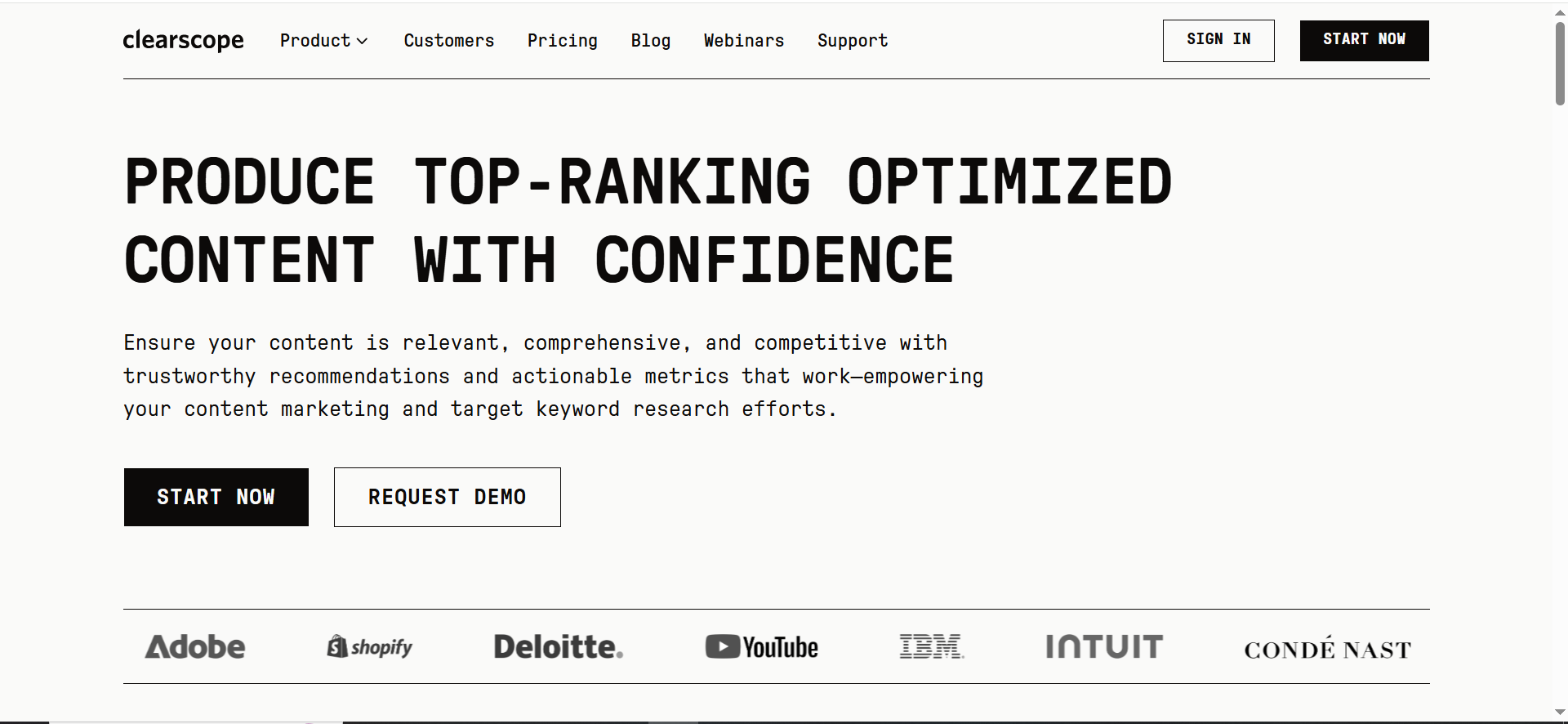
Clearscope focuses on content optimization and guided recommendations using NLP/LLM technologies (as described on its product pages).
Why teams use it
- Editorial teams want clear reports and strong optimization workflows.
- It’s commonly shortlisted for serious content operations.
What it’s good for
- Producing briefs that are clean, editorial, and optimization-ready
- Teams that care about maintaining content performance after publish
When it’s a good fit
- You have writers/editors who want guidance without turning the draft into a keyword-stuffed checklist.
When it’s not a good fit
- If you want a low-cost brief tool or heavy SERP scraping utilities.
How to use it
- Build a content report for the target keyword.
- Translate the report into a brief: target terms/entities, sections to cover, “don’t forget” subsections.
- Add internal link notes and “citation hooks” (definitions, stats, tables).
Key capabilities
- NLP-guided recommendations (vendor-described)
Pricing
Clearscope’s pricing starts at $189/month for its Essentials plan.
Free tier?
Clearscope doesn’t offer a free tier, but it does offer demos and can provide a free trial on request.
Downsides / limitations
- By itself, it may not be the fastest “SERP scrape → outline” machine; pair it with a SERP extractor if needed.
5. Thruuu
What it does
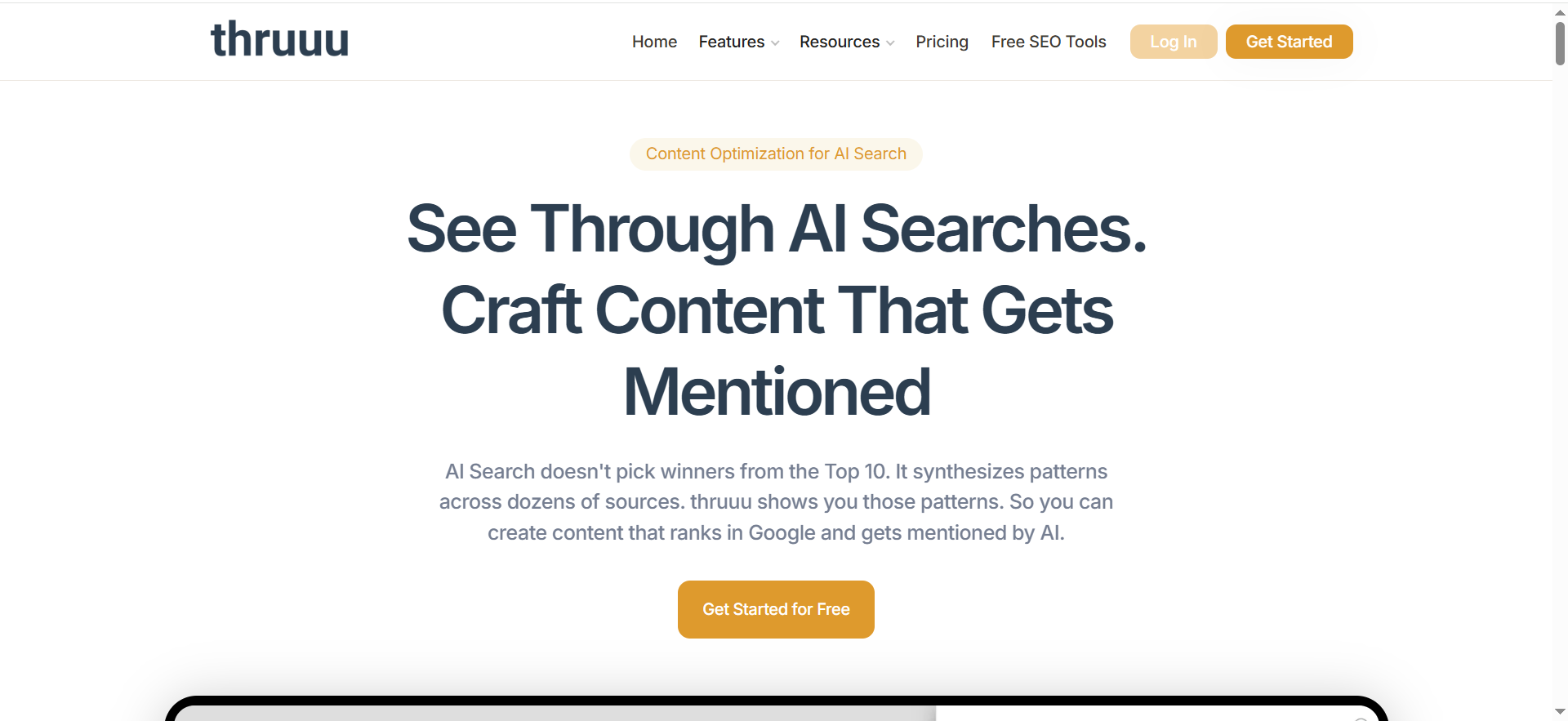
Thruuu is positioned as a SERP analysis tool that scrapes top-ranking pages and provides SERP data you can use to optimize pages and create content.
Why teams use it
- You want a “one-click SERP extraction” layer for briefs: competitor headings, SERP elements, and quick structure insights.
What it’s good for
- Creating the competitor outline map fast
- Extracting what top-ranking pages are doing without opening 20 tabs
When it’s a good fit
- Agencies and content strategists building briefs daily.
- Teams that already have a writing/optimization tool and just need better SERP research.
When it’s not a good fit
- If you need an integrated writing editor + scoring system (you’d pair it with another tool).
How to use it
- Run a SERP analysis on the target keyword.
- Export competitor structure patterns (common H2s/H3s, angles).
- Combine with your entity and FAQ plan.
- Add your differentiator and evidence plan.
Key capabilities
- SERP analysis positioning + data extraction
- Content brief workflow referenced on vendor materials
Pricing
thruuu’s paid plans start at $13/month (Starter), with higher tiers at $33/month and $66/month.
Free tier?
thruuu offers a free tier.
Downsides / limitations
- SERP extraction alone doesn’t guarantee a winning brief, you still need intent lock, entity plan, and QA.
📋 Get Listed / Advertisement
We update this guide monthly. Want your tool featured? Contact: [email protected].
How to choose the right tool (decision tree by team + workflow)
Use these questions to pick fast:
If you’re an agency building lots of briefs
Start with a SERP extraction layer + a writing/optimization layer:
- SERP extraction: Thruuu
- Brief + research: Frase
- Writer optimization: Surfer or Clearscope
Why: agencies need shareable workflows and quick “what’s ranking” snapshots. Surfer highlights share/collaboration for external writers.
If you’re an in-house content team optimizing quality
Choose a tool that creates clear editorial guidance:
- Clearscope for optimization guidance and workflows
- MarketMuse if you need deeper topic modeling beyond top-10 mimicry
If you’re already “all-in” on one SEO platform
- Semrush if your team wants content workflows connected to broader SEO tooling
- seoClarity for enterprise-scale workflows and automated briefs
If budget is tight
- Dashword (plus its free brief resources)
- NEURONwriter trial + optimization focus
What is a SERP-based content brief?
A SERP-based content brief is a writer-ready document built from what’s happening on the Search Engine Results Page (SERP) right now, specifically:
- Search intent signals: what Google is rewarding (guide vs list vs template vs product page)
- Common section patterns: recurring H2s/H3s across the top-ranking pages
- SERP features: People Also Ask, featured snippets, comparison tables, “reviews,” videos
- Topic/entity coverage: the concepts that consistently appear in high-performing pages
- Questions to answer: PAA + related queries that indicate what users still need
A normal brief might start with a topic and a few keywords. A SERP-based brief starts with evidence: what the SERP suggests is required to rank and satisfy the query. The goal isn’t to copy competitors; it’s to reverse-engineer expectations and then beat them with better structure, clarity, and original value (examples, templates, experience, proof).
What should an SEO content brief include in 2026?
In 2026, a brief can’t just be “keywords + word count.” It needs to guide writers to win in two places:
- Organic rankings (traditional SERP)
- Extractive AI surfaces (summaries/AI answers that cite sources)
A strong 2026 SEO content brief should include:
1) Target + intent lock
- Primary query + 3–8 close variants (use this step to sanity-check scope with your keyword research workflow)
- Search intent statement (one sentence)
- Format expectation (“best list,” “how-to,” “definition,” “pricing,” “template”)
2) Audience + positioning
- Who the reader is (ICP + role)
- What they already know vs what they need explained
- Unique angle: what you’ll do that top pages don’t
3) SERP insights
- Top competing URLs (top 5–10)
- Observed patterns: recurring H2s, common frameworks, content types
- SERP features to target (PAA, snippet, videos, comparisons)
4) Semantic coverage plan
- Entity list (concepts/tools/terms that must be included)
- Subtopic map (must-cover vs nice-to-have)
- FAQ questions + where they belong in the outline
5) Outline + structural guidance
- Full H2/H3 outline
- “Required” sections + optional sections
- Internal linking notes (pages to link to + anchor suggestions)
- Schema suggestions (FAQ schema, Product, HowTo, when relevant)
6) Evidence + citation hooks (important now)
- What claims require sources
- Data points, definitions, or benchmarks to include
- Places where tables/checklists improve extractability
7) Writing constraints
- Tone, voice, do/don’t rules
- Must include examples, step-by-steps, screenshots, templates (if relevant)
- CTA placement and conversion intent
8) QA checklist
- Intent match? Coverage match? Readability match?
- Clear answers near top? Tables/checklists included?
- Not over-optimized? Not thin? Not repetitive?
Which AI tools generate content briefs from SERP analysis?
Tools that generate SERP-based briefs typically fall into three buckets, and most teams use at least two.
Bucket A: SERP research + outline builders
These tools shine at: pulling competitor patterns, extracting questions, generating outline scaffolds.
- Frase (strong for SERP + questions + outline drafts)
- Thruuu (strong for SERP extraction/structure scraping)
- Content Harmony (strong templating + research → formatted briefs)
Bucket B: Optimization editors (brief + scoring workflows)
These tools shine at: giving writers measurable guidelines and optimization support.
- Surfer (real-time content editor + targets)
- Clearscope (editorial-grade reports + optimization workflow)
- NEURONwriter / Dashword (budget-friendly optimization with SERP grounding)
Bucket C: Strategy/topic modeling platforms
These tools shine at: moving beyond top-10 mimicry and planning topic depth.
- MarketMuse
- seoClarity Content Fusion (enterprise workflow + briefs + research)
Simple selection rule:
- If you need better briefs quickly → start with Frase or Thruuu
- If you need writers to hit consistent on-page targets → add Surfer or Clearscope
Frase vs Surfer vs Clearscope: which is best for briefs?
They can all support briefs, but they’re optimized for different stages of the process.
Frase: best for research-first brief building
Choose Frase if you want:
- Fast SERP summaries and competitor insight
- Strong question research to build FAQ + section coverage
- Quick outline generation you can refine into a brief
Ideal for: strategists, agencies, SEO leads who build briefs before writing starts.
Surfer: best for writer workflow + optimization targets
Choose Surfer if you want:
- A content editor where the brief becomes actionable targets
- Writers to get real-time guidance while drafting
- Consistency across many writers/pages
Ideal for: content ops teams managing many contributors.
Clearscope: best for editorial-grade optimization and quality control
Choose Clearscope if you want:
- Clean, readable term/topic guidance
- Strong editorial workflow and polish
- A quality-focused optimization layer
Ideal for: brands with high standards and editors who manage quality at scale.
Practical recommendation
- Best single-tool pick for briefs: Frase (most “brief-native” for research + outline)
- Best brief + writing execution: Surfer (turns guidelines into action)
- Best quality control layer: Clearscope (editorial optimization)
Best combo for most teams:
- Frase + Surfer (brief + writer workflow)
- Add Clearscope if you need stricter editorial optimization.
How to set word count, structure, and headings based on SERP patterns?
This is the part most briefs get wrong: they set word count by gut feel, not by evidence.
Step 1: Identify the SERP “format”
Look at the top 5–10 results:
- Are they listicles? (best tools)
- Guides? (how-to)
- Definitions? (what is X)
- Comparisons? (X vs Y)
Your structure should match the dominant format unless you have a strong reason not to.
Step 2: Use a “SERP range,” not a fixed number
Instead of “write 2,000 words,” set:
- Minimum viable length (to compete)
- Target range (where most winners sit)
- Max (avoid bloat)
Example:
- If top results cluster around 2,200–2,800 words → set target 2,500 ± 300.
Step 3: Extract recurring headings
Build a list:
- H2s that appear in 60–80% of top pages = required
- H2s that appear in 30–50% = optional
- Unique sections you add = differentiators
Step 4: Build the “coverage map”
Your brief should include:
- A section-by-section goal (“What this section must answer”)
- Key entities/terms per section
- Any visuals/tables that help clarity
Step 5: Add “extractable blocks”
To improve snippet/AI extraction:
- “Definition” paragraph early
- “Steps” in numbered format
- Comparison table near top (for best lists)
- Checklist and FAQ section near bottom
Step 6: Confirm readability and flow
If you’re adding sections just because competitors have them, you’ll create bloat. A better rule:
- Every H2 must answer a question the user actually has.
How do you refresh briefs when SERPs change?
SERPs drift. Your brief process should assume change and build a refresh loop.
What changes most often
- Tools and pricing (in “best tools” posts)
- SERP feature layout (more PAA, more video, more list snippets)
- New subtopics that become “expected”
- Intent shifts (“best” becomes “best + pricing,” “how to” becomes “template”)
Refresh process (monthly for money pages)
- Re-run SERP analysis (top 10, PAA, related searches).
- Compare your old outline to new patterns:
- Any new recurring sections?
- Any outdated sections?
- Update your brief template:
- Add new FAQs
- Replace outdated tool notes
- Add missing entities/subtopics
- Re-score and re-optimize content (if using Surfer/Clearscope).
- Update internal links to newer relevant pages(especially for posts competing in AI search visibility).
When to refresh immediately (not monthly)
- Rankings drop sharply
- New competitor enters with a stronger format
- Google starts showing a different dominant intent
- Major product changes (rebrands, pricing shifts, feature launches)
How do you combine SERP brief tools with editorial guidelines?
SERP tools tell you what the market expects. Editorial guidelines protect quality, brand voice, and originality. You need both.
The integration model that works
Create a brief template with two layers:
Layer 1: SERP requirements (non-negotiable)
- Intent statement
- Required headings/subtopics
- PAA questions to answer
- Competitor pattern insights
- Structural expectations (tables, comparisons, FAQs)
Layer 2: Editorial rules (brand protection)
- Tone of voice and style rules
- “No fluff” standards
- Proof requirements (sources, examples, screenshots)
- Differentiation mandate (unique framework, story, primary research)
- Accessibility and readability requirements
Practical workflow
- Run SERP research in Frase/Thruuu.
- Export outline + questions into your brief doc.
- Apply editorial overlay:
- rewrite headings to fit brand tone
- add unique insights and proof requirements
- add “avoid” notes (don’t copy competitor phrasing)
- Writers draft using Surfer/Clearscope guidance without breaking editorial style (this works best when paired with a strong AI content optimization workflow).
- Editor checks both:
- Did we match SERP expectations?
- Did we meet brand and quality standards?
What’s a practical checklist for briefs that rank?
Use this as a “ship it / don’t ship it” checklist before the writer starts.
Intent + format
- One-sentence intent statement is written and agreed
- The content format matches what the SERP rewards (list, guide, comparison, etc.)
- The intro answers the title query clearly within the first few paragraphs
SERP coverage
- Top competing pages were reviewed (top 5–10)
- “Required” H2s are identified based on SERP patterns
- PAA + related questions are extracted and mapped to sections
Outline quality
- Outline is complete (H2/H3) and logically ordered
- Each section has a goal: what it must answer
- Differentiator sections are included (unique value, not generic copycat)
Semantic / topical authority
- Entities/subtopics list is included
- Must-include concepts are mapped to the outline
- Internal links are specified (at least 3–5 targets).
Extractability (for snippets + AI)
- A definition block exists near the top
- A comparison table is included (if relevant)
- A checklist and FAQ section exist
- Claims that need sources are clearly flagged
Production readiness
- Tone/voice guidance is included
- Word count is a range based on SERP observation (not a random number)
- CTA goal is clear (lead, trial, demo, signup)
- QA checklist is attached and assigned to an owner
FAQs
What is a SERP-based content brief?
What should a modern SEO content brief include?
How do I make briefs that can win AI Overview citations?
Which tool is best if I mainly want competitor outlines and SERP extraction?
Which tool is best if I want SERP research plus AI-generated outlines?
Which tool is best for writer workflow and real-time optimization?
Which tool is best for editorial teams optimizing content quality?
How do I stop AI brief tools from making my content sound like everyone else?
Do I still need human review if the tool gives me an outline and a score?
How often should I update a “best tools” post like this?
📋 Get Listed / AdvertisementWe update this guide monthly. Want your tool featured? Contact: [email protected].