
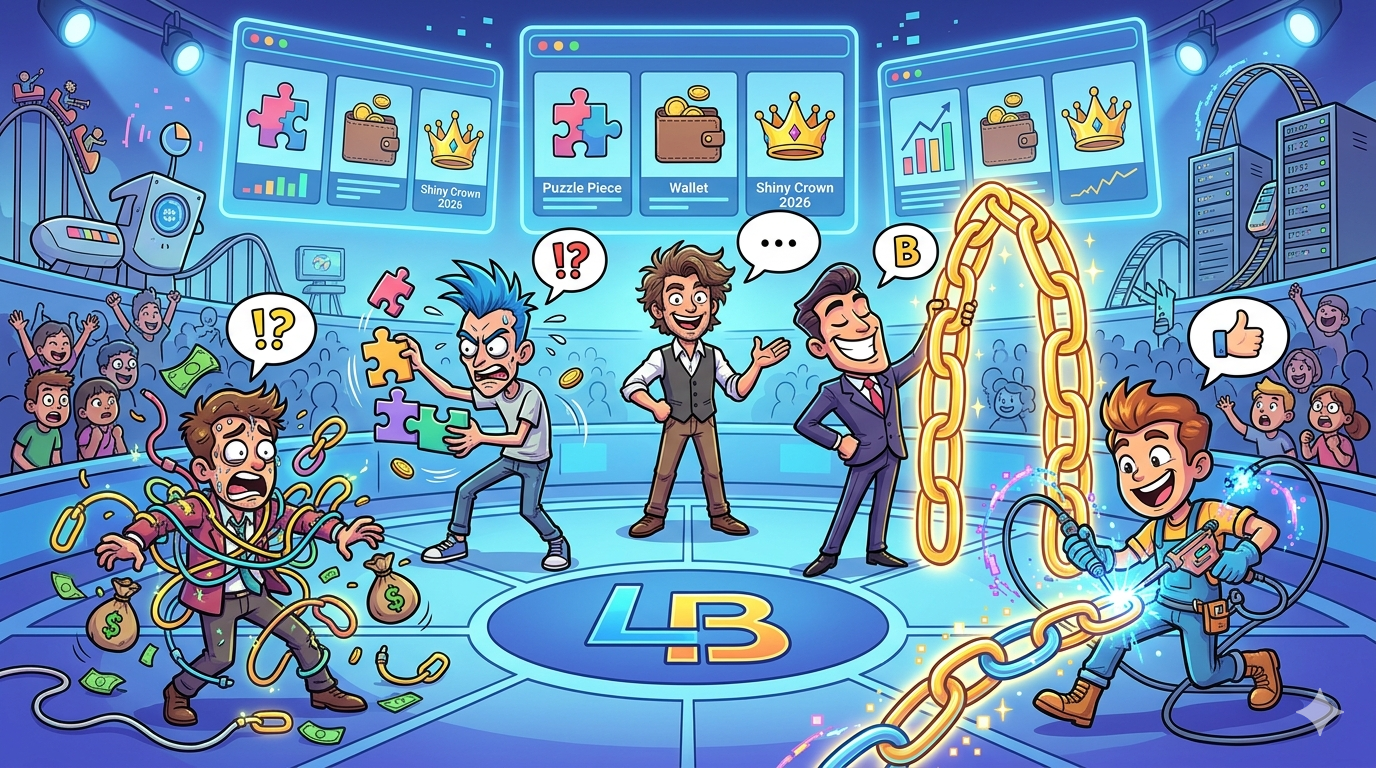
Google users click a website link just 8% of the time when an AI summary appears, versus 15% when it does not, according to a Pew Research Center analysis of 68,879 searches published in July 2025.
The best link building service for your company is decided by model fit and budget band, not by whoever promises the most links. Managed retainers, productized order forms, and transparent marketplaces solve different problems, and matching the model to your team is what separates a backlink budget that compounds from one that quietly leaks.
This guide ranks top vetted providers, states how each was assessed, gives you a full comparison table, and then answers the buying questions that decide which one you should actually sign.
Here is the short verdict before the detail.
- uSERP is the strongest fit for funded B2B SaaS and fintech brands chasing Tier-1 editorial placements.
- Siege Media wins when you want links earned through original content and linkable assets, not cold pitching.
- Editorial.Link suits teams that want senior-managed editorial outreach with reporting that tracks AI Overview placements.
- Page One Power is built for custom, research-driven manual outreach with a dedicated account contact.
- FATJOE is the default for agencies that need white-label, productized link orders at predictable turnaround.
▶️ If your ranked pages are not showing up in AI answers and you want a content system that fixes that, book a SaaS content strategy call.
Best Link Building Services Compared at a Glance
The table below maps all nine providers by operating model, ideal buyer, headline strength, and publicly listed starting price.
| Service | Model | Best For | Headline Strength | Starting Price (2026) |
|---|---|---|---|---|
| uSERP | Managed digital PR | Funded B2B SaaS and fintech | Tier-1 editorial placements | From ~$2,999/mo |
| Siege Media | Managed content-led | Content-driven brands | Linkable assets that earn links | From ~$5,000/mo |
| Editorial.Link | Managed outreach | SEO teams wanting AI-search proof | Senior account ownership | From ~$375/link |
| Page One Power | Custom managed | Long-term outreach programs | Manual, research-first outreach | From ~$3,500/mo |
| FATJOE | Productized | Agencies reselling at scale | Dashboard ordering and turnaround | From ~$700/package |
1. uSERP: Premium Digital PR for Funded SaaS
uSERP is the best choice for funded B2B SaaS and fintech brands that need editorial placements inside Tier-1 publications. It is a senior-led digital PR agency rather than a guest-post vendor.
Founded in 2019 and led by Jeremy Moser, uSERP runs a content-first model focused on brand mentions and contextual links on outlets such as business and technology publications, with published case studies naming clients in the work-management and HR-software space.
- Placement type: uSERP prioritizes editorial links and brand mentions on high-authority publications over bulk directory or guest-post volume.
- Team model: uSERP keeps account work senior, so strategists rather than junior researchers handle client communication.
- Reporting: uSERP reports placements alongside organic and authority movement, which suits brands that must justify five-figure spend internally.
Pricing: Publicly listed 2026 tiers run from about $2,999 per month at entry to roughly $15,000 per month for enterprise programs.
Pros include genuine Tier-1 access, senior strategists, and verifiable named-client proof.
Cons are the five-figure ceiling and a model that is overkill for small sites that need basic relevance links.
Choose uSERP when brand credibility matters as much as the link metric.
2. Siege Media: Content-Led Links for Sustainable Authority
Siege Media is the best fit when you want links earned by content rather than pitched cold. It treats link building as a content problem, producing data studies, calculators, and visual assets that attract links on their own.
Founded in 2012 in San Diego, Siege Media helped formalize content-led link building as a category and publishes multi-year case studies showing organic traffic curves for well-known consumer and software brands.
- Acquisition method: Siege Media earns links through linkable assets, so placements arrive without per-link cold outreach.
- Integration: Siege Media runs content strategy, production, and outreach under one roof, which ties the link program to a ranking-content engine.
- Time to impact: Siege Media campaigns compound over quarters as assets mature, rather than delivering a fixed monthly link count.
Pricing: Publicly reported 2026 retainers sit in the five-figure range, commonly cited from about $5,000 to $15,000 or more per month when content production is included.
Pros are durable, compounding links and strong creative quality.
Cons are the upfront content budget and a slower ramp.
Choose Siege Media when you want the link program bundled with a content asset engine, not standalone outreach.
3. Editorial.Link: Managed Outreach With AI-Search Reporting
Editorial.Link is the entry to test first if you want senior-managed editorial outreach with one account manager and reporting that surfaces AI Overview placements. It is a managed outreach agency with public per-link pricing bands.
The agency sources hand-picked editorial donors, operates on a prepayment model that keeps the outreach pipeline funded ahead of placement, and is repeatedly cited for same-day account-manager response rather than a ticket queue.
- Donor sourcing: Editorial.Link uses editorial-only, hand-picked sites rather than template pitch outreach across a reseller list.
- Account ownership: Editorial.Link assigns a single senior manager per engagement, so campaign context does not rotate between project managers.
- AI-search angle: Editorial.Link reports placements that can appear in AI Overviews and assistant answers, which buyers can hand to clients as proof.
Pricing: The agency's publicly listed 2026 rates start near $375 per backlink, with a five-link package around $1,750 and lower per-link costs at higher volume.
Pros are transparent per-link bands, editorial-grade donors, and AI-visibility reporting.
Cons are the prepayment requirement and a focus on links rather than full-funnel content.
Choose Editorial.Link after a botched reseller retainer when you want hand-picked donors and a manager who answers fast.
4. Page One Power: Custom Manual Outreach Programs
Page One Power is built for teams that want a tailored, manual outreach program documented end to end. Every link is sourced by a human researcher pitching a human editor, with no fixed productized packages.
Founded in 2010 and headquartered in Boise, Idaho, Page One Power runs resource link building and editorial placement as separate service lines, assigns a dedicated project manager, and spells out link types and sourcing process before the first call.
- Outreach style: Page One Power runs fully manual prospecting, so every placement is custom-sourced rather than pulled from inventory.
- Engagement shape: Page One Power starts with research and a custom plan instead of an off-the-shelf package.
- Documentation: Page One Power documents each prospecting step, which suits teams that need an auditable process.
Pricing: Publicly listed 2026 campaigns typically start around $3,500 to $3,700 per month with a six-month minimum, and the pricing sheet references roughly $600 per link.
Pros are process discipline, relevance-first sourcing, and a real partnership model.
Cons are the six-month commitment and a slower, less plug-and-play setup. Choose Page One Power for a long-term program where documented, sustainable authority growth matters more than speed.
5. FATJOE: White-Label Productized Links for Agencies
FATJOE is the default service for agencies that need white-label, productized link orders with dashboard tracking. It is the scaling engine of the category, built for resellers rather than end brands.
Founded in 2012 in the UK, FATJOE powers fulfillment for thousands of agencies through a self-serve catalogue of blogger outreach, niche edits, and digital PR packages priced per unit, with white-label reporting you can rebrand.
- Ordering model: FATJOE sells links as catalogue units you order from a dashboard with published turnaround windows.
- Reseller fit: FATJOE offers white-label, customizable reports, which makes it infrastructure for agencies billing clients under their own brand.
- Quality band: FATJOE filters out the worst link farms, though buyers note quality varies by service tier.
Pricing: Publicly listed 2026 figures show managed packages from about $700, niche edits from roughly $80, and individual blogger outreach links in the $75 to $300 range.
Pros are predictable volume, operational simplicity, and reseller reporting.
Cons are limited editorial customization and tier-dependent quality.
Choose FATJOE when you need reliable link volume that will not embarrass you, not bespoke placements on specific Tier-1 outlets.
How We Chose and Ranked These Services
We assessed each provider against five weighted criteria drawn from how AI engines and buyers actually evaluate links, then grouped them by operating model rather than forcing a single ranked order.
⚠️ The list is grouped, not strictly ranked, because a fair comparison of a $300 niche edit and a five-figure digital PR retainer is impossible. Each provider is placed where it is genuinely strongest. The assessment criteria are below.
| Criterion | What We Looked For | Why It Matters |
|---|---|---|
| Link quality controls | Real sites, topical relevance, organic traffic, editorial standards | Low-traffic placements carry little authority and add spam risk |
| Transparency | Clear deliverables, publisher disclosure, replacement policy | Hidden donor lists are the most common source of buyer regret |
| Model fit | Managed, productized, or marketplace clarity | The wrong model wastes budget regardless of execution quality |
| Scalability | Monthly volume without quality collapse | Sustained programs need repeatable delivery, not one good month |
| Evidence | Named-client case studies, public pricing, third-party reviews | Verifiable proof beats promised outcomes every time |
What Are Link Building Services?
Link building services are vendors that earn or place backlinks to your site on your behalf, through outreach, digital PR, content, or publisher marketplaces. They exist because acquiring relevant links is slow, relationship-heavy work that most in-house teams cannot scale alone.
The category splits into three operating models, and the split matters more than any feature list.
- A managed agency runs your whole campaign on a monthly retainer and you delegate control.
- A productized service sells links as fixed units you order from a dashboard.
- A marketplace lets you browse vetted publishers and buy individual placements without a retainer. Most disappointment with link building traces back to buying the wrong model, namely a marketplace buyer expecting agency-grade strategy, or a retainer client expecting marketplace-level price transparency.
Backlinks remain a confirmed ranking input.
Google's Gary Illyes reaffirmed that links are still a Google Search ranking factor, and 67.5% of marketers in the uSERP State of Backlinks survey of more than 800 SEOs said backlinks have a large impact on rankings.
If you are new to the underlying mechanics, our explainer on the best link building tools breaks down the software these services run on.
Why Link Building Services Matter More in 2026
Link building services matter more now because organic clicks are shrinking while link costs rise, so every placement has to earn harder. The squeeze is coming from both ends of the funnel at once.
On the demand side, AI summaries are absorbing clicks that used to flow to ranked pages. The same Pew study found users ended their browsing session on 26% of pages that carried an AI summary, against 16% of pages without one, which means fewer journeys ever reach your site.
On the supply side, acquisition is getting pricier. The Authority Hacker link building survey reports that a majority of practitioners now find link building both more expensive and more time-consuming than the prior year.
The strategic takeaway is that volume buying is the wrong instinct in this market. The job is fewer, more relevant, more authoritative links pointing at pages that are actually built to convert and to be cited, which reframes what you should demand from any service you hire.
How to Choose a Link Building Service
Choose a link building service by matching the operating model to your team's control needs and budget band, then verifying publisher transparency before you pay. Model fit decides more than any single feature.
Work through three questions in order.
First, how much control do you want, since a managed retainer trades control for strategy while a marketplace trades strategy for control.
Second, what is your monthly band, because no legitimate agency runs a real campaign under roughly $500 per month and marketplaces fill the budget below that.
Third, will they show you the donor sites before payment, which is the single clearest quality signal in the category.
The decision matrix below maps common buyer profiles to the right model.
| Buyer Profile | Right Model | Example Fit | Why |
|---|---|---|---|
| Funded SaaS chasing Tier-1 links | Managed digital PR | uSERP, Siege Media | Authority and brand credibility justify five-figure spend |
| Agency reselling to many clients | Productized white-label | FATJOE | Dashboard ordering and rebrandable reports scale cleanly |
| In-house SEO wanting hand-picked donors | Managed outreach | Editorial.Link, Page One Power | Senior ownership and editorial sourcing without a reseller queue |
Once your stack is chosen, wire it to measurement.
Our guide to keyword ranking reports helps you tie link acquisition to movement you can show leadership, and our roundup of SEO automation tools covers the workflow software that keeps outreach organized.
How Much Do Link Building Services Cost in 2026
Link building services cost from about $75 per link on a brokerage to five-figure monthly retainers for managed digital PR, with one high-quality contextual link commonly priced above $500. Cost tracks tactic and authority, not vendor branding.
The market data is consistent across recent surveys
The Editorial.Link State of Link Building survey of 518 experts put the average acceptable price for a single high-quality backlink at about $508.95 in its 2026 report. High-authority contextual links run higher still, with the uSERP State of Backlinks data citing a $700 to $2,000 or more range per link for top-tier placements. The cost-by-tactic table below sets expectations before you scope a budget.
| Tactic | Typical 2026 Price Range | Notes |
|---|---|---|
| Niche edit or link insertion | From ~$80 per link | Fastest to index since the page already ranks |
| Tiered guest post (mid DR) | ~$150 to $310 per link | Priced by domain-rating band |
| Standard guest post placement | From ~$300 per link | Quality and traffic vary widely by site |
| High-authority contextual link | ~$700 to $2,000+ per link | Tier-1 relevance and traffic command premiums |
| Managed digital PR retainer | ~$3,000 to $15,000+ per month | Includes strategy, outreach, and reporting |
For budget planning context, practitioner surveys from Aira found that a large share of SEOs spend $10,000 or more per year on link building, so even mid-market programs should plan for sustained spend rather than one-off orders.
If your priority is doing more with a lean budget, our list of cheap SEO tools shows where to economize without cutting link quality.
Link Building Agency vs Marketplace vs In-House
A link building agency manages the whole campaign for a retainer, a marketplace sells transparent per-link placements you select, and an in-house team gives you maximum control at the highest fixed cost. Each trades control against effort differently.
The economics favor outsourcing for most teams. uSERP's survey found that roughly 60% of companies outsource link building to agencies or freelancers, largely because building an in-house outreach function carries salary and tooling overhead that only pays off at scale.
The comparison below frames the trade-offs.
| Dimension | Agency (Retainer) | Marketplace | In-House Team |
|---|---|---|---|
| Control | Low, delegated | High, you pick sites | Highest |
| Strategy depth | High | Low | Variable |
| Cost shape | Monthly retainer | Per link, no lock-in | Salaries plus tools |
| Time to first link | Weeks | Days | Depends on hiring |
| Best for | Strategic programs | Tactical top-ups | Large, ongoing demand |
Are Link Building Services Safe Under Google's Spam Policies
Link building services are safe when they earn or place relevant, editorial links on real sites, and risky when they sell bulk placements on low-traffic or private-network domains. Google's policies target manipulation, not links themselves.
Helpful-content and spam systems have made cheap private-network links and spammy directories actively dangerous rather than merely useless, which is why manual outreach and editorial standards are now non-negotiable.
The practical test is simple. A safe placement sits in genuinely relevant content on a site with real organic traffic, while a risky one appears on a page that exists only to host outbound links.
Backlinko's analysis of the link economy underscores how rare genuinely earned links are, finding that only about 2.2% of published content earns links from more than one site, which tells you that easy bulk links are almost never the real thing.
Watch for these red flags before you sign.
- No publisher disclosure: Avoid any service that will not show donor sites before payment.
- Impossible volume: Reject offers of 100-plus links for under $100, which signal link farms.
- Guaranteed rankings: Treat ranking guarantees as a credibility failure, since no vendor controls Google.
- No content approval: Skip services that place links without letting you review the surrounding content.
- Zero-traffic donors: Decline placements on domains with no measurable organic traffic.
Do Backlinks Still Matter for AI Search and AI Overviews?
Backlinks still matter for AI search because authority and editorial citations help models decide which sources to trust, but the page receiving the link now has to be built for extraction. Links open the door, and content quality decides whether you get cited.
The shift is measurable.
In the Editorial.Link 2026 survey, 73.2% of experts said they believe backlinks influence whether a brand appears in AI Overviews and generative search results. Independent analysis points the same way, with Seer Interactive's research on what drives brand mentions in AI answers finding that a brand's presence across the wider web correlates with how often AI engines reference it.
In other words, links and citations now reinforce each other, so an authoritative link pointing at a thin, hard-to-parse page wastes most of its value.
This is exactly where a link program and a content system stop being separate projects.
Executing this well is the gap The Rank Masters closes for B2B SaaS teams, building an ICP-led content system that maps each topic cluster to a money page and to pipeline, and structuring those pages so they are citable in AI answers rather than just rankable.
To be clear, The Rank Masters is not a link building or digital PR vendor, and teams shopping mainly for backlinks are not the right fit.
The point is that the authority your chosen link service earns only compounds when it lands on pages built to convert and to be quoted. If you want the mechanics of that citable-content layer, start with our primer on Answer Engine Optimization (AEO), the companion guide to AEO tools for AI Overviews, and our GEO case study showing how structured content earned AI-assistant referrals.
Link Quality Signals That Separate Good Services From Bad
The signals that separate a good link building service from a bad one are donor relevance, real organic traffic, editorial context, and transparent reporting, in that order. Domain-rating numbers alone are the weakest of the useful signals.
Quality assessment has matured past chasing a single metric. Moz's ranking research shows that links from genuinely authoritative domains correlate with
stronger keyword growth, and its content analysis found that listicle formats earn the most unique backlinks of any content type, which is why a relevant resource page often outperforms a higher-rated but off-topic donor.
Backlinko founder Brian Dean framed the priority plainly in 2025, noting that "the authority of the page linking to you matters more than any other factor." Authority only counts, though, when the link sits in relevant, trafficked content with a natural acquisition pace, since a sudden spike of identical anchors reads as manipulation.
The signals table below is the checklist to run on any vendor's sample placements before you commit.
| Quality Signal | Strong Sign | Weak Sign |
|---|---|---|
| Topical relevance | Donor covers your niche | Generic multi-topic blog |
| Organic traffic | Measurable monthly visits | Near-zero traffic |
| Editorial context | Link sits in genuine content | Link in a thin hosting page |
| Anchor strategy | Natural, varied anchors | Repeated exact-match anchors |
| Reporting | Live placement disclosure | Promised links, no proof |
To monitor the links you earn and catch unlinked mentions worth reclaiming, see our roundup on how to monitor brand mentions, our breakdown of AI visibility tracking tools for measuring citations, and, for agencies juggling many client programs, our guide to AI marketing tools for agencies covering the reporting layer. More playbooks live in our content and SEO insights library.
Bringing the Decision Together
The best link building service is the one whose model matches how much control you want and whose links land on pages built to earn their authority. Premium digital PR fits funded brands chasing Tier-1 credibility, productized services fit agencies and SMBs that need predictable units, and marketplaces fit tactical buyers who will manage quality themselves.
Whichever you pick, screen donors for relevance and traffic, demand publisher disclosure before payment, and remember that a link is only as valuable as the page it points to.
If thin bottom-of-funnel coverage is costing you pipeline and your best pages are not getting cited in AI answers, book a SaaS content strategy call and we will map your highest-intent topics to revenue.