
The best Hall AI alternative for most teams that want both monitoring and action is Scrunch AI because it combines prompt and citation tracking with optimization guidance, crawl diagnostics, and its Agent Experience Platform, making it relevant for readers comparing the best AI visibility tools for citation tracking. Profound is the strongest fit for brands that want a more enterprise-heavy AI search platform with agent workflows, which aligns with TRM’s coverage of best AI visibility tools by share of voice. AthenaHQ is a strong choice if you want broad LLM coverage, citation intelligence, and AI-assisted content optimization, especially for teams evaluating best AI visibility solutions for content optimization teams. LLMrefs is the best value pick for teams that still think in keywords and want a simpler bridge from SEO to AI visibility, which makes it a natural fit alongside guides to the best AI tools for monitoring SaaS brand visibility in ChatGPT and Perplexity. Conductor is the best fit for enterprise teams that want AI visibility inside a broader search and content workflow, especially if they are already investing in AI visibility tracking tools and GEO services.
If you like Hall AI’s core idea but want stronger optimization workflows, deeper enterprise controls, or a tool that ties monitoring more directly to action, there are several good options. Hall positions itself around generative answer insights, website citation insights, agent analytics, and conversational commerce, with a free entry point that lowers the barrier to getting started.
The catch is that many teams eventually want more than visibility snapshots, especially when they need clearer remediation steps, broader workflow support, and stronger content operations tied to an AEO-ready SaaS blog strategy. That is exactly the gap the attached topic brief points toward for this article: better alternatives for teams that want AI visibility tracking plus clear optimization next steps.
The brief also specified the five tools to compare here: Scrunch AI, Profound, AthenaHQ, LLMrefs, and Conductor, which fits naturally with a broader roundup of best AI visibility tools by engine coverage.
📋 Get Listed / Advertisement
We update this guide monthly. Want your tool featured? Contact: [email protected].
Table of Contents
Best Hall AI Alternatives
| Tool | Best for | Strongest differentiator | Pricing signal |
|---|---|---|---|
| Scrunch AI | Teams that want monitoring plus optimization and technical fixes | Combines AI visibility, citation analysis, crawl diagnostics, and AXP for AI-optimized delivery | Starts at $250/month for brands; enterprise custom |
| Profound | Enterprise brands building around AI search as a channel | Broad AI search platform with prompt volumes, answer engine insights, agent analytics, and marketing agents | Custom enterprise pricing |
| AthenaHQ | Teams that want AI visibility plus AI-assisted optimization workflows | On/off-page GEO analysis, citation intelligence, blindspot detection, and content optimization agent | Self-Serve listed at $95/month first month, then $295/month; enterprise custom |
| LLMrefs | Budget-conscious teams and agencies moving from keyword SEO into AI visibility | Keyword-first workflow with citations, competitor benchmarking, exports, and utilities like llms.txt generation | Free plan; paid tiers start at $79/month per LLMrefs’ March 2026 blog post |
| Conductor | Enterprise marketing teams that want AI visibility in an established SEO/content platform | Connects AI visibility with audience, intent, content workflows, traffic, conversion, and bot reports | Free trial plus demo-led enterprise motion; pricing not publicly detailed |
1. Scrunch AI
What it does
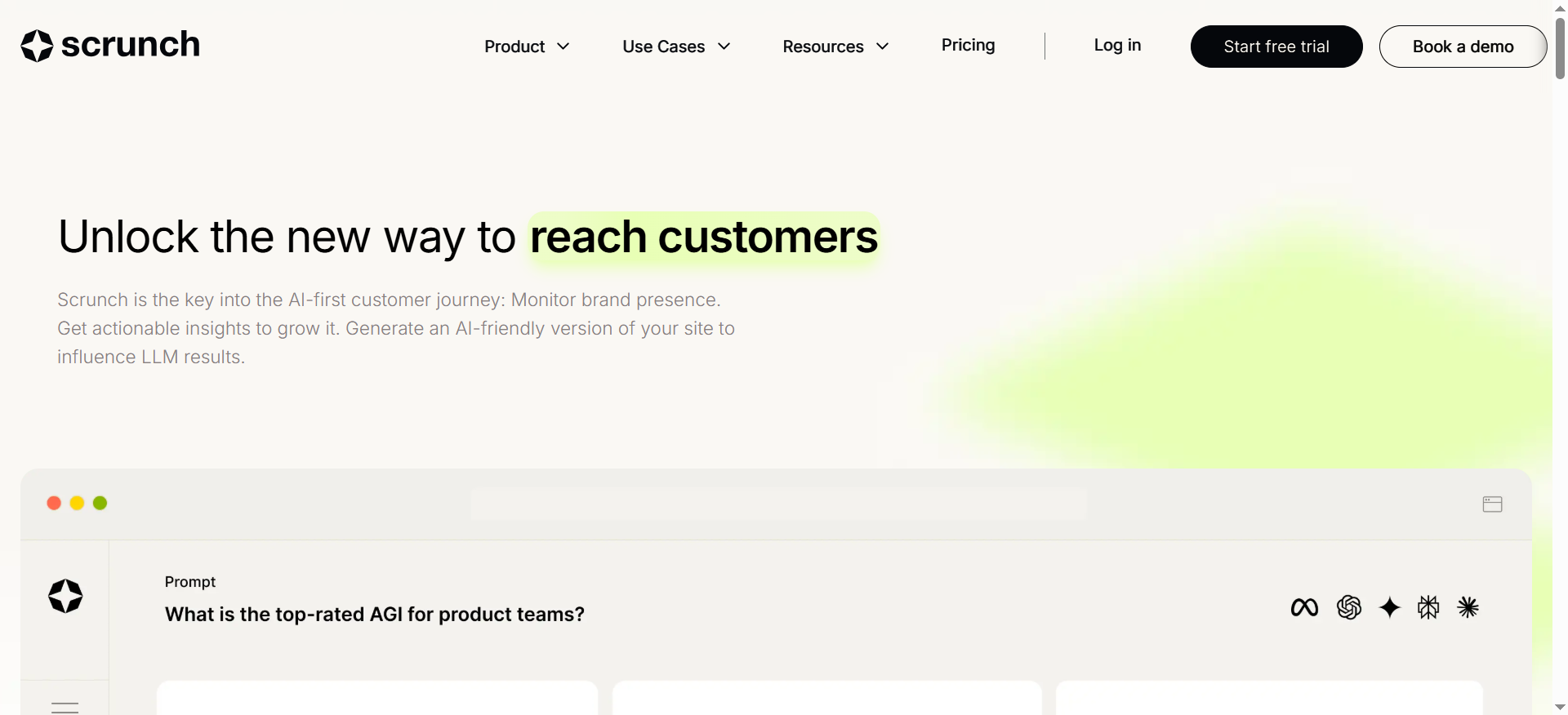
Scrunch is an AI search visibility platform built around three linked layers: monitoring, insights, and AXP, which makes it relevant for teams comparing broader AI search visibility solutions. Its core promise is not just that you can see your AI presence, but that you can understand why you are winning or missing and then improve what AI agents can read and cite.
Why teams use it
This is the most compelling Hall AI alternative when your team wants a direct path from diagnosis to execution. Scrunch tracks prompts, topics, entities, citations, competitors, rankings, and AI traffic, then layers in optimization guidance and site-level delivery through AXP. Hall gives you visibility into answers, citations, and agent activity, but Scrunch takes a more explicit “monitor, diagnose, optimize, deliver” approach that lines up well with TRM’s AE SEO playbook for AI answers and citations.
What it’s good for
Scrunch is best for companies that believe AI visibility is no longer just a reporting problem. It is especially strong for teams that want to improve crawl success, increase citations, reduce agent friction, and operationalize fixes without treating AI search as a side project. The platform also emphasizes competitor, persona, geo, and topic benchmarking, which makes it stronger than many lightweight trackers for teams that care about competitor benchmarking.
When it’s a good fit
Choose Scrunch if your team wants:
- prompt-level visibility across major AI platforms
- citation analysis tied to clear recommendations
- bot and crawl observability
- AI referral or agent traffic visibility
- a technical layer that improves how AI agents consume your content
- enterprise support such as SOC 2, RBAC, and API access
When it’s not a good fit
It is probably too much if you only want a cheap monitoring dashboard and do not plan to act on the data. It may also be overkill for very early-stage teams that are still validating whether AI visibility deserves budget at all.
How to use it
A practical rollout looks like this: start by monitoring your brand, key competitors, and core buyer prompts across the models that matter most to your category, then use citation analysis and crawl diagnostics to find which pages are not getting picked up or cited. Then use citation analysis and crawl diagnostics to find which pages are not getting picked up or cited. Next, prioritize the pages that matter most commercially and use the optimization guidance plus AXP to make those pages easier for AI agents to parse and reuse.
Repeat monthly and tie changes to citation growth and answer presence, because that workflow is much closer to a real operating model than simple brand mention tracking.
Key capabilities
Scrunch highlights performance tracking for prompts, topics, and entities, citation analysis, competitor benchmarking by persona, topic, and geo, AI traffic visibility, error detection for crawl issues, AI search trends, and AXP, which makes this a strong fit for linking to GEO prompt monitoring tools.
Pricing
Scrunch AI’s pricing starts at $250/month when billed annually, or $300/month month to month. Enterprise pricing is custom.
Free tier?
Scrunch AI doesn’t offer a free tier, but it does offer a 7-day free trial with no credit card required. Enterprise buyers can also book a demo.
Downsides / limitations
The main limitation is that Scrunch is opinionated. That is a strength for teams ready to act, but it can feel like more platform than you need if your current goal is simply to benchmark presence across AI answers. Also, the higher-value parts of the platform are clearest when you have someone on the team who can implement the technical and content changes it surfaces.
2. Profound
What it does
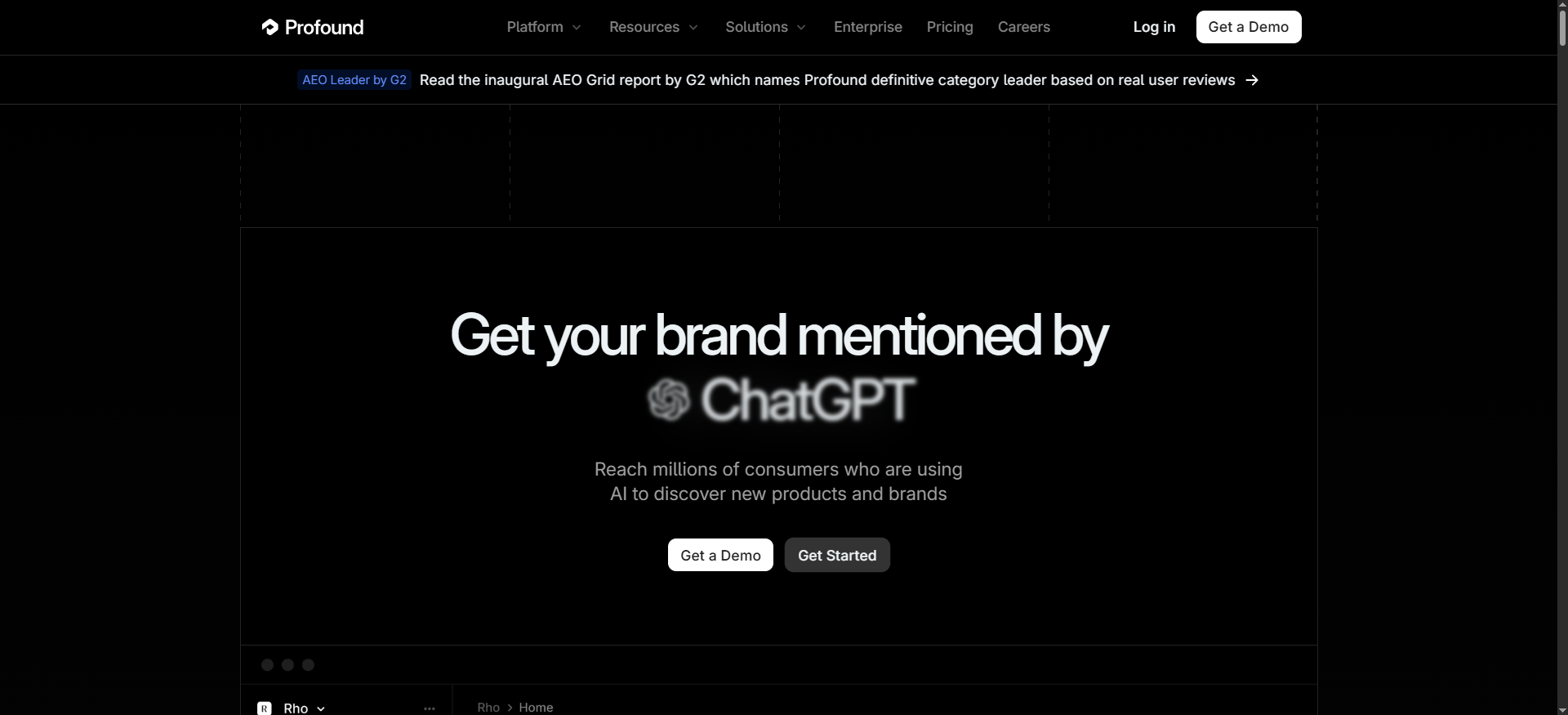
Profound positions itself as a full-stack marketing platform for the AI search era. On the homepage, it emphasizes Prompt Volumes, Answer Engine Insights, Agent Analytics, and a growing set of marketing agents. It covers a broad set of AI discovery environments including Perplexity, ChatGPT, Claude, Gemini, Grok, Copilot, Meta AI, DeepSeek, and Google AI Overviews.
Why teams use it
Profound is for buyers who want AI visibility to sit at the center of a broader AI-native marketing motion rather than behave like a simple mention tracker, which is why it appeals to teams evaluating a full AI visibility platform. It is not just presenting itself as another mention tracker. It is trying to become the operating system for how brands understand demand, analyze representation in AI answers, and build workflows around that opportunity.
What it’s good for
Profound is best for enterprise teams that want strategic breadth. Its language around “millions of consumers,” “agents for every marketing channel,” and “scale your presence, not your workload” points to a platform that is built for larger brands, more complex teams, and higher-level AI search programs. It is likely a better fit than Hall if your buying committee wants a more expansive platform vision than monitoring and remediation alone.
When it’s a good fit
Profound makes sense if you want:
- enterprise-grade AI search visibility
- insight into prompt demand and consumer behavior
- answer-level brand representation analysis
- AI agent workflows beyond just reporting
- strong executive narrative around AI search as a major growth channel
When it’s not a good fit
If you are a smaller team looking for transparent pricing, fast self-serve onboarding, or a simpler tactical tool, Profound may feel too heavyweight. Its positioning and pricing page both point toward a demo-led enterprise motion, not a low-friction starter product.
How to use it
Teams likely get the most value by combining Prompt Volumes with Answer Engine Insights, especially if they are already testing prompt coverage with AI visibility tools for prompt variation testing. In practice, that means identifying the high-demand prompt spaces that matter to your category, then measuring how AI systems represent your brand in those conversations and assigning follow-up work to content, PR, or SEO stakeholders. Agent Analytics adds another layer by helping teams see how AI systems interact with their site, not just what they say in outputs.
Key capabilities
The official site highlights Prompt Volumes, Answer Engine Insights, Agent Analytics, and agents for AEO and SEO, content and demand, and PR and communications, which makes this sentence a natural match for best AI visibility tools for daily prompt runs. It also offers free AEO reports and trialable agents, which signals a more workflow-heavy product direction than classic visibility dashboards.
Pricing
Profound’s pricing is not clearly published on its pricing page and is primarily quote-based for enterprise buyers. In Profound’s own published content, it also says a Starter plan starts at $99/month, while Enterprise pricing is custom.
Free tier?
Profound doesn’t offer a free tier. It does offer a free AEO report, and Profound’s own documentation also indicates that trial access may be available in some cases.
Downsides / limitations
The biggest drawback is accessibility. Smaller teams may struggle with the likely price point and more complex platform scope. If your current need is simply to track how often your site gets cited and fix obvious gaps, a tool like Scrunch, AthenaHQ, or LLMrefs may be easier to operationalize.
3. AthenaHQ
What it does
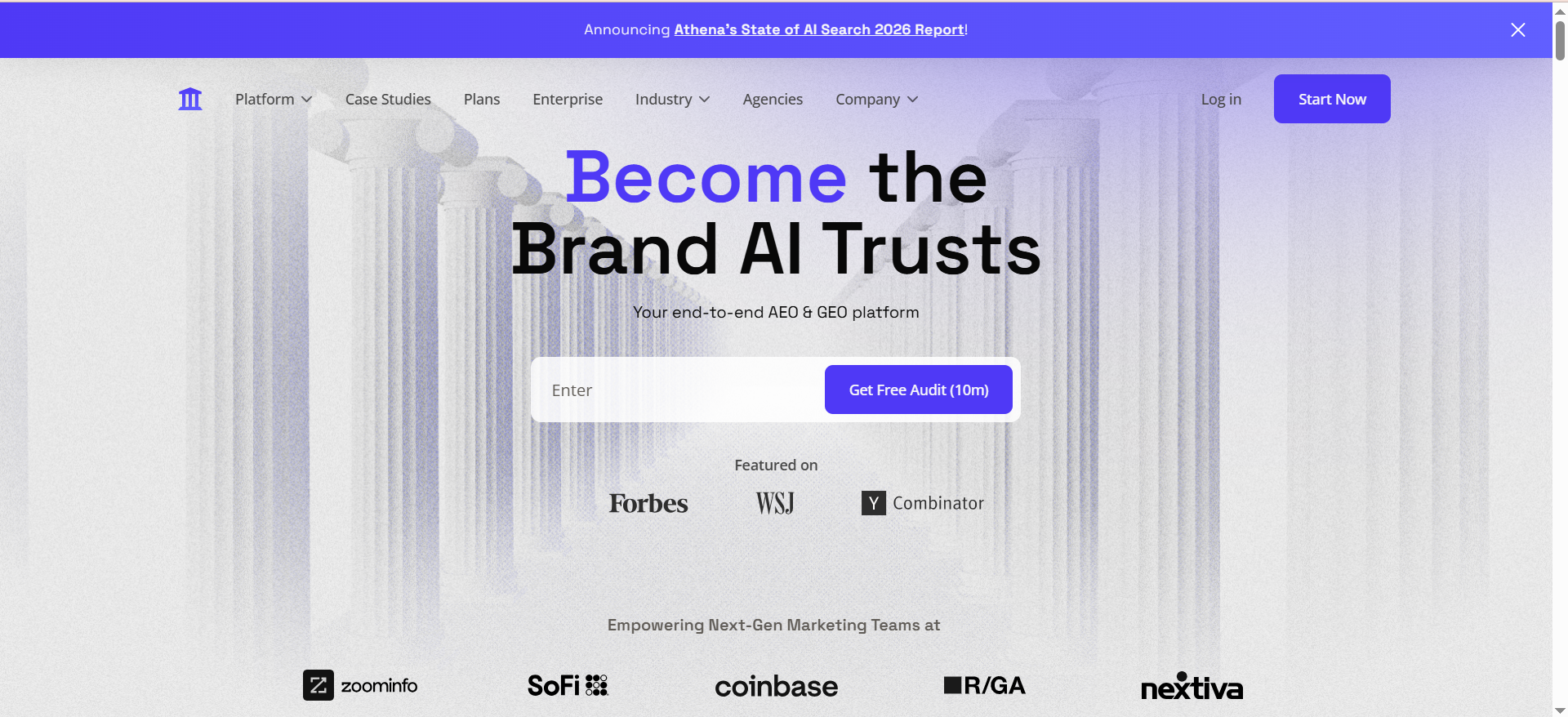
AthenaHQ presents itself as an AEO and GEO platform for AI search, making this a strong spot to link to TRM’s explainer on AISO vs SEO, AEO, and GEO. Its feature set includes monitoring across up to eight major LLMs, on-page and off-page GEO analysis, competitor monitoring and impersonation, basic AI content optimization, granular authority and citation intelligence, dynamic crawling, blindspot detection, and role-based access. The enterprise tier adds traffic analysis, self-improving content workflows, a content optimization AI agent with deep research, and Athena Citation Engine.
Why teams use it
AthenaHQ is a strong alternative for teams that want Hall-like visibility plus clearer site and content actionability. It sits in a useful middle lane: more optimization-oriented than a basic tracker, but usually easier to understand than the broadest enterprise platforms.
What it’s good for
AthenaHQ is particularly good for teams that want to answer questions like:
- Which AI platforms surface us and where are we invisible?
- What authority or citation gaps are holding pages back?
- What content or structural improvements should we make next?
- Where are AI systems missing or misunderstanding parts of our site?
That makes it especially relevant if Hall feels too lightweight for your operating model but you do not necessarily want an all-encompassing enterprise suite.
When it’s a good fit
AthenaHQ fits companies that want broad LLM coverage, citation intelligence, competitor analysis, and AI-assisted optimization in one product, which makes it relevant for buyers researching AEO tools for AI Overviews. The inclusion of dynamic AI crawling and blindspot detection is notable because those features map directly to the “site readiness” angle in your spreadsheet brief and connect well to TRM’s guide on best SEO strategies for AI visibility.
When it’s not a good fit
If your team is very price sensitive and only needs basic monitoring, AthenaHQ may still be more than necessary. Conversely, if you want deep workflow integration across a larger content and SEO stack, Conductor may be stronger.
How to use it
A clean implementation path is to use AthenaHQ first for baseline visibility across major models, then layer in its on/off-page analysis and citation intelligence to identify the pages and topics most worth fixing. From there, teams can use the content optimization workflow or AI agent features to prioritize changes rather than handing off generic “AI visibility” insights with no owner, which makes this a strong fit for evergreen content visibility in AI search.
Key capabilities
AthenaHQ highlights:
- up to 8 major LLMs
- on-page and off-page GEO analysis
- competitor monitoring and impersonation
- citation intelligence
- dynamic AI crawling
- blindspot detection
- unlimited seats with RBAC
- enterprise content optimization AI agent
- traffic analysis and insights
Pricing
AthenaHQ’s Self-Serve plan starts at $295/month, and its Enterprise plan is custom-priced. The site also shows a first-month promotional price of $95/month for Self-Serve.
Free tier?
AthenaHQ doesn’t offer a free tier. It includes $300/month in free credit on the Self-Serve plan, but that is part of a paid subscription, not a free plan.
Downsides / limitations
Its credit-based model may require more education internally, especially for teams used to flat-seat SaaS pricing. And while AthenaHQ clearly pushes into optimization, some buyers may still prefer the cleaner keyword-first simplicity of LLMrefs or the broader enterprise workflow maturity of Conductor.
4. LLMrefs
What it does
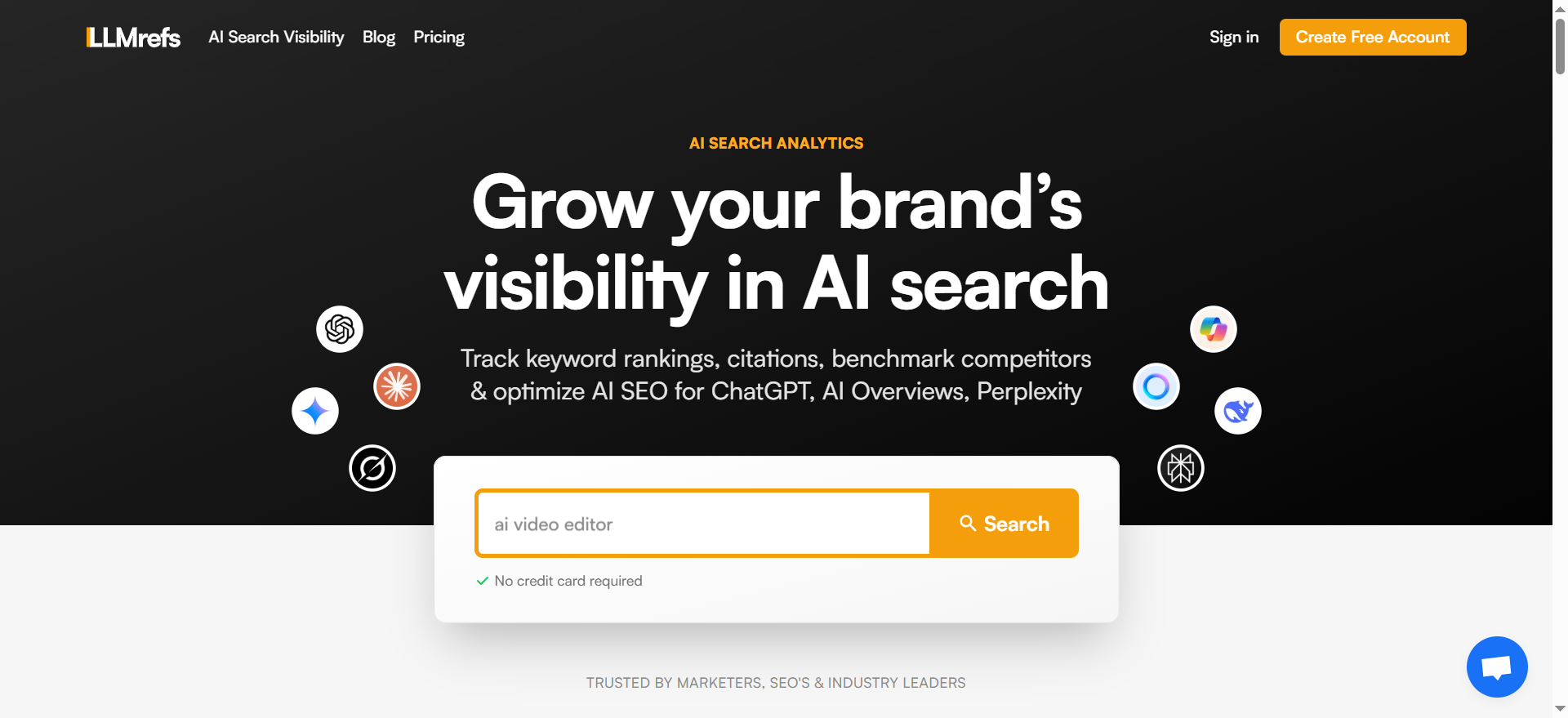
LLMrefs describes itself as a generative AI search analytics and AI SEO tracker for ChatGPT, AI Overviews, Perplexity, and other engines. Its core framing is unusually helpful for traditional SEO teams: you track keywords, not prompts. It also emphasizes citations, competitor benchmarking, and optimization utilities like an llms.txt generator.
Why teams use it
LLMrefs is the best Hall AI alternative for buyers who want a gentler learning curve and lower price point, especially if they want a simpler bridge from SEO to AI visibility. Many marketers still organize workflows around keyword sets, tracked queries, exports, and competitive benchmarking. LLMrefs meets them where they are instead of asking them to adopt a totally new operating model on day one.
What it’s good for
This is a practical fit for agencies, SEO managers, growth-stage SaaS teams, and anyone trying to build a first serious AI visibility program without going straight to enterprise software. Its value comes from clarity: rankings, citations, competitor comparisons, exports, and a familiar workflow, which is why LLMrefs appeals to teams already using SEO tools for keyword ranking reports.
When it’s a good fit
Choose LLMrefs if you want:
- a lower-cost starting point
- keyword-centric visibility tracking
- citation and source visibility
- competitor benchmarking
- CSV exports and agency-friendly workflows
- simple technical AI visibility utilities like llms.txt generation
When it’s not a good fit
If you need extensive persona-level analysis, advanced governance, or a deeper action layer tied to site delivery and crawl behavior, LLMrefs can feel lighter than Scrunch, AthenaHQ, Profound, or Conductor.
How to use it
Use LLMrefs as a bridge product: start by importing the commercial keywords and topic sets your team already cares about, then benchmark your presence and citations against direct competitors using a workflow similar to TRM’s best SaaS keyword research workflow. Then use the citations viewer to identify which sources AI systems trust and which content gaps keep your brand out of answers. That gives your SEO and content teams a concrete roadmap without forcing them to relearn everything.
Key capabilities
On its site and blog content, LLMrefs highlights keyword tracking, brand rankings, citations and sources viewer, competitor benchmarking, weekly reports, data exports, API access, unlimited seats and projects on paid tiers, crawlability tools, and llms.txt generation, which pairs naturally with best AI mention prominence tools.
Pricing
LLMrefs’ paid pricing starts at $79/month for its All in One plan.
Free tier?
LLMrefs does offer a free tier, and it also offers a 7-day free trial for the paid plan.
Downsides / limitations
The biggest trade-off is depth. Keyword-first workflows are easier to adopt, but they can be less diagnostic than platforms that model prompts, personas, crawl behavior, and content remediation more deeply. That makes LLMrefs excellent for accessibility and value, but not always the final system of record for large enterprise programs.
5. Conductor
What it does
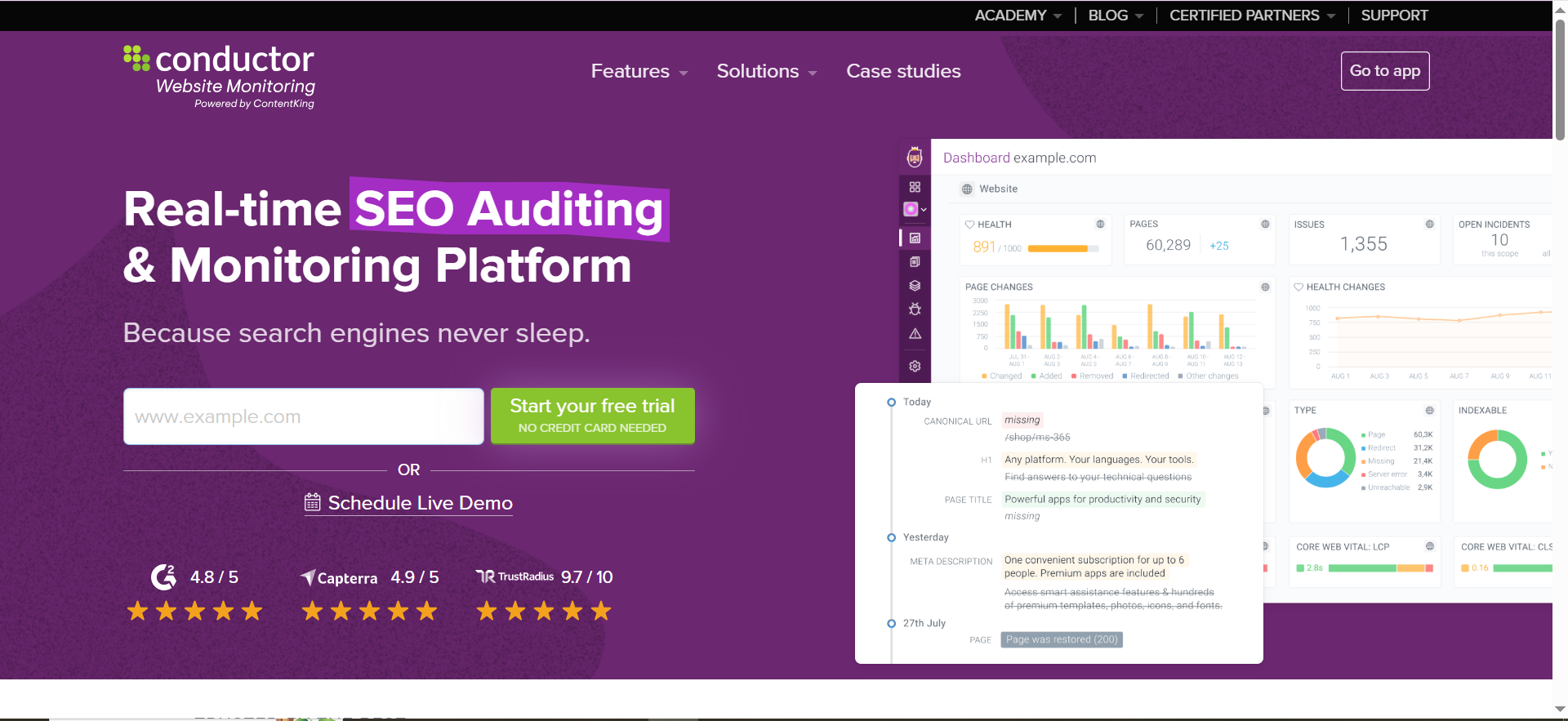
Conductor’s AI search performance product is built for enterprise brands that want to understand, benchmark, and improve their visibility in AI search while connecting it to audience intent, content workflows, traffic, conversions, and bot crawling reports. Its messaging is explicit: do not just monitor mentions, own the AI narrative.
Why teams use it
Conductor is the best Hall AI alternative for organizations that do not want another isolated AI dashboard and instead want AI visibility to live inside a more mature SEO and content operating system. They want AI visibility to live inside a more mature SEO and content operating system. That is Conductor’s advantage. It links visibility analysis to execution, audience understanding, and measurable business outcomes more directly than many standalone AI visibility vendors.
What it’s good for
Conductor is strong for enterprise teams asking questions like:
- Where are we winning or losing in AI search, and why?
- Which personas and intents matter most?
- What content should we create or optimize next?
- How does AI visibility relate to traffic and conversions?
- How are AI bots crawling our site?
When it’s a good fit
Conductor is a great fit when you already have mature search, content, or digital teams and want AI search to plug into those workflows. It is also strong if procurement, governance, and data integrity are major buying factors. The platform emphasizes an API-first data approach for reliability and compliance.
When it’s not a good fit
It is probably not the right starting point for very small teams or anyone looking for a cheap self-serve Hall replacement. The platform is clearly aimed at enterprise marketing organizations, not casual users.
How to use it
A practical path is to use Conductor to map AI visibility by audience and intent, identify where competitors dominate, and then push opportunities straight into content workflows, which pairs well with TRM’s guide to structuring AEO content for the AI era. Because it also surfaces AI referral traffic, conversion insights, and bot crawling reports, Conductor can help create a tighter loop between visibility, execution, and real-time dashboards for leadership.
Key capabilities
The features page highlights mention and citation tracking, audience and intent insights, brand sentiment analysis tied to cited sources, competitive market share, tracking customization, broad multi-engine coverage, topic and prompt analysis, content workflow integration, traffic and conversion insights, and AI bot crawling reports, which makes this sentence a strong fit for best AI tools for share of voice in AI answers.
Pricing
Conductor’s pricing is not publicly listed and is available by quote. The company says pricing varies based on your configuration and products selected.
Free tier?
Conductor doesn’t offer a public free tier, but it does promote a free trial.
Downsides / limitations
For many buyers, the limitation is not capability but complexity. Conductors are strongest when AI visibility is one part of a larger search and content program. If your immediate need is just to monitor AI citations and act on a few technical issues, something narrower may be faster to roll out.
📋 Get Listed / Advertisement
We update this guide monthly. Want your tool featured? Contact: [email protected].
Why teams look for a Hall AI alternative
Hall does several things well, and the product clearly covers the basics most buyers expect now: how your brand appears in AI answers, where your site gets cited, and how AI agents are interacting with your site across multiple AI platforms. Its positioning is clean, the free report reduces friction, and the product clearly covers the basics most buyers expect now: how your brand appears in AI answers, where your site gets cited, and how AI agents are interacting with your site. It also monitors multiple AI platforms including ChatGPT, AI Mode, AI Overviews, Perplexity, Gemini, Copilot, Claude, Meta AI, and DeepSeek.
That makes Hall attractive for teams early in their AI visibility journey because you can get a quick read on how AI systems represent your brand without committing to a heavyweight platform first, which matters if you are still building an AI visibility strategy.
But as programs mature, three common gaps tend to show up.
First, monitoring alone stops being enough. Once a dashboard shows weak presence or low citation share, the next question is always, “What exactly should we fix?”, which is why it helps to pair this section with a guide on AI citation gap analysis tools. Some alternatives put much more emphasis on prioritized recommendations, content actions, or site delivery improvements. Scrunch and Conductor are especially explicit about that action layer, while AthenaHQ and Profound also lean into optimization workflows beyond tracking.
Second, some teams need a stronger enterprise operating model. That can mean RBAC, SSO, multi-brand support, integrations, APIs, or governance. Scrunch highlights SOC 2 Type II, RBAC, and Data API support; AthenaHQ highlights RBAC and unlimited seats; Conductor is clearly designed for enterprise environments and ties AI visibility into broader marketing systems.
Third, many teams want an easier bridge from AI visibility into the systems they already use, especially when they need AI answer visibility data to connect with content, SEO, reporting, traffic, conversions, and ongoing optimization. Some buyers are not trying to buy a standalone GEO dashboard forever because they want AI answer visibility data to connect with content, SEO, reporting, traffic, conversions, and ongoing optimization.
That is why Conductor and, in a different way, LLMrefs can be compelling. Conductor connects AI visibility to content workflow and business outcomes, while LLMrefs makes the category easier to adopt for SEO-minded teams by using keywords as the organizing model.
Hall AI vs these alternatives
Here is the clearest way to think about the landscape.
Hall AI is a solid entry and mid-tier visibility product. Its strengths are visibility into answers, citations, and AI agent activity, plus a low-friction free entry point.
Scrunch AI is the strongest move if your issue is not “we need another dashboard” but “we need clearer fixes and a better AI-ready delivery layer.”
Profound is the move if leadership sees AI search as a strategic channel and wants a larger enterprise platform with broader AI-native workflows.
AthenaHQ is a strong middle option for teams that want broad coverage, technical and content diagnostics, and AI-assisted optimization without necessarily buying the biggest enterprise platform in the market.
LLMrefs is the best budget-conscious and SEO-friendly choice. It is the easiest to adopt if your team still wants to work from keyword lists and standard reporting habits.
Conductor is the best fit if you want AI visibility integrated into an enterprise search and content ecosystem, with strong business and workflow alignment, which makes this sentence a strong match for reporting AI visibility to leadership with real-time dashboards.
How to choose the right Hall AI alternative
A simple framework works better than feature bingo.
If your team’s biggest problem is “we know we’re underrepresented in AI answers, but we do not know what to fix,” start with Scrunch AI or AthenaHQ and use a more structured AI search visibility strategy.
If your biggest problem is “we need enterprise-grade AI search intelligence that leadership will take seriously”, look at Profound or Conductor.
If your biggest problem is “we want an affordable way to start measuring and improving AI visibility without changing our whole workflow,” pick LLMrefs and build around the kind of buyer guide that helps you compare tools by fit rather than hype.
If your biggest problem is “we are still early, and we just need visibility plus a free starting point,” Hall may still be fine, but this sentence also supports an internal link to best AI visibility tools with prompt templates. But once you need repeatable operational next steps, most teams outgrow monitoring-only mindsets quickly.
A practical evaluation framework for AI visibility tools
When evaluating any Hall AI alternative, do not just ask what the dashboard measures. Ask these five questions:
1. Does it show outputs, causes, and next steps?
A good tool should not stop at “your visibility is down” because it should help explain whether the issue is demand coverage, source trust, crawlability, structure, messaging clarity, or competitive pressure, making this sentence a natural match for PR and brand messaging for AI visibility.
2. Does it fit how your team actually works?
Some teams need prompt-first workflows, while others need keyword-first workflows, which makes this a useful place to link to which platform excels in AI visibility metrics. Some need API access and RBAC. Others just need exports and a clean UI.
3. Can it connect monitoring to execution?
The more mature your program gets, the more important this becomes, because visibility data without content, technical, or reporting workflows usually becomes shelfware, which pairs well with AI strategic visibility.
4. Is pricing aligned with your stage?
A great enterprise platform can still be the wrong decision for a growth-stage team. A cheap starter tool can also become expensive if it slows down action.
5. Does it help you improve citation eligibility, not just watch citations?
This is the most important question in the category. The point is not merely to observe what AI systems cite, but to become more citable.
Common mistakes buyers make in this category
The first mistake is buying an AI visibility tool like it is just a new rank tracker, because AI answer visibility is related to SEO but not identical, which makes this a useful place to link to TRM’s AI Overview SEO BOFU case study.
The second mistake is overvaluing surface count because more engines tracked is good, but it is not enough, so this sentence fits naturally with AI visibility metrics. A tool that tracks everything poorly is less useful than one that gives you fewer surfaces plus better diagnostics and actionability.
The third mistake is skipping implementation planning, because the best platform will still disappoint if nobody owns prompt sets, content updates, crawl fixes, and monthly reporting, which makes this a strong fit for most effective strategies for AI visibility enhancement.
The fourth mistake is choosing solely on price. Cheap monitoring can be expensive if it delays the fixes that actually move brand visibility in AI results.
Absolutely. Here are ready-to-paste H2 sections for those three query fan-out terms.
Hall AI competitors
The main Hall AI competitors are Scrunch AI, Profound, AthenaHQ, LLMrefs, and Conductor. Hall is a solid option for tracking how your brand appears across AI platforms and offers a free plan, but many teams look at competitors when they want deeper optimization workflows, stronger enterprise controls, or tighter links between monitoring and execution.
Among these, Scrunch AI is the strongest competitor for teams that want clear action after tracking visibility. Profound and Conductor are better suited to larger enterprise programs, while AthenaHQ offers a strong middle ground with optimization features, and LLMrefs is the simplest budget-friendly option for SEO-led teams.
Affordable Hall AI alternative
If budget is a major factor, LLMrefs is the most affordable Hall AI alternative in this list. It offers a free entry point and positions itself around keyword rankings, citations, competitor benchmarking, and AI search tracking, which makes it a practical choice for smaller teams and agencies that want AI visibility without committing to enterprise software.
Another affordable option is Scrunch AI if your team can justify paying for stronger optimization and diagnostics. Its pricing starts at $250/month, which is higher than entry-level tools but still more accessible than enterprise-only platforms with custom pricing.
Enterprise Hall AI alternative
For larger organizations, the best enterprise Hall AI alternative is usually Profound or Conductor, depending on what you need. Profound is a strong fit for brands that want an enterprise AI search platform with large-scale prompt, citation, and crawler analysis, plus enterprise security and customized pricing.
Conductor is the better enterprise choice if you want AI visibility tied directly to SEO, content, website monitoring, and revenue-focused workflows. It is built for teams that need AI search data to connect with broader marketing execution instead of living in a standalone dashboard.
FAQs
For most teams that want both monitoring and optimization, Scrunch AI is the strongest overall alternative because it combines visibility tracking, citation analysis, crawl diagnostics, and action workflows in a very direct way. For enterprise organizations, Conductor and Profound are also serious contenders depending on whether you want broader workflow integration or a more AI-native platform vision.
LLMrefs is the best value pick in this group. It offers a free entry point, says paid plans start at $79/month, and uses a keyword-first workflow that is easier for many SEO and growth teams to adopt quickly.
That depends on what “enterprise” means for you. Conductor is strongest if you want AI visibility deeply integrated with enterprise SEO, content, and business reporting. Profound is strongest if you want a broader AI-native platform built around prompt demand, answer engine insights, analytics, and agents.
Yes. Hall is still a legitimate option for teams that want a lower-friction starting point, especially because it offers free entry and covers answer insights, citations, and agent analytics across multiple AI platforms, making it useful for brands starting with an audit of brand visibility on LLMs. It just becomes less compelling once your team needs stronger optimization and operational workflows.
Both matter, but optimization workflows usually create more long-term value. Citation tracking tells you what happened, but optimization workflows help you change what happens next, which is why many mature teams invest in strategies for AI visibility enhancement. That is why many mature teams graduate from simple monitoring into platforms that connect visibility to site fixes, content improvements, and competitive strategy.
Look for prompt or topic analysis, source and citation mapping, competitor benchmarking, crawl diagnostics, technical readiness signals, and clear prioritization if you want a platform that can actually improve brand visibility in AI search. If the platform cannot help your team understand why AI systems are or are not citing you, it will be hard to turn measurement into growth, so this sentence can naturally link to TRM’s guide on how to get cited in AI answers.
Final verdict
Scrunch AI is the best overall Hall AI alternative for most teams. It gives you more than visibility tracking by helping you find issues, improve AI crawlability, and take clear action to increase citations and presence in AI search.
For enterprise teams, Profound and Conductor are stronger fits. AthenaHQ is the best middle-ground option, and LLMrefs is the best budget-friendly choice.
Bottom line: If you want the most complete replacement for Hall AI, pick Scrunch AI.
📋 Get Listed / Advertisement
We update this guide monthly. Want your tool featured? Contact: [email protected].