

Competitor content analysis used to mean “find what they rank for and write something similar.”
In 2026, that’s not enough.
A better goal is: steal the coverage, not the copy, identify the topics, entities, formats, and sources your competitors use to win AI search visibility, then create something more useful, more complete, and easier for both humans and AI systems to cite.
In this guide, you’ll get:
- A quick comparison of the best 5 tools (the tools to pitch for this topic are Semrush, Ahrefs, Similarweb, BuzzSumo, and Thruuu, per the attached planning sheet).
- A repeatable workflow to go from competitors → gaps → briefs → publishing plan.
- A practical framework for “coverage-first” content that can win rankings and increase AI citation likelihood.
📋 Get Listed / Advertisement
We update this guide monthly. Want your tool featured? Contact: [email protected].
Best 5 AI Tools for Competitor Content Analysis (Quick Comparison)
| Tool | Best for | Standout competitor-analysis strength | Pricing / trial (high-level) |
|---|---|---|---|
| Semrush | All-in-one SEO + gap analysis | Keyword Gap + content planning workflows | Public pricing page available |
| Ahrefs | Keyword & content gaps + link context | Content Gap methodology + competitive keyword discovery | Pricing page available |
| Similarweb | Market/traffic benchmarking | AI-powered competitive intelligence + traffic share | Packages vary; competitor intelligence included in Web Intelligence |
| BuzzSumo | What content performs & spreads | Billions of articles/social posts + competitor content research | Pricing page + free trial info available |
| Thruuu | SERP-level coverage + AIO extraction | SERP scrape + AI Overviews snapshot + competitor on-page patterns | Clear low-cost plans + free tier |
📋 Get Listed / Advertisement
We update this guide monthly. Want your tool featured? Contact: [email protected].
1. Semrush
What it does
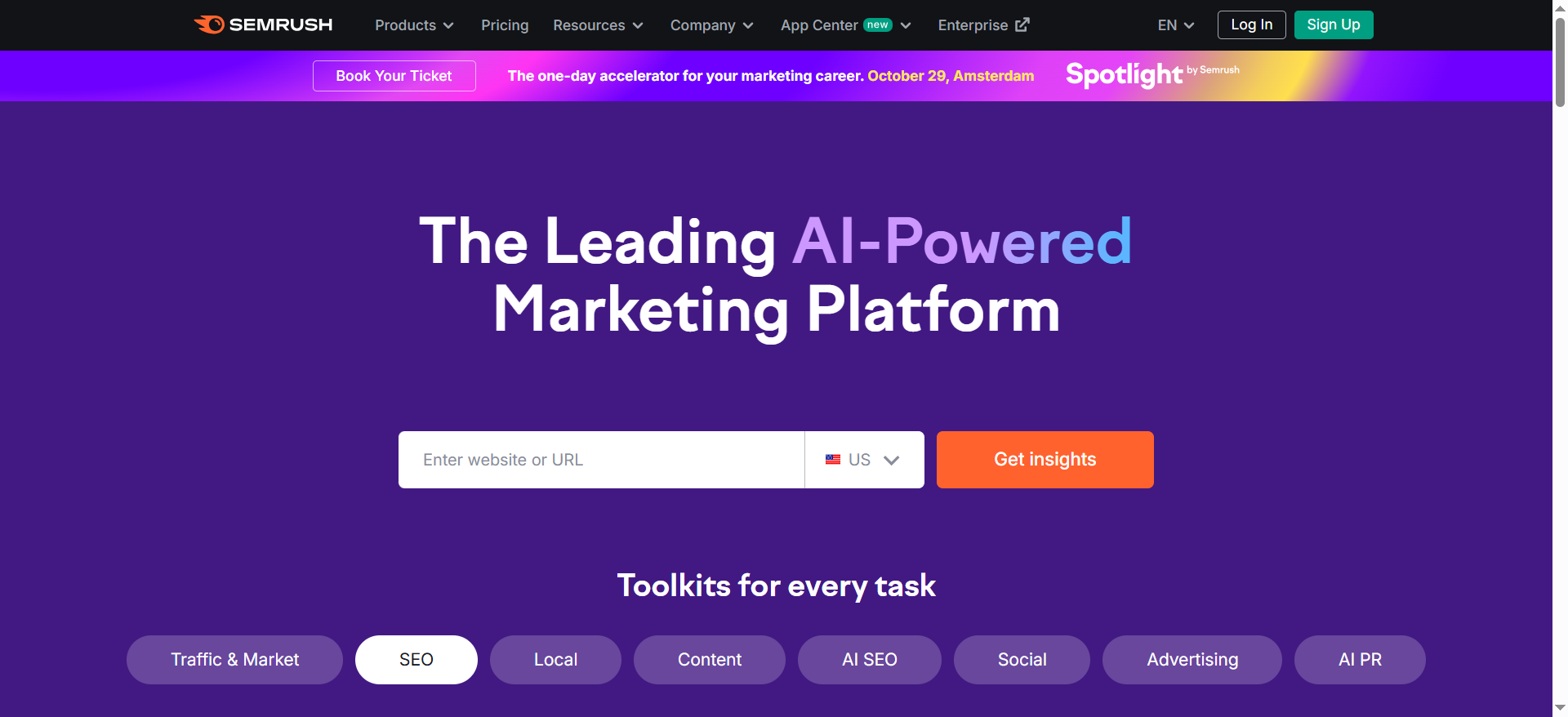
Semrush is a broad SEO and competitive research suite that’s especially strong for gap analysis (what competitors rank and turning findings into a prioritized content plan. Their resources explicitly frame gap analysis as part of modern visibility, including LLM visibility.
Why teams use it
- Fast competitor discovery and side-by-side comparisons
- Strong “from insights → execution” flow (keyword research → clustering → tracking → reporting)
- Useful for agencies managing multiple competitor sets and markets
What it’s good for
- Keyword gap analysis to uncover missing topics quickly
- Building a topic cluster roadmap based on real competitor footprints
- Tracking progress after you publish (rankings/visibility reporting)
When it’s a good fit
- You want one platform to cover research + planning + tracking
- You run content at scale (or manage multiple brands/clients)
- You need repeatable monthly updates for “best tool” pages and competitor monitoring
When it’s not a good fit
- You only need SERP scraping and brief generation (lighter tools may be cheaper)
- You want deep backlink-first workflows (some teams prefer Ahrefs’ link heritage)
How to use it
- Pick true competitors (not just business competitors): those that overlap on your money queries.
- Run Keyword Gap and segment results into:
- “We should have a page” gaps (missing topics)
- “We should upgrade a page” gaps (same topic, weaker coverage)
- Map gaps into clusters (hub page + supporting pages).
- Prioritize by intent + conversion pathway (commercial investigation pages first).
- Track: publish → internal link → monitor rankings → iterate monthly.
Semrush’s Keyword Gap is explicitly positioned as comparing your keyword profile to competitors.
Key capabilities
- Keyword gap comparisons and overlap views
- Competitive research features across SEO and market insights
- Reporting/export for stakeholder-friendly updates
Pricing
Semrush’s pricing starts at $139.95/month for the Pro plan.
Free tier?
Semrush offers a free account with limited daily usage, and it also offers a free trial (availability varies by product/toolkit).
Downsides / limitations
- The breadth can be overwhelming for smaller teams
- Some workflows require process discipline (tagging competitors, maintaining lists)
- Data depth varies by market/industry; validate with spot checks before betting big
2. Ahrefs
What it does
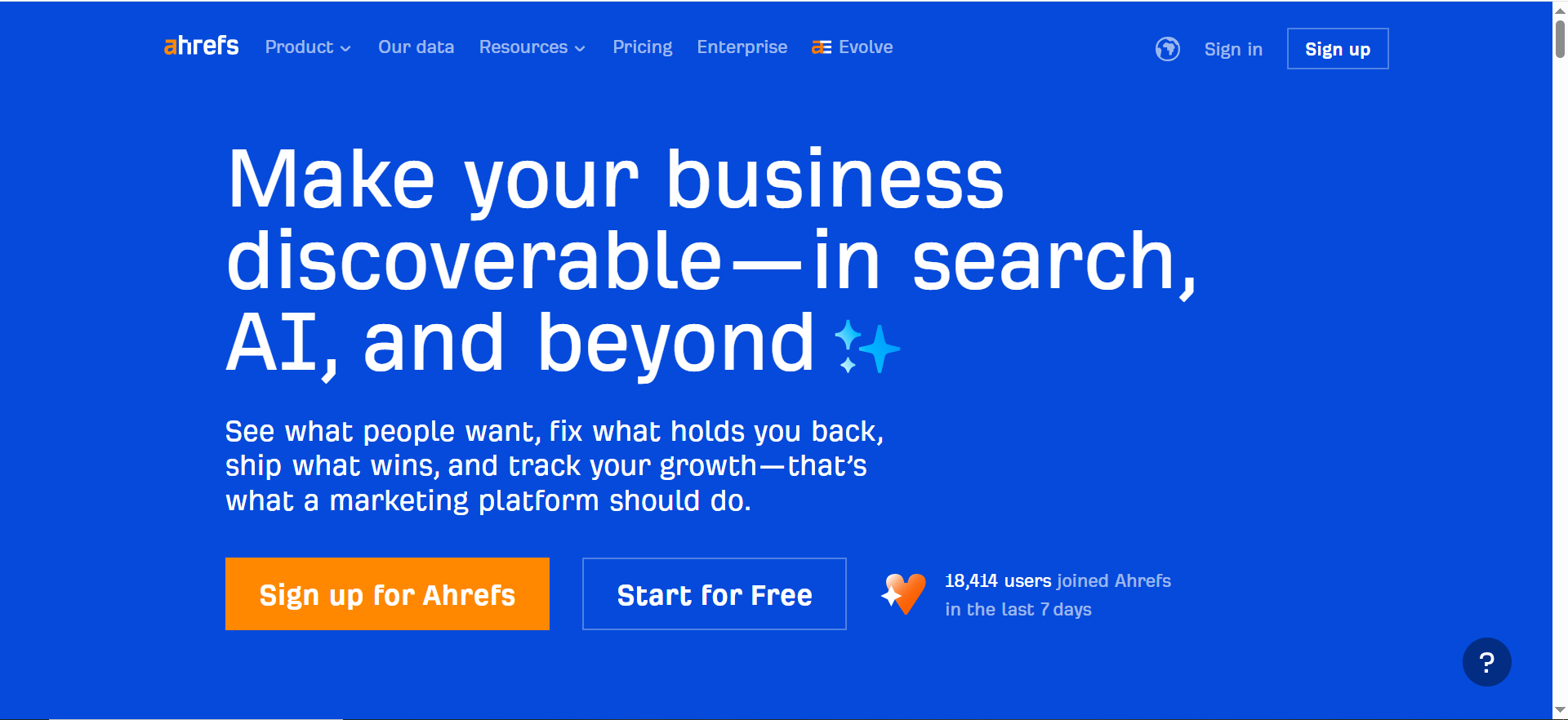
Ahrefs is a competitive SEO platform known for strong keyword and link intelligence, and its Content Gap approach is a classic way to discover what competitors rank for that you don’t. Their own explanation is straightforward: subtract your ranking keywords from competitors’ ranking keywords to reveal what to target.
Why teams use it
- Clean competitive analysis workflows
- Strong support content for implementing gap analysis quickly
- Trusted for linking context and SEO research fundamentals
What it’s good for
- Finding high-confidence keyword gaps across multiple competitors
- Turning gaps into a prioritized “pages we need” list
- Combining content gaps with link analysis to understand why competitors win
When it’s a good fit
- Your primary objective is: “Find what they rank for that we don’t, then build pages.”
- You value a simpler set of competitive views (less suite sprawl)
- You want a strong baseline tool for agencies and in-house SEO teams
When it’s not a good fit
- You need market/traffic share benchmarking (Similarweb is better for that)
- Your main focus is viral distribution and social performance (BuzzSumo is stronger)
How to use it
- Choose 3–5 competitors that overlap on commercial queries.
- Run Content Gap and filter into buckets:
- Competitors rank; you don’t
- Multiple competitors rank (higher confidence)
- Convert the best gaps into briefs: intent, angle, subtopics, supporting pages.
- Add a link/context layer: which pages earn links for that topic and why?
Ahrefs describes the Content Gap tool and its filters (any competitor vs at least X vs all) and why it’s a quick way to find target keywords.
Key capabilities
- Content Gap / competitive keyword discovery
- Complementary competitive tools (site exploration, content exploration, etc.)
- Educational resources for execution and templates
Pricing
Ahrefs’ pricing starts at $29/month for the Starter plan.
Free tier?
Ahrefs offers a free tier via Ahrefs Webmaster Tools, and it doesn’t offer a free trial.
Downsides / limitations
- If you need stakeholder-friendly “market narrative reporting” (share of traffic, channel mix), it can feel SEO-only
- Competitive content analysis still requires human judgment on angle and uniqueness (tools can find gaps; they can’t guarantee differentiation)
3. Similarweb
What it does
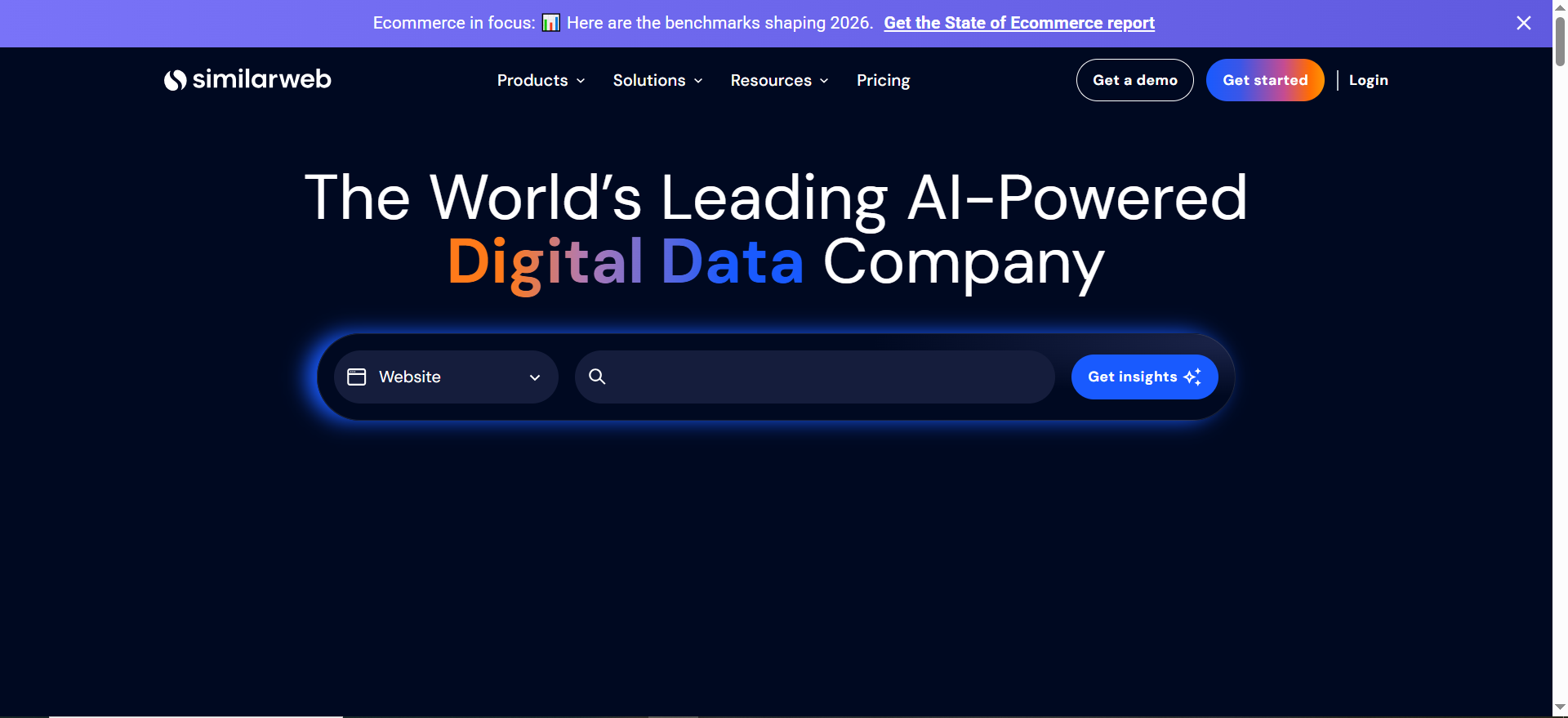
Similarweb positions itself as an AI-powered competitive intelligence platform for tracking competitor performance and market shifts, more about who’s winning the market and where traffic comes from than purely “which keywords.”
Why teams use it
- Adds “market reality” to SEO-only analysis
- Helps answer executive questions like: Which competitor is growing fastest? Which channels drive their growth?
- Useful for category pages, partnerships, and positioning decisions
What it’s good for
- Benchmarking competitor websites: relative traffic, channel mix, and trends
- Identifying “hidden competitors” that share your audience, even if they don’t share your exact keywords
- Supporting content strategy with market context (what topics/channels likely drive acquisition)
When it’s a good fit
- You’re planning content around category leadership and want to tie it to market shifts
- You need competitive intelligence beyond SEO (paid, referral, etc.)
- You work with leadership teams that need narrative + visuals (not just keyword exports)
When it’s not a good fit
- You want the cheapest way to do content gap analysis
- You primarily need SERP scraping and page-level structure extraction (Thruuu may be faster)
How to use it
- Start with your known competitors; validate who truly overlaps.
- Identify which channels drive meaningful growth.
- Use findings to shape content bets:
- If referrals dominate: build linkable assets
- If search dominates: invest in clusters + on-page upgrades
- If paid dominates: build comparison/alternatives pages for conversion
Similarweb’s own pages explain competitor intelligence and that it’s included across Web Intelligence packages, with flexible plans.
Key capabilities
- AI-powered competitor analytics positioning
- Website analysis and broader market intelligence framing
Pricing
Similarweb’s Web Intelligence pricing starts at $125/month billed annually (or $199/month billed monthly).
Free tier?
Similarweb doesn’t offer a free tier for full Web Intelligence, but it does offer a try-for-free trial for paid packages.
Downsides / limitations
- Pricing and packaging can be less transparent than SEO tools (often sales-led)
- For hands-on SEO execution (gap lists → briefs → SERP structure), you’ll still want a dedicated SEO/SERP tool
4. BuzzSumo
What it does
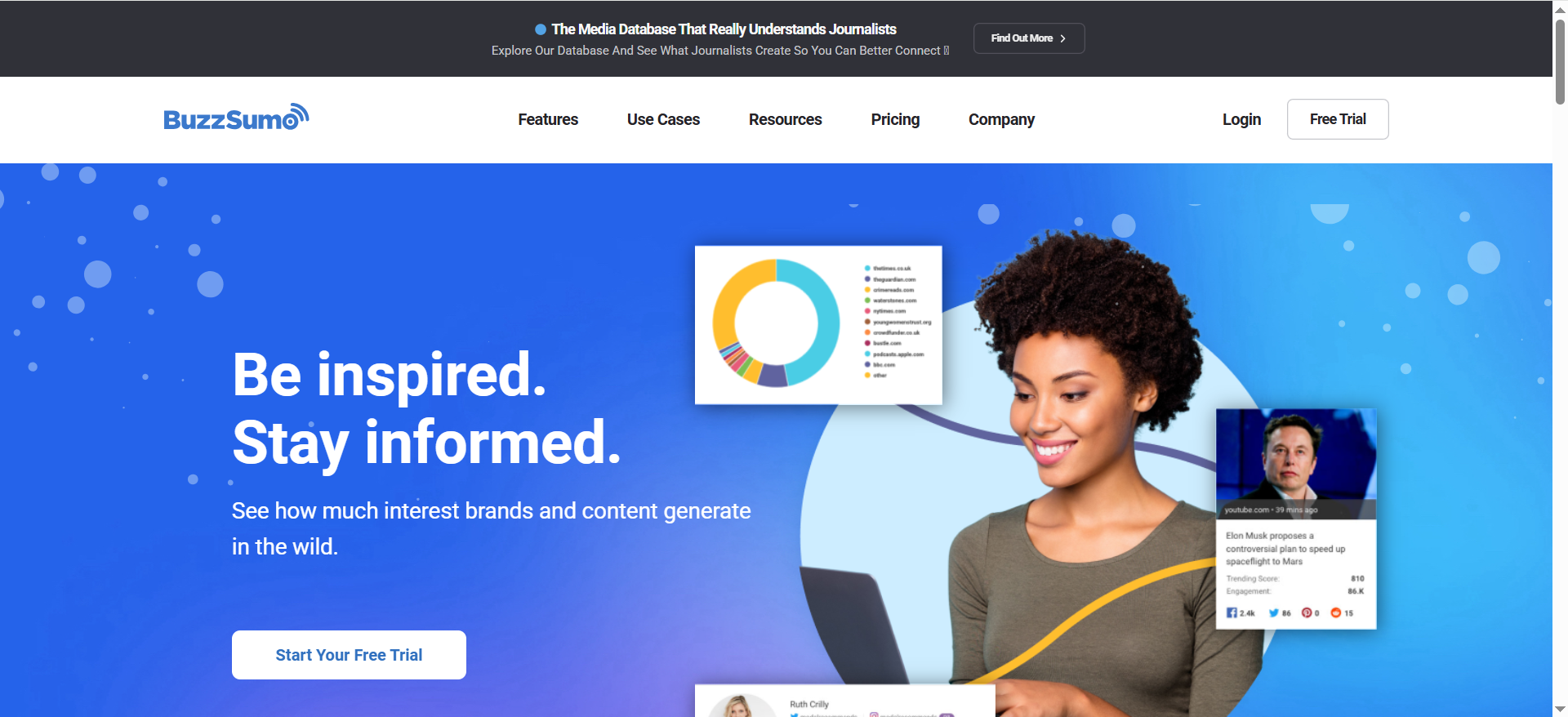
BuzzSumo is built for content research: finding what performs, what spreads, who links, and what competitors publish that gets traction. They describe scanning billions of articles and social posts to surface insights.
Why teams use it
- It answers a crucial competitor question SEO tools don’t: what content gets shared and referenced
- It supports PR + content + SEO collaboration (discoverability + amplification)
- It’s excellent for “angle discovery” so you don’t publish yet another samey post
What it’s good for
- Discovering competitor content that earns engagement and links
- Finding formats that work (lists, research, contrarian takes, tool pages)
- Building “why this angle will win” evidence for stakeholders
When it’s a good fit
- You’re trying to differentiate, not just match SERP coverage
- You need to validate a topic by performance signals
- You’re building linkable assets (original data, benchmarks, reports)
When it’s not a good fit
- You need classic keyword gap analysis as the primary workflow
- You want SERP structural analysis (headings, word counts, PAA extraction) as your main output
How to use it
- Plug in competitor domains and isolate their best-performing content.
- Sort by: topic, format, engagement, and recency.
- Identify patterns:
- Which themes consistently win?
- Which headlines/angles repeat?
- What’s missing that you can cover better?
- Turn winners into “coverage modules”: definitions, templates, examples, tools, checklists.
BuzzSumo’s help content even outlines steps to analyze competitor publishing strategy and which networks/formats work.
Key capabilities
- Content research/discovery at massive scale
- Competitor intelligence positioning and workflows
Pricing
BuzzSumo’s pricing starts at $199/month (annual billing).
Free tier?
BuzzSumo doesn’t offer a free tier, but it does offer a free trial (30 days or 50 searches, whichever comes first).
Downsides / limitations
- It’s not a replacement for SEO gap tooling; it’s a complement
- If your team doesn’t act on insights (briefs + publishing + updating), research can become “interesting but unused”
5. Thruuu
What it does
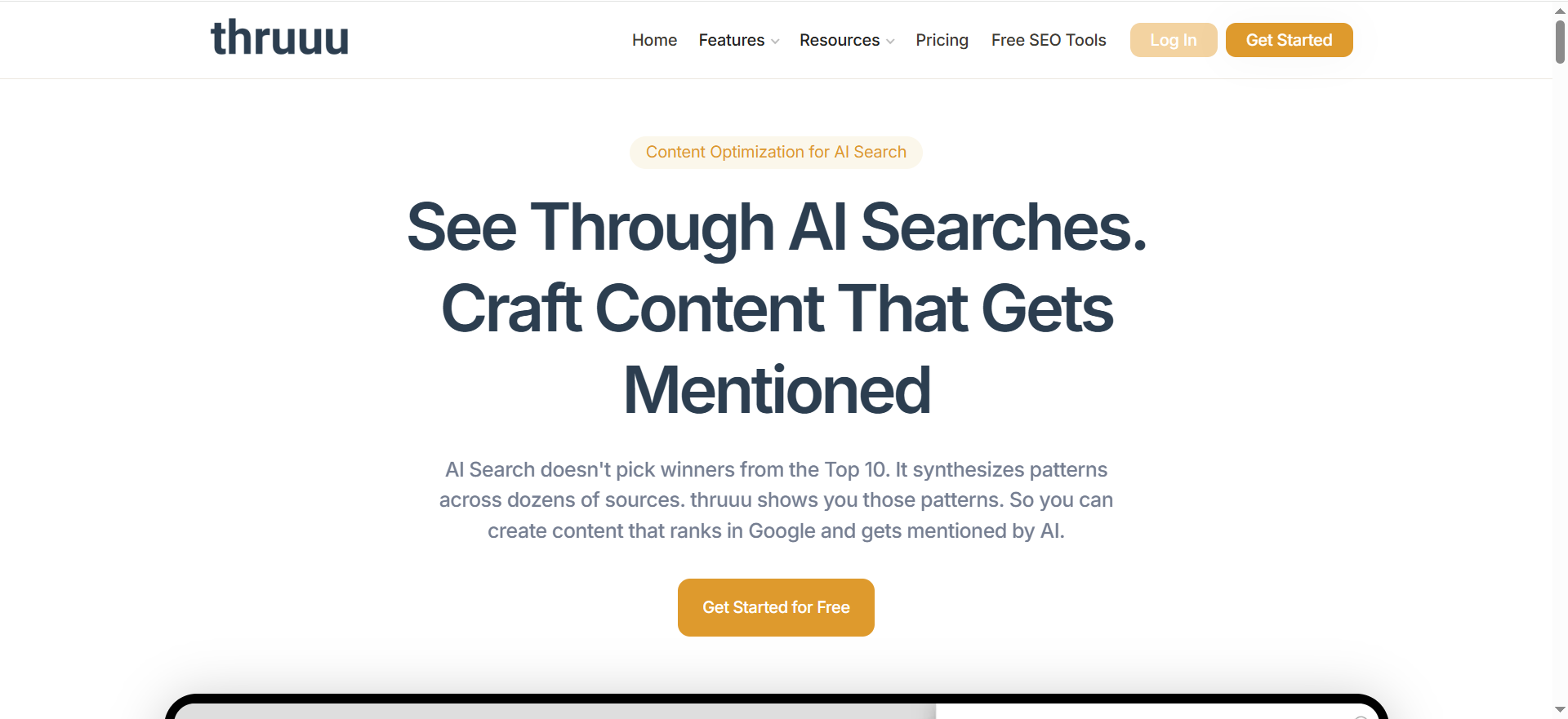
Thruuu is a SERP analysis and content optimization tool that leans into extracting what’s on the SERP, including structured competitive insights like titles, meta descriptions, word counts, headings, PAA, and (notably) AI Overviews snapshots.
Why teams use it
- Fast “SERP reality” extraction: what actually ranks and how those pages are structured
- Great for turning competitor pages into measurable patterns (coverage, headings, formats)
- Helpful for “coverage-first” approaches where you want to match required subtopics, then differentiate
What it’s good for
- SERP overlap and competitor identification at the query level
- On-page pattern analysis across many ranking URLs
- Capturing AI Overviews snapshots and cited brands/sources (when present), which is increasingly relevant for AI visibility
When it’s a good fit
- You publish a lot of SEO pages and need repeatable briefs
- You want a low-cost way to extract SERP patterns and AIO data
- You already have a keyword tool but need better “what should the page include?” intelligence
When it’s not a good fit
- You need deep backlink context and keyword databases (pair it with Ahrefs/Semrush)
- You need market/traffic share intelligence (Similarweb is better)
How to use it
- Run a SERP analysis for a target query (or a cluster).
- Export common patterns: dominant intent, formats, headings, wordcount ranges.
- Identify coverage gaps: frequent topics competitors include that you don’t.
- Draft a brief: required sections + unique angle + examples + internal links.
- If AI Overviews appear, capture: cited sources + which brands/entities show up.
Key capabilities
- SERP scraping for competitive on-page signals
- PAA extraction and intent detection
- AI Overviews snapshot extraction and brand mention tracking (as positioned on product pages)
Pricing
Thruuu’s pricing starts at $13/month for the Starter plan
Free tier?
Thruuu offers a free tier that includes 10 one-time credits.
Downsides / limitations
- SERP extraction is only as good as your chosen queries and competitor set
- You still need strategy: prioritization, differentiation, and updates (tools don’t replace taste)
“Steal the coverage, not the copy”: A modern competitor analysis framework
The planning note for this topic is essentially: “Steal the coverage, not the copy.” That’s the right mental model.
Here’s what “coverage” actually means in practice:
1) Coverage = the topics you address
Classic gap analysis: keywords and clusters your competitors own that you don’t.
Output: a prioritized list of pages you should have.
2) Coverage = the entities and subtopics you include
Many pages fail not because the idea is wrong, but because they miss the sub-entities search engines and LLMs expect (use cases, integrations, standards, workflows, edge cases).
Output: a checklist of must-include sections.
3) Coverage = the formats that win the SERP
Sometimes the SERP rewards a specific format:
- “Best tools” list + comparison table
- Template + downloadable checklist
- Step-by-step workflow + examples
- Benchmarks/research
Output: a format decision you can defend.
4) Coverage = the proof and references that make you cite-worthy
AI systems and humans both reward evidence: screenshots, data, clear steps, and credible references. The SOP explicitly calls for “evidence hooks” (places to cite, show a table, or provide an example).
Output: a brief that includes proof points and where you’ll place them.
5) Coverage = distribution and link context
Competitors win because content gets referenced, linked, and reused, not only because it exists.
Output: a plan for promotion + internal linking + linkable assets.
What to measure (KPIs) and how to report results
Competitor content analysis should produce measurable outputs:
Output KPIs (leading indicators)
- gaps found, broken down by bucket (missing / weak / coverage)
- briefs produced
- clusters planned
- Time-to-brief (how quickly research becomes a writer-ready brief)
Performance KPIs (lagging indicators)
- Rankings and organic traffic to new/updated pages
- Growth in non-branded impressions
- Links earned to linkable assets (if applicable)
- Conversions from content to pipeline (booked calls, lead captures, etc.)
AI visibility-adjacent KPIs (practical proxies)
Even if AI citations are hard to measure perfectly, you can still track:
- Appearance of your brand/domain in AI Overviews (when your tooling supports it)
- Presence of your brand in “source lists” and cited domains for relevant queries
- Changes in SERP features (more AI results, different layouts)
Thruuu highlights extracting AI Overview snapshots and cited brands/sources, which makes it a useful proxy tool where available.
Common mistakes (and how to avoid them)
Mistake 1: Copying competitor pages instead of copying coverage
Copying structure blindly leads to sameness.
Instead: copy (topics/entities) and add differentiation.
Mistake 2: Choosing the wrong competitors
If you pick “business competitors” that don’t share SERPs, your analysis will misloose SERP competitors using overlap and repeated presence.
Mistake 3: Treating gap lists as a strategy
A gap list is not a roadmap.
Instead: cluster gaps and map internal linking so your site builds topical authority.
Mistake 4: Skipping proof and “evidence hooks”
The SOP explicitly calls for evidence hooks and comparison tables near the top.
Instead: bake screenshots, examples, and tables into briefs so content becomes cite-worthy.
Mistake 5: Not updating “best tools” posts
Competitor and tool landscapes shift constantly.
Instead: schedule monthly refreshes and keep the comparison table current.
What is competitor content analysis (and how is it different from keyword research)?
Competitor content analysis is the process of studying what your SERP competitors publish, how their content is structured, and why it wins visibility, then turning those insights into a plan to outperform them. It’s not just “what keywords do they rank for?” It’s what coverage, format, and proof their content provides that makes it rank (and get cited/shared).
Keyword research, on the other hand, starts with demand: what people search for, how often, and what they likely want. It tells you what topics exist and helps you pick targets.
Competitor content analysis tells you:
- What’s already working in your SERP (and what you must match to compete)
- What competitors cover that you don’t (topics, entities, use cases, comparisons, FAQs)
- Which formats dominate (list posts, templates, guides, tools, comparisons)
- Why they win (links, freshness, internal linking, UX, authority, proof)
A simple way to remember it:
- Keyword research = the map (demand + opportunity
- Competitor content analysis = the battlefield report (what wins today and why).
The best strategy uses both:
- Keyword research to select the best opportunities,
- Competitor content analysis to build the best page for that opportunity.
How do you identify competitor topic clusters (not just single keywords)?
A topic cluster is a connected set of pages that collectively covers a theme:
- a hub page (the main “big” topic)
- multiple supporting pages (subtopics, how-tos, comparisons, use cases)
To identify competitor clusters, don’t stop at “what keywords they rank for.” You’re looking for how they’ve organized knowledge and how their pages support each other.
Step-by-step: how to find clusters
- Start with a seed topic
- Pick 1 “hub” keyword (e.g., competitor analysis tools, content gap analysis, AI SEO tools).
- Collect competitor top pages around that seed
- Use a tool (Semrush/Ahrefs) to pull top organic pages for competitor domains related to that topic.
- Group by intent (not just words)
- Cluster pages based on the job-to-be-done:
- Definitions / beginner guides
- Step-by-step workflows
- Tool comparisons (“best”, “alternatives”, “vs”)
- Templates / checklists
- Use cases by role or industry
- Look for internal linking patterns
- A real cluster usually has:
- navigation or “related reading” blocks
- repeated internal links to a core hub page
- category or pillar pages that funnel authority
- Spot recurring subtopics
- If multiple competitor pages frequently include the same section headings (e.g., “metrics,” “content gaps,” “SERP overlap,” “entity coverage”), that’s a sign those are required spokes in the cluster.
What a competitor cluster looks like (example)
Hub: Best competitor content analysis tools
Spokes:
- How to do content gap analysis
- Competitive keyword gap analysis (step-by-step)
- How to find content formats that rank
- Backlink context analysis for content prioritization
- Competitor distribution channel analysis
- Content brief template for competitor-driven content
Your goal isn’t to copy their cluster. It’s to:
- build the cluster they should have built
- connect pages better
- add better proof/examples
How do you evaluate competitor backlink context for content prioritization?
Backlinks aren’t just “how many links does this page have?
Backlink context answers: why did people link to it and what does that signal about what you should create?
What “backlink context” means
For any competitor page, you want to know:
- What type of page earned links? (guide, tool, study, template, stats)
- What specific section gets referenced? (definition, data point, framework, table)
- Who links to it? (industry blogs, universities, directories, partners)
- What anchor text is used? (tells you what it’s known for)
How to evaluate it in a prioritization-friendly way
Use this quick scoring approach:
A) Linkability score (0–3)
- 0 = no clear reason anyone would cite it
- 1 = helpful guide, but generic
- 2 = unique framework, template, or resource
- 3 = original data, benchmark, or tool
B) Authority transfer score (0–3)
- 0 = links are mostly low-quality
- 1 = mixed quality
- 2 = multiple relevant industry sites
- 3 = consistently high-quality, relevant sites
C) Replicability score (0–3)
- 0 = they earned links for brand reasons you can’t replicate
- 1 = partially replicable
- 2 = replicable with effort (better asset + outreach)
- 3 = highly replicable (template, data, resource)
How this informs content prioritization
- If a competitor’s “how-to guide” earns links → consider creating a better guide + a downloadable template.
- If a competitor’s “benchmark/report” earns links → prioritize original research as a linkable asset.
- If a competitor’s “statistics page” earns links → create a regularly updated stats hub.
The key insight:
Backlinks often reveal what content deserves to exist, not just what ranks.
How do you find entities/subtopics competitors cover that you don’t?
This is one of the biggest “why we can’t rank” reasons:
You wrote about the main topic, but you missed the supporting entities that define completeness.
What counts as an entity/subtopic?
- use cases (role-based, industry-based)
- tools, platforms, standards, frameworks
- integrations
- metrics and terminology
- workflows and step-by-step processes
- edge cases and limitations
- comparisons and alternatives
How do you turn competitor insights into a content brief writers can execute?
The biggest failure mode: doing great research and producing a messy spreadsheet nobody uses.
A “writer-ready” brief must translate competitor insights into:
- what to write
- how to structure it
- what to include
- what makes it better
A competitor-driven brief template (writer-ready)
1) Page goal + primary intent
What is the reader trying to do? (buy, compare, learn, implement)
2) Primary keyword + supporting topics
Include cluster context: hub page vs supporting page.
3) SERP summary (what wins today)
- dominant formats (list, guide, template)
- typical length range
- common section themes
4) Competitor coverage checklist (must-include sections)
List required H2/H3 sections and the entities/subtopics they expect.
5) Differentiation plan (your “why better”)
Pick 1–2:
- decision tree
- framework
- original data
- templates/checklists
- real examples/screenshots
6) Proof hooks
Where you’ll add credibility:
- a comparison table
- examples and screenshots
- mini case study
- references to standards/data
7) Internal links
- which existing pages to link out to
- which new pages this should link to (cluster support)
8) CTA / conversion path
What should a reader do next?
Time-to-brief goal
If your process is healthy, you should be able to go from research → brief in:
- 30–90 minutes for updates/refreshes
- 1–3 hours for net-new high-stakes pages
Which tools are best for competitive traffic benchmarking?
Traffic benchmarking answers questions like:
- Who is growing fastest?
- Where does their traffic come from?
- Is SEO their main acquisition channel or just one piece?
Best pick for traffic benchmarking
Similarweb
It’s purpose-built for competitive intelligence and market-level comparisons, especially channel mix and relative performance trends.
How to use traffic benchmarking in content strategy
- If competitor growth is driven by referrals: prioritize linkable assets + directory/partner strategies.
- If driven by social: prioritize shareable formats and distribution hooks
- If driven by search: build clusters and refresh them consistently
The key is that traffic benchmarking helps you avoid SEO tunnel vision and build a strategy that matches how competitors actually win.
FAQs
What is competitor content analysis?
What’s the difference between keyword gap and content gap?
Which tool is best for pure SEO content gap analysis?
Similarweb is positioned as an AI-powered competitive intelligence platform for tracking competitor performance and market shifts, which is ideal when you need market context beyond SEO rankings.
Which tool is best for discovering content that earns shares and links?
Which tool is best for SERP structure and on-page pattern extraction?
How do I avoid creating “me-too” content if I’m using competitor tools?
How often should I redo competitor content analysis?
What should a good competitor-analysis content brief include?
Are these tools “AI tools” or “SEO tools”?
📋 Get Listed / Advertisement
We update this guide monthly. Want your tool featured? Contact: [email protected].