

Replace Apollo by the job, not by a ranked list. For contact data, Lusha, Cognism and ZoomInfo are the realistic swaps. For enrichment, Clay. For sequencing, Outreach. Apollo.io bundles data, enrichment and sequencing, so one tool rarely replaces all three. Decide which job is failing first.
That holds for a team of 10 to 200 people that can name the job failing today. If more than one job is failing, plan two tools, not one.
Most of these tools publish no price, so a trial on your own records settles the choice, not a vendor's accuracy claim.
If you are on the vendor side of a list like this and want your product on it, our SaaS content marketing team builds the comparison pages that buyers read. It is one conversation to see whether it fits.
📋 Get Listed / Advertise
We update this guide monthly. Want your tool featured? Contact: [email protected].
Apollo Alternatives At A Glance
Pick by the job that is failing. The table maps each tool to the Apollo job it takes over and shows what its own pricing page publishes.
| Tool | Apollo Job It Replaces | Published Pricing | Best For |
|---|---|---|---|
| Lusha | Contact data | Free plan with up to 40 credits per month, paid prices not shown | Low-cost contact lookups and a free tier |
| Cognism | Contact data, especially phone numbers | Pricing on request | Phone-verified mobile data |
| ZoomInfo | Contact data with intent signals | Pricing on request | Enterprise data with intent signals |
| Clay | Enrichment | Free plan, Launch at $167 per month, Growth at $446 per month on the plan cards | Enrichment workflows without a fixed database |
| Outreach | Sequencing | Pricing on request | Sequencing teams replacing the engagement layer |
Vendors who want a place on lists like this one can look at our earned mentions on best-of lists service. Buyers should read on, because each tool below gets the same profile so the comparison stays fair.
1. Lusha: Best For Low-Cost Contact Lookups And A Free Tier
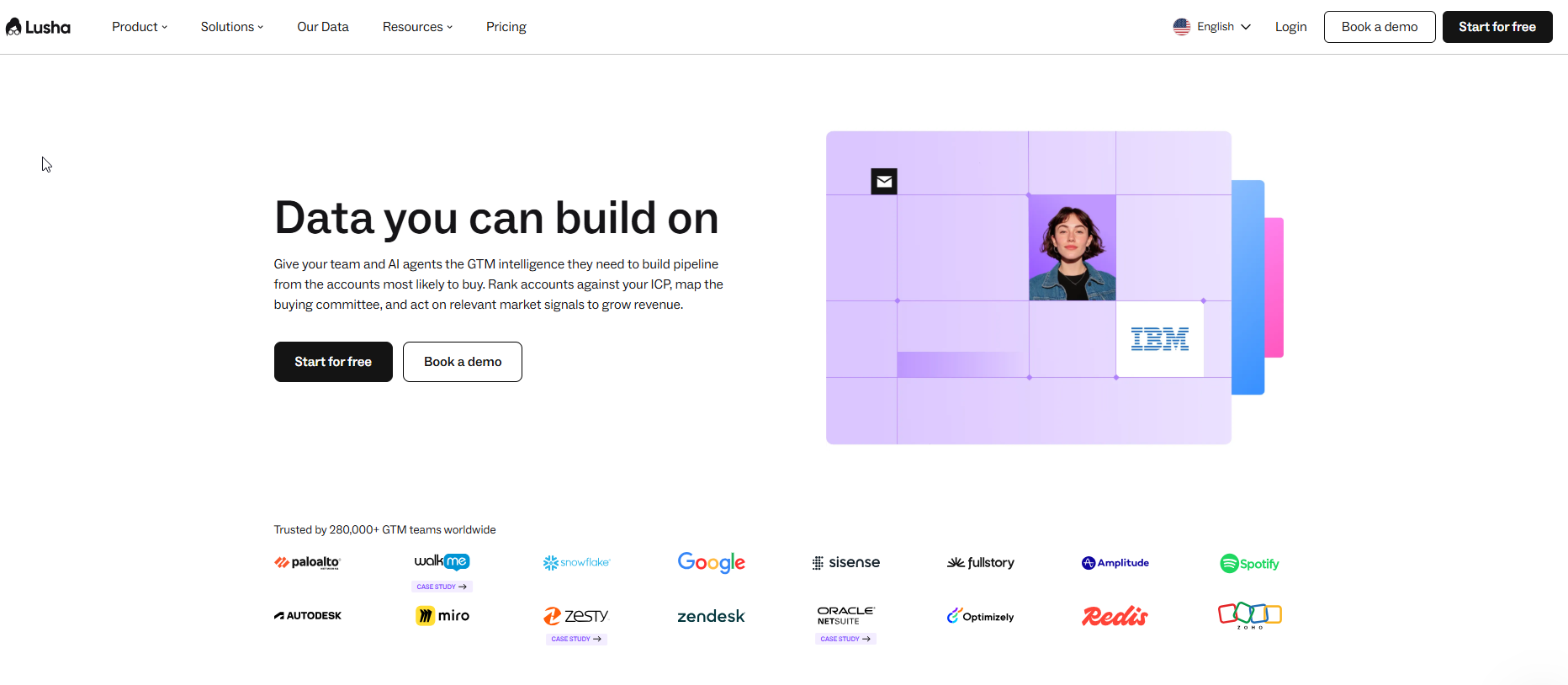
Lusha suits a small team replacing Apollo's contact lookups on a budget. Lusha's pricing page lists a Free plan at $0 with up to 40 credits per month, a browser extension and CRM integrations. One verified email costs 1 credit and one phone number costs 5 credits.
What it does: Lusha finds business emails and phone numbers for the people you want to contact. It does that job and stops there. You do not get a sequencer or an enrichment workflow builder, so it replaces the lookup part of Apollo and nothing else.
Who it is for: Founders, solo sellers and small sales teams who mostly use Apollo to find one email or one phone number at a time. If your reps work from a browser extension and push records into a CRM, the shape fits. If you build lists of thousands, it does not.
Pricing
| Plan | Price | Pricing Basis | What It Includes |
|---|---|---|---|
| Free | $0 | Credits per month | Up to 40 credits per month, browser extension, CRM integrations |
| Starter, Pro and Premium | Pricing on request | Credits | Paid credit plans |
| Scale | Contact sales | Credits | Custom plan |
The free tier is real, which is rare in this category. Lusha lets unused monthly credits roll over up to 2x the plan limit while the subscription is active, so a quiet month does not waste the allowance.
Strengths:
- A free plan you can use on real prospects before any card is entered.
- Emails cost 1 credit, so the free 40 credits stretch to 40 verified emails.
- Rollover up to 2x the plan limit softens uneven months.
- CRM integrations are on the free plan.
Trade-offs:
- A phone number costs 5 credits, so the free plan covers 8 phone numbers a month at most.
- Paid prices are not shown on the page, so you cannot budget without talking to sales.
- No sequencing or enrichment workflows, so a second tool is needed for those jobs.
- Rollover only works while the subscription is active.
Key capabilities:
- Credit-based lookups for verified emails and phone numbers.
- A browser extension for looking up contacts while you browse.
- CRM integrations on every plan listed.
- Monthly credits with rollover.
Good fit:
- A team of one to five that needs contacts and has no tolerance for a sales call.
- A rep who tests a data vendor on a sample before a contract.
Not a fit:
- A team that needs sequencing or workflow enrichment in the same tool.
- A team that needs thousands of phone numbers a month, where 5 credits each adds up fast.
The limitation that matters most is that the paid prices are hidden, so the free plan is the only number you can plan around. For more lightweight lookup tools, see our guide to email finder tools for sales teams.
2. Cognism: Best For Phone-Verified Mobile Data
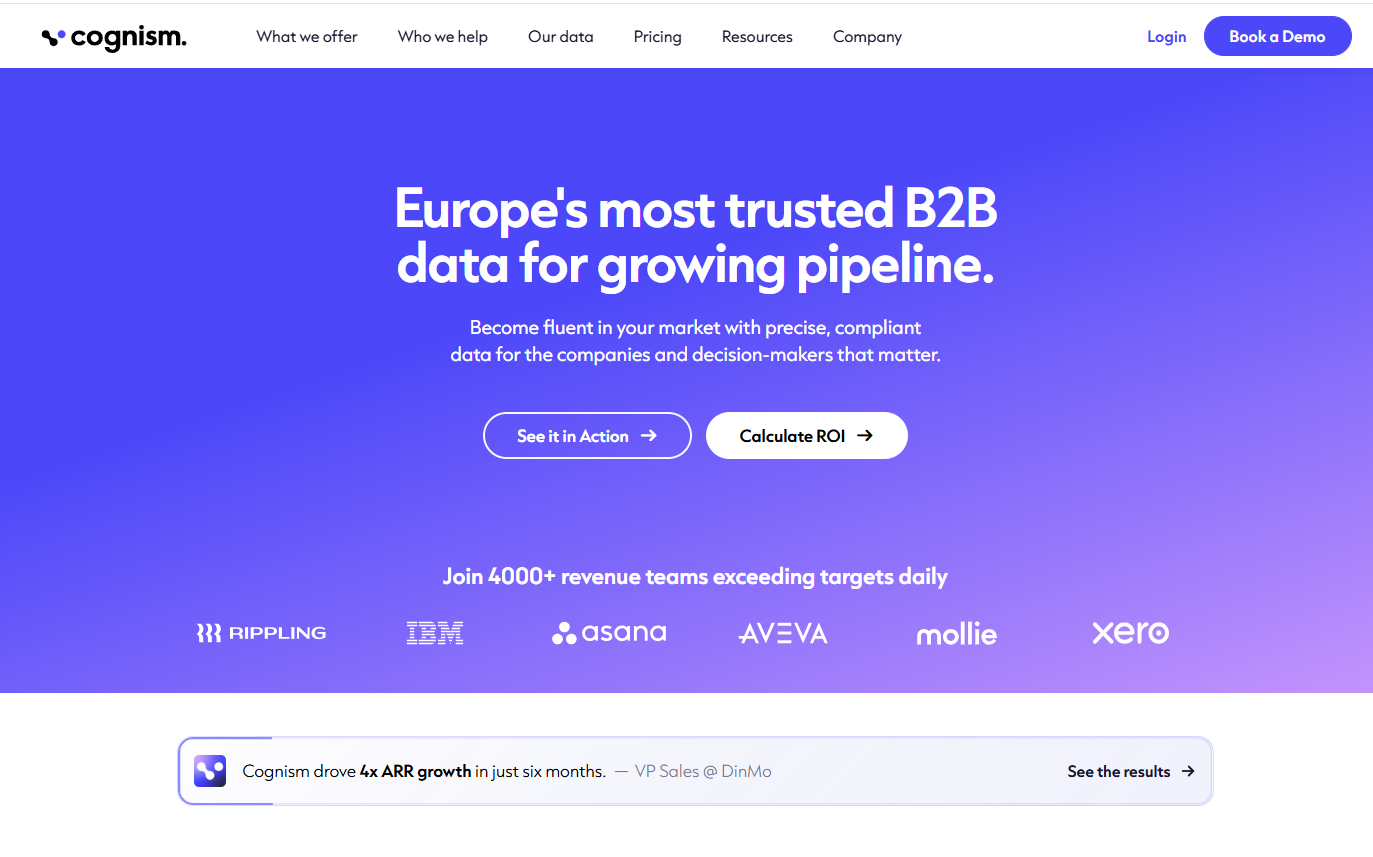
Cognism fits teams whose Apollo problem is phone data. Cognism's pricing page lists a Standard plan with mobile numbers and a Pro plan that adds higher-quality mobile data and on-demand mobile verification. No prices are published.
What it does: Cognism sells contact and company data. Standard covers 5 seats, contact and company data, mobile numbers, firmographic, technographic and signal filters, MCP and API access and CSV export. Pro adds higher-quality mobile data, on-demand mobile verification and buying-intent account prioritisation.
Who it is for: Outbound teams that call as much as they email and are tired of dead numbers. If the complaint in your pipeline review is that reps cannot get anyone on the phone, this is the job Cognism is built to take over. We make no claim about regional coverage here, because the research behind this page did not verify one.
Pricing
| Plan | Price | What It Includes |
|---|---|---|
| Standard | Pricing on request | 5 seats, contact and company data, mobile numbers, firmographic, technographic and signal filters, MCP and API access, CSV export |
| Pro | Pricing on request | Everything in Standard plus higher-quality mobile data, on-demand mobile verification, buying-intent account prioritisation |
| CRM Enrichment | Pricing on request | Standalone product or add-on |
The pricing page names plans and inclusions but no figure. Budget by asking for a quote, and ask for a trial on your own accounts first.
Strengths:
- Mobile numbers are included from the Standard plan, not sold as an afterthought.
- Pro adds on-demand mobile verification, which speaks directly to the dead-number problem.
- MCP and API access are listed on Standard, so the data can feed other tools.
- A CRM Enrichment option exists for teams that want data written into the CRM.
Trade-offs:
- No published prices, so comparison shopping starts with a sales conversation.
- Standard is listed with 5 seats, which suits a team and not a solo seller.
- No sequencing, so the engagement layer needs another tool.
- Quality tiers split across Standard and Pro, so the better mobile data costs more.
Key capabilities:
- Contact and company data with mobile numbers.
- Firmographic, technographic and signal filters.
- On-demand mobile verification on Pro.
- CSV export and API access.
Good fit:
- A sales team that books meetings by phone and wants verified mobile numbers.
- A team that wants an API or MCP connection to its own tooling.
Not a fit:
- A buyer who needs a price on the website before talking to anyone.
- A team whose failing Apollo job is sequencing, not data.
The limitation that matters most is quote-only pricing. If you are still deciding between data vendors, our list of tools for finding company contacts covers more options than the five profiled here.
3. ZoomInfo: Best For Enterprise Data With Intent Signals
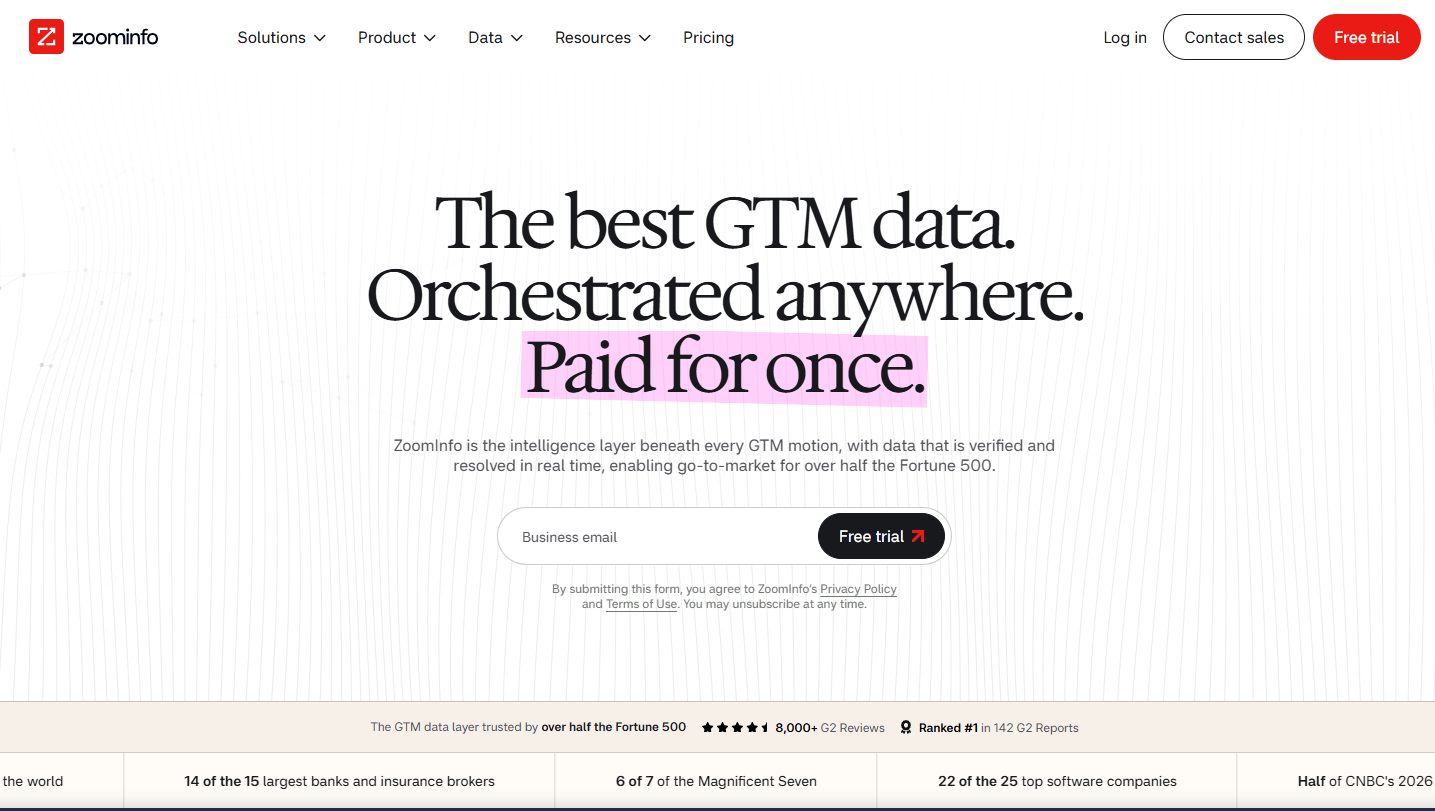
ZoomInfo suits larger teams that want data and intent in one contract. ZoomInfo's pricing page says pricing is quote-based and depends on features, licences and credit usage. Each exported contact or company profile costs one credit.
What it does: ZoomInfo sells contact and company data with intent topics layered on top. The listed plans include Professional, Copilot Advanced and Enterprise, with a free trial offered, plus Marketing Demand, ABM Lite and ABM Enterprise for marketing-led use.
Who it is for: Sales and marketing teams at larger B2B companies that run account-based programmes and want one vendor for contacts, accounts and intent. A founder replacing Apollo to save money will not find that here, because no price is published and the structure points to a contract, not a card.
Pricing
| Plan | Price | What The Page Lists |
|---|---|---|
| Professional | Pricing on request | Listed plan, free trial offered |
| Copilot Advanced | Pricing on request | Listed plan, free trial offered |
| Enterprise | Pricing on request | Listed plan, free trial offered |
| Marketing Demand | Pricing on request | 75K included credits, 25 intent topics |
| ABM Lite | Pricing on request | 100 intent topics |
| ABM Enterprise | Pricing on request | 150K included credits, unlimited intent topics |
The credit rule matters more than the plan names. Because every exported contact or company profile uses a credit, the number of records you pull is what drives the quote.
Strengths:
- Intent topics are part of the plan structure, with 25 on Marketing Demand, 100 on ABM Lite and unlimited on ABM Enterprise.
- Large credit pools are listed, 75K on Marketing Demand and 150K on ABM Enterprise.
- A free trial is offered on Professional, Copilot Advanced and Enterprise.
- One credit per exported record is a simple rule to model.
Trade-offs:
- No prices published for any plan.
- Cost depends on features, licences and credit usage, so the quote moves with your plan.
- Six named plans mean a buyer has to work out which one applies.
- Intent and account-based features you do not use still shape the contract.
Key capabilities:
- Contact and company data, exported on a credit per record basis.
- Intent topics, from 25 up to unlimited depending on plan.
- Account-based plans with large included credit pools.
- A free trial on the Professional, Copilot Advanced and Enterprise plans.
Good fit:
- A larger team that wants data and intent signals from one vendor.
- A buyer happy to negotiate a contract and model credit usage.
Not a fit:
- A small team that wants to start on a free plan.
- A team that wants to see the price before booking a demo.
The limitation that matters most is that no price is published, which makes ZoomInfo hard to compare until you have a quote. Readers who want the whole field can read our ZoomInfo competitors ranked by price and fit.
4. Clay: Best For Enrichment Workflows Without A Fixed Database
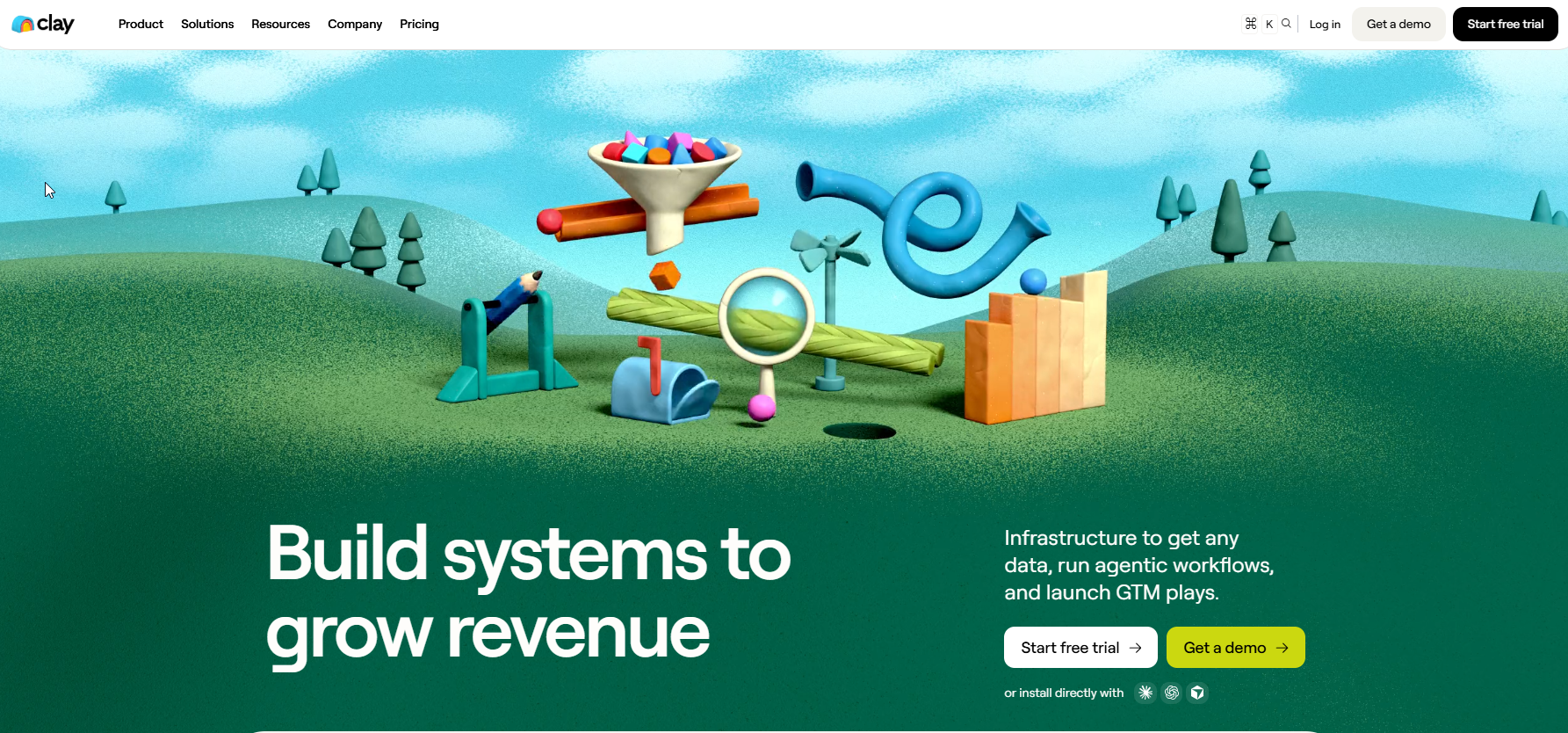
Clay replaces Apollo's enrichment job, not its sequencing. Clay's pricing page lists a Free plan with 500 actions and 100 data credits per month. Launch is shown at $167 per month and Growth at $446 per month.
What it does: Clay pulls data about a company or person from different sources and writes it into tables you control. You build the workflow, and each step uses actions and data credits. Phone number enrichment is included from Launch and CRM auto-sync from Growth.
Who it is for: RevOps and growth people who want to design how a lead gets enriched, rather than accept whatever one database holds. Clay's Launch plan also includes an email sequencer, so a small team may get a basic version of two jobs in one tool. Whether that sequencer matches what Apollo does for you is something to test in a trial.
Pricing
| Plan | Price | Pricing Basis | What It Includes |
|---|---|---|---|
| Free | $0 | Actions and data credits per month | 500 actions, 100 data credits, unlimited seats and tables, up to 200 rows per table |
| Launch | $167 per month on the plan card, 185 starting in the FAQ | Actions and data credits per month | 15K actions, 3K data credits |
| Growth | $446 per month on the plan card, 495 starting in the FAQ | Actions and data credits per month | 40K actions, 6K data credits |
| Enterprise | Custom | Custom | Custom |
Clay's own page disagrees with itself. The plan cards show $167 for Launch and $446 for Growth, while the FAQ states 185 and 495 as starting figures. Annual billing saves 10%. Ask which figure applies to you before you build a budget on either.
Strengths:
- A free plan with unlimited seats and tables.
- Phone number enrichment from Launch, not only on the top plan.
- CRM auto-sync from Growth.
- Action and credit allowances scale from 500 and 100 on Free to 40K and 6K on Growth.
Trade-offs:
- The plan cards and the FAQ show different starting prices.
- Free tables stop at 200 rows, so a real list outgrows it fast.
- You build and maintain the workflows yourself.
- Credits and actions are two meters to watch, not one.
Key capabilities:
- Workflow-based enrichment in tables.
- Phone number enrichment on Launch and above.
- CRM auto-sync on Growth and above.
- An email sequencer on Launch.
Good fit:
- A RevOps lead who wants control over data sources and enrichment logic.
- A small team that wants to start free and grow into a paid plan.
Not a fit:
- A buyer who wants a ready-made contact database and a single price.
- A team that needs a full sequencing platform with deep engagement features.
The limitation that matters most is the price conflict on the page, so confirm the figure with Clay before you commit. For the wider field of enrichment options, see our guide to the best B2B data enrichment tools.
5. Outreach: Best For Sequencing Teams Replacing Apollo's Engagement Layer
Outreach takes over sequencing and needs a separate data source. Outreach's pricing page states that it prices per user seat plus consumption-based AI credits, with no platform fee stated. Prices are by request only.
What it does: Outreach is a sales engagement platform. It replaces the sequencing job only. The plans on the page are Amplify Essentials with 10,000 AI credits, Core with 25,000, Plus with 50,000 and Pro with 100,000.
Who it is for: Sales teams where the contact data is fine but the sequencing is the problem. If reps already have lists from another source and want a heavier engagement tool, this is the swap. A team that uses Apollo mostly for finding contacts will be disappointed, because the pricing page lists seats and AI credits and no contact database.
Pricing
| Plan | Price | Pricing Basis | AI Credits Included |
|---|---|---|---|
| Amplify Essentials | Pricing on request | Per user seat plus consumption-based AI credits | 10,000 |
| Core | Pricing on request | Per user seat plus consumption-based AI credits | 25,000 |
| Plus | Pricing on request | Per user seat plus consumption-based AI credits | 50,000 |
| Pro | Pricing on request | Per user seat plus consumption-based AI credits | 100,000 |
The cost has two parts, seats and credits. Your quote will move with how many reps you have and how much AI you use.
Strengths:
- Four plans with clearly stepped AI credit allowances.
- Per-seat pricing means cost follows team size.
- No platform fee is stated on the page.
- It does one job and the plan structure reflects that.
Trade-offs:
- All prices are by request only.
- Consumption-based AI credits make the final bill harder to forecast.
- Seat pricing grows with every rep you add.
- It does not replace Apollo's data, so you pay for a data source on top.
Key capabilities:
- Sequencing for sales teams.
- AI credits on every listed plan, from 10,000 to 100,000.
- Per-user seat structure.
Good fit:
- A team with a data source it trusts and a sequencing job that is failing.
- A buyer comfortable with a quote process.
Not a fit:
- A team that needs contacts and enrichment as well.
- A small team that wants a published price and a free plan.
The limitation that matters most is that Outreach sits on top of data, it does not supply it, so the real cost is Outreach plus whatever feeds it.
📋 Get Listed / Advertise
We update this guide monthly. Want your tool featured? Contact: [email protected].
What Apollo.io Bundles And What You Are Replacing
Apollo.io bundles three jobs. Contact data is the database of people and companies you pull from. Enrichment fills in missing details on records you already hold. Sequencing sends and tracks the outreach to those people. Dialing is a further piece that some teams also lean on, and it needs its own check.
Most replacement mistakes come from treating those jobs as one. A team swaps Apollo for a data vendor, finds the sequencing gone, and ends up buying a second tool anyway.
Apollo is well reviewed, which is why teams do not leave lightly. The product is rated 4.5 on Capterra from 398 reviews. It is rated 4.7 on G2 from about 9,600 reviews, as reported by Linked API's Apollo alternatives guide. The G2 figure is second-hand, because it comes through that guide and not from G2 directly.
Apollo's own plan prices are not in this article. We did not read Apollo's pricing page, so check it yourself before you compare any figure above against what you pay today.
How We Evaluated These Apollo.io Alternatives
We judged each tool on four things.
- Job replaced: Which of Apollo's jobs the tool takes over, and which it leaves to another product.
- Published pricing: What the vendor's own page shows, with every price taken from that page.
- Pricing basis: Whether the tool charges by seat, by credit or by quote.
- What we could not verify: Anything the vendor page does not state, which we leave out or mark as quote-only.
Quote-only tools are marked as such, and accuracy claims were not accepted at face value. Data quality varies by market and segment, so a vendor's accuracy percentage tells you little about your own records. That is why the switching steps below start with a test on your own data.
We left out Seamless.AI and Prospeo because neither vendor page published figures we could use, and the list stops at five tools so each gets a full profile.
How To Choose An Apollo.io Alternative By Job
If the data is failing, choose a data vendor. If enrichment is failing, choose Clay. If sequencing is failing, choose Outreach. If two are failing, pick two tools and expect to connect them.
- Data is failing: Pick Lusha for a small team on a budget, Cognism if phone numbers are the pain, or ZoomInfo if you want intent signals in the same contract.
- Enrichment is failing: Pick Clay, and be ready to build your own workflows.
- Sequencing is failing: Pick Outreach and keep your existing data source.
- Two jobs are failing: Pair a data vendor with Outreach, or use Clay for enrichment alongside a sequencer.
Take the data case first, because it is the most common. A rep who cannot reach anyone has a data problem, and a fresh sequence will not fix it. Lusha gets you started without a contract. Cognism is the one to test if the dead numbers are phones. ZoomInfo fits when the buying team wants intent and accounts as well. For more on the same job-based method, see our guide to RocketReach alternatives by job, and for email finding specifically, our Hunter.io alternatives for email finding. For a wider shortlist, our best contact discovery tools page covers the data job in more depth.
Enrichment is a different problem. If your records exist but are thin, you do not need a bigger database. You need to fill gaps from the right sources, which is what Clay is built for.
Sequencing is the case where Outreach earns its place. The tool on the pricing page is a sequencing platform with seats and AI credits, and it makes no attempt to be your database.
Dialing is the gap. The research behind this page found no vendor-verified dialer replacement, so this article does not rank one. If a dialer matters to your team, check it separately before you cancel anything.
The next question after picking a tool is whether anyone finds you while you sell with it. The GEO + SEO Growth Programme covers that side of the pipeline, and a call shows what we would do first.
Free And Low-Cost Apollo.io Alternatives
Two of these tools publish a free plan. Lusha's pricing page shows 40 credits a month, and Clay's pricing page shows 500 actions and 100 data credits a month.
| Tool | Free Allowance | Job It Covers |
|---|---|---|
| Lusha | Up to 40 credits per month | Contact lookups |
| Clay | 500 actions and 100 data credits per month | Enrichment |
A free plan replaces a trial, not a team workflow. Lusha's 40 credits cover 40 verified emails or 8 phone numbers a month, which is enough to test the data on a sample and not enough to run a sales team. Clay's free plan caps tables at 200 rows, so it suits proving a workflow before you pay.
For low-cost beyond free, the picture is thinner. Clay's Launch and Growth plans show $167 and $446 per month on the plan cards. The rest of the list is quote-only, so the budget answer for a small team is to start on Lusha or Clay free and only talk to sales once a test proves the need.
How To Test Accuracy And Switch Off Apollo.io
Test on your own records before you pay, because a vendor's accuracy claim describes its own sample and not your market. Our note on how clean contact data improves outbound performance explains why this step earns its time.
- Pull a sample: Take 100 to 200 records from your real target market, including some you have already confirmed by hand.
- Run them through the new tool: Compare emails and phone numbers against what you know, and count the misses.
- Export from Apollo: Download your contacts, lists and sequences before you cancel anything, so no history is lost.
- Run both side by side: Keep Apollo live for a short overlap while the new tool handles real outreach.
- Cut over: Cancel Apollo once the new tool has matched or beaten it on the job that was failing.
Keep the overlap short. Paying for two tools for months defeats the point, and a few weeks is enough to see whether the new data holds up.
If the tool you pick is a content or visibility question for your own company rather than a sales one, our Revenue Content services cover decision-stage pages that turn searches like this one into pipeline.
FAQs
What Is The Best Apollo.io Alternative?
Why Do Teams Leave Apollo.io?
Is There A Free Alternative To Apollo.io?
Can One Tool Replace Everything Apollo Does?
Which Alternative Suits A Small Team On A Budget?
How Do I Test Data Accuracy Before Switching?
Can I Run Apollo And An Alternative Side By Side?
What Should I Export Before Leaving Apollo?
Which Of These Tools Publish Their Prices?
If you want a second opinion on your outbound stack or the inbound side of your pipeline, book a free 30-minute call. One of the founders takes it, and you leave knowing what we would fix first.