

Small sales teams do not need a giant enterprise stack to build pipelines, and for lean B2B teams, the best tools for small businesses are often the ones they can understand quickly, set up in days instead of months, and use without hiring a full-time RevOps person. They need tools they can understand quickly, set up in days instead of months, and use without hiring a full-time RevOps person.
For most small teams, the best outbound sales tools are the ones that combine speed, clarity, and enough workflow coverage to help reps actually send messages, track replies, manage deals, and improve week by week.
The best five tools for this use case are Apollo, HubSpot Starter, Instantly, Pipedrive, and lemlist. Apollo is the strongest all-around choice when you want prospecting data and engagement in one place, which makes it relevant for teams also exploring the best voice AI for generating contact leads. HubSpot Starter is the cleanest option for teams that want CRM plus simple sales workflows, especially if they are also building a broader SaaS content marketing engine.
Instantly is the fastest route to a cold email engine. Pipedrive is the easiest CRM for visual pipeline management.lemlist is a strong fit when you want multichannel outreach with an onboarding layer built around deliverability and guided setup, which is a similar decision pattern to choosing the best AI marketing tools for agencies. These are editorial judgments based on the small-team brief and each product’s current positioning, features, and pricing.
📋 Get Listed / Advertisement
We update this guide monthly. Want your tool featured? Contact: [email protected].
Best Outbound Sales Tools for Small Teams
| Tool | Best for | Key advantage | Starting price / trial |
|---|---|---|---|
| Apollo | Small teams that want prospecting and outreach in one place | Brings together B2B contact data, sequencing, and workflow support in a single platform | Free plan available; paid plans vary |
| HubSpot Starter | Teams that want a simple CRM-first setup | Gives startups and small businesses an all-in-one platform with CRM and core sales tools | Starter Customer Platform starts at $20/seat/month, with promotional pricing sometimes available |
| Instantly | Teams that want to launch cold email quickly | Built for fast campaign setup with unlimited email accounts and warmup on paid plans | Growth starts at $37/month; Hypergrowth starts at $97/month |
| Pipedrive | Small teams that need an easy, lightweight CRM | Offers a visual pipeline, simple adoption, and onboarding support for new users | Lite starts at $14/seat/month billed annually, with a 14-day free trial |
| lemlist | Teams that want multichannel outreach with deliverability help | Combines email outreach, LinkedIn-style steps, warmup, and guided onboarding | Email Pro starts at $63/user/month, with a 14-day free trial |
1. Apollo
What it does
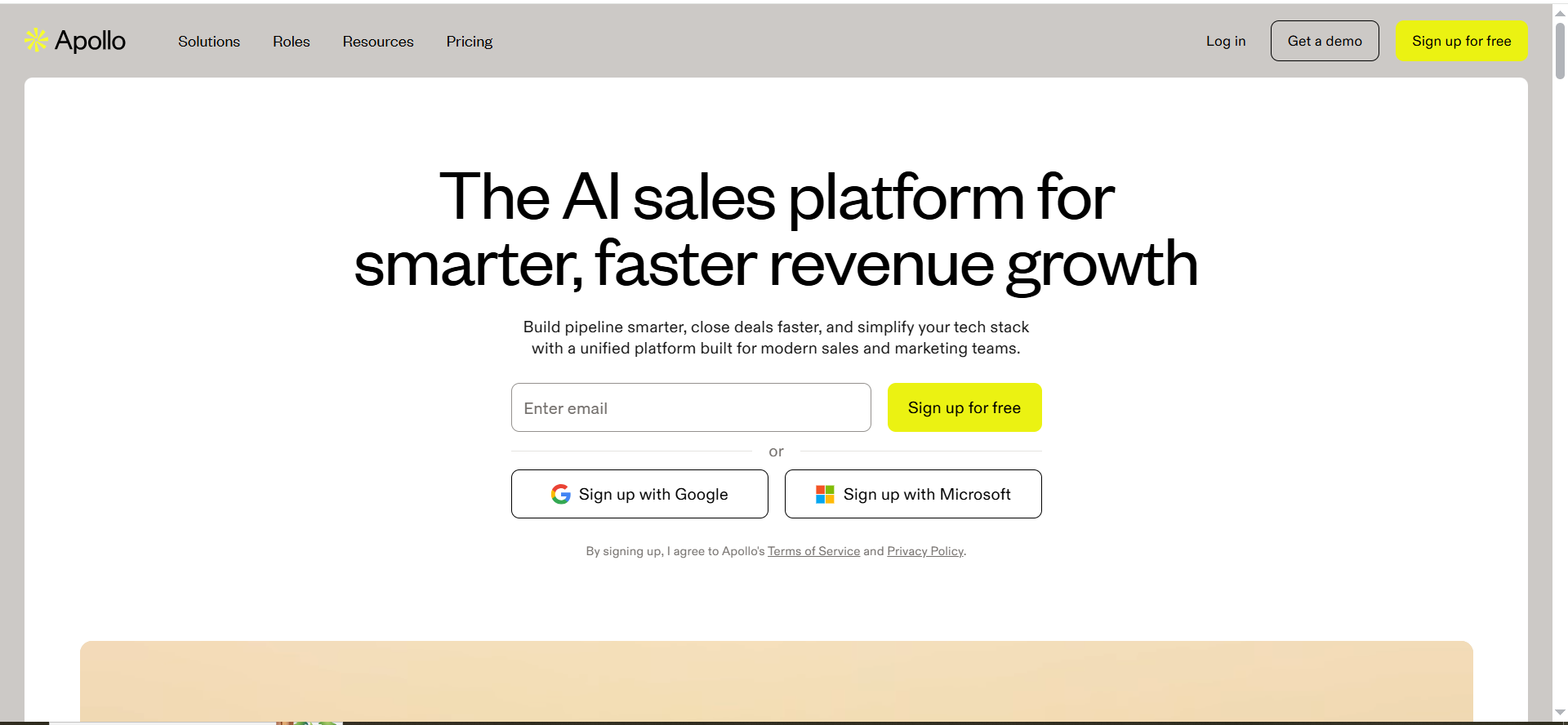
Apollo positions itself as an AI sales platform built for prospecting, engagement, and deal execution, putting it in the same buying conversation as the best LLMs for business growth for teams modernizing revenue workflows. On its site, it highlights outbound, inbound, data enrichment, workflow automation, a Chrome extension, and a sales engagement product that puts outbound channels in one place. It also states that millions of sellers at over 500,000 companies use Apollo.
Why small teams use it
Apollo is the best all-around choice for small teams because it reduces stack sprawl. Instead of buying one tool for contact data, another for sequencing, and a third for enrichment, you can start in one environment. Its sales engagement page emphasizes sequences with emails, calls, automated tasks, and AI help. That is exactly what a small team wants early: fewer handoffs, less setup debt, and one clear place to work.
For a founder or first sales hire, Apollo solves the biggest early problem: getting from “we know who we want to sell to” to “we are actually contacting them” without stitching together five separate systems, which is the same kind of operational simplicity that matters in a strong best AI tools for lead generation stack. That is why it is the most practical first choice for many B2B teams with 2 to 10 people.
Best fit
Apollo is best for:
- Startups building outbound from zero
- Small SDR or AE teams that need list building and outreach together
- Teams that want a free entry point before adding more seats
- Operators who care more about speed and coverage than deep customization
It is especially strong when your team wants a “good enough across the board” system instead of a category leader in just one narrow function.
Where it falls short
Apollo can feel broad rather than focused. Some teams love that because it simplifies the stack. Others outgrow it and want best-in-class tools for deliverability, CRM, or enterprise sales engagement. Also, Apollo’s pricing and credit mechanics can be more nuanced than very simple flat-seat tools, so small teams should look closely at usage before committing. Apollo notes that some features depend on its newer credit system, and additional credits can be purchased.
Pricing
Apollo’s paid pricing starts at $49 per user per month, billed annually. It also offers higher-tier paid plans, and custom pricing is available for larger teams.
Free tier?
Apollo does offer a free tier. It also offers a 14-day free trial of select paid plans for teams on the free plan.
Bottom line: If a small team asks, “What is the one tool that gets us prospecting plus outreach with the least stack complexity?” Apollo is my first answer.
2. HubSpot Starter
What it does
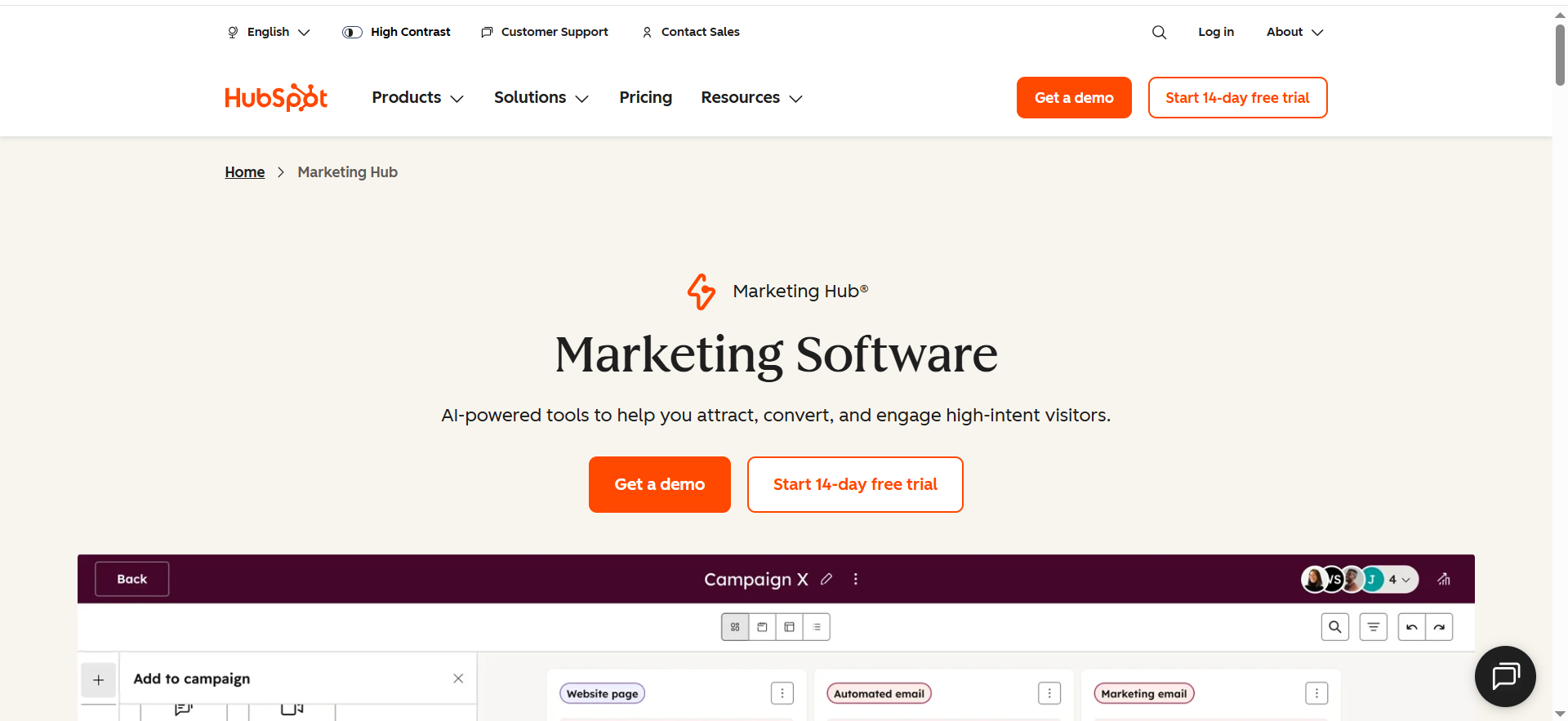
HubSpot’s Starter Customer Platform is explicitly aimed at startups and small businesses. HubSpot describes it as an all-in-one solution that helps growing companies find and win customers from day one, with starter editions of its marketing, sales, customer service, CRM, and data management tools.
Why small teams use it
HubSpot Starter is the easiest pick for teams that want CRM-first simplicity. A lot of small teams do not actually need a “sales engagement platform” first. They need a clean source of truth, a simple deal pipeline, email basics, and the ability to grow into more functionality later. That is HubSpot’s real advantage.
The onboarding story is also unusually clear, and if your team is still shaping its growth motion, lifecycle content strategy thinking applies here too because small teams need tools that support simple processes before they scale. HubSpot frames the product for founders and small businesses, and its ecosystem is built around guided adoption, templates, academy content, and clear UI patterns.
The result is that non-specialists can usually get value from it faster than they can with more complex outbound stacks, which is the same practical buying lens teams use when evaluating the best AI tools for marketing research.
Best fit
HubSpot Starter is best for:
- Founder-led sales motions
- Small teams that need CRM and outbound basics in one place
- Companies already doing inbound and outbound together
- Teams that want the option to grow into a larger platform later
If your team is managing contacts in spreadsheets today, HubSpot Starter is often the cleanest upgrade path, especially for founders building a repeatable pipeline alongside a SaaS blog lead generation motion.
Where it falls short
The tradeoff is that HubSpot Starter is not the most specialized outbound engine on this list. If your main goal is high-volume cold email campaigns or advanced multichannel outbound plays, Instantly or lemlist may feel more purpose-built. HubSpot shines when your business wants one commercial operating layer, not just an outreach machine.
Pricing
HubSpot Starter pricing normally starts at $20 per seat per month, or $15 per seat per month with annual commitment. HubSpot also runs promotional pricing at times, so the current entry price may be lower for new customers.
Free tier?
HubSpot does offer a free tier through its free CRM tools. It does not clearly list a standard free trial for Starter on the main Starter pricing page.
Bottom line: Choose HubSpot Starter if your main priority is simple onboarding, contact organization, and an outbound process that does not break as your company grows.
3. Instantly
What it does
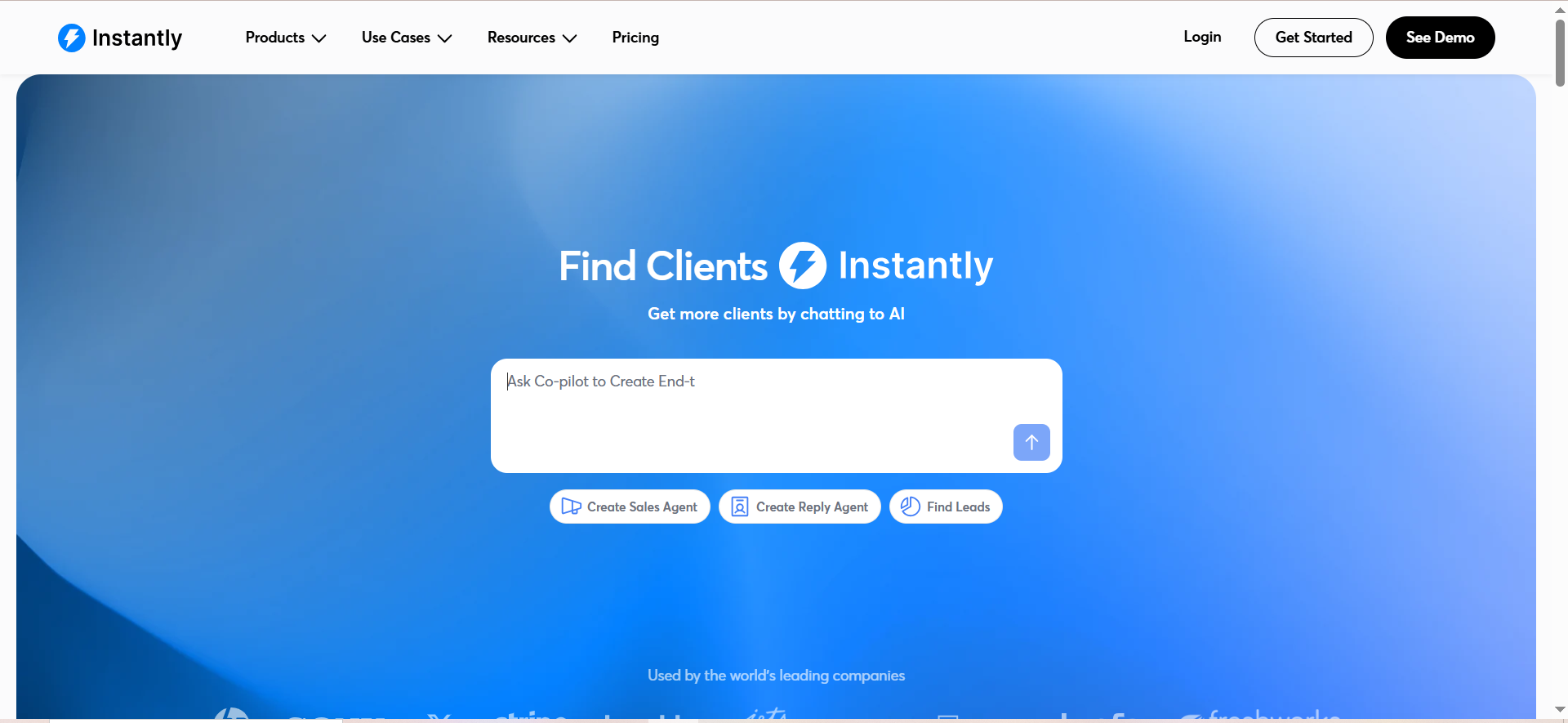
Instantly is built around cold email execution. Its pricing page emphasizes unlimited email accounts, unlimited email warmup, advanced warmup capabilities, automation features, analytics, and a Unibox/CRM layer. The platform messaging centers on helping users find leads, scale email campaigns, reach primary inboxes, and close clients with AI support.
Why small teams use it
If your team wants to launch outbound email fast, Instantly is one of the fastest paths from zero to sending. It is less about being a full GTM operating system and more about giving small teams a practical sending engine. That makes the onboarding burden lighter for narrow outbound motions.
For small teams, simplicity often means this: connect sending accounts, upload leads, build sequences, and start learning, which is why Instantly fits well beside other AI marketing tools for email marketing built for fast execution. Its pricing structure is also straightforward compared with some enterprise-oriented sales platforms. The Growth plan on the pricing page includes unlimited email accounts, unlimited email warmup, 1,000 active leads, and 5,000 monthly emails, while Hypergrowth raises those limits.
Best fit
Instantly is best for:
- Agencies doing outbound for clients
- Founders running direct cold email
- Lean teams where outbound email is the primary channel
- Teams that care deeply about warmup and sending operations
It is also a solid choice when you already have a CRM and just need the outreach layer.
Where it falls short
Instantly is not the best option if you want a polished, central CRM experience for your whole revenue motion. It does include a Unibox/CRM element on the pricing page, but the platform’s core value is still email outreach and deliverability operations, not being the best long-term system of record.
That means small teams should be honest about their needs. If you only need campaigns, Instantly is efficient. If you need deeper deal management, lifecycle visibility, and broader customer operations, HubSpot Starter or Pipedrive may be a better foundation.
Pricing
Instantly’s pricing starts at $37 per month for the Growth plan. It also offers higher paid plans, including Hypergrowth at $97 per month, plus larger plans for bigger teams.
Free tier?
Instantly does not clearly list a permanent free tier on its pricing page, but it does offer a free trial / free start.
Bottom line: Choose Instantly when you want the shortest path to a functioning cold email motion and you do not need your outbound tool to be your full CRM.
📋 Get Listed / Advertisement
We update this guide monthly. Want your tool featured? Contact: [email protected].
4. Pipedrive
What it does
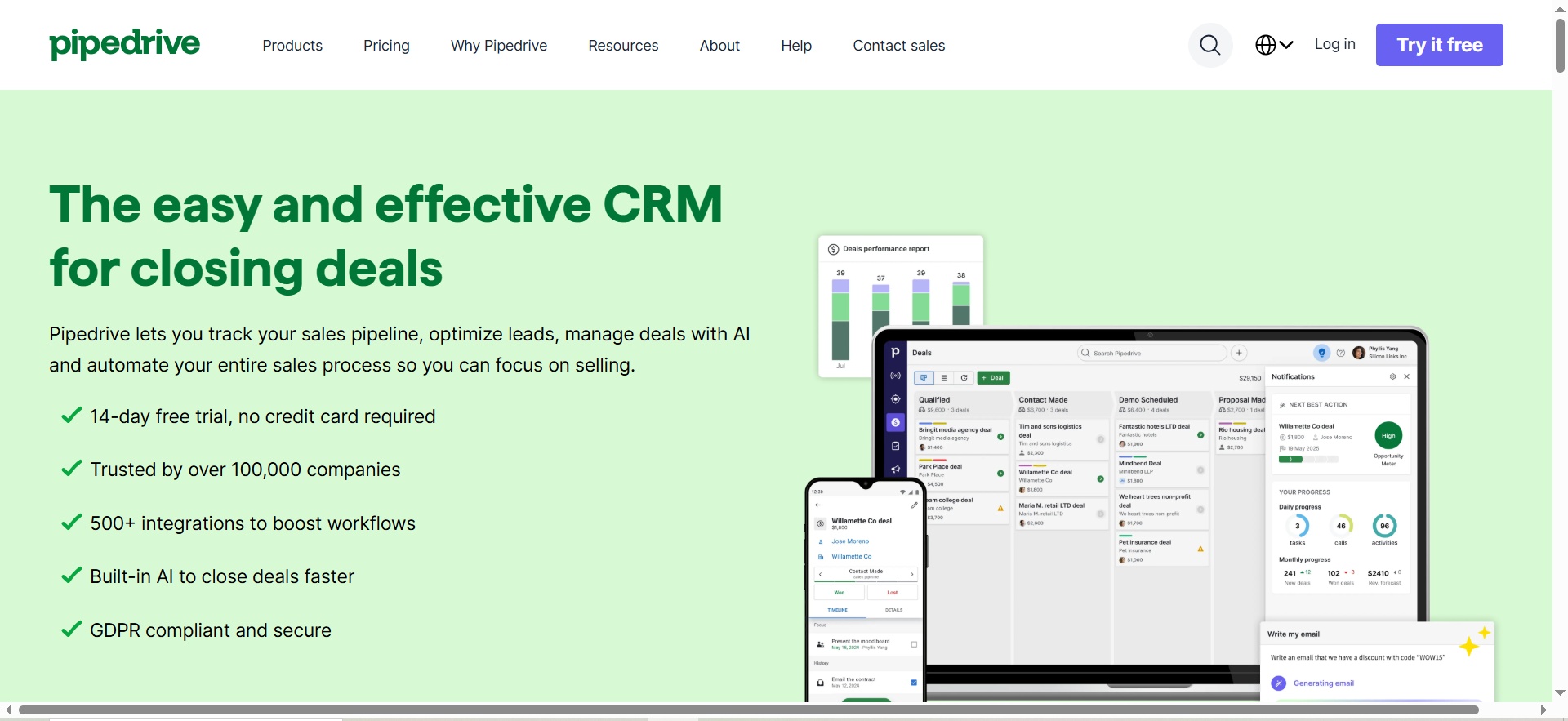
Pipedrive is a sales CRM centered on visual pipeline management. Its homepage describes it as an easy and effective CRM for closing deals, with lead and pipeline management, AI support, and workflow automation. Its pricing page adds features like personalized onboarding, full email sync, nurturing sequences on higher tiers, meeting scheduler, contacts timeline, and more than 500 integrations.
Why small teams use it
Pipedrive is often the easiest CRM for small teams to understand because it feels like sales software, not a giant business platform. Reps can open it and quickly grasp where deals sit, what happens next, and what the pipeline looks like. That matters more than people admit.
A lot of small teams buy “all-in-one” tools but then struggle because everything is buried in menus, permission layers, or cross-functional features they do not need yet, and that same tradeoff shows up when comparing broader stacks in an AI marketing stack.
Best fit
Pipedrive is best for:
- Small sales teams that want an intuitive CRM first
- Teams managing a straightforward outbound-to-close process
- Companies that do not need a giant inbound marketing suite
- Teams that value visual pipeline discipline
It is also a good option when sales management and forecasting matter more than list-building, especially for teams that already care about measurement and use the best marketing analytics tools to track performance.
Where it falls short
Pipedrive is not the strongest pure prospecting database on this list, and it is not the most specialized multichannel outreach tool either. Its strength is that it gives small teams a clean operational center. You may still pair it with another prospecting or outbound execution product, depending on how aggressive your outbound motion is.
Pricing
Pipedrive’s pricing starts at US$14 per seat per month, billed annually, for the Lite plan. Higher paid plans are available if you need more automation, reporting, or advanced features.
Free tier?
Pipedrive doesn’t offer a free tier, but it does offer a 14-day free trial with no credit card required.
Bottom line: Choose Pipedrive when your biggest problem is not sending more outreach, but managing opportunities cleanly without overwhelming the team.
5. Lemlist
What it does
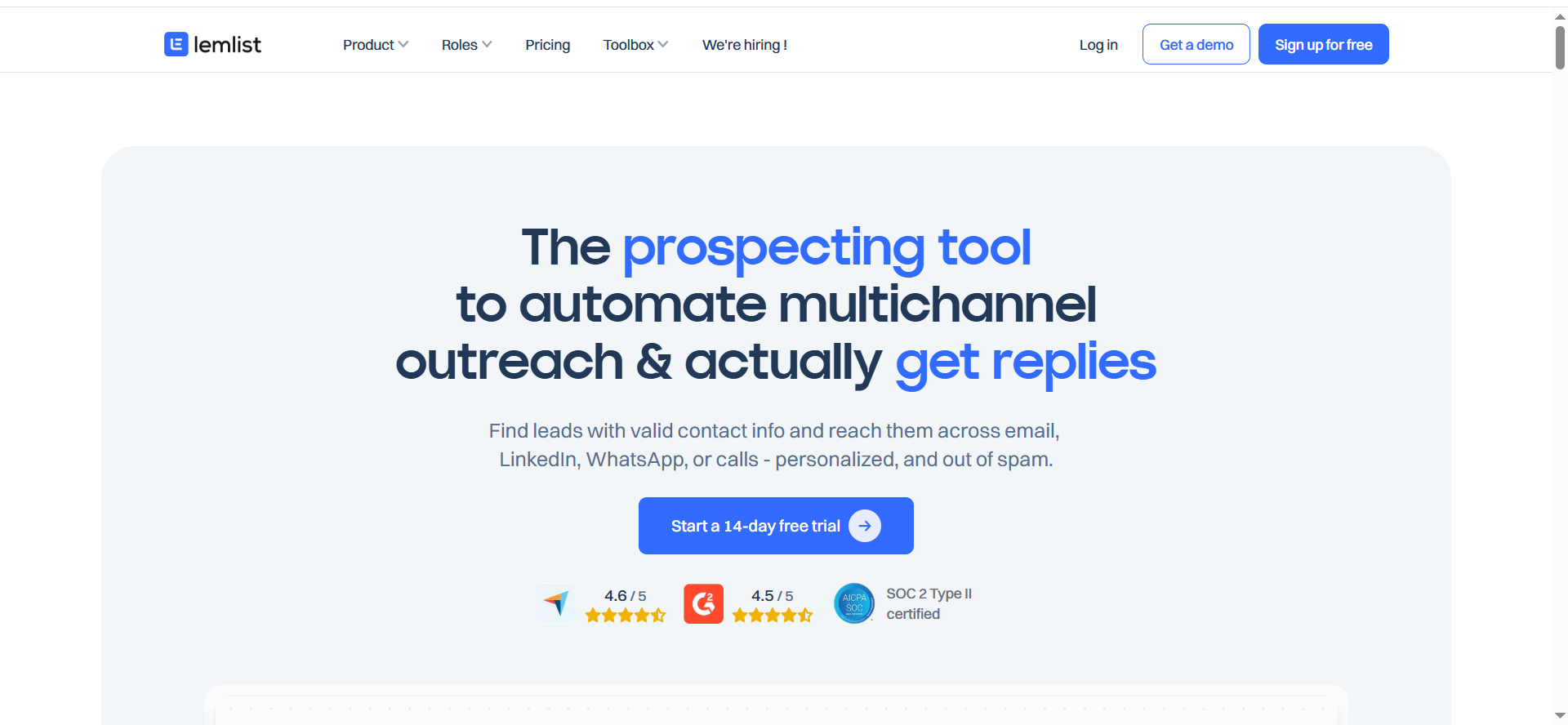
lemlist is an outbound prospecting platform focused on email and multichannel outreach. Its site highlights built-in warm-up through lemwarm, deliverability support, AI-powered personalization, CRM integrations, and a higher multichannel plan that includes LinkedIn automation, manual task steps, built-in calling/VoIP integrations, and a unified multichannel inbox. It also offers a 14-day free trial and lists 1:1 onboarding on the pricing page.
Why small teams use it
lemlist sits in a nice middle zone for small teams. It is more outbound-specialized than HubSpot or Pipedrive, but more guided and multichannel-friendly than bare-bones email tools. If your team wants outbound that feels a little more orchestrated, lemlist is attractive.
The onboarding angle matters here. Some small teams do not just need features. They need a platform that helps them avoid common mistakes around sending reputation, warmup, and sequence design. lemlist leans into that need more visibly than most CRM-first products. Its warm-up and trial positioning make it easier for small teams to test and learn without a huge implementation project.
Best fit
lemlist is best for:
- Small outbound teams running email plus LinkedIn-style steps
- Teams that care about deliverability support
- Startups that want a more guided outbound experience
- Teams that want multichannel workflows without buying enterprise software
Where it falls short
lemlist is not the cheapest option here, and it is not the best choice if your real need is a lightweight CRM. It is also a more specialized outbound workflow tool than a full system of record. Teams should not buy it and expect it to replace a structured CRM strategy entirely.
Pricing
lemlist’s pricing starts at $63 per user per month for Email Pro when billed yearly. It also offers higher paid plans, and Enterprise pricing is available by quote.
Free tier?
lemlist doesn’t clearly list a permanent free tier on its official pricing page, but it does offer a 14-day free trial and a demo.
Bottom line: Choose lemlist if your small team wants a stronger multichannel outbound motion and would benefit from more deliverability guidance during onboarding.
Which tool is best for which small team
Here is the simple buyer map:
Choose Apollo if you want one practical place to find prospects and run outbound.
Choose HubSpot Starter if you want the cleanest all-around CRM foundation.
Choose Instantly if cold email is your main motion and speed matters most.
Choose Pipedrive if pipeline visibility and ease of CRM adoption matter most.
Choose lemlist if you want a guided, multichannel outbound setup with stronger deliverability emphasis.
For most teams under 10 people, the real question is not “Which tool has the most features?” but “Which tool can our team adopt with the least friction while still supporting our next 12 months of growth?”, which is the same kind of planning lens used in a Series A SaaS content marketing budget.
A simple outbound stack for a team of 2 to 10
If I were building an outbound stack for a small B2B team today, I would keep it simple:
- Apollo alone if I wanted the least stack complexity
- HubSpot Starter + Instantly if I wanted strong CRM plus focused cold email
- Pipedrive + lemlist if I wanted clear deal management plus multichannel outreach
- HubSpot Starter alone if founder-led sales and basic pipeline were the main need
The mistake small teams make is trying to copy enterprise GTM architecture too early, and the same principle shows up in blog vs paid ads for SaaS growth, where simpler systems usually win earlier. You need clean data, a clear ICP, disciplined messaging, a repeatable sequence, and a tool your team will actually use every day.
What small teams should avoid when buying outbound tools
Do not buy based on feature count alone because buying the most powerful platform often creates more work, not less, just like choosing from best AI tools for marketing automation requires focusing on fit instead of maximum features.
Do not over-index on AI labels because plenty of products now market AI prospecting, AI personalization, or AI sales assistants, but that kind of positioning still needs to tie back to outcomes like SaaS blogs driving organic leads and conversions.
Do not confuse “all-in-one” with “best fit,” because for some teams all-in-one is perfect, while for others a lightweight CRM plus a focused email tool is the better move, much like choosing the right best SaaS keyword research workflow before scaling content operations.
Do not ignore onboarding resources because trial access, live support, academy content, personalized onboarding, and guided setup matter more than people think, especially when nobody on the team owns RevOps full time, and that kind of implementation reality also matters when choosing a B2B SaaS SEO agency. Apollo highlights onboarding resources, Pipedrive includes personalized onboarding on its pricing page, and lemlist lists 1:1 onboarding.
Which outbound sales tool is easiest to onboard?
HubSpot Starter is the easiest to onboard for most small teams because it combines CRM, contact management, and sales basics in a very simple setup. HubSpot positions Starter as an all-in-one option for startups and small businesses, which makes it a natural fit for teams that want less complexity. Its free CRM also lowers the barrier to getting started. Pipedrive is another strong option if you want an easy, sales-focused CRM with a visual pipeline and fast setup. Instantly is easiest only if your goal is just to launch cold email quickly, not build a full CRM process.
What is the best outbound stack for a startup sales team?
For most startup sales teams, the best outbound stack is the one with the fewest moving parts. Apollo alone works well if you want prospecting and outreach in one platform without adding extra tools. HubSpot Starter + Instantly is a strong combo if you want a clean CRM plus fast cold email execution. Pipedrive + lemlist is a better fit for teams that care more about pipeline visibility and multichannel outreach. For a very lean startup, starting simple usually works better than building a large stack too early.
Which tool is best for email outreach and sequencing?
Instantly is the best choice if your main goal is email outreach and sequencing. Its pricing page highlights unlimited email accounts, unlimited warmup, and campaign-focused sending, which makes it ideal for fast-moving small teams.
Apollo is a better option if you want email sequences plus broader outbound workflows like prospecting and sales execution. lemlist is also a strong pick if you want email plus a more multichannel setup. For pure cold email speed and simplicity, though, Instantly is the clearest winner.
Which tool is best if you need CRM plus outbound in one place?
If you need CRM plus outbound in one place, HubSpot Starter is usually the best fit. It gives small teams a CRM foundation, contact management, and core sales tools inside one system built for startups and smaller businesses. Apollo is also a strong option, but it leans more toward prospecting and outbound execution than full CRM structure.
So the choice depends on what matters more: long-term CRM organization or faster prospecting and outreach. For most teams wanting both in one place, HubSpot is the safer pick.
Which outbound prospecting tool is best for founders?
For founders doing their own outbound, Apollo is the best prospecting tool overall. It is useful because it brings prospecting and outreach into one platform, which saves time and reduces stack complexity. That matters a lot for founder-led sales, where speed and simplicity are more important than advanced configuration.
Apollo also has a free entry path, which makes it easier to test messaging and outreach before committing to a bigger setup. For founders who want one practical tool to start outbound, Apollo is the strongest option.
What is the best low-cost sales tool for small outbound teams?
The best low-cost option depends on what your team needs first. Pipedrive is one of the lowest-cost CRM options here, with a 14-day free trial and affordable entry pricing. Instantly is a strong low-cost choice for teams focused mainly on cold email, with Growth listed at $37 per month. HubSpot’s free CRM is the best zero-cost starting point if your team mainly needs contact and pipeline organization.
Apollo is also attractive because it offers a free plan for teams that want prospecting plus outreach without paying upfront.
What tool helps small teams start outbound fastest?
If the goal is to start outbound as fast as possible, Instantly is usually the best answer. Its product is built around connecting sending accounts, warming them up, and launching campaigns quickly. Apollo is another fast option, especially if you also need built-in prospecting and do not want to add extra tools.
HubSpot Starter can still be quick, but it is better for building a clean sales system than for launching cold email at top speed. So for fastest execution, Instantly leads, while Apollo is the better all-around fast-start option.
Which outbound sales tools offer free trial or free plan?
Several tools in this list offer a low-risk way to test them. Apollo offers a free plan and also has a free trial path for paid features. HubSpot offers a free CRM, which is one of the easiest no-cost starting points for small teams.
Pipedrive offers a 14-day free trial with no commitment, and lemlist also offers a 14-day free trial. Instantly promotes a free start on its site, making it another accessible option for testing before buying.
FAQs
What is the best outbound sales tool for a startup team?
Which outbound tool is easiest to onboard?
What is the best outbound email tool for a small team?
Do small teams need a CRM and an outreach tool?
Is HubSpot Starter good for outbound sales?
Is Pipedrive enough for a small outbound team?
Which tool has the lowest starting cost?
Final verdict
For most small outbound teams, Apollo is the best overall choice because it offers the best balance of prospecting data, outreach capability, and stack simplicity. HubSpot Starter is the best choice for CRM-first teams that want the cleanest onboarding experience.
Instantly is the best tool for teams that just want to get cold email live fast. Pipedrive is the best easy CRM for pipeline-driven teams. lemlist is the best choice for small teams that want multichannel outbound with more built-in deliverability guidance.
The right answer depends less on “best software” and more on your starting point, which is the same logic behind comparing the best content optimization tools based on team needs rather than feature lists. If you have no structured system at all, start with Apollo or HubSpot Starter. If your process already exists and you just need more outbound execution, use Instantly or lemlist.
If you are losing visibility after meetings are booked, add Pipedrive or use HubSpot as your system of record.
The small-team advantage is speed, and your tool stack should preserve that, not slow it down, just like the systems behind best tools SEO SaaS need to stay usable as teams grow.
📋 Get Listed / Advertisement
We update this guide monthly. Want your tool featured? Contact: [email protected].