

There’s no single best B2B data provider for every team. ZoomInfo leads for enterprise sales, Apollo is the strongest all-in-one option for growing teams, Cognism is best for compliance and EMEA prospecting, Clearbit is strongest for enrichment workflows, and Seamless.AI is a decent choice for lower-cost prospecting volume. Choose based on your use case, not just database size.
If you are comparing B2B data providers, the right choice usually comes down to one question: do you need broader coverage, cleaner mobile and international data, better workflow integration, or lower-cost prospecting at scale? For most enterprise teams, ZoomInfo is still the safest choice when breadth and workflow maturity matter most.
For fast-moving outbound teams that want an all-in-one platform, Apollo is often the most practical pick. If compliance and phone data are high priorities, Cognism deserves serious attention. If you care most about enrichment and routing inside a modern GTM stack, Clearbit is a strong fit. And if budget and volume matter more than polish, Seamless.AI can be worth considering.
📋 Get Listed / Advertisement
We update this guide monthly. Want your tool featured? Contact: [email protected].
This guide is built for B2B SaaS founders, sales leaders, RevOps teams, and growth operators trying to improve list quality, raise reply rates, and create more pipeline from outbound, much like teams refining a best SaaS keyword research workflow. Rather than just listing features, it focuses on what matters in the real buying process: accuracy, compliance, enrichment depth, CRM fit, workflow friction, and whether a platform actually helps your team build a better outbound engine.
Best B2B Data Providers at a Glance
| Provider | Best for | Strengths | Main tradeoff |
|---|---|---|---|
| ZoomInfo | Enterprise sales and large outbound teams | Massive database, mature workflows, buyer intent, org charts, strong sales workflows | Expensive and often more than smaller teams need |
| Apollo | SMB to mid-market outbound teams | Large contact database, sequencing, prospecting, simple all-in-one workflow | Data quality can vary by segment and geography |
| Cognism | Teams prioritizing phone data and compliance | Strong mobile coverage, EMEA strength, compliance-friendly positioning | Not always the cheapest option for smaller teams |
| Clearbit | Enrichment-heavy GTM stacks | Strong enrichment, form shortening, routing, product and marketing workflows | Not the best fit as a pure outbound prospecting database |
| Seamless.AI | Budget-conscious teams needing volume | High prospecting velocity, simple search workflow, broad awareness in sales teams | Quality consistency and workflow maturity can be uneven |
The short version is this: there is no universal best provider. The best provider is the one that matches your sales motion.
If you are building a high-output SDR team and need account intelligence, hierarchy mapping, intent signals, and workflow controls, you will probably lean toward ZoomInfo. If you want a cheaper stack that combines database access with outbound execution, Apollo often gives you the fastest path to value. If your team sells heavily into EMEA or needs cleaner mobile numbers with a stronger compliance story, Cognism becomes much more attractive. If your business depends on enrichment, lead routing, and identifying accounts inside your existing funnel, Clearbit shines. If your goal is simply to source a lot of names quickly without an enterprise-level budget, Seamless.AI may make sense.
1. ZoomInfo
What it does
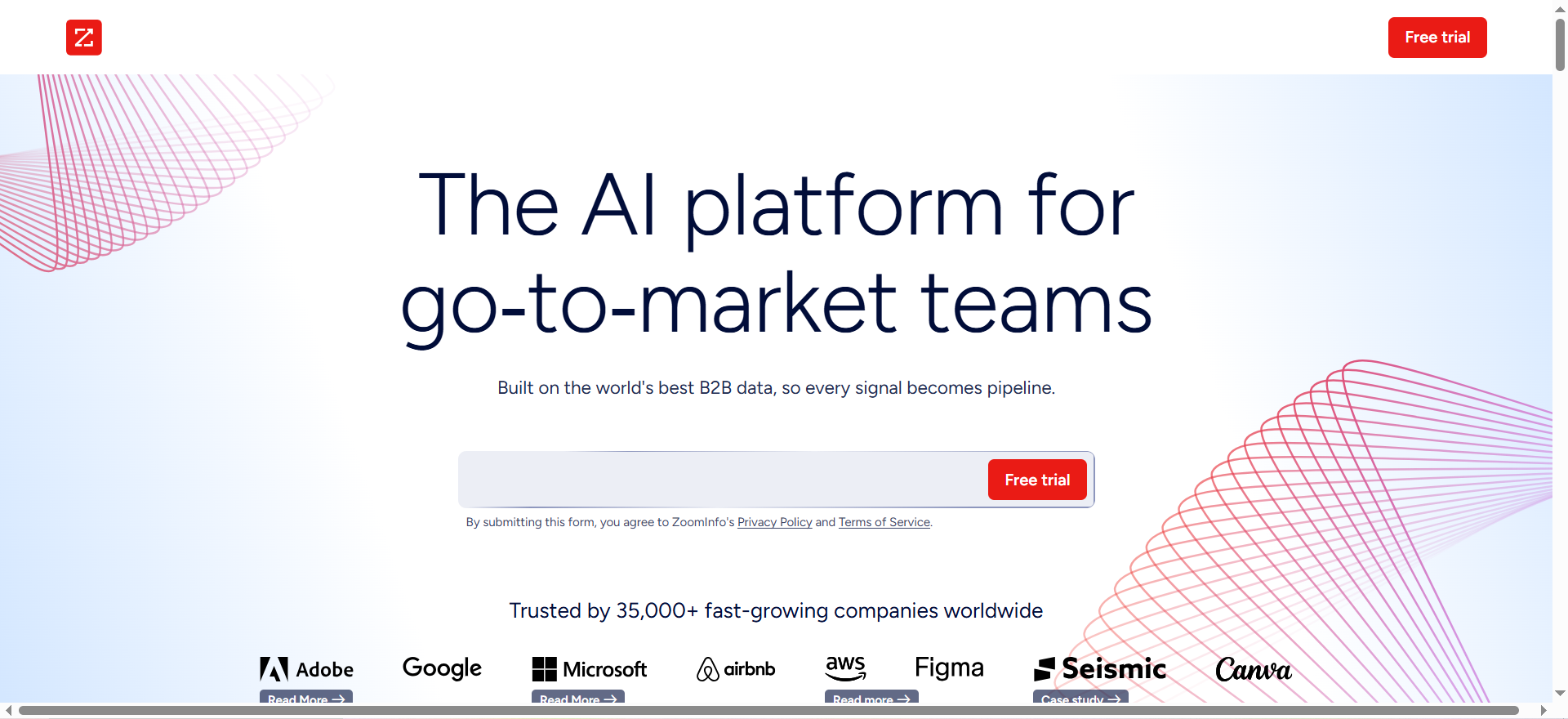
ZoomInfo is one of the most established B2B data platforms in the market. It combines company and contact data with enrichment, org charts, buyer intent, technographics, workflow automation, and a broad go-to-market operating layer. It is built for teams that want more than list building.
Why teams use it
Sales leaders choose ZoomInfo when they need scale, structure, and control, much like larger teams evaluating best SEO reporting software for operational visibility. It is especially popular with mature outbound teams that want a single platform for prospecting, enrichment, prioritization, and sales workflow support. It often appeals to enterprises because the dataset is broad and the surrounding features are more developed than what many lower-cost tools offer.
What it’s good for
ZoomInfo is strongest when your team needs:
- Large-scale outbound list creation
- Advanced account research
- Org charts and buying committee discovery
- Intent-led targeting
- Territory and account planning
- CRM enrichment and operational workflows
It is usually the tool people buy when they are trying to professionalize outbound, not just start it.
When it’s a good fit
ZoomInfo is a strong fit if you have:
- Multiple SDRs or AEs prospecting regularly
- RevOps support
- Enterprise or upper mid-market deal sizes
- Complex account targeting
- Need for reporting and admin oversight
If you are selling into larger buying committees and cannot afford weak targeting, ZoomInfo can be very compelling, especially for teams that already think in terms of AI strategic visibility across complex buying journeys.
When it’s not a good fit
It is less attractive when:
- Your team is small and budget-sensitive
- You only need basic contact exports
- You want a lighter, simpler workflow
- Your outbound process is still immature
For lean startups, it can feel like buying more platforms than you can operationalize.
How to use it
The best use of ZoomInfo is not “download contacts and blast them.” The better approach is to combine firmographic filters, role filters, intent data, and account signals to build tight account lists, similar to how teams use AI tools for SaaS keyword clustering and topic maps to tighten targeting upstream. Then enrich and sync those records into your CRM and sequencing stack with clear field mapping and quality rules.
Teams that get the most value from it usually build repeatable workflows around territory planning, lead routing, and account prioritization rather than treating it like a one-off search tool.
Key capabilities
Common reasons teams shortlist ZoomInfo include:
- Large B2B contact and company database
- Intent and technographic data
- Org charts and contact discovery
- Workflow automation
- CRM enrichment
- Sales search and segmentation
- Account intelligence
Pricing
ZoomInfo’s pricing starts at $0 with ZoomInfo Lite. Its paid plans use custom pricing, so the lowest paid price is not publicly listed.
Free tier?
ZoomInfo does offer a free tier through ZoomInfo Lite. It also offers a free trial.
Downsides / limitations
The biggest downside is cost, and for budget-conscious teams that tradeoff matters just as much as it does when comparing best tools for tracking brand visibility in AI search. Beyond that, some smaller teams find the platform heavier than they need, both in procurement and in implementation. Like every vendor in this category, data quality can also vary by segment, title, and region, so you still need to validate based on your own ICP.
2. Apollo
What it does
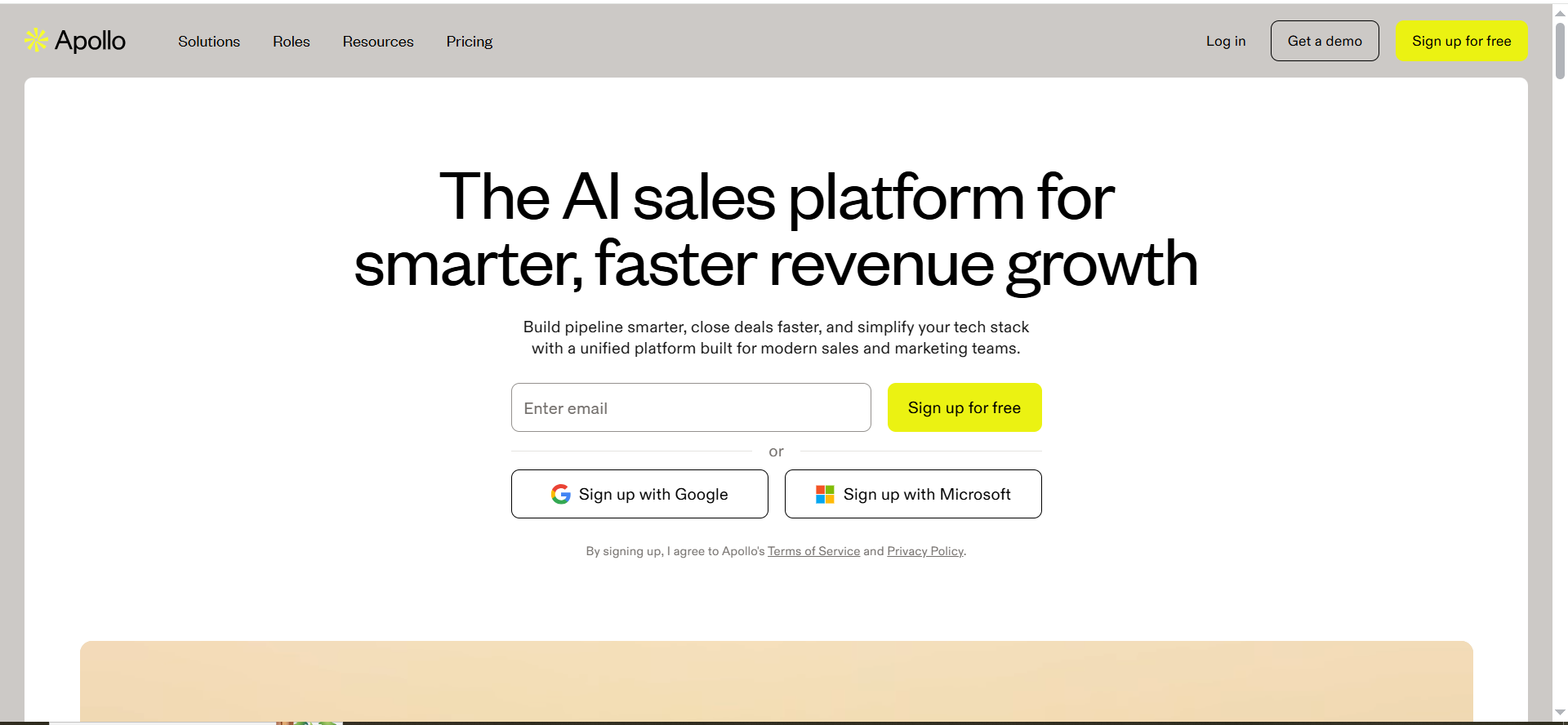
Apollo combines a large B2B database with prospecting workflows, sequencing, enrichment, and productivity features. That all-in-one positioning is why it has become such a common choice for startups and mid-market sales teams.
Why teams use it
Apollo is attractive because it lets a team move quickly.Instead of buying a database and then stitching together separate tools for outreach, many teams can prospect and execute from one platform, which is part of the same appeal behind best AI SEO tools for leaner teams. That lowers complexity and usually lowers cost.
What it’s good for
Apollo works well for:
- Startup and SMB outbound
- High-volume prospecting
- Building lists quickly
- Running email sequences
- Enrichment for lean GTM teams
- Early sales process standardization
It is often the practical answer for companies that need traction now and cannot justify an enterprise stack.
When it’s a good fit
Apollo is a strong fit if:
- You need value fast
- You want an all-in-one prospecting motion
- Your team is small or mid-sized
- Budget matters
- You want simple ramp-up for reps
It is especially useful when you want one system that helps reps find, enrich, and contact prospects without much operational overhead.
When it’s not a good fit
Apollo may be less ideal if:
- You need top-tier international coverage
- You have strict compliance requirements across many regions
- Your team wants highly structured enterprise workflows
- You need deeper account intelligence beyond basic prospecting
In those cases, Apollo can still work, but the tradeoffs become more noticeable.
How to use it
Apollo works best when you pair tight ICP criteria with disciplined list building. Use filters for company size, industry, title, geography, and recent hiring or activity signals. Then push only qualified records into outreach sequences.The mistake many teams make is relying on volume instead of precision, which is why a tighter keyword targeting process usually leads to better outbound results. Apollo is more powerful when used as a targeting tool first and a sequencing engine second.
Key capabilities
- Contact and company search
- Email sequencing
- Basic sales engagement workflows
- Enrichment
- Filters for segmentation
- CRM integrations
- Prospecting productivity features
Pricing
Apollo’s pricing starts at $49 per user per month on annual billing for its Basic plan. Higher plans start at $79 and $119 per user per month, and custom pricing is available for larger teams.
Free tier?
Apollo does offer a free tier through its Starter plan. It also offers trial plans.
Downsides / limitations
The biggest tradeoff is consistency. Some teams love Apollo’s speed and breadth, while others find that data quality varies more than they would like across specific titles or geographies. It is very useful, but buyers should still validate against their exact ICP.
3. Cognism
What it does
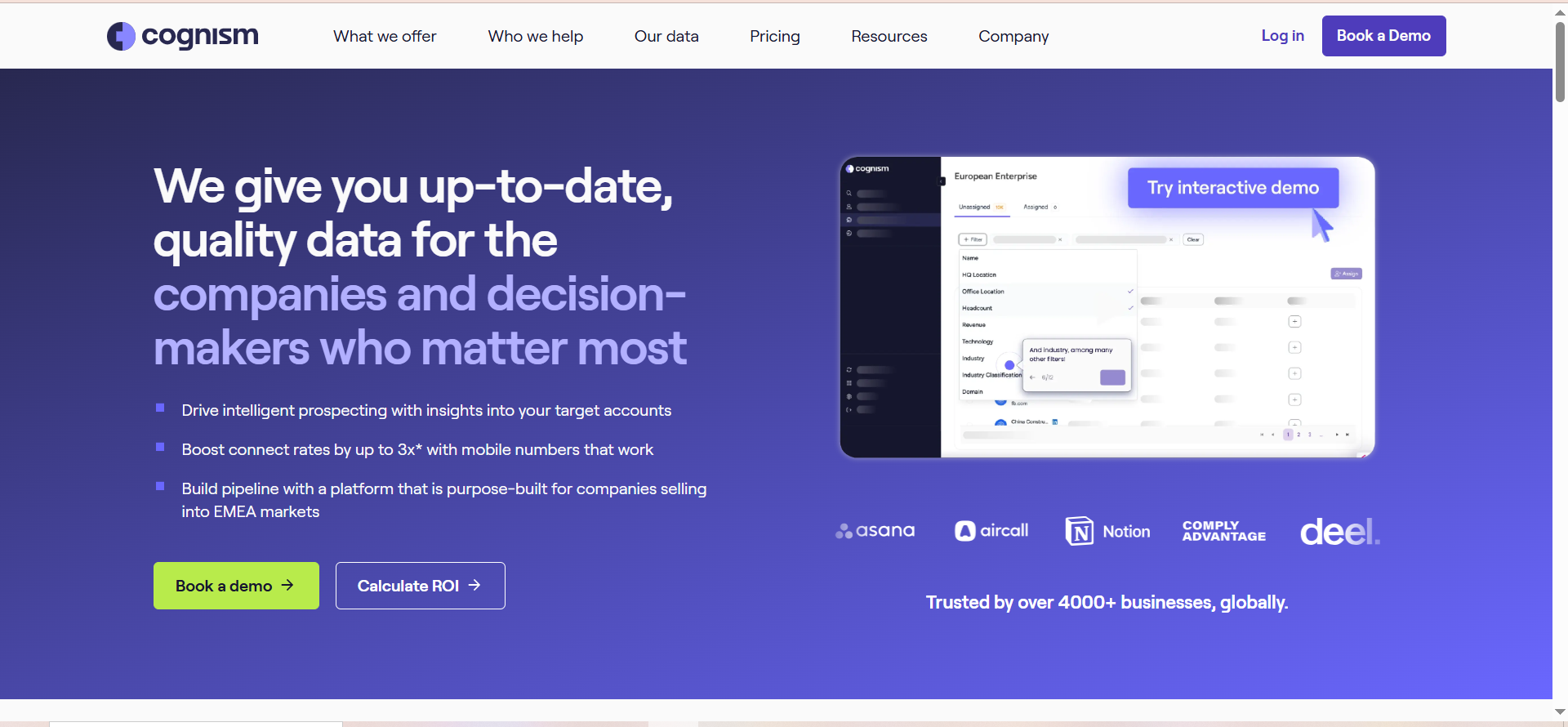
Cognism is a B2B data platform known for contact data, sales intelligence, and a stronger compliance-oriented reputation, especially in conversations around international prospecting and phone data.
Why teams use it
Many teams shortlist Cognism because they want a more confidence-inspiring option for compliant prospecting, particularly in regions where data governance matters heavily. It also comes up often when teams want better mobile number coverage and stronger support for international outbound.
What it’s good for
Cognism is often a good fit for:
- EMEA prospecting
- Phone-first outreach
- Compliance-conscious sales teams
- Mid-market and enterprise outbound
- Teams that want more trust in mobile data quality
When it’s a good fit
Choose Cognism if:
- You operate across the UK or Europe
- Phone outreach is central to your motion
- Legal and compliance concerns weigh heavily in the buying process
- You want a more specialized data story than a broad all-in-one stack
When it’s not a good fit
It may be less ideal if:
- You just want the cheapest route to list volume
- Your team mainly needs enrichment inside marketing workflows
- You are looking for a broad do-everything GTM platform
How to use it
Cognism is strongest when paired with targeted outbound programs where mobile numbers and regional coverage can materially affect connect rates. It works well for teams running focused account lists and combining data quality with structured rep execution.
Key capabilities
- B2B contact and account data
- Mobile and direct dial emphasis
- Regional data strength
- Compliance-friendly positioning
- Sales intelligence workflows
- CRM and sales tool integrations
Pricing
Cognism’s pricing is not publicly listed; it’s available by quote. Packages are tailored based on team size, workflow needs, and add-ons such as buying intent and job-change signals.
Free tier?
Cognism doesn’t offer a free tier. It does offer a demo and quote-based sales process.
Downsides / limitations
For smaller teams, Cognism can feel too specialized or too expensive relative to simpler all-in-one options. It may also be less appealing if your core need is marketing enrichment rather than contact-led outbound.
4. Clearbit
What it does
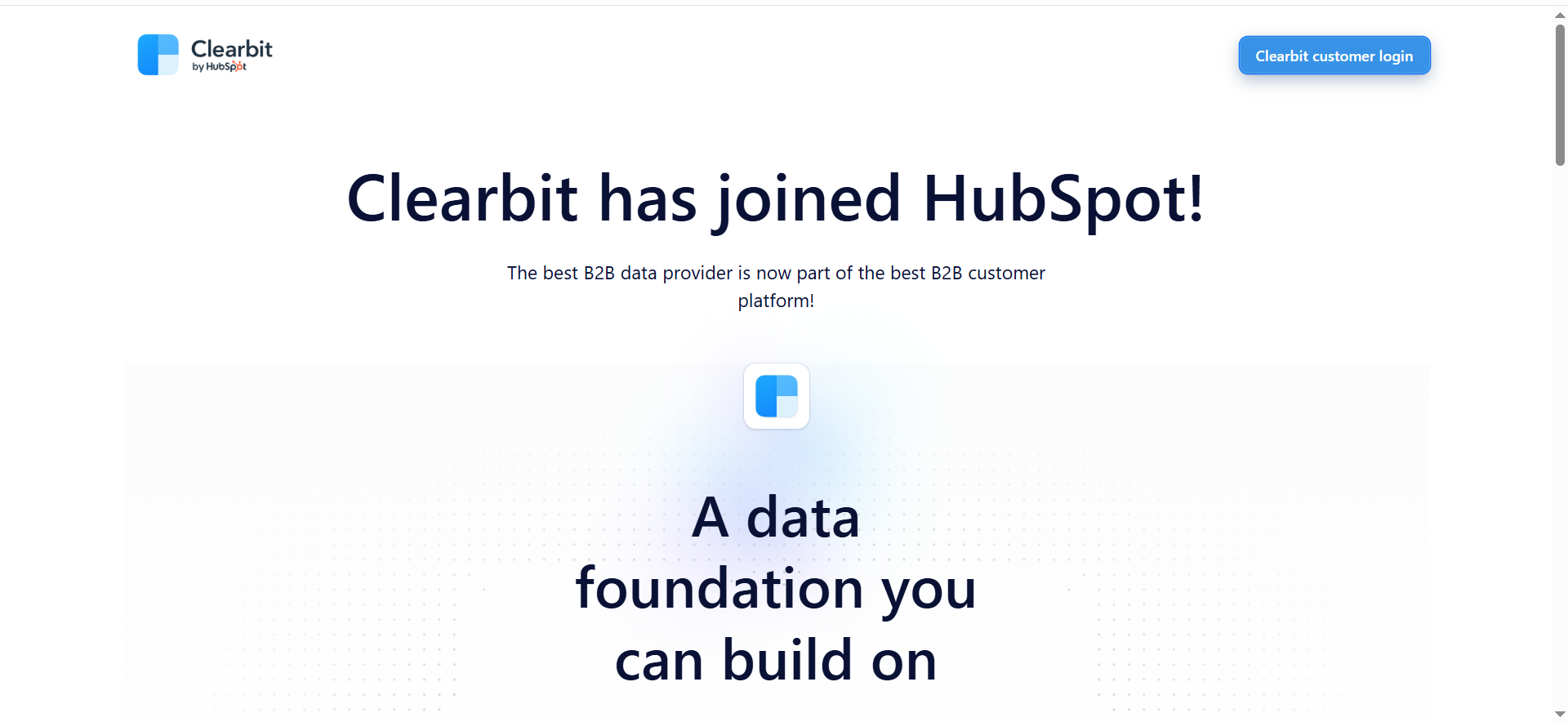
Clearbit is best understood as an enrichment-first platform rather than a classic prospecting database. It helps teams enrich leads, identify companies, shorten forms, route records intelligently, and improve how GTM data flows through systems.
Why teams use it
Marketing, RevOps, and growth teams often love Clearbit because it improves the quality of data already entering the funnel. Instead of centering the workflow around list exports, it helps teams turn anonymous traffic, form fills, and incomplete records into richer account and lead profiles.
What it’s good for
Clearbit is especially useful for:
- Lead enrichment
- Form optimization
- Lead routing
- Account identification
- Marketing operations
- Product-led and inbound-heavy GTM motions
If your team depends on clean enrichment more than cold outbound list generation, Clearbit becomes very attractive.
When it’s a good fit
Clearbit is a good fit if:
- You have meaningful inbound or PLG volume
- You need accurate routing and enrichment
- Your team cares about operational cleanliness
- Marketing and RevOps are central stakeholders
When it’s not a good fit
It is not the first choice if:
- You want a rep-first prospecting database
- You need a large contact export workflow
- Your main buying criterion is direct-dial prospecting coverage
How to use it
Clearbit works best as infrastructure. Plug it into your forms, CRM, routing logic, and scoring workflows. Use it to enrich records in real time, reduce form friction, and improve segmentation before leads ever reach sales. Teams that buy Clearbit and then expect it to behave like a full outbound database often misjudge its best use case, much like teams that skip SEO copywriting best practices often misjudge what content can really do.
Key capabilities
- Lead and account enrichment
- Company identification
- Form shortening
- Routing and qualification support
- GTM data infrastructure
- API-first workflows
Pricing
Clearbit’s standalone pricing is not publicly listed. Clearbit is now part of HubSpot, and pricing depends on the HubSpot plan and credit usage rather than a simple public base price.
Free tier?
Clearbit doesn’t appear to offer a standalone free tier for its main enrichment product. Some HubSpot Breeze features are available for free, but advanced enrichment runs through paid HubSpot plans and credits.
Downsides / limitations
The biggest limitation is category fit. Clearbit is excellent for enrichment-heavy workflows, but many pure sales teams will still want a more traditional contact discovery platform alongside it.
5. Seamless.AI
What it does
Seamless.AI is a prospecting platform designed to help sales teams find contact data quickly and keep prospecting velocity high. It is often positioned around accessibility, speed, and contact discovery for outbound reps.
Why teams use it
Teams choose Seamless.AI when they want reps sourcing leads fast without paying premium enterprise prices. It appeals to organizations that value speed and database access over deeper infrastructure.
What it’s good for
It is commonly used for:
- High-volume prospecting
- Rep-led contact discovery
- Quick list building
- Budget-conscious outbound teams
- Early-stage sales motions
When it’s a good fit
Seamless.AI makes sense if:
- You need a lower-cost prospecting option
- Reps do a lot of manual list building
- Your sales motion is still being built
- You care about speed more than advanced workflow sophistication
When it’s not a good fit
It is less ideal if:
- You want top-tier data governance and admin controls
- You need deep enrichment workflows
- You require highly structured enterprise operations
- Quality consistency is non-negotiable
How to use it
The platform tends to work best when paired with tighter list QA processes. Reps can use it to source a large number of prospects quickly, but managers should still establish validation habits, deduplication rules, and target-account discipline.
Key capabilities
- Contact discovery
- Prospecting search
- List building
- Rep-first workflows
- Integrations into sales processes
Pricing
Seamless.AI’s paid pricing is not publicly listed. Its Pro plan is pay-per-user and its Enterprise plan is custom, but the company asks buyers to contact sales for exact pricing.
Free tier?
Seamless.AI does offer a free tier. The free plan includes 1 user and 50 credits.
Downsides / limitations
The biggest concern buyers raise is consistency. It can be useful for volume, but not every team finds it dependable enough to serve as the only source of truth in a mature outbound stack.
📋 Get Listed / Advertisement
We update this guide monthly. Want your tool featured? Contact: [email protected].
What a B2B data provider actually does
A B2B data provider gives your team access to company records, contact details, enrichment attributes, and sometimes intent or technographic signals that make prospecting more targeted. In practice, these platforms sit between your go-to-market strategy and your execution layer.
A strong provider helps you answer questions like these:
- Which companies fit our ICP?
- Who are the likely buyers at each account?
- Which contacts have valid work emails or mobile numbers?
- Which companies use the technologies we target?
- Which accounts appear to be in-market?
- How do we enrich inbound leads before routing them?
That means the platform is rarely just a “contact list tool.” It becomes part of lead generation, segmentation, routing, enrichment, territory planning, account prioritization, and outbound execution.
The problem is that buyers often compare vendors too narrowly, which is why a more structured evaluation process like keyword research best practices for SaaS can be useful when defining selection criteria. But data vendors should be judged based on how well they support the full job your team needs done.
A giant database is not useful if your reps still spend hours cleaning exports, which is why strong content ops and workflow discipline matter just as much as database size. Strong enrichment is not enough if sales cannot turn those records into sequences. Great intent data is wasted if your team cannot trust the contact layer underneath it.
The best buying lens is not “which provider has the most records?” It is “which provider improves the performance of your GTM system?
How to choose the right B2B data provider
Before picking a vendor, define what success looks like. Most teams buy too early, based on vendor reputation or peer recommendations, instead of working backward from their sales motion.
Here are the five criteria that matter most.
1. Data accuracy
Accuracy matters more than size, which is why many teams use a structured process similar to AI content auditing software before trusting any dataset at scale. Ten million bad records create more operational drag than one million useful ones. Bad data hurts reply rates, damages sender reputation, wastes rep time, and creates distrust in the stack.
Look for accuracy across the fields your team actually uses, just as teams evaluating broader stacks often review best site audit tools before trusting a platform at scale.
- Direct dials and mobile numbers
- Work emails
- Job titles
- Seniority mapping
- Company size and revenue bands
- Industry and sub-industry
- Location
- Tech stack signals
The right test is simple: pull a sample of accounts from your ICP, export contacts, and manually validate a meaningful batch, just as you would when reviewing best website traffic analysis tools before making a tooling decision.
2. Coverage by geography and segment
Some vendors look great in US SaaS and much weaker in EMEA manufacturing, which is why segment-level benchmarking matters in the same way it does for B2B SaaS content benchmarks. Others are strong in enterprise org charts but weaker for startup founders and operators. A platform can be “best in market” and still be the wrong fit for your segment, especially if your team has not done the kind of content audit that clarifies ICP, market, and use-case priorities.
Check coverage by:
- Region
- Industry
- Company size
- Functional department
- Seniority level
3. Compliance and data governance
This matters much more now than it did a few years ago. Teams need to understand consent, sourcing, suppression workflows, and regional differences. If your team operates internationally, compliance cannot be treated as a legal footnote after procurement, especially for companies building a broader B2B SaaS content strategy.
Ask how the vendor handles:
- Regional compliance posture
- Data sourcing practices
- Deletion requests
- Auditability
- Data retention controls
- Admin governance
4. Workflow fit
A great data layer should reduce work, not create more of it, which is also true of the best SEO automation tools in a modern GTM stack.
Look at:
- CRM sync
- Sales engagement integrations
- API access
- Bulk enrichment
- Salesforce and HubSpot compatibility
- Territory assignment logic
- Duplicate handling
- Lead-to-account matching
5. Total economic value
Pricing matters, but not just list price. The real question is whether the vendor reduces rep time, improves meeting quality, and creates enough incremental pipeline to justify the cost.
A cheaper tool is not cheaper if it creates extra manual cleanup, poor targeting, or weak connect rates, which is why teams often compare overall stack efficiency the same way they evaluate the best tools for SEO SaaS. A more expensive platform may be the right decision if it replaces multiple tools and removes workflow friction.
Which B2B data provider is best for each use case
A side-by-side list is useful, but most buying decisions become easier when mapped to real operating contexts.
Best for enterprise outbound: ZoomInfo
If you have multiple reps, defined territories, meaningful CRM process, and pressure to create a predictable pipeline, ZoomInfo is usually the safer bet. It is broader, more mature, and more operationally suited to larger teams. It is not cheap, but it often aligns better with complex account-based motions and stricter GTM operations.
Best all-in-one option for growing teams: Apollo
Apollo is the practical choice for teams that want prospecting and execution in one place. It offers a lot of utility for the price and reduces tool sprawl.If your team wants speed, affordability, and faster onboarding, Apollo is hard to ignore, particularly for companies exploring wider AI marketing use cases across GTM.
Best for compliance-conscious international teams: Cognism
If your reps are calling across Europe or your legal team is involved early in vendor review, Cognism is often one of the most relevant names on the shortlist, especially for teams that care about best voice AI services for phone verification alongside data quality. It is a strong option when compliance posture and mobile data quality matter heavily.
Best for enrichment and inbound operations: Clearbit
If your funnel already produces leads and your real problem is poor enrichment, weak routing, and incomplete firmographic context, Clearbit is often a better fit than a rep-first database, especially if you are focused on organic leads and conversions. It improves the quality of your system, not just the size of your exports.
Best for budget-conscious prospecting volume: Seamless.AI
If you need lead volume without enterprise-level spend, Seamless.AI can be a viable option, especially for teams also comparing best cheap SEO tools when cost efficiency matters. Just go in with the right expectations and build extra QA into your process.
Common mistakes buyers make
The most common mistake is buying based on category reputation instead of use case fit. A vendor may be famous, but that does not mean it is best for your market, geography, team size, or operating model.
The second mistake is overvaluing record volume. More contacts do not automatically mean more pipeline. Clean segmentation, relevant targeting, and usable workflows matter more than raw count.
The third mistake is skipping validation, and that same discipline applies when comparing vendors against other best free SEO tools before committing a budget. Never rely on demo claims alone. Run a sample test with your target accounts, titles, and geographies. Compare outputs. Check whether the platform gives your reps genuinely usable records.
The fourth mistake is treating compliance as a procurement checkbox. If your team sells internationally, compliance affects how confidently you can execute outbound at scale.
The fifth mistake is buying a data vendor in isolation, even though your broader stack decisions often connect to adjacent priorities like top link building tools and reporting workflows. The right vendor should fit your stack, not just your wishlist.
Absolutely. Here’s ready-to-paste content for those query fan-out items as H2 sections.
Which B2B data provider is most accurate?
The most accurate B2B data provider depends on the kind of data your team cares about most. If you need broad company and contact coverage with mature account intelligence, ZoomInfo is often seen as the strongest option for overall dataset depth. If your team relies heavily on mobile numbers and international contact data, Cognism is often the better choice, especially for teams prospecting across EMEA. For enrichment-heavy workflows where company and lead profile quality matter more than raw contact exports, Clearbit is a strong contender.
That said, no provider is universally the most accurate across every field, market, and use case. One vendor may be stronger for direct dials, another for firmographics, and another for real-time enrichment. Accuracy also changes by geography, job function, and company size. A platform that performs well for US SaaS may be much weaker for European manufacturing or APAC mid-market accounts.
The smartest way to judge accuracy is to run a sample test using your actual ICP, similar to how teams use AI content audit tools before trusting performance at scale. Pull a list of target accounts, export relevant contacts, and manually verify the records your reps would use in real campaigns. Check work emails, job titles, phone numbers, company size, and department mapping. In practice, the most accurate provider is the one that consistently gives your team usable records for your market, not the one with the biggest headline database.
Which B2B data provider is best for small sales teams?
For most small sales teams, Apollo is usually the best fit, especially for teams that need an affordable stack similar to other small-business tools. It combines contact data, prospecting workflows, enrichment, and sequencing in one platform, which makes it attractive for lean teams that need to move fast without buying a complex enterprise stack. Instead of stitching together multiple tools, a small team can use Apollo to build lists, qualify prospects, and launch outreach from one place.
That matters because small sales teams usually do not have dedicated RevOps support, large budgets, or time for heavy implementation, which is why they often favor practical systems over big, theory-heavy content strategies. They need a tool that is easy to adopt, reasonably priced, and flexible enough to support fast experimentation. Apollo checks those boxes for many startups and growth-stage teams.
Seamless.AI can also be worth considering for small teams that care most about affordable prospecting volume. It may help reps source contacts quickly, but it often requires more manual quality control. If your team wants speed and lower upfront cost, it can be a workable option. If your team wants a more complete all-in-one workflow, Apollo is usually the stronger choice.
Small teams should avoid buying based on brand reputation alone, especially when a leaner stack may be a better fit for companies comparing AI marketing tools for small business. A large enterprise platform may look impressive in a demo, but it can be too expensive or too operationally heavy for a lean GTM motion. For most smaller organizations, the best provider is the one that helps reps find and contact the right people quickly without adding unnecessary complexity.
Which B2B data provider is best for enterprise sales?
For enterprise sales teams, ZoomInfo is usually the strongest choice. It stands out because it offers broad company and contact coverage, buyer intent data, org charts, technographics, and more mature workflow support than many lower-cost alternatives.Enterprise sales teams often need more than just names and emails, which is why process-heavy buyers also pay close attention to reporting and dashboards when evaluating systems that need to scale. They need account intelligence, role mapping, buying committee visibility, territory planning support, and CRM-ready workflows that can operate at scale.
That is where ZoomInfo tends to perform best. Larger teams often have multiple SDRs, AEs, and RevOps stakeholders working across segmented territories and complex account lists. They need admin controls, integrations, and structured workflows that make prospecting more repeatable and measurable, which is why many enterprise teams lean toward ZoomInfo. ZoomInfo is often better suited to that environment than lighter all-in-one platforms built primarily for speed and accessibility.
Cognism can also be a strong option for enterprise teams, especially when compliance and international prospecting are major priorities. But if the goal is a broad enterprise-grade intelligence layer that supports large outbound motions, ZoomInfo is usually the safer default shortlist choice.
The real caveat is cost, and enterprise sales teams may still justify a premium platform the same way growth teams think about SaaS blog ROI timeline before making a long-term investment. In that context, the best provider is not necessarily the cheapest one. It is the one that fits the complexity of your sales motion and creates the most leverage for your team.
What is the best B2B enrichment tool?
If your main goal is enrichment rather than pure prospecting, Clearbit is usually the best B2B enrichment tool to consider, especially for teams already investing in content optimization across their funnel. It is especially useful for teams that want to improve lead quality, shorten forms, enrich incoming records, identify companies visiting the site, and route leads more intelligently inside the CRM. Rather than focusing only on list exports for outbound reps, it helps teams turn anonymous traffic, form fills, and incomplete records into richer account and lead profiles, much like safe AI writing tools for SaaS SEO help teams improve quality without adding unnecessary risk.
This makes it especially valuable for marketing, RevOps, and inbound-heavy GTM teams.If your business depends on form fills, demo requests, product signups, or account identification, Clearbit can strengthen the systems behind qualification and routing in much the same way teams refine conversion-focused content.
That said, “best enrichment tool” depends on what you need to enrich. If you want a platform that combines enrichment with outbound prospecting, tools like Apollo or ZoomInfo may still play a role. But if your priority is clean firmographic enrichment, lead routing, and GTM data infrastructure, Clearbit is usually the most natural fit.
A lot of teams make the mistake of buying an enrichment tool when what they really need is a prospecting database, or vice versa. The difference matters because prospecting tools help reps discover and contact new people, while enrichment tools improve the quality and usefulness of data already entering your systems, much like best AI content generator tools for SaaS support creation while other tools improve existing workflows.
Which B2B data provider is best for compliance?
For teams where compliance is a major concern, Cognism is often one of the strongest vendors to evaluate. It frequently comes up in buying conversations where legal scrutiny, international prospecting, and data governance matter more than raw database size alone. This is especially true for teams operating in the UK and Europe, where compliance expectations can play a bigger role in vendor selection.
Cognism’s positioning tends to appeal to organizations that want more confidence in how contact data is sourced, governed, and used in outbound motions. It is also commonly favored by teams that rely on phone-based outreach and want stronger trust in mobile data quality without treating compliance as an afterthought.
That does not mean other vendors ignore compliance, but Cognism often stands out more clearly on this point in the minds of buyers. For many teams, that makes it a practical shortlist option when compliance posture needs to be considered alongside data quality and prospecting usability.
Still, no vendor should be treated as a blanket compliance guarantee.Every company should run its own review with legal, RevOps, and procurement stakeholders, especially if the vendor decision will shape a wider content audit process. The right evaluation includes data sourcing, suppression handling, regional fit, deletion workflows, admin controls, and how the provider aligns with your target markets, which is similar to the rigor used in an AI search visibility audit.
In most cases, Cognism is one of the best starting points for compliance-conscious teams, but the final decision should always reflect your actual outreach model and internal standards.
FAQs
What is the best B2B data provider overall?
Which B2B data provider is best for startups?
Which B2B data provider is best for compliance?
Is Clearbit a data provider or an enrichment tool?
What should I test before buying a B2B data vendor?
Are B2B data providers worth the cost?
Which B2B data provider is best for EMEA prospecting?
How often should B2B data be refreshed?
Final verdict
The best B2B data provider depends on what kind of GTM machine you are building.
If you need enterprise-ready breadth, structured workflows, and a strong overall intelligence layer, ZoomInfo is usually the strongest pick, especially for teams that also care about scalable measurement through a best SEO tool for keyword ranking reports. If you want a lower-friction all-in-one platform for outbound, Apollo offers a very compelling balance of utility and cost. If compliance and international phone data matter most, Cognism deserves serious consideration.
If your challenge is enrichment and funnel intelligence more than raw prospecting, Clearbit may be the smartest choice. If you need affordable prospecting volume and can tolerate more variability, Seamless.AI can still earn a place on the shortlist.
A good buying process does not start with feature comparison, and teams that want a stronger process often benefit from a framework similar to a SaaS content audit fix sprint. It starts with your motion. Define whether you are optimizing for rep productivity, CRM enrichment, international compliance, account intelligence, or simple cost-efficient prospecting. Once that is clear, the right choice usually becomes much easier.
📋 Get Listed / Advertisement
We update this guide monthly. Want your tool featured? Contact: [email protected].