

If you want an alternative to SE Ranking’s AI Visibility Tracker, you’re probably looking for deeper AI answer reporting and a more dedicated GEO workflow. While SE Ranking is useful inside a broader SEO suite, tools like Peec AI, AthenaHQ, LLMrefs, Profound, and Ziptie offer more focused AI visibility tracking across platforms like ChatGPT, Perplexity, Gemini, and Google AI Overviews.
For most teams, Peec AI is the best all-around alternative, while AthenaHQ is better for deeper strategy, LLMrefs suits budget-conscious SEO-led teams, Profound fits enterprise brands, and Ziptie is a strong option for practical AI search monitoring.
If you are looking for an alternative to SE Ranking’s AI Visibility Tracker, the main reason is usually simple: you want deeper AI answer reporting than a traditional SEO suite add-on can offer.
SE Ranking has moved quickly into AI visibility and gives users a useful way to monitor brand mentions, prompt-level visibility, competitor presence, and AI search performance inside a broader SEO platform. That is valuable, especially for teams that already use SE Ranking for rank tracking, site audits, and search research.
But as AI search becomes a more important discovery channel, many teams start wanting something more focused, especially around AI search visibility. They want cleaner reporting across platforms like ChatGPT, Perplexity, Gemini, and Google AI Overviews, which is why some teams also compare best AI visibility tools for citation tracking. They want more direct insight into how their brand appears inside AI-generated answers, which is why many teams also invest in how to get cited in AI answers. They want a tool that is purpose-built for GEO and AI visibility, not just layered into a larger SEO suite.
That is where dedicated alternatives start to make more sense, especially for teams comparing the best AI visibility tools for share of voice.
For most teams, the strongest SE Ranking AI Visibility Tracker alternatives are
Peec AI, AthenaHQ, LLMrefs, Profound, and Ziptie, and each one fits into a broader landscape of best AI visibility tools by engine coverage. Each one is built around a slightly different use case. Some are better for growing teams that want simple dashboards and fast setup. Others are better for enterprise brands that need deeper reporting, broader monitoring, and more mature workflows.
In this guide, we’ll break down the best SE Ranking AI Visibility Tracker alternatives, who each one is best for, and how to choose the right platform based on your team, goals, and budget using a broader AI visibility metrics comparison.
Get Listed / Advertisement
We update this guide monthly. Want your tool featured? Contact: [email protected].
Best SE Ranking AI Visibility Tracker Alternatives
| Tool | Best For | Core Strength | Best Fit |
|---|---|---|---|
| Peec AI | Teams that want a dedicated AI visibility platform | Clean dashboards and prompt-based reporting | Best overall alternative for most growth teams |
| AthenaHQ | Teams that want more strategic depth | Stronger AEO/GEO workflow and deeper analysis | Best for teams treating AI visibility as a serious workstream |
| LLMrefs | Budget-conscious and SEO-led teams | Familiar keyword-first approach to AI visibility | Best for smaller teams and SEO managers transitioning into GEO |
| Profound | Enterprise brands | Enterprise-grade reporting, scale, and governance | Best for large organizations with advanced reporting needs |
| Ziptie | Teams that want focused AI search monitoring | Practical optimization insights without heavy complexity | Best for lean teams that want dedicated AI visibility tracking |
Why Teams Look for an Alternative to SE Ranking’s AI Visibility Tracker
SE Ranking’s AI Visibility Tracker is useful, but it still lives inside a broader SEO suite.For some teams, that is a benefit, but for others, it is exactly the reason they start looking for alternatives as they build a more formal AI strategic visibility program.
The most common reason is focus.
A dedicated AI visibility platform is usually easier to use when your team’s main question is not “How are we doing in search overall?” but “How are we being surfaced, cited, and described in AI-generated answers?” That is a different workflow. It requires different reporting. It also often requires different stakeholders.
In a traditional SEO suite, AI visibility can feel like one feature among many, while in a dedicated platform it becomes the core product experience for teams focused on AI search visibility strategy.
Another reason teams look elsewhere is reporting depth, and teams also want to know how often they appear, whether they are linked, what sources influence answers, how competitors are framed, and how performance changes over time through stronger citation gap analysis.
There is also the issue of stakeholder communication, which becomes even more important when reporting AI visibility to leadership is part of the workflow. SEO teams may be comfortable digging through tools. CMOs, founders, and content leads usually are not. They want clear reporting and simple explanations. If the platform cannot turn AI visibility data into a narrative people can understand quickly, it becomes harder to use internally.
Pricing and packaging are another factor, because some teams do not want to pay for a full SEO suite just to access AI visibility tracking tools and GEO services. Others already have a separate SEO stack and simply want a dedicated GEO product. In those cases, an AI-first platform may fit better than an add-on inside a broader system.
The final reason is maturity, since many companies are moving from “we should probably monitor AI search” to a more deliberate AI visibility strategy. Once that happens, a lightweight feature inside a general platform can start to feel limiting.
1. Peec AI
What it does
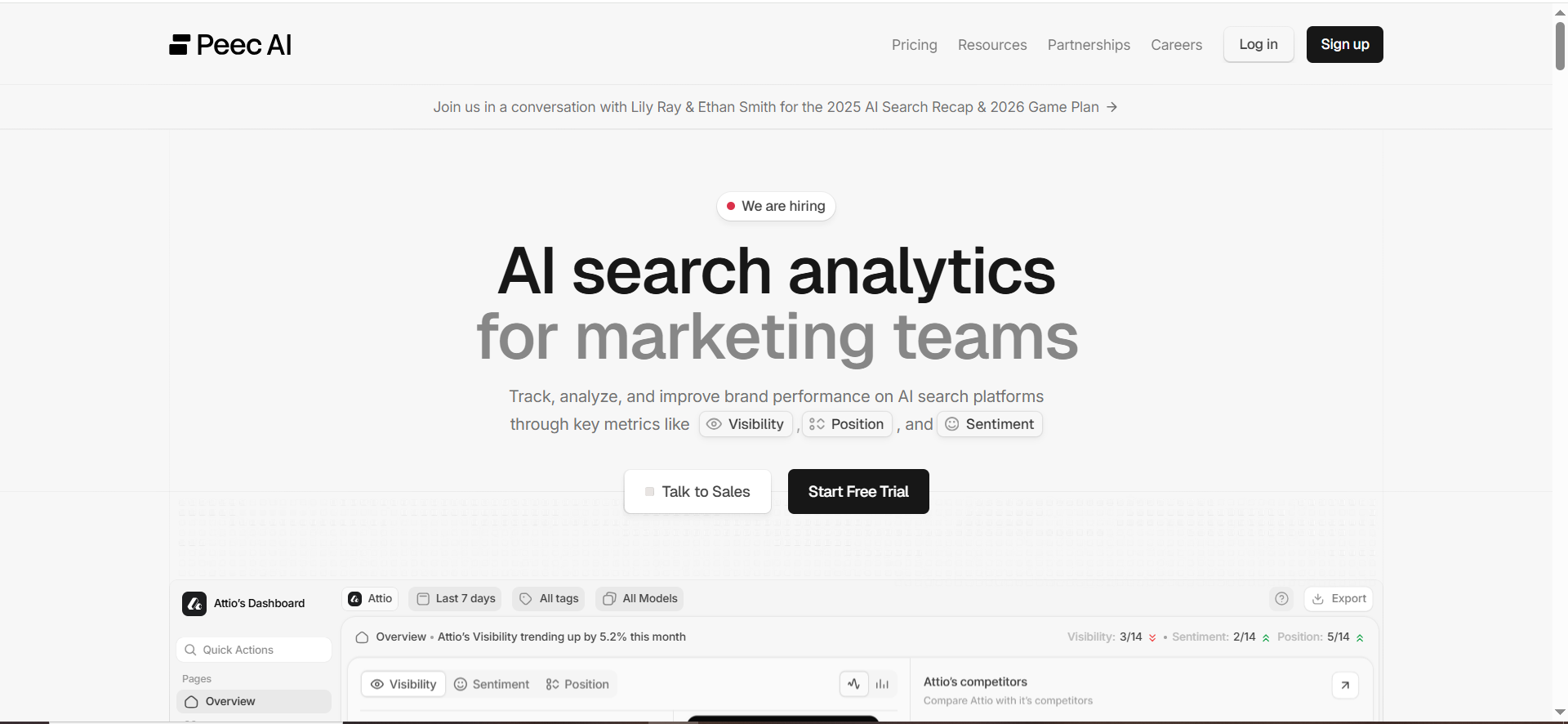
Peec AI is a dedicated AI search analytics platform designed for teams that want to monitor visibility in AI-generated search experiences. It is built around prompts, AI search monitoring, and competitive benchmarking, which makes it one of the most direct alternatives to SE Ranking’s AI Visibility Tracker.
Why teams use it
Peec stands out because it feels purpose-built. It is not trying to be an all-in-one SEO suite. It is focused on helping marketing teams understand how they appear across AI platforms and where competitors are gaining visibility, which is why many teams also look at SaaS AI visibility case studies on mentions, citations, and conversions.
That makes it appealing for teams that want a cleaner, easier-to-understand workflow.
What it’s good for
Peec is especially strong for prompt-based monitoring, competitive benchmarking, and straightforward reporting. If your team wants an AI visibility product that feels native to this category rather than attached to an older SEO workflow, Peec is one of the best options.
When it’s a good fit
Peec is a good fit for growth teams, B2B SaaS marketers, and in-house SEO or content leads who want a dedicated AI visibility tool without immediately stepping into enterprise complexity, especially if they are comparing AI visibility solutions for content optimization teams.
When it’s not a good fit
It may be less ideal for very large enterprise teams that need heavier governance, deeper internal permissions, or a more complex cross-team operating layer, which is why some buyers also research the best enterprise SEO tools.
How to use it
A simple Peec workflow might start with identifying your top commercial and category-level prompts, benchmarking your brand against a few direct competitors, then reviewing which prompts lead to mentions, links, or weak representation as part of a broader brand visibility in AI search process. From there, you can prioritize content and authority-building work based on what AI systems seem to trust.
Key capabilities
Peec’s strongest value is clarity, because it helps teams monitor AI visibility, identify competitor patterns, and understand how their brand is surfacing in AI search without adding unnecessary complexity, similar to what buyers look for in AI visibility tools for competitor benchmarking.
Pricing
Peec AI has paid Starter, Pro, and Advanced plans, plus custom Enterprise pricing. Pricing is publicly listed, but the exact starting dollar amount was not clearly readable in the official pricing source I reviewed.
Free tier?
Peec AI doesn’t appear to offer a free tier, but it does offer a free trial.
Downsides / limitations
The tradeoff with Peec is that it may not offer the same level of enterprise depth as larger platforms. For many growth teams, that is not a problem. For complex organizations, it may matter.
2. AthenaHQ
What it does
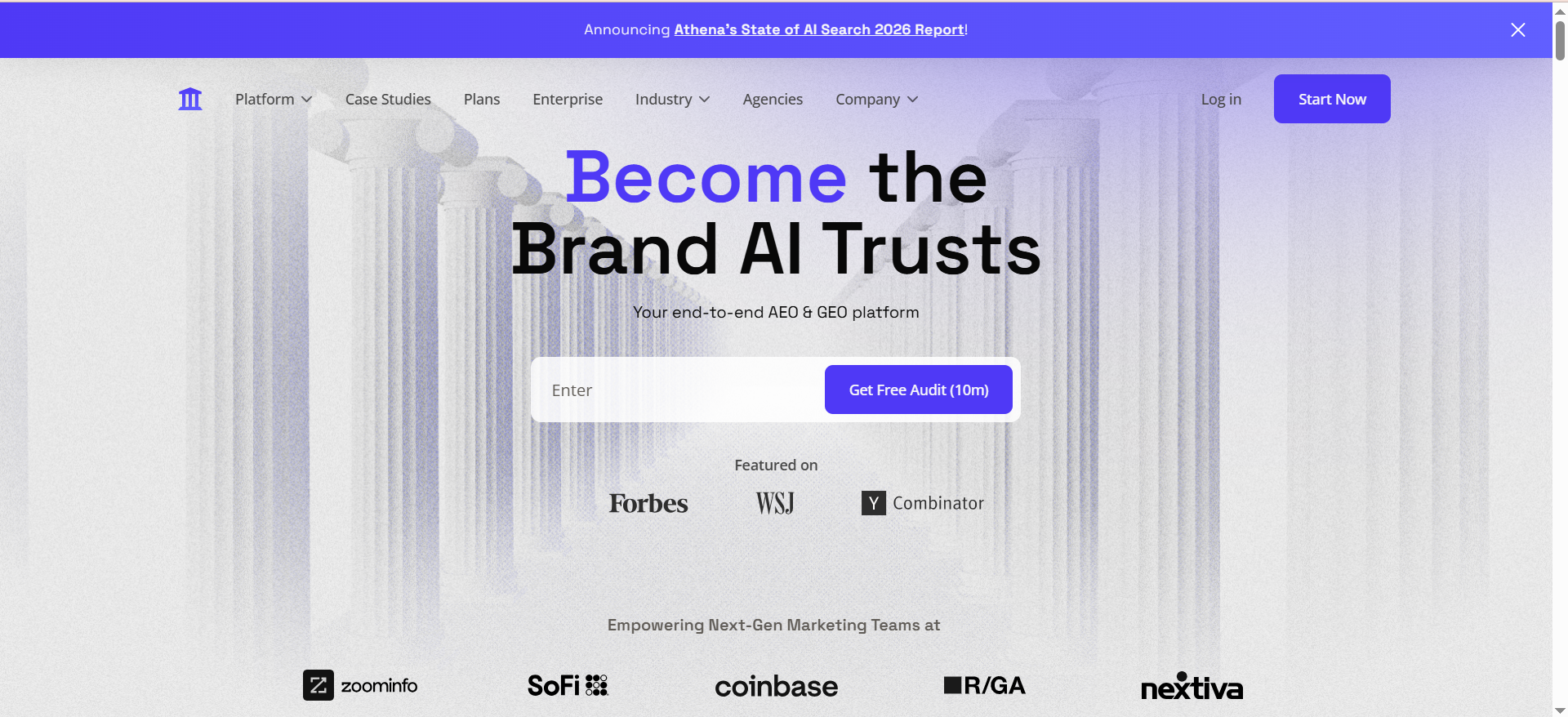
AthenaHQ positions itself as an end-to-end AEO and GEO platform. It is built for teams that want more than visibility snapshots and are looking for a stronger strategic workflow around AI search.
Why teams use it
AthenaHQ is attractive to teams that have already moved beyond early experimentation. Instead of just asking whether they show up in AI answers, they want a system that helps them understand where they are strong, where they are weak, and how to improve.
What it’s good for
AthenaHQ is well suited to mid-market and growth-stage teams that want more operational depth than lightweight monitoring tools usually offer. It is especially useful for teams that expect AI visibility to become a major part of their marketing reporting, often alongside a broader AI search visibility strategy for B2B SaaS.
When it’s a good fit
It is a strong fit when your organization wants a more structured platform for AEO and GEO, and when your team is ready to treat AI search visibility as an ongoing workstream.
When it’s not a good fit
It may be too much for very small teams that are still validating whether AI search matters enough to justify a paid platform.
How to use it
AthenaHQ works best when you organize tracking around product lines, category themes, or brand goals, which is also a useful approach when comparing AI visibility tools for category tracking. That makes it easier to prioritize prompts, compare competitors, and connect visibility data back to actual marketing actions.
Key capabilities
Its main strength is that it feels more like a full operating layer for AI visibility rather than just a dashboard, which is why it can appeal to teams comparing a broader AI visibility platform buyer guide.
Pricing
AthenaHQ’s pricing starts at $295/month for its Self-Serve plan. Enterprise pricing is custom and available by quote.
Free tier?
AthenaHQ doesn’t appear to offer a free tier. It offers a discounted first month, but I did not find a public free trial on the official pricing page I reviewed.
Downsides / limitations
The downside is that it may be more platform than some teams need. If your use case is simple monitoring, AthenaHQ can be more than necessary.
Get Listed / Advertisement
We update this guide monthly. Want your tool featured? Contact: [email protected].
3. LLMrefs
What it does
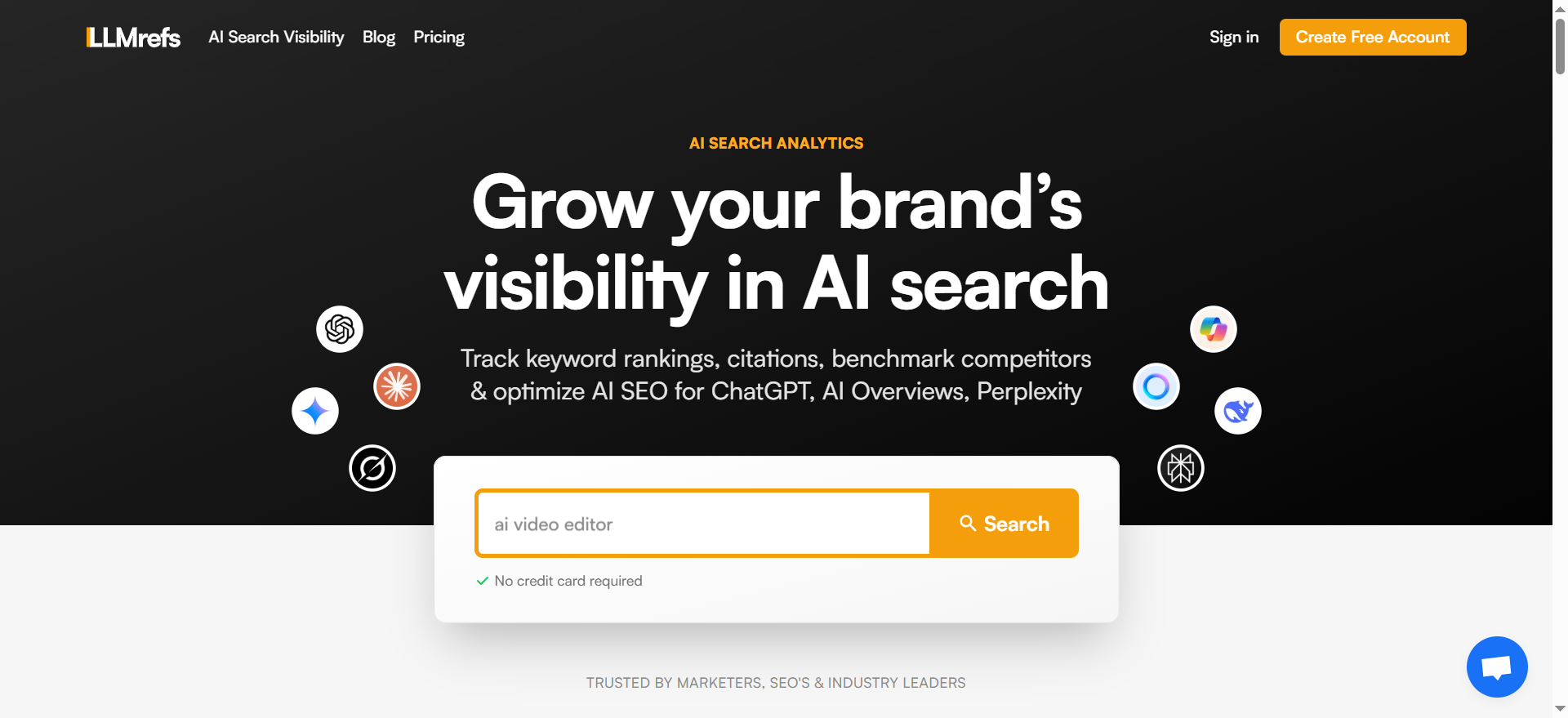
LLMrefs is an AI visibility and GEO tracking platform that is especially attractive to teams approaching this space from a traditional SEO mindset. Its biggest differentiator is that it makes AI visibility easier to approach through keyword-style workflows.
Why teams use it
Many teams want to start tracking AI visibility without fully changing how they think about search. That is where LLMrefs becomes appealing. It gives SEO teams a familiar way to enter the category, which makes it useful for buyers already comparing best SEO rank tracking software.
What it’s good for
LLMrefs is a strong option for smaller teams, agencies, startups, and SEO managers who want a more affordable and approachable tool. It is also useful for organizations that want to move gradually from keyword tracking into AI search analysis.
When it’s a good fit
It is a good fit when budget matters, when you want faster adoption across an SEO-led team, and when you need a more accessible starting point.
When it’s not a good fit
It may be less ideal for teams that want a deeply prompt-native workflow or more advanced AI visibility operations from day one.
How to use it
LLMrefs works well when you start with branded terms, category keywords, and commercial queries, especially if your team is still refining keyword research best practices for SaaS. That makes it easier to see how AI systems surface your brand relative to competitors and where your authority may be weaker.
Key capabilities
Its biggest advantage is usability for SEO-native teams, which makes it a sensible option for buyers also researching the best AI SEO tools.
Pricing
LLMrefs’ pricing starts at $79/month for its All in One plan.
Free tier?
LLMrefs doesn’t offer a free tier, but it does offer a 7-day free trial.
Downsides / limitations
The main tradeoff is that a keyword-first model can miss some of the nuance of prompt-level behavior. If your team is already mature in prompt-based AI search analysis, you may outgrow it.
4. Profound
What it does
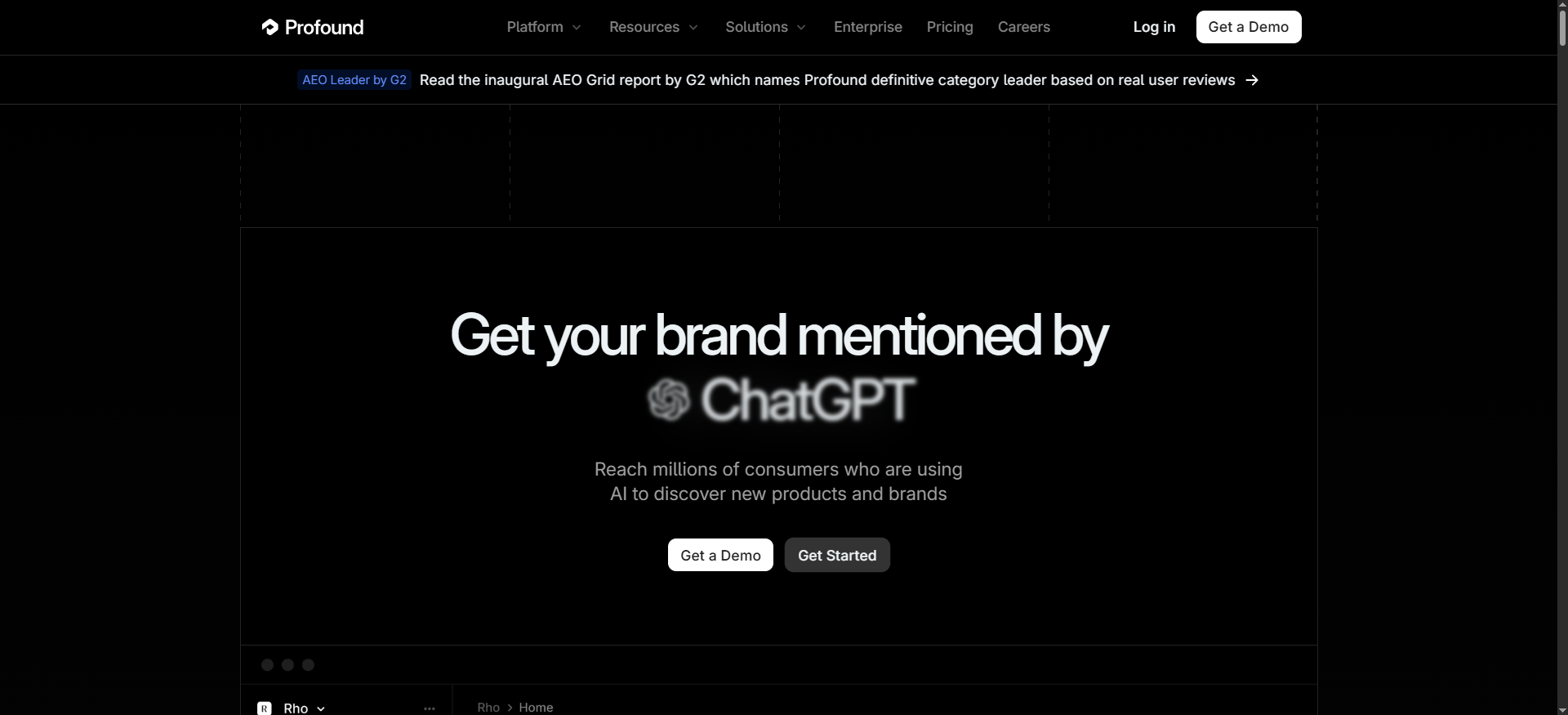
Profound is an enterprise AI visibility and AI search intelligence platform built for larger organizations. It is one of the clearest choices in this category for brands that need scale, governance, and broad internal reporting.
Why teams use it
Enterprise brands often need more than a list of mentions or prompts, so they look for stronger PR and brand messaging for AI visibility alongside executive reporting and operational depth. That is where Profound stands out.
What it’s good for
Profound is best for enterprise organizations, large brands, and teams that want to treat AI visibility as a serious strategic program rather than a side experiment.
When it’s a good fit
It is a strong fit when your organization needs deeper reporting, larger-scale tracking, and broader internal coordination around AI search visibility.
When it’s not a good fit
It is usually not the right first purchase for startups, lean SaaS teams, or buyers who mainly need straightforward monitoring and competitive snapshots.
How to use it
Profound is best used when AI visibility reporting has to reach multiple levels of the organization, especially when reporting AI visibility to leadership is already a requirement. It can support a more mature workflow that ties AI search visibility into content strategy, brand positioning, and executive planning.
Key capabilities
Its key strength is enterprise readiness. That includes scale, internal reporting usefulness, and a stronger sense of operational maturity.
Pricing
Profound’s self-serve pricing starts at $99/month. Enterprise pricing is custom and available by quote.
Free tier?
Profound doesn’t appear to offer a free tier. The official enterprise page is demo-led, and the public source I reviewed did not clearly confirm a free trial.
Downsides / limitations
The downside is obvious: complexity and cost. Profound is strongest when your company is ready for that level of investment and usage.
5. Ziptie
What it does
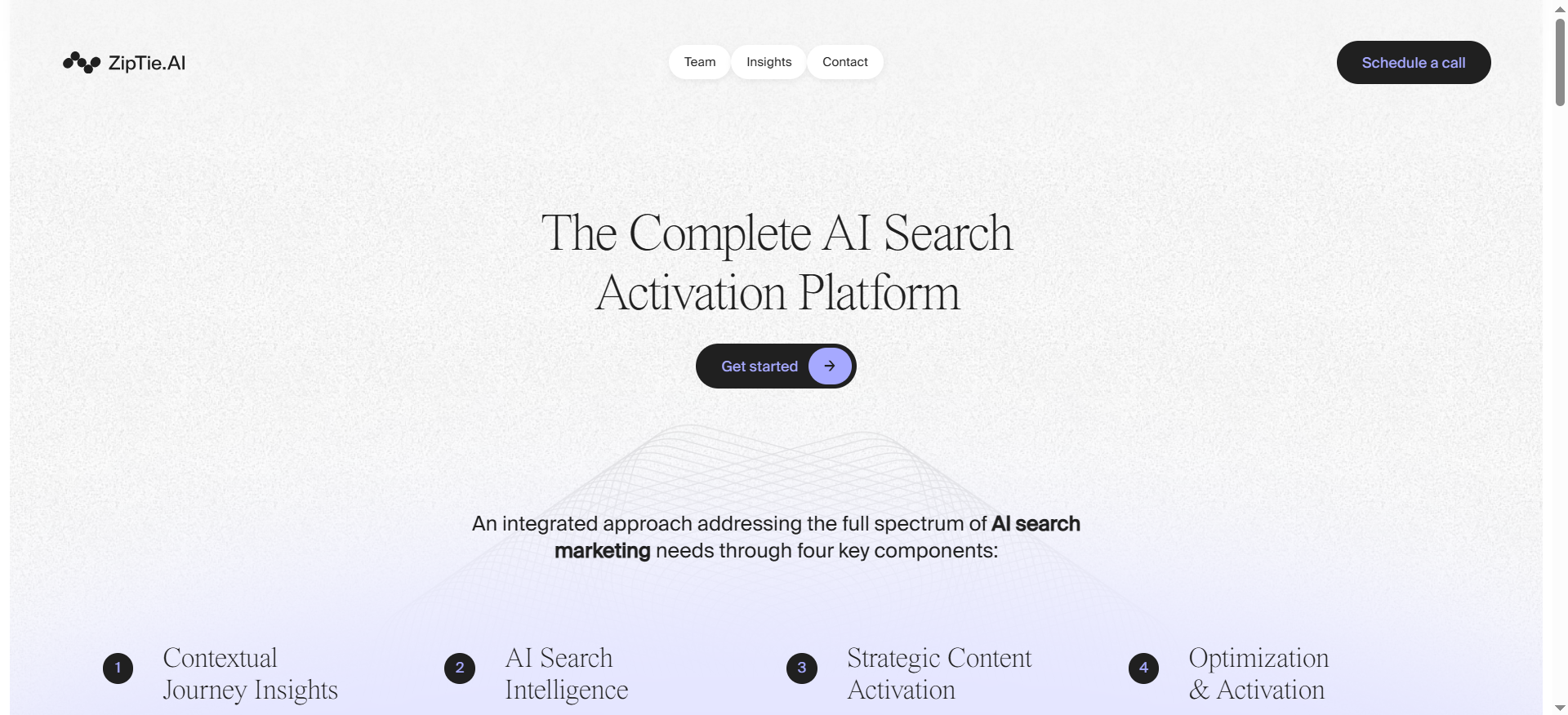
Ziptie is an AI search intelligence tool focused on monitoring visibility and surfacing practical optimization opportunities across AI platforms.
Why teams use it
Ziptie appeals to teams that want a dedicated AI visibility product without the heaviness of an enterprise platform. It offers a focused approach and is often easier to understand than broader systems.
What it’s good for
It is good for practical AI search monitoring, visibility checks, and identifying where a brand may need stronger source presence or better authority signals through a more deliberate AI search visibility audit.
When it’s a good fit
Ziptie is a good fit for lean marketing teams, startups, and growth-stage companies that want a focused AI search tool at a more approachable level.
When it’s not a good fit
It may not be the best option for teams that need very deep reporting, large-scale governance, or a broader all-in-one system.
How to use it
A practical use case for Ziptie is monitoring the prompts and answer environments that matter most for your commercial visibility, then using that data to improve content and authority around the most important gaps with a stronger AEO-ready SaaS blog strategy.
Key capabilities
Its main value is practicality, because it helps teams understand how they appear in AI search and where they can improve without requiring a massive internal process, which overlaps with the best tools for tracking brand visibility in AI search.
Pricing
Ziptie’s pricing starts at $69/month for its Basic plan. It also offers higher Standard and Pro plans, plus custom pricing for larger needs.
Free tier?
Ziptie doesn’t offer a free tier, but it does offer a 14-day free trial.
Downsides / limitations
The main limitation is that it is more focused and narrower than the larger platforms. That is a strength for some teams and a limitation for others.
Which SE Ranking Alternative Is Best for Each Use Case?
Choose Peec AI if you want the strongest all-around dedicated alternative. It is a great fit for teams that want clean dashboards, prompt-based tracking, and a purpose-built AI visibility workflow.
Choose AthenaHQ if you want more depth and a stronger strategic platform. It is the better option when AI visibility is becoming an important part of your operating model.
Choose LLMrefs if you want an easier entry point, especially if your team still thinks in classic SEO terms and prefers keyword-led workflows.
Choose Profound if you are an enterprise brand that needs scale, reporting maturity, and a platform built for bigger teams and bigger stakes.
Choose Ziptie if you want a focused, practical AI visibility product without committing to a heavy system.
Should You Replace SE Ranking Entirely or Use It Alongside an AI Visibility Tool?
For many teams, the right answer is not replacement. It is a combination.
If you already use SE Ranking for your core SEO workflows, you may still want to keep it. Traditional SEO and AI visibility are overlapping but not identical disciplines. Your SEO suite may still be the best place for keyword rankings, audits, and broader competitive monitoring.
A dedicated AI visibility tool becomes valuable when you need stronger insight into how AI systems describe, cite, and surface your brand.
So the smartest setup for many teams is this:Keep your SEO suite for core search operations.Add a dedicated AI visibility platform for GEO-specific reporting and optimization.
That approach is especially useful if you already have internal adoption around a traditional SEO tool and do not want to force everything into a single platform, particularly while building a stronger SEO-to-GEO transition strategy for B2B SaaS.
Tools Better Than SE Ranking for GEO
If your main goal is GEO-specific reporting and optimization, several tools are better suited than SE Ranking because they are built around AI visibility as the core workflow, not as an added feature inside a broader SEO suite.
Peec AI is one of the strongest options for teams that want a dedicated GEO platform with cleaner dashboards and more focused prompt-level tracking. It is easier to use when your team wants to monitor how your brand appears across AI platforms without digging through traditional SEO workflows.
AthenaHQ is a stronger choice for teams that want deeper GEO operations, and it is better suited to companies treating AI visibility as an active growth channel.
LLMrefs is a good fit for SEO-led teams that want a more affordable way to move into GEO, especially if your team still thinks in keyword clusters and wants a bridge between traditional search reporting and AI visibility.
Profound is the better option for enterprise brands that need GEO reporting at scale, especially when AI search visibility needs to be managed across multiple stakeholders, regions, or product lines with a stronger AI strategic visibility approach.
Ziptie is another solid alternative for teams that want dedicated AI search monitoring without buying into a large enterprise platform. It works well when the goal is focused AI visibility tracking with practical optimization insights.
The key difference is simple: SE Ranking is still an SEO platform first, while these tools are built more directly around AI visibility, citations, prompts, and answer-level reporting. If your team’s priority is GEO rather than general SEO, a dedicated tool usually gives you a better workflow, especially when evaluating the best AI visibility tool for GEO.
SE Ranking AI Results Tracker Alternatives
If you are specifically looking for SE Ranking AI Results Tracker alternatives, you are probably comparing tools that can give you stronger visibility into how your brand appears inside AI-generated answers.
SE Ranking is useful as a starting point because it allows teams to monitor AI search performance within an existing SEO suite. That makes it convenient for current users. But for many teams, the limitation is that they eventually want more dedicated AI search reporting, broader answer-level visibility, and clearer recommendations on where they are winning or losing in AI-generated results.
That is why the best alternatives usually come down to five names: Peec AI, AthenaHQ, LLMrefs, Profound, and Ziptie.
Peec AI is the best all-around alternative for teams that want a purpose-built AI visibility platform with simple reporting and prompt-based tracking.
AthenaHQ is a better fit for teams that want more strategic depth and a stronger operational layer around AEO and GEO.
LLMrefs is often the easiest option for teams coming from a traditional SEO background because it makes AI visibility feel more familiar.
Profound is the strongest enterprise-focused alternative when the reporting needs are larger and the stakes are higher.
Ziptie fits teams that want dedicated AI search monitoring at a more focused and practical level.
If the issue with SE Ranking is not data access but AI reporting depth, these alternatives are the ones most likely to feel like an upgrade, especially if you are using an AI visibility platform buyer guide to compare them.
Best Budget AI Visibility Tracking Tool
The best budget AI visibility tracking tool depends on how your team works, but for most smaller teams, LLMrefs and Ziptie stand out first, especially if you are also comparing other best cheap SEO tools.
LLMrefs is one of the strongest budget-friendly choices because it gives SEO-led teams an approachable way to start tracking AI visibility without forcing a completely new workflow. It is especially useful if your team still thinks in keywords and wants a lower-friction transition into GEO.
Ziptie is another strong option for teams that want focused AI search monitoring and practical insights without paying for a more expensive platform. It is a good fit for startups, lean SaaS teams, and marketers who want dedicated AI visibility tracking without enterprise-level cost.
If your budget is tight but you still want a cleaner dedicated platform, Peec AI can also be worth considering, especially if ease of use matters more than having the lowest possible entry price.
The real takeaway is that “best budget” does not always mean “cheapest.” It means getting a tool your team will actually use. A lower-priced platform is only a good value if it gives you reporting you can understand, act on, and share internally, especially when comparing AI visibility solutions for content optimization teams. For some SEO-led teams, that makes LLMrefs the best budget option. For teams that want a more practical AI-native workflow, Ziptie may be the better fit.
Can SE Ranking Replace a Dedicated GEO Platform?
For some teams, SE Ranking can be enough. For others, it cannot fully replace a dedicated GEO platform.
If your team already uses SE Ranking for rank tracking, audits, and broader SEO workflows, its AI visibility features may be enough to help you start monitoring how your brand appears across AI search. In that case, SE Ranking works well as an efficient entry point because it keeps everything inside one platform.
But once AI visibility becomes a more serious workstream, the limitations become clearer.
A dedicated GEO platform is usually better when you need:
- more focused prompt or answer-level reporting
- stronger visibility into citations and source patterns
- cleaner reporting for stakeholders
- more mature workflows around AI search monitoring
- clearer optimization insights tied directly to GEO
That is the main difference: SE Ranking can introduce you to AI visibility, but a dedicated GEO platform is usually better when AI search reporting becomes something your team actively manages and acts on through a more deliberate AI search visibility audit.
So, can SE Ranking replace a dedicated GEO platform?
Yes, for teams that only need a starting point.
No, for teams that want AI visibility to become a serious reporting and optimization function.
That distinction matters because many teams do not actually need to replace SE Ranking completely. In practice, the best setup is often to keep SE Ranking for traditional SEO work and add a dedicated GEO tool when deeper AI reporting becomes necessary.
FAQs
What is the best SE Ranking AI Visibility Tracker alternative?
Is SE Ranking’s AI Visibility Tracker enough on its own?
Which alternative is best for smaller teams?
Which tool is best for enterprise AI visibility tracking?
What is the difference between keyword-based and prompt-based AI visibility tracking?
Should I replace my SEO suite with a dedicated AI visibility tool?
Final Verdict
SE Ranking’s AI Visibility Tracker is a solid starting point, especially if you already use the SE Ranking ecosystem and want a convenient way to begin monitoring AI search visibility.
But if you are specifically searching for SE Rankings AI Visibility Tracker alternatives, you are probably looking for more focus, better AI answer reporting, and a dedicated GEO workflow.
For most teams, the shortlist is clear.
Choose Peec AI if you want the best overall dedicated alternative.
Choose AthenaHQ if you want more workflow depth and a stronger platform feel.
Choose LLMrefs if you want the most accessible SEO-to-GEO bridge.
Choose Profound if you need enterprise-grade scale and reporting.
Choose Ziptie if you want practical AI search monitoring without unnecessary complexity.
The best choice depends on how your team works, how mature your AI visibility program is, and how much reporting depth you actually need, especially if you are thinking about evergreen content visibility in AI search. But one thing is clear: as AI search becomes more important, more teams will want tools built specifically for that job, not just an extra feature inside a traditional SEO platform.
Get Listed / Advertisement
We update this guide monthly. Want your tool featured? Contact: [email protected].