

TL;DR
Running a DTC brand without tracking what people say about your products is like shipping orders without checking inventory — you are operating blind on the one thing that determines whether customers come back or churn. Brand monitoring tools scan social platforms, review sites, forums, news outlets, podcasts, and even AI search engines for every mention of your brand, products, and competitors. They surface sentiment shifts before they become PR fires, flag competitor moves before they eat into your market share, and hand your marketing team the real-time feedback loop that paid media dashboards cannot provide.
This guide breaks down the five strongest brand monitoring tools for DTC brands in 2026: Brandwatch, Brand24, Sprout Social, Talkwalker, and Yotpo. Each section covers what the tool does, why DTC teams use it, pricing, free tier availability, key capabilities, and honest limitations. If you are a CMO, content lead, or head of growth at a consumer brand managing volume and sentiment, this comparison gives you the information you need to shortlist fast and decide with confidence.
Best Brand Monitoring Tools for DTC Brands (Quick Comparison)
| Tool | Best For | Starting Price | Free Tier |
|---|---|---|---|
| Brandwatch | Enterprise DTC brands needing deep consumer intelligence | ~$800/mo (custom) | No |
| Brand24 | Mid-market DTC brands wanting affordable real-time monitoring | $199/mo | Free trial |
| Sprout Social | DTC teams combining social management with listening | $199/seat/mo | 30-day trial |
| Talkwalker | Global DTC brands with visual-heavy products | ~$500/mo (custom) | No |
| Yotpo | Shopify-native DTC brands focused on reviews and UGC | $79/mo (Reviews) | Free starter |
1. Brandwatch
What It Does
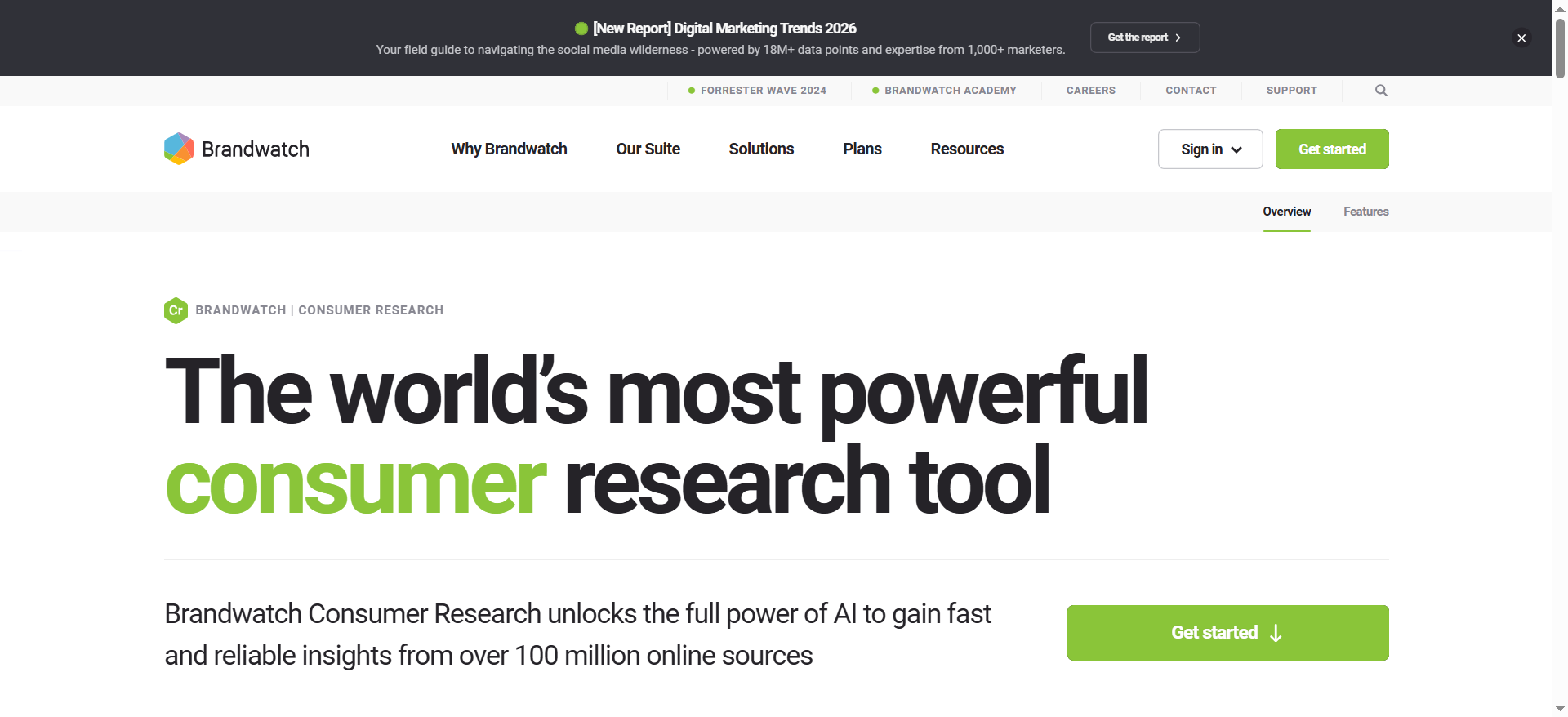
Brandwatch is an enterprise-grade consumer intelligence platform that combines social listening, audience research, and trend analysis into a single dashboard. It ingests data from social media platforms, blogs, forums, news sites, review portals, and broadcast media, then applies AI-driven analytics to segment conversations, detect anomalies, and surface actionable insights. For DTC brands, this means you can track how customers talk about your products across every channel where conversations happen, from Reddit threads about your latest product launch to TikTok reviews that go viral overnight.
Why Teams Use It
DTC marketing teams turn to Brandwatch when they outgrow simpler monitoring tools and need to understand the full picture behind brand conversations. The platform does not just count mentions — it breaks them down by audience segment, geography, sentiment, and topic. Growth-stage DTC brands use it to track product perception shifts after major launches, monitor competitor positioning in real time, and identify emerging trends before they hit mainstream awareness. The consumer intelligence layer is what sets Brandwatch apart: it lets you research audiences, map conversation clusters, and build custom dashboards that connect social data to business decisions.
What It Is Good For
Brandwatch excels when your DTC brand has reached a scale where volume and complexity demand enterprise tooling. If you are managing multiple product lines, selling in several markets, or running large-scale influencer campaigns, Brandwatch gives you the depth and flexibility to monitor all of it from one place. The image recognition feature is particularly valuable for DTC brands in fashion, beauty, and food — it can detect your product in user-generated photos even when your brand is not tagged or mentioned in the caption. The custom dashboard builder means each team member, from the CMO to the social media coordinator, can have a view tailored to their specific KPIs.
When It Is a Good Fit
Brandwatch fits DTC brands with annual monitoring budgets above $10,000 that need consumer intelligence beyond basic mention tracking. If your team is making strategic decisions based on social data — adjusting product development, refining positioning, or planning market entry — the depth of Brandwatch's analytics justifies the investment. It is also the right choice for DTC brands that work with agencies, since the platform supports multi-user collaboration with role-based access and automated reporting that can be scheduled and distributed to stakeholders.
When It Is Not a Good Fit
If you are a bootstrapped DTC brand doing under $5M in annual revenue, Brandwatch is likely overkill both in terms of cost and complexity. The platform requires meaningful onboarding time, and the custom pricing model means you will not know your exact cost until you go through a sales process. Smaller DTC teams that just need to track mentions and sentiment on a handful of keywords will find faster time-to-value with simpler tools like Brand24. The lack of a free tier or self-serve pricing also makes it a poor fit for teams that want to test before committing.
How to Use It
Getting started with Brandwatch involves setting up queries (the keywords, brand names, and competitor terms you want to track), configuring dashboards for different team members, and establishing alert rules for spikes in mentions or sentiment shifts. Most DTC brands start with three core queries: their own brand name and product names, their top three to five competitors, and category-level terms that capture broader industry conversations. From there, you refine segments, set up automated reports, and begin using the consumer research tools to dig deeper into audience behavior and preferences.
Key Capabilities
Brandwatch delivers AI-powered sentiment analysis that goes beyond positive and negative to detect emotions like frustration, excitement, and confusion. The image recognition engine scans visual content across platforms to find your products even in untagged posts. Audience segmentation lets you break down who is talking about your brand by demographics, interests, and behavioral patterns. The competitive benchmarking module tracks share of voice, sentiment comparison, and trending topics across your competitive set. Automated reporting can be scheduled and distributed to any stakeholder, and the API supports integration with BI tools, CRMs, and marketing automation platforms.
Pricing
Brandwatch uses custom pricing only, starting at approximately $800 per month for a single user. Real-world costs reported by users range from $800 to $5,000+ per month depending on data volume, number of users, and which product modules you activate. All plans are billed annually. The platform offers three product lines: Consumer Intelligence (social listening and research), Social Media Management (publishing and engagement), and Influencer Marketing (discovery and campaign management). Each can be purchased separately or bundled.
Free Tier?
No. Brandwatch does not offer a free tier or a self-serve free trial. You need to book a demo with their sales team to access the platform.
Downsides and Limitations
The biggest limitation for DTC brands is the opaque pricing — you cannot budget for Brandwatch without going through a sales conversation first. The learning curve is steeper than most alternatives, and smaller teams may find the feature set overwhelming when they only need core monitoring capabilities. Annual billing with no monthly option locks you in, and the lack of native ecommerce integrations means you will need to build custom connections if you want to tie social listening data directly to your Shopify or BigCommerce store data.
2. Brand24
What It Does
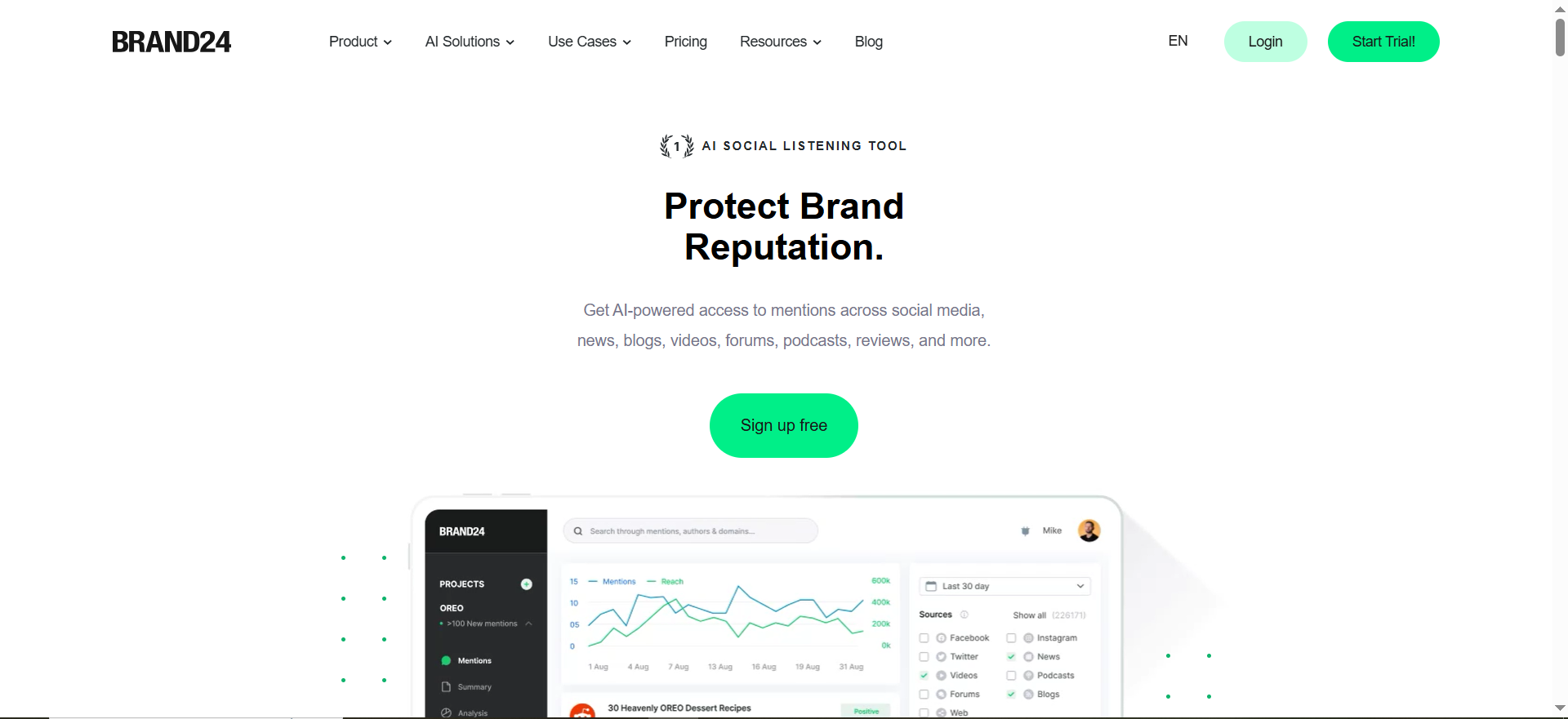
Brand24 is a real-time brand monitoring and social listening platform built for speed and accessibility. It scans social media platforms, news sites, blogs, forums, review sites, podcasts, newsletters, and online marketplaces for mentions of your brand, products, competitors, and any keywords you define. For DTC brands, Brand24 serves as an always-on radar system that catches customer feedback, product reviews, influencer mentions, and competitor activity the moment they appear online. The platform offers AI Visibility as an add-on module, which monitors how AI models like ChatGPT, Claude, Gemini, Perplexity, DeepSeek, and Grok reference and recommend your brand — a capability that matters increasingly as consumers use AI search to discover products.
Why Teams Use It
DTC marketing teams choose Brand24 because it delivers the core monitoring functionality they need without the enterprise pricing or complexity that comes with platforms like Brandwatch or Talkwalker. The setup takes minutes: you enter your keywords, and Brand24 starts tracking immediately. Teams use it to catch negative reviews before they spread, identify micro-influencers who are already talking about their products, track the performance of product launches in real time, and monitor competitor campaigns to understand what messaging resonates in their category. The AI-powered anomaly detection flags unusual spikes in mentions or sentiment shifts automatically, so teams can respond before small issues become viral problems.
What It Is Good For
Brand24 is strongest when DTC brands need reliable, real-time monitoring at a price point that does not require executive approval. It covers the channels that matter most for consumer brands: Instagram, TikTok, YouTube, Reddit, Twitter/X, Facebook, review sites, and forums. The sentiment analysis engine categorizes mentions as positive, negative, or neutral and tracks sentiment trends over time, giving DTC teams a clear view of how brand perception moves in response to campaigns, product changes, or external events. The automated PDF reports are particularly useful for DTC brands that report to investors or board members — you can schedule weekly or monthly brand health reports and have them delivered automatically.
When It Is a Good Fit
Brand24 fits DTC brands at the growth stage that are spending between $200 and $600 per month on monitoring and need solid coverage without enterprise overhead. If your team has one to five people managing brand and social, and you need to track mentions, measure sentiment, monitor competitors, and generate reports, Brand24 covers all of those use cases. It is also the right choice for DTC brands that sell through marketplaces like Amazon, since it monitors marketplace reviews alongside social mentions. The LLM monitoring add-on makes it particularly relevant for DTC brands that are investing in AI visibility and want to understand how AI search engines represent their products.
When It Is Not a Good Fit
Brand24 reaches its limits when DTC brands need deep consumer research, audience segmentation, or visual content monitoring at scale. The platform does not offer image recognition, so if your products appear frequently in untagged photos (common in fashion, beauty, and food), you will miss those mentions. The data depth and customization options are thinner than enterprise platforms, and the mention volume caps on lower tiers can be restrictive for brands with high social visibility. If you need to combine social listening with publishing and engagement management in one platform, you will need to pair Brand24 with a separate social media management tool.
How to Use It
Setting up Brand24 takes about ten minutes. You create a project for each keyword or phrase you want to track — typically your brand name, product names, key competitor names, and category terms. The platform starts collecting mentions immediately and presents them in a real-time feed. From there, you configure email or Slack alerts for specific conditions (sentiment drops, mention volume spikes, mentions from high-influence accounts), set up automated reports, and begin using the analytics dashboard to track trends over time. Most DTC teams review the dashboard daily and run weekly reports to share with stakeholders.
Key Capabilities
Brand24 provides real-time mention tracking across social media, news, blogs, forums, podcasts, and review sites. The AI-powered sentiment analysis categorizes every mention and tracks sentiment trends over time. Anomaly detection flags unusual activity before it becomes a crisis. The Discussion Volume chart shows mention volume over time, making it easy to spot the impact of campaigns or PR events. Influence scoring ranks the sources mentioning your brand by reach and engagement, helping you identify high-value advocates. The AI mention tracking feature monitors how LLMs reference your brand in AI search results. Automated PDF reports can be scheduled and delivered to any email address, and integrations include Slack, Google Analytics, and API access for custom connections.
Pricing
Brand24 offers five pricing tiers, all priced below at annual billing rates: Individual at $199 per month, Team at $299 per month, Pro at $399 per month, Business at $599 per month, and Enterprise starting from $1,499 per month. Monthly billing is available at higher rates (Individual $249, Team $349, Pro $499, Business $699). The Individual plan suits solo practitioners tracking up to three keywords with 2,000 mentions per month. The Team plan adds unlimited users, 10,000 mentions, and hourly updates. The Pro plan includes advanced AI features, real-time updates, and white-label reporting, making it popular with small agencies and growing DTC teams. The Business plan supports up to 100,000 mentions per month, advanced reports, and a dedicated client success lead. The Enterprise plan offers custom keyword counts, unlimited AI features, and dedicated consulting for large-scale operations. AI Visibility (LLM monitoring) is available as a paid add-on across all tiers.
Free Tier?
No permanent free tier, but Brand24 offers a free trial that lets you test the platform with your actual keywords before committing.
Downsides and Limitations
Brand24 lacks image recognition, so visual mentions of your products without text tags are missed. The mention volume caps on lower tiers can be restrictive for DTC brands with high social visibility — you may hit limits and need to upgrade sooner than expected. The analytics depth does not match enterprise platforms like Brandwatch or Talkwalker, and the audience segmentation capabilities are basic. There is no built-in social media management, so you will need a separate tool for publishing and engagement.
3. Sprout Social
What It Does
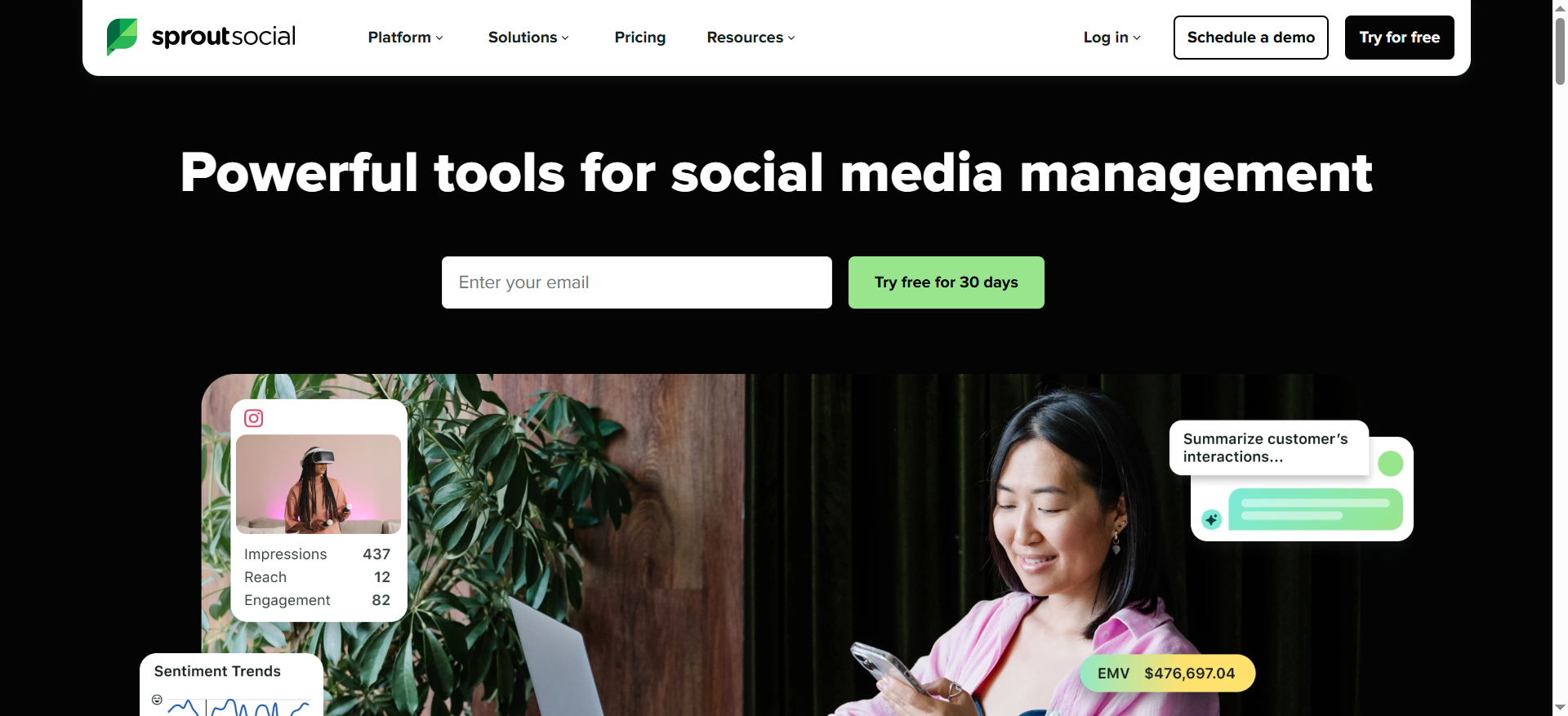
Sprout Social is a unified social media management platform that combines publishing, engagement, analytics, and social listening in a single interface. For DTC brands, it serves as the command center for all social media activity: scheduling posts, responding to customer messages, analyzing performance, and monitoring brand mentions and industry conversations. The social listening module (available as an add-on) extends Sprout beyond management into monitoring territory, tracking brand mentions, sentiment, competitor activity, and trending topics across social platforms and the web.
Why Teams Use It
DTC marketing teams choose Sprout Social when they want one platform to handle both the doing (publishing, engaging) and the knowing (listening, analyzing). Instead of juggling a social media scheduler, a community management tool, and a separate listening platform, Sprout consolidates everything. This matters for DTC brands because the speed of response is a competitive advantage — when a customer posts a negative review or a product goes viral on TikTok, the team that spots it and responds first wins. Sprout's unified inbox pulls every mention, comment, DM, and review into one stream, so nothing gets missed and response times stay tight.
What It Is Good For
Sprout Social shines when DTC brands need operational efficiency across social media management and monitoring. The publishing tools let you plan and schedule content across all major platforms from a single calendar. The engagement tools route incoming messages by type, sentiment, or priority, making it easy for teams to divide and handle customer interactions without stepping on each other. The analytics module provides cross-platform performance reports that connect social activity to business metrics. For DTC brands running customer service through social channels (which is increasingly common), Sprout's workflow and tagging system makes it possible to track resolution times, categorize issues by type, and measure customer satisfaction.
When It Is a Good Fit
Sprout Social fits DTC brands that want to consolidate their social stack into one platform. If your team is currently using three or four different tools for scheduling, engagement, analytics, and monitoring, Sprout replaces all of them. It is a good fit for DTC brands with teams of two to ten people managing social media, where collaboration features like message approval workflows, task assignments, and shared content calendars add real value. The platform is also strong for DTC brands that treat social media as a customer service channel, since the unified inbox and CRM-like contact profiles make it easy to track customer history across interactions.
When It Is Not a Good Fit
Sprout Social's per-seat pricing model makes it expensive for larger teams — adding users at $199 to $399 each adds up quickly. The social listening module is a paid add-on that can significantly increase your total cost, and its depth does not match dedicated listening platforms like Brandwatch or Talkwalker. If your primary need is deep brand monitoring and consumer intelligence rather than social media management, Sprout is not the most cost-effective choice. The platform also lacks native ecommerce integrations for review monitoring and UGC collection, so DTC brands that need those capabilities will still need supplementary tools.
How to Use It
DTC teams typically start by connecting their social profiles (Instagram, Facebook, TikTok, Twitter/X, LinkedIn, Pinterest) to Sprout Social. From there, you set up the publishing calendar with your content plan, configure the Smart Inbox to route different message types (mentions, DMs, comments, reviews) to the right team members, and establish reporting dashboards for the KPIs that matter to your brand. If you add the social listening module, you create topics around your brand, competitors, and industry keywords, then monitor the listening dashboard alongside your engagement feed.
Key Capabilities
Sprout Social provides a unified Smart Inbox that aggregates all social messages, mentions, and comments into one manageable stream. The publishing suite supports scheduling, content calendar management, and optimal send time suggestions. Analytics cover cross-platform performance with exportable reports and custom dashboards. The social listening add-on tracks mentions, sentiment, share of voice, and trending topics. Workflow tools include message approval chains, task assignments, and team performance reporting. The CRM-like contact profiles store interaction history for each customer, and the Employee Advocacy add-on enables employee advocacy programs for extending social reach. Integrations include Salesforce, HubSpot, Zendesk, Shopify, and Google Analytics.
Pricing
Sprout Social charges per seat per month across five tiers: Essentials at $79 per seat per month with five social profiles and core publishing and reporting features, Standard at $199 per seat per month with five social profiles plus keyword monitoring and review management, Professional at $299 per seat per month with unlimited profiles and competitor insights, Advanced at $399 per seat per month with AI-assisted messaging and sentiment analysis, and Enterprise with custom pricing. All prices are for annual billing. Social Listening and Premium Analytics are separate add-ons that can significantly increase the total cost. A 30-day free trial is available without a credit card.
Free Tier?
No permanent free tier. Sprout Social offers a 30-day free trial that gives you access to test the platform.
Downsides and Limitations
The per-seat pricing model is the biggest pain point for DTC brands — a five-person team on the Professional plan pays $1,495 per month before add-ons, though the newer Essentials tier at $79 per seat provides a lower entry point for teams that only need publishing and basic analytics. Social Listening being a paid add-on rather than a core feature means the total cost for monitoring plus management can be significantly higher than the base price suggests. The listening depth does not match dedicated platforms, and image recognition for untagged visual mentions is not available. DTC brands that primarily need monitoring rather than management will find better value in dedicated listening tools.
4. Talkwalker
What It Does
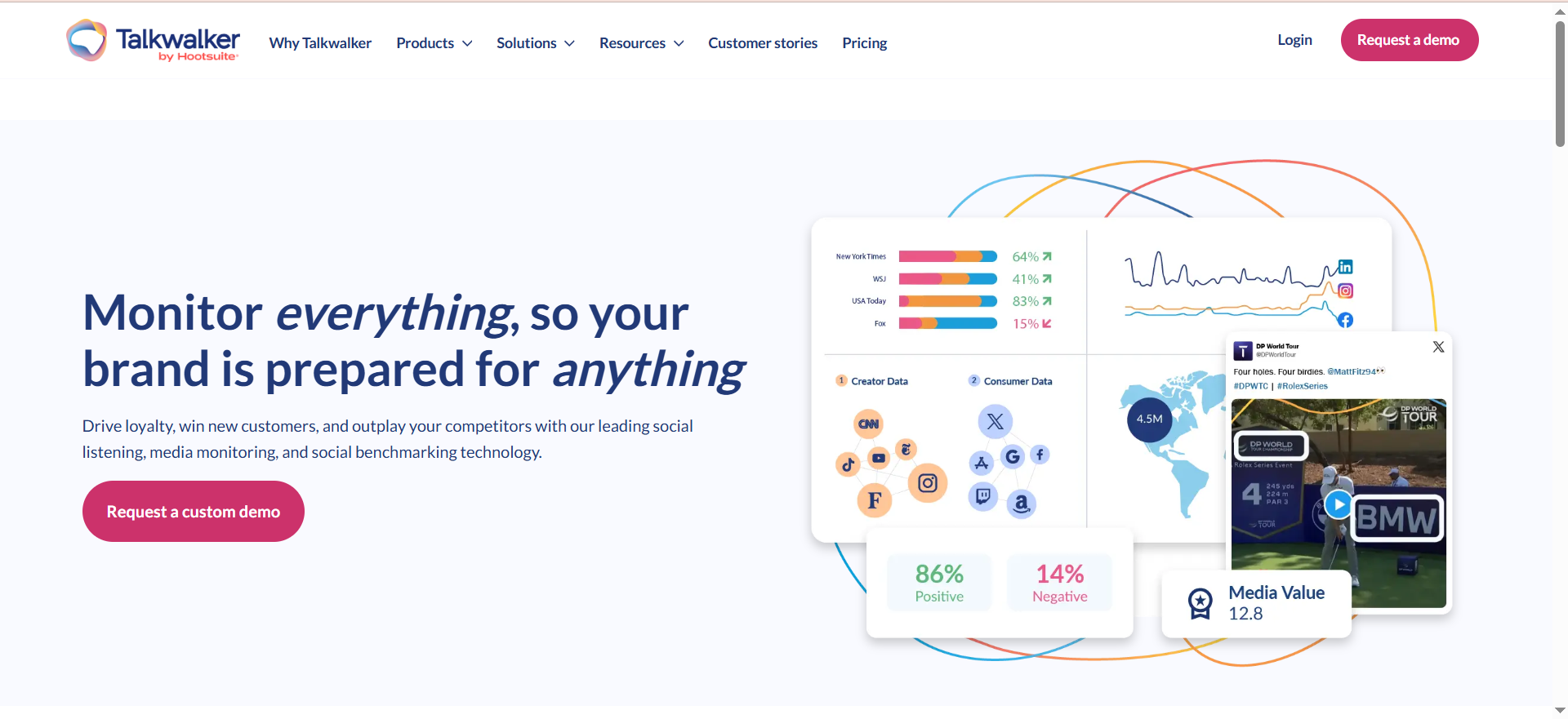
Talkwalker is an AI-powered consumer intelligence and social listening platform that monitors brand conversations across social media, news, blogs, forums, print media, broadcast, podcasts, and review sites. What distinguishes Talkwalker for DTC brands is its visual monitoring capability: the Blue Silk AI engine can detect your product logos, packaging, and products in images and videos across 150 million+ sources, even when your brand is not tagged or mentioned in the text. For DTC brands in visually-driven categories like fashion, beauty, food, and home goods, this means capturing a layer of brand exposure that text-only monitoring tools miss entirely.
Why Teams Use It
DTC brands choose Talkwalker when visual brand monitoring is a priority. Consumer products get photographed, unboxed, reviewed on video, and shared in lifestyle posts constantly — and the majority of that content does not include a brand tag or mention. Talkwalker's image recognition closes that gap. Teams also use Talkwalker for its multilingual sentiment analysis, which is critical for DTC brands selling internationally. The platform processes content in 187 languages, so a DTC skincare brand selling in the US, Europe, and Asia can monitor brand perception across all markets from a single dashboard. The competitive intelligence features let teams benchmark their share of voice, sentiment, and trend alignment against competitors in real time.
What It Is Good For
Talkwalker is strongest when DTC brands need to monitor visual content, track global sentiment across multiple languages, and benchmark against competitors with enterprise-level data depth. The Blue Silk AI engine does not just detect logos — it can identify products, scenes, and brand associations in visual content, giving DTC teams insight into how their products appear in real-world contexts. The trend prediction feature uses AI to identify emerging topics and conversations before they peak, which is valuable for DTC brands that want to ride trends early rather than react late. The automated reporting and alert system supports real-time notifications for sentiment shifts, mention volume spikes, and competitor activity.
When It Is a Good Fit
Talkwalker fits DTC brands that sell physical products in visually-driven categories and need to capture the full scope of brand mentions, including untagged photos and videos. If your brand has international presence and needs multilingual monitoring, Talkwalker's language coverage is a significant advantage. It is also a good fit for DTC brands with dedicated analytics or insights teams that can leverage the platform's depth — the consumer intelligence capabilities are extensive, and teams that invest time in setting up custom dashboards and reports get the most value. Brands with annual monitoring budgets of $6,000 to $26,000+ will find Talkwalker's pricing within range.
When It Is Not a Good Fit
Talkwalker is not the right choice for small DTC brands looking for simple, affordable monitoring. The pricing starts at $500 per month and scales up significantly for enterprise features, which puts it out of reach for early-stage brands. The platform does not include social media management tools (no publishing or engagement), so you will need a separate tool for those functions. The onboarding and learning curve are more involved than simpler tools like Brand24, and the custom pricing model means budget planning requires a sales conversation.
How to Use It
Setting up Talkwalker involves defining your monitoring queries (brand names, product names, competitors, category terms), configuring the visual recognition engine to detect your specific products and logos, and building dashboards for different team members. Most DTC teams start with brand monitoring and competitive tracking queries, then expand to category-level listening and trend tracking. The alert system can be configured to notify teams via email or Slack when specific conditions are met — sentiment drops below a threshold, mention volume spikes above a set level, or a high-influence account mentions your brand.
Key Capabilities
Talkwalker delivers Blue Silk AI-powered visual recognition that detects brand logos, products, and packaging in images and videos across 150 million+ sources. Multilingual sentiment analysis covers 187 languages for global DTC brand monitoring. Competitive benchmarking tracks share of voice, sentiment comparison, and trending topics across your competitive set. Trend prediction uses AI to identify emerging conversations before they peak. The platform monitors social media, news, blogs, forums, print, broadcast, podcasts, and review sites. Automated reporting supports scheduled distribution with custom dashboards. API access enables integration with BI tools, CRMs, and marketing platforms.
Pricing
Talkwalker uses custom pricing with plans starting at approximately $500 per month ($6,000 annually) for the Core plan. The Corporate plan is approximately $1,000 per month ($12,000 annually), and the Enterprise plan runs approximately $2,200 per month ($26,400 annually). Pricing is not published publicly, and exact costs depend on data volume, features needed, and number of users. All plans require contacting sales for a quote.
Free Tier?
No. Talkwalker does not offer a free tier or a self-serve free trial. Access requires a demo with their sales team.
Downsides and Limitations
The lack of transparent pricing forces DTC brands into a sales process before they can budget or compare costs. There is no social media management built in, so teams need a separate tool for publishing and engagement. The minimum price point of $500 per month is too high for early-stage DTC brands, and the enterprise-grade feature set can be overwhelming for small teams. Setup and onboarding require more time investment than simpler alternatives, and the platform does not have native ecommerce integrations for connecting listening data directly to store performance metrics.
5. Yotpo
What It Does
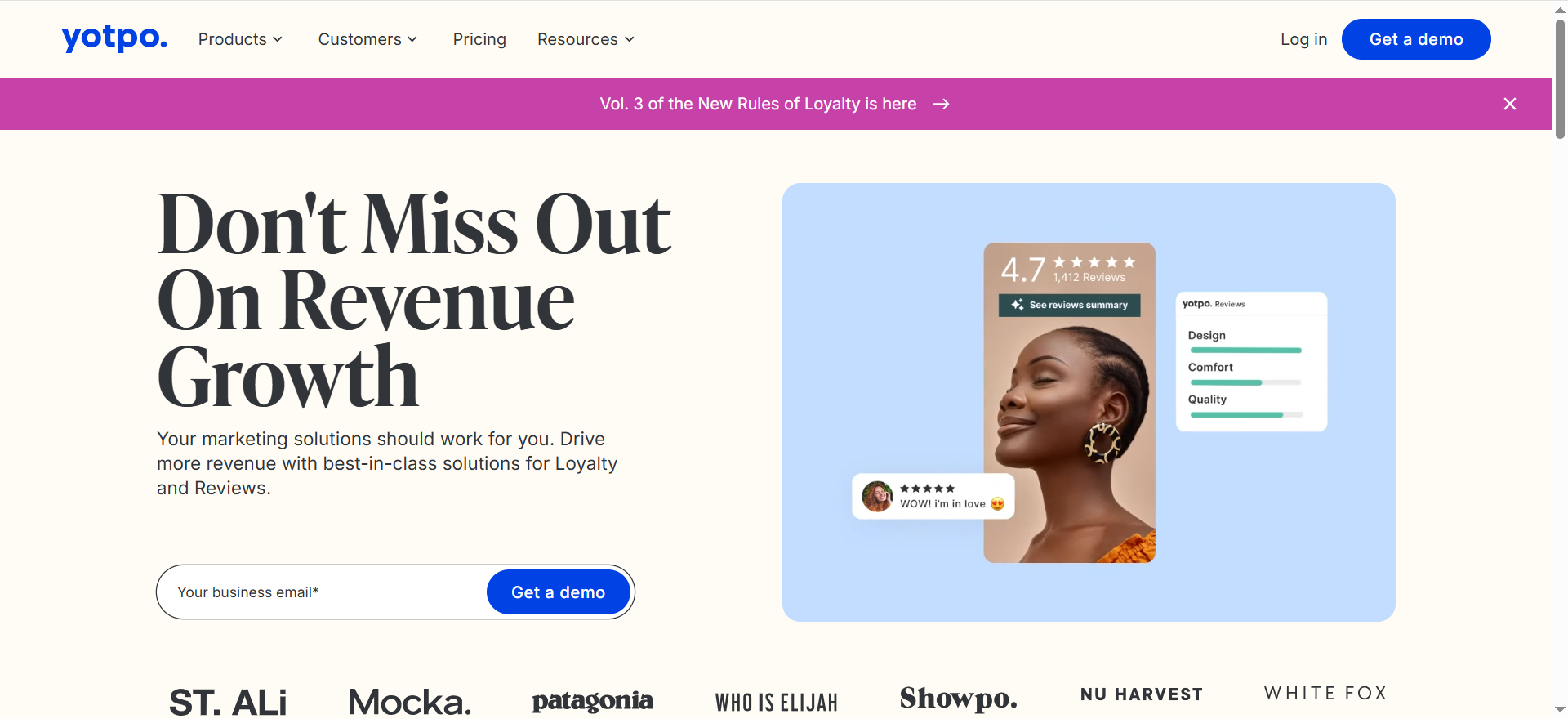
Yotpo is a retention marketing platform designed specifically for ecommerce brands, with a focus on product reviews, user-generated content (UGC), and loyalty programs. Unlike the other tools on this list, Yotpo approaches brand monitoring from the ecommerce side: instead of scanning the broad web for mentions, it systematically collects, manages, and displays customer reviews and visual UGC directly on your product pages and marketing channels. For DTC brands, Yotpo serves as the infrastructure layer for social proof — the reviews on your product pages, the photo galleries of real customers using your products, and the loyalty program that turns one-time buyers into repeat customers.
Why Teams Use It
DTC brands choose Yotpo because customer reviews and UGC are among the highest-impact conversion drivers in ecommerce. Yotpo automates the collection of reviews through post-purchase email and SMS flows, makes it easy for customers to upload photos and videos alongside their reviews, and syndicates that content across your store, social channels, and Google Shopping. Teams use it because manually collecting and managing reviews does not scale — Yotpo handles the entire lifecycle from request to display to analysis. The sentiment analysis built into the review platform gives product teams direct feedback on what customers love and what needs improvement, without needing a separate social listening tool for that specific use case.
What It Is Good For
Yotpo is strongest when DTC brands need to build and leverage social proof as a core part of their marketing and conversion strategy. If your products sell primarily through your own Shopify, BigCommerce, or WooCommerce store, Yotpo integrates natively and starts collecting reviews from day one. The visual UGC feature lets customers submit photos with their reviews, which Yotpo then makes shoppable — visitors can click on a customer photo and go directly to the product page. The loyalty and referral module creates structured programs that reward repeat purchases, social sharing, and referrals, turning your existing customer base into a growth engine. For DTC brands in beauty, skincare, supplements, fashion, and food, where reviews directly influence purchase decisions, Yotpo is purpose-built.
When It Is a Good Fit
Yotpo fits DTC brands that sell through their own ecommerce store and need a dedicated system for collecting, managing, and displaying customer reviews and UGC. If your conversion rate optimization strategy relies on social proof, Yotpo gives you the tools to systematically generate and leverage it. It is also a good fit for DTC brands that want to build loyalty programs without custom development — the loyalty module supports points, VIP tiers, and referral rewards out of the box. Brands doing between 500 and 10,000+ orders per month will find a Yotpo pricing tier that matches their scale.
When It Is Not a Good Fit
Yotpo is not a social listening or brand monitoring platform in the traditional sense. If your primary need is tracking brand mentions across social media, news, forums, and the web, Yotpo does not do that — you need a tool like Brand24, Brandwatch, or Talkwalker for that function. Yotpo focuses on owned-channel social proof (reviews on your store) rather than earned media monitoring (mentions across the internet). The per-order pricing model can also become expensive at scale — overage charges of approximately $0.20 per extra order add up for high-volume DTC brands. Note that Yotpo discontinued its Email and SMS marketing products at the end of 2025, so it is no longer an all-in-one retention platform.
How to Use It
Getting started with Yotpo involves installing the app on your ecommerce platform (Shopify, BigCommerce, WooCommerce, or Magento), configuring post-purchase review request flows, customizing the review display widgets for your product pages, and setting up UGC galleries. Most DTC brands start with the Reviews module to build their social proof foundation, then add Loyalty once they have enough repeat customers to make a program worthwhile. The dashboard provides analytics on review volume, average rating, sentiment trends, and UGC performance, giving product and marketing teams a clear view of customer perception.
Key Capabilities
Yotpo provides automated review collection through post-purchase email flows with customizable timing and templates. The visual UGC module lets customers submit photos and videos that become shoppable content on your store. Review syndication pushes ratings and reviews to Google Shopping, social ads, and other marketing channels. The loyalty and referral module supports points-based programs, VIP tiers, and referral rewards. Sentiment analysis built into the review platform identifies recurring themes and product feedback. Native integrations with Shopify, BigCommerce, WooCommerce, Magento, Google Shopping, Facebook, and Instagram keep your review and UGC content connected across channels. API access enables custom integrations.
Pricing
Yotpo prices each module separately. Reviews offers a Starter plan at $79 per month for up to 500 orders and a Pro plan at $169 per month with AI-powered smart sorting, review summaries, and multi-user access. Loyalty starts at $199 per month. Premium plans with advanced AI tools, onboarding support, and retail syndication use custom pricing. Enterprise pricing is available for brands processing 10,000+ orders per month. Overage charges of approximately $0.20 per extra order apply when you exceed your plan’s monthly cap.
Free Tier?
Yes. Yotpo offers a free starter plan with basic review collection and display features, making it accessible for early-stage DTC brands that want to start building social proof without a monthly commitment.
Downsides and Limitations
Yotpo is not a traditional brand monitoring tool — it does not track mentions across social media, news, forums, or the broader web. The per-order pricing means costs scale with your sales volume, and overage charges can surprise brands during peak seasons. The Email and SMS products were permanently discontinued at the end of 2025, so brands looking for an all-in-one retention stack will need to source messaging from elsewhere. The free tier is very limited, and meaningful functionality requires a paid plan. Advanced features like VIP tiers and deep analytics are locked behind higher-tier plans.
What Is Brand Monitoring and Why Does It Matter for DTC Brands?
Brand monitoring is the process of tracking mentions of your brand, products, competitors, and industry terms across the internet — including social media, news outlets, blogs, forums, review sites, podcasts, and increasingly, AI search engines. For DTC brands, monitoring matters because your reputation is your distribution. Unlike B2B companies that rely on sales teams, DTC brands live and die by consumer perception. A single viral TikTok review, a trending Reddit thread, or a shift in how AI search engines describe your brand can move the needle on revenue overnight. Brand monitoring gives you the early warning system to catch these moments and act on them before they compound — whether that means jumping on positive buzz to amplify it or addressing negative sentiment before it spreads.
How to Choose the Right Brand Monitoring Tool for Your DTC Brand
Choosing a brand monitoring tool comes down to four factors: your budget, your team size, the channels that matter most for your category, and whether you need monitoring only or monitoring combined with social management. Start by defining what you are actually monitoring for — is it crisis detection, competitor intelligence, influencer identification, customer feedback, or all of the above? Then match your priority to the tool's strength. Brand24 is the best entry point for teams that need affordable, real-time monitoring. Sprout Social makes sense when you want monitoring and social management in one platform. Brandwatch and Talkwalker serve teams that need enterprise-grade consumer intelligence. Yotpo is the right pick when your monitoring needs center on product reviews and UGC rather than broad social listening.
How Much Do Brand Monitoring Tools Cost for DTC Brands in 2026?
Brand monitoring costs vary widely based on the platform and your usage level. At the accessible end, Brand24 starts at $199 per month for basic monitoring, while Yotpo's review collection starts at $79 per month with a free tier available. Mid-range options like Sprout Social start at $199 per seat per month, though adding social listening as an add-on increases the total meaningfully. Enterprise platforms like Talkwalker start at approximately $500 per month, and Brandwatch starts at approximately $800 per month with costs scaling to $5,000+ depending on features and data volume. For most growth-stage DTC brands, expect to budget between $200 and $600 per month for monitoring, with enterprise needs pushing that to $1,000 to $3,000+ per month.
What Is the Difference Between Brand Monitoring and Social Listening?
Brand monitoring and social listening overlap but serve different purposes. Brand monitoring is primarily reactive — it tracks specific mentions of your brand, products, and competitors and alerts you when something happens. Social listening is broader and more strategic — it analyzes conversations, trends, and sentiment across your entire category to surface insights that inform business decisions. In practice, most modern tools blend both functions. Brand24 leans toward monitoring with some listening capabilities. Brandwatch and Talkwalker offer deep listening and consumer intelligence. Sprout Social provides listening as an add-on to its management platform. For DTC brands, the distinction matters most at the budget level: if you just need to know when someone mentions your brand, monitoring is sufficient. If you need to understand why customers in your category are shifting preferences, you need listening.
Can Brand Monitoring Tools Track AI Search Mentions?
Yes, and this is becoming a critical capability in 2026. Brand24 offers an accessible implementation in this area with its AI Visibility add-on, which tracks how AI models like ChatGPT, Claude, Gemini, Perplexity, DeepSeek, Grok, and Google AI Overview mention and recommend your brand. This matters for DTC brands because an increasing share of product discovery happens through AI-powered search rather than traditional Google results. If a customer asks Perplexity for the best skincare brand for sensitive skin and your competitor gets recommended instead of you, that is a brand monitoring insight you need to capture. Most enterprise platforms are building similar capabilities, and Brand24’s AI Visibility add-on remains one of the most accessible implementations of AI mention tracking as of mid-2026.
How Do Brand Monitoring Tools Help DTC Brands with Influencer Marketing?
Brand monitoring tools help DTC brands identify, evaluate, and track influencers without needing a separate influencer marketing platform. By monitoring mentions across social media, you can discover which creators are already talking about your products organically — these are your most authentic potential partners because they chose your brand before any paid relationship. Brand24's influence scoring ranks mentions by source authority and reach, helping you prioritize outreach. Brandwatch includes a full influencer marketing suite for discovery, campaign management, and performance tracking. Talkwalker's image recognition can find creators who are using your products in their content even without tagging your brand. For DTC brands, this organic influencer identification is often more valuable than cold outreach, because the creator already has genuine affinity for your product.
What Integrations Should a DTC Brand Monitoring Tool Have?
The essential integrations for DTC brand monitoring tools depend on your existing stack, but most DTC brands need connections to their ecommerce platform (Shopify, BigCommerce, WooCommerce), their CRM or marketing automation tool (Klaviyo, HubSpot, Salesforce), their team communication platform (Slack for real-time alerts), analytics tools (Google Analytics), and their social media management platform if monitoring and management are handled by separate tools. Yotpo offers the deepest native ecommerce integrations, connecting directly to Shopify and syndicating reviews to Google Shopping. Sprout Social integrates with Salesforce, HubSpot, and Shopify. Brand24 connects to Slack and Google Analytics. Brandwatch and Talkwalker offer API access for custom integrations with BI tools and data warehouses.
Is Brand Monitoring Worth It for Small DTC Brands?
Yes, but the tool choice matters more at smaller scale. A small DTC brand doing $1M to $5M in annual revenue does not need an enterprise platform — but it absolutely needs some form of monitoring. Negative reviews that go unanswered, competitor moves that go unnoticed, and customer feedback that never reaches the product team are all preventable problems. Brand24's Individual plan at $199 per month gives small DTC brands real-time monitoring, sentiment tracking, and automated reporting. Yotpo's free tier lets early-stage brands start collecting reviews without any cost. Even a basic setup that monitors your brand name and top competitor across social platforms provides enough signal to improve response times, catch issues early, and spot opportunities that would otherwise be missed.
How to Measure Brand Sentiment for DTC Products
Measuring brand sentiment for DTC products requires tracking both quantitative metrics and qualitative patterns across channels. The quantitative side includes sentiment score (the percentage of positive vs. negative mentions over time), share of voice relative to competitors, mention volume trends, and average review ratings on your product pages. The qualitative side involves reading actual mentions to understand the specific language customers use, the features they praise or criticize, and the emotional context behind their feedback. Most monitoring tools automate the quantitative tracking and provide dashboards that show sentiment trends over time. For DTC brands, the most actionable approach is combining automated sentiment tracking from your monitoring tool with regular manual review of the highest-impact mentions — reviews with the most engagement, social posts from influential accounts, and forum threads where customers discuss your product in detail.
Do DTC Brands Need Separate Tools for Social Listening and Review Monitoring?
In most cases, yes. Traditional social listening tools like Brandwatch, Brand24, and Talkwalker excel at monitoring brand mentions across social media, news, and the web, but they do not replace a dedicated review management platform like Yotpo for collecting, managing, and displaying product reviews on your ecommerce store. The exception is Sprout Social, which combines social management and listening in one platform — but even Sprout does not handle on-site review collection. For DTC brands, the practical setup is usually a monitoring tool (Brand24, Talkwalker, or Brandwatch) for broad brand tracking plus a review and UGC platform (Yotpo) for on-site social proof. If budget is tight, start with Yotpo for reviews (since they directly impact conversion) and add a monitoring tool once your brand has enough social presence to generate meaningful mention volume.