

TL;DR
If you run an ecommerce brand and you are not tracking what people say about you across the web, you are flying blind. A single viral complaint on Reddit, a wave of negative reviews on Trustpilot, or a competitor comparison thread on TikTok can shift buyer perception overnight — and you will not know it happened until the revenue dip shows up in your dashboard.
Brand monitoring tools solve this by scanning social platforms, review sites, forums, news outlets, blogs, and increasingly AI-generated search results for mentions of your brand, your products, and your competitors. For ecommerce teams specifically, the right tool surfaces customer complaints before they snowball, catches unauthorized resellers, identifies influencer shout-outs worth amplifying, and feeds real sentiment data into marketing decisions.
This guide compares five brand monitoring tools built for (or highly relevant to) ecommerce teams: Brand24, Mention, Sprout Social, Brandwatch, and Yotpo. Each tool is evaluated on monitoring scope, ecommerce-specific features, pricing, ease of use, and limitations so you can shortlist the right fit without wading through generic feature lists.
Best Brand Monitoring Tools for Ecommerce Teams (Quick Comparison)
| Tool | Best For | Starting Price | Ecommerce Fit |
|---|---|---|---|
| Brand24 | Budget-friendly monitoring with strong alerts | $79/mo | High — tracks reviews, marketplaces, forums |
| Mention | Real-time alerts and competitive tracking | Custom (Company plan) | Medium-High — Boolean search, influencer ID |
| Sprout Social | Teams needing social management + listening | $199/user/mo | Medium — social-focused, listening is add-on |
| Brandwatch | Enterprise-scale consumer intelligence | Custom (~$800+/mo) | High — 100M+ sources, deep analytics |
| Yotpo | Review-driven ecommerce brands on Shopify | $79/mo (Reviews) | Very High — native Shopify/ecommerce integration |
1. Brand24
What It Does
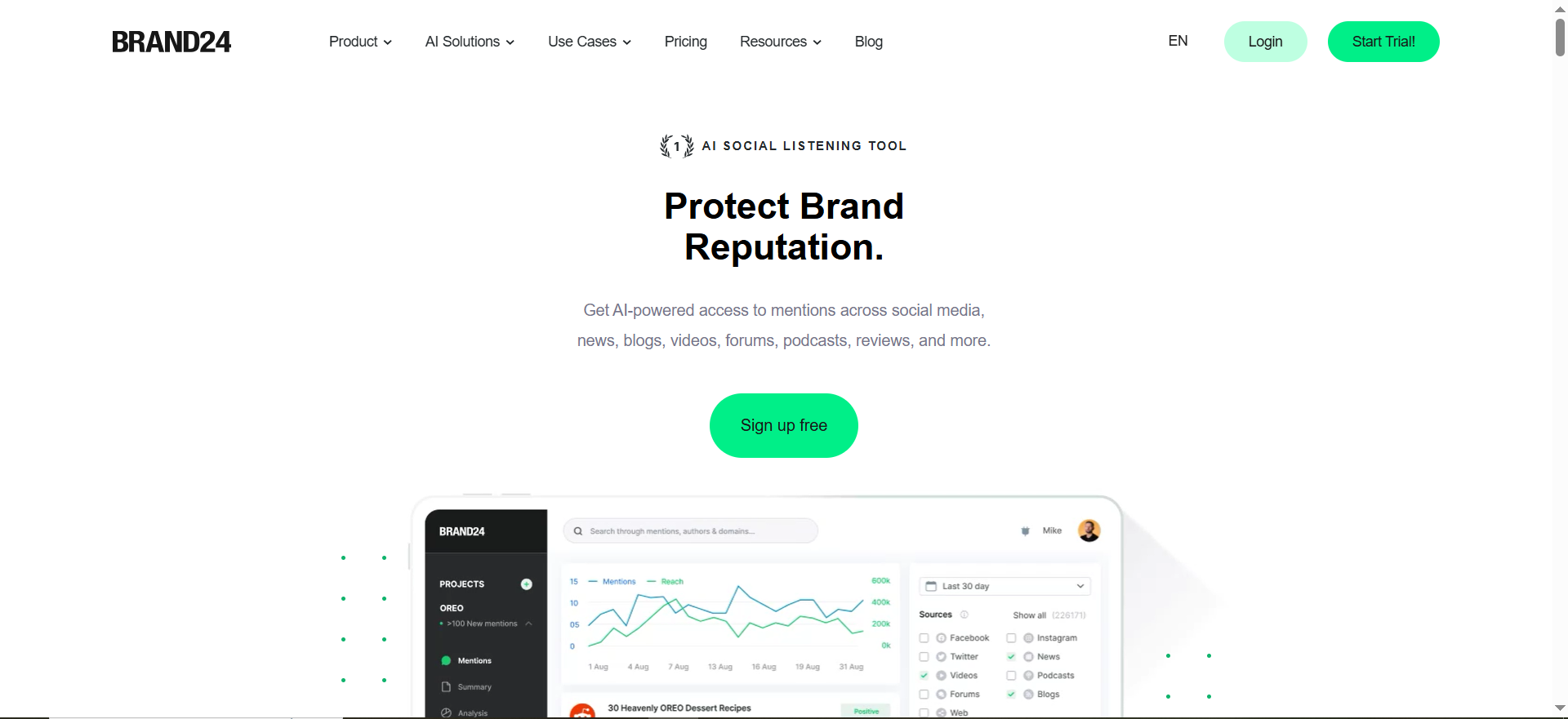
Brand24 is an AI-powered social listening and brand monitoring platform that scans the internet for mentions of your brand, products, competitors, and any keywords you define. It tracks mentions across social media platforms, news sites, blogs, forums, review sites, podcasts, newsletters, and online marketplaces — giving ecommerce teams a single dashboard to see what people are saying about them everywhere online.
Why Teams Use It
Ecommerce teams gravitate toward Brand24 because it hits the sweet spot between affordability and coverage depth. Unlike enterprise tools that require five-figure annual contracts and a dedicated analyst, Brand24 gives small and mid-size ecommerce brands access to real-time mention tracking, sentiment analysis, and AI-driven summaries at a price point that does not require executive sign-off. The platform is particularly popular with DTC brands, Shopify merchants, and agencies managing multiple ecommerce clients who need to monitor brand health without overspending.
What It Is Good For
Brand24 excels at catching the conversations that matter to ecommerce teams. It monitors review sites like Trustpilot, Yelp, and TripAdvisor alongside social channels, so you see product feedback whether it lands on Instagram or a niche review forum. The AI anomaly detection flags unusual spikes in mention volume — useful for catching product quality issues, shipping complaints, or viral moments before they fully unfold. Automated PDF reports can be scheduled and sent to stakeholders, making it easy to keep leadership informed without manual data pulls. The platform also identifies influencers mentioning your brand, helping ecommerce teams spot organic advocacy opportunities.
When It Is a Good Fit
Brand24 works best for ecommerce teams with 1-15 people who need reliable monitoring without the complexity of an enterprise platform. It is ideal if you sell products across multiple channels (your own store, Amazon, marketplaces) and want to track what customers say across all of them. It is also a strong fit for agencies managing multiple ecommerce brands, since the project-based structure keeps monitoring organized per client.
When It Is Not a Good Fit
If you need deep integration with your ecommerce platform (Shopify, WooCommerce, BigCommerce) for review collection and UGC management, Brand24 does not connect directly to those systems. It monitors mentions across the web but does not pull structured review data from your storefront. Teams that need social media publishing, scheduling, and community management alongside monitoring will need to pair Brand24 with a separate social management tool. Enterprise brands monitoring 50+ keywords across dozens of markets may also find the data volume limits on lower tiers restrictive.
How to Use It
Setup takes under 10 minutes. You create a project, enter your brand name and any product-specific keywords, and Brand24 starts collecting mentions immediately. From the dashboard you can filter mentions by sentiment (positive, negative, neutral), source type, language, and country. Set up email or Slack alerts for real-time notifications when mention volume spikes or sentiment shifts. Use the AI-powered summary feature to get a quick daily or weekly digest of what people are saying without reading every individual mention.
Key Capabilities
Brand24 covers real-time mention tracking across social media, news, blogs, forums, review sites, podcasts, and newsletters. The platform includes AI-powered sentiment analysis that categorizes mentions as positive, negative, or neutral automatically. Anomaly detection alerts you to unusual spikes in mention volume or sentiment shifts. Influencer identification surfaces high-reach accounts mentioning your brand. Automated reporting generates scheduled PDF reports for stakeholders. Hashtag tracking monitors campaign performance across platforms. The discussion volume chart visualizes mention trends over time so you can correlate spikes with campaigns, product launches, or PR events.
Pricing
Brand24 starts at $79 per month for the Individual plan, which includes 3 keywords and up to 2,000 mentions per month. The Team plan runs $149/month with 7 keywords and 5,000 mentions. The Pro plan at $199/month adds 12 keywords, 25,000 mentions, and advanced AI features. The Enterprise plan at $399/month includes 25 keywords, 100,000 mentions, and white-label reporting. All plans are billed annually. A 14-day free trial is available without requiring a credit card.
Free Tier?
No permanent free tier. Brand24 offers a 14-day free trial with full feature access so you can test the platform before committing. No credit card required to start the trial.
Downsides and Limitations
Brand24 does not offer social media publishing or scheduling — it is purely a monitoring and listening tool. The lower-tier plans have relatively tight mention limits (2,000-5,000/month), which can feel restrictive for ecommerce brands with high mention volumes during peak seasons. Historical data access is limited on lower plans, so you cannot retroactively analyze mentions from before you set up your project. The platform does not natively integrate with ecommerce platforms like Shopify or WooCommerce for structured review data. Podcast and newsletter monitoring, while available, can be inconsistent depending on the source.
2. Mention
What It Does
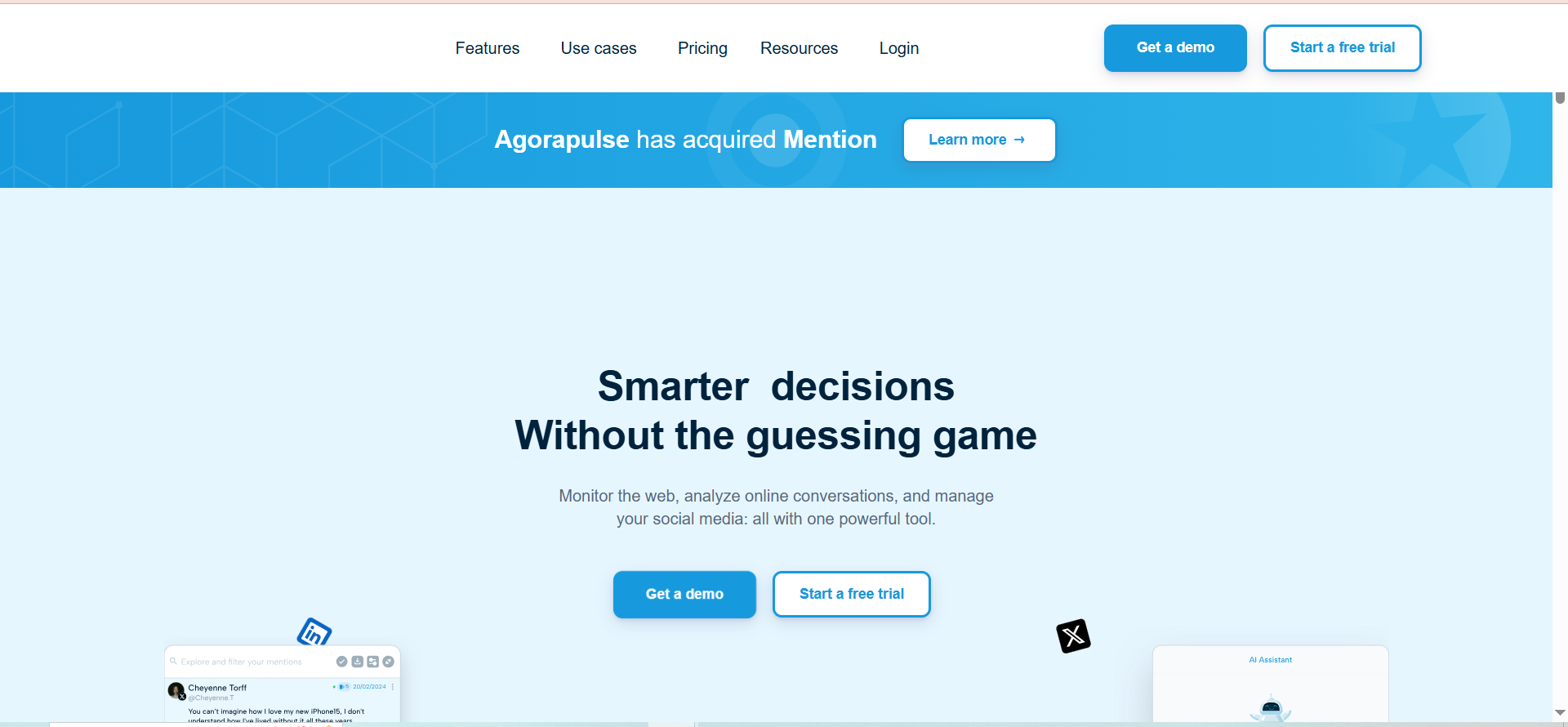
Mention is a real-time media monitoring tool that tracks brand mentions across the web, social media, forums, blogs, news sites, and review platforms. It scans over a billion sources daily and delivers alerts the moment your brand, products, or competitors are mentioned anywhere online. The platform combines Boolean search operators with a clean, intuitive interface that makes it accessible to ecommerce teams without requiring a data analyst on staff.
Why Teams Use It
Ecommerce teams use Mention because it delivers fast, accurate alerts without the setup complexity of enterprise tools. The Boolean search capability lets you build precise queries — for example, monitoring your brand name only when it appears alongside terms like "shipping problem" or "competitor name" — so you cut through noise and focus on mentions that actually require action. The competitive tracking feature is particularly valuable for ecommerce brands in crowded categories where customers actively compare products before purchasing.
What It Is Good For
Mention stands out in three areas relevant to ecommerce: speed of alerts, competitive intelligence, and influencer identification. The platform typically surfaces mentions within minutes of publication, which matters when a negative review or complaint starts gaining traction. Competitive tracking lets you monitor up to several competitor brands side-by-side, so you see how your share of voice compares and catch competitor missteps you can capitalize on. The influencer identification feature automatically flags high-reach accounts mentioning your brand, making it easy to spot creators who are already talking about your products organically.
When It Is a Good Fit
Mention is a strong fit for ecommerce teams of 2-20 people who need reliable, real-time monitoring at a moderate price point. It works especially well for brands in competitive categories (beauty, fashion, supplements, consumer electronics) where staying ahead of competitor conversations directly impacts sales. It is also well-suited for DTC brands that rely heavily on social proof and need to quickly identify and engage with customers posting about their products.
When It Is Not a Good Fit
Mention is primarily a monitoring tool, not a social media management suite. If you need scheduling, publishing, and community management in the same platform, you will need to pair it with another tool. The pricing scales based on mention volume and keyword count, which can get expensive for brands with very high mention volumes. The platform does not offer native ecommerce integrations (no Shopify plugin, no review collection features), so it is not a replacement for tools like Yotpo if you need to actively collect and display customer reviews on your storefront.
How to Use It
You start by creating alerts for your brand name, product names, and any relevant keywords. Mention supports Boolean operators (AND, OR, NOT) so you can build highly targeted queries that filter out irrelevant noise. The dashboard shows a real-time feed of mentions with sentiment tags, source information, and reach metrics. You can set up email digests for daily or weekly summaries, or configure instant notifications for high-priority mentions. The competitive analysis view lets you compare your mention volume and sentiment against competitors over time.
Key Capabilities
Mention provides real-time monitoring across social media, news, blogs, forums, and review sites. Boolean search operators let you create precise monitoring queries with include/exclude logic. Competitive tracking compares your brand mentions and sentiment against competitors. Influencer identification automatically surfaces high-reach accounts mentioning your brand. Sentiment analysis categorizes mentions as positive, negative, or neutral. The alert system supports email, in-app, and Slack notifications. Automated reports can be generated and shared with stakeholders. The API is available for custom integrations with your existing tech stack.
Pricing
As of mid-2025, Mention consolidated its pricing into a single Company plan for new customers. The legacy Solo ($41/month), Pro ($83/month), and ProPlus ($149/month) plans are no longer available to new sign-ups — existing subscribers on those tiers retain access but cannot switch between them. The Company plan offers custom pricing based on mention volume, keyword count, and team size, and is built for businesses that need advanced listening capabilities. Contact Mention's sales team for a quote. A 14-day free trial is available to test the platform before committing.
Free Tier?
No permanent free tier for new customers. Mention offers a 14-day free trial to test the platform. The legacy Solo, Pro, and ProPlus plans that previously offered lower-cost entry points are no longer available to new sign-ups.
Downsides and Limitations
Mention does not include social media publishing or scheduling features — it is focused solely on monitoring and listening. The mention volume caps on lower plans can be limiting during product launches, sales events, or viral moments when ecommerce brands typically see spikes in mentions. The sentiment analysis, while generally accurate, can misread sarcasm and context-heavy posts. There are no native ecommerce platform integrations, so you cannot pull structured review data from Shopify, Amazon, or other marketplaces directly. Historical data on lower tiers is limited, which restricts your ability to analyze long-term trends.
3. Sprout Social
What It Does
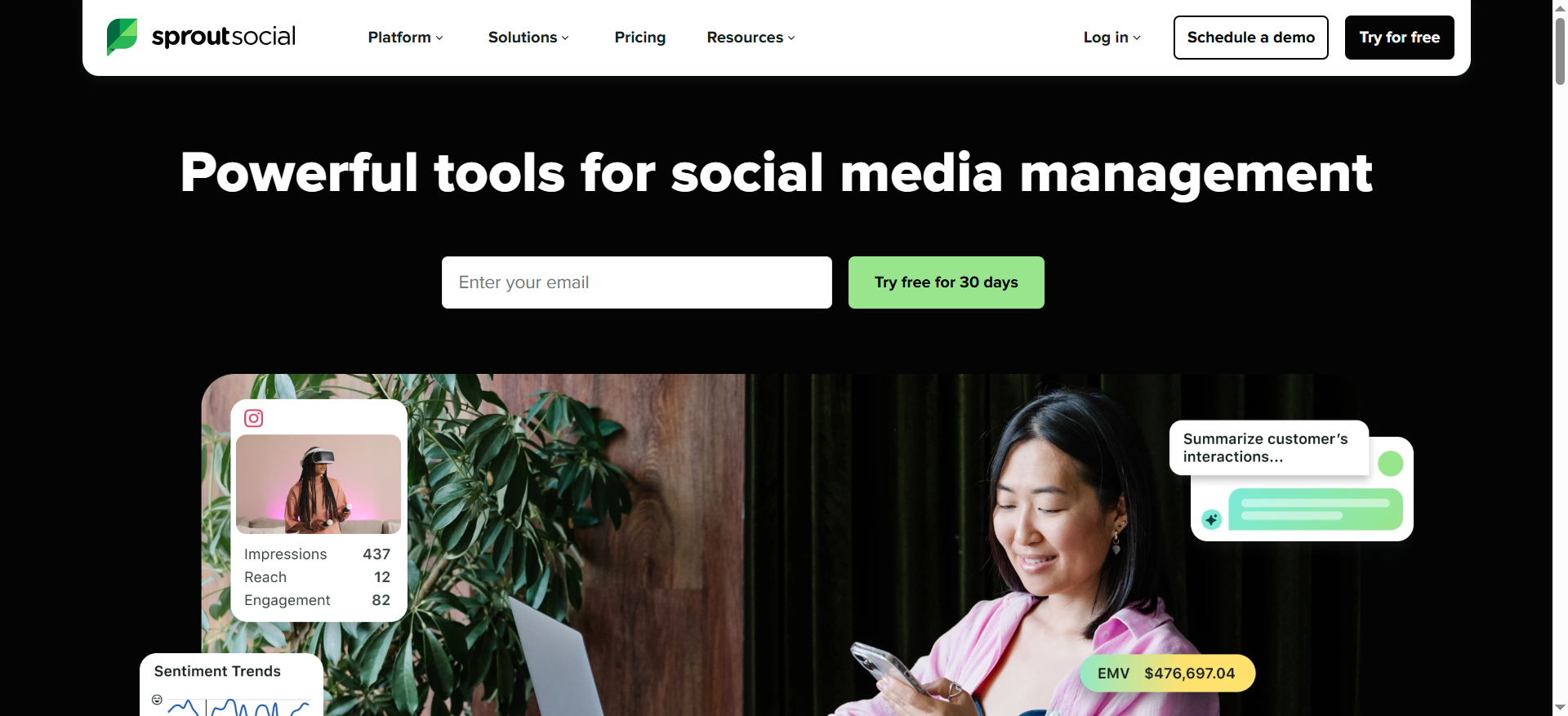
Sprout Social is a comprehensive social media management platform that includes publishing, engagement, analytics, and social listening capabilities. For brand monitoring specifically, Sprout Social offers a dedicated Listening add-on that tracks brand mentions, sentiment, trends, and competitive conversations across social platforms and web sources. It is the most full-featured option on this list if your ecommerce team needs monitoring bundled with social media management in a single platform.
Why Teams Use It
Ecommerce teams choose Sprout Social when they want to consolidate their social media stack into one tool. Instead of juggling a separate publishing tool, a monitoring tool, and an analytics tool, Sprout Social handles all three. The unified Smart Inbox pulls messages, comments, mentions, and reviews from all connected social profiles into a single feed, so your team can respond to customer inquiries and brand mentions without switching between platforms. This is particularly valuable for ecommerce brands that receive high volumes of customer messages across Instagram, Facebook, X, and TikTok.
What It Is Good For
Sprout Social's Listening add-on is one of the strongest social listening engines on the market. It monitors brand mentions, industry keywords, competitors, and sentiment across all major social platforms in real time. The competitive benchmarking features let you compare your social performance and share of voice against competitor brands. For ecommerce teams, the review management feature is a notable differentiator — Sprout Social pulls in reviews from Google Business Profile, Facebook, TripAdvisor, Glassdoor, and Yelp, letting you monitor and respond to reviews from within the platform.
When It Is a Good Fit
Sprout Social is the right choice for ecommerce teams that need a full social media management suite alongside brand monitoring. If your team already manages social publishing, community engagement, and analytics, and you want to add monitoring without introducing another tool, Sprout Social is the most efficient path. It works best for mid-market and enterprise ecommerce brands with dedicated social media teams (3+ people) who can justify the per-user pricing.
When It Is Not a Good Fit
Sprout Social is expensive. At $199/user/month for the Standard plan (and $299/user/month for Professional), costs add up fast for teams with more than 2-3 users. The Social Listening capability is a paid add-on on top of the base plan, starting at approximately $999/month depending on topic volume. If you only need brand monitoring and do not use the social management features, you are paying a significant premium for capabilities you will not touch. Solo operators and early-stage ecommerce brands will likely find the pricing prohibitive.
How to Use It
After connecting your social profiles, Sprout Social automatically pulls all messages, comments, and mentions into the Smart Inbox. For deeper brand monitoring, you configure Listening topics — these are keyword-based queries that track conversations across social platforms and the web. You can build topics around your brand name, product names, competitor brands, industry terms, or campaign hashtags. The Listening dashboard visualizes mention volume, sentiment trends, and share of voice over time. Set up alerts for sentiment shifts or volume spikes to catch emerging issues early.
Key Capabilities
Sprout Social provides a unified Smart Inbox that consolidates messages, comments, and mentions from all connected social profiles. Social Listening tracks brand mentions, sentiment, trends, and competitive conversations across social and web sources. Review management pulls in reviews from Google, Facebook, TripAdvisor, and Yelp for centralized monitoring and response. Competitive benchmarking compares your social performance against competitor brands. Publishing and scheduling tools manage content across all major social platforms. Analytics and reporting provide detailed performance data with exportable custom reports. The platform supports team collaboration with task assignment, approval workflows, and internal notes.
Pricing
Sprout Social Standard starts at $199/user/month (billed annually) and includes 5 social profiles, a unified inbox, keyword monitoring, and basic reporting. Professional at $299/user/month adds unlimited social profiles, competitive reports, and custom workflows. Advanced at $399/user/month includes automated workflows and sentiment analysis. Enterprise pricing is custom. Social Listening is a separate add-on starting at approximately $999/month depending on topic volume and keyword count. A 30-day free trial is available.
Free Tier?
No free tier. Sprout Social offers a 30-day free trial to test the platform before committing to a paid plan.
Downsides and Limitations
The per-user pricing model makes Sprout Social one of the most expensive options for teams. Social Listening being a paid add-on rather than included in the base plan means the total cost for monitoring is significantly higher than standalone tools like Brand24 or Mention. The platform is heavily social-media focused — web monitoring (forums, blogs, news) is less comprehensive than dedicated monitoring tools. No native ecommerce platform integrations exist for Shopify, WooCommerce, or BigCommerce. The Standard plan limits you to 5 social profiles, which may not be enough for ecommerce brands operating across multiple platforms and regions.
4. Brandwatch
What It Does
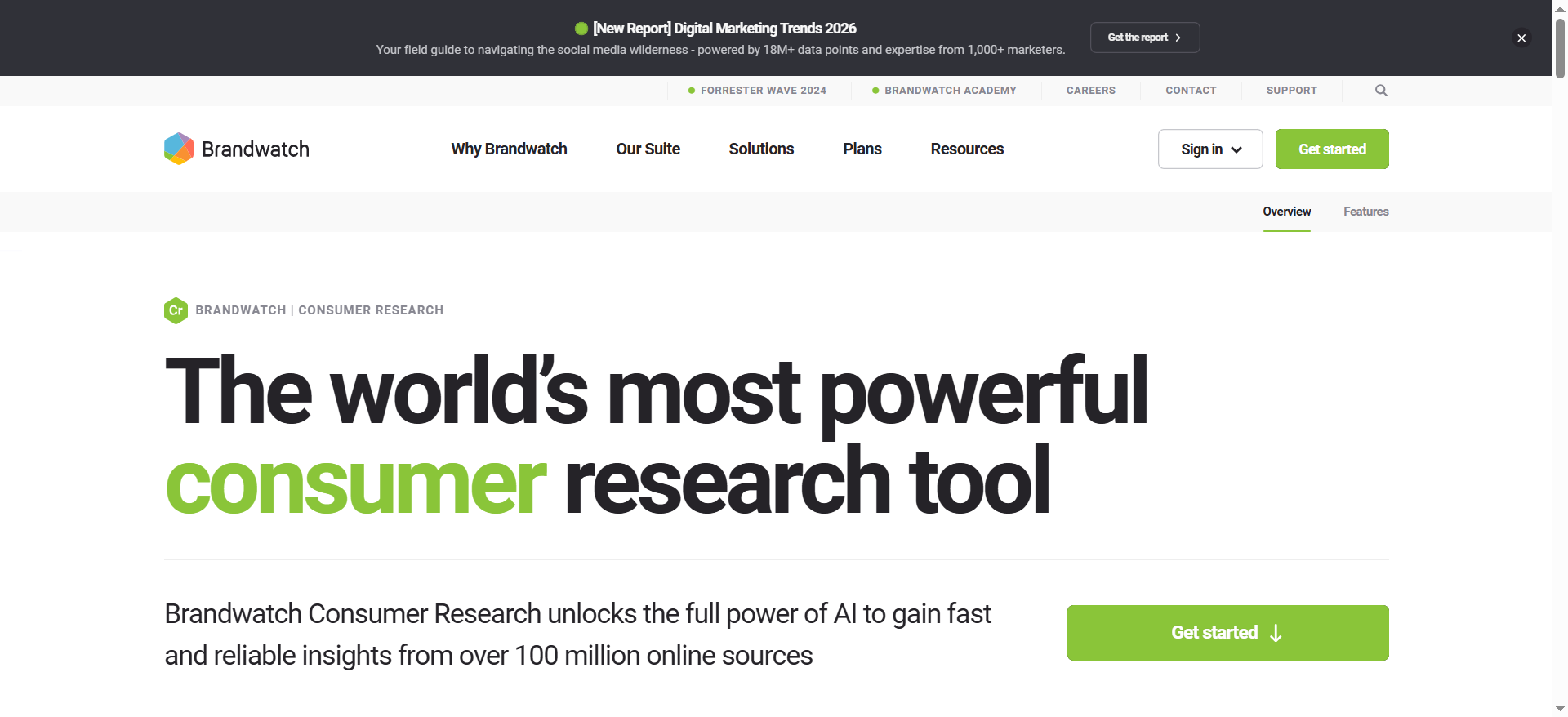
Brandwatch is an enterprise-grade consumer intelligence platform that monitors over 100 million sources worldwide for brand mentions, consumer sentiment, market trends, and competitive activity. Now part of Cision, it combines social listening, audience analytics, content management, and influencer marketing into a single platform. Brandwatch is the deepest and most data-rich tool on this list, designed for teams that need to go beyond basic mention tracking and into true consumer intelligence.
Why Teams Use It
Large ecommerce brands and multi-brand retailers choose Brandwatch when they need monitoring at a scale and depth that mid-market tools cannot match. The platform tracks conversations in dozens of languages, monitors sources that smaller tools miss entirely (niche forums, regional social networks, podcast transcripts), and provides historical data archives that let you analyze trends over months or years. The AI-powered analytics engine surfaces patterns and anomalies across millions of data points, turning raw mention data into actionable consumer insights that inform product strategy, marketing campaigns, and crisis response.
What It Is Good For
Brandwatch excels at providing the consumer intelligence layer that enterprise ecommerce operations need. Beyond simple mention tracking, the platform offers audience segmentation (understanding who is talking about your brand and how those segments differ), trend detection (spotting emerging conversations before they peak), and image recognition (detecting your logo or products in visual content even when the brand is not mentioned by name). The customizable dashboards let you build views tailored to different stakeholders — a crisis monitoring view for the PR team, a competitive intelligence view for marketing, and a product feedback view for the product team.
When It Is a Good Fit
Brandwatch is the right fit for enterprise ecommerce brands monitoring multiple product lines, regions, and languages. It works best for organizations with a dedicated insights or analytics team that can fully leverage the platform's depth. If you need to run regular brand health tracking studies, monitor competitive activity across dozens of markets, benchmark sentiment trends over long periods, or integrate monitoring data into a broader business intelligence workflow, Brandwatch is built for exactly that.
When It Is Not a Good Fit
Brandwatch is not built for small or mid-size ecommerce teams. The pricing starts in the range of $800-$2,000/month for basic access and can reach $5,000-$15,000+/month for enterprise packages. There is no free trial, so you are committing budget before experiencing the platform. The learning curve is steep — the interface is powerful but complex, and most teams need onboarding and training to use it effectively. If you just need to track a few keywords and get alerts when people mention your brand, Brandwatch is significant overkill.
How to Use It
Implementation typically involves working with a Brandwatch account team to configure your monitoring queries, set up dashboards, and train your team on the platform. You define the brands, products, competitors, and topics you want to track, and Brandwatch builds queries that capture relevant conversations across its source network. The platform supports advanced query building with Boolean logic, proximity operators, and entity recognition. Dashboards update in real time and can be configured to show the metrics most relevant to your team's workflow.
Key Capabilities
Brandwatch monitors over 100 million sources worldwide including social media, forums, blogs, news, review sites, and niche platforms. AI-powered analytics surface patterns, anomalies, and trends across large datasets. Audience segmentation identifies and profiles the people talking about your brand. Sentiment analysis with contextual understanding goes beyond simple positive/negative scoring. Image recognition detects brand logos and products in visual content. Historical data archives support long-term trend analysis. Customizable dashboards serve different stakeholder views. Competitive benchmarking tracks share of voice, sentiment, and topic ownership against competitors. Crisis detection with automated alerts flags emerging issues. The platform integrates with CRM, BI tools, and marketing platforms through APIs and native connectors.
Pricing
Brandwatch uses custom pricing based on the number of active queries, data sources, user seats, and contract term. Based on industry reports, the basic tier runs approximately $800-$2,000/month for 3-5 users with limited historical data. Professional packages range from $2,000-$5,000/month for 10+ users with 1-year data history. Enterprise packages start at $5,000/month and can exceed $15,000/month for unlimited users and full platform access. Annual contracts are standard, and multi-year commitments typically unlock meaningful discounts.
Free Tier?
No free tier and no free trial. Brandwatch requires contacting their sales team for a demo and custom quote.
Downsides and Limitations
The pricing is the most significant barrier — Brandwatch is the most expensive tool on this list by a wide margin, and the lack of a free trial makes it difficult to evaluate before committing. The platform's complexity means most teams need formal training and onboarding, which adds time before you see value. Smaller ecommerce teams will find the feature set overwhelming and the cost unjustifiable. There are no native ecommerce platform integrations (no Shopify, WooCommerce, or BigCommerce plugins), so connecting monitoring data to your ecommerce operations requires custom API work or middleware. The platform is primarily designed for brand and marketing teams, not ecommerce operations teams, so workflows around order-related complaints or product quality issues are not built into the standard interface.
5. Yotpo
What It Does
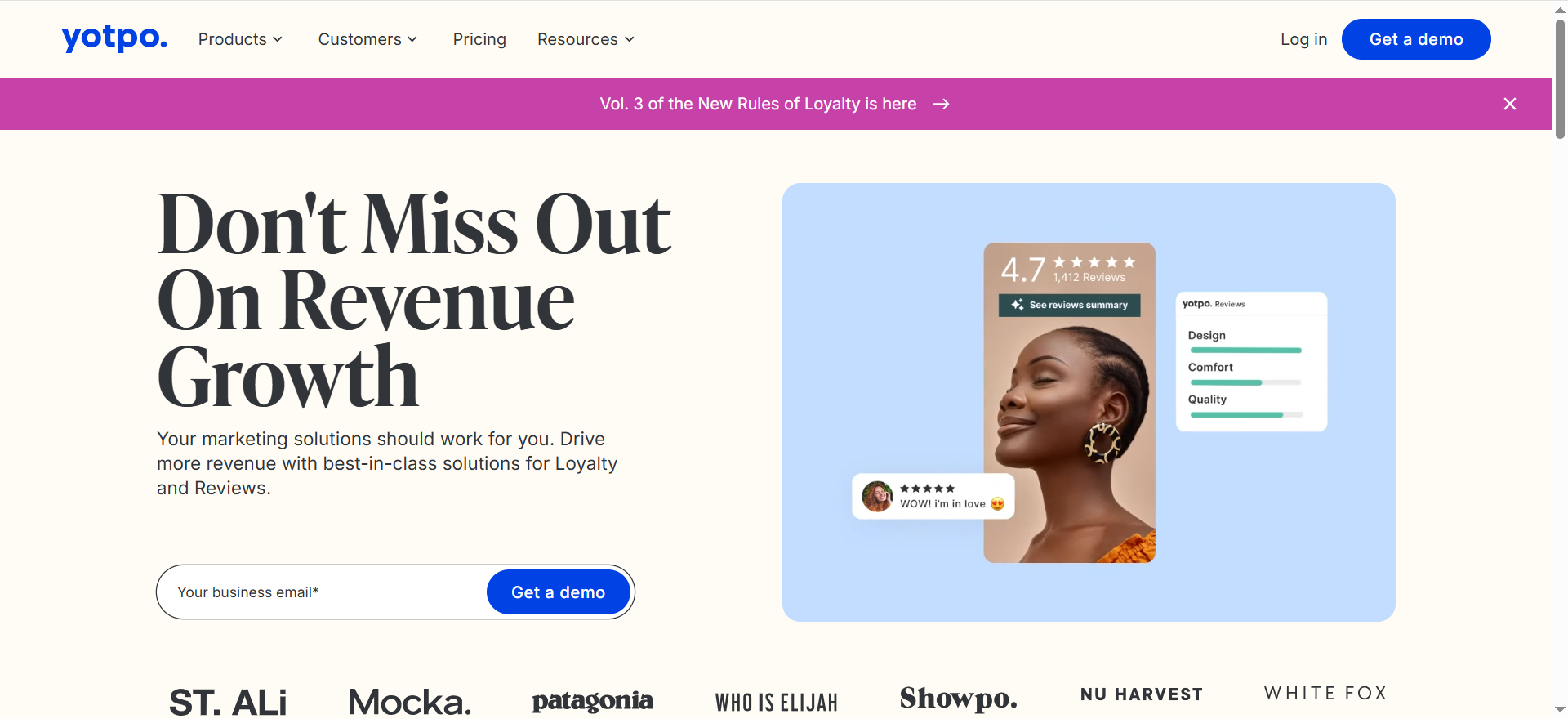
Yotpo is an ecommerce retention marketing platform that helps brands collect, manage, and leverage customer reviews, ratings, visual UGC (user-generated content), loyalty programs, and referral programs. Unlike the other tools on this list, Yotpo is not a traditional brand monitoring tool — it is purpose-built for ecommerce and focuses on the review and customer feedback side of brand monitoring. It integrates natively with major ecommerce platforms and helps brands turn customer feedback into a growth engine.
Why Teams Use It
Ecommerce teams use Yotpo because it solves the specific monitoring challenge they face most directly: understanding what customers think about their products and turning that feedback into more sales. While tools like Brand24 and Mention scan the open web for brand mentions, Yotpo actively collects first-party reviews and ratings from your actual customers, displays them on your product pages to drive conversions, and gives you dashboards to analyze sentiment and trends across your product catalog. For ecommerce brands, this is often the highest-impact form of brand monitoring because it directly influences purchase decisions.
What It Is Good For
Yotpo excels at the intersection of brand monitoring and conversion optimization for ecommerce. The platform automatically collects product reviews and site reviews via post-purchase emails and SMS. Photo and video reviews let customers share visual feedback that builds trust with future buyers. Smart review prompts guide customers to leave more detailed, useful reviews rather than generic star ratings. The analytics dashboard surfaces product-level sentiment trends so you can quickly identify which products are receiving negative feedback and why. Yotpo also syndicates reviews to Google Shopping, Facebook, and other channels, extending the reach of positive customer feedback beyond your storefront.
When It Is a Good Fit
Yotpo is the right choice for ecommerce brands that need to systematically collect, manage, and leverage customer reviews as their primary form of brand monitoring. It works best for Shopify, Magento, BigCommerce, and WooCommerce stores that sell physical products and rely on social proof to drive conversions. Brands running loyalty programs alongside review collection get additional value from Yotpo's integrated loyalty and referral features. It is particularly strong for DTC brands in categories where reviews significantly influence buying decisions — beauty, skincare, supplements, fashion, home goods, and food.
When It Is Not a Good Fit
Yotpo does not monitor the broader web for brand mentions. It will not catch conversations about your brand on Reddit, TikTok, industry forums, news sites, or competitor comparison threads. If you need comprehensive web and social monitoring, you will need to pair Yotpo with a dedicated monitoring tool like Brand24 or Mention. The pricing scales based on order volume, which can get expensive for high-volume stores. Note that Yotpo discontinued its Email and SMS products at the end of 2025, so brands now need separate tools (Klaviyo, Attentive, or Omnisend) for those channels.
How to Use It
Yotpo integrates directly with your ecommerce platform via native apps for Shopify, Magento, BigCommerce, and WooCommerce. Once installed, you configure your review collection workflows — setting up post-purchase email sequences that request reviews, customizing review forms with product-specific questions, and choosing where to display reviews on your storefront. The dashboard provides an overview of review volume, average ratings, sentiment trends, and product-level analytics. You can respond to reviews directly from the platform and set up alerts for negative reviews that need immediate attention.
Key Capabilities
Yotpo provides automated review collection via post-purchase emails and SMS with smart timing. Photo and video review collection lets customers share visual UGC. Smart review prompts guide customers to leave detailed, structured feedback. Product-level sentiment analysis surfaces trends across your catalog. Review syndication publishes customer reviews to Google Shopping, Facebook, and other channels. On-site display widgets showcase reviews, ratings, and UGC on product pages, category pages, and checkout. Loyalty program management integrates points, tiers, and referrals with the review system. The analytics dashboard tracks review volume, sentiment, and conversion impact. Moderation tools let you manage and respond to reviews before they go live.
Pricing
Yotpo's Reviews product starts at $79/month for up to 500 monthly orders with basic review collection and display features. The Premium Reviews plan at approximately $169-$299/month adds photo and video reviews, smart prompts, and advanced analytics. Loyalty programs start at $199/month as a separate product. Bundling Reviews + Loyalty typically starts around $368/month. Enterprise pricing is custom for high-volume stores. Pricing scales based on order volume, not user count. A free plan is available for brands just getting started with basic review collection.
Free Tier?
Yes. Yotpo offers a free plan that includes basic review collection and display features for stores with limited monthly order volume. This is one of the few tools on this list with a permanent free tier, making it accessible for early-stage ecommerce brands that want to start collecting reviews without a paid commitment.
Downsides and Limitations
Yotpo is not a web monitoring tool — it does not scan social media, forums, news sites, or blogs for brand mentions. Its monitoring capability is limited to collecting and analyzing first-party reviews and ratings on your own storefront. The pricing model based on order volume can become expensive as your store grows, especially once you bundle Reviews with Loyalty. Yotpo permanently discontinued its Email and SMS products at the end of 2025, which limits its value as an all-in-one retention platform. The free plan is very basic and is missing key features like photo/video reviews and advanced analytics. Some users report that review collection email deliverability can be inconsistent depending on your domain setup.
What Is Brand Monitoring and Why Does It Matter for Ecommerce?
Brand monitoring is the practice of tracking mentions of your brand, products, competitors, and relevant industry terms across the internet. This includes social media platforms, review sites, forums, blogs, news outlets, podcasts, and increasingly AI search engines and large language models.
For ecommerce teams specifically, brand monitoring matters because your brand reputation is directly tied to revenue. A study of consumer behavior consistently shows that the majority of online shoppers read reviews before making a purchase, and a single negative experience shared publicly can influence hundreds of potential buyers. Ecommerce brands operate in environments where purchase decisions happen fast and are heavily influenced by what other people are saying. Brand monitoring gives you visibility into those conversations so you can respond to issues before they escalate, capitalize on positive mentions, and make data-informed decisions about your product and marketing strategy.
Beyond reputation management, brand monitoring also feeds your marketing engine. When you know what customers love about your products, you can amplify those messages in your advertising. When you see a competitor receiving negative feedback, you can position your product as the alternative. When an influencer organically mentions your brand, you can build a relationship that turns into a long-term partnership.
How to Choose a Brand Monitoring Tool for Your Ecommerce Store
Choosing the right brand monitoring tool depends on four main factors: what you need to monitor, how large your team is, how much you can spend, and what other tools are already in your stack.
Start by defining your monitoring scope. If you primarily need to track product reviews and on-site customer feedback, a tool like Yotpo that integrates directly with your ecommerce platform is the most efficient choice. If you need to monitor the broader web — social media, forums, Reddit, news sites, competitor conversations — a dedicated monitoring tool like Brand24 or Mention makes more sense. Enterprise brands operating across multiple markets and languages should look at Brandwatch for its depth and scale.
Consider your team size and workflow. Solo operators and small teams benefit from tools with simple setup and automated alerts (Brand24, Mention). Larger teams that already manage social publishing and community engagement may prefer an integrated platform like Sprout Social to avoid managing multiple tools. Enterprise teams with dedicated analysts can justify Brandwatch's complexity and cost.
Evaluate pricing relative to your mention volume. Many tools cap mentions per month on lower tiers. Estimate your typical monthly mention volume and choose a plan that gives you headroom — running into caps during a product launch or sale event is a common frustration.
Finally, check integration compatibility. If you run a Shopify store, Yotpo's native integration adds value that other tools cannot match. If you already use Slack for team communication, make sure your monitoring tool can send alerts there. If you need monitoring data in your CRM or BI tool, look for API access or native integrations.
Brand Monitoring vs Social Listening: What Is the Difference?
Brand monitoring and social listening are related but serve different purposes, and ecommerce teams often confuse the two.
Brand monitoring is reactive and specific. It tracks direct mentions of your brand name, product names, and specific keywords across the web and alerts you when those mentions happen. The primary goal is awareness — knowing when someone talks about you so you can respond, engage, or escalate as needed. Tools like Brand24 and Mention are primarily brand monitoring tools.
Social listening is proactive and broad. It goes beyond tracking specific mentions to analyze conversations, trends, and sentiment around topics, categories, and industries. The goal is insight — understanding the broader market context your brand operates in, identifying emerging trends before competitors, and uncovering unmet customer needs. Brandwatch and Sprout Social's Listening add-on operate more in this territory.
For ecommerce teams, both capabilities have value. Brand monitoring catches the immediate, actionable items — a customer complaint, a competitor attack, an influencer shout-out. Social listening informs strategy — what features customers wish existed, which product categories are gaining momentum, how consumer sentiment around your category is shifting. The best approach is often to start with brand monitoring and layer in social listening as your team and budget grow.
How Ecommerce Teams Use Brand Monitoring to Protect Revenue
Brand monitoring directly protects ecommerce revenue in several concrete ways that go beyond general reputation management.
The most immediate impact is catching negative reviews and complaints early. When a customer posts a negative review on a third-party site or complains on social media, responding quickly and constructively can often resolve the issue and prevent the negative sentiment from spreading. Teams that monitor mentions in real time can address problems in hours instead of days, which reduces the damage any single complaint can do to purchase conversion rates.
Brand monitoring also catches unauthorized resellers and MAP (minimum advertised price) violations. Ecommerce brands that sell through authorized retailers often discover unauthorized sellers undercutting prices or misrepresenting products. Monitoring for your brand name and product names across marketplace listings and comparison sites surfaces these violations so you can enforce your channel policies.
Competitive monitoring protects revenue by keeping you informed when competitors launch new products, change pricing, or receive significant press coverage. Ecommerce categories move fast, and the brands that react quickly to competitive shifts maintain market share while slower-moving competitors lose ground.
Finally, monitoring feeds content strategy. The language customers use to describe your products — the exact words they use in reviews, social posts, and forum discussions — is some of the most valuable copy research you can do. Brand monitoring captures this language and lets you use it in product descriptions, ads, and email campaigns to improve conversion rates.
What Should You Track with a Brand Monitoring Tool?
Ecommerce teams should configure their monitoring tools to track several categories of keywords and conversations beyond just the brand name.
Start with your brand name and common misspellings. Customers frequently misspell brand names, and those mentions are still relevant. Include your company name, any abbreviations, and the names of your most popular products or product lines.
Add competitor brand names. Monitoring what people say about your competitors — especially complaints, negative reviews, and comparison discussions — gives you intelligence you can use in your positioning and advertising.
Track key product categories and buying-intent terms. If you sell running shoes, monitor terms like "best running shoes 2026" and "running shoe recommendation" to see where your brand appears (or does not appear) in purchase consideration conversations.
Monitor your key people. If your founder or CEO has a public profile, especially on LinkedIn or X, tracking mentions of their name can surface brand-relevant conversations that would not include your company name.
Set up alerts for crisis indicators. Terms like "[your brand] scam," "[your brand] fake," or "[your brand] problem" should trigger immediate alerts so you can respond to potential crises before they gain momentum.
Free vs Paid Brand Monitoring Tools for Ecommerce
Free brand monitoring options exist but come with significant limitations that most ecommerce teams will outgrow quickly.
Google Alerts is the most well-known free option. It monitors web and news mentions for any keyword you define and sends email notifications when new mentions appear. However, Google Alerts has notable gaps: it does not monitor social media, it misses many forum and review site mentions, alerts can be delayed by hours or days, and there is no sentiment analysis, competitive benchmarking, or analytics dashboard.
Yotpo offers a free tier for basic review collection and display, which gives early-stage ecommerce brands a starting point for monitoring customer feedback on their own storefront.
Paid tools justify their cost through three core advantages: coverage, speed, and intelligence. Coverage means they monitor sources that free tools miss — social media, forums, Reddit, review sites, podcasts, and niche platforms. Speed means you get alerts in minutes rather than hours or days. Intelligence means you get sentiment analysis, competitive benchmarking, trend detection, and AI-powered summaries that turn raw mentions into actionable insights.
For ecommerce teams generating more than a few hundred orders per month, the revenue protection value of a paid monitoring tool almost always exceeds the subscription cost. A single negative review that goes unaddressed for days can cost more in lost conversions than a year of Brand24 or Mention.
How Brand Mentions Impact AI Search Visibility for Ecommerce Brands
In 2026, brand monitoring is no longer just about reputation management — it directly affects whether your brand appears in AI-generated search results from tools like ChatGPT, Gemini, Perplexity, and Google AI Overviews.
AI search engines and large language models build their responses from patterns across the web. When your brand is consistently mentioned across credible sources — review sites, expert blogs, comparison articles, forum discussions — AI systems are more likely to include your brand in recommendations and answers. Conversely, if your brand has limited web presence or is primarily associated with negative mentions, AI systems may exclude you or reference you unfavorably.
Brand monitoring helps you understand your AI visibility footprint by showing you where your brand appears (and does not appear) across the web. You can identify the sources that AI systems are most likely to cite — established review platforms, high-authority blogs, comparison sites — and focus your PR and content efforts on building presence in those specific channels.
This is particularly relevant for ecommerce brands because purchase-intent queries are increasingly starting in AI search. When a potential customer asks Perplexity "what is the best brand monitoring tool for ecommerce," the answer it generates is shaped by the brand mentions and reviews it has indexed. Monitoring those sources and actively building your presence across them is now a critical part of ecommerce marketing strategy.
How to Set Up Brand Monitoring Alerts for Your Ecommerce Store
Setting up effective brand monitoring alerts takes about 30 minutes and follows a consistent process regardless of which tool you choose.
First, create your core keyword list. This should include your brand name (and misspellings), your top 5-10 product names, your competitor brand names (3-5 direct competitors minimum), and any campaign or hashtag terms you are actively promoting.
Second, configure alert thresholds. Not every mention needs to trigger a notification. Set up tiered alerts: instant alerts for high-priority mentions (negative sentiment, high-reach accounts, crisis keywords), daily digests for general brand mentions, and weekly summaries for competitive intelligence and trend tracking.
Third, route alerts to the right channels. Customer complaints should go to your support team (via Slack or email). Influencer mentions should go to your marketing team. Competitive intelligence should go to your strategy lead. Most monitoring tools let you create separate alert rules for different keyword groups and send them to different channels.
Fourth, establish a response workflow. Define who responds to what, what the expected response time is, and what escalation paths exist for serious issues. Without a clear workflow, monitoring data creates noise instead of value.
Fifth, review and refine weekly. The first week of monitoring will generate false positives and miss some relevant mentions. Spend 15 minutes weekly adjusting your keywords, Boolean operators, and alert thresholds to improve signal quality.
Common Brand Monitoring Mistakes Ecommerce Teams Make
The most common mistake ecommerce teams make with brand monitoring is setting it up and then never acting on the data. Monitoring only creates value when someone owns the workflow — reviewing alerts, responding to mentions, escalating issues, and feeding insights back into marketing and product decisions. If alerts pile up unread, you are paying for a tool that generates noise.
The second mistake is monitoring too narrowly. Teams that only track their exact brand name miss misspellings, abbreviations, product-specific mentions, and industry conversations where their brand should be present. Cast a wider net initially and narrow down as you learn which keywords generate actionable signals.
The third mistake is ignoring competitor monitoring. Understanding what customers say about competitors — their complaints, their praise, their comparisons — is often more strategically valuable than monitoring your own brand mentions. Competitor intelligence directly informs positioning, messaging, and product development.
The fourth mistake is choosing a tool based on features rather than workflow fit. The best brand monitoring tool for your team is the one your team will actually use consistently. A simpler tool that gets checked daily beats a powerful platform that gets checked monthly.
The fifth mistake is treating brand monitoring as a marketing function only. Customer support, product development, and leadership teams all benefit from monitoring data. The most effective ecommerce brands build cross-functional workflows that route relevant mentions to the teams that can act on them.
How Brand Monitoring Integrates with Your Ecommerce Tech Stack
Brand monitoring works best when it connects to the other tools your ecommerce team uses daily rather than sitting in isolation as a standalone dashboard.
The most valuable integration is with your team communication tool (Slack, Microsoft Teams). Routing monitoring alerts directly into dedicated channels means your team sees and responds to mentions without logging into a separate platform. Most monitoring tools (Brand24, Mention, Sprout Social) offer native Slack integrations.
Connecting monitoring to your helpdesk or customer support platform (Zendesk, Intercom, Freshdesk) lets you automatically create support tickets from negative mentions. This ensures customer complaints that surface on social media or review sites get routed into your standard support workflow rather than falling through the cracks.
For ecommerce specifically, the Yotpo integration with Shopify, BigCommerce, and WooCommerce is the tightest example of monitoring-to-platform connectivity. Reviews flow directly from customer emails into your product pages, and sentiment data appears alongside your sales metrics.
API access (available on most mid-tier and higher plans) lets you pipe monitoring data into your business intelligence tools, CRM, or custom dashboards. This is particularly useful for enterprise ecommerce teams that want to correlate brand sentiment with sales data, campaign performance, and customer lifetime value metrics.
Zapier integrations provide a no-code bridge between monitoring tools and the rest of your stack when native integrations are not available.