
If you’re considering Ahrefs Brand Radar, you’re probably trying to answer a bigger question than “Can I monitor mentions in AI search?” What most teams really want is a reliable way to track how often their brand appears in AI-generated answers, which competitors get cited instead, and what content or product pages are actually influencing those responses.
Ahrefs Brand Radar is a strong entry point, especially if your team already uses Ahrefs and wants native access to prompt-based AI visibility tracking. But it is not the only option, and it is not always the best fit. Some teams need stronger workflow tools, some want deeper citation analysis, some need more flexible reporting for clients or executives, and others simply want a lower-cost way to get started, which is why many buyers also look at AI visibility case studies focused on mentions, citations, and conversions.
This guide compares five solid Ahrefs Brand Radar alternatives: Peec AI, Profound, AthenaHQ, Conductor, and Otterly AI, and it helps readers compare them through an AI visibility platform showdown. You’ll see where each tool fits best, where Ahrefs still has an edge, and how to choose based on team size, reporting needs, and AI visibility maturity.
📋 Get Listed / Advertisement
We update this guide monthly. Want your tool featured? Contact: [email protected].
Best Ahrefs Brand Radar alternatives
| Tool | Best for | Key strength | Tradeoff |
|---|---|---|---|
| Peec AI | Mid-market teams that want structured AI visibility workflows | Clear prompt tracking, competitor monitoring, and usable reporting | May be more focused than teams wanting broader SEO suite functionality |
| Profound | Enterprise brands with serious AI search stakes | Deep enterprise AI visibility positioning and strategic reporting | Likely overkill for smaller teams |
| AthenaHQ | AthenaHQ | Strong operational focus around discovering and improving AI visibility | Pricing may stretch early-stage teams |
| Conductor | Enterprises wanting AI visibility plus wider organic search workflows | Broader platform fit across content, SEO, and visibility reporting | May not feel as specialized as pure-play AI visibility tools |
| Otterly AI | Lean teams, consultants, and budget-conscious buyers | Simple AI search tracking at a lower entry point | Less depth for large-scale enterprise workflows |
If you want the quick version:
- Choose Peec AI if you want a focused platform that feels purpose-built for AI visibility analysis without a huge enterprise learning curve.
- Choose Profound if your company needs executive-ready AI visibility intelligence and likely has an enterprise budget.
- Choose AthenaHQ if you care less about vanity tracking and more about turning insights into optimization work.
- Choose Conductor if your organization wants AI visibility inside a broader organic growth stack.
- Choose Otterly AI if you want the lightest and most affordable route into tracking AI brand presence.
📋 Get Listed / Advertisement
We update this guide monthly. Want your tool featured? Contact: [email protected].
Why people look for an Ahrefs Brand Radar alternative
Ahrefs Brand Radar is getting attention because it brings AI visibility tracking into a familiar SEO ecosystem. That matters. A lot of teams trust Ahrefs data, already pay for the platform, and would rather avoid adding another standalone vendor while they compare the best tools for tracking brand visibility in AI search.
Still, there are several reasons buyers start looking elsewhere.
Pricing and packaging concerns
A common reason is packaging. Some teams want a platform that helps connect visibility insights to optimization, which is where AI visibility solutions for content optimization teams can be a better fit. Others compare Brand Radar against specialist tools and decide they would rather pay for a platform designed entirely around AI search, citations, prompts, and competitive visibility.
This is especially true for consultants, smaller SaaS companies, and growth-stage teams with tight budgets that need practical tools to monitor SaaS brand visibility across ChatGPT and Perplexity. They do not always need a large SEO suite. They need one thing to work very well: show them how their brand appears across AI answers and what to do next.
Need for deeper citation analysis
Another reason is depth. Tracking whether your brand shows up in an answer is useful, but it is only part of the picture, which is why many teams also look at AI citation gap analysis tools. Teams also want to know:
- Which pages were cited
- Which competitor domains show up most often
- Which prompts lead to branded vs non-branded mentions
- Which content themes influence visibility
- How share of voice changes over time
If a platform stops at top-line mention tracking, some teams will outgrow it fast.
Workflow and reporting requirements
In-house teams often need reporting that is easy to hand off to leadership. Agencies need dashboards they can explain to clients, which is why reporting AI visibility to leadership matters. Content teams need prompt clusters tied to editorial opportunities. RevOps or growth leaders want trend data that supports real budget decisions.
That is where alternatives can pull ahead. A tool might win not because it tracks more prompts, but because it turns insight into action more cleanly.
Broader AI engine coverage
The AI search landscape is still shifting.Buyers are paying closer attention to how tools handle engines like ChatGPT, Perplexity, Gemini, and other generative answer environments, so AI visibility tools with strong engine coverage are becoming more important. Some want visibility into answer citations. Others want cross-engine comparison.
Others care about prompt libraries, vertical-specific tracking, or how the tool updates as AI interfaces change, which makes AI visibility tools with prompt templates especially relevant.
Better fit for specific team sizes
Finally, there is a fit. The best tool for a 20-person SaaS company is rarely the same as the best tool for a global enterprise brand with multiple product lines, legal review cycles, and quarterly board reporting, which is why AI visibility platforms for content optimization teams.
That is why “best” is not a universal label here. The right Ahrefs Brand Radar alternative depends on your goals, your internal workflow, and how mature your AI visibility efforts already are.
1. Peec AI
What it does
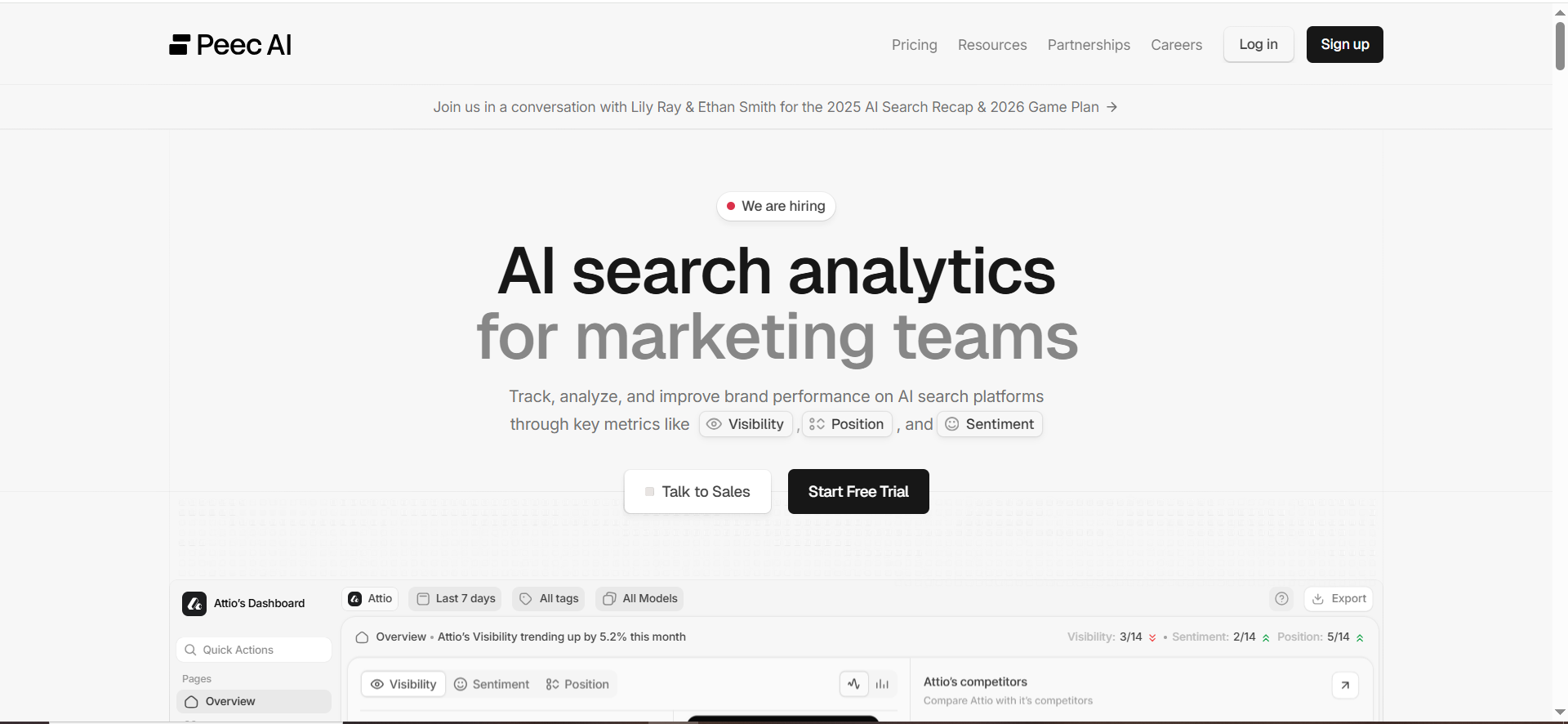
Peec AI is one of the more compelling Ahrefs Brand Radar alternatives for teams that want a focused AI visibility platform without jumping straight into the heaviest enterprise setup. It is built around tracking how brands appear across AI search prompts, with structured views into competitors, citations, and visibility patterns.
Why teams use it
Peec AI stands out because it tends to feel purpose-built for the exact problem many modern SEO and growth teams are trying to solve: understanding how AI-generated answers talk about their brand and category, which is central to AI strategic visibility.
Instead of burying AI visibility inside a much larger suite, it gives the category room to breathe, which is why some teams pair this kind of tooling with a broader Generative Engine Optimization case study. That often makes the reporting easier to interpret and the workflows easier to adopt internally.
What it’s good for
Peec AI is a good fit for:
- In-house SEO teams building an AI visibility reporting layer
- Growth-stage SaaS companies that need competitive monitoring
- Teams that want clearer prompt-based analysis
- Marketers who want specialist capability without the perceived weight of a larger enterprise vendor
When it’s a good fit
Peec AI is a strong choice if your team is already convinced that AI visibility deserves its own workflow. It works well when you want:
- Dedicated focus on AI answer monitoring
- Clear competitive comparisons
- Faster adoption by SEO and content teams
- Reporting that is easier to map to optimization decisions
When it’s not a good fit
It may be less ideal if your company only wants AI visibility as a side feature inside a broader SEO platform, or if procurement strongly prefers established enterprise suite vendors with long procurement histories.
How to use it
Most teams would use Peec AI to build a monitoring set around high-intent prompts in their category, track which competitors appear most often, and identify which citation patterns or content gaps keep surfacing, which is where category tracking tools can help. That makes it useful for both strategic reporting and tactical editorial planning.
Key capabilities
- Prompt-based AI visibility monitoring
- Competitive presence analysis
- Likely citation or source tracking workflows
- Reporting that supports recurring reviews
- Focused specialist positioning in the AI visibility category
Pricing
Peec AI’s pricing starts at $95/month for the Starter plan. Enterprise pricing is custom, and Peec also offers separate agency plans that start at $245/month.
Free tier?
Peec AI doesn’t list a free tier, but it does offer a free trial.
Downsides / limitations
The biggest limitation is that specialist tools can feel narrow if your team prefers consolidation. If you want one giant platform that covers technical SEO, content optimization, web monitoring, and AI visibility all together, you may still prefer a broader suite.
Bottom line on Peec AI
Peec AI is probably the strongest all-around Ahrefs Brand Radar alternative for teams that want a dedicated AI visibility workflow with enough structure to be useful but without the enterprise heaviness some buyers want to avoid.
2. Profound
What it does
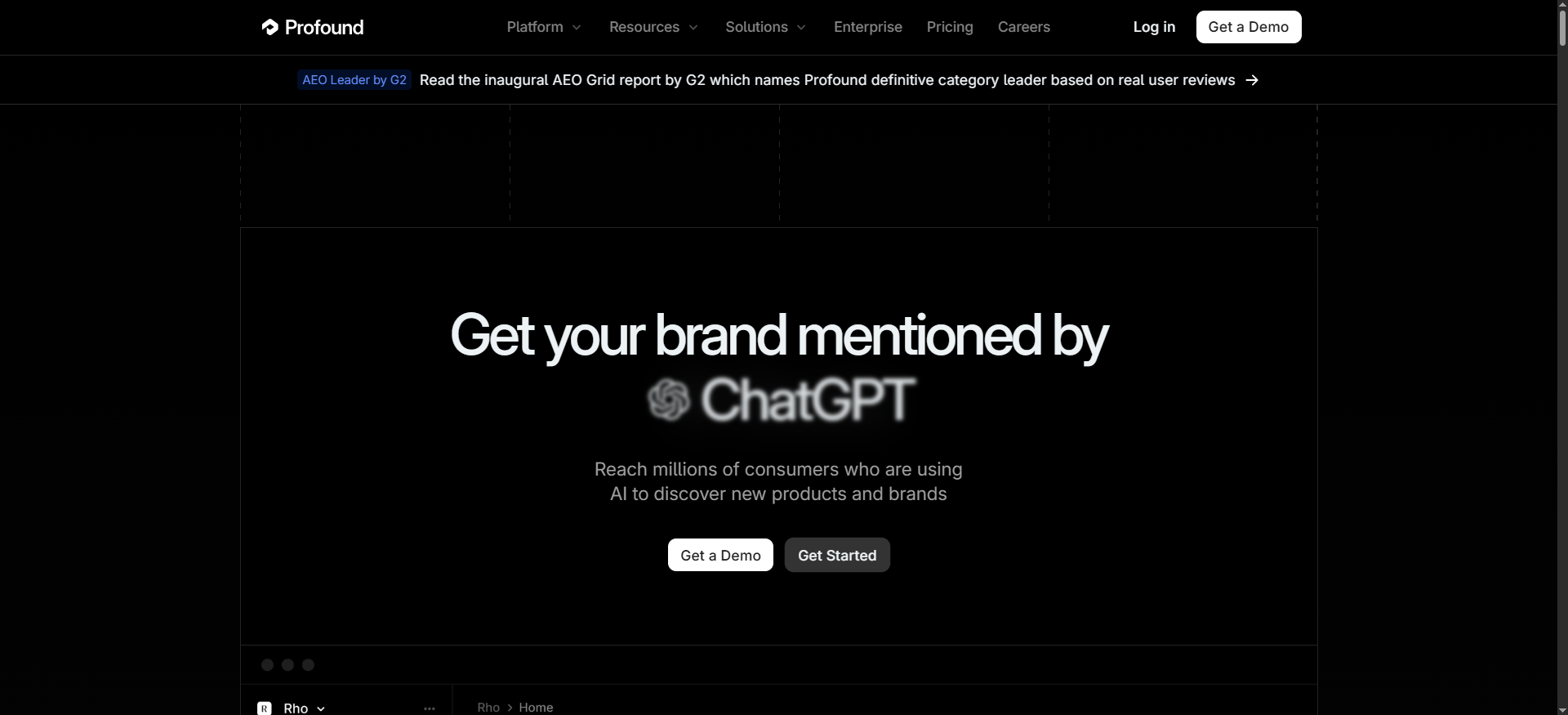
Profound positions itself at the enterprise end of the AI visibility market. It is aimed at brands that care deeply about how they are represented in AI answers and need more than lightweight monitoring.
Why teams use it
Teams look at Profound when AI search visibility is no longer an experiment. It is the kind of platform that appeals when the stakes are bigger: more leadership visibility, more competition, more pressure to understand how brand perception is showing up in generative search environments.
What it’s good for
Profound is best for:
- Enterprise marketing organizations
- Brands with serious category competition
- Teams that need strategic reporting for executives
- Companies that want a vendor focused strongly on the AI search layer
When it’s a good fit
Profound makes sense when your company wants an enterprise-grade AI visibility partner and is willing to invest accordingly. It is a fit when:
- AI visibility is already a board-level or leadership topic
- Multiple stakeholders need access to reporting
- Brand monitoring goes beyond SEO into broader strategic positioning
- You want a category specialist with enterprise posture
When it’s not a good fit
It is usually not the best fit for leaner teams, budget-sensitive companies, or buyers who just want a practical dashboard without a big strategic platform motion.
How to use it
Profound is typically best used as a visibility intelligence layer across critical categories, competitor groups, and branded topics, which is why larger teams often compare it with platforms that excel at AI visibility metrics. Large teams can use it to see not just whether they appear, but how AI systems frame the brand compared with other vendors.
Key capabilities
- Enterprise AI visibility reporting
- Brand presence and competitive analysis
- Executive-ready insight positioning
- Likely broader strategic use cases around representation and category visibility
Pricing
Profound’s pricing starts at $99/month for the Starter plan. Growth is a paid higher tier, and Enterprise pricing is custom.
Free tier?
Profound doesn’t list a free tier, but it does offer a seven-day free trial on at least one paid plan.
Downsides / limitations
The biggest tradeoff is accessibility. Smaller teams may find it too expensive, too heavyweight, or simply more platform than they need right now.
Bottom line on Profound
If you are an enterprise brand and want a serious AI visibility platform rather than a lightweight feature set, Profound is one of the most credible Ahrefs Brand Radar alternatives to shortlist.
3. AthenaHQ
What it does
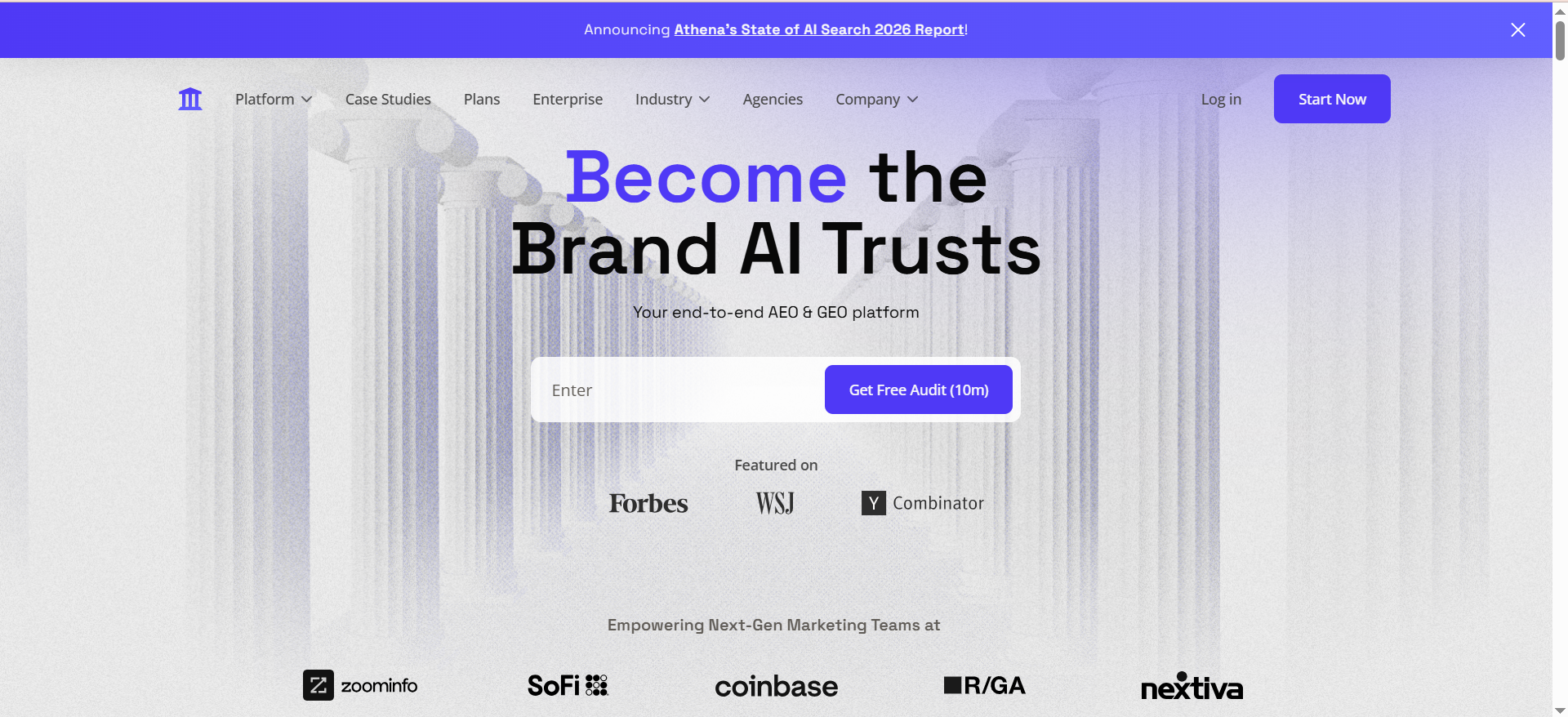
AthenaHQ is a strong option for teams that want AI visibility insights tied more directly to action. It is not just about seeing the problem. It is about helping teams work on the problem.
Why teams use it
AthenaHQ appeals to buyers who are less interested in screenshot-level tracking and more interested in operational workflows. That includes finding opportunities, understanding why competitors get surfaced, and translating visibility insight into execution.
What it’s good for
AthenaHQ is well-suited for:
- SEO and content teams that want action-oriented workflows
- Growth teams looking to improve discoverability in AI systems
- Companies that want a serious platform but may not want the broadest enterprise suite
- Buyers who care about strategic and operational depth
When it’s a good fit
AthenaHQ is a good fit when your team wants:
- A practical bridge between insight and optimization
- Workflow depth around AI search visibility
- Better internal collaboration between SEO and content
- A platform designed for recurring operational use
When it’s not a good fit
It may be less attractive for very small teams that just want a simple dashboard, or for buyers who want the lowest-cost tool possible.
How to use it
A team might use AthenaHQ to monitor prompt performance, track which domains influence AI answers, and then use those findings to inform content updates, messaging changes, or new asset creation, which aligns well with structuring content for the AI era. That is where it can be especially valuable. It supports a more active program rather than passive measurement.
Key capabilities
- AI visibility tracking
- More operational workflow orientation
- Actionable analysis around improvements
- Fit for recurring SEO and content optimization cycles
Pricing
AthenaHQ’s self-serve pricing starts at $295/month. Enterprise pricing is custom.
Free tier?
AthenaHQ doesn’t list a free tier. Its pricing pages do not publicly list a free trial, but the site does offer a free audit and a demo.
Downsides / limitations
For smaller teams, cost may still be the main friction point. For buyers wanting a broad legacy SEO suite, it may also feel more specialized than they want.
Bottom line on AthenaHQ
AthenaHQ is one of the better Ahrefs Brand Radar alternatives for teams that want to move from tracking to action. If your biggest frustration with AI visibility tools is that they show data but do not help you decide what to do next, AthenaHQ deserves a close look alongside the most effective strategies for AI visibility enhancement.
4. Conductor
What it does
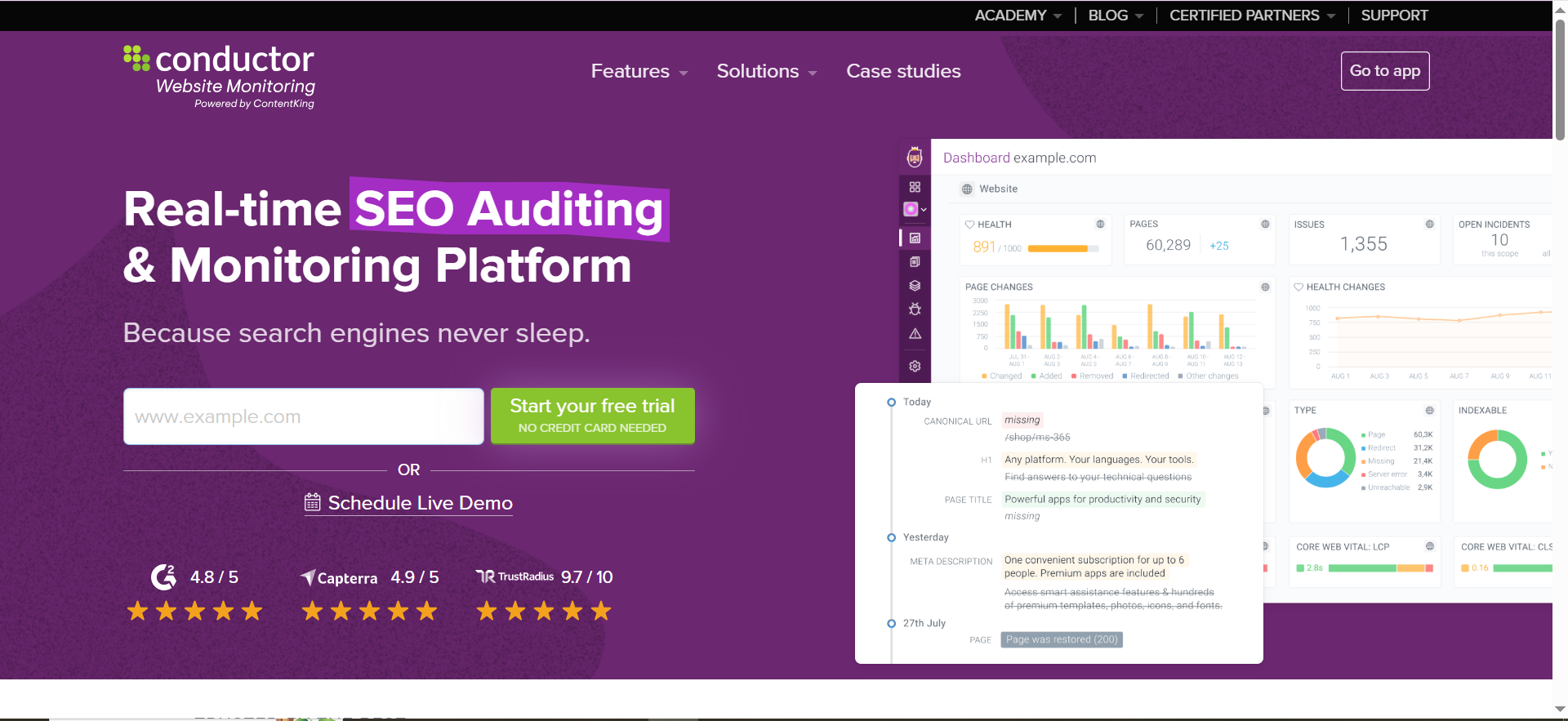
Conductor is not just an AI visibility tool. It is a broader organic marketing and website intelligence platform that has expanded into the AI discovery conversation.
Why teams use it
Large organizations often prefer platform consolidation. They do not want a separate vendor for every emerging capability. Conductor appeals to teams that want AI visibility reporting tied into a broader content, SEO, and website performance workflow.
What it’s good for
Conductor is a good fit for:
- Enterprise teams with established SEO programs
- Organizations that want fewer standalone tools
- Teams already aligned around content plus SEO strategy
- Buyers who value integrated workflows over pure-play specialization
When it’s a good fit
Conductor makes sense if your company wants AI visibility inside a bigger organic growth stack. It is especially attractive when the decision is not just “Which AI visibility tool is best?” but “Which platform helps our search and content organization operate better overall?”
When it’s not a good fit
If you want the most specialized AI visibility experience possible, Conductor may not feel as purpose-built as a pure-play vendor. Some buyers want a tool designed entirely around generative search, not one capability inside a larger platform.
How to use it
Conductor is best used when AI visibility needs to connect with broader planning, content performance, and organizational reporting, especially for teams building a larger AI search visibility strategy for B2B SaaS. A mature marketing team can use that integrated setup to avoid fragmented workflows across vendors.
Key capabilities
- AI visibility within a broader organic platform
- Support for cross-functional content and SEO workflows
- Enterprise reporting fit
- Stronger appeal for organizations seeking consolidation
Pricing
Conductor’s pricing is not publicly listed; it’s available by quote based on your configuration and products.
Free tier?
Conductor doesn’t list a free tier, but it does advertise a free trial and a demo.
Downsides / limitations
The main limitation is specialization. Buyers who are deeply focused on AI answer citations, prompt-level tracking, and niche AI visibility analysis may find stronger dedicated depth elsewhere.
Bottom line on Conductor
Conductor is a credible Ahrefs Brand Radar alternative for enterprise buyers that want AI visibility as part of a larger organic growth platform, not as a separate specialty tool.
5. Otterly AI
What it does
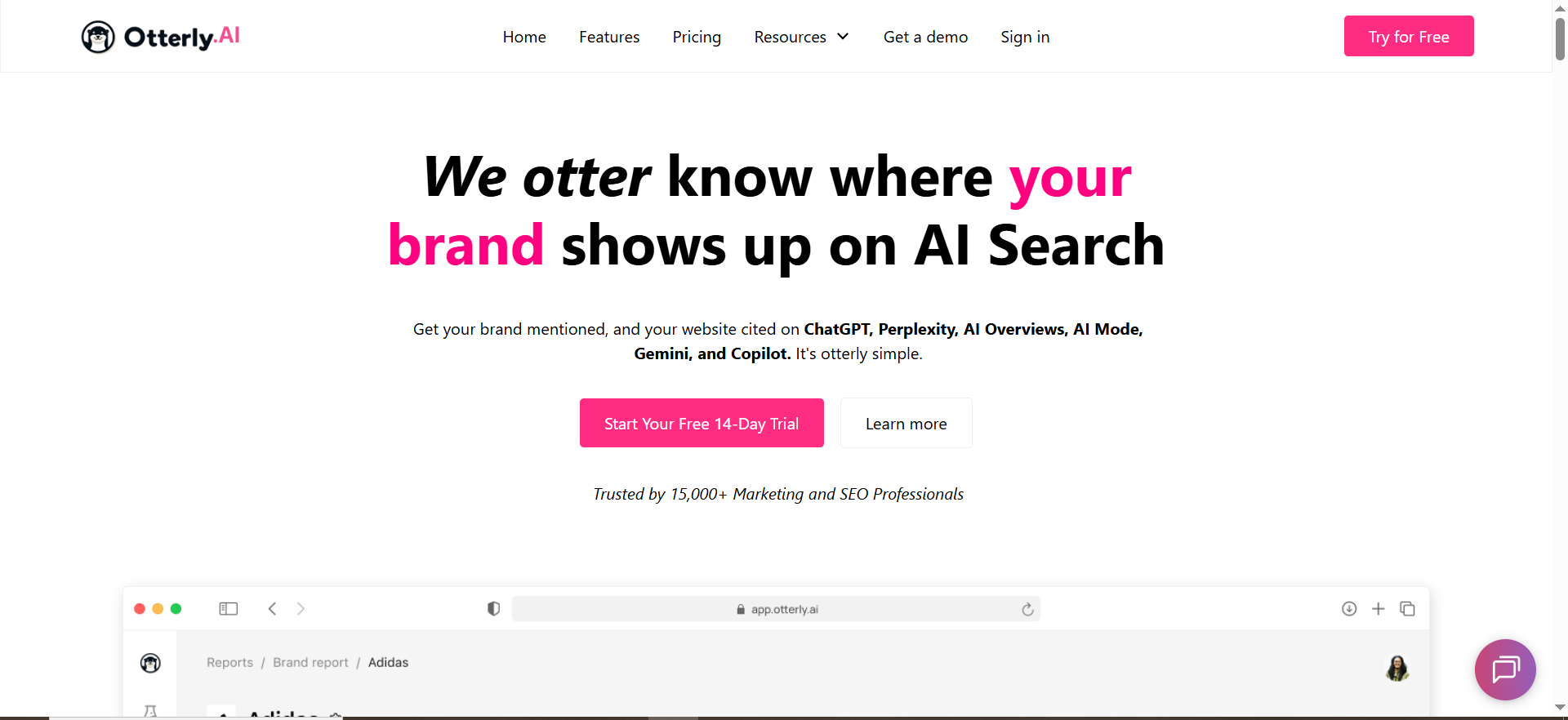
Otterly AI is one of the lighter and more accessible options in this category. It focuses on helping users monitor how brands and content appear across AI-powered search or answer environments without the cost or complexity of enterprise platforms.
Why teams use it
Its appeal is straightforward: simplicity and affordability. That matters more than some vendors admit. A lot of teams do not need a sophisticated operating system for AI visibility. They need a dependable way to start tracking brand presence in AI search without stretching the budget.
What it’s good for
Otterly AI is a strong fit for:
- Consultants
- Agencies testing AI visibility services
- Small in-house teams
- Budget-conscious SaaS companies
- Teams that want to start simple before graduating to a larger platform
When it’s a good fit
Otterly AI is a good fit if:
- You are early in your AI visibility journey
- Budget matters a lot
- You want a simpler interface and setup
- You do not need enterprise reporting complexity
When it’s not a good fit
It is less ideal for large organizations with complex reporting needs, multiple business units, or a need for heavyweight stakeholder workflows.
How to use it
A typical team might use Otterly AI to monitor a selected set of brand and category prompts, watch how visibility changes, and use that baseline to justify future investment in AI search strategy.
Key capabilities
- Accessible AI visibility tracking
- Lower-cost entry point
- Simpler reporting and monitoring workflow
- Good starting point for smaller teams
Pricing
Otterly AI’s pricing starts at $29/month for the Lite plan. It also offers higher paid plans and custom Enterprise pricing.
Free tier?
Otterly AI offers a free tier. It does not need a separate free-trial-only mention because the company explicitly says users can test the platform on a free tier.
Downsides / limitations
The tradeoff for affordability is usually depth. Teams with advanced reporting needs, larger competitive landscapes, or executive stakeholder demands may outgrow it.
Bottom line on Otterly AI
Otterly AI is the best Ahrefs Brand Radar alternative for teams that want a lightweight, lower-cost way to begin monitoring AI search visibility without committing to a large platform investment.
Ahrefs Brand Radar vs alternatives at a glance
Here is the practical comparison.
| Platform | Best for | Strength | Limitation |
|---|---|---|---|
| Ahrefs Brand Radar | Existing Ahrefs users | Native extension of a trusted SEO platform | May not be as specialized for AI visibility workflows |
| Peec AI | Mid-market AI visibility programs | Strong specialist balance of clarity and usability | Less suite breadth than larger SEO platforms |
| Profound | Enterprise AI visibility intelligence | Serious enterprise positioning and stakeholder value | Likely expensive and heavy for smaller teams |
| AthenaHQ | Action-oriented AI search teams | Better bridge from insight to optimization | Higher cost than lightweight tools |
| Conductor | Enterprises wanting consolidation | Integrated fit across broader organic workflows | Less specialized than pure AI visibility tools |
| Otterly AI | Smaller teams and consultants | Lower-cost, simpler setup | Limited depth for advanced enterprise use |
A useful way to think about the market
The category is not really split into “good tools” and “bad tools.” It is split into different operating models.
- Ahrefs is for teams that want AI visibility inside a trusted SEO ecosystem.
- Peec AI and AthenaHQ are for teams that want more dedicated AI visibility workflows.
- Profound is for companies treating AI visibility as a high-stakes strategic layer.
- Conductor is for enterprises that value platform consolidation.
- Otterly AI is for those who want a cheaper, simpler starting point.
That framing usually helps buyers shortlist faster.
📋 Get Listed / Advertisement
We update this guide monthly. Want your tool featured? Contact: [email protected].
Which Ahrefs Brand Radar alternative is right for your team?
This is the part that matters most. Features are helpful, but fit decides whether the tool gets adopted.
Choose Peec AI if you want the best overall specialist alternative
Peec AI is the best fit for teams that want a dedicated AI visibility platform without immediately going full enterprise. It feels well suited to modern in-house teams that need focused reporting, competitor analysis, and prompt tracking in one place.
Choose Profound if you are a large enterprise brand
Profound makes the most sense when leadership visibility, competitive positioning, and strategic intelligence matter enough to justify an enterprise-grade platform. If AI search has become a serious executive topic inside your organization, Profound is built for that level of importance.
Choose AthenaHQ if actionability matters more than passive tracking
Some tools are good at showing trends. AthenaHQ is compelling when your team needs help turning those trends into work. If you want a platform that helps connect visibility insights to optimization, it may be a stronger fit than a simpler monitoring product.
Choose Conductor if you want fewer vendors
Conductor is ideal for organizations that do not want a specialist tool for every new category, especially if they are already thinking through best SEO strategies for AI visibility. If your team already thinks in terms of integrated organic growth systems rather than point solutions, Conductor is worth considering.
Choose Otterly AI if you want a lightweight and affordable option
Otterly AI is the most approachable choice for teams that want to learn the category without a major spend, particularly if they are comparing AI brand mention tracking tools. It is practical, easier to test, and often enough for smaller use cases.
Stick with Ahrefs Brand Radar if convenience is your top priority
There is also a case for staying with Ahrefs. If your team already trusts the platform, wants minimal operational change, and only needs a reliable way to begin tracking AI visibility, Brand Radar may still be the most efficient choice for teams focused on answer engine optimization. Not every team needs to optimize for maximum platform depth.
The right move depends on whether your priority is:
- convenience
- specialization
- actionability
- consolidation
- affordability
Once you know which of those matters most, the shortlist becomes much easier.
Which Ahrefs Brand Radar alternative is best for enterprise teams?
For enterprise teams, the two strongest Ahrefs Brand Radar alternatives are Profound and Conductor, but they serve slightly different needs.
Profound is the better choice if your company wants a platform built specifically for AI visibility and brand intelligence. It makes the most sense for large organizations that need executive-ready reporting, deeper strategic insight, and a system that treats AI search visibility as a serious business function rather than an experimental channel. If multiple stakeholders need visibility into how your brand appears in AI-generated answers, Profound is likely the stronger fit.
Conductor is the better option for enterprises that want AI visibility inside a broader organic growth platform. Instead of adding a separate specialist tool, teams can tie AI visibility reporting into larger SEO, content, and website performance workflows. That matters for enterprise organizations that care about consolidation, governance, and cross-functional reporting.
For most enterprise buyers, the decision comes down to this:
- Choose Profound if you want a specialist enterprise AI visibility platform.
- Choose Conductor if you want AI visibility integrated into a wider enterprise SEO and content stack.
Ahrefs Brand Radar can still work for enterprise teams already invested in Ahrefs, but companies with more advanced stakeholder needs may find that specialist vendors or broader enterprise platforms offer a better long-term fit.
Which Ahrefs Brand Radar alternative is best for agencies?
For agencies, Otterly AI and Peec AI are the most practical Ahrefs Brand Radar alternatives, depending on the kind of clients you serve.
Otterly AI is often the better choice for smaller agencies, consultants, or teams testing AI visibility as a new service line. It is more approachable, easier to set up, and better suited to agencies that need a lightweight reporting layer without major overhead. If your goal is to start offering AI visibility audits, brand monitoring, or basic reporting for clients, Otterly AI is a strong entry point.
Peec AI is the better fit for agencies that want more structured workflows and stronger competitive monitoring. It feels more purpose-built for teams that need clearer prompt tracking, better reporting, and a more specialist platform experience. Agencies working with B2B SaaS or growth-stage brands may find Peec AI easier to position as a higher-value service because it supports more strategic analysis than a lightweight entry tool.
In practice:
- Choose Otterly AI if you want affordability, simplicity, and faster rollout.
- Choose Peec AI if you want more depth and a stronger specialist workflow for client delivery.
Most agencies do not need the heaviness of enterprise platforms like Profound or Conductor unless they work with very large brands and require more advanced reporting environments.
Which Ahrefs Brand Radar alternative has better citation tracking?
If citation tracking is your biggest priority, Peec AI and AthenaHQ are the most promising Ahrefs Brand Radar alternatives in this list.
One of the main reasons teams leave general AI visibility tools is that mentioning tracking alone is not enough. They want to know which sources get referenced, which competitor pages are being cited, and which content types influence AI-generated answers. That is where more specialized platforms can have an edge.
Peec AI appears especially well positioned for teams that want structured visibility into prompts, competitors, and likely citation or source patterns. It is a good fit if you want to understand not just whether your brand is mentioned, but why certain sources keep showing up.
AthenaHQ is also a strong choice if your team wants citation insights tied to action. Instead of treating citations as passive data, it is better suited to workflows where you want to identify which pages influence AI answers and then use that information to guide optimization priorities.
If your main question is, “Which tool helps me understand who gets cited and how to improve that?” then AthenaHQ may be the more actionable choice, while Peec AI may be the better all-around specialist platform for citation tracking.
Which Ahrefs Brand Radar alternative is easiest to use?
The easiest Ahrefs Brand Radar alternative to use is likely Otterly AI, with Peec AI close behind for teams that want more structure without too much complexity.
Otterly AI stands out because its value proposition is simple. It is built for teams that want a lighter setup, a lower learning curve, and a straightforward way to begin tracking AI visibility. That makes it especially attractive for smaller internal teams, consultants, or marketers who want to get useful insight without spending weeks on onboarding.
Peec AI is also relatively approachable, but in a more structured way. It is better suited to teams that want a specialist workflow and are willing to trade a little simplicity for stronger analysis. In other words, Otterly AI is easier if your priority is fast adoption, while Peec AI is easier if your priority is balancing usability with more depth.
For buyers who care most about ease of use:
- Choose Otterly AI for the simplest path to getting started.
- Choose Peec AI if you want a user-friendly specialist platform with more strategic depth.
Enterprise tools like Profound and Conductor may deliver more sophisticated reporting, but they are rarely the easiest option for lean teams or first-time users who need daily prompt runs.
Which Ahrefs Brand Radar alternative is cheapest?
The cheapest Ahrefs Brand Radar alternative in this list is Otterly AI.
For teams that want to enter the AI visibility category without making a large platform investment, Otterly AI is the most budget-friendly option. It is well suited to consultants, startups, smaller SaaS companies, and marketing teams that want proof of value before moving up to a more advanced platform.
This is a big reason why Otterly AI stands out. Many buyers are still in the learning phase with AI visibility. They do not yet need deep enterprise workflows, advanced stakeholder dashboards, or large-scale competitive analysis. They need a tool that helps them monitor brand presence in AI search without stretching the budget.
That said, cheapest does not always mean best. The tradeoff is usually depth. Teams that need more operational support, stronger competitive analysis, or more advanced reporting may outgrow a lower-cost tool fairly quickly.
So the answer is simple:
- Choose Otterly AI if price is your main concern.
- Choose Peec AI or AthenaHQ if you can spend more for additional depth and usability.
Which Ahrefs Brand Radar alternative is best for in-house SEO teams?
For in-house SEO teams, the best Ahrefs Brand Radar alternative is usually Peec AI, with AthenaHQ as a strong second option.
Peec AI is the best fit for most in-house SEO teams because it strikes a useful balance between specialist AI visibility tracking and practical workflow usability. It is focused enough to help teams monitor prompts, competitors, and likely citation patterns, but not so heavy that it becomes difficult to adopt across day-to-day SEO work.
For teams building internal reporting around AI search visibility, Peec AI feels like the most natural upgrade from basic monitoring.
AthenaHQ is also a strong option, especially for SEO teams that work closely with content and want to turn insights into action faster. If your team’s biggest challenge is not measurement but execution, AthenaHQ may be the better fit, especially for organizations that want AI visibility data tied closely to content updates and ongoing workflow management.
It is more compelling for organizations that want AI visibility data tied closely to optimization decisions, content updates, and ongoing workflow management.
In simple terms:
- Choose Peec AI if you want the best overall fit for most in-house SEO workflows.
- Choose AthenaHQ if your team values actionability and optimization support more than simple monitoring.
Ahrefs Brand Radar still makes sense for in-house teams already operating inside Ahrefs, but those that want a more dedicated AI visibility workflow may find Peec AI or AthenaHQ better suited to a long-term brand visibility audit.
FAQs
What is the best Ahrefs Brand Radar alternative?
Is Ahrefs Brand Radar enough for AI visibility tracking?
Which Ahrefs Brand Radar alternative is best for enterprise teams?
Which Ahrefs Brand Radar alternative is best for small teams?
Which Ahrefs Brand Radar alternative is best for turning insights into action?
Should I choose a specialist AI visibility tool or a broader SEO platform?
Final verdict
Ahrefs Brand Radar is a solid starting point for AI visibility tracking, especially for teams already invested in Ahrefs. It lowers friction, extends a trusted SEO environment, and gives marketers a way to start measuring brand presence across AI-generated answers.
But if you want more specialized workflow depth, stronger reporting, or a platform better matched to your team size and maturity, there are several strong alternatives.
For most mid-market teams, Peec AI looks like the best overall Ahrefs Brand Radar alternative because it strikes a useful balance between focus, usability, and specialist capability.
For large enterprises, Profound and Conductor stand out for different reasons: Profound for dedicated AI visibility intelligence, Conductor for broader platform integration.
For teams that want stronger actionability, AthenaHQ is a smart option.
For smaller budgets and simpler use cases, Otterly AI is likely the easiest way to get started.
The best choice is not about who has the longest feature list, because teams usually get more value when their platform choice fits a broader AI strategic visibility program. It is about which platform matches the way your team actually works and the level of AI visibility maturity you are ready to support.
📋 Get Listed / Advertisement
We update this guide monthly. Want your tool featured? Contact: [email protected].