
If you like Semrush AI Toolkit but want deeper AI visibility workflows, stronger competitor intelligence, or a platform that feels more purpose-built for AI search, the best alternatives are Profound, Conductor, AthenaHQ, Peec AI, and Scrunch AI. Semrush gives teams a practical entry point with AI visibility benchmarking, prompt research, competitor views, technical audit checks for AI crawlers, and reporting, which is why many teams start with a lighter AI visibility platform buyer guide. Its AI Visibility Toolkit is listed as a $99/month premium add-on. But many teams outgrow it when they need more customization, more executive-ready analysis, or a stronger path from insight to action, which is why they start comparing AI strategic visibility.
📋 Get Listed / Advertisement
We update this guide monthly. Want your tool featured? Contact: [email protected].
Table of Contents
Best Semrush AI Toolkit alternatives at a glance
| Tool | Best for | Key strength | Pricing visibility |
|---|---|---|---|
| Profound | Enterprise brands and serious AI search programs | Broad AI search monitoring plus a mature product story around answer engine visibility | Public pricing page, largely sales-led |
| Conductor | Enterprise teams that want AI visibility tied to SEO and content workflows | Strong customization, market share, sentiment, and connection to content operations | Demo-led / custom |
| AthenaHQ | Teams that want a dedicated GEO platform with optimization workflows | Tracks 8+ LLMs, automated recommendations, citation analysis, and plan structure around credits | Public plans page plus custom enterprise tiers |
| Peec AI | Lean teams that want clarity and faster setup | Straightforward prompt tracking, daily monitoring, public pricing, simple reporting | Starter from $95/month; Pro from $245/month |
| Scrunch AI | Brands focused on technical AI discoverability and AI-agent-ready content delivery | Combines monitoring with an Agent Experience Platform that serves AI-friendly versions of pages | Pricing is sales-led / custom |
Why teams look for a Semrush AI Toolkit alternative
Semrush deserves credit for making AI visibility easier to buy into, especially for teams still learning what AI visibility means. It already gives marketers a familiar environment, especially if they are using Semrush for SEO, keyword research, reporting, or site audits. Its AI Visibility Toolkit covers core jobs that matter early on: benchmarking brand visibility, analyzing competitors, discovering prompts and topics, tracking daily prompt visibility, surfacing technical issues that may block AI crawlers, and exporting reports for stakeholders.
That said, “good enough” and “best fit” are not the same thing.
In practice, most teams start looking for alternatives once they realize their stack needs stronger support for AI search visibility.
First, they want deeper AI-native reporting, which is why many teams start evaluating AI visibility metrics. A lot of teams do not just want a visibility score, and many now compare platforms based on category tracking for AI visibility. They want to know which prompts matter by funnel stage, which sources are getting cited, how sentiment changes by topic, and where competitors are winning by audience segment.
Platforms like Conductor and Profound lean harder into that level of analysis.
Second, they want more control over prompt design and tracking structure, especially when comparing GEO prompt monitoring tools. Semrush is useful for prompt research, but some organizations want to organize prompt sets by buyer persona, region, brand, use case, domain, and topic cluster, especially when testing prompt variation workflows. Conductor explicitly emphasizes this kind of tracking customization.
Third, they need stronger optimization workflows, not just monitoring, which is why many teams start exploring best AI content optimization tools for search visibility. AthenaHQ positions itself as an end-to-end GEO platform with automated content optimization recommendations and citation source analysis, which makes it relevant for teams comparing GEO case studies and outcomes. Those are very different products from “just show me visibility trends.”
Fourth, some buyers simply want cleaner pricing and simpler adoption, which is why many teams compare alternatives alongside other best SEO tools for SaaS. Semrush’s $99/month AI Visibility Toolkit add-on is accessible, but smaller teams often compare it against dedicated tools with more transparent AI-search-specific plans. Peec, for example, publishes a lower-friction pricing structure with daily tracking, prompt allowances, and unlimited users on entry tiers.
Fifth, agencies and advanced in-house teams want a platform that can support AI visibility as an ongoing program, not a lightweight add-on, which is why they often review AI visibility services for SEO and GEO. Once reporting goes to clients or executives, workflow fit matters more than feature lists.
1. Profound
What it does
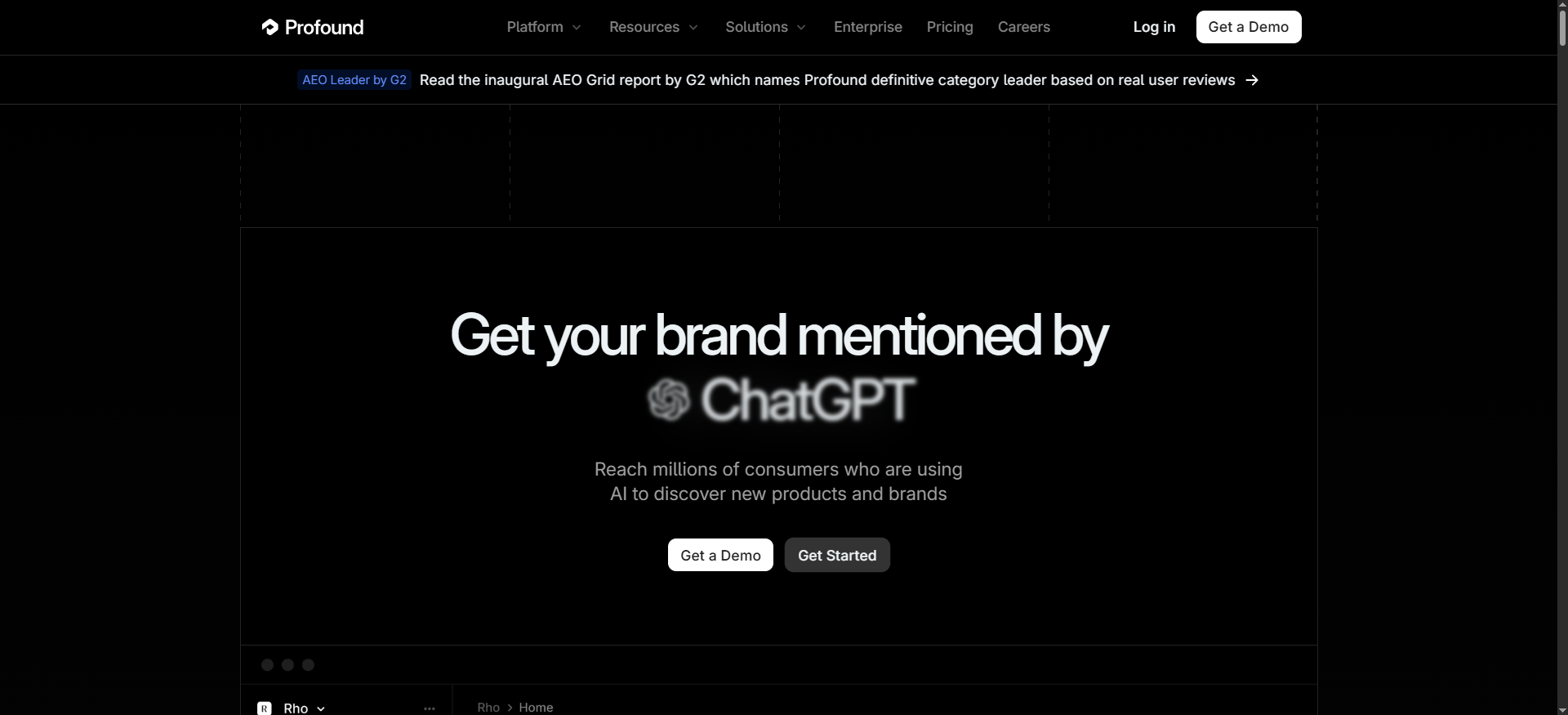
Profound is one of the most visible names in the AI visibility category, and buyers often compare it against other best AI visibility tools by engine coverage. Its positioning centers on helping brands gain visibility in AI-generated answers and monitor how they appear inside LLM-based answer engines. It is clearly built for organizations treating AI search as a serious acquisition and brand channel, not just an experimental report.
Why teams use it
Teams usually look at Profound when they want a platform that feels AI-native from the ground up, which is why it often enters the conversation around AI strategic visibility. Its language, product packaging, and surrounding education all point toward AI answer engine strategy rather than traditional SEO with AI features added on top. For teams trying to explain why AI visibility matters to leadership, that sharper positioning can help.
What it’s good for
Profound is strongest when your organization wants a serious platform for answer engine monitoring, brand visibility analysis, and executive storytelling around AI search, which makes it a relevant fit for teams comparing AI visibility tools for share of voice. It also appears to have kept expanding its product around newer surfaces, including Google AI Overviews, which makes it relevant for teams following an AI Overview SEO BOFU case study.
When it’s a good fit
It is a good fit if you are an enterprise brand, large B2B SaaS company, or advanced agency that wants to build a durable AI visibility program and can support a sales-led tool purchase, especially if you are already evaluating broader AI search visibility services for SEO and GEO.
When it’s not a good fit
It is a weaker fit if you want transparent self-serve pricing, simple onboarding, or a budget-friendly first step. Profound has a pricing page, but its public presence still feels more enterprise-oriented than tools built for quick self-serve adoption.
How to use it
Use Profound when the main internal question is not “Are we visible?” but “How do we measure and improve our presence across answer engines as a strategic growth channel?” That means mapping priority prompt clusters, tracking visibility by product line or market segment, reviewing cited sources, and tying insights back to content, brand, and PR work.
Key capabilities
Profound’s public materials emphasize AI answer visibility and provider selection factors like reporting depth, filtering by LLM, competitors, and prompts. That suggests a product built for analysis beyond simple rank-style outputs.
Pricing
Pricing is not publicly listed for Profound’s main platform; it’s available by quote.
Free tier?
Profound doesn’t appear to offer a public free tier for its main platform, but it does offer a free AEO report and free access to one agent.
Downsides / limitations
The main downside is likely complexity and cost relative to simpler tools. If your team just wants daily prompt checks, top citations, and a clean report, Profound may be more platform than you need.
2. Conductor
What it does
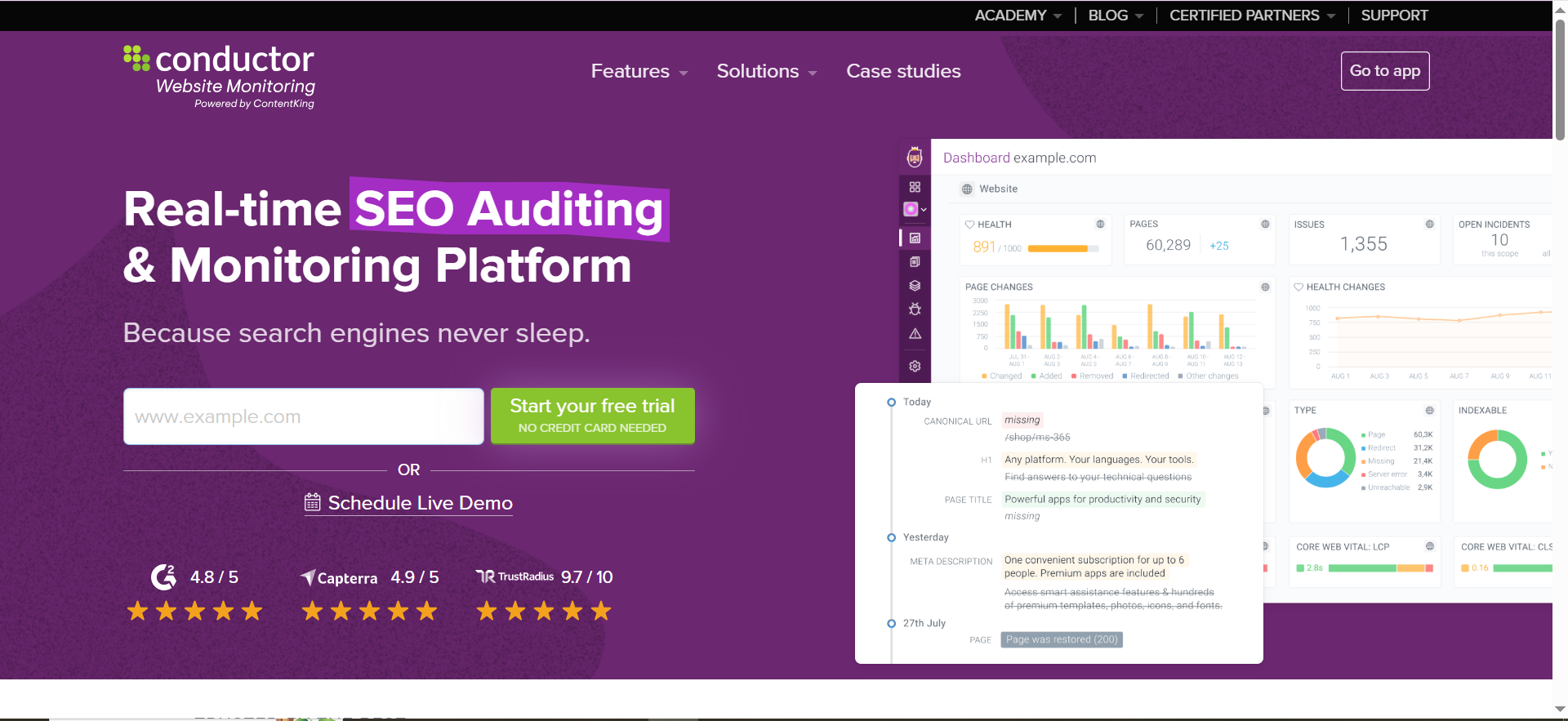
Conductor has expanded hard into AI search and positions itself as an enterprise AEO platform for improving visibility, traffic, and conversions across ChatGPT, Perplexity, Google, and more. It combines AI visibility monitoring with broader content and SEO workflow logic.
Why teams use it
Teams use Conductor when they do not want AI visibility to sit in a separate silo. Its value is not just seeing whether the brand appears. It is able to analyze mention and citation tracking, brand sentiment, competitive market share, custom tracking dimensions, and then move straight into content workflows.
What it’s good for
Conductor is a strong fit for enterprise marketing organizations that already think in SEO programs, editorial workflows, buyer intent, and performance reporting, especially if they care about reporting AI visibility to leadership. It is especially appealing for teams that need to connect AI visibility to traffic and conversion outcomes rather than treat it as a side metric.
When it’s a good fit
It is a good fit if you need:
- persona- and intent-based prompt structures
- market share and competitor analysis
- sentiment tied to cited sources
- tracking customization by brands, domains, engines, and regions
- a path from insights into content action
When it’s not a good fit
It is not the best fit for small teams that want something lightweight or cheap. Conductor’s framing and feature set are clearly enterprise-oriented.
How to use it
Conductor is best used when AI visibility is part of a broader search and content system, especially for teams building an AI search visibility strategy for B2B SaaS. You define important personas and intent stages, track the prompts that map to them, benchmark against competitors, study cited sources and sentiment, then use those insights to prioritize content creation and optimization.
Key capabilities
Conductor publicly highlights mention and citation tracking, audience and intent insights, sentiment analysis tied to cited sources, competitive market share, tracking customization, broad LLM coverage, topic and prompt analysis, content workflow integration, traffic and conversion insights, and AI bot crawling reports, which is why it often appears in AI visibility metrics comparisons. That is one of the most complete public capability sets in this category.
Pricing
Pricing is not publicly listed; it’s available by quote. Conductor says its plans vary based on configuration and needs.
Free tier?
Conductor doesn’t offer a free tier, but it does offer a free trial.
Downsides / limitations
The likely tradeoff is heavier adoption. Conductor looks excellent for mature teams, but probably excessive for early-stage companies that just need prompt monitoring and clearer AI citation reporting.
📋 Get Listed / Advertisement
We update this guide monthly. Want your tool featured? Contact: [email protected].
3. AthenaHQ
What it does
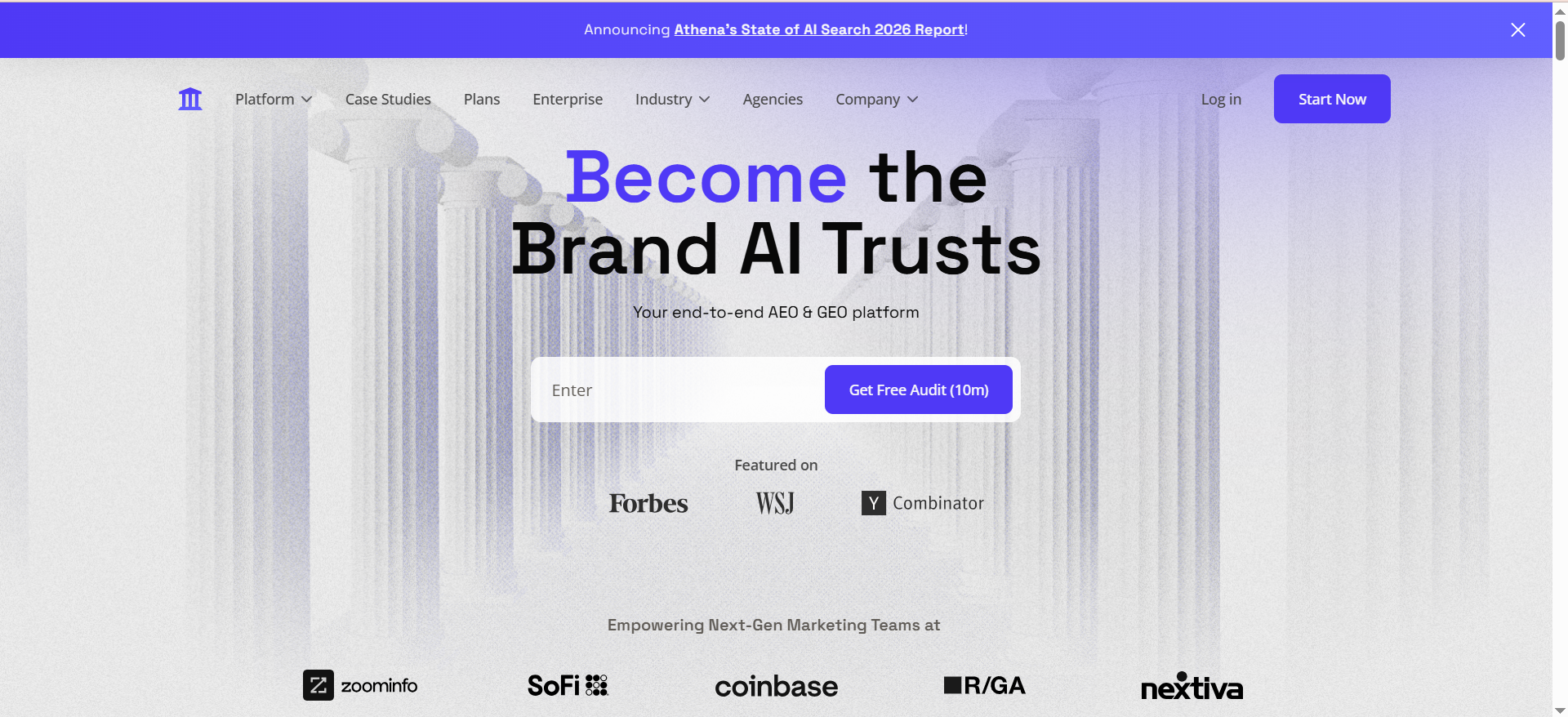
AthenaHQ presents itself as an AEO and GEO platform for AI search, so it naturally fits into a broader discussion around AEO tools for AI Overviews. It pushes beyond monitoring into execution with end-to-end workflow language, automated optimization recommendations, and citation source analysis. It also says it tracks across 8+ LLMs.
Why teams use it
AthenaHQ is attractive to buyers who want a more dedicated GEO platform than Semrush without immediately jumping into a highly opaque enterprise purchase, especially if they are already exploring answer engine optimization. Its public plans page and platform messaging make it easier to understand what the tool is trying to do.
What it’s good for
AthenaHQ is strongest for teams that want a balanced mix of:
- cross-platform AI visibility tracking
- automated optimization guidance
- citation analysis
- operational workflow support
- a clearer pricing structure than many enterprise tools, which overlaps with best AI tools for GEO.
When it’s a good fit
It is a good fit for growth-stage and enterprise teams that want a dedicated AI search platform with enough structure to support ongoing optimization, not just reporting. Agencies may also find it appealing because the plans page explicitly references enterprise and agencies.
When it’s not a good fit
It may be less appealing if you want a very simple UI and minimal setup, or if your team is still too early to act on recommendation-driven workflows.
How to use it
AthenaHQ is best used as a working GEO command center, which makes it a relevant fit for teams comparing the best AI visibility tool for GEO. You track your brand across LLMs, review which sources get cited, identify missing topics or weak pages, and then follow the platform’s optimization direction to improve performance.
Key capabilities
Publicly listed capabilities include end-to-end GEO workflow management, cross-platform AI visibility tracking across 8+ LLMs, automated content optimization recommendations, and citation source analysis and link building, which makes AthenaHQ relevant for teams studying a real SaaS AI visibility case study on mentions, citations, and conversions.
Pricing
AthenaHQ’s self-serve plan is $95/month. Its Enterprise plan is custom-priced.
Free tier?
AthenaHQ doesn’t appear to offer a free tier, but it does offer a free audit.
Downsides / limitations
AthenaHQ’s credit model may require closer forecasting than flat-plan tools. Buyers should make sure they understand how response volume maps to their monitoring needs before committing.
4. Peec AI
What it does
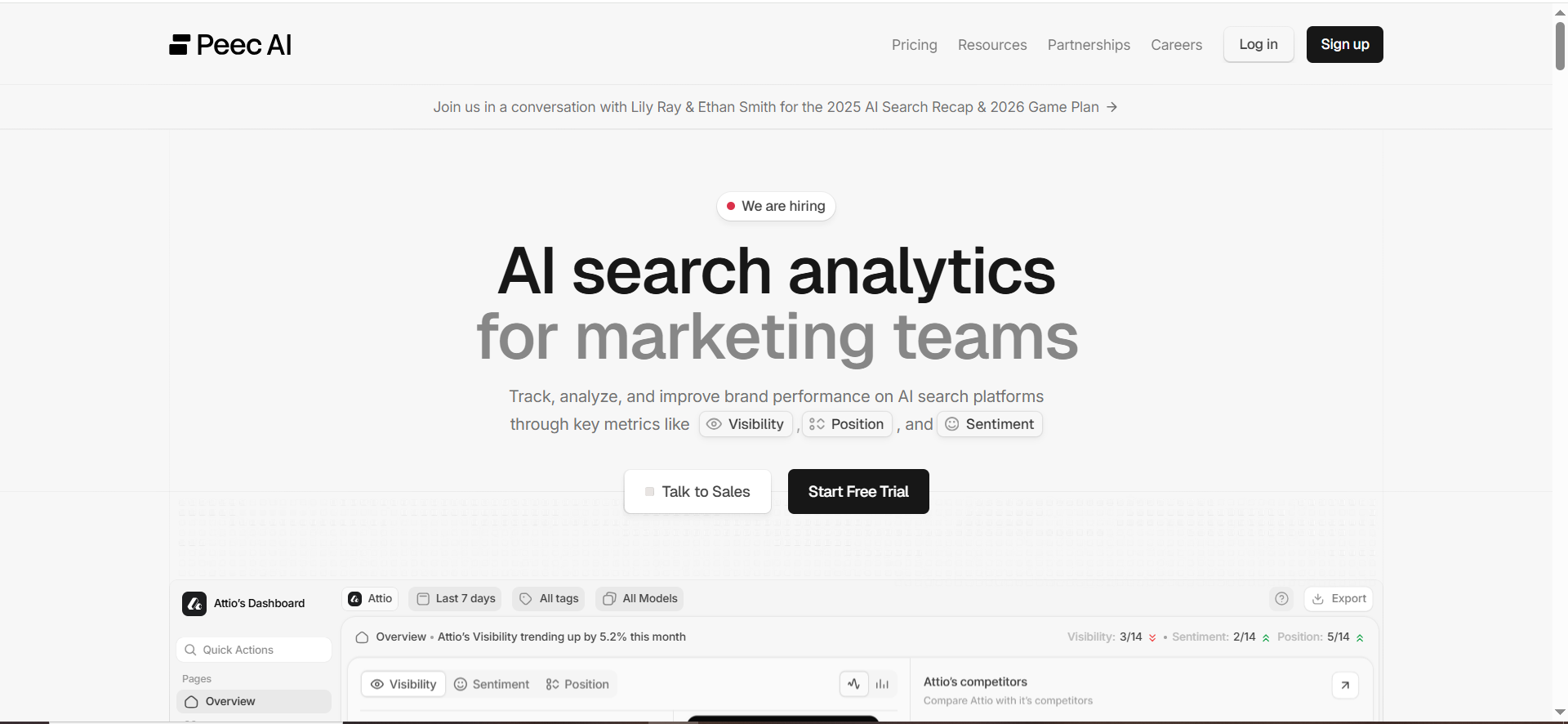
Peec AI is an AI search analytics platform for marketing teams and SEO agencies. It focuses on visibility analysis across platforms like ChatGPT, Perplexity, Gemini, and others, with strong emphasis on prompt tracking, cited sources, and competitor benchmarking.
Why teams use it
Peec’s biggest advantage is focus, which makes it a useful option for teams comparing the best AI tools to monitor SaaS brand visibility in ChatGPT and Perplexity. It does not try to be everything. It is built to answer practical questions quickly: Which prompts matter? Are we visible? Which sources are being cited? Where are competitors winning? That narrower product story is exactly why many lean teams prefer it over broader suites.
What it’s good for
Peec is especially good for smaller in-house SEO teams, content leads, growth marketers, and agencies that want fast setup, daily monitoring, and public pricing without losing the core AI visibility features that matter, making it relevant for buyers comparing the best AI search engines.
When it’s a good fit
It is a good fit if you want:
- daily tracking
- a modest but workable prompt allowance
- unlimited users
- a simple adoption path
- lower cost than heavier enterprise stacks
When it’s not a good fit
It is not the best fit if you need deep enterprise governance, broad workflow orchestration, or the most advanced market-share and sentiment layer, and some teams in that position end up comparing broader marketing analytics tools.
How to use it
Peec works well when you want to operationalize AI visibility inside an SEO or content team without starting a heavyweight platform rollout, especially if you need daily prompt runs. Set up prompt clusters around your category, product use cases, and comparison terms. Review the domains and pages that show up in citations. Then prioritize refreshes, net-new content, and authority-building based on where you are missing.
Key capabilities
Peec’s public pricing page shows daily tracking, prompt limits, model selection, project limits, and unlimited users, which is why it often comes up in comparisons of the best AI visibility tools for category tracking. Its broader positioning centers on analyzing brand performance, benchmarking competitors, and optimizing visibility in AI search.
Pricing
Peec AI’s pricing starts at $95/month. Its Enterprise plan is custom-priced.
Free tier?
Peec AI doesn’t offer a free tier, but it does offer a free trial.
Downsides / limitations
Peec’s tradeoff is that it appears intentionally lean. That is a strength for usability, but some large organizations may want more enterprise-grade customization, broader integrations, or more advanced executive reporting layers.
5. Scrunch AI
What it does
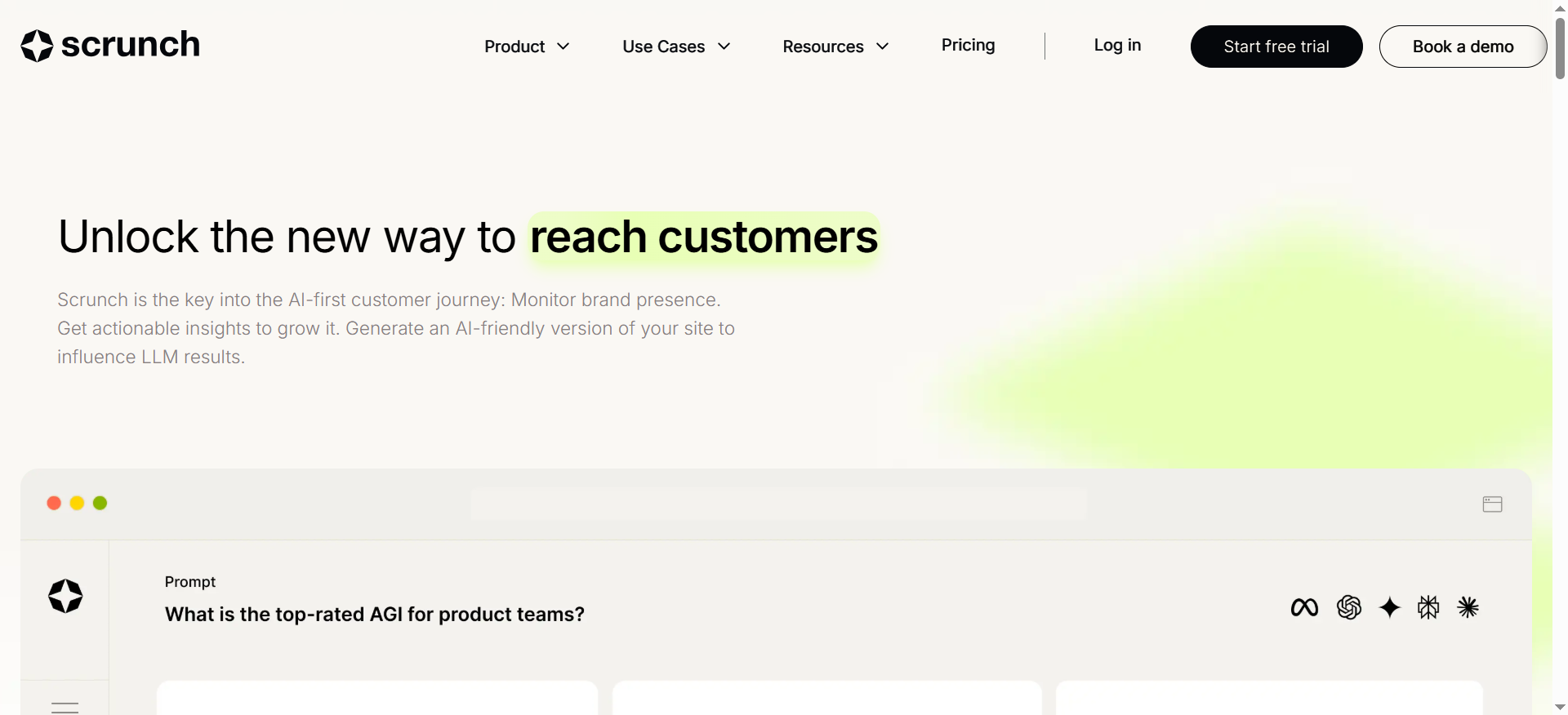
Scrunch is interesting because it is not only a monitoring platform. It also has an Agent Experience Platform (AXP) designed to create a parallel, AI-ready version of site pages that is served to AI agents without changing the human-facing experience. Public materials also indicate the company offers monitoring and insights into how brands show up in AI.
Why teams use it
Teams look at Scrunch when they believe AI visibility is partly a content architecture and delivery problem, not just a tracking problem. That is a very different worldview from a pure dashboard vendor.
What it’s good for
Scrunch is best for brands that care deeply about:
- AI agent readability
- technical content delivery
- making pages easier for AI systems to parse and cite
- pairing monitoring with a more direct technical remediation path, which connects naturally to best SEO strategies for AI visibility.
When it’s a good fit
It is a strong fit for sophisticated web teams, large content-heavy brands, and organizations that already know raw monitoring alone will not fix their AI discoverability problems.
When it’s not a good fit
It is less ideal for buyers who simply want an affordable reporting layer or who do not have the internal technical appetite to make use of its delivery-oriented model.
How to use it
Scrunch is best used when your team is asking, “How do we make our content more usable to AI systems in the first place?” which is closely related to structuring AEO content for the AI era. rather than only “How many times did we get mentioned?” In that sense, it overlaps with AI visibility software but leans harder into technical enablement.
Key capabilities
Public pages describe AXP as routing AI agent traffic to a stripped-down, structured version of each page via the CDN layer, with no framework code changes required. The navigation and terms pages also reference monitoring and insights, enterprise support, agencies, pricing, and prompt generation.
Pricing
Scrunch’s pricing starts at $250/month for brands. Its Enterprise plan is custom-priced, and its agency plans start at $500/month.
Free tier?
Scrunch doesn’t offer a free tier, but it does offer a 7-day free trial.
Downsides / limitations
Scrunch may be too specialized for teams that mainly want prompt tracking and executive dashboards, but it can make sense for companies investing in AI visibility audits. Its core value becomes clearer when you have technical content delivery issues to solve.
Semrush AI Toolkit vs alternatives
Semrush AI Toolkit still makes sense for a certain buyer.
If you are already inside the Semrush ecosystem, want a familiar interface, and mostly need AI visibility benchmarking, prompt discovery, competitor views, site-audit-style AI readiness checks, and exportable reports, it remains a practical option for teams building an AI search visibility audit. At $99/month for the toolkit add-on, it is also easier to trial than many enterprise-first alternatives.
But if your team’s real need is one of the following, an alternative is usually the smarter buy:
- Enterprise analysis and broader AI search program depth: Profound
- Integration with content and SEO operating workflows: Conductor
- Dedicated GEO execution and recommendation layer: AthenaHQ
- Fast adoption and public pricing for lean teams: Peec AI
- Technical AI-agent content delivery and AI-ready page serving: Scrunch AI
That is the real takeaway. These tools are not interchangeable. They reflect different beliefs about what “AI visibility” actually means.
Which Semrush AI Toolkit alternative is best for which team
Best for enterprise marketing leaders
Conductor or Profound
Choose Conductor if you want AI visibility to live inside a broader search and content workflow, particularly if your team is building an AI search visibility strategy from SEO to GEO. Choose Profound if you want a highly AI-native platform story and are building a serious answer engine program.
Best for growth-stage B2B SaaS teams
AthenaHQ or Peec AI
AthenaHQ is better if you want more workflow depth and optimization direction. Peec is better if you want speed, clarity, and a tighter budget.
Best for agencies
Peec AI, AthenaHQ, or Profound
Peec’s public agency pricing and straightforward packaging are attractive. AthenaHQ explicitly references agencies in its plans structure. Profound also appears to support agency-oriented packaging in some materials.
Best for technical AI discoverability
Scrunch AI
If the real issue is not just measurement but how your content is served and interpreted by AI agents, Scrunch stands out, especially for teams building an AE SEO playbook for AI answers and citations.
How to choose Semrush AI Toolkit alternative without overbuying
Here is the simplest decision framework.
If you are early, buy the tool that helps your team see the problem clearly.
If you are intermediate, buy the tool that helps your team prioritize the right fixes.
If you are advanced, buy the tool that helps your team turn AI visibility into a repeatable operating system.
That means:
- choose Peec when clarity and speed matter most
- choose Semrush when you want AI visibility inside an existing SEO suite
- choose AthenaHQ when you want a dedicated GEO platform with stronger actionability
- choose Conductor when you need enterprise-grade analysis linked to content operations
- choose Profound when AI answer engine visibility is becoming a strategic reporting layer
- choose Scrunch when your main bottleneck is technical AI-agent usability, not just monitoring
The mistake most buyers make is buying for the category headline instead of the actual workflow gap, which is why many teams now start with a formal AI visibility platform showdown.
📋 Get Listed / Advertisement
We update this guide monthly. Want your tool featured? Contact: [email protected].
Which Semrush AI Toolkit competitor is best for enterprise teams?
For most enterprise teams, Conductor is the strongest Semrush AI Toolkit competitor. Its AI Search Performance product is built for larger organizations that need more than basic visibility tracking. It supports tracking across engines like ChatGPT, Gemini, Google AI Mode, Google AI Overviews, Microsoft Copilot, Claude, and Perplexity, and it lets teams analyze prompts, topics, personas, intent, citations, sentiment, and market share from one reporting layer. That makes it a better fit for enterprise teams that need AI visibility data to serve multiple stakeholders, not just one SEO manager.
Conductor also stands out because it feels like a full operating platform rather than a single-purpose add-on. Its public materials emphasize that teams can move from AI visibility insights into content workflows, reporting, and broader search operations. That matters for enterprises where AI visibility is not just a monitoring project, but part of a larger SEO, content, and brand program.
If the buyer wants executive reporting, workflow integration, and flexibility across brands, markets, and regions, Conductor is the safest enterprise recommendation for teams building stronger website traffic analysis and reporting workflows.
That said, Profound is also a serious contender for enterprise buyers, especially brands that want a more AI-native platform story. It is often the better fit when the internal goal is to build a dedicated answer engine optimization program rather than extend an existing SEO workflow. In other words, Conductor is the stronger “enterprise system” choice, while Profound may appeal more to teams that want AI visibility positioned as its own strategic category.
If you want a simple recommendation line for the post, use this: Conductor is the best Semrush AI Toolkit competitor for enterprise teams because it combines AI visibility tracking with enterprise-grade reporting, segmentation, and workflow depth.
Which Semrush AI Toolkit alternative is best for agencies?
For most agencies, Peec AI is the best Semrush AI Toolkit alternative.
It is a strong fit because it is built for multi-client workflows, offers agency-specific pricing, and supports the core jobs agencies need most: prompt tracking, competitor comparisons, and client reporting. Its agency plans are designed for teams managing multiple clients, which makes it more practical than tools aimed mainly at single-brand in-house use.
If an agency wants a more technical, audit-heavy offering, Scrunch AI is another option. But for most agencies, Peec AI is the clearer recommendation because its agency positioning and pricing are more straightforward.
FAQs
For enterprise teams, Conductor is one of the strongest overall alternatives because it combines AI visibility, sentiment, competitor benchmarking, customization, and content workflow integration. For smaller teams, Peec AI is often the easier pick because pricing is public and setup looks simpler, which is why it also fits naturally into comparisons of the best SEO tools for small businesses.
In many cases, yes. Semrush lists the AI Visibility Toolkit as a $99/month premium add-on, which is lower-friction than many enterprise-focused platforms. But “cheaper” does not always mean better value if your team needs deeper workflows or broader AI-native analysis.
Peec AI is a strong agency option because it has explicit agency pricing and a simple daily-tracking structure, which is why it fits naturally alongside other best AI marketing tools for agencies. AthenaHQ and Profound also look relevant for agencies, especially when clients need more strategic AI visibility programs.
Conductor, AthenaHQ, Peec AI, and Scrunch all have useful angles, but the best choice depends on the workflow. Conductor is stronger for enterprise analysis, AthenaHQ for recommendation-driven GEO work, Peec for lean clarity, and Scrunch for technical delivery and AI readability.
It can be used for early-stage monitoring and reporting, especially if your team mainly wants AI visibility benchmarks, prompt research, competitor views, AI crawler audit checks, and presentation-ready reporting, but more advanced teams may need a deeper brand visibility audit for LLMs. It is less likely to replace a dedicated GEO platform once you need advanced customization, richer workflows, or deeper optimization support, especially if your team is using a more formal AE SEO playbook for AI answers and citations.
Scrunch AI stands out because it does more than monitor, and it fits especially well for teams investing in AEO-ready SaaS blogs. Its Agent Experience Platform is built to serve AI-friendly versions of site pages to AI agents, which makes it a stronger fit for technical AI discoverability work than a standard dashboard tool.
Final verdict
The best Semrush AI Toolkit alternative for most serious teams is not automatically the most expensive one, especially for buyers already comparing the best cheap SEO tools.
For many enterprises, Conductor is the best all-around alternative because it combines AI visibility depth with workflow integration, customization, and performance reporting, which also makes it relevant to teams evaluating the best enterprise SEO tools. For dedicated AI search programs, Profound is one of the strongest AI-native bets. For balanced GEO execution, AthenaHQ is compelling for teams that are also evaluating AISO vs SEO vs AEO vs GEO. For leaner teams that want value fast, Peec AI is probably the easiest recommendation. And for technical AI discoverability, Scrunch AI brings a genuinely different angle.
Semrush AI Toolkit still belongs in the conversation, but many teams evaluating alternatives also compare it against other AI visibility platform showdowns. It gives brands a practical way to benchmark visibility, research prompts, track competitors, identify AI crawler blockers, and share reports, all from a familiar platform. But once your team needs more control, more analysis depth, or a stronger bridge from insight to action, these alternatives become much more attractive.
📋 Get Listed / Advertisement
We update this guide monthly. Want your tool featured? Contact: [email protected].