
Geneo is a decent entry-level AI visibility tool, but it may feel limited once your team needs deeper reporting, better citation analysis, stronger competitor tracking, or more scalable workflows. The best Geneo AI alternatives are Peec AI for overall balance, AthenaHQ for deeper diagnostics, LLMrefs for SEO-led teams, Profound for enterprise buyers, and Rankscale AI for action-oriented analysis. This guide compares each option by use case, strengths, limitations, and fit so you can choose the right tool for your stage of growth. If you already know AI visibility matters and now need a platform that helps you operationalize it, these are the tools worth evaluating.
If Geneo feels a little too light for your current AI visibility monitoring program, you are not imagining it. Geneo is a useful entry point for AI visibility monitoring, especially if you want affordable access to brand mention tracking across AI search environments, which makes resources on AI brand mention prominence tools especially relevant. But once your team starts asking harder questions like which citations are driving visibility, which competitors are gaining share, how to segment by market, and how to report this cleanly across stakeholders, you may outgrow it fast.
The best Geneo AI alternatives right now are Peec AI, AthenaHQ, LLMrefs, Profound, and Rankscale AI, and teams evaluating them often compare the broader AI visibility platform showdown. They all solve the same broad problem, which is helping brands understand how they appear in AI-generated answers, but they take very different approaches.
Some are better for lean SEO teams that want clean dashboards and faster setup, which is why many buyers also review the best AI tools that monitor SaaS brand visibility in ChatGPT and Perplexity.
Others are better for enterprise buyers that need governance, deeper diagnostics, or workflow layers beyond monitoring, so it helps to compare the best AI tools for enterprise SaaS marketing. A few sit in the middle and make sense for growing teams that have moved past “Are we showing up?” and into “Why are we winning or losing, and what do we do next?”
This guide is built for marketers, founders, SEO teams, and agencies comparing Geneo against stronger or more scalable alternatives in answer engine optimization. You will get a quick shortlist first, followed by a deeper look at what each tool is best at, where it falls short, and which type of team should seriously consider it.
📋 Get Listed / Advertisement
We update this guide monthly. Want your tool featured? Contact: [email protected].
Table of Contents
Best Geneo AI Alternatives for SEO Teams, Agencies, and Brands
| Tool | Best for | Main strength | Best fit |
|---|---|---|---|
| Peec AI | Growth teams and agencies | Clear reporting and multi-project flexibility | Teams outgrowing lightweight monitoring |
| AthenaHQ | Mature in-house teams | Deep diagnostics and operational depth | Companies formalizing GEO as a serious function |
| LLMrefs | SEO-led teams | Keyword-first workflow and affordability | Teams moving from SEO into AI visibility |
| Profound | Enterprise brands | Broad AI visibility platform vision | Large orgs with bigger budgets and needs |
| Rankscale AI | Practical GEO teams | Action-oriented analysis and recommendations | Teams that want insight without immediate enterprise overhead |
📋 Get Listed / Advertisement
We update this guide monthly. Want your tool featured? Contact: [email protected].
1. Peec AI
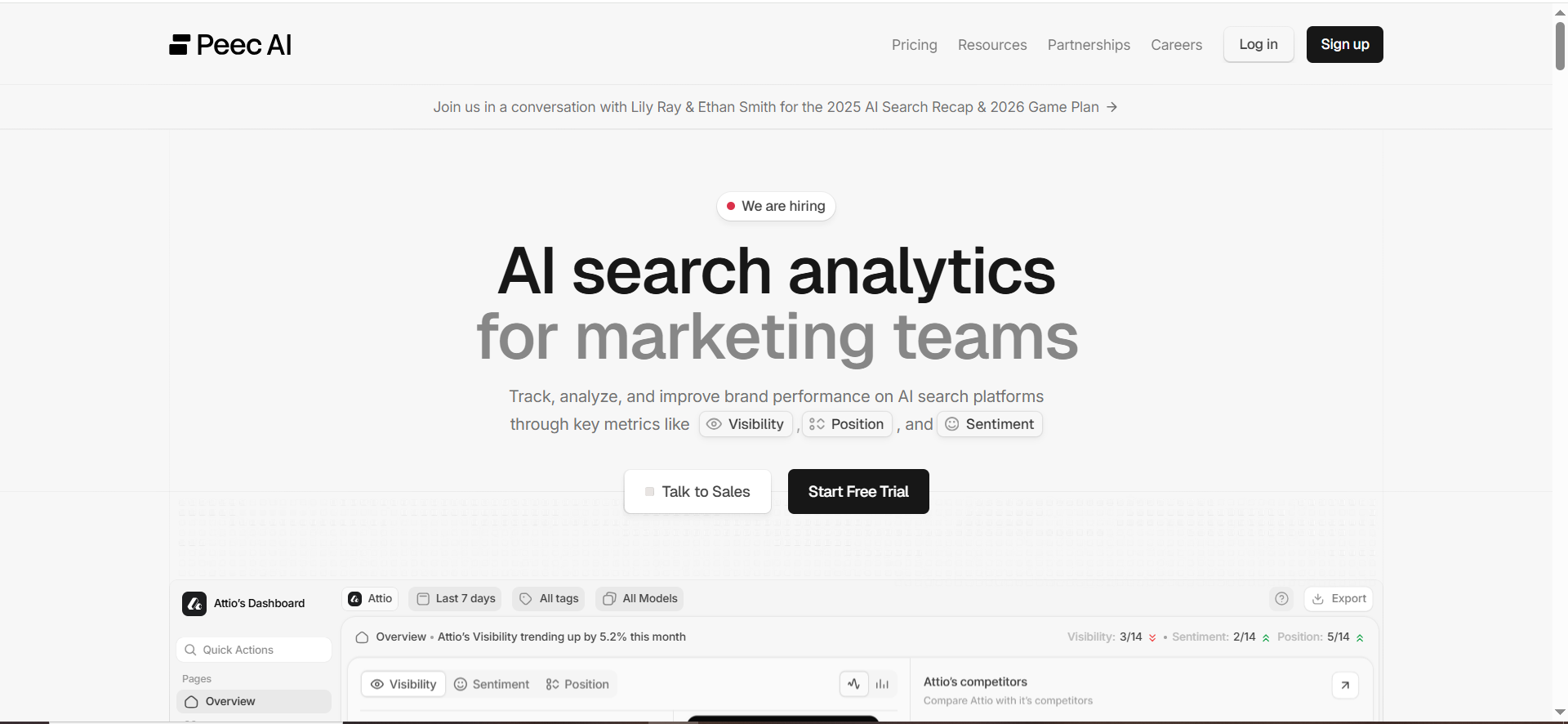
Peec AI is the best all-around Geneo alternative for most growth-stage teams. It feels like a real upgrade without feeling like a category shift.
That is an important distinction.
A lot of buyers leaving Geneo are not looking for an enterprise platform. They are looking for a tool that keeps the practical benefits of modern AI visibility tracking but adds more structure, more flexibility, and a better reporting layer. Peec AI sits right in that sweet spot.
What it does
Peec AI helps brands track visibility across AI search environments using prompts, projects, and model-based monitoring. It is designed to help teams understand where they appear, where they do not, and how their visibility changes over time.
It also appears built for more serious project management than many entry-level tools in the space. Instead of just showing isolated results, it gives teams a better framework for organizing prompts, projects, stakeholders, and reporting.
Why teams use it
Teams usually choose Peec AI when they want a cleaner operating model, which is often what buyers look for in AI visibility tracking tools for SEO and GEO services.
It gives them more room to work across brands, countries, languages, or departments without forcing them into a heavy enterprise buying motion, which makes it relevant for teams comparing the best AI marketing tools for agencies. It is especially appealing for teams that already know AI visibility matters and now want a more reliable way to manage and report on it.
What it’s good for
Peec AI is especially strong for growth-stage companies and agencies that want better AI visibility metrics and reporting maturity.
If your team wants to track multiple prompt groups, separate projects by brand or market, and build reporting that stays understandable as the program grows, Peec AI makes a lot of sense for teams already investing in tools for SEO in SaaS.
It is also strong for organizations that need collaboration without unnecessary complexity. That makes it a good fit for operators who want a tool that feels more mature than Geneo but still approachable.
When it’s a good fit
Choose Peec AI if:
- You want a clear upgrade from Geneo without jumping to enterprise complexity
- You manage multiple projects, brands, or markets
- You care about reporting clarity and team usability
- You want a practical tool that can scale with a growing workflow
- You are an agency that needs flexible project structure
When it’s not a good fit
Peec AI may not be the best choice if your main need is deeper diagnostics, AI crawl intelligence, or a more prescriptive operating layer for large teams. In that case, AthenaHQ or Profound may be a better fit.
How to use it
A smart Peec workflow starts by organizing prompts around core buyer journeys, commercial topics, or product lines, then scaling with better GEO prompt monitoring tools. From there, you separate projects by brand, region, or market segment. Then you review visibility trends over time, compare answer performance by model, and identify which prompt clusters deserve content or authority investment.
That structure helps teams move beyond passive reporting and toward more consistent visibility management.
Key capabilities
Peec AI stands out because it appears to combine flexibility with operational clarity. The platform is well suited for prompt-based tracking, project separation, multi-country workflows, stakeholder reporting, and broader team use.
It feels less like a lightweight experiment tool and more like a system that can support regular usage.
Pricing
Peec AI’s pricing starts at $95/month for the Starter plan. Its Enterprise plan is custom-priced.
Free tier?
Peec AI doesn’t offer a free tier, but it does offer a free trial.
Downsides / limitations
The main limitation is that Peec AI seems strongest as a reporting and monitoring upgrade, not necessarily as the deepest optimization platform in the category. If you already know you need heavier technical or enterprise workflow layers, you may eventually want something more advanced.
Still, for the majority of Geneo buyers, Peec AI is one of the strongest next-step options available.
2. AthenaHQ
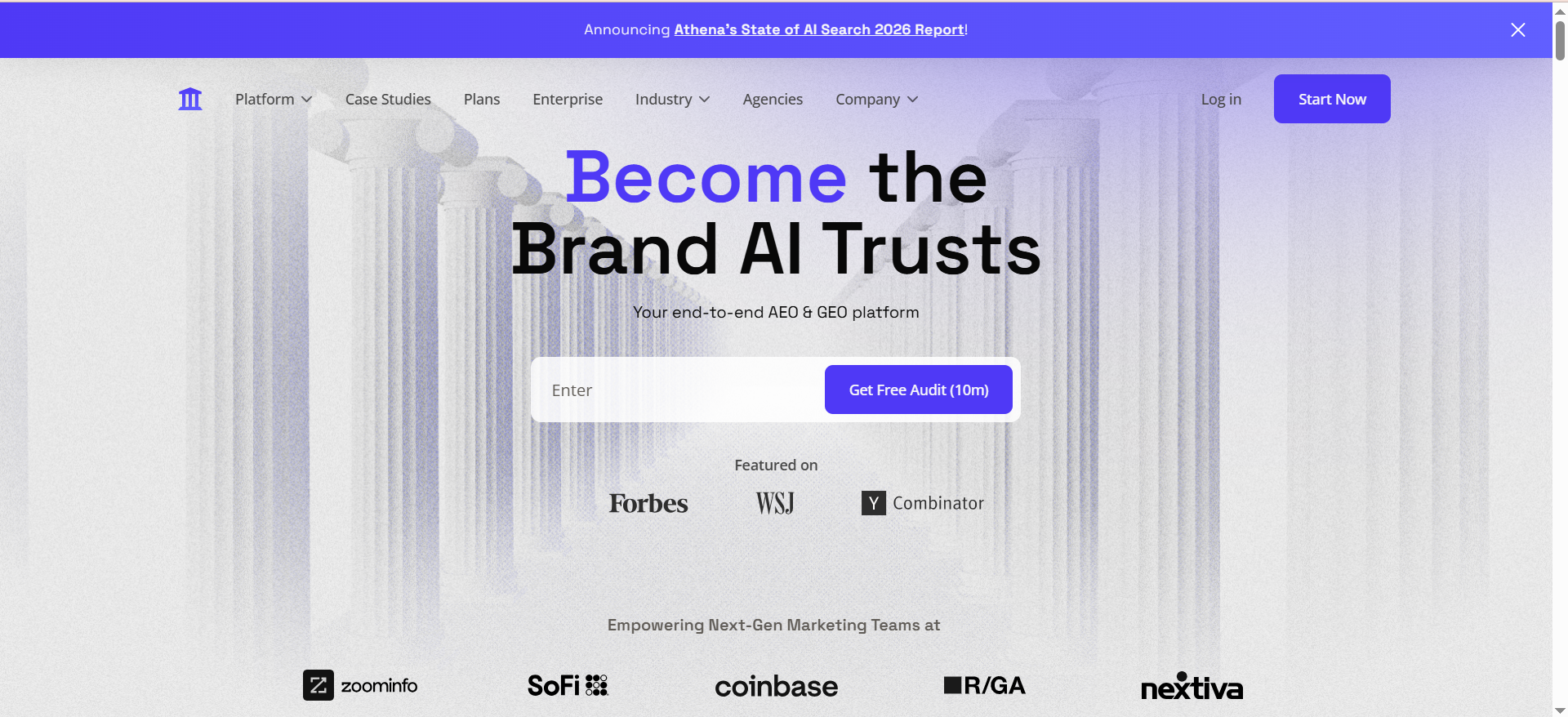
AthenaHQ is the Geneo alternative for teams that want to move from tracking into true operational depth.
Where Geneo feels like a useful monitoring layer, AthenaHQ feels more like a command center. It is built for teams that want to treat GEO as a serious function with repeatable processes, better diagnostics, and stronger cross-team visibility.
What it does
AthenaHQ combines AI visibility tracking, competitor monitoring, citation intelligence, and optimization support in a more structured platform.
It appears designed for teams that want more than dashboards. It helps users understand where they are winning or losing, what competitors are doing better, where blind spots exist, and what kinds of fixes may improve performance.
Why teams use it
Teams use AthenaHQ because it helps answer harder questions.
It is one thing to know that a competitor appears more often in AI answers. It is another thing to understand where they are getting cited, where your content is underrepresented, what answer engines are surfacing, and which parts of your digital footprint may need improvement.
AthenaHQ is much more appealing when those are the questions your team is asking.
What it’s good for
AthenaHQ is strong for mature in-house marketing teams, SEO leaders, and enterprise or upper mid-market brands that want better structure, stronger diagnostics, and clearer accountability, which is why it also appeals to teams evaluating best enterprise SEO tools.
It is also a good fit for teams that need governance features and role separation, which becomes more important as GEO ownership expands across multiple stakeholders.
When it’s a good fit
Choose AthenaHQ if:
- Your team wants deeper diagnostics, not just monitoring
- You need stronger competitor and citation intelligence
- GEO is becoming a formal part of your marketing or SEO function
- You want better control, reporting, and collaboration for larger teams
- You care about operational visibility, not just surface-level scores
When it’s not a good fit
AthenaHQ may be too much if you are still experimenting with AI visibility and only need lightweight tracking. Smaller teams that mostly want simple reports may find it heavier than necessary.
How to use it
A practical AthenaHQ workflow starts by defining the core topics and prompts that matter most to your business, then pairing that analysis with AI search visibility audit tools. Then you track visibility by engine, compare your presence against competitors, inspect citations, identify blindspots, and connect those findings to content or authority actions.
That kind of loop is where AthenaHQ becomes valuable. It is not just showing outcomes. It is helping create a more disciplined optimization process.
Key capabilities
AthenaHQ appears to stand out for its deeper feature set. That includes richer citation views, broader engine coverage, competitor analysis, blindspot identification, and a more structured environment for teams that need to coordinate work.
This is the kind of platform you evaluate when your team is starting to ask not only “How visible are we?” but also “Why are we not more visible, and what do we change next?”
Pricing
AthenaHQ’s pricing starts at $295/month for its Self-Serve plan. Its Enterprise plan is custom-priced. The official site also advertises a $95 first-month offer for Self-Serve.
Free tier?
AthenaHQ doesn’t offer a free tier or free trial, but it does offer a free audit/demo.
Downsides / limitations
The main tradeoff is that AthenaHQ is not the lightest or simplest option. If your workflow is still early, you may not use enough of the platform to justify it. But if your GEO program is maturing quickly, that depth can become a real advantage.
3. LLMrefs
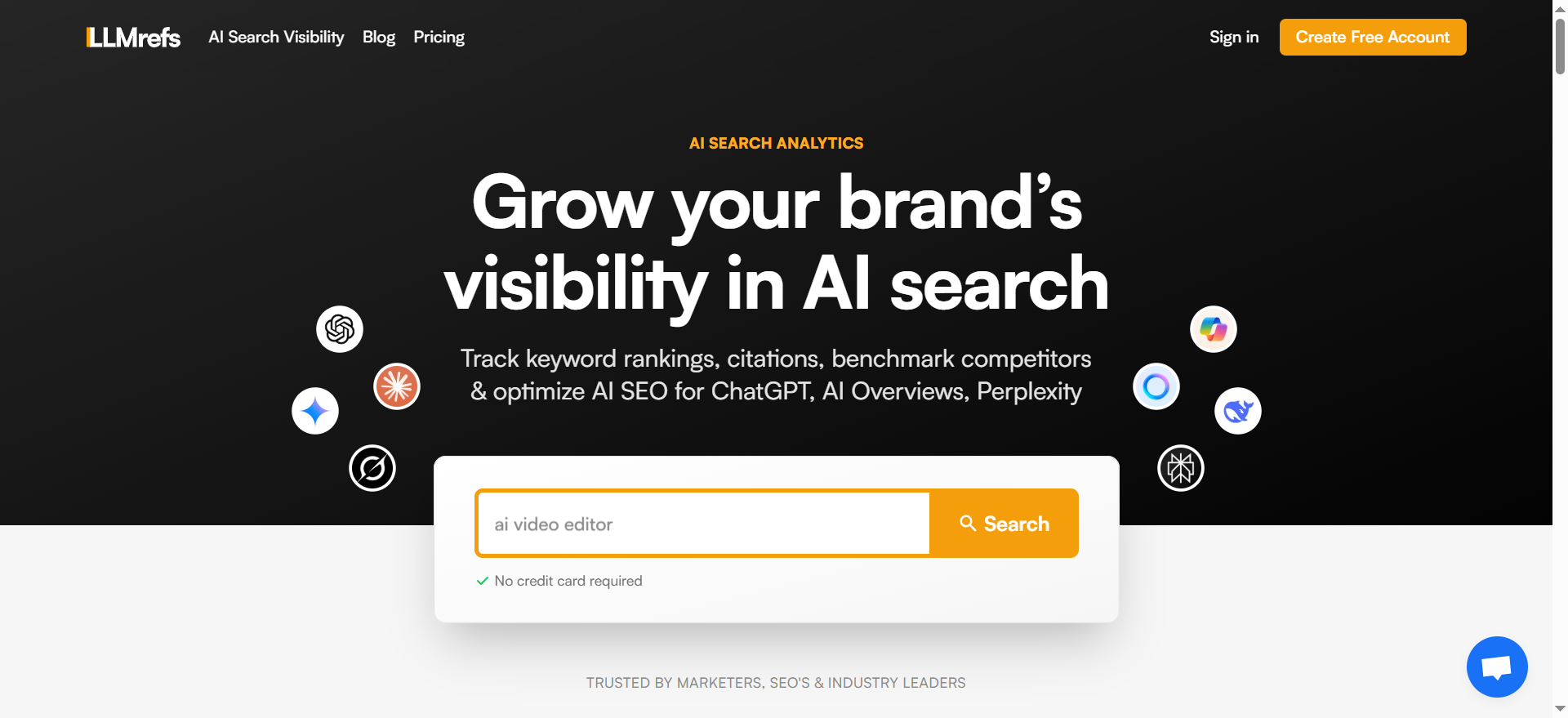
LLMrefs is the best Geneo alternative for SEO teams that want a practical, affordable bridge from traditional search workflows into AI visibility.
That sounds like a narrow point, but it is actually a huge one.
A lot of GEO software assumes teams are ready to think in entirely new terms. Many are not. They still organize their work around keyword sets, commercial pages, topical clusters, rankings, exports, and regular SEO reporting. LLMrefs understands that transition and seems designed to make it easier.
What it does
LLMrefs helps teams track how brands and sources appear across AI search environments while keeping the workflow more familiar to SEO operators.
Instead of forcing users to completely abandon keyword-oriented thinking, it gives them a path into AI visibility measurement that still feels operationally legible.
Why teams use it
Teams use LLMrefs because it feels practical.
It is especially appealing for SEO managers, consultants, and lean growth teams that want stronger AI visibility reporting without buying an oversized platform or retraining the whole team on a brand-new working model.
What it’s good for
LLMrefs is strong for:
- SEO-led companies
- Smaller in-house teams
- Agencies and consultants
- Teams that care about international or geo-targeted tracking
- Buyers who want clear value without immediate enterprise pricing
It is one of the easiest recommendations for teams that already know how to run search programs and want to extend that thinking into answer engines.
When it’s a good fit
Choose LLMrefs if:
- Your team is SEO-first in how it thinks and works
- You want a smoother learning curve into GEO
- You need strong reporting value without major overhead
- You want a tool that can support multiple projects and markets
- Budget matters, but you still want serious functionality
When it’s not a good fit
If your team is heavily prompt-native or wants broader operational intelligence around crawlers, workflows, or AI agents, LLMrefs may feel too narrow compared with AthenaHQ or Profound.
How to use it
A smart LLMrefs workflow starts with your existing keyword universe, which pairs naturally with a strong best SaaS keyword research workflow. You identify the commercial and informational queries that matter most, map them to AI answer behavior, and then track which brands and cited sources show up across engines.
From there, you can use fan-out queries, citation trends, and visibility gaps to guide content production, authority building, and optimization priorities, which aligns well with AEO-ready SaaS blog guidance.
That makes LLMrefs especially good for teams trying to connect classic SEO thinking with new AI search realities, especially if they already use AI tools for SaaS keyword clustering and topic maps.
Key capabilities
LLMrefs stands out because it appears to combine broad engine tracking with practical exports, team access, project support, and a workflow model that SEO teams already understand.
It also seems to support international targeting and fan-out style analysis, which helps teams expand beyond a small prompt list and toward fuller topic coverage.
Pricing
LLMrefs’ pricing starts at $79/month for its All in One plan.
Free tier?
LLMrefs does offer a free tier, and it also offers a 7-day free trial for the paid plan.
Downsides / limitations
Its biggest strength is also its limit. LLMrefs is practical and approachable, but it may not go as far as larger platforms if your team needs heavier diagnostics, deeper strategic layers, or broader cross-functional operating support.
For many Geneo buyers, though, that is exactly why it is appealing. It solves the next problem without creating new complexity.
4. Profound
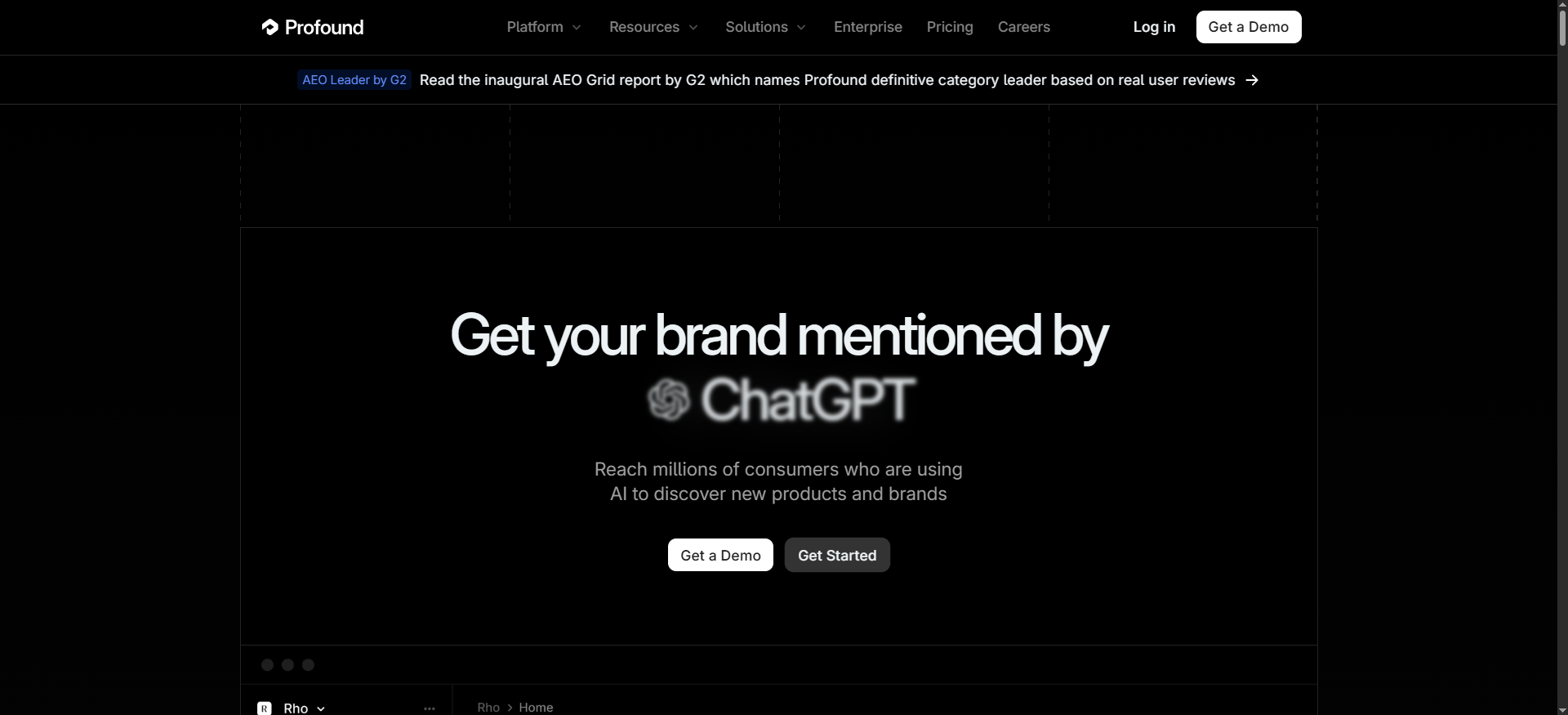
Profound is not just another Geneo replacement. It is the option you consider when your company is ready to think much bigger about AI visibility.
This is the most enterprise-oriented platform in the list. It feels less like a single-purpose monitoring tool and more like a broader AI search operating system.
What it does
Profound appears to combine answer-engine visibility tracking with analytics, demand insight, and broader platform capabilities that go well beyond simple mention monitoring, putting it closer to the kinds of platforms discussed in comparison to AI SEO tools.
It is built for organizations that want visibility into how they appear across AI systems and also want a wider layer for understanding demand, platform behavior, and internal opportunities.
Why teams use it
Teams use Profound because they need more than reporting.
Large organizations often want one platform that can support leadership reporting, market insight, content strategy, experimentation, and internal coordination across multiple functions, much like the tools covered in best marketing analytics tools. Profound looks built for that kind of environment.
What it’s good for
Profound is strongest for enterprise brands and large teams with bigger budgets, broader use cases, and more mature internal processes.
If your company is already investing heavily in AI search, content, analytics, and brand visibility, Profound may fit much better than a lighter GEO tool.
When it’s a good fit
Choose Profound if:
- You are an enterprise team with broader AI visibility needs
- You want more than monitoring and reports
- Multiple stakeholders will use the platform
- You need a stronger executive and operational layer
- You are building long-term AI visibility capability, not just measuring it
When it’s not a good fit
Profound is probably too much for small teams or early GEO programs. If your real need is a simple Geneo upgrade, this is likely more platform than you need.
How to use it
A serious Profound workflow might connect answer-engine visibility, prompt opportunity analysis, analytics, internal strategy, and execution planning, which is closely related to structuring AI-era AEO content. It is the kind of platform that becomes more valuable when several teams can work from the same visibility layer.
Key capabilities
What makes Profound stand out is scope. It appears to go beyond standard GEO dashboards into a broader environment for understanding AI search presence, prompt demand, and system-level opportunity.
That is why it belongs on this list, but also why it is not the default recommendation for everyone.
Pricing
Pricing is not publicly listed; it’s available by quote. Profound’s official pricing page says it uses customized enterprise pricing.
Free tier?
Profound doesn’t offer a free tier, but it does offer a demo. It also offers a free AEO report and a no-cost agent tryout.
Downsides / limitations
The tradeoff is obvious. Profound likely requires more budget, more internal commitment, and more adoption work than lighter alternatives.
If your team is ready for that, it could be the right fit. If not, the simpler options on this list are probably more realistic.
5. Rankscale AI
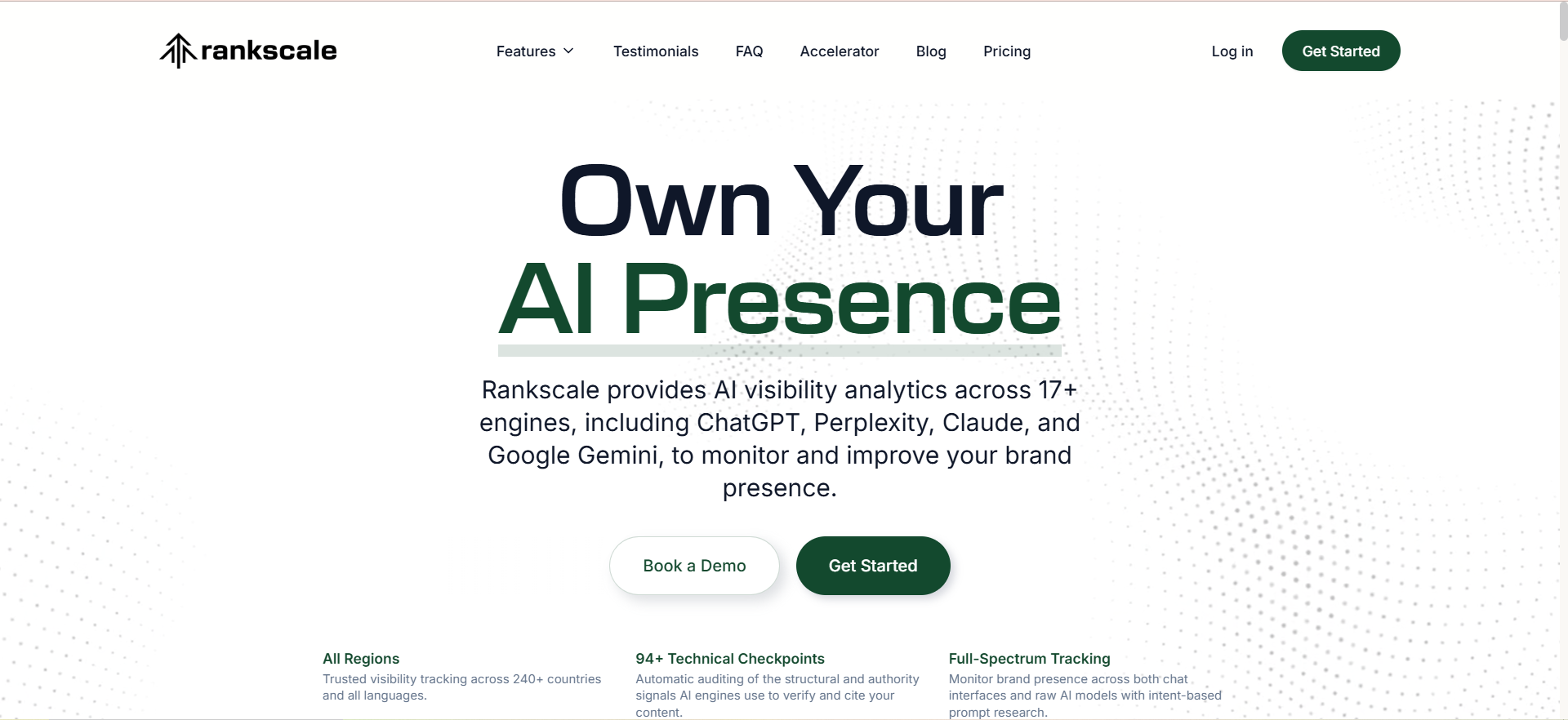
Rankscale AI is one of the more interesting Geneo alternatives because it appears to focus on practical analysis and optimization guidance, not just tracking.
That matters because a lot of teams do not actually want another dashboard. They want to know what is wrong, where they are weak, and what to work on next.
Rankscale AI seems built with that mindset.
What it does
Rankscale AI helps teams analyze brand presence in AI search, identify visibility gaps, uncover citation and sentiment patterns, compare competitors, and generate actionable recommendations, which overlaps with work on PR and brand messaging for AI visibility.
It appears to sit between lighter monitoring tools and heavier enterprise platforms. That gives it a useful position for teams that want more help than simple trackers provide but are not ready for a full enterprise solution.
Why teams use it
Teams use Rankscale AI because it appears more action-oriented than many tools in the category.
If your team is less interested in raw monitoring and more interested in practical direction, this kind of product can be more useful than a platform that simply reports outcomes, especially when paired with best tools for share of voice in AI answers.
What it’s good for
Rankscale AI is a good fit for:
- Brands that want structured visibility analysis
- GEO teams that value recommendations and gap detection
- Buyers who want a free or low-friction entry point before deeper adoption
- Teams that want useful insights without immediate enterprise complexity
When it’s a good fit
Choose Rankscale AI if:
- You want analysis plus recommendations
- You care about content gaps and competitor insight
- You want to test your visibility without a heavy buying process
- You need a more practical improvement loop than Geneo provides
When it’s not a good fit
If your buying process depends on very detailed public pricing transparency, deep sales documentation, or an obvious enterprise governance layer, Rankscale may need more direct evaluation before you commit.
How to use it
A smart workflow begins with a baseline visibility analysis, which is why many teams start with an AI search visibility audit tool. From there, you identify weak topics, missing citations, poor sentiment patterns, or competitor gaps. Then you convert those findings into content, authority, or messaging actions.
That kind of workflow is often much easier to defend internally because it ties software output more directly to action.
Key capabilities
Rankscale AI appears to emphasize visibility audits, tracking over time, citation analysis, sentiment, competitor discovery, content gap detection, and optimization guidance.
That is a solid combination for teams that want more than passive measurement.
Pricing
Rankscale AI uses credit-based pricing, but the starting paid price was not clearly accessible from the official materials I could verify.
Free tier?
Rankscale AI doesn’t clearly present a free tier, but it does offer a free analysis with no registration required.
Downsides / limitations
The main downside is that the public surface area may feel less transparent than some of the more established or more visibly marketed competitors. That does not make it a weak choice, but it does mean buyers should validate fit carefully.
Why teams look for a Geneo alternative
Geneo is not a bad tool. In fact, it is a solid starting point for teams that are just beginning to track AI visibility. It usually appeals to buyers for the same reason many early-stage tools do: it gives you access to the category without overwhelming you. You can monitor brand presence, look at mentions, track visibility in AI answers, and begin to understand whether your company is showing up when people ask relevant questions.
That is useful. For many teams, it is the right first step.
But a first step is not always the right long-term solution.
Once a team starts treating GEO as a real function rather than a side experiment, the questions change, which is why a clear AI search visibility strategy matters. Basic monitoring becomes less valuable on its own. Teams start needing better reporting for leadership, cleaner segmentation across products or markets, stronger competitor views, clearer citation analysis, and a more systematic way to translate visibility changes into action.
That is the moment when Geneo starts to feel limited.
Most buyers searching for Geneo AI alternatives are not trying to leave the category, and many are really looking for a stronger AI visibility platform buyer guide. They are trying to move forward within it. They have already accepted that AI visibility matters. What they need now is a tool that fits the next phase of maturity.
That next phase usually falls into one of three buckets.
1. Better reporting
A lightweight tool can tell you whether you appeared in an answer, but stronger teams often care more about share of voice in AI search. A stronger tool should help you track changes over time, compare prompts and topics, segment by project or market, and show progress clearly to different stakeholders through better AI visibility metrics.
This matters because internal buy-in often depends on reporting quality. A team can believe AI search matters, but if they cannot explain what is changing and why it matters, the workflow never becomes durable.
2. More operational depth
Monitoring tells you what happened. A better platform helps you understand why it happened and what to do next.
That could mean citation intelligence, competitor comparison, blindspot detection, AI crawl visibility, prompt volume analysis, content recommendations, or workflow support for larger teams, which is why some teams benchmark the most effective strategies for AI visibility enhancement. If the software only gives you a score but no usable path to action, it is hard to justify over time, especially compared with the best AI visibility solutions for content optimization teams.
3. A better fit for your team
Tool fit is not universal. A founder-led company with one marketer needs something very different from a global SaaS team or a GEO agency managing multiple clients.
Some teams need simplicity above all else. Some need governance. Some need exports and dashboards. Some need a clear bridge from SEO into answer-engine optimization. Some need a platform that multiple teams can use together.
That is why the best Geneo AI alternative is not the same for everyone.
The right replacement depends on what kind of team you are, how mature your workflow is, and what problem you are actually trying to solve next.
What to look for in a better Geneo replacement
Before you switch tools, define what “better” actually means for your business. A surprising number of teams move from one platform to another only to realize they bought a slightly more expensive version of the same limitations.
Here are the criteria that matter most.
AI engine coverage
A serious GEO platform should track the engines your buyers actually use. That means more than one model and more than one interface. At a minimum, most teams care about visibility across ChatGPT, Perplexity, and Google AI Overviews, so it helps to understand the landscape of best AI search engines.
Coverage matters because buyer behavior is increasingly fragmented, which is why teams often compare AI visibility tools by engine coverage. If your reporting only reflects one answer engine, you can end up making decisions on incomplete visibility data.
Citation and source analysis
This is one of the biggest dividing lines in the category.
A lightweight platform may show whether your brand appeared. A stronger platform should help you understand which sources are shaping answers, where competitors are getting cited, and what authority or content gaps may be limiting your visibility through better citation tracking.
Without citation analysis, optimization stays vague, so many teams also look at AI citation gap analysis tools. You may know you are losing, but not why.
Workflow fit
Some platforms are built around prompts. Others fit better into keyword-oriented workflows. Some emphasize projects and collaboration. Others are designed more like executive dashboards.
You want the tool to match how your team already works, or at least make the transition easy.
If your team is SEO-led and still organizes work around keyword sets, search intent, and reporting exports, a keyword-first tool may be much easier to adopt, especially if your team already relies on a strong SaaS keyword research workflow.If your team is already prompt-native and focused on AI answer behavior directly, a prompt-first tool may feel more natural, especially if you already use best AI visibility tools with prompt templates.
Multi-project support
This matters a lot if you are an agency, a multi-brand operator, or an in-house team managing multiple business units.
A better Geneo replacement should make it easy to separate projects, track different brands, compare regions, and manage reporting without turning the setup into a mess, which is why many teams evaluate AI visibility tools for category tracking.
Depth beyond monitoring
This is the most important question to ask.
Do you just want visibility tracking, or do you want a platform that helps improve visibility too, which is the same question many teams ask when comparing AEO tools for AI Overviews?
If the goal is simple monitoring, a lighter alternative may be enough, especially for teams still comparing AI brand mention tracking tools. If the goal is to build a real AI visibility program, you may need stronger diagnostics, content guidance, authority insights, competitor modeling, and more structured workflow support, which is why teams evaluate AI visibility solutions for content optimization teams.
The right answer depends on where your team is today, but it is worth being honest. Buying a heavy platform too early creates adoption problems. Buying a lightweight one too late
Which Geneo AI alternative is best for your use case?
If you want the short answer, here it is.
Choose Peec AI if you want the best all-around upgrade from Geneo for a growth-stage team or agency. It is the easiest recommendation for the largest number of buyers.
Choose AthenaHQ if your team wants deeper operational insight, stronger diagnostics, and a more serious GEO command center.
Choose LLMrefs if your team is SEO-led, budget-conscious, and looking for the most natural bridge from traditional search workflows into AI visibility.
Choose Profound if you are an enterprise buyer building a broader AI visibility and analytics capability.
Choose Rankscale AI if you want a more action-oriented improvement loop and like the idea of starting with a free visibility analysis.
If I were ranking them specifically as Geneo alternatives for the broadest range of real-world buyers, I would put them in this order:
- Peec AI
- LLMrefs
- AthenaHQ
- Rankscale AI
- Profound
That ranking is not about who is universally best. It is about who is most likely to solve the next problem a Geneo buyer actually has.
Peec AI wins for overall balance.
LLMrefs wins for accessibility and SEO-led fit.
AthenaHQ wins for depth.
Rankscale wins for action-oriented experimentation.
Profound wins for enterprise scope.
The right choice depends on your team size, budget, workflow maturity, and what you need next, not just what sounds most impressive on a homepage.
How to switch from Geneo without losing momentum
Changing platforms is easy. Preserving measurement continuity is the hard part.
If you move off Geneo, do not treat it like a software swap, and teams making that transition often begin by learning how to audit brand visibility on LLMs. Treat it like a reporting transition.
Here is the best way to handle it.
1. Freeze your core prompt set
Before switching, define the prompt or query set that matters most to your business. Do not change everything at once. Keep a stable baseline so you can compare outputs between the old and new tool.
If you change prompts, categories, and reporting structure all at the same time, you lose continuity.
2. Export your historical data
Even if the data is not perfect, export what you can.
Historical visibility, mentions, sentiment patterns, or competitor views may still be useful later for internal reporting or performance comparisons. Teams often regret losing access to that baseline once the account is closed.
3. Rebuild the workflow around decisions
Do not choose a new platform based only on dashboards. Choose it based on what decisions it helps you make.
Ask questions like:
- Which topics deserve more content investment?
- Which sources should we try to earn citations from?
- Which competitors are gaining answer-engine visibility?
- Which markets are underperforming?
- Which teams need this reporting and in what format?
A better tool should make those decisions easier, not just produce more charts.
4. Assign ownership clearly
One person or team should own the new workflow.
Not just setup. Not just renewal. Ongoing usage.
That means someone is reviewing trends, checking competitor movement, analyzing citations, briefing content changes, and reporting outcomes. The software creates value only when someone turns the data into action.
5. Set a 60-day evaluation window
Do not expect instant magic from a new platform. Give it enough time to build a usable baseline, but define what success looks like early.
That could include faster reporting, better executive visibility, improved content prioritization, cleaner competitor analysis, or stronger internal adoption.
Without a defined evaluation window, teams often drift into subjective opinions instead of real measurement.
Absolutely. Here are SEO-friendly H2 sections you can paste directly into the article.
Which Geneo alternative is best for agencies?
For agencies, Peec AI is the strongest Geneo alternative in this list.
The main reason is flexibility. Agencies rarely manage just one brand, one region, or one reporting view. They need a platform that can handle multiple clients, different prompt sets, separate projects, and recurring reporting without becoming messy. Peec AI stands out because it is well suited to multi-project workflows and gives agencies a cleaner structure for managing several accounts at once.
Another reason Peec AI works well for agencies is reporting clarity. Agencies do not just need to understand performance internally. They need to present it clearly to clients. That means dashboards and workflows have to be simple enough to explain, but detailed enough to show progress, identify weak spots, and justify recommendations. Peec AI feels like a better fit for that balance than a lighter entry-level platform.
It also makes sense for agencies that are in growth mode. A small GEO agency may start with only a few clients, but once reporting expands across verticals, sub-brands, or markets, the need for a more organized system becomes obvious. Peec AI gives agencies room to grow without forcing them into an overly heavy enterprise setup too early.
That said, Profound may also be worth considering for larger agencies serving enterprise clients, especially if those clients expect broader AI visibility analysis, deeper strategic insight, or more advanced platform capabilities. But for most agencies looking for a practical replacement for Geneo, Peec AI is the best fit overall.
Which Geneo alternative is best for enterprise teams?
For enterprise teams, the best Geneo alternatives are AthenaHQ and Profound, but they serve slightly different needs.
AthenaHQ is the better choice for enterprise teams that want a serious AI visibility command center with stronger operational depth. It is a good fit for organizations that need deeper diagnostics, richer citation analysis, stronger competitor monitoring, and a more structured way to manage GEO across stakeholders. Enterprise teams often need more than just visibility dashboards. They need a platform that helps them understand why visibility shifts happen and what to do next. That is where AthenaHQ stands out.
It is especially appealing for companies formalizing GEO as a real function inside SEO, content, or growth. If a team wants to build repeatable processes, identify blindspots, compare performance across AI platforms, and support larger internal workflows, AthenaHQ is one of the strongest options in this list.
Profound, on the other hand, is the better fit for very large brands that want a broader AI visibility platform rather than a pure tracking or diagnostics tool. It is more suitable for organizations with larger budgets, more complex internal needs, and a desire for a wider platform vision that goes beyond basic monitoring.
So if the question is which alternative is best for enterprise teams in general, the answer is AthenaHQ for structured operational depth and Profound for broader enterprise platform ambitions.
Which Geneo alternative is best for affordable GEO reporting?
If affordability is a top priority, LLMrefs is the best Geneo alternative for affordable GEO reporting.
What makes LLMrefs stand out is that it gives SEO and marketing teams a more practical path into AI visibility tracking without requiring a big platform commitment. For teams that want to improve reporting, track visibility more seriously, and access broader GEO functionality without jumping into enterprise pricing, LLMrefs is one of the strongest value options.
It is particularly well suited to smaller in-house teams, consultants, and SEO-led organizations that want to extend their current reporting workflows into AI search. Instead of forcing a complete process change, LLMrefs fits naturally into keyword-oriented thinking, which makes it easier to adopt and easier to justify internally.
Affordable GEO reporting is not just about price. It is also about usability. A cheaper platform is not really affordable if your team cannot use it properly or if the reporting is too weak to influence decisions. LLMrefs performs well here because it combines accessible pricing with a workflow model that many SEO teams already understand.
If a team wants a low-friction way to move beyond lightweight AI visibility tracking while still staying budget-conscious, LLMrefs is the best pick in this category.
Which Geneo alternative has the best competitor analysis?
If competitor analysis is the main priority, AthenaHQ is the strongest Geneo alternative in this list.
Competitor analysis in GEO is not just about seeing which brand appears most often. It is about understanding where competitors are showing up, which sources are being cited, which prompts they dominate, and where your own brand is being left out. AthenaHQ appears strongest here because it is built for deeper diagnostics and more structured visibility analysis, not just surface-level monitoring.
This matters because AI search competition is often less obvious than traditional search competition. Your real competitors in answer engines may not always be the same companies you track in Google rankings. A better platform needs to help you see those patterns clearly, especially across prompts, topics, and citations.
AthenaHQ is the best fit for teams that want to compare their brand against competitors in a more actionable way, so it makes sense to review AI visibility tools for competitor benchmarking. Instead of just identifying winners and losers, AthenaHQ helps create a stronger analysis loop around why visibility gaps exist and where teams should respond, much like dedicated AI citation gap analysis tools.
Rankscale AI is also worth mentioning here because it seems more action-oriented than many lighter tools and appears to combine competitor insight with recommendations. But if you want the strongest overall answer for competitor analysis specifically, AthenaHQ is the best choice.
Which Geneo alternative offers better reporting and exports?
For better reporting and exports, Peec AI and LLMrefs are the strongest Geneo alternatives, with Peec AI taking the lead overall, especially for teams comparing best SEO reporting software.
Peec AI stands out because it feels built for teams that need cleaner structure and more scalable reporting. This is especially useful for growth teams, agencies, and multi-stakeholder environments where reports need to be understandable, repeatable, and easy to share. If your main frustration with Geneo is that it starts to feel too lightweight as reporting needs grow, Peec AI is the most natural next step.
Reporting is not just about dashboards. It is about how easily a team can organize data by project, market, client, or brand, then turn that into something leadership or clients can understand. Peec AI appears especially strong in that area.
LLMrefs also deserves a mention because it is attractive for SEO teams that want usable exports and a workflow that fits into their current reporting habits. Teams already working from keyword sets, topic clusters, and recurring SEO reports may find LLMrefs easier to plug into their existing process, especially if they already use the best SEO tool for keyword ranking reports.
So if the focus is on overall reporting maturity, choose Peec AI. If the focus is on practical reporting and exports for SEO-led teams, LLMrefs is also a very strong option.
Which Geneo alternative supports multiple projects or brands?
For teams managing multiple projects or brands, Peec AI is the best Geneo alternative.
This is one of the clearest areas where platform maturity starts to matter. A tool may work fine when you are tracking one brand and a small set of prompts, but once you add multiple business units, sub-brands, regional teams, or client accounts, the workflow can become much harder to manage. That is where Peec AI stands out.
Peec AI appears well suited to project-based organization and multi-brand workflows, which makes it especially useful for agencies, portfolio companies, and in-house teams operating across more than one product or market. That kind of flexibility becomes important fast when a GEO program expands.
The value here is not just scale. It is clear. Teams need to separate reporting cleanly, avoid overlap between prompt sets, and make sure stakeholders only see the views relevant to them. A strong multi-project structure makes that easier.
Profound can also make sense for large organizations with complex brand ecosystems, especially at enterprise scale. But for most teams specifically looking for a practical Geneo replacement that handles multiple projects or brands well, Peec AI is the best fit.
FAQs
The strongest Geneo AI alternatives right now are Peec AI, AthenaHQ, LLMrefs, Profound, and Rankscale AI. Each one serves a slightly different type of buyer, so the best option depends on whether you prioritize reporting, SEO workflow fit, enterprise depth, or action-oriented guidance.
Peec AI is one of the strongest choices for agencies because it appears well suited to multi-project, multi-brand, and client-based reporting workflows. Agencies usually need flexibility and clarity more than heavy enterprise overhead, which makes Peec a strong fit.
AthenaHQ and Profound stand out most for enterprise use cases. AthenaHQ is stronger for teams that want deeper diagnostics and workflow control, while Profound is better for organizations that want a much broader AI visibility platform.
LLMrefs is usually the best answer for SEO-led teams that want a cost-conscious but serious option. It fits naturally into keyword-oriented workflows and offers a smoother transition from traditional SEO into GEO.
Yes, Geneo can still be a good fit for teams that are early in their AI visibility journey and mostly need simple monitoring. It becomes less compelling when reporting, competitor analysis, and workflow maturity start to matter more.
That depends on how your team already operates. Prompt-first tools may align more directly with AI answer behavior, while keyword-first tools are often easier for SEO teams adopting GEO for the first time. The best choice is usually the one your team can actually use consistently.
Look for broader engine coverage, better reporting, stronger citation analysis, clearer competitor tracking, multi-project support, and a workflow model that matches how your team already works by using an AI visibility platform buyer guide. The best replacement should not just collect data, and teams often pair that thinking with a practical guide on how to audit brand visibility on LLMs. It should help your team make better decisions.
Some tools mainly measure visibility, while others help identify why visibility is weak and what actions may help improve it, which is why buyers often compare best AI content optimization tools for search visibility. If your goal is real optimization, prioritize platforms with citation intelligence, competitor analysis, content guidance, or actionable recommendations.
Final verdict
Geneo is a legitimate starting point for AI visibility tracking. It helps teams begin monitoring how they appear in AI-generated answers and gives them a useful entry point into GEO.
But many teams eventually outgrow that first stage.
Once your program matures, you need more than visibility snapshots, which is why many teams study an AI Overview SEO BOFU case study. You need stronger reporting, clearer citation analysis, better competitor intelligence, more structured workflows, and a better path from measurement into action.
That is where the right alternative matters.
For most teams, Peec AI is the strongest overall upgrade because it adds structure, flexibility, and reporting maturity without feeling unnecessarily heavy.
For SEO-led teams, LLMrefs is the most practical and affordable bridge into more serious GEO work.
For teams that want deeper diagnostics and a more command-center style product, AthenaHQ is a very strong choice, especially for brands following a broader generative engine optimization case study.
For enterprise buyers building a bigger AI visibility capability, Profound is the best fit in this list.
And for teams that want more action-oriented analysis and a lower-friction starting point, Rankscale AI is absolutely worth a look.
The best Geneo AI alternative is not the one with the biggest feature list, which is why many teams also review the best AI visibility tool for GEO before deciding. It is the one that best matches the next level of maturity your team is trying to reach.
If Geneo helped you prove that AI visibility matters, your next tool should help you operationalize it with stronger SEO strategies for AI visibility tools.
📋 Get Listed / Advertisement
We update this guide monthly. Want your tool featured? Contact: [email protected].