
If you’re evaluating Profound AI alternatives, the short answer is this: Peec AI is the strongest choice for teams that want a cleaner, easier monitoring workflow, AthenaHQ is a strong option when you want broader GEO controls and enterprise-oriented workflow depth, Conductor is the best fit for organizations that want AI visibility inside a larger enterprise SEO platform, Scrunch AI stands out for actionability and agent-ready site optimization, and LLMrefs is the clear value pick for teams that want affordable visibility tracking without a heavy enterprise sales process. The right choice depends less on “which tool has the most features” and more on whether you need operator simplicity, deep governance, SEO integration, or budget efficiency, which is the same framing used in AI search visibility strategy for B2B SaaS SEO to GEO.
Public product pages also show that these tools differ meaningfully in engine coverage, reporting design, APIs, pricing transparency, and whether they focus mainly on monitoring or on monitoring plus optimization, which is why some buyers also review the best AI visibility platforms for buyer evaluation.
📋 Get Listed / Advertisement
We update this guide monthly. Want your tool featured? Contact: [email protected].
Table of Contents
Best Profound AI alternatives at a glance
| Tool | Best for | Strengths | Pricing signal |
|---|---|---|---|
| Peec AI | Teams that want clean AI visibility tracking without enterprise bloat | Daily prompt tracking, citation/source visibility, Looker Studio connector, API, multi-project reporting | Usage-based pricing; annual discount publicly noted |
| AthenaHQ | Brands that want stronger GEO workflow depth and enterprise controls | Up to 8 major LLMs, on/off-page GEO analysis, competitor monitoring, citation intelligence, RBAC, SSO, API on enterprise | Self-Serve starts at $295/month; Enterprise custom |
| Conductor | Enterprises that want AI visibility inside a broader SEO platform | AEO + SEO + content + technical monitoring, analytics integrations, strong enterprise workflows | Custom pricing; multi-product platform |
| Scrunch AI | Teams that want monitoring plus clear optimization action | Prompt manager, citations, page audits, agent traffic monitoring, AXP, SOC 2 Type II, RBAC, Data API | Prompt manager, citations, page audits, agent traffic monitoring, AXP, SOC 2 Type II, RBAC, Data API |
| LLMrefs | Cost-conscious teams and agencies that still want serious coverage | $79/month public plan, citation tracking, weekly reports, geo-targeting, unlimited seats/projects, CSV + API | $79/month public plan with 7-day free trial |
Why teams look for a Profound alternative
Profound has become one of the best-known names in AI visibility software, especially for larger brands that want to understand how they appear across ChatGPT, Perplexity, Claude, Gemini, Grok, Copilot, Meta AI, DeepSeek, and Google AI Overviews, which is why many teams also compare the best AI visibility tools by engine coverage. Its public messaging emphasizes Answer Engine Insights, Prompt Volumes, Agent Analytics, and Agents for marketing workflows.
In other words, it is trying to be more than a dashboard. It is positioning itself as a broader operating system for the zero-click, AI-search era.
That said, not every team wants a full-stack AI-search platform, so some buyers start with a simpler AI visibility platform showdown. Some want better reporting. Some need easier setup for client work.Others want transparent self-serve pricing, or they already have an SEO stack and just need AI visibility layered into it, which is why some teams start with the best AI marketing stack. That is where alternatives start to look attractive.
In practice, most teams shopping for a Profound alternative are reacting to one of five things:
1. They want less complexity
A mature platform can be powerful, but it can also create operational drag, especially for teams that would benefit more from the best AI visibility tools for prompt variation testing. If your team mainly needs prompt tracking, citation visibility, competitor benchmarking, and a clean reporting loop, you may not want to pay for or manage a broader agent platform, especially if you are comparing AI brand mention tracking tools.
2. They want clearer pricing
Profound has a public pricing page, but teams still often treat it as a more sales-led, enterprise-style purchase. Recent third-party reviews published in 2026 have described entry pricing in the roughly $399 to $499 per month range, though exact packaging should be verified directly with the vendor.
3. They want better agency or multi-project workflows
If you run multiple brands, markets, or clients, reporting flexibility matters as much as visibility data, especially for teams reviewing the best AI marketing tools for agencies. Some buyers prioritize exports, dashboards, APIs, seat limits, and client segmentation over advanced automation, which is why they often look at best AI visibility tools for bulk prompt upload and tagging.
4. They want stronger SEO integration
Some teams do not want a standalone AI visibility tool because they want a platform that ties AI search performance back to content planning, analytics, site monitoring, and technical SEO.
5. They want faster time to value
A lot of AI visibility buying today is still exploratory, which is why many teams first review AI visibility metrics before committing to a platform. Teams are not always ready for a heavy deployment. They want to test prompts, benchmark competitors, watch citations, and decide whether this channel deserves a larger budget.
1. Peec AI
What it does
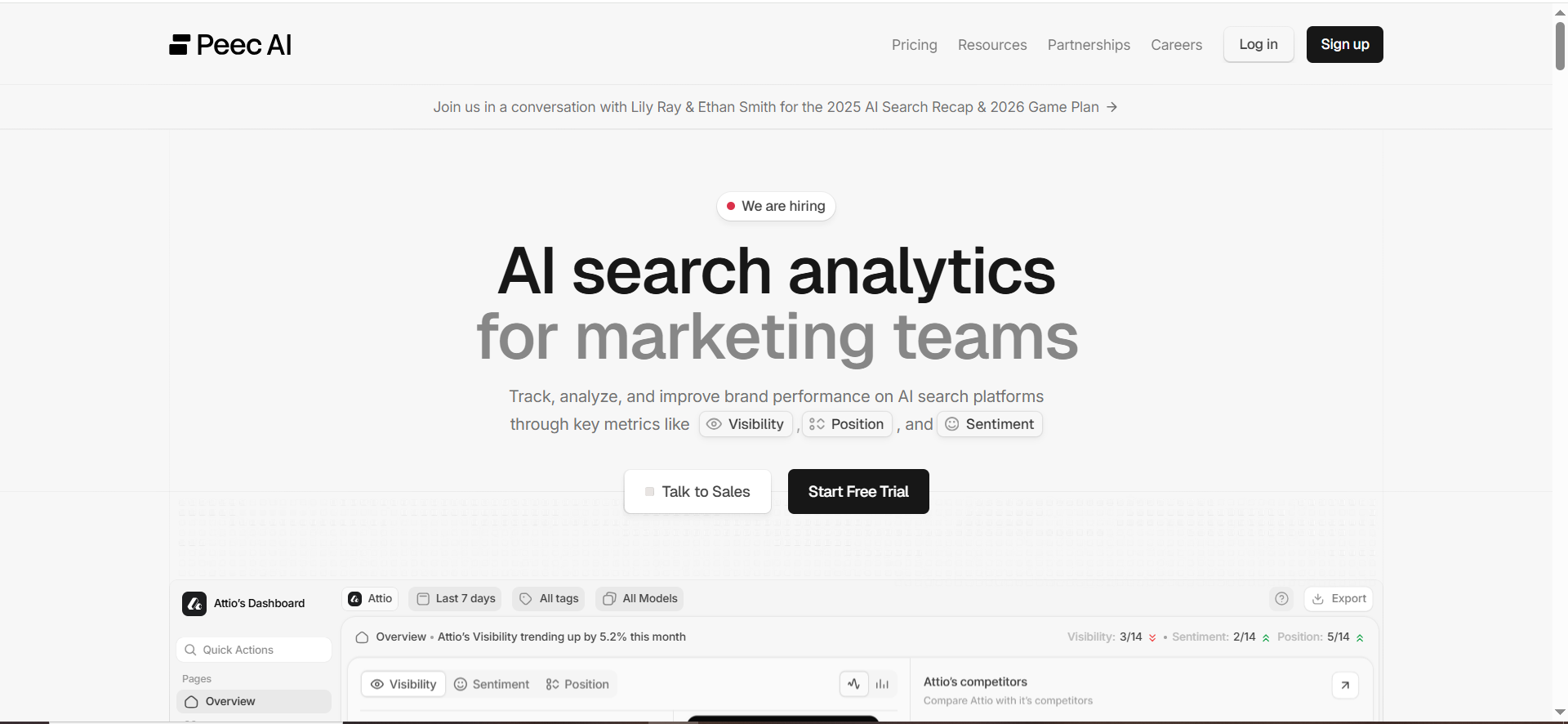
Peec AI is an AI search analytics platform built for marketing teams that want to measure how their brand appears across AI systems like ChatGPT, Perplexity, and Gemini, then act on those findings. Its public site emphasizes prompt tracking, competitor benchmarking, citation analysis, source visibility, and reporting workflows rather than trying to present itself as an all-in-one AI operations suite.
Why teams use it
Peec AI is one of the strongest Profound alternatives for teams that want clarity, especially if they are actively comparing the best tools for tracking brand visibility in AI search. Its positioning is much more operator-friendly: set up prompts, measure visibility, inspect citations, compare competitors, and push insights into dashboards.
It also publicly states that prompts are executed every 24 hours, which makes it a good fit for teams comparing the best AI visibility tools for daily prompt runs. That makes it a good fit for teams running recurring reporting cycles.
What it’s good for
It is especially strong for:
- brands building an AI visibility reporting rhythm,
- agencies that need exports and dashboard handoff,
- teams that care about source-level citation analysis,
- organizations that want to compare performance by region or audience segment.
When it’s a good fit
Choose Peec AI over Profound if your main goal is clean monitoring and reporting without platform sprawl. It is also appealing if you want community-friendly tooling around dashboards, since Peec publicly highlights a Looker Studio connector, CSV exports, and API access, which makes it appealing for teams evaluating AI visibility tracking tools and SEO GEO services.
When it’s not a good fit
If you specifically want a broader “agent platform” narrative or more extensive enterprise workflow layers, Profound, AthenaHQ, or Conductor may feel more ambitious. Peec is strongest when you value ease of use and reporting efficiency over complexity.
How to use it
A practical way to use Peec is to build prompt sets by funnel stage, region, and product line, which is why teams often look for best AI visibility tools with prompt templates.
- brand mention visibility,
- source citation frequency,
- competitor movement,
- prompt clusters where your site is used but not named,
- opportunities for content refreshes.
Key capabilities
Peec publicly highlights:
- prompt tracking,
- source and citation analysis,
- competitor benchmarking,
- CSV exports,
- Looker Studio connector,
- API access,
- daily tracking cadence,
- filtering by model, country, and prompt tags.
Pricing
Peec AI’s pricing is not publicly listed as a fixed starting monthly price. Its official pricing page says pricing depends on tracked prompts and models, and Enterprise pricing is custom.
Free tier?
Peec AI doesn’t offer a free tier, but it does offer a free trial.
Downsides / limitations
Peec is not the obvious pick if you want one system to absorb AI visibility, enterprise governance, content production, and technical monitoring in the same stack, so some teams instead look at best SEO strategies for AI visibility. It is better understood as a focused AI visibility analytics platform than as a total search operating system.
2. AthenaHQ
What it does
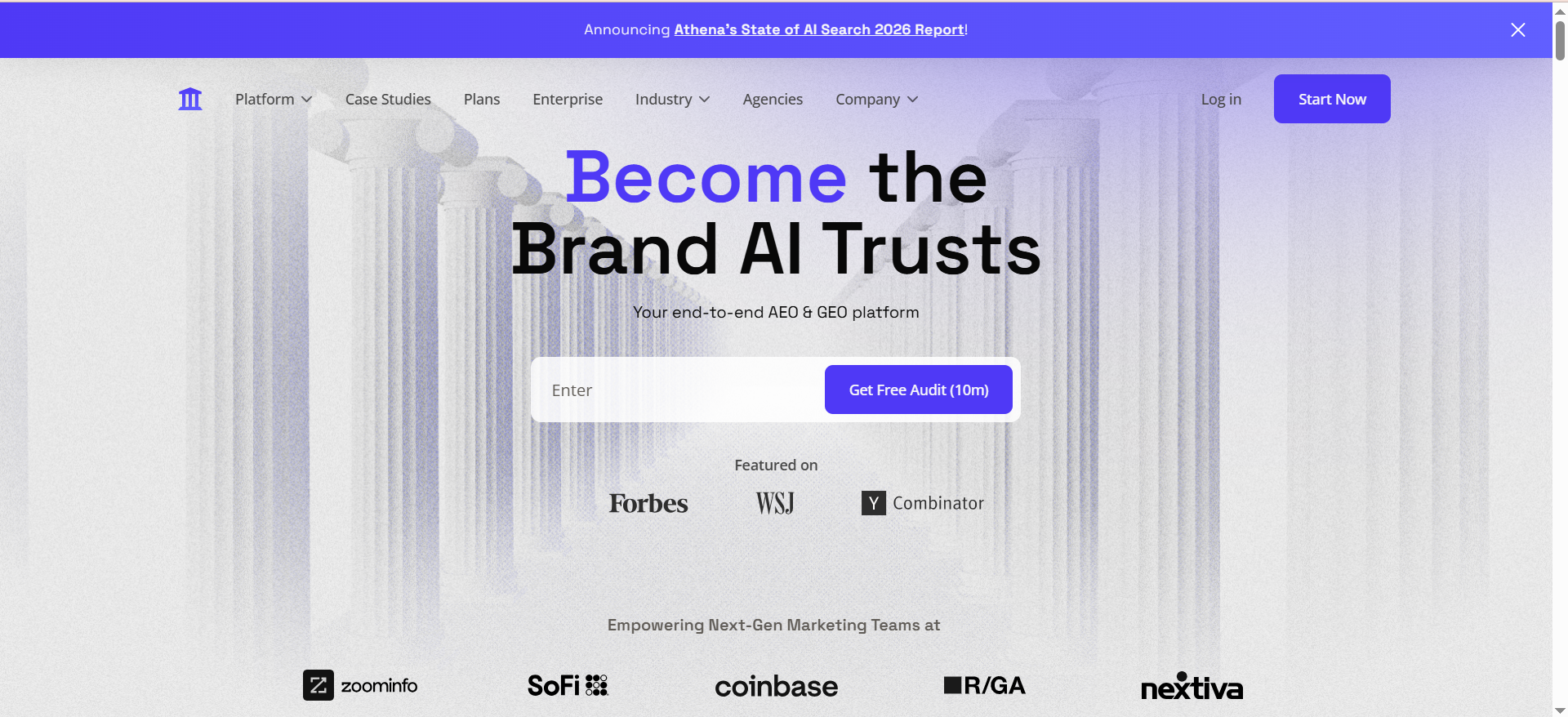
AthenaHQ positions itself as an end-to-end AEO and GEO platform. Its plans page highlights AI visibility across up to 8 major LLMs, on-page and off-page GEO analysis, competitor monitoring, citation intelligence, dynamic AI crawling, and more advanced enterprise features like API access, SSO, and a dedicated GEO specialist on Enterprise.
Why teams use it
AthenaHQ is a strong profound alternative for brands that want deeper workflow and governance but still want some public pricing transparency. It feels like a middle ground between lightweight trackers and a broader enterprise platform.
What it’s good for
AthenaHQ is especially good for:
- teams that want more than raw visibility charts,
- brands that need stronger citation and authority intelligence,
- organizations that care about enterprise controls,
- teams that want content optimization tied to GEO workflows.
When it’s a good fit
AthenaHQ makes sense when you like the category Profound plays in but want a platform that feels more structured around GEO operations, not just AI answer visibility, which is a key theme in this guide to the best AI visibility tool for GEO.
When it’s not a good fit
If you want the lowest-friction, lowest-cost option, AthenaHQ is not that, and some smaller teams may be better served by reviewing the best cheap SEO tools. If you mainly need straightforward reporting and simple prompt monitoring, LLMrefs or Peec may get you there faster.
How to use it
Best practice is to use AthenaHQ across three layers, especially if your team is building a repeatable way to audit brand visibility on LLMs workflow.
- benchmark brand and competitor visibility,
- inspect citation/authority gaps,
- turn those insights into on-page and off-page content actions.
Key capabilities
Public materials mention:
- support for up to 8 major LLMs,
- on-page and off-page GEO analysis,
- competitor monitoring,
- citation intelligence,
- dynamic AI crawling,
- RBAC,
- SAML/OIDC SSO,
- API access on Enterprise,
- content optimization workflows.
Pricing
AthenaHQ’s pricing starts at $295/month for the Self-Serve plan. Enterprise pricing is custom.
Free tier?
AthenaHQ doesn’t offer a free tier, but it does offer a free audit/demo.
Downsides / limitations
AthenaHQ may feel like more platform than a smaller team needs. Credits-based pricing also means buyers should model expected AI response volume before committing.
📋 Get Listed / Advertisement
We update this guide monthly. Want your tool featured? Contact: [email protected].
3. Conductor
What it does
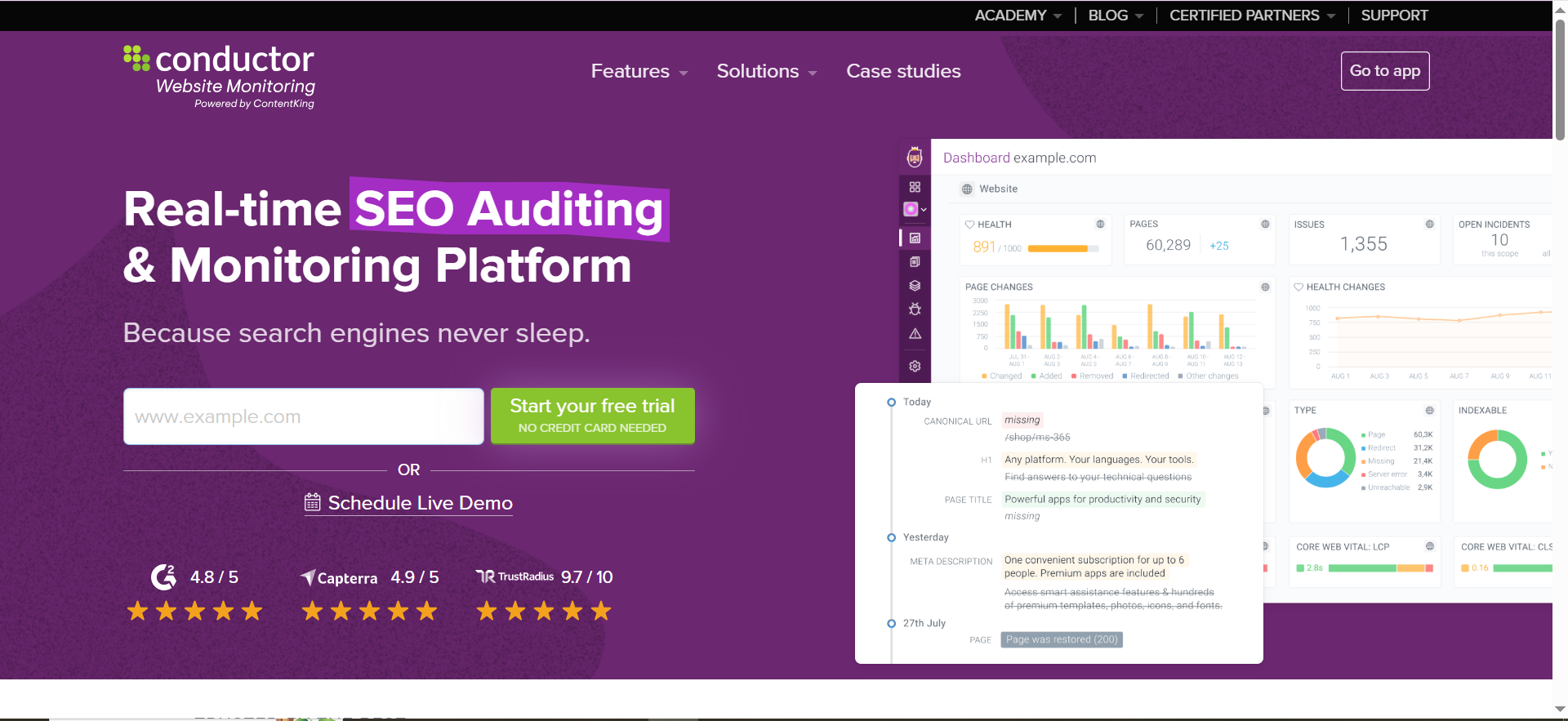
Conductor is different from most standalone AI visibility tools because it is already an established enterprise SEO platform and is now extending that footprint into AEO, AI search performance, content, and technical monitoring. Its site emphasizes visibility across ChatGPT, Perplexity, Google, and more, while its knowledge base shows feature tiers across Creator, Intelligence, and Monitoring products.
Why teams use it
Conductor is the best Profound alternative for enterprises that do not want a separate AI visibility tool sitting off to the side. If your organization already needs SEO intelligence, content workflows, analytics integrations, and website monitoring, Conductor can be a better strategic buy for teams already evaluating the best enterprise SEO tools.
What it’s good for
Conductor is especially good for:
- enterprise SEO organizations,
- cross-functional content + SEO + web teams,
- businesses that need AI and traditional search reporting together,
- teams that care about technical monitoring and analytics integrations.
When it’s a good fit
Pick Conductors when your real buying question is not “Which GEO tool should I buy?” but “Which enterprise search platform should own AI visibility, content workflows, and site health together?”
When it’s not a good fit
If you only need prompt tracking and citation benchmarking, Conductor will likely be broader and more expensive than necessary, especially for teams comparing the best AI visibility tools by engine coverage. It is also less attractive for small teams that want simple, transparent self-serve buying.
How to use it
Conductor works best when AI visibility is treated as one input in a larger optimization loop, which is why it appeals to teams thinking about AI search visibility.
- identify AI search gaps,
- connect those gaps to topic research and content creation,
- monitor technical issues,
- tie performance back to analytics and reporting.
Key capabilities
Public Conductor materials highlight:
- AI search performance,
- content creation workflows,
- 24/7 site monitoring,
- Google Analytics, Google Search Console, and Adobe Analytics integrations,
- bundled enterprise workflows across intelligence, creator, and monitoring products.
Pricing
Conductor’s pricing is not publicly listed. It’s available by quote and varies based on plan and configuration.
Free tier?
Conductor doesn’t offer a free tier, but it does offer a free trial and a demo.
Downsides / limitations
Conductor is not the cleanest answer for someone specifically seeking a “Profound replacement.” It is better framed as a larger enterprise search platform that includes AI visibility, not a narrow alternative in the same mold.
4. Scrunch AI
What it does
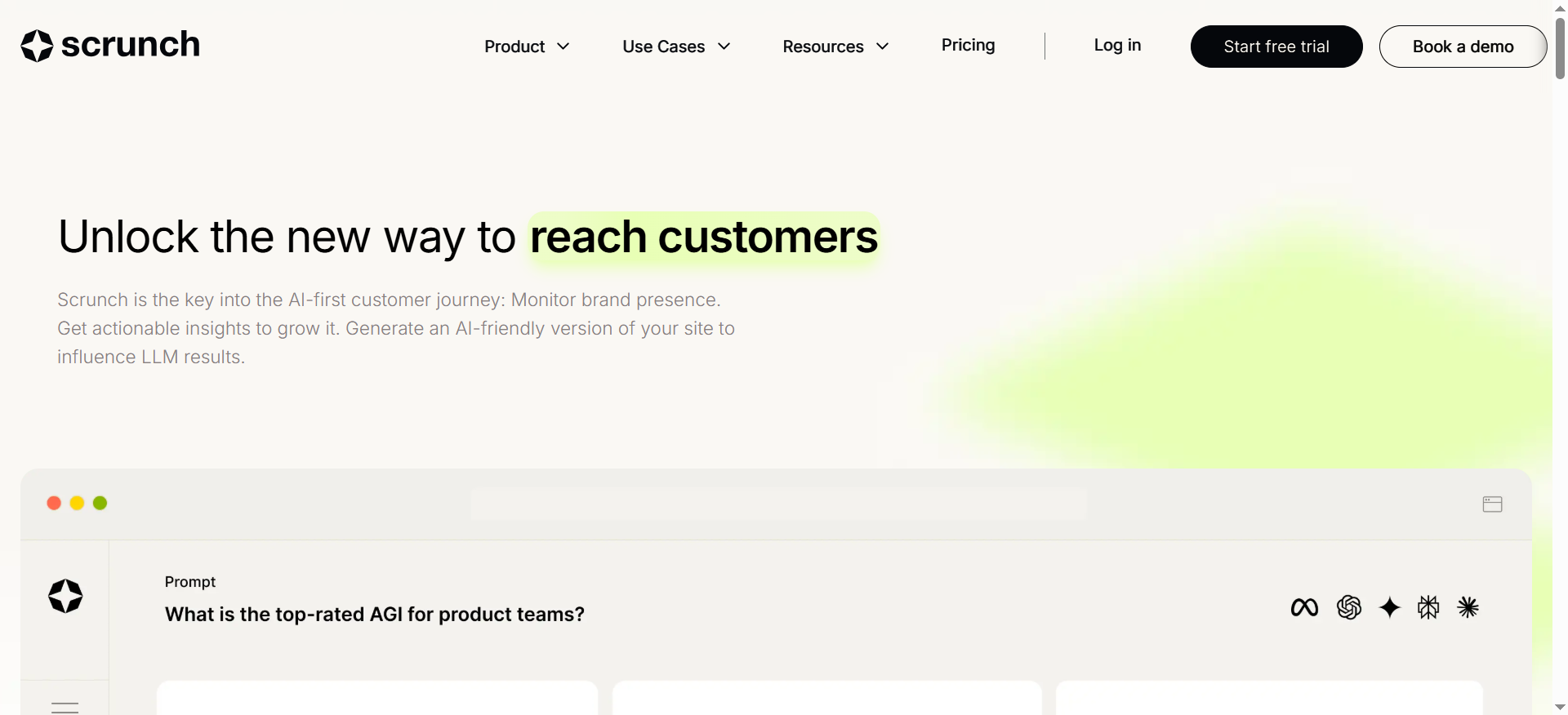
Scrunch AI focuses on helping brands monitor and improve visibility in AI search, then act on those findings, which makes it relevant for teams researching the most effective strategies for AI visibility enhancement. Its public messaging is unusually direct about this. It highlights Prompt Manager, Insights, citations tracking, Page Audits, agent traffic monitoring, and its Agent Experience Platform (AXP) for serving a parallel, AI-optimized version of site content.
Why teams use it
Scrunch stands out because it does not stop at “you ranked here,” which makes it useful for teams comparing AI search visibility audit tools. It leans into diagnostics and remediation. If Profound feels too dashboard-heavy or too platform-heavy, Scrunch can feel more practical.
What it’s good for
It is especially good for:
- teams that want actionable page-level recommendations,
- brands trying to make their sites easier for AI agents to crawl and understand,
- agencies and in-house teams that want reporting plus execution guidance,
- organizations that care about governance.
When it’s a good fit
Choose Scrunch if your team wants monitoring plus visible next steps.It is one of the strongest alternatives for bridging visibility data and on-site optimization, especially for teams comparing the best AI content optimization tools for search visibility.
When it’s not a good fit
If you want a low-cost starter option, LLMrefs will usually be easier to justify, especially for teams looking at the best AI visibility tools for citation tracking. If you want a large enterprise SEO suite, Conductor is a more natural fit.
How to use it
A smart Scrunch workflow is:
- monitor prompt performance and citations,
- inspect why certain pages are underperforming,
- use page audits to identify missing structure, entities, or claims,
- improve AI crawlability and agent-readability through AXP where relevant.
Key capabilities
Scrunch publicly lists:
- Prompt Manager,
- Insights,
- citation tracking,
- Page Audits,
- reporting dashboard,
- agent traffic monitoring,
- personas,
- integrations,
- AXP,
- SOC 2 Type II,
- RBAC,
- multi-region support,
- Data API.
Pricing
Scrunch AI’s pricing starts at $250/month billed annually, or $300/month billed month to month, for the Starter plan. Enterprise pricing is custom.
Free tier?
Scrunch AI doesn’t offer a free tier, but it does offer a 7-day free trial.
Downsides / limitations
Scrunch can be a stronger “operator tool” than a pure executive reporting tool. That is a plus for some buyers and a mismatch for others. If your team mainly wants leadership dashboards and market-level benchmarks, you may prioritize Peec, AthenaHQ, or Conductor instead.
5. LLMrefs
What it does
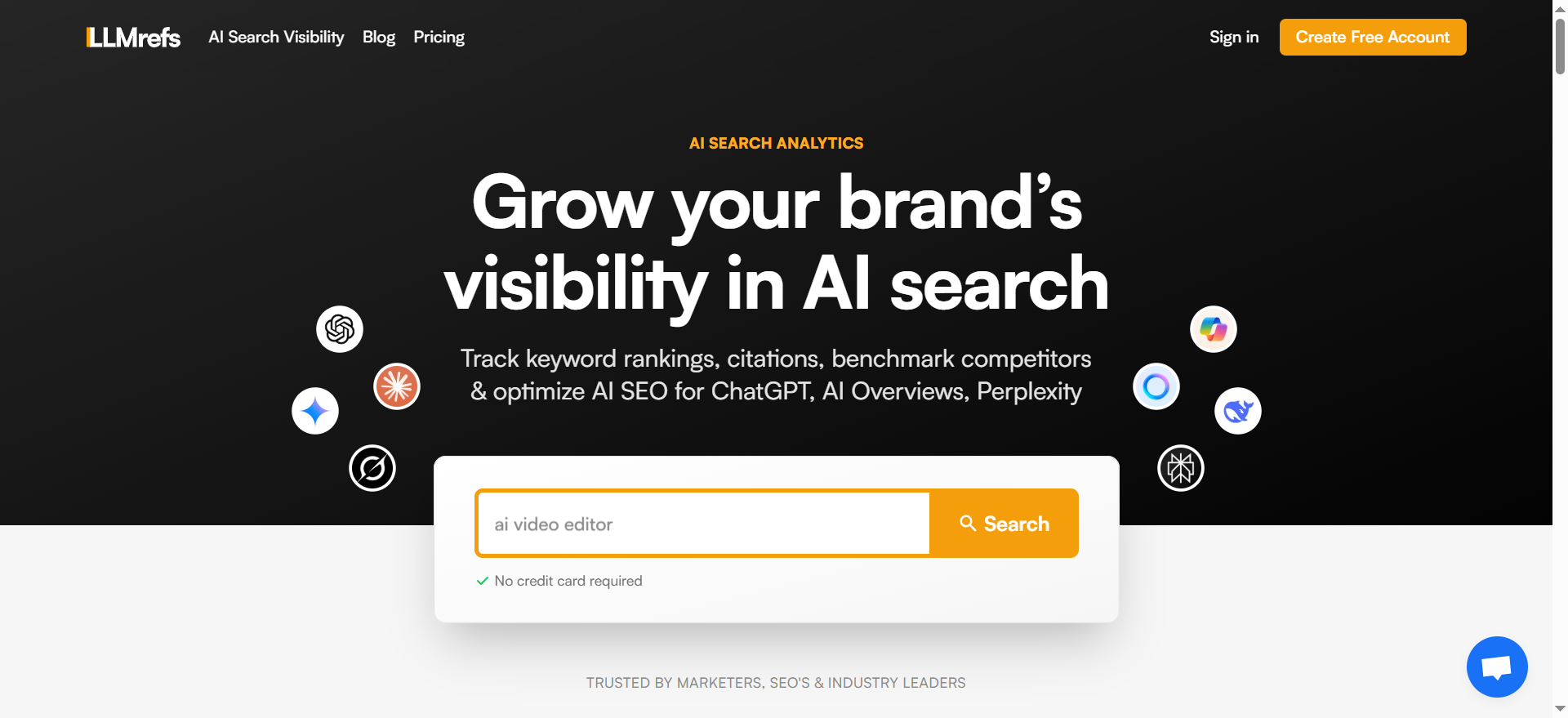
LLMrefs is an AI search analytics platform focused on helping brands track keyword rankings, citations, competitor benchmarks, and AI visibility across major assistants, making it relevant for teams comparing AI citation gap analysis tools. Its public positioning is appealingly direct: it wants to make AI visibility easier for marketers by letting them think in keywords while the platform handles the messiness of prompt-scale analysis.
Why teams use it
The obvious reason is value. LLMrefs publicly advertises a $79/month plan with 500 prompts, access to multiple AI engines, weekly reports, geo-targeting, unlimited team members, unlimited projects, CSV export, and API access. That is dramatically easier to test than most enterprise-led platforms.
What it’s good for
LLMrefs is especially good for:
- budget-conscious growth teams,
- SEO consultants and agencies,
- teams that already think in keyword sets,
- organizations that want AI visibility without a long sales cycle.
When it’s a good fit
Choose LLMrefs if Profound feels too expensive, too enterprise-oriented, or too broad for your current maturity, especially if you’re comparing best AI tools to monitor SaaS brand visibility in ChatGPT and Perplexity.
When it’s not a good fit
If you need heavy governance, advanced enterprise controls, or a broad platform story across content and technical monitoring, LLMrefs will not replace Conductor, AthenaHQ, or a more enterprise-led deployment.
How to use it
Use LLMrefs to:
- port in your most important SEO topic sets,
- benchmark AI visibility by category,
- inspect citations,
- monitor weekly trend movement,
- export reports to clients or leadership.
Key capabilities
Public plan details include:
- 500 prompts,
- all supported AI engines,
- weekly visibility reports,
- citation tracking,
- geo-targeting in 50+ countries and 20+ languages,
- unlimited team members,
- unlimited projects,
- CSV export,
- API access.
Pricing
LLMrefs’ pricing starts at $79/month for the All in One plan.
Free tier?
LLMrefs does offer a free tier, and it also offers a 7-day free trial for the paid plan.
Downsides / limitations
LLMrefs wins on simplicity and cost, but it is not the tool I would pick first for complex enterprise governance or cross-functional rollout across large business units.
Which Profound alternative is best for your team?
Here is the practical answer.
Choose Peec AI if your priority is clean reporting, daily cadence, source visibility, and usable exports. It is probably the best pure replacement for teams that want to reduce complexity without giving up serious monitoring.
Choose AthenaHQ if you want a more operations-heavy GEO platform with stronger enterprise features and public entry pricing.
Choose Conductor if your organization already thinks in terms of enterprise SEO platform consolidation rather than standalone AI tooling.
Choose Scrunch AI if you want the clearest bridge between monitoring and optimization, especially around page audits, crawlability, and AI-agent delivery.
Choose LLMrefs if your main concern is cost-efficiency and speed to value.
When Profound is still the right choice
Even in an alternatives article, it is worth saying this clearly: Profound is still a credible choice for teams that want a more ambitious platform story around answer engine insights, prompt demand, agent analytics, and marketing agents. If your company is already aligned around a “zero-click” future and wants a platform that is explicitly built around that narrative, Profound may still be the better fit than lighter alternatives, particularly for teams investing in answer engine optimization.
The main question is whether you will actually use that breadth. If not, a more focused alternative may create better adoption and better ROI, especially for teams investing in best SEO strategies for AI visibility tools.
How to migrate from Profound without losing reporting continuity
If you are switching, do not migrate by feature checklist alone, because a proper audit of brand visibility on LLMs gives you a much cleaner baseline. Migrate by decision workflow.
Start by listing the dashboards and recurring decisions your team currently makes:
- executive reporting,
- content refresh prioritization,
- competitor benchmarking,
- regional comparisons,
- AI citation gap analysis,
- weekly or monthly trend reviews.
Then map those decisions to the new platform:
- Where do prompts live?
- How are models segmented?
- How do you export reports?
- Can leadership still get the same summaries?
- Can content teams still see source-level opportunities?
- Can agencies still separate client views?
The best migration is the one that preserves the decisions your team already makes while simplifying the amount of platform overhead needed to make them, which is a lesson echoed in this generative engine optimization case study.
Which Profound alternative is best for enterprises?
For enterprise teams, the best Profound AI alternative usually comes down to whether you want a dedicated AI visibility platform or a broader enterprise search stack.
If your team needs stronger governance, deeper GEO workflows, and more enterprise-level controls, AthenaHQ is one of the best fits, especially for companies shaping an AI search visibility strategy for B2B SaaS. It makes sense for larger organizations, governance is not optional, and that becomes even clearer when you compare AI visibility metrics across teams and reporting layers. This is especially useful for companies where SEO, content, and leadership all need visibility into the same AI search data.
If your company already needs SEO intelligence, content workflows, analytics integrations, and website monitoring, Conductor can be a better strategic buy for teams comparing best tools for SEO SaaS. It works well for enterprises that do not want another standalone tool and would rather manage AI visibility alongside content, technical SEO, and analytics reporting.
For most enterprise buyers, the choice is simple: pick AthenaHQ if you want a more focused enterprise AI visibility platform, and pick Conductor if you want AI visibility inside a broader enterprise SEO ecosystem.
Is there a Profound AI alternative with a free trial?
Yes, some Profound AI alternatives do offer a free trial, which makes them easier to test before committing to a full contract.
Peec AI is a good option for teams that want to try AI visibility tracking with a lighter setup and see how prompt monitoring, citation tracking, and reporting work in practice. Scrunch AI is another strong option if you want trial access while also exploring optimization-focused features like page audits and AI search performance insights.
LLMrefs also stands out here because it is positioned as a more affordable option, which makes it attractive for smaller teams and agencies that want to validate value quickly without a large upfront commitment.
If free trial availability is important, these options are usually better starting points than a more sales-led enterprise platform. For many buyers, a free trial is the fastest way to compare dashboards, reporting quality, and overall usability before making a longer-term tool decision, especially if they are still evaluating the best AI search engines.
Which alternative is best for SEO teams already using enterprise search software?
For SEO teams already using enterprise search software, Conductor is the strongest Profound alternative.
That is because these teams usually do not need a separate AI visibility tool in isolation, and instead need a workflow built around evergreen content visibility in AI search. They need AI search insights to connect directly with the rest of their workflow, including keyword strategy, content planning, technical SEO monitoring, and executive reporting.
Conductor is the best fit in this situation because it brings AI visibility into a larger platform environment instead of creating another standalone system to manage.
This is especially useful for mature SEO teams that already have established reporting processes and cross-functional collaboration with content, analytics, and web teams, especially if they are already reporting AI visibility to leadership with real-time dashboards. Rather than adding another dashboard, Conductor can help centralize traditional search and AI search insights in one place, which is a strong fit for teams comparing the best enterprise SEO tools.
If your team already works inside an enterprise SEO platform and wants AI visibility to feel like an extension of that setup, Conductor is usually the most natural fit for brands prioritizing AI search visibility. If you want something more specialized and separate from your existing stack, then AthenaHQ or Peec AI may still be worth considering, especially if you are exploring the best AI visibility tool for GEO.
FAQs
For most teams, Peec AI is the best all-around alternative because it balances usability, citation analysis, reporting, and enough depth for real AI visibility workflows.For larger governance-heavy teams, AthenaHQ or Conductor may be a better fit if your evaluation also includes which platform excels in AI visibility metrics.
Based on public pricing, LLMrefs is the cheapest serious alternative in this list at $79/month, while AthenaHQ starts at $295/month on its self-serve plan.
That depends on what “enterprise” means in your org. If you want dedicated governance and GEO workflows, AthenaHQ is a strong choice. If you want AI visibility tied into a larger enterprise SEO stack, Conductor is likely the better fit.
Peec AI and LLMrefs both look attractive for agencies because of exports, API access, and multi-project usability. Peec also publicly highlights dashboarding through Looker Studio, which is useful for client reporting.
If citation analysis is your top priority, Peec AI, AthenaHQ, Scrunch AI, and LLMrefs all explicitly highlight citation or source visibility, which makes this a natural place to link to the best AI visibility tools for citation tracking. The best choice depends on whether you want reporting simplicity, workflow depth, or lower cost.
Yes. Public site materials indicate a free trial for Scrunch AI, LLMrefs, and Peec AI.
Not exactly. Conductor is a broader enterprise search platform, so it is best understood as a strategic alternative rather than a one-for-one replica. It is strongest when your organization wants AI visibility plus SEO, content, analytics, and technical monitoring in one platform.
Final verdict
There’s no single best Profound AI alternative for every team because the right choice depends on your goals, budget, and workflow. If you want the best balance of usability, reporting, and citation tracking, Peec AI is the strongest overall alternative.
If your team needs deeper GEO workflows and stronger enterprise controls, AthenaHQ is a better fit. If you want AI visibility as part of a broader SEO and content platform, Conductor makes the most sense. Scrunch AI is ideal for teams that want visibility data tied closely to optimization actions, while LLMrefs is the best option for smaller teams or agencies that want affordable tracking without a heavy enterprise setup.
Overall, Peec AI is the best pick for most teams replacing Profound because it covers the core use cases well without adding too much complexity, which is why it fits naturally into conversations about the best tools for tracking brand visibility in AI search. But if your needs are more enterprise-heavy or more budget-sensitive, one of the other options may be a smarter fit.
📋 Get Listed / Advertisement
We update this guide monthly. Want your tool featured? Contact: [email protected].