

If you’re comparing seoClarity ArcAI alternatives, the best choice depends on whether you want a full enterprise SEO platform or a more focused AI visibility tool. Conductor is the strongest alternative for large enterprise SEO teams that want AI visibility tied to broader search and content workflows. Profound and AthenaHQ are better fits for teams that want an AI-first platform focused on answer engines, citations, and GEO/AEO operations. Semrush AI Visibility Toolkit is the best lower-cost starting point, while Peec AI is a strong option for agencies and lean teams that want simpler reporting and cleaner dashboards. In this guide, we compare the top options by features, pricing, workflow fit, and who each tool is best for.
📋 Get Listed / Advertisement
We update this guide monthly. Want your tool featured? Contact: [email protected].
Best seoClarity ArcAI alternatives
| Tool | Best for | Biggest strength | Main tradeoff | Public pricing? |
|---|---|---|---|---|
| Conductor | Enterprises that want AI visibility plus broader SEO workflows | Deep enterprise workflow, AI visibility, content integration, traffic and conversion context | Usually overkill for lean teams | Demo/custom |
| Profound | AI-first teams that want focused answer engine visibility | Strong AI-search positioning with monitoring and agent workflows | Public pricing is not clearly listed | Demo/custom |
| Semrush AI Visibility Toolkit | Teams that want a lower-cost starting point | Clear entry pricing and ties into a familiar SEO ecosystem | Less enterprise workflow depth than full-suite platforms | Yes, $99/mo |
| Peec AI | Agencies and lean teams that want simple AI reporting | Clean UX, “used” vs “cited” source visibility, exports, Looker Studio, API | Narrower than full enterprise SEO suites | Partly, usage-based |
| AthenaHQ | Teams that want a GEO/AEO-first operating system | Broad model coverage, citation intelligence, traffic integrations, RBAC, content actions | Can feel more specialized than general SEO suites | Yes for self-serve, custom for enterprise |
Why teams look for an alternative to seoClarity ArcAI
ArcAI is built for enterprise SEO teams
seoClarity positions ArcAI as part of a larger enterprise SEO system, not as a standalone lightweight AI visibility app, which is why many buyers also compare AI visibility solutions for content optimization teams.Its messaging emphasizes research, orchestration, AI search visibility tracking, competitive benchmarking, real-time citation monitoring, and actionable AI content recommendations. That is attractive if your team already works inside a big SEO platform and wants AI search added to existing reporting and workflow.
AI visibility buyers often want a narrower workflow
A lot of buyers are not replacing “SEO software”; they are replacing friction, which is why a dedicated AI visibility platform can feel cleaner than a broader enterprise suite. If that is your use case, a dedicated AI visibility platform can feel cleaner than a broader enterprise suite. That is why tools like Peec AI, AthenaHQ, and Profound keep getting attention.
Budget and implementation can reshape the shortlist
Pricing is another reason buyers look elsewhere, especially when they are evaluating AI visibility tracking tools and GEO services alongside enterprise SEO software. seoClarity’s platform pricing starts at $4,500 per month, which makes sense for some enterprise programs but immediately narrows the buyer pool.
By contrast, Semrush lists its AI Visibility Toolkit at $99 per month, and AthenaHQ publicly lists a self-serve option as well. Even when a buyer can afford ArcAI, they may still choose a more focused platform if it gets adopted faster.
1. Conductor
What it does
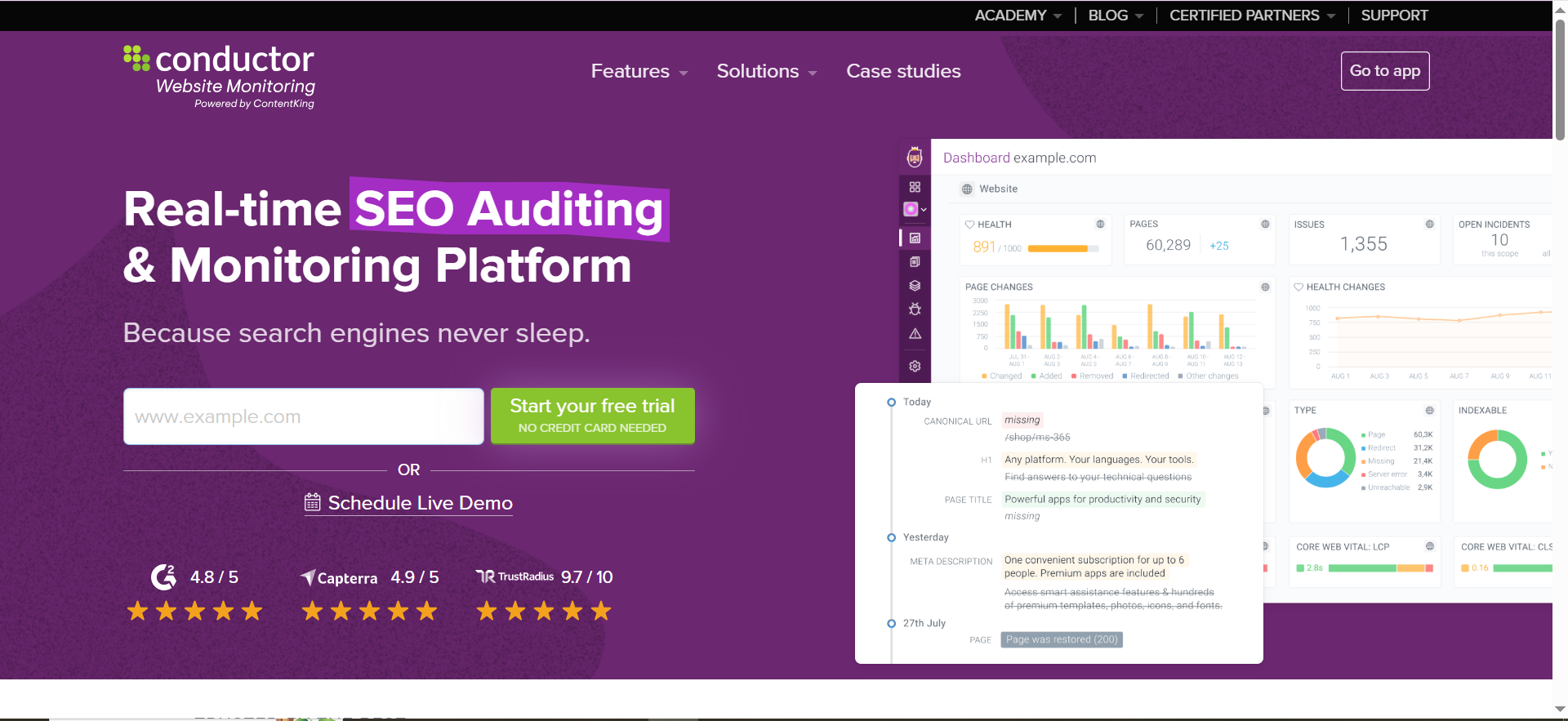
Conductor is the closest enterprise SEO platform alternative to seoClarity ArcAI. It positions itself as an AI search platform for increasing visibility, traffic, and conversions across ChatGPT, Perplexity, Google, and related AI search experiences, while still keeping one foot firmly planted in the larger enterprise SEO stack.
Why teams use it
Conductor’s real appeal is that it does not treat AI visibility as an isolated metric, which is why it stands out in a broader AI visibility platform showdown. Its platform ties together mention and citation tracking, audience and intent analysis, and competitive market share, along with prompt customization, topic analysis, content workflow integration, and traffic or conversion insights. For a mature SEO organization, that is compelling because it reduces the gap between measurement and action.
What it’s good for
Conductor is especially strong for teams that already think in terms of content strategy, enterprise reporting, and ROI, with broad engine coverage across major AI experiences. Its AI Search Performance feature set includes both brand mentions and website citations, making it relevant for teams comparing AI citation tracking capabilities.
When it’s a good fit
Choose Conductor over ArcAI if you want:
- an enterprise alternative with deep workflow maturity
- AI visibility connected to content creation and optimization
- prompt generation grounded in search and persona context
- stronger connections to traffic, engagement, and conversion reporting
Conductor also claims an API-first approach for data collection where possible, a point that matters to teams evaluating AI visibility metrics and enterprise trustworthiness. That point will matter to procurement-heavy teams and brands that care about data governance.
When it’s not a good fit
Conductor may not be the best fit if your team wants a lightweight AI-only monitor that can be spun up in an afternoon, which is why some buyers also compare best SEO tools for small businesses. It is still an enterprise platform, and that usually means a broader implementation and a broader buying process.
Key capabilities
- Mention and citation tracking
- Audience and intent insights
- Brand sentiment analysis tied to cited sources
- Competitive market share benchmarking
- Tracking customization by brand, region, intent, and persona
- Coverage across ChatGPT, Perplexity, Google AI experiences, and more
- Content workflow integration
- Traffic and conversion insights
- AI bot crawling reports
Pricing
Conductor’s pricing is not publicly listed; it’s available by quote. Its plans vary by product, features, and usage needs.
Free tier?
Conductor doesn’t offer a public free tier, but it does offer a free trial and a demo.
Bottom line: Conductor is the best ArcAI alternative for large SEO teams that still want AI visibility embedded in a broader enterprise search workflow.
2. Profound
What it does
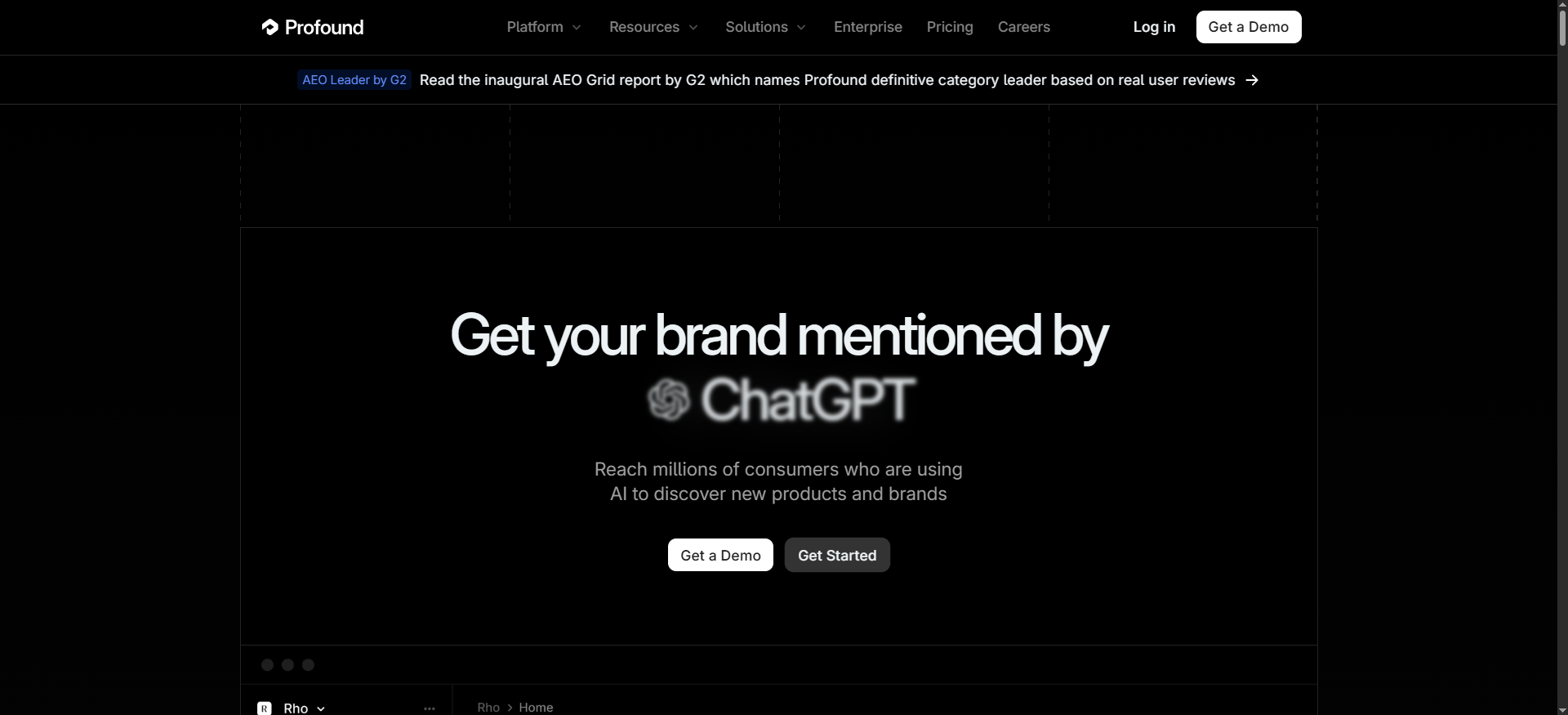
Profound is an AI-first visibility platform built around answer engines and LLM-based discovery. Its positioning is more directly centered on getting brands mentioned across systems like Perplexity, ChatGPT, Claude, Gemini, Grok, Copilot, Meta AI, DeepSeek, and Google AI Overviews.
Why teams use it
Profound feels less like “SEO software with AI features” and more like a company built for the answer-engine layer itself, which makes it relevant for teams comparing AI visibility tools by category. Its publicly visible navigation emphasizes Answer Engine Insights, Agent Analytics, Prompt Volumes, Shopping, and Agents, which signals a product philosophy focused on AI-native discovery and execution rather than classic rank tracking.
What it’s good for
Profound is a strong fit for brands that want a dedicated platform for the AI search era and do not need the weight of a larger all-in-one SEO suite, especially if they are reviewing best AI visibility tools for share of voice. If your team talks more about AI answers, brand presence, prompt sets, and zero-click discovery than about keyword rankings and technical SEO, Profound will likely feel more aligned with an AI-first search visibility workflow.
When it’s a good fit
Choose Profound over ArcAI if you want:
- a more AI-native product direction
- platform messaging centered on answer engine visibility
- potential workflow expansion into agents and AI-centric monitoring
- broader emphasis on LLM and zero-click behavior than traditional SEO teams often get from legacy suites
When it’s not a good fit
Profound is harder to evaluate quickly if you want transparent public pricing or simple self-serve buying, which is one reason readers also look for an AI visibility platform buyer guide. On the pages reviewed, its pricing page presents product navigation and a demo motion but not a straightforward public pricing table. That tends to slow down smaller teams that want to self-qualify before taking a sales call.
Key capabilities
Based on Profound’s public pages, the visible platform areas include:
- Answer Engine Insights
- Agent Analytics
- Prompt Volumes
- Shopping
- Agents
- coverage across major AI answer engines and assistants
Pricing
Profound’s pricing is not publicly listed; it appears to be available through a demo-led sales process.
Free tier?
Profound doesn’t appear to offer a public free tier or free trial, but it does offer a demo.
Bottom line: Profound is one of the most compelling alternatives if you want an AI-first platform rather than an enterprise SEO platform that adds an AI layer later.
3. Semrush AI Visibility Toolkit
What it does
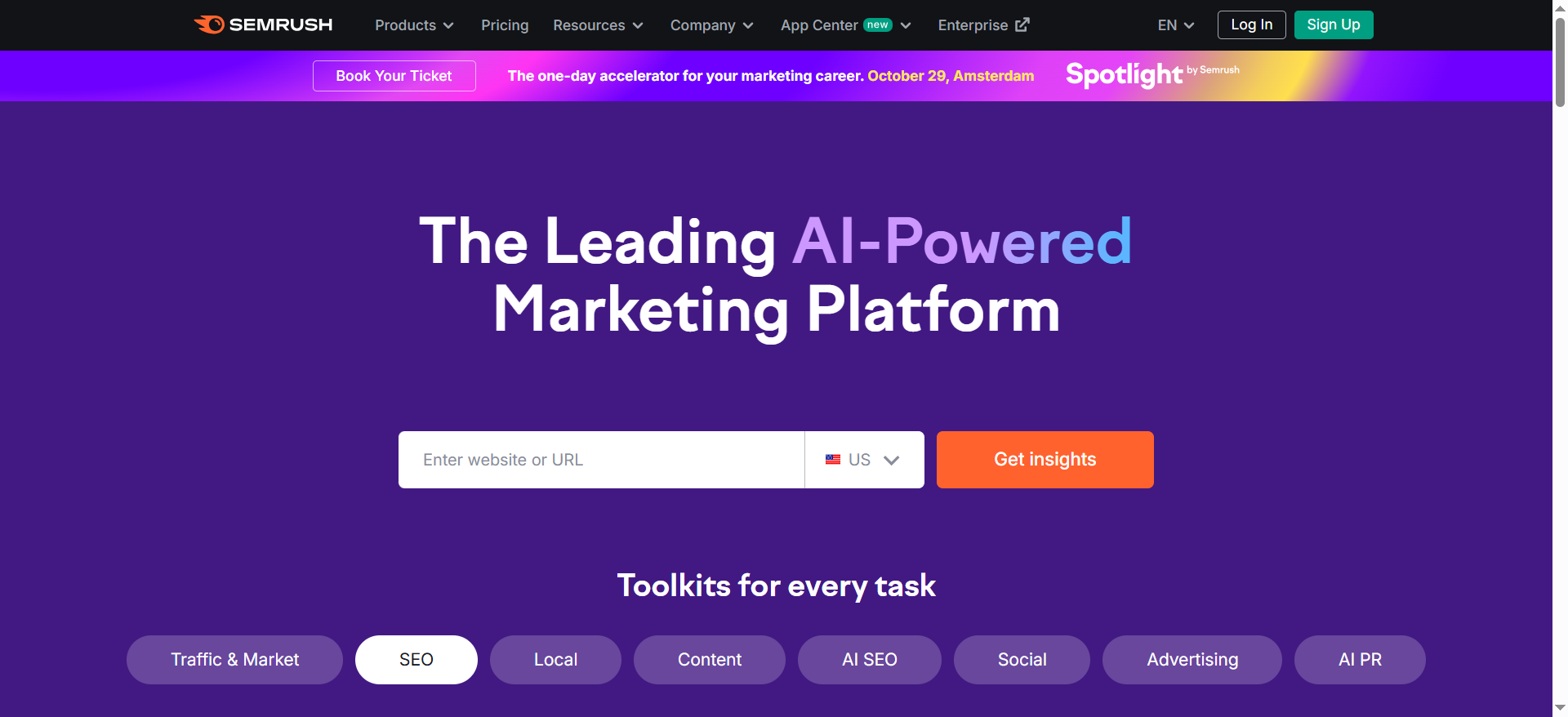
Semrush AI Visibility Toolkit is the most obvious budget-aware alternative on this list. It helps marketers track how brands appear in AI-generated answers and extends Semrush’s broader search tooling into AI visibility.
Why teams use it
The biggest reason teams choose Semrush is simple: they already know the SEO tool ecosystem, and the pricing is public. That removes friction. The toolkit includes one domain for brand performance analysis, daily queries in AI Analysis and Prompt Research, prompt tracking, AI Search checks in Site Audit, and CSV exports.
What it’s good for
Semrush is good for teams that want to start measuring AI visibility without making a major platform commitment, especially if they are also comparing tools to monitor SaaS brand visibility in ChatGPT and Perplexity. It works especially well for:
- lean in-house SEO teams
- content teams already using Semrush
- buyers who need a lower-cost pilot
- teams that want AI visibility in the same general environment as their existing SEO workflows
When it’s a good fit
Choose Semrush over ArcAI if you want:
- fast access to AI visibility tooling
- a familiar interface
- transparent entry pricing
- a lower-risk way to test prompt tracking and brand performance in AI search
When it’s not a good fit
Semrush is not the strongest choice for buyers who need the deepest enterprise workflow controls, dedicated AI visibility operations, or highly tailored governance. It is practical, but it does not present itself like an AI-first operating system in the same way AthenaHQ or Profound do, and it does not look as workflow-rich for enterprise AI visibility as Conductor does.
Key capabilities
- Brand Performance analysis
- AI Analysis reports
- Prompt Research
- Prompt Tracking
- AI Search checks in Site Audit
- CSV exports
- daily updates for several AI visibility reports
- support for broad international prompt tracking coverage
Pricing
Semrush AI Visibility Toolkit starts at $99/month.
Free tier?
Semrush AI Visibility Toolkit doesn’t offer a free tier or free trial, but it does offer a free demo.
Bottom line: If ArcAI feels too expensive or too enterprise-heavy, Semrush is the easiest alternative to justify for a pilot.
📋 Get Listed / Advertisement
We update this guide monthly. Want your tool featured? Contact: [email protected].
4. Peec AI
What it does
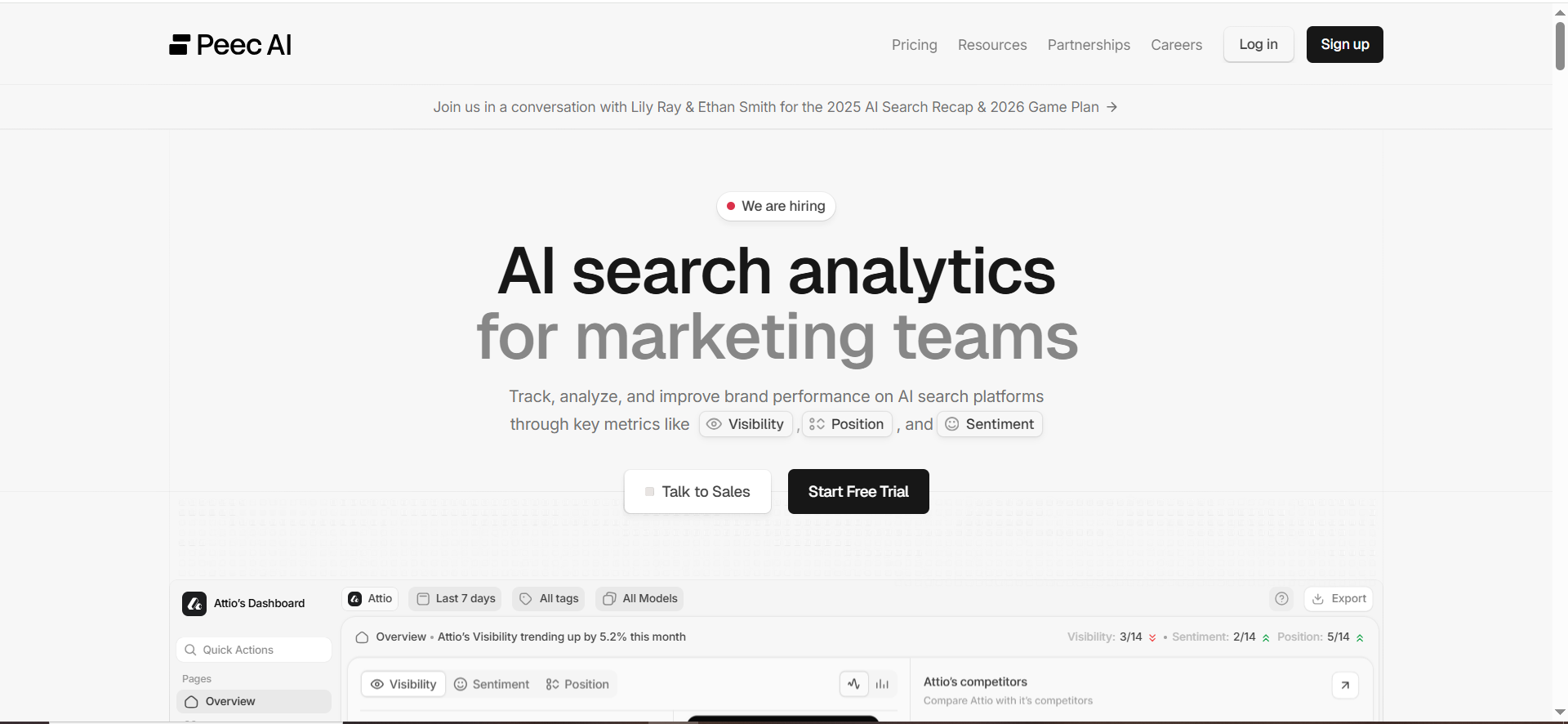
Peec AI is an AI search analytics platform aimed at marketing teams and SEO agencies. Its product positioning is centered on prompt tracking, visibility insights, source analysis, and reporting that is easy to share with teams or clients.
Why teams use it
Peec AI’s pitch is clarity and usability. Instead of overwhelming buyers with a giant enterprise suite, it focuses on a cleaner visibility workflow: set up your brand and domain, choose or refine prompts, see what AI says, track citations, and report the results. The platform also distinguishes between content that was “used” to inform an answer and content that was explicitly “cited,” which is why it fits naturally with URL-level citation analysis.
What it’s good for
Peec AI is a strong fit for:
- agencies building client-facing AI visibility reporting
- growth teams that care about clear dashboards
- operators who want exports and BI connections
- teams that want AI visibility without adopting a heavyweight enterprise suite, especially if they are building AEO-ready SaaS blogs.
It also offers a Looker Studio connector and an API, which makes it easier to move the data into custom reporting environments.
When it’s a good fit
Choose Peec AI over ArcAI if you want:
- a simpler AI visibility workflow
- clearer reporting and dashboards
- better fit for agency or multi-client presentation
- easier operational adoption for smaller teams
When it’s not a good fit
Peec AI is less likely to be the right replacement if your true need is a broad enterprise SEO operating system. It is more focused. For many teams that is a benefit, but for some enterprise buyers it can mean more stack fragmentation.
Key capabilities
- Prompt tracking
- Brand visibility metrics
- Source visibility metrics
- “Used” vs “cited” citation logic
- domain- and URL-level source usage analysis
- CSV exports
- Looker Studio connector
- API
- segmentation by model, country IP, and prompt tags
- daily prompt execution cadence
Pricing
Peec AI’s pricing is usage-based and depends on the number of tracked prompts and models analyzed. Pricing is not publicly listed as a fixed starting plan, and annual billing gets a 15% discount.
Free tier?
Peec AI doesn’t offer a public free tier, but it does offer a free trial.
Bottom line: Peec AI is one of the best ArcAI alternatives for agencies and lean teams that want clean AI visibility reporting without enterprise bloat, especially if they need real-time dashboards for reporting AI visibility to leadership.
5. AthenaHQ
What it does
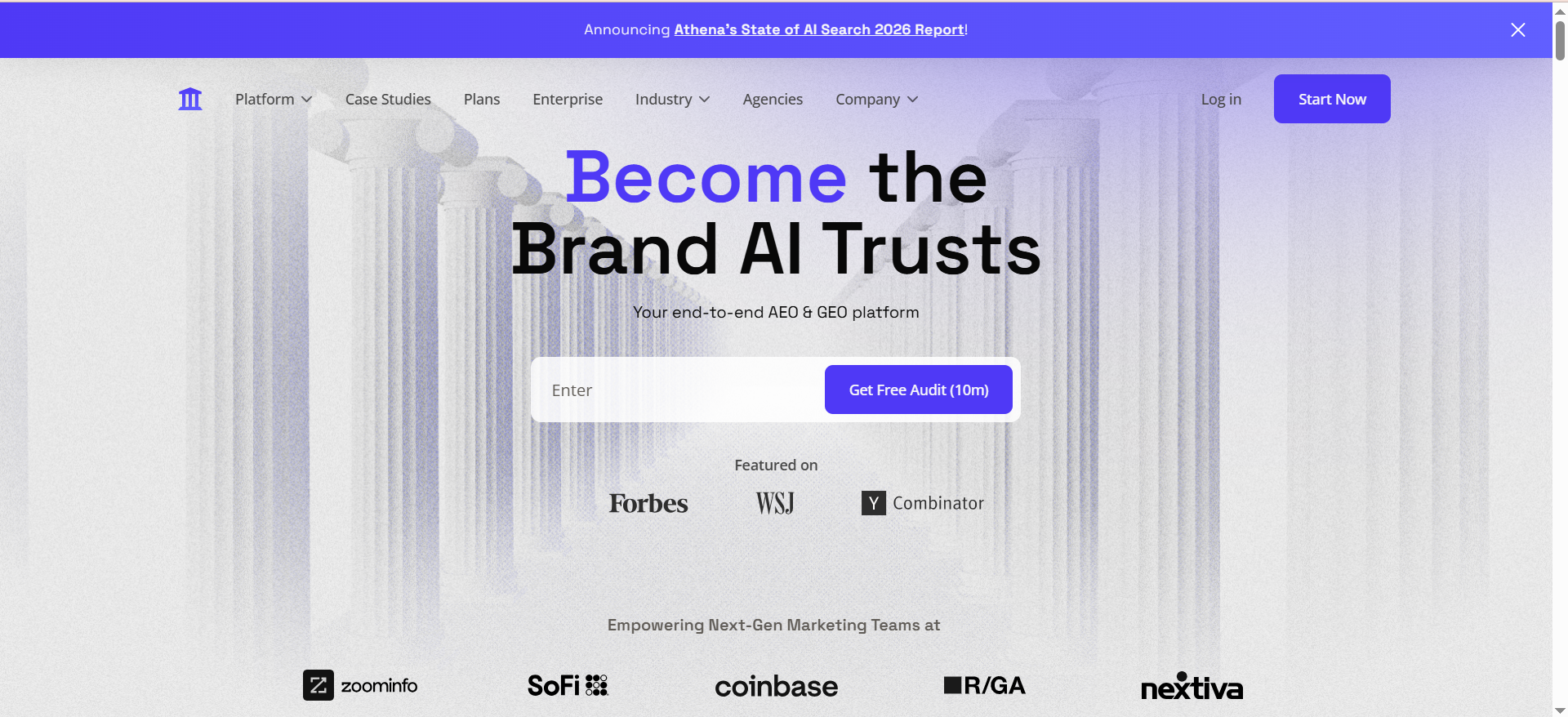
AthenaHQ positions itself as an end-to-end AEO and GEO platform designed to help brands become “the brand AI trusts.” Its product and pricing pages show a broad AI-search workflow spanning monitoring, content actions, citations, analytics, integrations, and enterprise controls.
Why teams use it
AthenaHQ stands out because it tries to be more than a dashboard, which is why it belongs in comparisons of AI strategic visibility platforms. Publicly listed capabilities include prompt volume estimation and analysis, citation intelligence, on-page and off-page actions, dynamic crawler access management, content optimization agents, traffic analysis, BI support, role-based access control, SSO, and dedicated specialist support in enterprise plans. That makes it feel closer to an operating layer for GEO/AEO than a simple tracker.
What it’s good for
AthenaHQ is good for teams that want:
- broad AI engine coverage
- enterprise controls like RBAC and SSO
- stronger content and action workflows, which also ties into evergreen content visibility in AI search
- integrations that connect AI visibility to site traffic
- a platform that can support both operators and executives
The plans page says Athena covers ChatGPT, Perplexity, Google AI Overviews, Google AI Mode, Gemini, Claude, Copilot, Grok, and more. It also lists GA4 and Google Search Console integration to connect AI visibility with site traffic, which makes it relevant for teams comparing SEO reporting software.
When it’s a good fit
Choose AthenaHQ over ArcAI if you want:
- a GEO/AEO-native platform
- strong actionability, not just monitoring
- more transparent self-serve entry pricing
- enterprise controls and reporting depth
- multi-model coverage with content optimization workflows
When it’s not a good fit
AthenaHQ may be less appealing if your team is deeply invested in a classic enterprise SEO platform and wants everything centered there, which is why some buyers still start with best tools for SEO SaaS.
Key capabilities
- monitoring across major answer engines and assistants
- unlimited competitor tracking and benchmarking
- prompt variations and conversation context
- real-time brand sentiment intelligence
- Shopify and Webflow integrations
- GA4 and GSC integration
- configurable multi-views
- executive dashboard with BI tool support
- on-page and off-page GEO/SEO actions
- citation intelligence
- dynamic robots.txt and llms.txt controls
- RBAC, OAuth, SAML SSO, enablement, and specialist support
Pricing
AthenaHQ’s Self-Serve plan starts at $295/month, and its Enterprise plan is custom-priced.
Free tier?
AthenaHQ doesn’t offer a free tier, and no public free trial is listed on its pricing page.
Bottom line: AthenaHQ is one of the strongest ArcAI alternatives if you want a serious GEO/AEO platform with both operational depth and visible pricing for smaller starting teams, and it aligns well with what buyers look for in the best AI visibility tool for GEO.
Which seoClarity ArcAI alternative is best for your team?
Best for enterprise SEO teams: Conductor
If your team wants AI visibility inside a broader enterprise content and SEO workflow, Conductor is the cleanest alternative. It is best for organizations that need reporting depth, workflow integration, and business-outcome framing, not just prompt tracking.
Best for AI-first visibility teams: Profound or AthenaHQ
If you think of this category as a new operating system for answer engines, not a bolt-on SEO feature, Profound and AthenaHQ are the strongest choices for teams building an AI search visibility playbook. Profound feels especially AI-native in its positioning. AthenaHQ feels more operational and feature-dense in public plan details.
Best for budget-conscious teams: Semrush AI Visibility Toolkit
Semrush is the easiest answer if you need a low-friction pilot. Public pricing is simple, the ecosystem is familiar, and the toolkit gives you enough tracking to test the category without an enterprise commitment.
Best for agencies and reporting-heavy workflows: Peec AI
Peec AI is particularly useful for operators who want to diagnose source patterns at the page level and understand how influence differs from visible citation.
How to choose an ArcAI alternative
When buyers compare ArcAI alternatives, they often ask the wrong question. They ask, “Which tool has the most features?” The better question is, “Which workflow do we need to operationalize every week?”
Use this filter:
1. Decide whether you need an enterprise SEO platform or an AI visibility platform
If your team still runs on classic SEO processes, you may be happier with Conductor.If your team is building an AI-search practice from scratch, Profound, AthenaHQ, or Peec AI may get adopted faster, especially when paired with a clearer AI search visibility strategy.
2. Separate monitoring from action
Some tools are better at showing you what happened. Others are better at helping you change what happens next. AthenaHQ leans heavily into action workflows. Conductor connects insight to content. ArcAI itself emphasizes orchestration and recommendations. Peec AI keeps the action layer lighter and cleaner.
3. Check reporting and stakeholder fit
If your CMO wants a business narrative, platforms that connect visibility to traffic, sentiment, and conversions are better bets.If your agency needs clean dashboards and exports, Peec AI may be more practical, especially for teams comparing best AI marketing tools for agencies.
4. Check pricing transparency
This matters more than most teams admit. Semrush and AthenaHQ make self-qualification easier because public entry pricing exists. ArcAI, Conductor, and Profound lean more heavily into sales-led evaluation.
5. Look beyond “engine coverage”
Most vendors now claim broad model coverage, but the real question is whether you can see citations and influence, not just mentions, which is central to an AI search visibility audit. The real questions are:
- Can you segment prompts by persona or funnel stage?
- Can you see citations and influence, not just mentions?
- Can you connect results to traffic or conversions?
- Can the right people actually use the product every week?
Those workflow questions usually decide the winner.
Which ArcAI alternative is best for enterprise SEO teams?
For most enterprise SEO teams, Conductor is the strongest seoClarity ArcAI alternative because it is built for the same kind of buyer: large organizations that want AI visibility tied to broader search, content, and reporting workflows. Conductor positions its AI Search Performance product around visibility across ChatGPT, Perplexity, Google, and other AI search environments, while also connecting that visibility to content workflow integration, competitive market share, traffic, and conversion insights. That makes it a strong fit for companies that do not want a standalone AI dashboard, but a platform their SEO, content, and leadership teams can use together.
ArcAI itself is aimed at enterprise teams too. seoClarity frames it as a data-first platform that helps brands research, track, report on, and optimize visibility across AI search engines, with emphasis on how AI engines interpret questions, choose sources, and cite pages. So if a buyer is replacing ArcAI, the best enterprise alternative should not just track mentions. It should also support structured workflows, prioritization, and enterprise-level reporting. That is where the conductor looks closest in shape and maturity.
AthenaHQ is also worth considering for enterprise teams, especially if they want a more GEO/AEO-specific operating system rather than a classic enterprise SEO suite. Its plans page highlights unlimited seats, role-based access control, SAML SSO, enablement, API access, and enterprise support. That makes AthenaHQ more credible for cross-functional organizations than many lightweight AI visibility tools. Still, if the team’s center of gravity is traditional enterprise SEO, Conductor is the safer recommendation. If the team is building an AI-search program with dedicated workflows, AthenaHQ becomes more attractive.
Best pick for enterprise SEO teams: Conductor Runner-up: AthenaHQ
Which seoClarity ArcAI alternative is best for AI citation tracking?
If AI citation tracking is your top priority, Conductor and Peec AI are the strongest alternatives, but they win for slightly different reasons. Conductor explicitly emphasizes AI mention and citation tracking and says it tracks brand mentions and website citations so teams can understand total AI visibility, analyze sources, and connect those insights to action. It also highlights sentiment tied to cited sources, which is especially useful for brands that care not just about whether they were cited, but how to get cited in AI answers.
Peec AI is especially interesting for citation-focused workflows because its documentation goes a level deeper into source behavior. It distinguishes between content that LLMs used and content they explicitly cited, and it lets users inspect how specific URLs were used over time and which prompts consistently triggered them as sources.
That makes Peec AI particularly useful for operators who want to diagnose source patterns at the page level and understand how influence differs from visible citation.
AthenaHQ is also a serious option here. Its plans page and product pages describe citation intelligence as part of a broader GEO/AEO workflow, alongside prompt analysis, traffic integrations, and optimization actions. That gives it strong citation-monitoring credibility, especially for teams that want citations tracked as part of a broader operating system. Still, based on the clearest public wording available, Conductor is the most explicit enterprise-grade answer for citation tracking, while Peec AI is arguably the easiest specialist pick for teams that want source-level analysis in a cleaner workflow.
Best pick for AI citation tracking: Conductor
Best specialist option for source-level citation analysis: Peec AI
Which alternative has the best pricing transparency?
The alternative with the best pricing transparency is Semrush AI Visibility Toolkit. Semrush publicly lists the toolkit at $99 per month and clearly outlines what is included: one domain for Brand Performance analysis, daily query limits for AI Analysis and Prompt Research, prompt tracking, AI Search checks in Site Audit, and CSV exports. It also documents add-ons like extra domain slots, which makes it much easier for buyers to estimate cost before talking to sales.
AthenaHQ also deserves credit here because it publicly presents plan details and self-serve pricing entry points, while also distinguishing what is included at higher organizational tiers. Its pricing page lists operational details like unlimited seats with role-based access control and SSO support at higher levels, which gives buyers a more concrete sense of what they are paying for. That said, Semrush is still the clearest option for a straightforward, low-friction pricing comparison.
By comparison, several other alternatives are much less transparent. Profound’s pricing page is visible, but the publicly accessible version does not present a simple list-price structure. Conductor leans more heavily into demo-led evaluation. seoClarity also routes buyers toward pricing conversations and plan exploration rather than exposing a simple, buyer-friendly matrix on the pages reviewed here. For teams that want to self-qualify quickly, Semrush is the easiest option to evaluate.
Best for pricing transparency: Semrush AI Visibility Toolkit
Runner-up: AthenaHQ
Which ArcAI alternative works best for multi-brand companies?
For multi-brand companies, AthenaHQ stands out most clearly because it publicly signals support for multi-brand use cases and combines that with organization-level controls. AthenaHQ’s site explicitly lists multi-brand as one of its industry or use-case categories, and its plans page highlights unlimited seats, RBAC, SSO, and enterprise support. Those features matter because multi-brand organizations rarely just need visibility tracking. They also need governance, shared access, stakeholder segmentation, and the ability to manage multiple brands or business units without chaos.
Conductor is also a strong option for multi-brand enterprises, especially when central SEO teams need to support many business lines while still tying AI visibility into broader content and conversion workflows. Its positioning around tracking customization, topic-level analysis, competitive market share, and content workflow integration suggests it can support more complex organizations well. But AthenaHQ is easier to recommend specifically for multi-brand buyers because the public messaging is more direct on that exact operating model.
Semrush can work for multi-brand companies too, but its pricing structure is more domain-slot based, which may be practical for smaller portfolios but less elegant for large multi-brand organizations managing many properties at once. Peec AI can still be useful for multi-brand reporting if the company values dashboards and external reporting, but it presents more like a focused analytics product than a broad multi-brand operating layer. For the clearest fit, AthenaHQ is the best answer.
Best for multi-brand companies: AthenaHQ
Runner-up: Conductor
FAQs
What is seoClarity ArcAI?
Why would someone switch from ArcAI?
Which ArcAI alternative is best for enterprises?
Which ArcAI alternative is cheapest?
Which tool is best for agencies?
Is Semrush enough instead of ArcAI?
What matters most in an ArcAI alternative?
Final verdict
The best seoClarity ArcAI alternative depends on what you want more of and what you want less of.
- Pick Conductor if you want the strongest like-for-like enterprise replacement.
- Pick Profound if you want a platform built around answer engines first.
- Pick Semrush AI Visibility Toolkit if you want the cheapest credible entry point.
- Pick Peec AI if usability, reporting, and agency workflows matter most.
- Pick AthenaHQ if you want a serious GEO/AEO platform with action depth and public self-serve pricing.
For most enterprise SEO teams, Conductor is the safest replacement. For most AI-first operators, AthenaHQ or Profound will feel more purpose-built.For smaller teams testing the category, Semrush is the easiest starting point, particularly for buyers also researching best free SEO tools.
📋 Get Listed / Advertisement
We update this guide monthly. Want your tool featured? Contact: [email protected].