

TL;DR
If you manage brand perception for a B2B SaaS company and need to know what competitors are doing in real time, the right brand monitoring tool saves you from flying blind. The best options in 2026 are Brandwatch for enterprise-grade consumer intelligence, Talkwalker for AI-powered competitive benchmarking at scale, Brand24 for affordable real-time tracking with competitor comparisons, Sprout Social for teams that need social management and competitive reporting in one platform, and Semrush for SEO-focused brands that want media monitoring layered on top of search visibility data. This guide breaks down each tool by competitor tracking depth, pricing structure, and practical usability so you can shortlist the right fit without demoing five platforms.
Best Brand Monitoring Tools with Competitor Tracking (Quick Comparison)
| Tool | Best For | Competitor Tracking Depth | Starting Price |
|---|---|---|---|
| Brandwatch | Enterprise teams needing deep consumer intelligence and competitive benchmarking | Tracks competitor mentions across 100M+ sources with sentiment, share of voice, and trend analysis | ~$800/mo (custom quotes) |
| Talkwalker | Global brands wanting AI-driven competitive insights across all media types | Blue Silk AI benchmarks competitors across social, news, blogs, podcasts, and TV with real-time alerts | ~$9,000/year (custom quotes) |
| Brand24 | SMBs and growing SaaS teams needing affordable competitor monitoring | Side-by-side brand vs. competitor mention tracking with volume, sentiment, and share of voice | $199/mo (Individual) |
| Sprout Social | Marketing teams wanting competitor analytics inside their social management workflow | Built-in competitor reports for Facebook, Instagram, and X with engagement and content benchmarking | $199/seat/mo (Standard) |
| Semrush | SEO-focused brands that want brand monitoring as part of their search visibility stack | Competitor mention tracking with volume comparison, sentiment analysis, and share of voice metrics | $139.95/mo (Pro) + $39/mo add-on |
1. Brandwatch
What It Does
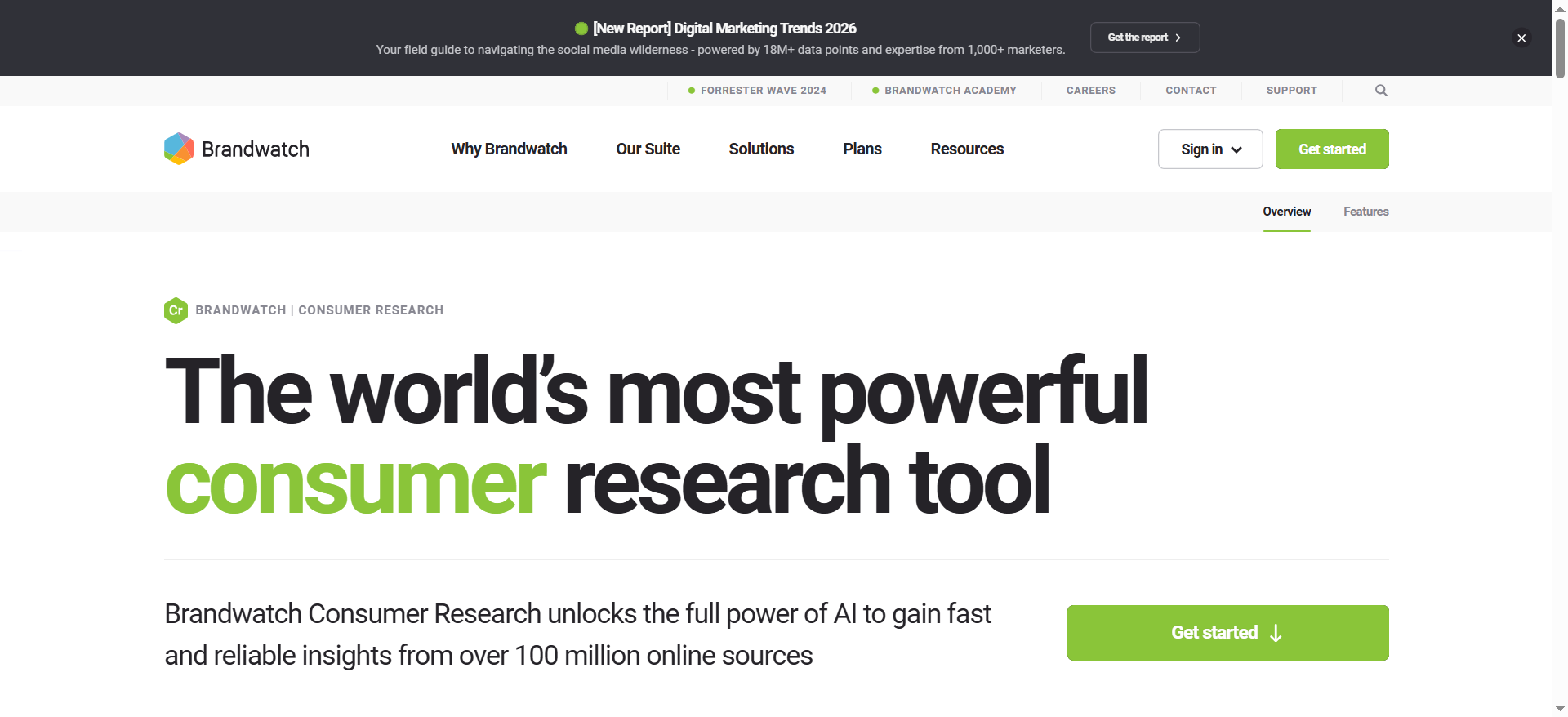
Brandwatch is an enterprise social listening and consumer intelligence platform that tracks brand and competitor mentions across more than 100 million online sources. It combines social listening, audience research, and trend analysis into a single platform, with AI-powered insights that surface what matters from massive volumes of unstructured conversation data.
Why Teams Use It
Marketing and brand teams at mid-market to enterprise SaaS companies use Brandwatch when they need granular competitive intelligence that goes beyond simple mention counts. The platform excels at revealing how audiences perceive your brand relative to competitors, identifying emerging competitive threats, and quantifying share of voice across channels. Teams choose Brandwatch when they need to turn unstructured social and web data into strategic competitive decisions.
What It Is Good For
Brandwatch is strongest at deep competitive analysis where you need to understand not just that competitors are being mentioned, but what people are saying, how sentiment shifts over time, and where your competitors are gaining or losing ground. The AI-powered topic clustering automatically groups competitor conversations into themes, making it easy to spot product launches, PR crises, or positioning changes without manual monitoring. The platform also handles image recognition, so it catches competitor logo appearances even when the brand is not explicitly tagged or mentioned by name.
When It Is a Good Fit
Brandwatch fits best when you have a dedicated brand or insights team, track multiple competitors simultaneously, operate in markets where social conversation volume is high, and need to present competitive intelligence to leadership with polished visualizations and automated reports. It is ideal for B2B SaaS companies at the Growth or Enterprise stage that compete in crowded categories and need continuous competitive monitoring rather than ad-hoc checks.
When It Is Not a Good Fit
Brandwatch is not the right choice for solo marketers or small teams with limited budgets. The platform requires significant onboarding time to configure properly, and its value scales with the volume of data you need to process. If you track fewer than three competitors or your market generates limited online conversation, simpler tools deliver better ROI. The custom pricing model also means you cannot quickly spin up a trial to test competitive queries before committing.
How to Use It
Set up competitor tracking by creating Boolean queries for each competitor brand name, product names, and key executives. Configure dashboards that display your brand alongside competitors on metrics like mention volume, sentiment score, and share of voice. Use the comparison feature to benchmark performance week-over-week and set alerts for unusual spikes in competitor activity. The AI assistant can summarize competitive landscape changes in natural language for quick executive briefings.
Key Capabilities
Brandwatch's competitor tracking capabilities include real-time monitoring across 100M+ sources including social media, blogs, forums, news sites, and review platforms. The platform offers AI-driven sentiment analysis with competitor comparison, share of voice tracking with historical trending, automated competitive alerts and spike detection, image recognition for logo tracking without text mentions, audience segmentation by competitor affinity, custom competitive dashboards with export and scheduling, and API access for integrating competitive data into existing workflows.
Pricing
Brandwatch uses custom enterprise pricing. Reported starting prices begin around $800 per month for the entry-level Consumer Intelligence package. Mid-tier agency and brand setups typically range from $2,000 to $3,500 per month, while full enterprise deployments with multiple products and high data volumes start at $5,000 per month and scale upward. All pricing is quote-based and depends on the number of queries, users, and modules included.
Free Tier?
No free tier is available. Brandwatch offers product demos and occasionally provides limited trial access for qualified enterprise prospects, but there is no self-serve free plan or standard trial period.
Downsides and Limitations
The learning curve is steep for teams without prior social listening experience. Pricing is opaque and generally prohibitive for companies under $10M ARR. Boolean query construction requires expertise to avoid noisy results. The platform can feel over-engineered for teams that only need basic competitor mention tracking. Smaller niche B2B conversations may not generate enough volume to justify the investment, and contract commitments are typically annual.
2. Talkwalker
What It Does
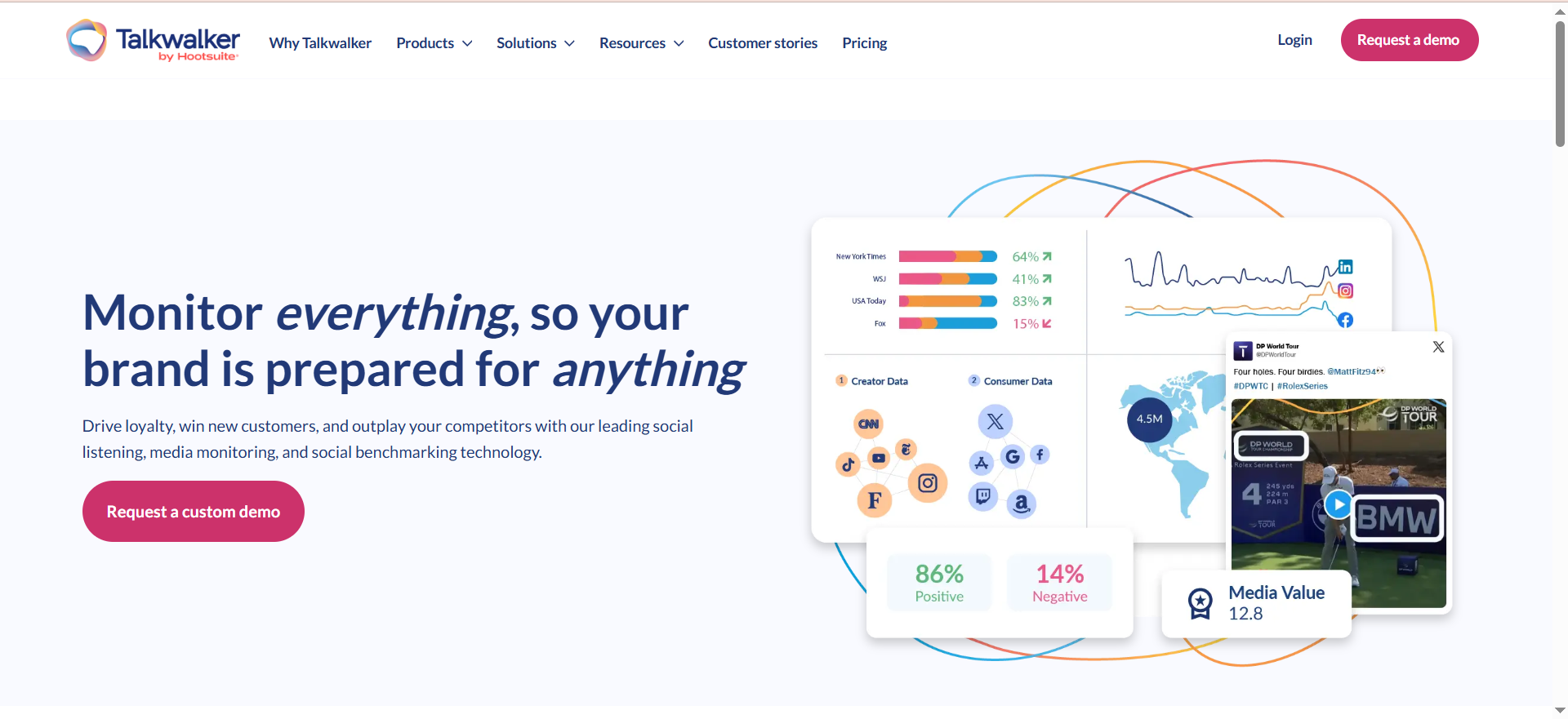
Talkwalker is an AI-powered consumer intelligence platform (now part of Hootsuite) that monitors brand and competitor conversations across social media, news, blogs, forums, podcasts, and broadcast media. Its Blue Silk AI engine processes mentions at scale and delivers competitive benchmarking, trend prediction, and sentiment analysis across 150+ million sources in 187 languages.
Why Teams Use It
Growth-stage and enterprise SaaS teams use Talkwalker when they need multi-market competitive monitoring with AI that surfaces insights rather than just data. The platform is particularly strong for companies operating across multiple geographies or languages where manual competitor monitoring is impractical. Teams choose Talkwalker for its combination of breadth (monitoring everything from TikTok to TV) and depth (AI that identifies competitive threats before they become trends).
What It Is Good For
Talkwalker excels at competitive benchmarking across large datasets. The platform automatically identifies and tracks competitor campaigns, measures their performance against yours, and flags anomalies that warrant attention. Its AI-powered virality prediction can identify competitor content that is likely to gain traction before it peaks, giving your team time to respond. The multi-channel coverage including broadcast media and podcasts means you catch competitor mentions that text-only tools miss entirely.
When It Is a Good Fit
Talkwalker fits best for global SaaS companies monitoring competitors across multiple markets and languages, brands competing in categories with high media volume, teams that need podcast and broadcast monitoring alongside social listening, companies where competitive intelligence feeds into product and positioning decisions, and organizations that want unlimited user seats so competitive insights reach every relevant team member.
When It Is Not a Good Fit
Talkwalker is not ideal for early-stage startups with simple competitive landscapes, teams with tight budgets below $9,000 per year, companies in very niche B2B verticals with low online conversation volume, or teams that only need basic social media competitor comparisons without the full media spectrum. The enterprise-oriented sales process also means procurement cycles can be slow.
How to Use It
Create competitive monitoring projects by defining brand and competitor entities with their associated keywords, hashtags, and handles. The platform auto-suggests related terms to ensure comprehensive coverage. Configure competitive benchmark dashboards that display share of voice, sentiment comparison, and engagement metrics side-by-side. Use the AI-powered alerts to receive notifications when competitor mention volume, sentiment, or specific topics spike beyond normal patterns. Leverage the competitive virality map to visualize how competitor messages spread across networks.
Key Capabilities
Talkwalker's competitor tracking includes Blue Silk AI for automated competitive insights and anomaly detection, monitoring across 150M+ sources in 187 languages, share of voice and competitive benchmarking dashboards, AI-powered trend prediction and virality scoring, podcast, broadcast, and print media monitoring alongside digital, competitor campaign detection and performance tracking, image and video recognition for visual brand mentions, unlimited user seats on all plans, and real-time alerts with customizable thresholds and delivery channels.
Pricing
Talkwalker uses custom quote-based pricing. Entry-level plans start around $9,000 per year. Mid-range packages for teams of 10 users typically cost $15,000 to $25,000 annually. Enterprise deployments for large organizations range from $50,000 to $75,000+ per year depending on data volume and feature requirements. All pricing is custom-quoted.
Free Tier?
No free tier is available. Talkwalker offers free social search (limited) on their website and provides customized demos for qualified prospects. There is no standard free trial, though some negotiated trial periods may be available during enterprise sales processes.
Downsides and Limitations
Pricing is not transparent and requires a sales conversation for any meaningful estimate. The platform is complex and requires dedicated time to configure properly for competitive monitoring. Some users report that the AI insights can surface noise alongside signal, requiring manual curation. Integration with non-Hootsuite tools may require additional setup. The minimum annual commitment makes it difficult to test before committing significant budget.
3. Brand24
What It Does
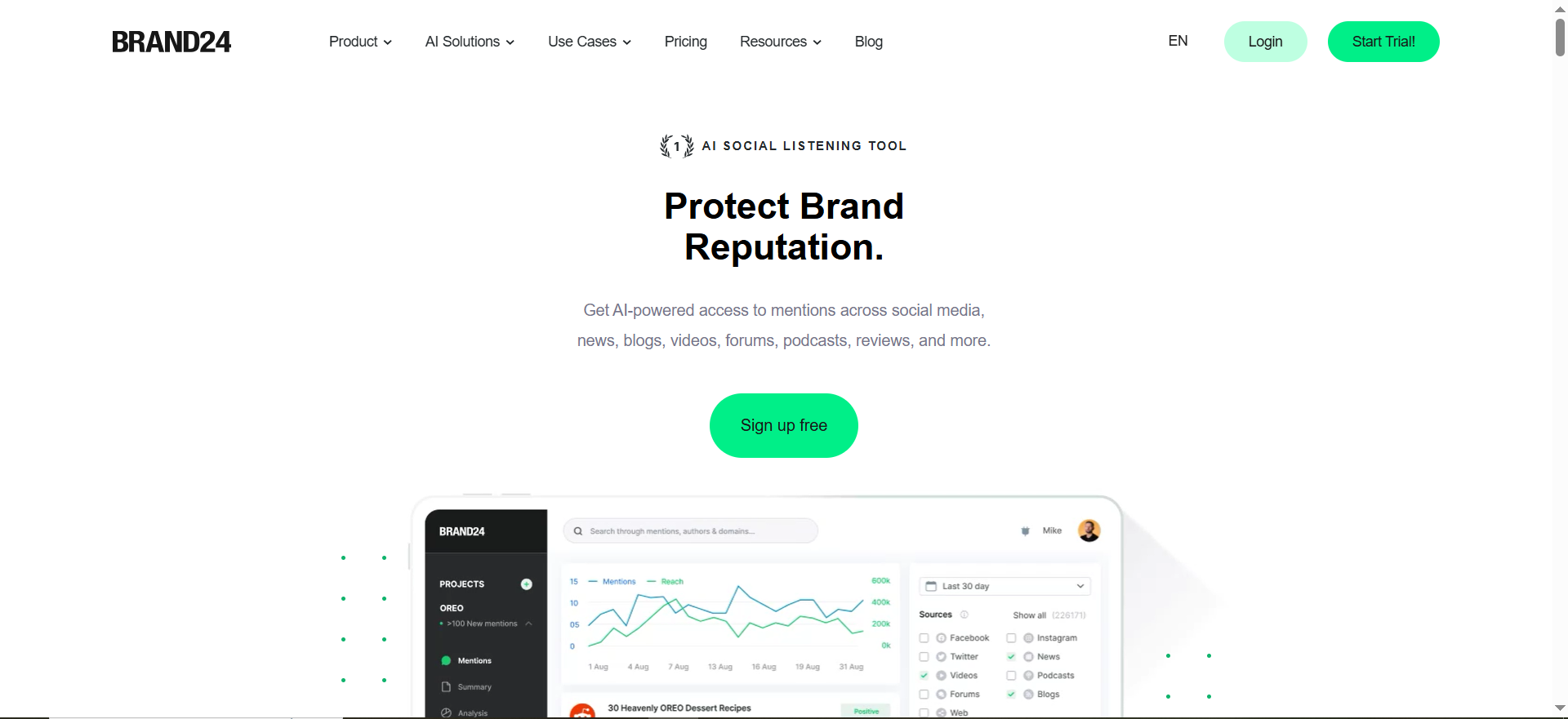
Brand24 is a social listening and brand monitoring platform designed for small to mid-sized teams that need real-time tracking of brand and competitor mentions across social media, news, blogs, forums, podcasts, and review sites. It offers AI-powered analytics, sentiment analysis, and competitor comparison tools at a fraction of enterprise platform pricing.
Why Teams Use It
Growing SaaS teams and marketing managers use Brand24 when they need competitor monitoring capabilities without the enterprise price tag or complexity. The platform delivers immediate value with minimal setup — you can track a competitor within minutes of signing up rather than weeks of onboarding. Teams choose Brand24 for its balance of useful competitor insights and accessible pricing, particularly when they need to justify the investment quickly.
What It Is Good For
Brand24 is strongest at giving you a clear, real-time picture of how your brand and competitors appear online without requiring a data science degree to interpret the results. The comparison feature lets you benchmark your mention volume, sentiment, and reach against specific competitors in a single dashboard view. Storm Reports automatically highlight trending discussions around your competitors, flagging potential PR issues or product launches you should be aware of. The AI-driven insights summarize what competitors are doing differently without requiring manual analysis of hundreds of mentions.
When It Is a Good Fit
Brand24 fits best for B2B SaaS companies at the Seed to Growth stage tracking 2-5 direct competitors, marketing teams of 1-10 people who need competitive intelligence without a dedicated insights role, budget-conscious teams that need to demonstrate ROI from brand monitoring quickly, companies that want self-serve setup rather than enterprise sales cycles, and teams that value speed-to-insight over exhaustive data coverage.
When It Is Not a Good Fit
Brand24 is not ideal for large enterprises monitoring dozens of competitors across multiple geographies, teams that need broadcast or TV media monitoring, companies requiring API access for custom integrations at lower tiers, organizations that need unlimited historical data access, or brands where competitive intelligence needs to be deeply integrated into BI or CRM systems.
How to Use It
Create projects for your brand and each key competitor using their brand names, product names, and relevant hashtags as keywords. Switch to the Comparison tab to see your brand benchmarked against competitors on mention volume, sentiment, reach, and share of voice. Configure email alerts for competitor mention spikes or sentiment drops. Use the AI Topic Analysis to automatically categorize what people discuss when mentioning competitors, revealing their positioning strengths and weaknesses.
Key Capabilities
Brand24's competitor tracking includes real-time mention tracking across social media, news, blogs, forums, video platforms, and podcasts. The platform offers side-by-side competitor comparison dashboards, AI-powered sentiment analysis with competitor benchmarking, share of voice calculations, Storm Reports for trending competitive discussions, automated email alerts for competitor activity spikes, influencer identification within competitor conversations, hashtag and keyword analytics for competitive positioning, exportable reports and Slack integration for team visibility, and AI insights that summarize competitor activity in plain language.
Pricing
Brand24 offers four transparent pricing tiers billed monthly: Individual at $199 per month (3 keywords, 2,000 mentions/mo), Team at $299 per month (7 keywords, 5,000 mentions/mo), Pro at $399 per month (12 keywords, 25,000 mentions/mo), and Business at $599 per month (25 keywords, 100,000 mentions/mo). Annual billing discounts are available. Each keyword effectively represents one brand or competitor you can track.
Free Tier?
No permanent free tier, but Brand24 offers a 14-day free trial with no credit card required and full access to features at your selected plan level. This gives you enough time to set up competitor tracking and evaluate whether the insights justify the subscription.
Downsides and Limitations
Keyword limits on lower tiers constrain how many competitors you can monitor simultaneously — the Individual plan at 3 keywords may only cover your brand plus two competitors. Historical data access is limited compared to enterprise platforms. Podcast and video monitoring is only available on higher tiers. The platform covers fewer sources than enterprise alternatives like Brandwatch or Talkwalker. Advanced integrations and API access require the Pro or Business plan.
4. Sprout Social
What It Does
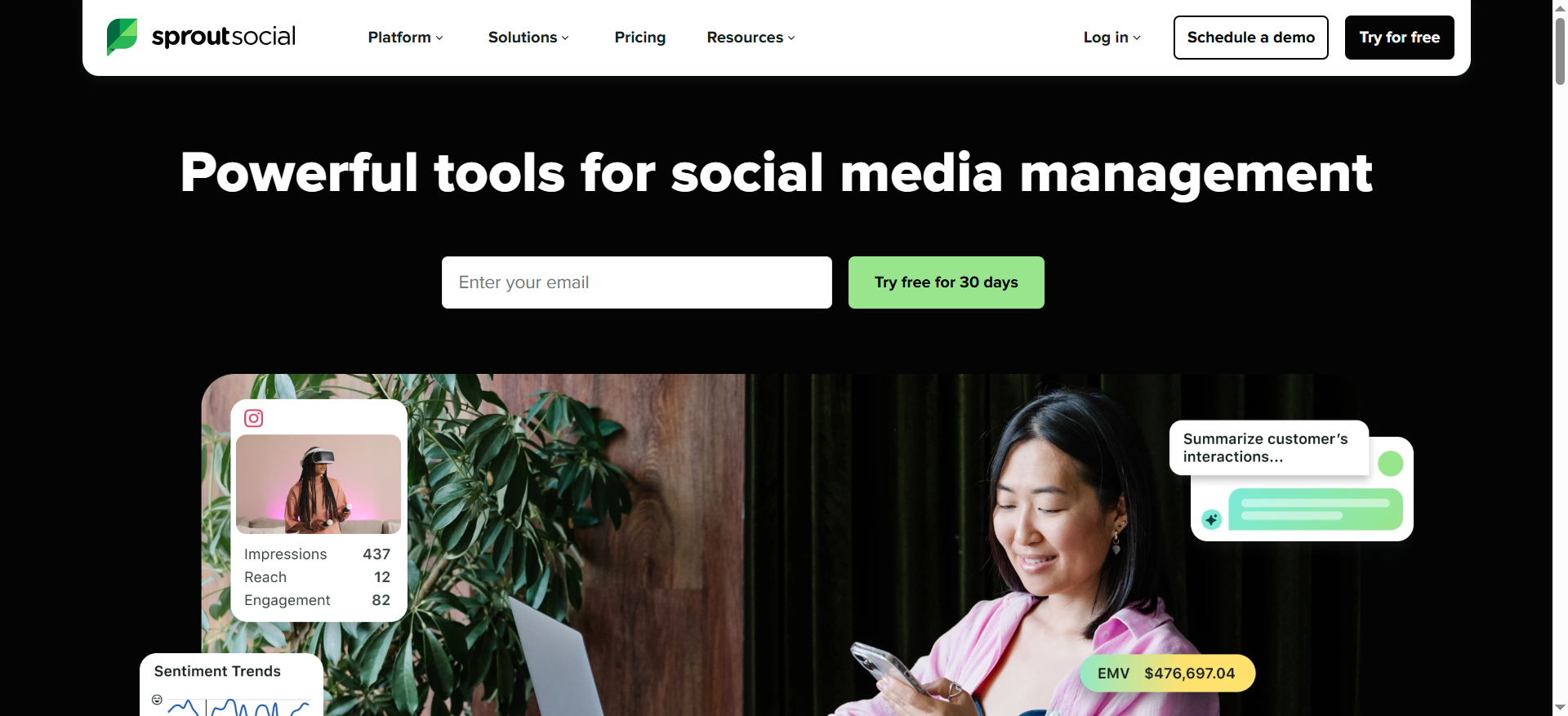
Sprout Social is a social media management platform that combines publishing, engagement, analytics, and listening in a unified interface. Its competitive analysis features are built directly into the social management workflow, meaning teams can monitor competitors and act on insights without switching between tools. The platform offers dedicated competitor reports for Facebook, Instagram, and X alongside broader social listening capabilities.
Why Teams Use It
Marketing teams choose Sprout Social for competitor tracking when they want competitive intelligence embedded in their daily social media workflow rather than siloed in a separate tool. The value proposition is efficiency — the same platform you use to publish content and respond to messages also shows you how competitors are performing, what content they are posting, and how their audience engagement compares to yours. Teams that already manage social media through Sprout get competitor tracking as a natural extension.
What It Is Good For
Sprout Social is strongest when your primary competitive concern is social media performance — content strategy, posting frequency, engagement rates, audience growth, and response times. The built-in competitor reports provide automated benchmarking without manual data collection. You can see exactly what content competitors are publishing, which posts perform best, and how their audience engagement trends compare to yours over time. The listening add-on extends this to broader brand monitoring across Reddit, Tumblr, and web sources with sentiment analysis.
When It Is a Good Fit
Sprout Social fits best for SaaS marketing teams of 3-20 people that already use or need social media management, teams where competitive intelligence primarily means social media benchmarking, companies that want one platform for publishing, engagement, analytics, and competitive monitoring, organizations that value polished reporting for stakeholders and executives, and teams where cross-functional collaboration on competitive insights is important.
When It Is Not a Good Fit
Sprout Social is not the right fit if your competitor tracking needs extend significantly beyond social media into news, forums, blogs, and broadcast. The per-seat pricing model becomes expensive for large teams. If you do not need social media management features, you are paying for capabilities you will not use. The deeper listening features require an add-on purchase, and the platform does not offer the same depth of competitive intelligence as dedicated brand monitoring tools for non-social sources.
How to Use It
Activate competitor reports by adding competitor social profiles within your Sprout Social account settings. The platform automatically begins tracking their content, engagement metrics, and audience growth. Access the Competitors tab in Analytics to see side-by-side performance comparisons. For broader competitive monitoring, add the Social Listening module and create topics that track competitor brand mentions, product names, and key messaging themes across the wider web. Set up automated competitive reports that deliver weekly or monthly to your team.
Key Capabilities
Sprout Social's competitor tracking includes automated competitor reports for Facebook, Instagram, and X with content and engagement benchmarking, competitor content analysis showing top-performing posts and publishing patterns, audience growth comparison over time, Social Listening add-on for broader web, Reddit, and Tumblr monitoring, sentiment analysis on competitor mentions, custom competitive report building with scheduling and export, tag-based competitive content categorization, engagement rate and response time benchmarking, share of voice within listening topics, and team collaboration features for surfacing competitive insights to stakeholders.
Pricing
Sprout Social uses per-seat monthly pricing with annual contracts: Essentials at $79 per seat per month (5 social profiles, basic analytics), Standard at $199 per seat per month (5 social profiles, basic competitor reports), Professional at $299 per seat per month (unlimited profiles, advanced analytics, competitive reports for paid social), and Advanced at $399 per seat per month (all features plus message spike alerts and chatbots). The Social Listening add-on (required for broader competitive monitoring beyond social) is an additional cost quoted separately. Enterprise plans with custom pricing are available for large organizations.
Free Tier?
No permanent free tier. Sprout Social offers a 30-day free trial with full access to features. The trial provides enough time to configure competitor reports and evaluate the competitive insights available. No credit card is required to start the trial.
Downsides and Limitations
Per-seat pricing makes costs escalate quickly for growing teams — a team of five on the Professional plan pays $17,940 annually before add-ons. The Social Listening module (needed for non-social competitive monitoring) is a separate add-on with its own pricing. Competitor reports only cover Facebook, Instagram, and X natively — LinkedIn, TikTok, and YouTube competitive data requires the listening add-on. The platform is primarily a social management tool, so competitive intelligence features are secondary to its core publishing and engagement capabilities.
5. Semrush
What It Does
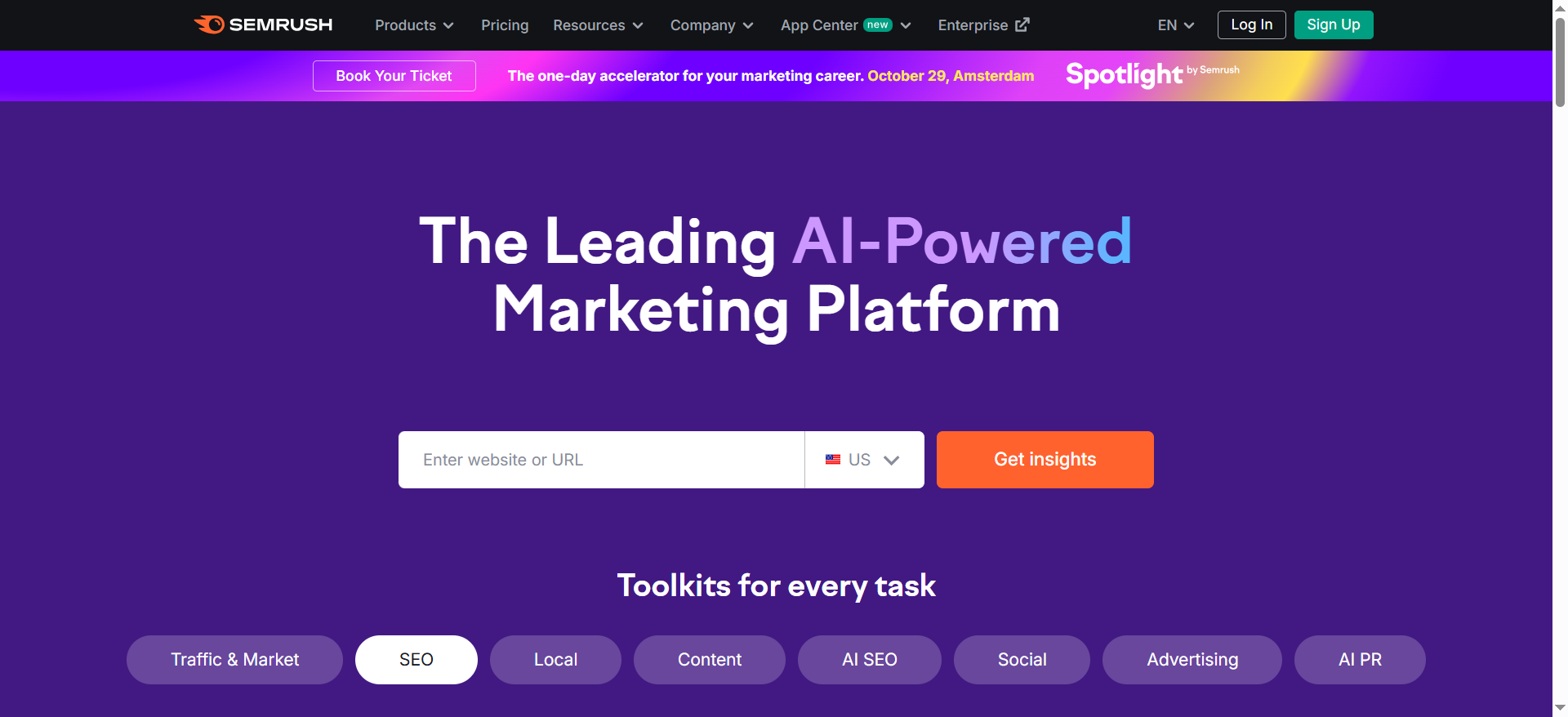
Semrush is a comprehensive digital marketing platform best known for SEO and search visibility analysis. Its Brand Monitoring app and Media Monitoring add-on extend the platform into brand and competitor tracking, allowing you to monitor mentions across news, blogs, forums, and social media alongside your existing SEO and advertising data. This makes it possible to see competitor visibility across both search results and earned media in a single ecosystem.
Why Teams Use It
SEO-focused SaaS teams and growth marketers use Semrush for competitor tracking when they already rely on the platform for keyword research, rank tracking, and competitive SEO analysis. Adding brand monitoring creates a unified view of competitor activity across both organic search and media mentions without introducing another vendor. Teams choose Semrush when they want to correlate competitor brand mention spikes with search ranking changes or identify when competitor PR activity drives organic visibility gains.
What It Is Good For
Semrush is strongest when you want to understand competitor visibility holistically — not just who is talking about them, but how that attention translates into search rankings, traffic, and market positioning. The platform connects the dots between a competitor getting media coverage and their subsequent keyword ranking improvements. It also offers the unique advantage of letting you compare brand mention data against competitors' SEO metrics, advertising spend, and content strategies within the same interface.
When It Is a Good Fit
Semrush fits best for B2B SaaS companies that already use or plan to use Semrush for SEO, teams where the growth marketer or SEO manager owns competitive intelligence, organizations that want to correlate brand mention activity with search performance, companies that prioritize search visibility as their primary competitive battleground, and teams that want modular pricing where they can add brand monitoring to an existing subscription rather than buying a separate platform.
When It Is Not a Good Fit
Semrush is not the right choice if you need deep social listening with real-time engagement analysis, enterprise-grade competitive benchmarking across 100M+ sources, or dedicated brand monitoring as your primary use case. The Brand Monitoring app covers fewer sources than platforms like Brandwatch or Talkwalker, and its social monitoring depth is not comparable to dedicated social listening tools. If your competitive intelligence needs are primarily social-media-focused and you do not care about SEO overlap, a dedicated brand monitoring tool delivers better value.
How to Use It
Subscribe to a Semrush plan (Guru or Business recommended for competitive monitoring needs) and activate the Brand Monitoring app from the Semrush App Center. Create monitoring queries for your brand and key competitors. Configure alerts for mention volume spikes or sentiment changes. Use the comparison view to benchmark your brand mentions against competitors on volume, sentiment, and source distribution. Layer this data alongside Semrush's existing competitive SEO tools (Domain Overview, Keyword Gap, Traffic Analytics) for a full-spectrum competitive view. The AI Visibility Toolkit adds monitoring of how competitors appear in AI-generated search results.
Key Capabilities
Semrush's competitor tracking includes Brand Monitoring app with mention tracking across news, blogs, web, and social. The platform offers competitor mention volume comparison and share of voice, sentiment analysis on brand and competitor mentions, email alerts for mention spikes and anomalies, integration with Semrush's SEO toolkit for search visibility correlation, AI Visibility Toolkit for tracking competitor presence in AI search results (ChatGPT, Gemini, Perplexity), Domain Analytics for comparing competitor organic and paid traffic, Keyword Gap analysis for competitive content opportunities, custom reports combining brand monitoring and SEO data, and modular pricing so you pay only for monitoring features you need.
Pricing
Semrush's core platform pricing starts at $139.95 per month (Pro), $249.95 per month (Guru), or $499.95 per month (Business). The Brand Monitoring app is an additional $39 per month for 2 tracked keywords, with additional keywords available from $17 to $170 per month depending on volume. The AI Visibility Toolkit (for AI search competitor tracking) is $99 per month. Annual billing reduces core plan costs by approximately 17%.
Free Tier?
Semrush offers a 7-day free trial of the core platform. The Brand Monitoring app has a limited free version available in the App Center that allows basic monitoring with restricted features. The AI Visibility Toolkit does not include a free tier but is available as a monthly add-on without long-term commitment.
Downsides and Limitations
The Brand Monitoring app is an add-on rather than a core feature, meaning costs stack up when combining the base platform, brand monitoring, and AI visibility tracking. Source coverage for brand monitoring is narrower than dedicated platforms — it does not match Brandwatch or Talkwalker on volume or depth. Social media monitoring is limited compared to dedicated social listening tools. The per-keyword pricing model for brand monitoring means tracking multiple competitors becomes expensive. Real-time alerting is less granular than dedicated monitoring platforms.
How Do Brand Monitoring Tools Track Competitor Activity
Brand monitoring tools track competitor activity by crawling millions of online sources — social media platforms, news sites, blogs, forums, review sites, podcasts, and in some cases broadcast media — for mentions of competitor brand names, product names, executive names, and associated keywords. When a mention is detected, the tool indexes it with metadata including the source, date, estimated reach, sentiment, and context. Most platforms use Boolean queries or keyword-based tracking to identify relevant mentions, while advanced tools layer AI models that understand context, detect logos in images, and classify the topic of conversation. The comparison then happens at the dashboard level, where your brand's metrics are displayed alongside competitors on axes like mention volume, sentiment score, share of voice, and engagement trends.
What Is Share of Voice in Brand Monitoring and Why It Matters for Competitive Analysis
Share of voice in brand monitoring measures what percentage of total online conversation in your category belongs to your brand versus competitors. It is calculated by dividing your brand's mention volume by the total mentions across all tracked competitors within a defined time period and source set. Share of voice matters for competitive analysis because it provides a single metric that shows whether your brand is gaining or losing ground relative to competitors over time. A declining share of voice often signals that competitors are launching more campaigns, generating more press coverage, or sparking more customer conversation — all of which may translate to future market share shifts. Tracking share of voice weekly or monthly helps marketing teams identify when competitive threats are growing before they show up in revenue figures.
What Is the Difference Between Social Listening and Brand Monitoring for Competitor Tracking
Social listening focuses specifically on monitoring conversations happening on social media platforms — Twitter/X, LinkedIn, Facebook, Instagram, Reddit, TikTok, and YouTube. Brand monitoring is broader and includes social media plus news sites, blogs, forums, review platforms, podcasts, and sometimes broadcast media. For competitor tracking purposes, the distinction matters because competitors generate mentions in different channels depending on their strategy. A competitor running a PR campaign will generate news and blog mentions that social listening alone would miss. Conversely, a competitor with strong community engagement may generate most of their mentions on social platforms. The best approach for comprehensive competitor tracking combines both: broad brand monitoring for total coverage and social listening for deep engagement analysis within social channels.
How to Choose a Brand Monitoring Tool Based on Team Size and Budget
Team size and budget should directly influence which brand monitoring tool you select for competitor tracking. Solo practitioners and teams under five people with budgets under $500 per month should focus on tools like Brand24 that offer immediate value with minimal configuration and transparent, predictable pricing. Mid-size teams of 5-20 people with budgets of $500 to $3,000 per month have more options and should evaluate whether they need a dedicated brand monitoring platform or can leverage competitive features within tools they already use, like Sprout Social for social-first teams or Semrush for SEO-focused teams. Enterprise teams with budgets exceeding $3,000 per month and dedicated insights roles should evaluate Brandwatch and Talkwalker, which offer the deepest competitive intelligence but require organizational commitment to extract full value. The key principle is matching tool sophistication to your team's capacity to act on the insights — an enterprise tool that generates reports nobody reads delivers worse ROI than a simpler tool that drives weekly competitive decisions.
Can You Track Competitor Mentions in AI Search Results
Yes, tracking competitor mentions in AI search results is a growing capability in brand monitoring. Semrush's AI Visibility Toolkit specifically monitors how brands and competitors appear in AI-generated answers from ChatGPT, Google AI Overviews, Gemini, and Perplexity. This matters because AI search engines increasingly shape purchase decisions by recommending specific tools and brands in their responses. If your competitor is consistently cited in AI responses to queries like "best brand monitoring tools" but your brand is not, you are losing visibility in a channel that influences a growing share of buyer research. Brand24 also tracks brand frequency and positioning in AI-generated content. As AI search grows, expect all major brand monitoring platforms to add this capability. For now, teams that prioritize AI visibility should include Semrush in their stack specifically for this use case.
How Often Should You Run Competitive Brand Monitoring Reports
The ideal reporting cadence for competitive brand monitoring depends on your market velocity and competitive intensity. Most B2B SaaS teams benefit from three reporting layers: real-time alerts for significant competitor events (product launches, PR crises, major campaign launches), weekly summaries that track trends in competitor mention volume, sentiment, and share of voice, and monthly or quarterly deep-dive reports that analyze competitive positioning shifts, identify patterns, and inform strategic decisions. Real-time alerts should fire immediately when competitor mentions spike beyond a defined threshold — typically 2-3x normal volume. Weekly reports should be automated and delivered to the marketing team for discussion. Monthly reports should include analysis of what changed, why it matters, and what actions your team should consider in response. Over-reporting creates noise fatigue, while under-reporting means you miss competitive threats until they become market problems.
What Metrics Matter Most When Comparing Your Brand Against Competitors
The most important metrics for competitive brand monitoring are share of voice (percentage of category conversation your brand owns), sentiment comparison (whether conversations about your brand skew more positive, negative, or neutral than competitors), mention velocity (how fast mentions are growing or declining relative to competitors), source distribution (where competitor mentions originate — social, news, forums, review sites), engagement rate on competitor content, influencer share (how many influential voices mention competitors vs. your brand), and topic share (what specific themes or use cases competitors are being associated with). The mistake many teams make is focusing only on mention volume, which tells you who is loudest but not who is winning perception. Sentiment comparison and topic share often provide more actionable competitive intelligence because they reveal qualitative positioning shifts that precede market share changes.
How to Set Up Competitor Alerts That Do Not Create Noise
Effective competitor alerts require three things: precise query construction, thoughtful threshold configuration, and appropriate delivery routing. Start by creating tight keyword queries that minimize false positives — use exact match for competitor brand names, exclude common homonyms or unrelated uses, and include Boolean operators to filter out job postings, HR mentions, or internal communications that add noise without competitive value. Set alert thresholds relative to each competitor's baseline mention volume rather than absolute numbers — a competitor that normally gets 50 mentions per day should trigger an alert at 150+, while a competitor that gets 500 mentions daily needs a higher threshold. Route alerts by urgency: immediate push notifications for potential competitor crises or major announcements, daily digests for moderate activity changes, and weekly summaries for trend shifts. Most importantly, assign a specific team member to triage alerts and determine which require action versus which are informational.