

Scrunch AI is a solid platform for tracking AI visibility, citations, prompts, and page readiness, but it is not the only good option on the market. If you want a simpler analytics-focused alternative, Peec AI is a strong pick. If you need a more premium enterprise platform, Profound stands out. For teams that want more hands-on optimization workflows, AthenaHQ is one of the best alternatives. If budget matters most, LLMrefs is the most accessible entry point, while Conductor is the best fit for large organizations that want AI visibility tied into a broader SEO and analytics stack.
In this guide, you’ll see how Scrunch AI compares with these five alternatives on features, pricing, reporting, and use case fit, so you can choose the right platform for your team.
📋 Get Listed / Advertisement
We update this guide monthly. Want your tool featured? Contact: [email protected].
If you’re researching Scrunch AI alternatives, you’re probably past the “should we track AI visibility?” stage and deeper into evaluating your AI search visibility strategy.You already know that ChatGPT, Perplexity, Gemini, Copilot, and AI Overviews are shaping discovery, consideration, and branded demand, which is why more teams are investing in answer engine optimization.
Now the question is simpler: which platform gives your team the clearest data, the best workflow, and the most usable reporting?
The short answer is that Scrunch AI is a strong option for AI visibility monitoring, prompt management, citations tracking, page audits, and agent traffic monitoring, which is why some teams also compare it with other AI visibility platforms for content optimization teams. Scrunch’s published pricing starts at $250 per month for Core, and its positioning leans toward helping teams benchmark AI visibility, monitor prompts, track citations, and improve site readiness.
For teams comparing alternatives, the best options right now are Peec AI, Profound, AthenaHQ, LLMrefs, and Conductor, and many of the same buyers also review the best AI visibility tool for GEO. Each one solves a slightly different problem. Some are better for lightweight visibility tracking, some are better for enterprise reporting, and some are stronger when you need optimization support and a better fit with an existing AI marketing stack.
📋 Get Listed / Advertisement
We update this guide monthly. Want your tool featured? Contact: [email protected].
Best Scrunch AI alternatives at a glance
| Tool | Best for | Strength | Watch-out |
|---|---|---|---|
| Peec AI | Marketing teams that want straightforward AI search analytics | Clean visibility tracking and competitor benchmarking across major AI platforms | Pricing details are less transparent on the main site |
| Profound | Brands that want a premium, enterprise-style AI visibility product | Broad feature set and flexible plans aimed at serious teams | Can be expensive relative to simpler tools |
| AthenaHQ | Teams that want optimization workflows plus tracking | Combines cross-platform monitoring with recommendations and workflow depth | Credit-based pricing may require closer usage management |
| LLMrefs | Budget-conscious teams and consultants | Low-cost entry point with useful AI SEO utilities | Lighter than full enterprise platforms |
| Conductor | Enterprises that want AI visibility inside a bigger SEO platform | Connects AI visibility with analytics, technical SEO, and broader search operations | Connects AI visibility with analytics, technical SEO, and broader search operations |
That table is the real buying landscape in one view, especially for teams also comparing the best AI visibility tools for citation tracking across vendors. If you’re moving away from Scrunch AI, you are usually making one of four decisions:
- You want a lower-cost option.
- You want stronger reporting for leadership, which is one reason teams also look at real-time dashboards for reporting AI visibility to leadership.
- You want more actionable optimization help, not just monitoring, which is exactly the gap addressed by the most effective strategies for AI visibility enhancement.
- You want AI visibility data to connect with your broader SEO and analytics stack.
Those are the lenses that matter more than marketing copy, particularly if you are evaluating broader AI visibility tools for category tracking before choosing a platform.
1. Peec AI
What it does
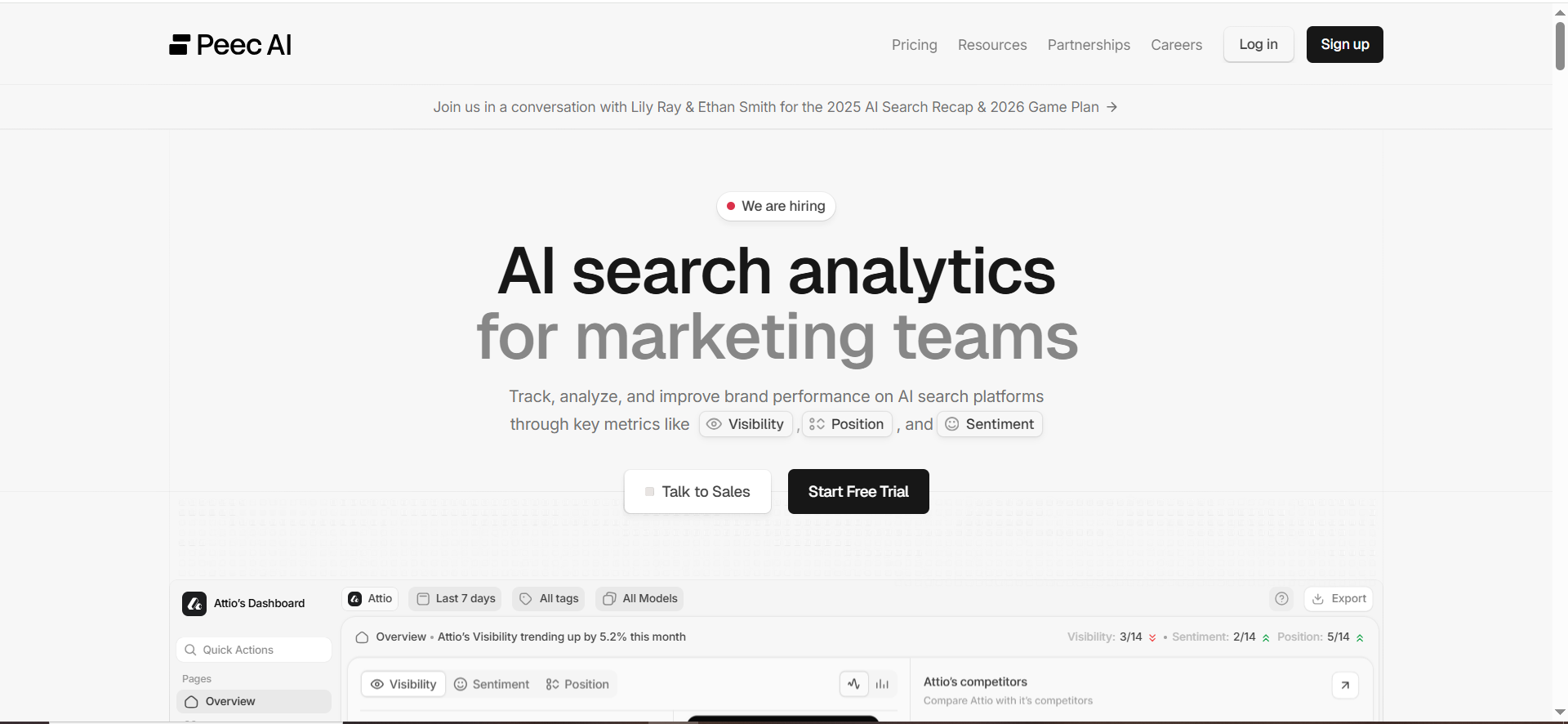
Peec AI is an AI search analytics platform for marketing teams. Its site says it helps brands track performance across AI platforms such as ChatGPT, Perplexity, and Gemini, benchmark competitors, and optimize visibility.
Why teams choose it
Peec AI is appealing because it looks focused and practical, which makes it relevant for teams comparing AI visibility tools for prompt variation testing. It is not trying to be your entire search stack. It is trying to answer a narrower question well: how visible is your brand across AI answer engines, and how does that compare with competitors?
That focus is attractive for teams that want something easier to operationalize than a large enterprise platform, especially if they are already comparing best AI visibility tools by engine coverage.If your team wants clean dashboards, core AI visibility analytics, and a product your marketers will actually log into, Peec AI makes sense, especially for marketers comparing best tools for tracking brand visibility in AI search.
Best fit
Peec AI is a strong fit for:
- growth-stage marketing teams,
- in-house SEO and content leaders, particularly teams comparing best SEO strategies with AI visibility tools.
- brands that want a dedicated AI visibility product,
- and teams that value clarity over platform sprawl, which also makes it relevant to buyers researching best AI visibility solutions for content optimization teams.
Potential limitations
The biggest caution is pricing transparency. Peec’s main marketing site does not surface the same level of detailed public pricing as some buyers want, so teams may need to do more direct evaluation. Third-party reviews suggest entry pricing exists, but those should always be treated carefully until confirmed in a sales process.
Pricing
Peec AI’s pricing starts at $95/month for the Starter plan. Enterprise pricing is custom.
Free tier?
Peec AI doesn’t offer a free tier, but it does offer a free trial.
Bottom line
Choose Peec AI over Scrunch if you want a more straightforward AI search analytics experience and your team values simple competitive visibility reporting over a broader “AI customer experience” framing.
2. Profound
What it does
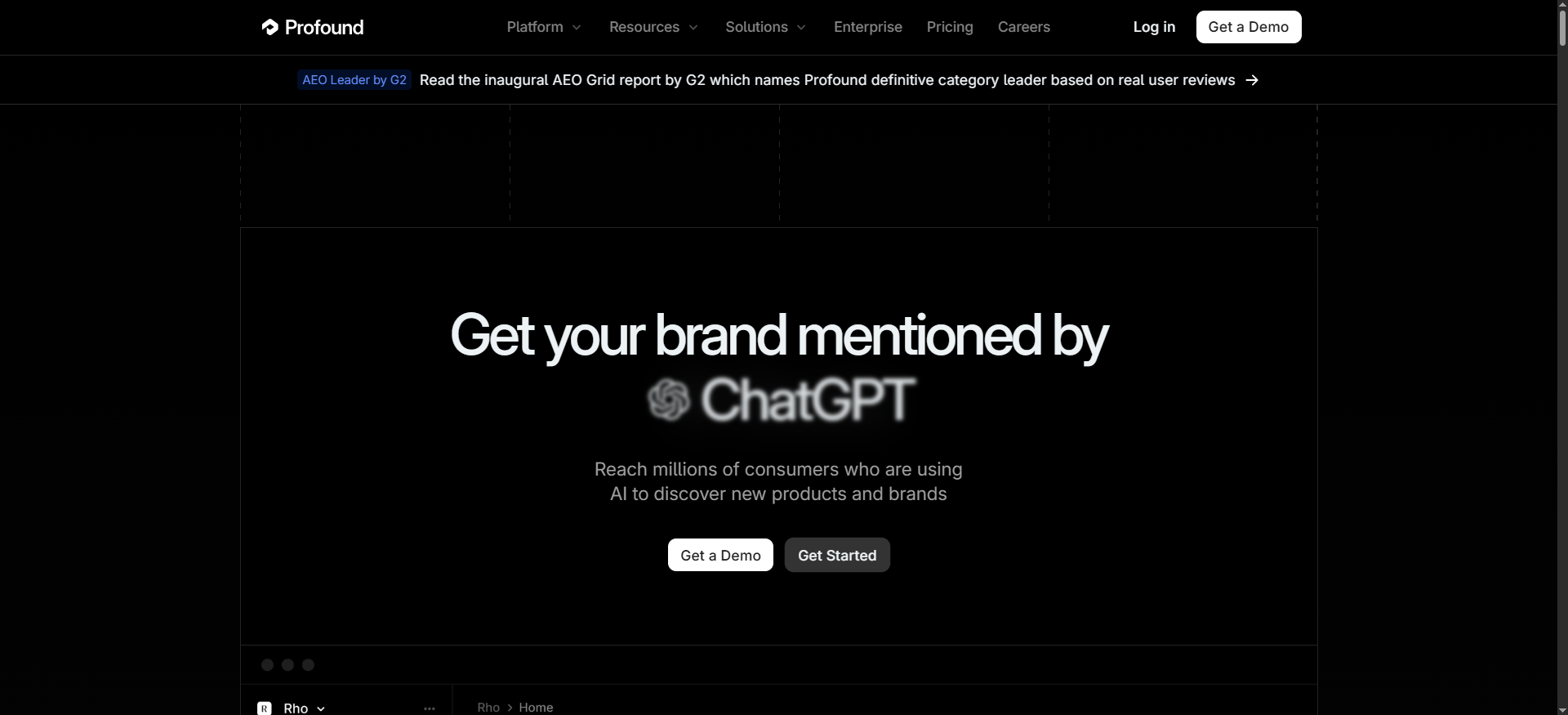
Profound is one of the best-known names in AI visibility software. Its site positions the platform around helping brands gain visibility in AI-generated answers and optimize presence in LLM-based search experiences. Profound also has publicly visible pricing pages for different team sizes.
Why teams choose it
Profound tends to attract teams that want a premium, serious platform in this category, much like buyers researching which platform excels at AI visibility metrics. It has strong market awareness, broad AI search positioning, and a product story built around visibility, insights, and control.
Its appeal is especially strong for companies that see AI search as strategic and want to invest early, much like brands studying an AI Overview SEO BOFU case study.
Best fit
Profound is a good fit for:
- larger growth teams,
- enterprise marketing orgs,
- teams that need stronger internal buy-in,
- and buyers that want a more established brand in the AI visibility category.
Potential limitations
The main tradeoff is cost and complexity, which is why some teams compare Profound against other AI visibility platform showdown options before committing. Third-party analysis published in 2026 says Profound’s entry-level pricing can land meaningfully above the category average, which may put it out of reach for smaller teams or make ROI scrutiny tougher if the company is still early in its AI search program.
Pricing
Profound’s pricing is currently available through customized enterprise pricing. Profound’s own site also states that self-serve plans start at $99/month, with custom pricing for enterprise customers and agencies.
Free tier?
Profound doesn’t offer a free tier. It does offer demos, and its terms confirm that trial access may be available.
Bottom line
Choose Profound over Scrunch if you want a more premium, enterprise-leaning platform and are willing to pay more for depth, positioning, and broader organizational fit.
3. AthenaHQ
What it does
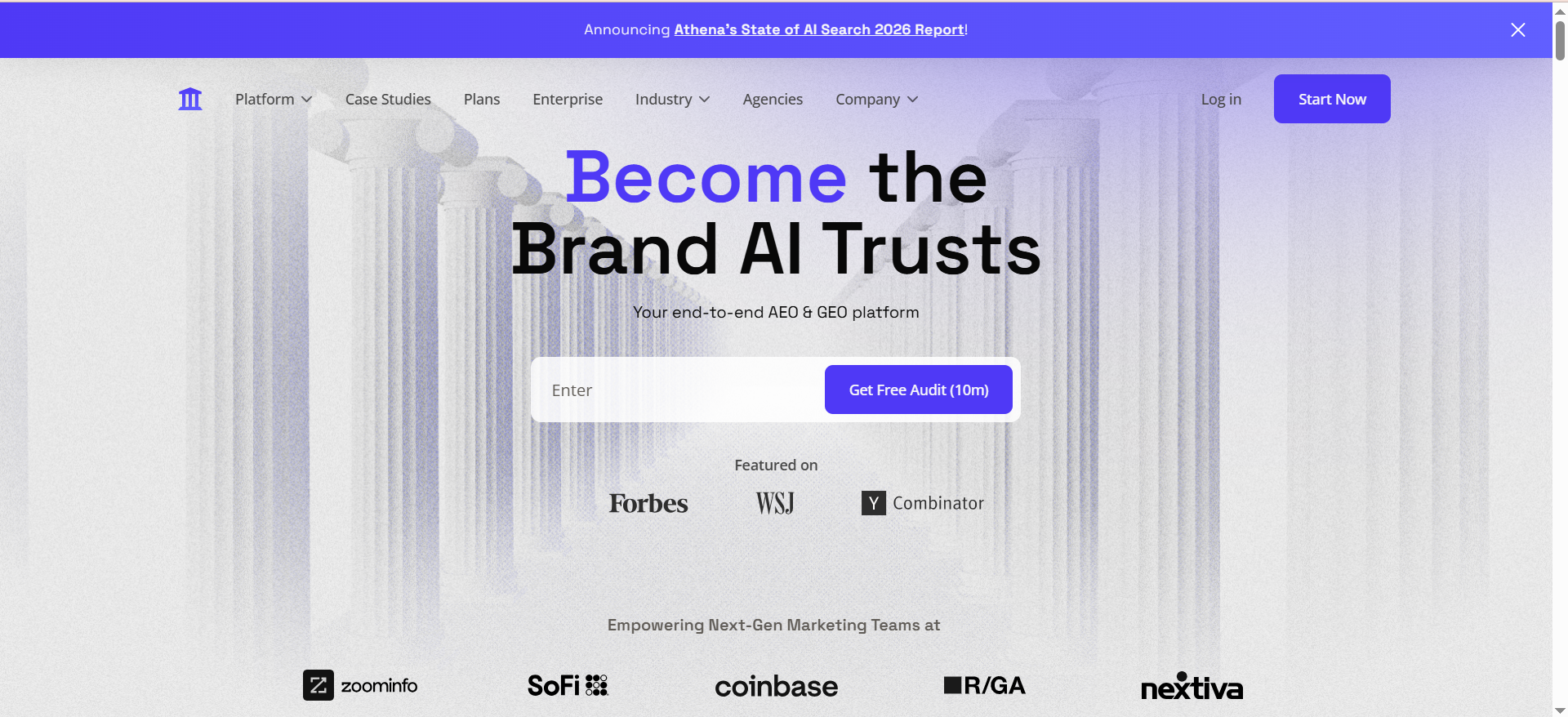
AthenaHQ positions itself as an AEO and GEO platform for AI search. The company says it offers cross-platform AI visibility tracking across 8+ LLMs, automated content optimization recommendations, citation source analysis, and workflow support. Its plans page also shows a credit-based pricing model and a self-serve structure.
Why teams choose it
AthenaHQ stands out because it pushes beyond raw monitoring, making it appealing for teams that do not want a passive dashboard and instead want stronger AI content optimization tools for search visibility. Its positioning is not just “see the problem,” but also “execute the fix.” That makes it appealing for teams that do not want a passive dashboard.
If your team needs workflow depth and optimization support, AthenaHQ is one of the more compelling options in the market, especially for companies investing in AEO-ready SaaS blogs.
Best fit
AthenaHQ is a strong fit for:
- SEO teams doing active AI search optimization,
- agencies that need repeatable workflows,
- brands that want recommendations alongside reporting,
- and teams that want self-serve access without jumping straight into enterprise procurement, which lines up closely with modern AEO tools for AI Overviews.
Potential limitations
The main caveat is the credit system, and buyers that care about usage-based models often also compare AI visibility tools for daily prompt runs. Buyers should model usage carefully so the economics stay clear over time, which is a useful mindset when comparing best AI visibility tools for daily prompt runs. AthenaHQ’s public pricing page explains that one credit is tied to AI response activity, which is helpful, but still requires a bit more planning than a flat subscription.
Pricing
AthenaHQ’s pricing starts at $295/month for the Self-Serve plan. Enterprise pricing is custom.
Free tier?
AthenaHQ doesn’t offer a free tier. It offers a free audit, and its terms indicate that free trials may be available.
Bottom line
Choose AthenaHQ over Scrunch if you want stronger optimization follow-through and a platform that feels built for active AEO/GEO work, not just monitoring.
4. LLMrefs
What it does
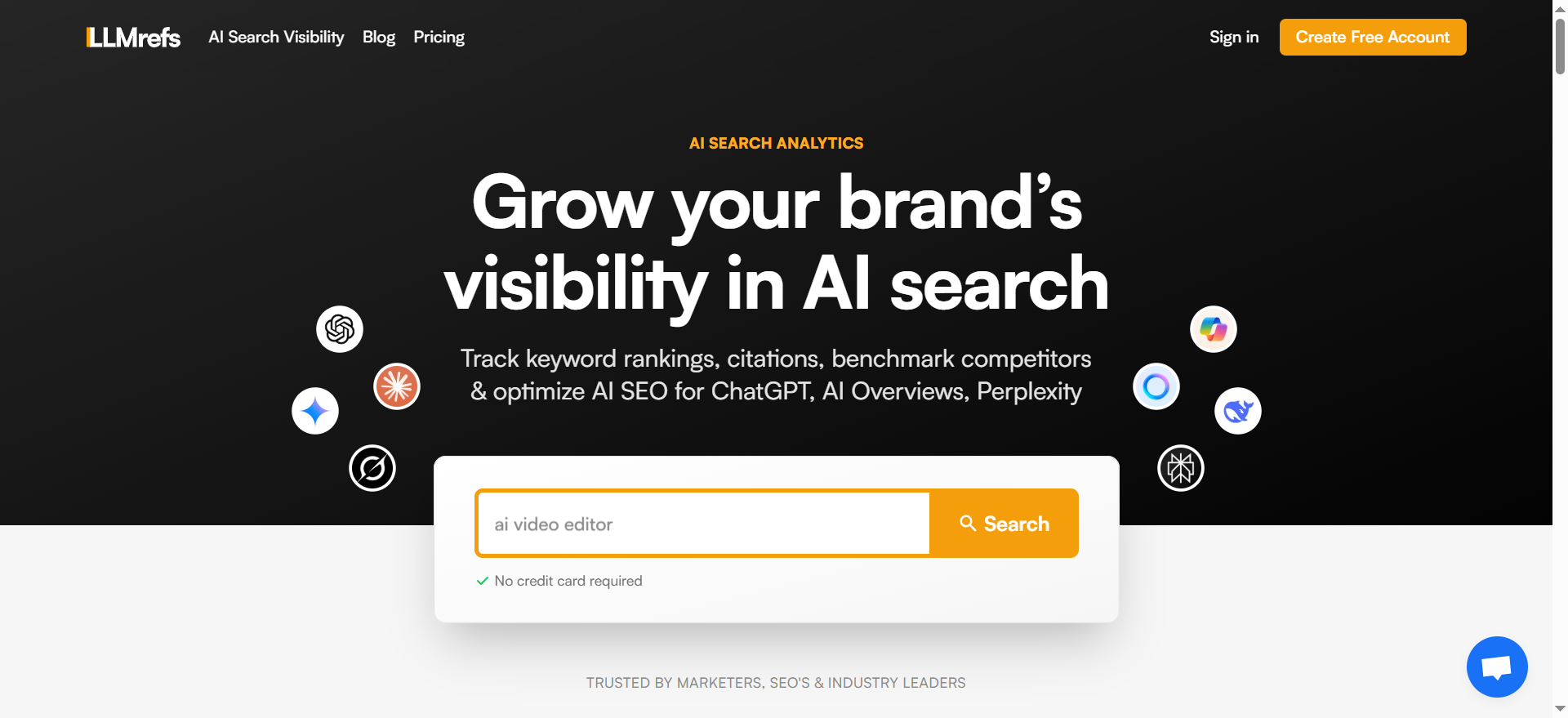
LLMrefs is a lighter-weight AI search visibility and analytics product that tracks how brands appear in AI-generated answers. It also appears to bundle useful adjacent utilities for AI SEO work, such as a crawlability checker, prompt fan-out tooling, and an llms.txt generator, based on third-party reviews.
Why teams choose it
Price and simplicity. That is the LLMrefs story.
A lot of teams do not need a large platform yet because they need an affordable way to start tracking presence in AI search, gather evidence, compare competitors, and build an internal case that this channel matters, similar to the buyers exploring best AI tools to monitor SaaS brand visibility in ChatGPT and Perplexity.
Best fit
LLMrefs is a strong fit for:
- consultants and agencies,
- early-stage B2B SaaS teams,
- marketers testing AI visibility without big budgets,
- and buyers who want a low-friction starting point, which overlaps with the audience for best AI mention prominence tools.
Potential limitations
LLMrefs is generally seen as lighter than enterprise platforms, which may still be fine for teams exploring the best free SEO tools before investing in a larger stack. If your team needs advanced stakeholder reporting, broad integrations, or a deep optimization workflow, you may outgrow it. That does not make it weak. It just means its sweet spot is different.
Pricing
LLMrefs’ pricing starts at $79/month for its All in One plan.
Free tier?
LLMrefs doesn’t offer a free tier, but it does offer a 7-day free trial.
Bottom line
Choose LLMrefs over Scrunch if budget matters most and you want a lean, useful product that gets you into the market quickly.
5. Conductor
What it does
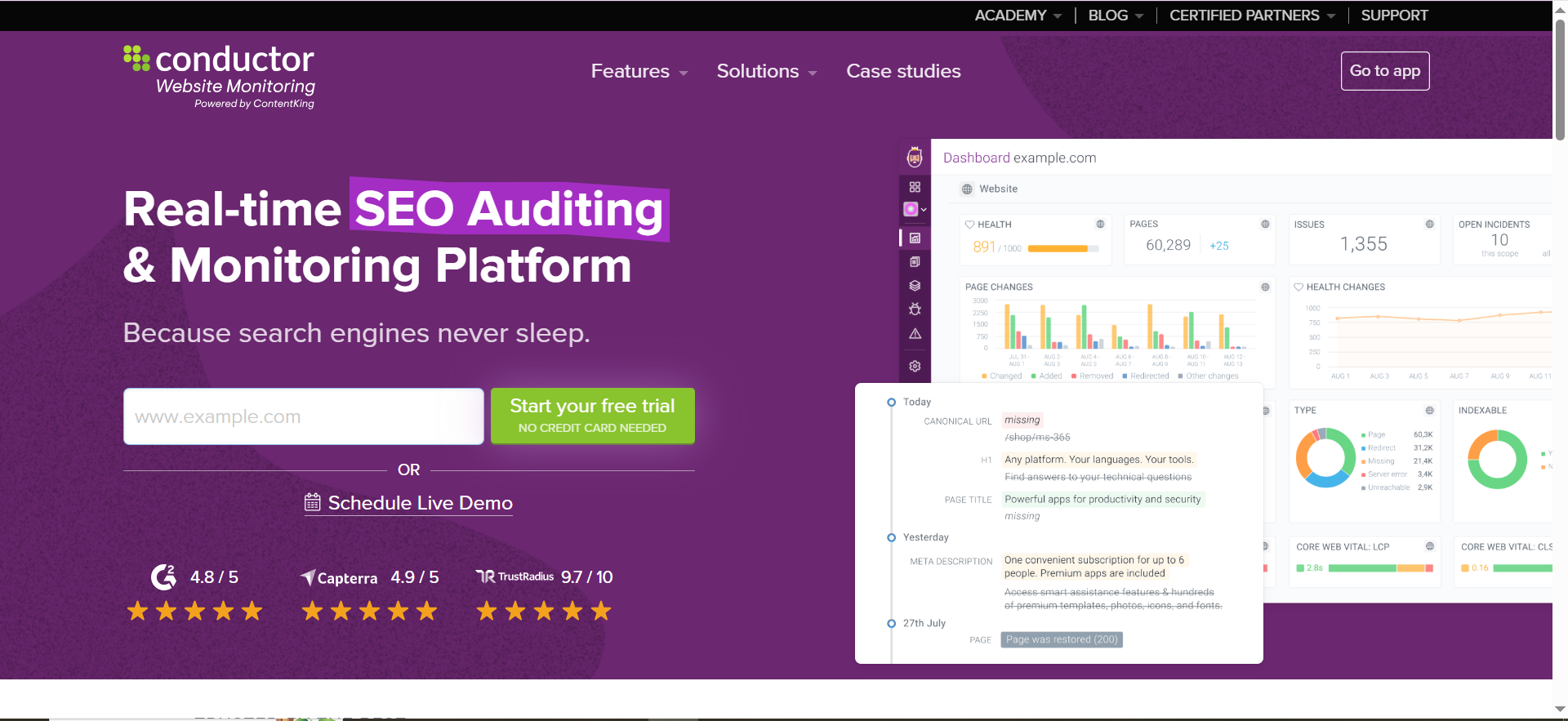
Conductor is not a niche newcomer in the same way as some other tools on this list. It is a broader enterprise search platform that has expanded aggressively into AI visibility. Conductor says its AI product helps brands get found in AI search, track citations and mentions, analyze AI referral traffic, monitor AI bot crawling, and connect those signals with web analytics, which aligns with broader AI search visibility audit tools.
Why teams choose it
The conductor's real advantage is context. Most AI visibility tools show you AI data. Conductor’s pitch is that it ties AI visibility to the rest of your search and digital performance picture, which is especially useful for teams comparing best SEO reporting software alongside AI visibility tools. For enterprises, that is powerful, particularly when AI visibility needs to connect with a broader AI search visibility strategy for B2B SaaS.
Leadership rarely wants another disconnected dashboard. They want to know how AI visibility affects traffic, engagement, and conversions.
Best fit
Conductor is a strong fit for:
- enterprise brands,
- mature SEO teams,
- organizations with multiple stakeholders,
- and companies that want AI visibility inside a bigger operational system, much like teams comparing the best enterprise SEO tools.
Potential limitations
Conductor is usually not the best answer for small teams that just want a simple AI visibility tracker. It is broader and likely heavier than many startups need. Teams should also note Conductor’s strong public stance on API-based data collection for AI visibility, which is part of its differentiation versus scraping-heavy approaches. That may be a positive or a point for deeper technical evaluation depending on your view of measurement methodology.
Pricing
Conductor’s pricing is not publicly listed; it’s available by quote.
Free tier?
Conductor doesn’t offer a free tier, but it does offer a free trial.
Bottom line
Choose Conductor over Scrunch if you are an enterprise team that wants AI visibility integrated with technical SEO, analytics, and broader search operations.
What Scrunch AI does well
To judge alternatives fairly, it helps to start with what Scrunch AI actually does well.
Scrunch positions itself as an AI customer experience platform focused on helping brands monitor and improve visibility across AI search, analyze website readiness, and deliver content to AI agents, which is closely related to broader AI strategic visibility efforts. Its pricing page highlights Prompt Manager, Insights, citation tracking, Page Audits, reporting dashboards, agent traffic monitoring, personas, integrations, and onboarding support.
That matters because Scrunch is not just selling a vanity mention checker, since it is trying to connect visibility in AI answers, technical and content readiness on your site, and the workflows needed to improve performance through a stronger AI visibility strategy. It is trying to connect three things:
- visibility in AI answers,
- technical and content readiness on your site,
- and the workflows needed to improve performance.
That is a sensible approach.Plenty of teams do not need an enormous enterprise suite, and some start by reviewing the best AI visibility tools for bulk prompt upload and tagging instead. They need a product that gives them prompt-level visibility, citation evidence, and enough direction to act.
Where Scrunch AI fits best
Scrunch looks like a good fit for teams that want:
- an AI visibility platform built for marketers, which overlaps with how TRM frames its AI visibility tracking tools and SEO GEO services
- a balance of monitoring and optimization,
- support for prompt tracking and personas,
- citation tracking,
- and a relatively accessible starting price compared with some enterprise-heavy vendors.
Why teams start looking for alternatives
Even when a tool is good, the search for alternatives usually starts when executives want reporting tied to broader business outcomes, which is why some teams pair this evaluation with best marketing analytics tools.
- the team wants more transparency on data depth or methodology,
- pricing or plan limits do not map well to the team’s scale,
- executives want reporting tied to broader business outcomes,
- the workflow needs stronger SEO or analytics integration, and in some cases also a clearer connection between PR, brand messaging, and AI visibility.
- or the company wants a different balance between lightweight monitoring and full operational execution.
That is why “alternatives” keywords convert. They are less about dissatisfaction and more about fit.
Which Scrunch AI alternative is best for you?
This is the part most articles skip, but it is the only section that really matters.
Best for startups
LLMrefs is the strongest pick if you need to start small, learn fast, and keep spending tight, and it fits the same buyer mindset as teams researching the best cheap SEO tools. It gives you a low-cost entry point and enough tooling to begin building an AI visibility workflow.
Best for growth-stage marketing teams
Peec AI is a smart pick if your team wants dedicated AI search analytics without the overhead of a broader enterprise platform.
Best for active optimization teams
AthenaHQ is the strongest fit when the goal is not just to monitor visibility but to move from insight to action, which is why it appeals to teams focused on structuring AEO content for the AI era. Its workflow and recommendation positioning make it especially attractive for teams doing ongoing AEO/GEO work.
Best for enterprise organizations
Conductor and Profound both make sense here, but for different reasons. Conductor is better when AI visibility must plug into a much larger SEO and analytics ecosystem. Profound is better when the priority is a premium AI visibility product category leader with strong market presence.
Best replacement if you like Scrunch but want a different balance
If you like Scrunch’s general direction but want a different tradeoff, it also helps to compare your options against a broader AI visibility platform showdown.
- choose AthenaHQ for more optimization workflow,
- choose Peec AI for cleaner dedicated analytics,
- choose LLMrefs for lower cost,
- choose Profound for a more premium platform,
- choose Conductor for deeper enterprise integration.
Scrunch AI vs alternatives: The real tradeoffs
The biggest mistake buyers make is comparing feature lists without comparing operating models, which is also a common problem when evaluating best AI visibility tools for share of voice.
Monitoring vs optimization workflow
Some products are strongest at monitoring and evidence gathering, while others are better at helping teams act, which mirrors the distinction in many AI search visibility audit tools. Scrunch sits in the middle by combining prompt monitoring, page audits, and reporting. AthenaHQ appears to push further into structured optimization workflows. LLMrefs leans lighter and more practical for smaller teams.
Budget vs enterprise tradeoffs
LLMrefs and, in some cases, AthenaHQ’s self-serve setup can be easier starting points for smaller teams. Profound and Conductor tend to fit organizations with bigger budgets and more formal reporting needs. Scrunch itself sits in an interesting middle ground, with public starting pricing but a more developed product story than many entry-level tools.
SEO stack integration
If your team already lives in an enterprise SEO workflow, Conductor has an obvious advantage because it connects AI visibility with broader search operations and analytics, which is why some buyers also evaluate enterprise SEO tools. If you want a dedicated tool that feels purpose-built for the AI channel, Peec AI, Profound, AthenaHQ, Scrunch, or LLMrefs may feel more focused, especially if you are already researching best AI search engines.
What to look for in an AI visibility platform
If you are evaluating Scrunch AI alternatives, here is the practical checklist, and it pairs well with a broader AI visibility metrics framework for comparing vendors.
1. Prompt coverage
The tool should let you monitor prompts that reflect real commercial journeys, not just generic head terms, which is why many teams also look at best AI visibility tools for prompt templates. Scrunch explicitly highlights prompt management and personas. Conductor also emphasizes prompt tracking customization.
2. Citation evidence
Visibility without source evidence is weak, which is exactly why many teams also care about how to get cited in AI answers. Scrunch, AthenaHQ, Peec AI, and Conductor all emphasize citation analysis in different ways.
3. Competitive benchmarking
A good tool should show how your brand appears relative to competitors across prompts, engines, and themes, which is why teams often compare vendors based on AI visibility tools for competitor benchmarking. Peec AI and Scrunch both surface competitor-focused positioning clearly.
4. Actionability
Can the team move from dashboard to decision? If the product only reports and never helps prioritize fixes, the burden shifts back to your team, which is exactly why many marketers look for the most effective strategies for AI visibility enhancement. That is why platforms with audits, recommendations, or deeper integrations tend to win renewals.
5. Reporting for leadership
The best AI visibility tool is often the one that helps you explain the channel internally, since leadership teams want trendlines, competitive context, and some bridge to traffic or business outcomes through reporting AI visibility to leadership. The conductor's positioning is strong here. Scrunch also makes a point of reporting dashboards and agent traffic monitoring.
What is the best alternative to Scrunch AI for agencies?
The best alternative to Scrunch AI for agencies depends on the kind of service the agency is selling and how hands-on the team needs to be inside the platform. In most cases, the strongest agency-friendly alternatives are AthenaHQ and LLMrefs, with Peec AI also making sense for agencies that want cleaner reporting and competitive visibility tracking.
For agencies, the decision usually comes down to three things: how easily the platform can support multiple clients, how quickly strategists can turn insights into deliverables, and how clearly the tool helps justify work to clients. That matters more than just having a long feature list.
AthenaHQ is one of the strongest options for agencies because it appears built around active optimization, not passive monitoring alone. Agencies often need more than dashboards. They need to identify what changed, explain why it matters, and recommend the next action. A platform that combines visibility tracking with optimization recommendations is usually more useful in a client services environment because it shortens the distance between insight and execution. That makes AthenaHQ especially attractive for agencies offering AI visibility, AEO, or GEO retainers.
LLMrefs is another strong agency choice, especially for smaller agencies, consultants, or boutique firms that want a lower-cost way to monitor multiple brands without jumping into enterprise pricing too early. It may not be as expansive as larger platforms, but affordability can matter a lot in agency environments where margins are tighter and tooling costs need to stay under control. For agencies still testing demand for AI visibility services, a lower-cost platform can be the most practical starting point.
Peec AI also deserves consideration for agencies that want clean tracking, competitor comparisons, and reporting that is easy to share with clients. If the agency’s main value is insight, benchmarking, and strategic guidance rather than heavy operational implementation inside the platform, Peec AI can be a good fit.
By contrast, Conductor is usually better suited to large in-house enterprise teams than most agencies, because it is broader and more integrated into enterprise SEO operations. Profound may work for agencies with larger client accounts and bigger budgets, but it can be harder to justify if the agency needs efficiency and flexibility more than premium positioning. Scrunch AI itself can still work well for agencies, especially if they want prompt management, citation tracking, and page-level audits in one place, but alternatives may be more attractive depending on pricing, workflow, and how action-oriented the platform feels.
For most agencies, the simplest answer is this:
- Choose AthenaHQ if you want the strongest optimization workflow.
- Choose LLMrefs if you want the most budget-friendly agency option.
- Choose Peec AI if you want clean reporting and competitor benchmarking.
If your agency is building AI visibility services as a core offer, the best platform is usually the one that helps you move fastest from data to recommendations clients will pay for, especially if you already work with AI visibility tracking tools and SEO GEO services.
Which Scrunch AI alternative has transparent pricing?
Transparent pricing is one of the most important decision factors in an emerging software category like AI visibility. Buyers want to know the starting point, what is included, how usage scales, and whether the product is realistically accessible before they commit to demos and sales calls.
Among the main Scrunch AI alternatives, AthenaHQ, Profound, and LLMrefs tend to stand out most when buyers are specifically looking for clearer pricing signals. Scrunch AI itself also performs reasonably well here compared with some enterprise vendors, since it gives buyers a visible starting point instead of forcing every conversation into sales-led discovery.
AthenaHQ is one of the more transparent options because it publicly explains its plan structure and credit model. Even though credit-based pricing requires a bit more interpretation than a flat monthly plan, buyers at least get a clearer sense of how the product is packaged and how usage maps to cost. That level of visibility is useful for self-serve buyers and smaller teams that need to estimate tool spend before entering procurement.
LLMrefs is also attractive from a pricing transparency standpoint because it is widely discussed as a low-cost option with a relatively easy-to-understand entry point. Tools like this often appeal to smaller teams because the economics are simpler and the buying process feels lighter. When a team is early in its AI visibility journey, that clarity can be just as valuable as advanced feature depth.
Profound is more transparent than some enterprise tools in the sense that it publicly signals plan availability and market positioning, but the total cost may still depend on team size, requirements, and sales discussions. In other words, it is more transparent than a fully hidden-pricing model, but not always as straightforward as a simple flat-rate SaaS product.
Peec AI is less transparent if you are judging only by what is easily visible on the public site. Buyers can still evaluate the product, but the lack of a very obvious pricing structure can make it harder to compare quickly against alternatives. That is not unusual in B2B SaaS, but it does create more friction during early-stage evaluation.
Conductor is usually the least transparent for smaller buyers because it fits into a broader enterprise SEO platform model. That often means custom packaging, custom sales processes, and less public pricing detail up front. That may be completely fine for enterprise buyers, but it is not ideal for teams that want to shortlist tools quickly based on public plan information.
So if transparent pricing is a major buying factor, the practical ranking looks something like this:
- AthenaHQ for clear public plan structure
- LLMrefs for simple, accessible entry-level positioning
- Scrunch AI for a visible starting point
- Profound for partial transparency with some sales dependence
- Peec AI and Conductor for buyers willing to evaluate through demos or direct contact
For most teams, pricing transparency matters most when budget is tight or when they are still validating whether AI visibility software deserves a formal line item, which is why it helps to start with a broader AI visibility platform buyer guide. In those cases, the tools with visible pricing often get shortlisted first, even if they are not the most feature-rich platforms overall.
What is the cheapest Scrunch AI alternative?
If cost is the main decision factor, LLMrefs is generally the cheapest Scrunch AI alternative among the tools discussed in this guide. It is the option most likely to appeal to startups, consultants, solo operators, and lean marketing teams that want to start tracking AI visibility without taking on the cost of a more mature enterprise platform.
That matters because AI visibility software is still a young category. Many teams are interested in the space, but they are not yet ready to commit to premium pricing. They want a practical way to test prompt tracking, citation monitoring, and competitive visibility before making a larger investment. That is where lower-cost tools become attractive.
LLMrefs stands out because it offers a more accessible entry point while still addressing the core problem: understanding whether and how your brand appears in AI-generated answers. For many smaller teams, that is enough. They do not need a sophisticated cross-functional platform on day one. They need data they can use to start learning.
The key tradeoff is that the cheapest option is not always the most complete option. Lower-cost tools may have fewer advanced dashboards, fewer integrations, less stakeholder reporting depth, or less built-in guidance for optimization. That is not necessarily a problem if the team using the tool is comfortable doing more of the interpretation manually. In fact, for smaller and more tactical teams, simplicity can be a benefit rather than a weakness.
After LLMrefs, the next most accessible options tend to be Scrunch AI and AthenaHQ, depending on plan structure and usage. Scrunch AI is attractive because it combines several useful workflows into one platform at a published starting point. AthenaHQ can also be appealing for teams that want more optimization support without immediately moving into a more expensive enterprise tier. The right choice between them depends on whether the team wants the cheapest possible entry or the best balance between cost and feature depth.
By comparison, Profound and Conductor are generally harder to classify as low-cost options. They are better suited to teams with larger budgets, stronger internal buy-in, and more advanced reporting needs. Peec AI may or may not be budget-friendly depending on the exact plan, but it is usually not framed as the obvious “cheapest” option in the way LLMrefs is.
So if the question is purely about cost, the answer is simple: LLMrefs is the cheapest Scrunch AI alternative for most buyers.
If the question is about value, then the decision gets more nuanced:
- Choose LLMrefs for lowest-cost entry.
- Choose Scrunch AI if you want more built-in workflow at a still-accessible price point.
- Choose AthenaHQ if you are willing to spend a bit more for optimization support.
The cheapest tool is not always the best long-term fit, but it is often the best starting point when a team is still testing the category.
Do Scrunch AI alternatives offer optimization recommendations?
Yes, some Scrunch AI alternatives do offer optimization recommendations, but not all of them do it with the same depth or the same philosophy.
This is one of the most important distinctions in the category. Some AI visibility tools are mainly designed to monitor performance. They show where your brand appears, which prompts matter, who your competitors are, and whether you are gaining or losing visibility. Other tools go a step further by helping teams understand what to change next. That second category is often much more valuable because most teams do not just want a report. They want progress.
Among the alternatives covered in this guide, AthenaHQ is one of the clearest examples of a platform that appears to offer optimization recommendations as part of its core value proposition. Its positioning suggests that it is designed not only to track AI visibility but also to help teams improve content and search presence through structured recommendations and a more action-oriented workflow. For teams that are actively trying to improve performance in answer engines, that is a meaningful advantage.
Scrunch AI itself also leans in this direction more than many basic monitoring tools. Features such as page audits and prompt analysis suggest that the platform is not just about visibility snapshots. It is also trying to help users understand readiness and potential improvements. That is one reason some teams may compare Scrunch more closely with AthenaHQ than with lighter-weight tools.
The Conductor can also support optimization, but its style is different. Because it sits inside a broader enterprise SEO platform, optimization guidance may come less from a narrow AI visibility playbook and more from connecting AI search insights with technical SEO, content performance, site health, and analytics. For larger teams, that can be even more useful because it puts AI visibility in the context of broader digital performance and a more complete AI strategic visibility plan.
On the other hand, tools like Peec AI and LLMrefs may be better understood primarily as monitoring and visibility intelligence tools. That does not mean they are passive or unhelpful. A good monitoring platform can still enable strong optimization if the team using it knows how to interpret the data and turn it into action. But there is a difference between a tool that says, “Here’s what happened,” and a tool that says, “Here’s what to do next.”
That distinction matters a lot in practice:
- If your team already has strong strategists, content leads, or SEO operators, a monitoring-heavy tool may be enough.
- If your team is still building AI visibility expertise, a tool with stronger optimization recommendations can reduce the execution gap, especially when paired with best SEO strategies for AI visibility.
- If leadership expects fast results, action-oriented guidance can make adoption easier because teams are not left guessing how to respond to the data.
So the direct answer is yes, some Scrunch AI alternatives do offer optimization recommendations, and AthenaHQ is usually the strongest example of that on this list. Conductor also supports optimization through its broader platform ecosystem. Scrunch AI itself offers some action-oriented features too. Meanwhile, Peec AI and LLMrefs are often better suited to teams that mainly need visibility intelligence and are comfortable translating those insights into changes on their own.
When evaluating alternatives, this is a useful question to ask in demos:
Does this platform only tell us what changed, or does it help us decide what to fix next?
That one question often reveals the real difference between a reporting tool and a platform your team will actually use every week, which is exactly the kind of distinction covered in this AI visibility platform buyer guide.
FAQs
What is the best Scrunch AI alternative?
Scrunch AI can be worth it for teams that want a combination of prompt monitoring, citations tracking, page audits, reporting, and agent traffic monitoring in one product. Its public pricing starts at $250 per month, which gives buyers a visible entry point compared with some demo-only enterprise vendors.
Which Scrunch AI alternative is cheapest?
Which alternative is best for enterprise teams?
Do these tools only monitor AI search, or do they help improve it too?
Which Scrunch AI alternative is best for agencies?
Final verdict
There is no single best Scrunch AI alternative for everyone.
If you want the clearest practical picks:
- Best overall for growth teams: Peec AI
- Best premium alternative: Profound
- Best for optimization workflows: AthenaHQ
- Best budget-friendly option: LLMrefs
- Best enterprise option: Conductor
Scrunch AI remains a credible option in the market, especially for teams that want a blend of prompt monitoring, citations, page audits, and agent traffic visibility at a published starting price. But if your team needs different economics, deeper enterprise integration, or a stronger optimization workflow, one of these five alternatives will likely fit better.
The right way to choose is simple: do not ask which tool has the longest feature list, and instead ground the decision in a clearer AI visibility metrics framework. Ask which tool will make your team better at measuring, explaining, and improving AI visibility over the next 12 months.
📋 Get Listed / Advertisement
We update this guide monthly. Want your tool featured? Contact: [email protected].