
TL;DR
Knowing what people say about your competitors is just as important as knowing what they say about you. Competitor brand monitoring gives marketing, brand, and growth teams the ability to track rival mentions across social media, news, blogs, forums, review sites, and even AI-generated answers. The right tool surfaces shifts in sentiment, flags emerging threats, and reveals gaps in competitor positioning before they become problems.
If you are a CMO, content lead, or head of growth at a B2B SaaS company, this guide breaks down the five strongest tools for competitor brand monitoring in 2026. We evaluated Brandwatch, Talkwalker, Brand24, Sprout Social, and Semrush across competitor tracking depth, data coverage, pricing transparency, and day-to-day usability. Each tool section covers what the platform does, who it works best for, pricing, limitations, and setup guidance so you can shortlist fast and move on.
The quick comparison table below gives you a snapshot, followed by deep dives on each tool.
Best Tools for Competitor Brand Monitoring (Quick Comparison)
| Feature | Brandwatch | Talkwalker | Brand24 | Sprout Social | Semrush |
|---|---|---|---|---|---|
| Best For | Enterprise consumer intelligence | Global media monitoring with visual AI | SMBs wanting accessible social listening | Social media teams needing unified management | SEO teams adding competitor visibility |
| Data Sources | 100M+ online sources | 150M+ websites, forums, blogs | 25M+ sources including podcasts | Social networks + web (via add-on) | Search, traffic, and web data |
| Languages | 27+ | 180+ | 108+ | Limited to platform languages | Multi-language keyword tracking |
| AI Capabilities | AI-powered sentiment and trends | Visual recognition, AI summaries, peak detection | AI chatbot mention tracking (ChatGPT, Claude, Perplexity) | AI-assisted publishing and listening | AI Visibility Toolkit for LLM tracking |
| Competitor Tracking | Benchmarking dashboards, share of voice | Cross-channel competitor benchmarks | Share of voice, competitor alerts | Competitive reports, benchmarking | EyeOn auto-monitoring, traffic comparison |
| Starting Price | Custom (~$800+/mo) | Custom (~$500+/mo) | $249/mo ($199/mo annual) | $199/seat/mo (annual) | $117.33/mo (annual) |
| Free Trial | No | Demo only | 14 days, no card required | 30-day trial | 7-day trial |
1. Brandwatch
What It Does
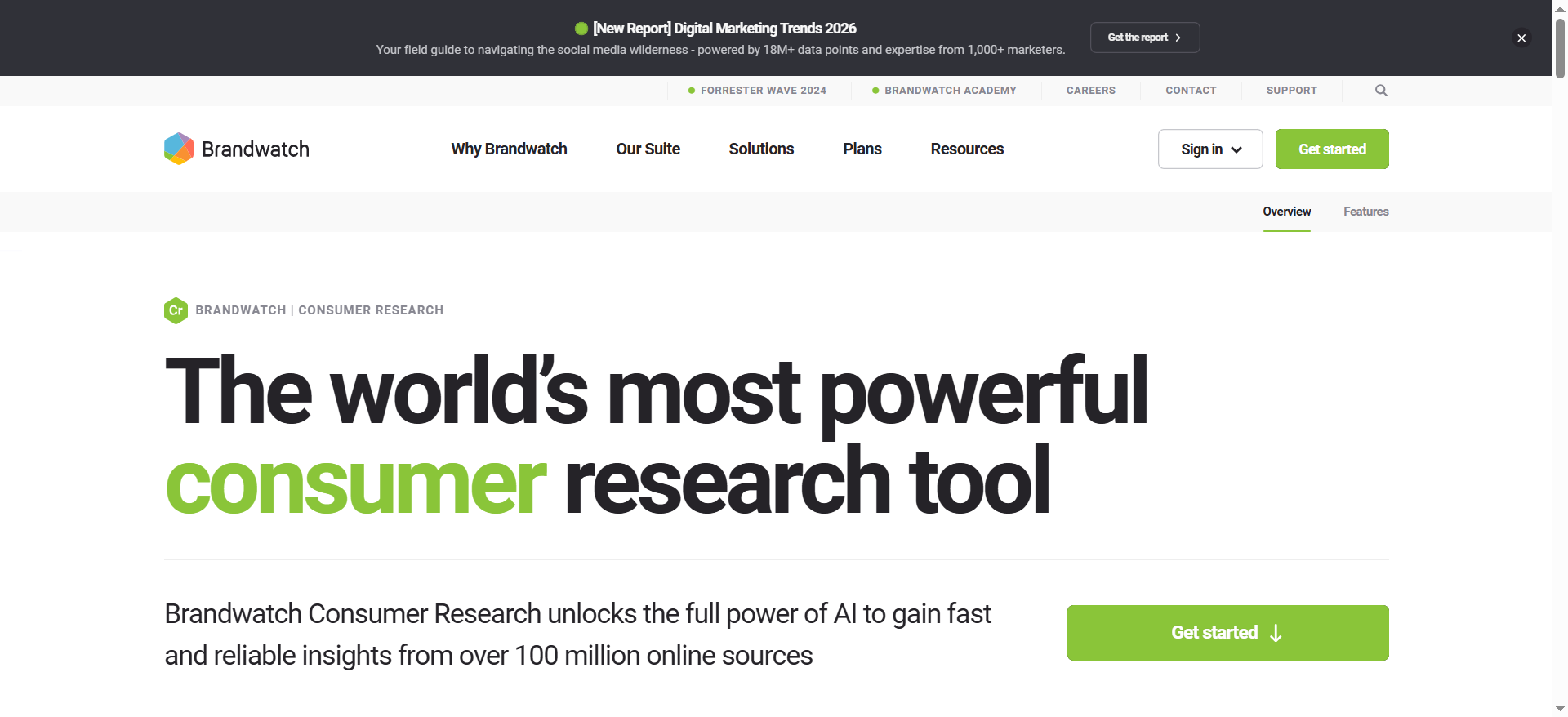
Brandwatch is a consumer intelligence platform that monitors online conversations across more than 100 million sources worldwide. It tracks mentions across social media, news outlets, blogs, forums, review sites, and the broader web, then layers AI-powered analytics on top to surface trends, sentiment shifts, and audience insights. The platform combines social listening with full social media management, giving teams a single workspace for monitoring, publishing, engagement, and reporting.
Why Teams Use It
Enterprise marketing and brand teams choose Brandwatch when they need depth of data and analytical rigor. The platform excels at turning massive volumes of unstructured conversation data into structured intelligence. Teams use it to understand how their brand is perceived relative to competitors, identify emerging trends before they hit mainstream coverage, and build custom dashboards that track competitive positioning over time. The historical data archive is particularly valuable for spotting long-term sentiment shifts and benchmarking campaign impact against rival activity.
What It Is Good For
Brandwatch is strongest when your monitoring requirements are complex and high-volume. If you need to track multiple competitor brands across dozens of markets, analyze conversation themes at scale, or integrate consumer intelligence into broader business strategy, Brandwatch delivers. The custom query builder lets you create highly specific listening queries with Boolean operators, making it possible to isolate competitor mentions by region, product line, sentiment, or audience segment. The platform also supports image recognition, identifying brand logos in visual content across social media.
When It Is a Good Fit
Brandwatch fits best when your organization has a dedicated insights or intelligence function, when you need to monitor competitors across multiple geographies and languages (27+ supported), and when the buying decision involves cross-functional stakeholders who need custom reporting views. Growth-stage and enterprise B2B SaaS companies with active competitive markets benefit most.
When It Is Not a Good Fit
Brandwatch is not the right choice for small teams or startups with limited budgets. The platform does not publish pricing publicly and requires annual enterprise contracts, with costs typically ranging from $2,000 to $5,000 per month for standard usage. There is no free trial, which makes evaluation harder. Teams that only need basic mention tracking or social scheduling will find the platform overpowered and overpriced for their needs.
How to Use It
After onboarding, you set up tracking queries for each competitor brand you want to monitor. Queries use Boolean logic to capture relevant mentions while filtering noise. From there, you build dashboards that visualize share of voice, sentiment trends, mention volume, and source breakdowns. Alerts can be configured to notify your team when a competitor experiences a spike in mentions or a sentiment shift. Integration with Slack, email, and other tools keeps the intelligence flowing into existing workflows.
Key Capabilities
Brandwatch's core capabilities include real-time brand and competitor mention tracking across 100M+ sources, AI-powered sentiment analysis and trend detection, custom Boolean query builder for precise monitoring, competitive benchmarking dashboards with share of voice metrics, image and logo recognition in visual content, social media management suite (publishing, engagement, calendar), historical data archive for long-term trend analysis, and multi-user collaboration with role-based access.
Pricing
Brandwatch does not publish pricing. Expect a minimum of $800 per month, with typical costs between $2,000 and $5,000 per month for mid-market teams. Enterprise plans run $15,000 or more per month. Annual contracts are standard. No self-serve signup is available — you request a demo and receive a custom quote based on your monitoring scope, user count, and data requirements.
Free Tier
No. Brandwatch does not offer a free tier or a free trial. Evaluation requires a guided demo with the sales team.
Downsides and Limitations
The lack of transparent pricing makes budgeting difficult before the sales conversation. The learning curve is steep for teams without prior social listening experience. Smaller teams may find the feature set overwhelming when all they need is basic competitor mention tracking. The annual contract commitment and high minimum spend put it out of reach for most startups and SMBs.
2. Talkwalker
What It Does
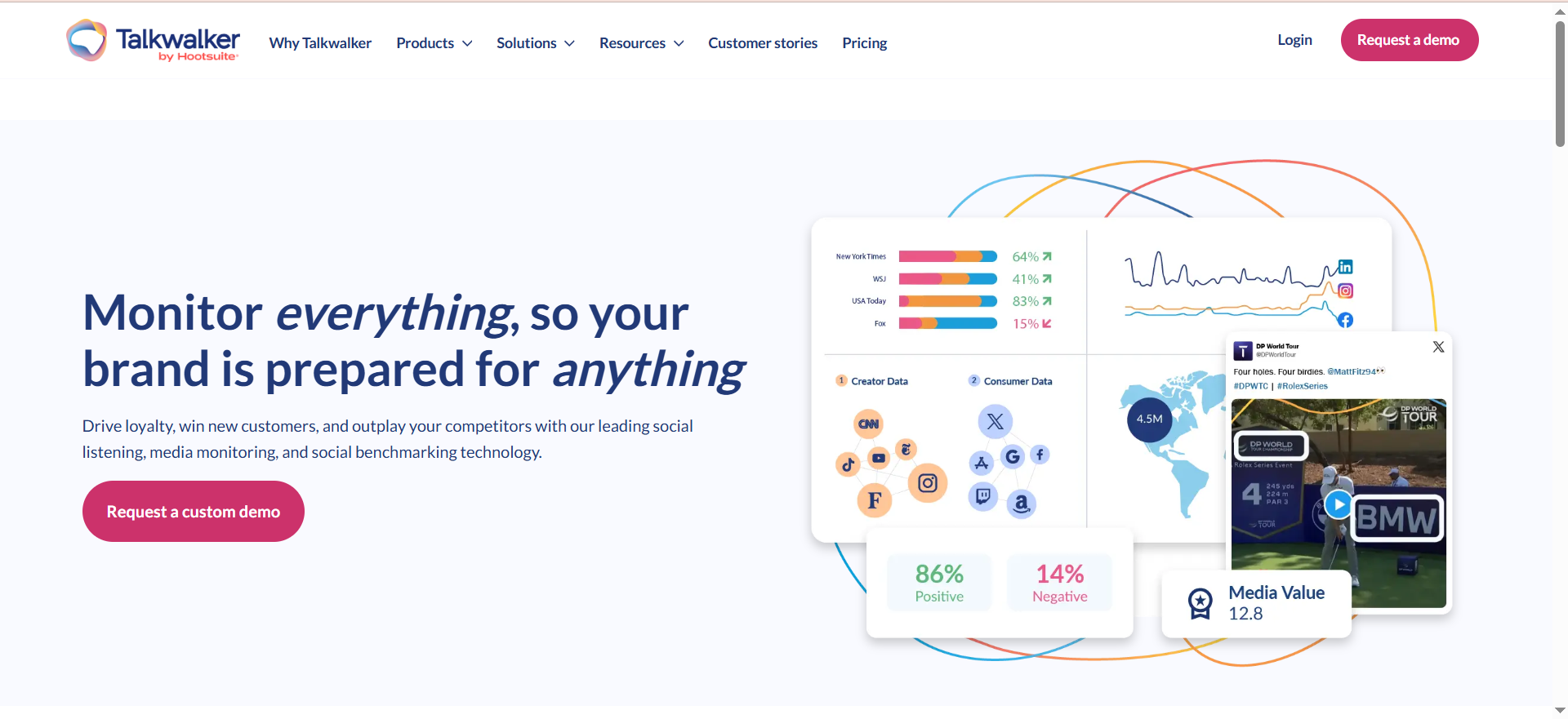
Talkwalker is an AI-powered consumer intelligence and social listening platform that tracks brand and competitor mentions across more than 150 million websites, forums, blogs, social networks, and broadcast media. Now part of the Hootsuite ecosystem, Talkwalker processes conversations in over 180 languages and adds visual recognition capabilities that can identify brand logos and scenes in images and videos. The platform is designed for global enterprises that need monitoring coverage that spans regions, channels, and media formats.
Why Teams Use It
Brand and communications teams at global organizations choose Talkwalker when they need the widest possible coverage net. The platform is particularly strong in media monitoring — tracking not just social media but also news, print, broadcast, and podcasts. Teams use Talkwalker to benchmark their brand against competitors across every channel where conversations happen, run crisis detection alerts, and generate executive-ready reports that visualize competitive positioning over time.
What It Is Good For
Talkwalker stands out when your competitive monitoring needs extend beyond social media into traditional media and visual content. The visual recognition engine scans images and videos for brand logos, making it possible to track competitor visibility in visual formats that text-only tools miss. The AI-powered peak detection feature automatically identifies unusual spikes in competitor mentions and flags them for review, reducing the manual effort required to stay on top of competitive shifts.
When It Is a Good Fit
Talkwalker is the right fit for large enterprises and global brands that require comprehensive monitoring across multiple languages and channels. If your competitors are active in markets where traditional media coverage matters as much as social conversation, Talkwalker provides coverage that most social-first tools cannot match. It integrates natively with Hootsuite, which makes it a natural choice for teams already using Hootsuite for social management.
When It Is Not a Good Fit
Talkwalker is not ideal for teams with modest budgets or those who only need social media monitoring. The custom pricing model means costs can escalate quickly with added features, and the platform's breadth can feel excessive for organizations with a narrower monitoring scope. Teams that want quick, self-serve setup will find the onboarding process longer than with lighter tools like Brand24.
How to Use It
Set up your competitor tracking by creating topic profiles for each brand you want to monitor. Talkwalker's query builder lets you define keyword combinations, hashtags, and Boolean filters to capture relevant mentions. Dashboards can be customized to display share of voice comparisons, sentiment breakdowns, geographic distribution of mentions, and source-type analysis. The AI Agent feature lets you ask natural-language questions about your data and receive instant summaries, making it easier to pull competitive insights without building complex reports.
Key Capabilities
Talkwalker's key capabilities include monitoring across 150M+ sources in 180+ languages, AI-powered sentiment analysis and peak detection, visual recognition for brand logos in images and videos, TalkwalkerAI Agent for natural-language data queries, real-time alerts and crisis detection, customizable dashboards and executive reporting, Hootsuite integration for unified social management, and speech recognition for broadcast and podcast monitoring.
Pricing
Talkwalker does not publish detailed pricing. The entry-level Core plan starts at approximately $500 per month. Higher tiers (Analyze and Business) range from $12,000 to $26,400 per year. Custom quotes are required for all plans. Annual contracts are standard.
Free Tier
No free tier. Talkwalker offers a free social search tool for basic trending topic exploration, but the full monitoring platform requires a paid subscription. A demo is available on request.
Downsides and Limitations
Pricing is opaque and can climb significantly as you add features and data volume. The platform's depth creates a learning curve that requires dedicated onboarding time. Teams that do not need media monitoring or visual recognition are paying for capabilities they will not use. The Hootsuite integration is a strength for Hootsuite users but irrelevant for teams on other social management platforms.
3. Brand24
What It Does
Brand24 is a social listening and media monitoring tool that tracks online mentions of your brand, competitors, or any keyword across more than 25 million sources. Coverage spans social media platforms, news sites, blogs, forums, review sites, podcasts, and video content. What sets Brand24 apart in 2026 is its AI chatbot monitoring feature, which tracks how AI systems like ChatGPT, Claude, Gemini, Perplexity, and Grok mention and recommend your brand and your competitors.
Why Teams Use It
Marketing teams at growth-stage SaaS companies choose Brand24 because it delivers strong monitoring capabilities at a fraction of enterprise pricing. The platform is fast to set up, intuitive to navigate, and provides enough depth for teams that need competitive intelligence without the overhead of an enterprise platform. The AI chatbot tracking feature is a particularly compelling reason to choose Brand24 in 2026, as it shows how AI models describe your brand relative to competitors — a data point that most enterprise tools have been slower to address.
What It Is Good For
Brand24 excels at making competitor brand monitoring accessible. The mention feed gives you a real-time stream of competitor mentions with sentiment tags, source labels, and reach estimates attached to each one. The Discussion Volume chart visualizes mention spikes over time, making it easy to spot when a competitor launches a campaign, gets press coverage, or faces a PR issue. The Share of Voice metric lets you compare your brand visibility against competitors across all tracked sources, and the AI-powered Topic Analysis groups mentions into themes so you can understand what conversations are happening around rival brands.
When It Is a Good Fit
Brand24 works well for B2B SaaS teams in the growth stage who need solid competitor monitoring without enterprise complexity. If you want to track three to seven competitor brands, get real-time alerts when they are mentioned, understand the sentiment of those mentions, and see how AI systems talk about your competitors, Brand24 delivers all of this at published, predictable pricing. The 14-day free trial with no credit card required makes evaluation low-risk.
When It Is Not a Good Fit
Brand24 is not the right tool for enterprise teams that need monitoring across 100+ million sources or coverage in 180+ languages. The data depth and historical archive do not match Brandwatch or Talkwalker. Teams that need visual recognition, broadcast monitoring, or deep media analytics will hit the platform's ceiling. The keyword-based system also means you are limited by your plan's keyword count — the Individual plan allows only three keywords, which may not be enough if you are tracking multiple competitors.
How to Use It
Create a project for each competitor you want to track by entering their brand name as a keyword. Brand24 immediately begins collecting mentions from across the web and social platforms. The dashboard shows a mention feed, sentiment analysis, share of voice, and influencer identification. Set up email or Slack alerts for spikes in competitor mentions. Use the Comparison tab to benchmark your brand against competitors side by side. The AI Reports feature generates natural-language summaries of competitive activity, saving time on manual analysis.
Key Capabilities
Brand24's core capabilities include real-time mention tracking across 25M+ sources, AI chatbot monitoring for ChatGPT, Claude, Gemini, Perplexity, and Grok, sentiment analysis powered by AI, Share of Voice comparison across competitors, Discussion Volume charts for trend spotting, AI-generated reports and topic analysis, influencer identification within mention streams, email and Slack alerts for mention spikes, and a 14-day free trial with no credit card.
Pricing
Brand24 publishes transparent pricing. The Individual plan costs $249 per month ($199 per month billed annually) and includes 3 keywords and 2,000 mentions per month. The Team plan costs $349 per month ($299 per month billed annually) with 7 keywords and 10,000 mentions. The Pro plan is $499 per month ($399 per month billed annually) and adds advanced AI features, AI Insights, and AI Topics for up to 2 projects. The Business plan is $699 per month ($599 per month billed annually) for high-volume monitoring, unlimited AI Topics, and advanced reports.
Free Tier
No permanent free tier. Brand24 offers a 14-day free trial with no credit card required. The trial gives you access to the full feature set so you can evaluate competitor monitoring capabilities before committing. Note that AI Visibility (AI chatbot monitoring for ChatGPT, Claude, Gemini, Perplexity, and Grok) is available as a paid add-on across all plans.
Downsides and Limitations
Source coverage (25M+) is smaller than enterprise alternatives. The keyword limit on lower plans restricts how many competitors you can track simultaneously. Historical data access is limited compared to Brandwatch's deep archive. Visual recognition and broadcast monitoring are not available. The platform is designed for online and social monitoring, so it will not capture offline or print media mentions.
4. Sprout Social
What It Does
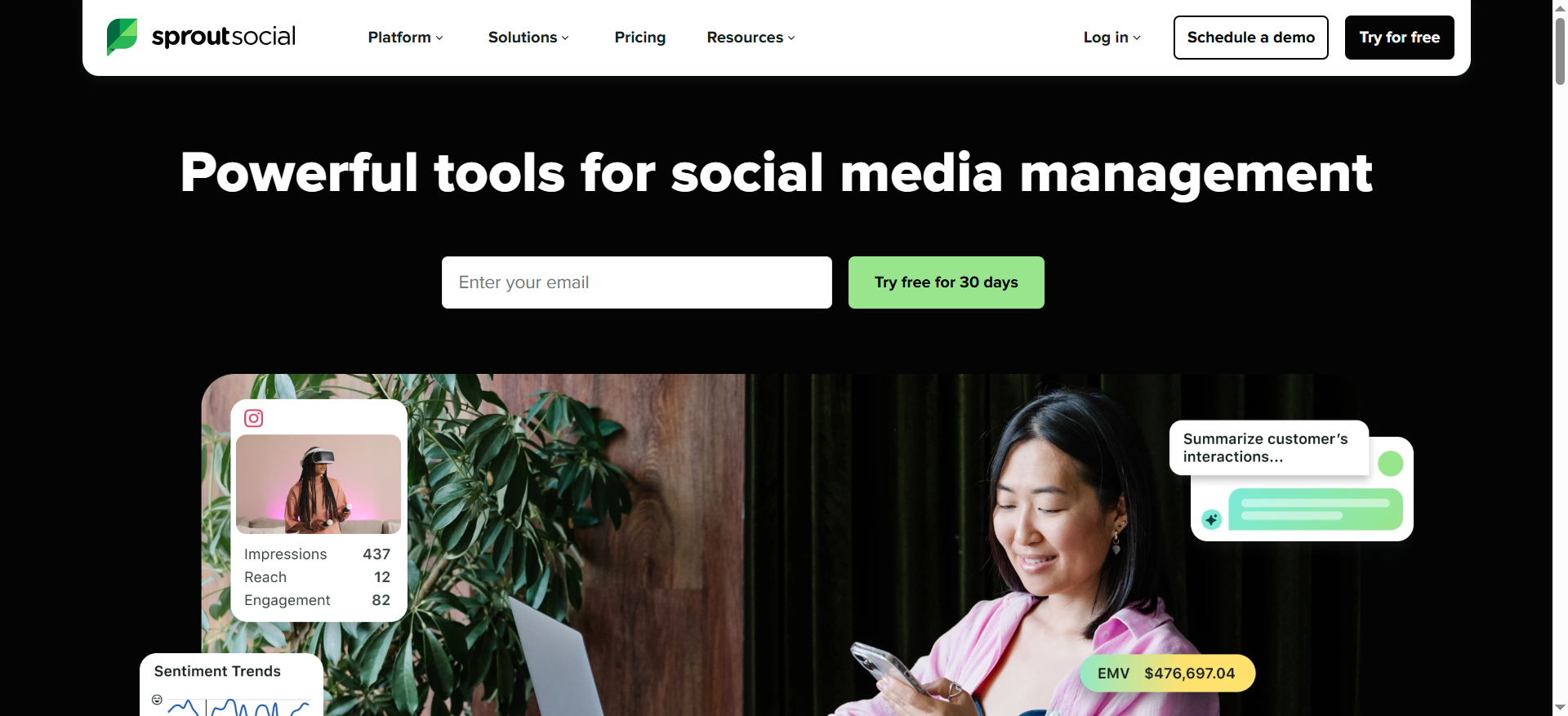
Sprout Social is a social media management platform that combines publishing, engagement, analytics, and social listening into a unified workspace. The platform consolidates messages, comments, and mentions from multiple social accounts into a single Smart Inbox, making it easier for teams to monitor conversations and respond quickly. Competitive analysis features are built into the Professional and Advanced tiers, with a dedicated Social Listening add-on that extends monitoring beyond owned social channels to track brand and competitor mentions across social and web sources.
Why Teams Use It
Social media teams choose Sprout Social when they want a single platform for both day-to-day social management and competitive monitoring. Rather than running separate tools for publishing, engagement, and listening, Sprout Social puts everything in one place. The competitor benchmarking features let teams compare their social performance against rivals on key metrics like engagement rate, posting frequency, audience growth, and content performance, making it easy to spot where competitors are gaining ground.
What It Is Good For
Sprout Social is strongest when your competitor monitoring focus is social media platforms. The Competitive Reports feature on the Professional plan and above lets you add competitor social profiles and track their posting activity, engagement metrics, audience growth, and content themes. The Social Listening add-on broadens this to include web mentions, trending topics, and sentiment analysis around competitor brands. The Smart Inbox is particularly useful for catching competitor mentions in real time — you can tag and organize mentions by competitor, topic, or urgency.
When It Is a Good Fit
Sprout Social fits teams that already manage their social media presence through the platform and want to add competitor monitoring without introducing a separate tool. It is a good match for B2B SaaS marketing teams that manage five or more social profiles, need competitive benchmarking on social metrics, and want engagement and publishing tools alongside monitoring. The clean interface and strong onboarding make it accessible for teams without dedicated analyst roles.
When It Is Not a Good Fit
Sprout Social is not the right tool if your competitor monitoring needs extend beyond social media. The platform's web and media monitoring capabilities are limited compared to Brandwatch, Talkwalker, or even Brand24. The Social Listening feature is a paid add-on on top of already-premium plan pricing, which means the total cost for competitive monitoring can exceed what you would pay for a dedicated listening tool. The Standard plan limits you to five social profiles, forcing an upgrade to Professional ($299/month) for teams managing multiple brands.
How to Use It
Add competitor social profiles in the Competitive Reports section of your Sprout Social account. The platform automatically tracks their posting frequency, engagement rates, audience growth, and top-performing content. For broader competitor brand monitoring, enable the Social Listening add-on and create topics for competitor brand names. The listening tool surfaces mention volume, sentiment, trending themes, and demographic data about the audiences discussing competitor brands. Set up alerts to flag significant changes in competitor activity.
Key Capabilities
Sprout Social's key capabilities include Smart Inbox for consolidated social engagement and mention tracking, Competitive Reports with benchmarking on social metrics, Social Listening add-on for brand and competitor monitoring, publishing and scheduling across all major social platforms, analytics and custom reporting with export options, team collaboration with approval workflows, and integrations with CRM and helpdesk tools (Salesforce, HubSpot, Zendesk).
Pricing
Sprout Social offers three main tiers. The Standard plan costs $199 per seat per month (billed annually) and includes core publishing, engagement, and analytics for up to 5 social profiles. The Professional plan costs $299 per seat per month (billed annually) and adds competitive reports, paid social tracking, and unlimited profiles. The Advanced plan costs $399 per seat per month (billed annually) and includes all features plus the premium analytics and listening add-ons. Social Listening is an additional paid add-on — pricing is provided on request.
Free Tier
No permanent free tier. Sprout Social offers a 30-day free trial that includes access to the full feature set. No credit card is required to start the trial.
Downsides and Limitations
Competitor monitoring beyond social media requires the paid Social Listening add-on, which increases total cost significantly. Web and media monitoring depth is limited compared to dedicated listening platforms. The Standard plan's 5-profile limit is restrictive for multi-brand teams. Per-user pricing means costs scale quickly as team size grows. The platform does not offer AI chatbot monitoring or visual recognition capabilities.
5. Semrush
What It Does
Semrush is a digital marketing platform known primarily for SEO and competitive intelligence, but its brand monitoring and competitor tracking capabilities have expanded significantly. The platform tracks competitor visibility across organic search, paid search, content marketing, and now AI-generated search results. The Brand Monitoring tool tracks online mentions of your brand and competitors across the web. The EyeOn feature automatically monitors competitor websites for new content, page changes, and promotional shifts. In 2026, the AI Visibility Toolkit adds tracking for how brands appear in ChatGPT, Google AI Overviews, and other AI search surfaces.
Why Teams Use It
SEO and growth marketing teams choose Semrush when they want competitor monitoring that is deeply connected to search visibility and digital performance data. Rather than just tracking what people say about competitors, Semrush shows what competitors are doing — what keywords they are targeting, how their traffic is changing, what content they are publishing, and how their backlink profile is evolving. This makes it uniquely valuable for teams that view competitor brand monitoring through the lens of search performance and digital market share.
What It Is Good For
Semrush excels at competitor monitoring from a search and digital performance perspective. The Organic Research tool lets you see every keyword a competitor ranks for, track their ranking changes over time, and identify keywords where you could overtake them. The Traffic Analytics tool shows estimated traffic volumes, top pages, audience overlap, and geographic distribution for competitor websites. EyeOn runs automated checks on competitor websites and sends you updates when they publish new content, change their Google Ads copy, or update key pages. The AI Visibility Toolkit tracks how your brand and competitors appear in AI-generated search results.
When It Is a Good Fit
Semrush is the right fit when your competitor monitoring strategy is centered on search visibility, digital marketing performance, and content strategy. If you want to know not just what people say about competitors but what competitors are actively doing in search, content, and paid channels, Semrush provides data that social listening tools do not cover. It works especially well for B2B SaaS companies where organic search is a primary acquisition channel and competitive keyword positioning directly impacts pipeline.
When It Is Not a Good Fit
Semrush is not a social listening tool. If your primary need is tracking competitor mentions across social media, forums, and news in real time with sentiment analysis, Semrush will not replace a dedicated platform like Brandwatch, Talkwalker, or Brand24. The Brand Monitoring tool is more basic than purpose-built listening tools. Teams that need deep conversational analytics, share of voice comparisons across social channels, or visual recognition should pair Semrush with a social listening tool rather than relying on it alone.
How to Use It
Set up competitor tracking by adding rival domains in the Competitive Research section. Semrush automatically populates data on their organic rankings, paid ads, backlinks, and traffic estimates. Enable EyeOn to receive automated alerts when competitors make changes to their websites or ad campaigns. For brand mention tracking, set up the Brand Monitoring tool with competitor brand names as keywords. For AI visibility tracking, add the AI Visibility Toolkit and configure it to monitor how your brand and competitors appear in AI-generated results.
Key Capabilities
Semrush's core capabilities for competitor monitoring include organic and paid search competitor analysis, website traffic analytics and audience overlap data, EyeOn automated competitor website monitoring, Brand Monitoring tool for web mention tracking, AI Visibility Toolkit for tracking brand appearances in ChatGPT and AI Overviews, backlink analysis and gap identification, content gap analysis to find ranking opportunities, and historical data for long-term competitive trend tracking.
Pricing
Semrush publishes transparent pricing. The Pro plan costs $117.33 per month (billed annually) and covers keyword research, competitor analysis, site audits, and rank tracking for up to 5 projects and 500 keywords. The Guru plan costs $208.33 per month (annual) and adds the Content Marketing Platform, historical data, and tracking for 15 projects and 1,500 keywords. The Business plan costs $416.66 per month (annual) for maximum limits, Share of Voice, and API access. The AI Visibility Toolkit is an add-on at $99 per month. The Traffic and Market Toolkit add-on costs $289 per user per month.
Free Tier
Semrush offers a limited free account with restricted access to most tools (typically 10 queries per day). A 7-day free trial of the Pro or Guru plan is available. The free tier is useful for basic exploration but not sufficient for ongoing competitor monitoring.
Downsides and Limitations
Brand mention monitoring is basic compared to dedicated social listening tools. Social media monitoring capabilities are minimal. The most valuable competitor tracking features (Traffic Analytics, AI Visibility) are paid add-ons on top of the base subscription, which can push total costs above $400 per month. The platform's depth in SEO data is unmatched, but teams focused on social conversation and sentiment will need a complementary tool.
What Is Competitor Brand Monitoring and Why Does It Matter?
Competitor brand monitoring is the practice of systematically tracking what people, media outlets, and now AI systems say about your competitors across the internet. This includes social media mentions, news articles, blog posts, forum discussions, review site comments, podcast appearances, and AI-generated answers. The goal is to understand how competitors are perceived by your shared audience, spot shifts in market positioning, and identify threats and opportunities before they become obvious.
For B2B SaaS companies, competitor brand monitoring matters because buyer decisions in this space are heavily influenced by peer recommendations, review site rankings, analyst coverage, and increasingly, what AI chatbots recommend. If a competitor launches a new feature, gets a wave of positive reviews, or starts appearing in ChatGPT recommendations for your category, you need to know about it quickly. Without active monitoring, you are operating on outdated assumptions about your competitive landscape.
The five tools covered in this guide approach competitor brand monitoring from different angles. Brandwatch and Talkwalker offer deep enterprise-grade listening across massive source networks. Brand24 makes monitoring accessible with transparent pricing and AI chatbot tracking. Sprout Social embeds competitor benchmarking within a broader social management workflow. Semrush tackles competitor monitoring from the search and digital performance side. Most serious competitive intelligence programs combine at least two of these approaches — one for conversational monitoring and one for search and traffic analysis.
How to Set Up a Competitor Brand Monitoring Workflow
Setting up an effective competitor brand monitoring workflow starts with identifying which competitors to track. For most B2B SaaS teams, this means your three to five closest direct competitors plus two to three adjacent competitors who compete for the same buyer attention even if their product differs. Trying to monitor more than seven or eight brands simultaneously dilutes focus and creates noise.
Next, define what you want to track. Mention volume and sentiment are the baseline, but the most useful workflows also track share of voice trends, content publication frequency, pricing changes, feature announcements, key hire or leadership changes, and how competitors appear in AI-generated answers. Assign each tracking objective to the tool best suited for it — a social listening tool for mentions and sentiment, Semrush or a similar platform for search and content monitoring, and an AI visibility tracker for LLM mentions.
Set up alerts to surface the most important signals without requiring you to check dashboards constantly. Daily email digests work for general awareness, but real-time Slack or email alerts should trigger for mention spikes, significant sentiment shifts, or major competitor announcements. Review competitive intelligence weekly in a structured format — a 15-minute team standup or a shared dashboard that everyone checks — so insights translate into action rather than sitting in a report.
Competitor Brand Monitoring vs Social Listening: What Is the Difference?
Social listening is a broad practice that involves monitoring conversations across social media and the web to understand audience sentiment, identify trends, and gather insights about your brand, industry, or topic of interest. Competitor brand monitoring is a specific application of social listening that focuses the lens on rival brands rather than your own.
The practical difference matters when choosing tools. A social listening platform like Brandwatch, Talkwalker, or Brand24 can serve both purposes — you track your own brand mentions alongside competitor mentions. But competitor brand monitoring may also include activities that go beyond traditional social listening, such as monitoring competitor website changes, tracking their search rankings, analyzing their content strategy, and watching how AI systems recommend them. This is where tools like Semrush complement social listening platforms.
Teams that treat competitor brand monitoring as just another tab in their social listening tool often miss the search, content, and AI visibility dimensions that increasingly influence B2B SaaS buying decisions.
How to Measure Share of Voice Against Competitors
Share of voice measures how much of the total conversation in your market belongs to your brand versus competitors. In the context of brand monitoring, it is calculated by dividing the number of mentions your brand receives by the total mentions across all tracked brands in your competitive set, then expressing the result as a percentage.
Most brand monitoring tools automate this calculation. Brand24 provides a Share of Voice metric that compares your brand visibility against tracked competitors across all monitored sources. Brandwatch and Talkwalker offer more granular share of voice analysis, letting you segment by channel, geography, sentiment, or topic. Semrush approaches share of voice differently, measuring it in terms of search visibility — what percentage of organic clicks in your keyword space go to your domain versus competitor domains.
The most useful share of voice tracking combines both conversational and search metrics. A competitor may have high share of voice in social conversations but low share of voice in organic search, or vice versa. Tracking both dimensions gives you a complete picture of competitive visibility and helps you allocate marketing effort where it will have the most impact.
Can AI Tools Track How Competitors Are Mentioned by ChatGPT and Other LLMs?
Yes, and this is one of the most important developments in competitive intelligence for 2026. AI chatbots like ChatGPT, Claude, Gemini, and Perplexity are increasingly influencing how B2B buyers discover and evaluate software tools. When a buyer asks an AI assistant to recommend the best tool in your category, the brands that get mentioned shape the consideration set before a human marketer ever gets involved.
Brand24 has built this capability directly into its platform with a Share of Voice by AI Chatbots feature that tracks how often AI models mention and recommend your brand versus competitors. Semrush addresses this through the AI Visibility Toolkit, which monitors how brands appear in ChatGPT, Google AI Overviews, and other AI search surfaces. Both tools let you see whether competitors are gaining or losing visibility in AI-generated recommendations.
For B2B SaaS companies, monitoring AI mentions of competitors is no longer optional. If a competitor is consistently recommended by ChatGPT for your primary use case and you are not, that represents a visibility gap that traditional SEO and social listening alone will not reveal.
What Metrics Should You Track for Competitor Brand Monitoring?
The essential metrics for competitor brand monitoring in B2B SaaS include mention volume over time, which shows whether a competitor is gaining or losing attention. Sentiment analysis reveals whether the conversation around a competitor is positive, negative, or neutral, and tracking sentiment shifts over time flags potential PR issues or product launches. Share of voice compares your visibility against competitors across monitored channels.
Beyond these fundamentals, track source distribution to understand where competitor conversations happen — a competitor getting more attention on review sites like G2 or Capterra signals different things than one getting mentioned on Reddit or Twitter. Engagement metrics on competitor social content show which messaging angles resonate with your shared audience. Content publication frequency and topic coverage, tracked through tools like Semrush's EyeOn, reveal competitor content strategy shifts.
For 2026, add AI visibility metrics to your tracking. Monitor how often competitors appear in AI-generated answers, which use cases they are recommended for, and how their AI share of voice trends over time. This data is available through Brand24 and Semrush's AI Visibility Toolkit.
Free vs Paid Brand Monitoring Tools: When to Upgrade
Free tools like Google Alerts provide basic mention tracking, but they have significant limitations for serious competitor brand monitoring. Google Alerts only covers web pages indexed by Google, misses social media entirely, provides no sentiment analysis, and has no share of voice calculation. For a startup tracking one or two competitors casually, free tools are a reasonable starting point.
The upgrade to a paid tool becomes necessary when you need real-time alerts rather than daily digests, when you need to track mentions across social media platforms that free tools do not cover, when you need sentiment analysis to distinguish positive from negative competitor mentions, and when you need share of voice metrics to benchmark your position. For most B2B SaaS teams with active competitive markets, this threshold is reached early.
Among paid tools, Brand24 offers the most accessible entry point at $199 per month (annual billing) with a 14-day free trial. Semrush's base plan at $117.33 per month provides competitor tracking from the search perspective. Sprout Social and Talkwalker sit in the mid-range, while Brandwatch is positioned for enterprise budgets. The right investment level depends on how many competitors you track, how many channels matter, and whether AI visibility tracking is a priority.
How to Build a Competitive Intelligence Dashboard
An effective competitive intelligence dashboard consolidates data from your monitoring tools into a single view that your team can reference regularly. Start with a top-level section that shows share of voice across all competitors, updated weekly. Below that, add a mention volume trend chart for each tracked competitor, color-coded for easy comparison. Include a sentiment breakdown for each competitor so you can spot shifts at a glance.
Add a section for competitive activity tracking — new content published, pricing changes detected, product announcements, and key hires. This data often comes from Semrush's EyeOn feature or manual tracking supplemented by Google Alerts. Include an AI visibility section that shows how competitors are mentioned by major AI chatbots, using data from Brand24 or Semrush's AI Visibility Toolkit.
Most brand monitoring tools let you create custom dashboards natively. Brandwatch and Talkwalker offer the most flexible dashboard builders. For teams using multiple tools, a shared Google Sheet or Notion database that pulls in weekly data from each source works well as a lightweight alternative. The key is consistency — the dashboard only delivers value if it is reviewed weekly and the insights are discussed in team standups.