

The best Knowatoa AI alternatives for most teams are Peec AI, LLMrefs, Scrunch AI, Profound, and SE Ranking. Peec AI is the best overall option for mid-market teams that want stronger reporting and clearer source-level visibility. LLMrefs is the best fit for budget-conscious teams, Scrunch AI is best for teams that want optimization workflows instead of just monitoring, Profound is the strongest choice for enterprises, and SE Ranking is ideal for SEO teams that want AI visibility inside a broader search stack. In this guide, you’ll see a quick comparison, who each tool is best for, where Knowatoa falls short for some teams, and how to choose the right replacement based on reporting, engine coverage, and scalability.
📋 Get Listed / Advertisement
We update this guide monthly. Want your tool featured? Contact: [email protected].
If you’re looking for the best Knowatoa AI alternatives, the main reason is usually not that Knowatoa is bad. It’s that your team has outgrown what you want from a lightweight AI visibility platform.
That happens fast in this category.
At first, most teams just want a clean way to track whether their brand appears in ChatGPT, Perplexity, Gemini, Claude, or Google AI Overviews, which is why many start by reviewing the best AI search engines. They want to see who gets cited, which competitors show up most often, and whether visibility is moving in the right direction. For that stage, a focused platform like Knowatoa can make sense.
But after a few weeks, the questions get more demanding.
Your CMO asks for a better dashboard. Your SEO lead wants source-level reporting, which is why some teams compare AI citation tools at the URL level. Your growth team asks whether prompt tracking can be tied to use cases, regions, or product lines, which is why AI visibility tools for category tracking can be a useful reference. Then the conversation shifts from “Can we monitor this?” to “Can we run a repeatable AI visibility program from this?”
That is the point where Knowatoa alternatives become more interesting.
The best alternatives don’t just track brand mentions in AI search, and teams evaluating that layer often compare AI brand mention tracking tools. They help teams report more clearly, compare competitors more intelligently, and scale workflows without turning AI visibility into another disconnected dashboard nobody uses, which is why a strong AI visibility platform buyer guide can be useful.
For most mid-market teams, the strongest Knowatoa alternatives are Peec AI, LLMrefs, Scrunch AI, Profound, and SE Ranking, and buyers in that stage often review AI visibility tracking tools for SEO and GEO services. They each solve a slightly different problem. Some are better for reporting, which is why buyers often look at the best SEO reporting software.
Some are better for budget-conscious teams. Some are better if you want AI visibility to fit into a broader SEO stack, especially if you are already exploring best AI SEO tools. That decision-making angle matches the attached SOP, which requires these articles to support comparison and evaluation intent rather than just explain the category.
📋 Get Listed / Advertisement
We update this guide monthly. Want your tool featured? Contact: [email protected].
Best Knowatoa AI alternatives
| Tool | Best for | Main strength | Best fit |
|---|---|---|---|
| Peec AI | Mid-market reporting | Cleaner dashboards and source analysis | Marketing and SEO teams that need better stakeholder reporting |
| LLMrefs | Budget-conscious teams | Broad tracking at a lower entry point | Smaller teams proving value early |
| Scrunch AI | Workflow depth | Monitoring plus optimization direction | Teams that want to move from visibility to action |
| Profound | Enterprise organizations | Platform depth and scale | Large brands with cross-functional needs |
| SE Ranking | SEO-led teams | AI visibility inside a broader SEO stack | Teams that want less tool sprawl |
If you want the best overall alternative to Knowatoa for a growth-stage team, start with Peec AI.
If your biggest concern is budget, start with LLMrefs.
If your team keeps asking what to fix after the report comes in, Scrunch AI is the strongest choice.
If you’re buying for a large organization with multiple stakeholders, Profound is the enterprise option to evaluate first.
If you want AI visibility without adding a totally separate operating environment, SE Ranking is the easiest fit.
That ordering reflects the brief behind this post. The article needs to help a reader compare options by coverage, reporting, and workflow scale, then guide them toward a decision.
1. Peec AI
What it does
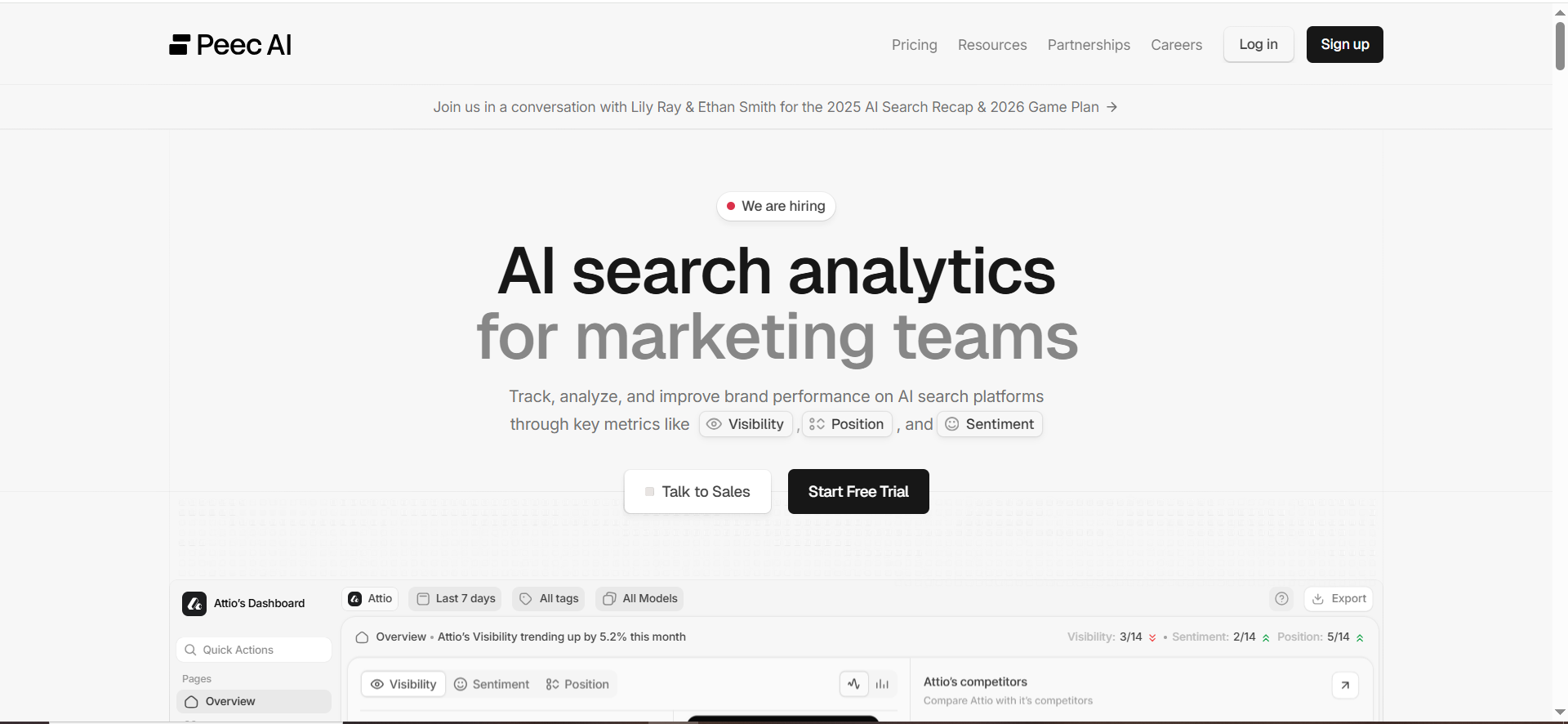
Peec AI is a strong Knowatoa alternative for teams that want AI visibility reporting to be easier to understand and easier to share, especially if they are already thinking about AI visibility metrics. It is well suited to organizations that have already proven AI visibility matters and now need a cleaner way to track prompts, citations, sources, and competitive presence over time.
The value of Peec is not just that it tracks visibility. It appears designed for teams that need reporting clarity, not just raw monitoring.
Why teams use it
Peec AI is attractive because many marketing teams do not fail on data collection, and that challenge often overlaps with PR brand messaging for AI visibility.
A lot of dashboards tell you what happened, but not in a format leadership actually wants to consume, which is why the best SEO reporting software is a relevant internal link here. Peec stands out because it feels more aligned with the reality of stakeholder reporting, especially for teams building real-time dashboards for AI-first search. If your team needs to package AI visibility into weekly updates, monthly reviews, or cross-functional reporting, that matters a lot when you are deciding which platform excels at AI visibility metrics.
That makes Peec especially strong for:
- in-house SEO teams reporting to leadership
- content teams proving visibility improvement
- agencies that need client-friendly reporting
- growth teams that want clean comparisons over time
What it’s good for
Peec is best when your biggest frustration with Knowatoa is not the basic tracking itself but the lack of a more mature reporting workflow.
This is the tool I would prioritize if your team keeps saying:
- “The data is useful, but the dashboard is not easy to present.”
- “We need a clearer way to show who is citing us and how that changes.”
- “We need something that works better across brands or stakeholders.”
When it’s a good fit
Peec AI is a good fit if:
- you want stronger source-level visibility
- your team needs better reporting for internal stakeholders
- you want a platform that feels more polished for recurring review cycles
- you need an alternative that can scale with a mid-market team
It’s also a good choice if you are in that in-between stage where enterprise platforms feel too heavy, but lightweight trackers no longer feel sufficient.
When it’s not a good fit
Peec may not be the right fit if your main need is deep technical optimization guidance or a heavily enterprise-controlled environment. It also may not be the best match if your biggest problem is simply getting started as cheaply as possible.
In other words, Peec is strongest when the problem is maturity of reporting, not bare-minimum access.
How to use it
The best way to use Peec is to organize prompt tracking around business-critical use cases, not vanity prompts, which is easier when you have a process for GEO prompt monitoring.
For example:
- commercial comparison prompts
- category prompts
- problem-aware prompts
- feature or solution prompts
- competitor prompts
From there, the value comes from tracking changes in source usage, visibility, and citation patterns over time, then turning that into a reporting rhythm leadership can follow, which is easier when you understand how to audit brand visibility on LLMs.
Key capabilities
The practical strengths that make Peec a compelling Knowatoa alternative include:
- strong AI visibility tracking
- competitor comparison
- source analysis
- cleaner reporting workflows
- better fit for recurring stakeholder communication
Pricing
Peec AI’s pricing is not publicly listed as a flat starting monthly price. Its pricing is usage-based and depends on the number of tracked prompts and models analyzed.
Free tier?
Peec AI doesn’t appear to offer a free tier, but it does offer a free trial.
Downsides / limitations
The main limitation is that Peec is not the obvious budget-first choice. It also may not be the first tool you choose if you want a broader technical optimization layer rather than a reporting-forward analytics platform.
But for the team that has already outgrown lightweight dashboards, it is one of the best upgrades from Knowatoa.
2. LLMrefs
What it does
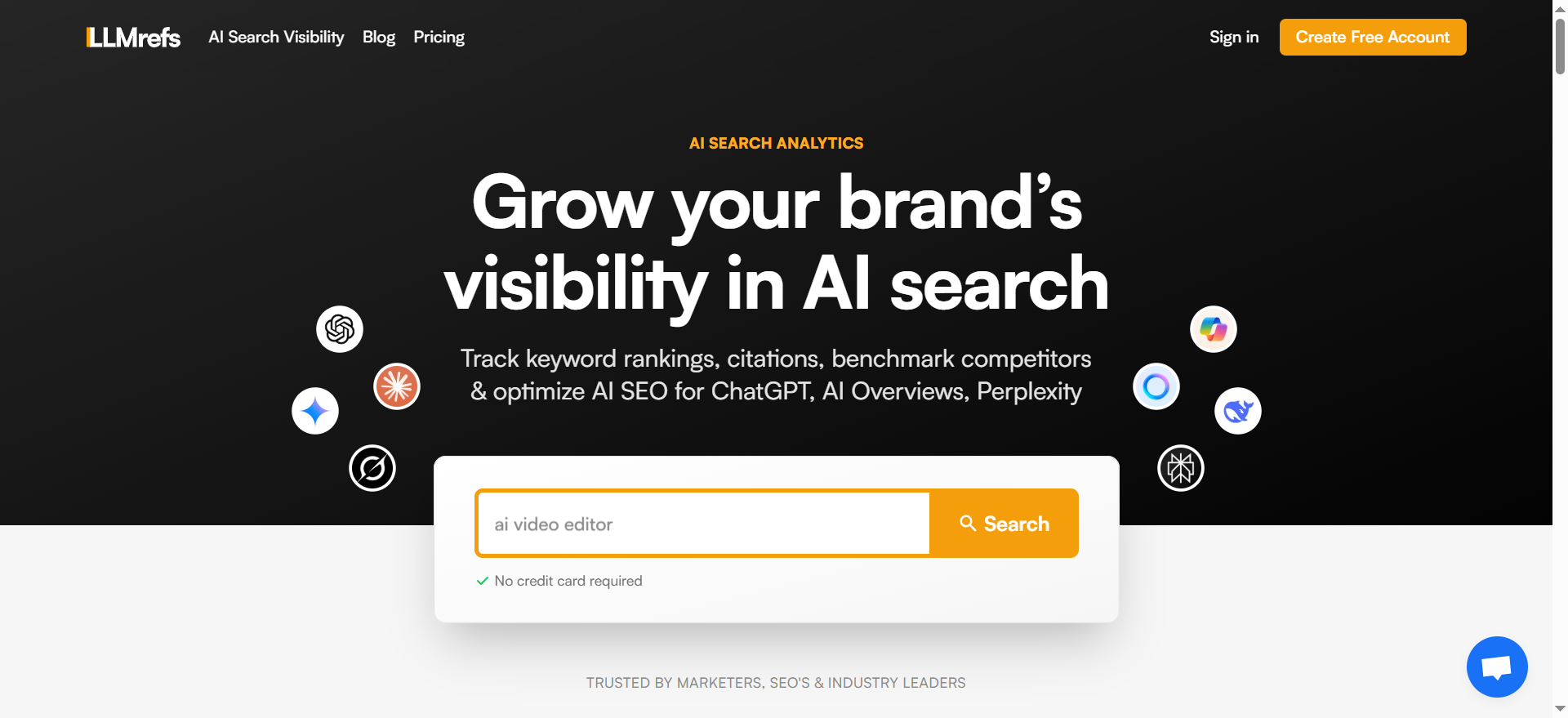
LLMrefs is one of the most appealing Knowatoa alternatives for smaller teams and budget-sensitive buyers, particularly those comparing the best AI tools for marketing research. It focuses on AI search tracking, prompt monitoring, brand mentions, source tracking, and visibility across multiple AI systems without trying to become an all-in-one enterprise platform.
That focus is a strength.
Not every company needs a heavyweight platform. Sometimes you just need broad enough coverage, useful enough tracking, and a monthly cost that is easy to justify.
Why teams use it
Teams use LLMrefs because it lowers the barrier to entry.
That matters more than many vendors want to admit.
A lot of marketing teams know AI visibility matters, but they are still early in proving the business case, so what is AI in marketing is a relevant contextual link. They do not want to jump straight to enterprise pricing or a complex implementation cycle. They want a tool that lets them track meaningful prompts, monitor sources, and see how brand presence changes without a huge commitment.
LLMrefs works well for:
- lean in-house marketing teams
- startup growth teams
- consultants
- smaller agencies
- SEO teams building their first AI visibility workflow, especially if they are also exploring the best AI visibility tool for GEO.
What it’s good for
LLMrefs is best for teams that want breadth and affordability, and it fits well for buyers researching the best AI tools to monitor SaaS brand visibility in ChatGPT and Perplexity.
If your question is, “What’s the most practical alternative to Knowatoa if I want broader coverage without overspending?” LLMrefs is one of the best answers.
It is also useful for teams that want to monitor a decent set of prompts and compare visibility across engines before they commit to a more advanced platform later, which is why the best AI visibility tools for daily prompt runs can be relevant.
When it’s a good fit
LLMrefs is a strong fit if:
- you care about cost efficiency
- you want to prove value before expanding spend
- you need broader prompt and source tracking
- you want something usable without a complex onboarding process
This is also a smart choice if Knowatoa felt fine conceptually, but you want a tool that gives you more room to monitor without moving into a much heavier buying process.
When it’s not a good fit
LLMrefs is less attractive if you want enterprise-grade governance, a larger support layer, or a highly developed reporting and workflow environment.
It also may not be the best choice if you already know AI visibility is a strategic priority with executive ownership. In that case, you may want something more robust.
How to use it
The ideal LLMrefs rollout is simple:
- start with your highest-intent prompts
- layer in competitors
- monitor mention rate and source patterns
- identify recurring themes in where competitors outperform you
- expand your prompt set once you have a baseline
That makes it a very usable option for teams still shaping their AI visibility program.
Key capabilities
LLMrefs stands out for:
- accessible pricing
- broad AI engine monitoring
- prompt tracking
- source tracking
- practical fit for smaller teams
- strong value for early-stage adoption
Pricing
LLMrefs’ paid pricing starts at $79/month.
Free tier?
LLMrefs offers free signup with no credit card required, and it also offers a 7-day free trial.
Downsides / limitations
The tradeoff with LLMrefs is the maturity ceiling.
As your team becomes more complex, you may eventually want more sophisticated reporting, more stakeholder-ready dashboards, or deeper operational features. So while it is a very practical alternative to Knowatoa, it may be more of a growth-stage solution than a large-enterprise one.
Still, for the right buyer, that is not a downside. It is exactly the appeal.
3. Scrunch AI
What it does
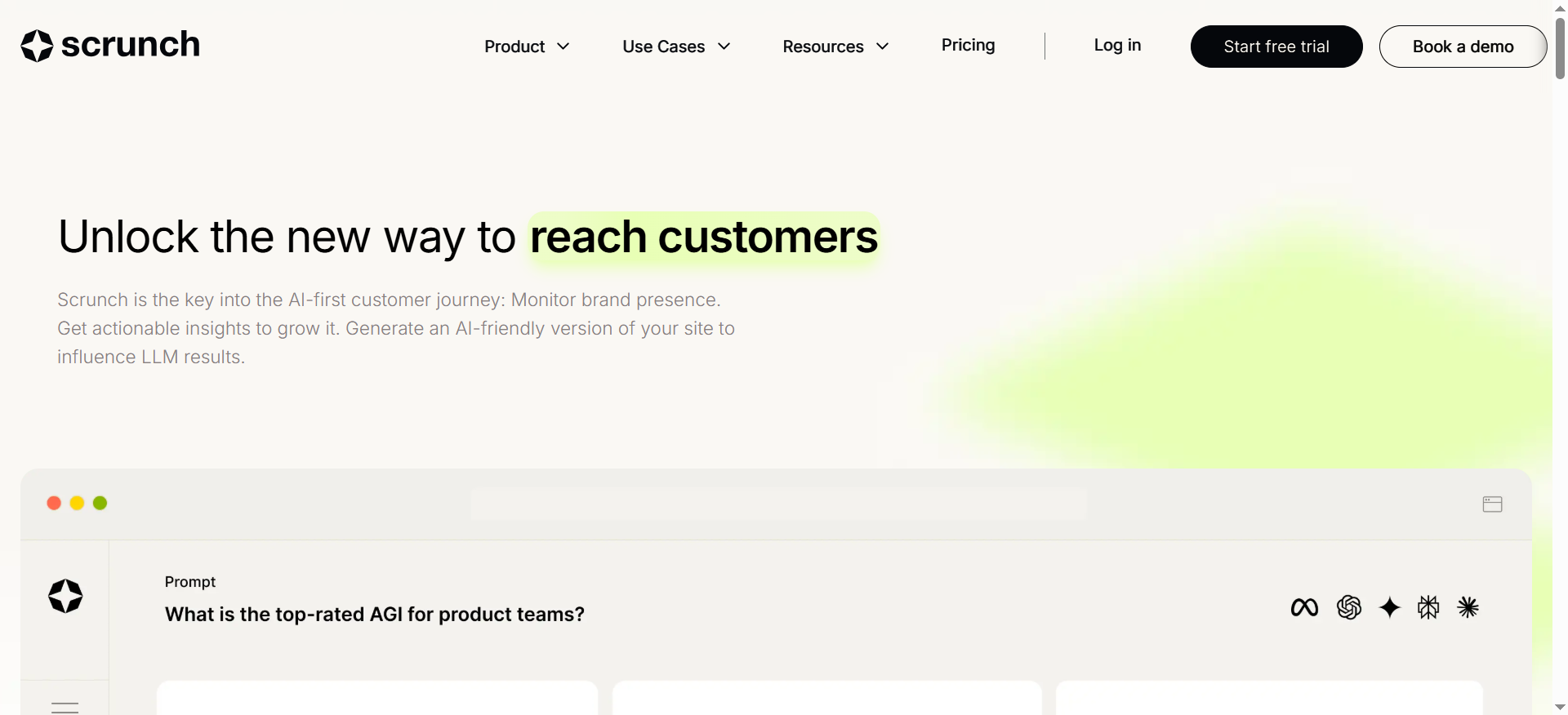
Scrunch AI is a stronger Knowatoa alternative for teams that want to go beyond monitoring and start acting on what the data shows.
This is the difference between a dashboard tool and an operational tool.
Scrunch is useful for organizations that do not just want to see whether they were cited, which is why it aligns well with teams working on how to get cited in AI answers. They want to understand what changes could improve visibility and whether their site is structured in a way that helps AI systems process and surface the right information.
Why teams use it
Teams choose Scrunch because it makes the leap from observation to execution easier.
That is important because AI visibility is not just a reporting problem. It is also a publishing, site structure, and content architecture problem. If the tool cannot help teams move from insight to action, the data may remain interesting but not transformative.
Scrunch is particularly compelling for:
- brands with dedicated SEO and content operations, especially those already thinking about how content engineers drive AI search visibility
- agencies managing performance improvement across clients
- teams that want technical and workflow depth
- organizations treating AI visibility as a strategic initiative
What it’s good for
Scrunch is best for buyers who keep asking, “What should we do next?”
That is the moment when simple trackers start feeling incomplete.
If you want to identify opportunities, shape page improvements, and move from visibility monitoring into optimization decisions, Scrunch is one of the best options in this list for teams already investing in content optimization for AI search visibility.
When it’s a good fit
Scrunch AI is a good fit if:
- you want more than a dashboard
- your team needs workflow depth
- you care about technical readiness for AI agents and answer engines
- you want a tool that can support a more operational AI visibility program
This is the right type of platform when your team is serious about using AI visibility insights to guide actual site and content work, which connects well with structuring AEO content for the AI era.
When it’s not a good fit
Scrunch may be too much for teams that only want lightweight tracking. It also may feel like more platform than you need if your AI visibility program is still experimental.
If your budget is tight and your needs are basic, it may not be the first option to evaluate.
How to use it
Scrunch works best when the team uses it to identify weak spots, prioritize pages or topics, and feed those insights into a regular optimization cycle, especially if they are already using AI search visibility audit tools.
A practical workflow might look like:
- track key commercial prompts
- compare visibility against competitors
- identify low-citation or low-inclusion areas
- evaluate pages tied to those opportunities
- prioritize content or structure changes
- review the effect over time
That is a more mature workflow than simple monitoring, and that is exactly why Scrunch stands out here.
Key capabilities
Scrunch is compelling because it combines:
- AI visibility monitoring
- workflow depth
- optimization direction
- stronger fit for action-oriented teams
- better support for serious program-building
Pricing
Scrunch AI’s pricing starts at $250/month for its Core plan. Enterprise pricing is custom and available by quote.
Free tier?
Scrunch AI doesn’t offer a free tier, but it does offer a 7-day free trial.
Downsides / limitations
The obvious limitation is that Scrunch may be more of a tool than a smaller team needs. If the problem is only basic tracking, a lighter and cheaper platform could be enough.
But if the goal is to build a repeatable AI visibility workflow, Scrunch is one of the strongest alternatives to Knowatoa.
📋 Get Listed / Advertisement
We update this guide monthly. Want your tool featured? Contact: [email protected].
4. Profound
What it does
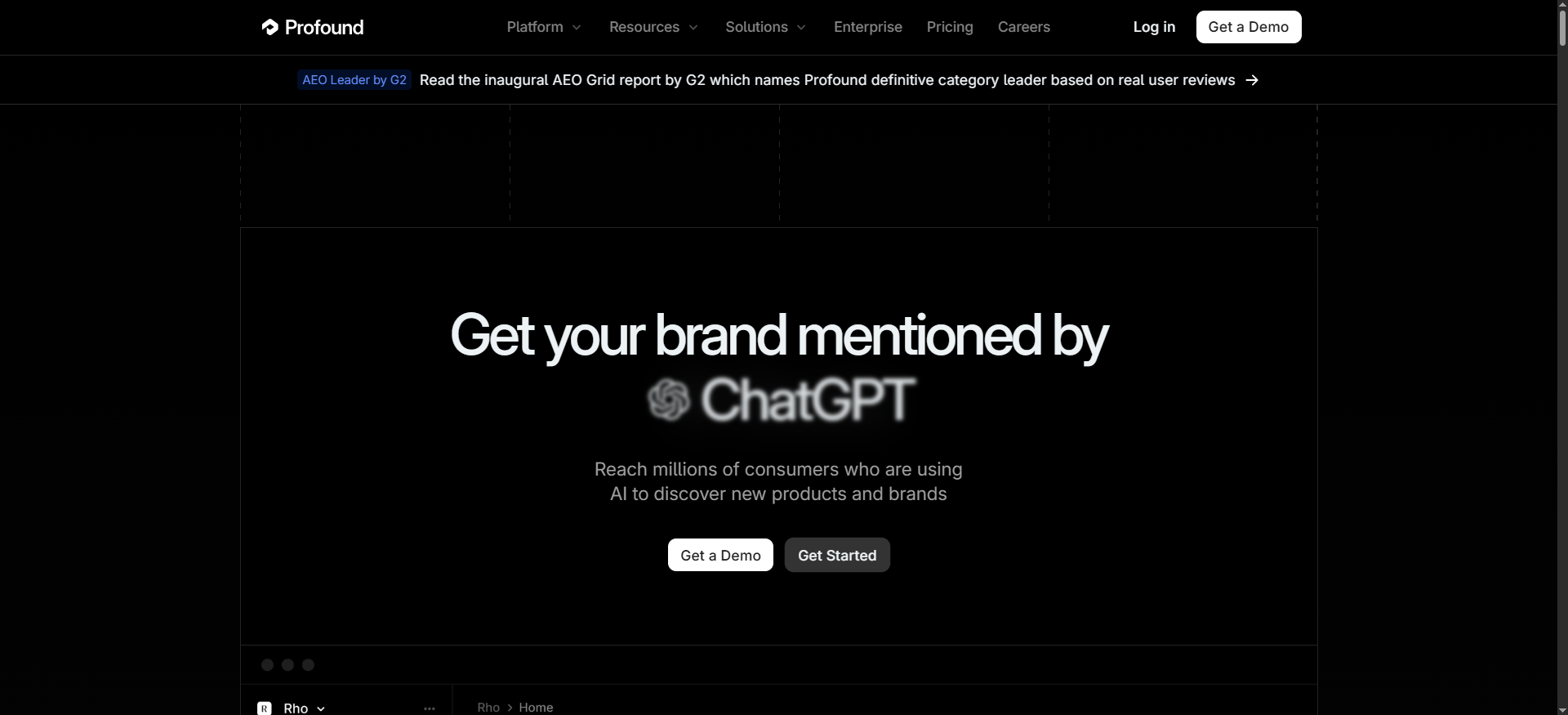
Profound is the enterprise option in this list.
It is built for organizations that need a more strategic answer-engine visibility platform, not just a simple monitoring tool. That distinction matters. Enterprise teams often need broader internal alignment, deeper reporting, and a platform that can support multiple business units, markets, or stakeholder groups.
Profound is attractive because it feels purpose-built for the level of complexity many teams see in a more advanced AI strategic visibility program.
Why teams use it
Large organizations use tools like Profound because they have already moved past the “should we monitor AI visibility?” conversation.
They are now dealing with questions like:
- How do we measure answer-engine presence at scale?
- How do we report this across leadership teams?
- How do we coordinate visibility strategies across functions?
- How do we compare our footprint against established competitors?
When the stakes are higher and the stakeholder map is broader, enterprise positioning becomes valuable.
What it’s good for
Profound is best for:
- large brands
- enterprise marketing teams
- organizations with multiple internal stakeholders, especially those evaluating the best enterprise SEO tools.
- teams that want platform depth over lightweight self-serve simplicity
It is especially relevant when AI visibility is being treated as a long-term strategic category rather than a niche SEO experiment, which is why some teams also study the most effective strategies for AI visibility enhancement.
When it’s a good fit
Profound is a good fit if:
- your team needs a platform built for scale
- reporting has to work across multiple audiences
- your organization wants a deeper answer-engine visibility program
- budget is not the main blocker
If Knowatoa feels too lightweight for your internal complexity, Profound is the kind of alternative to evaluate.
When it’s not a good fit
Profound is not the right fit for most smaller teams.
If you want an easy, low-cost, self-serve tool, this is probably not the first option to pursue. It is also probably unnecessary if your prompt set, reporting needs, and stakeholder count are all small.
How to use it
Profound works best when the business already has a serious visibility program and needs a centralized platform to support ongoing measurement, comparison, and reporting, which aligns with a broader AI visibility platform buyer guide.
In practice, that means:
- defining core prompt clusters by product or region
- tracking visibility against a competitor set
- reporting across stakeholder groups
- using the platform as an executive-level visibility layer
Key capabilities
The appeal of Profound comes from:
- enterprise readiness
- broader platform ambition
- stronger fit for large organizations
- ability to support cross-functional visibility work
- mature positioning for strategic AI visibility programs
Pricing
Profound’s pricing is not publicly listed as a monthly starting price. It is available through customized enterprise pricing by quote.
Free tier?
Profound doesn’t appear to offer a free tier or a free trial. It is demo-led.
Downsides / limitations
The main downside is obvious: it is not built for small or budget-sensitive teams.
That is not a criticism. It just means Profound solves a different problem than many Knowatoa buyers are trying to solve. If your problem is complexity and scale, it makes sense. If your problem is simply wanting a better starter tool, it probably does not.
5. SE Ranking
What it does
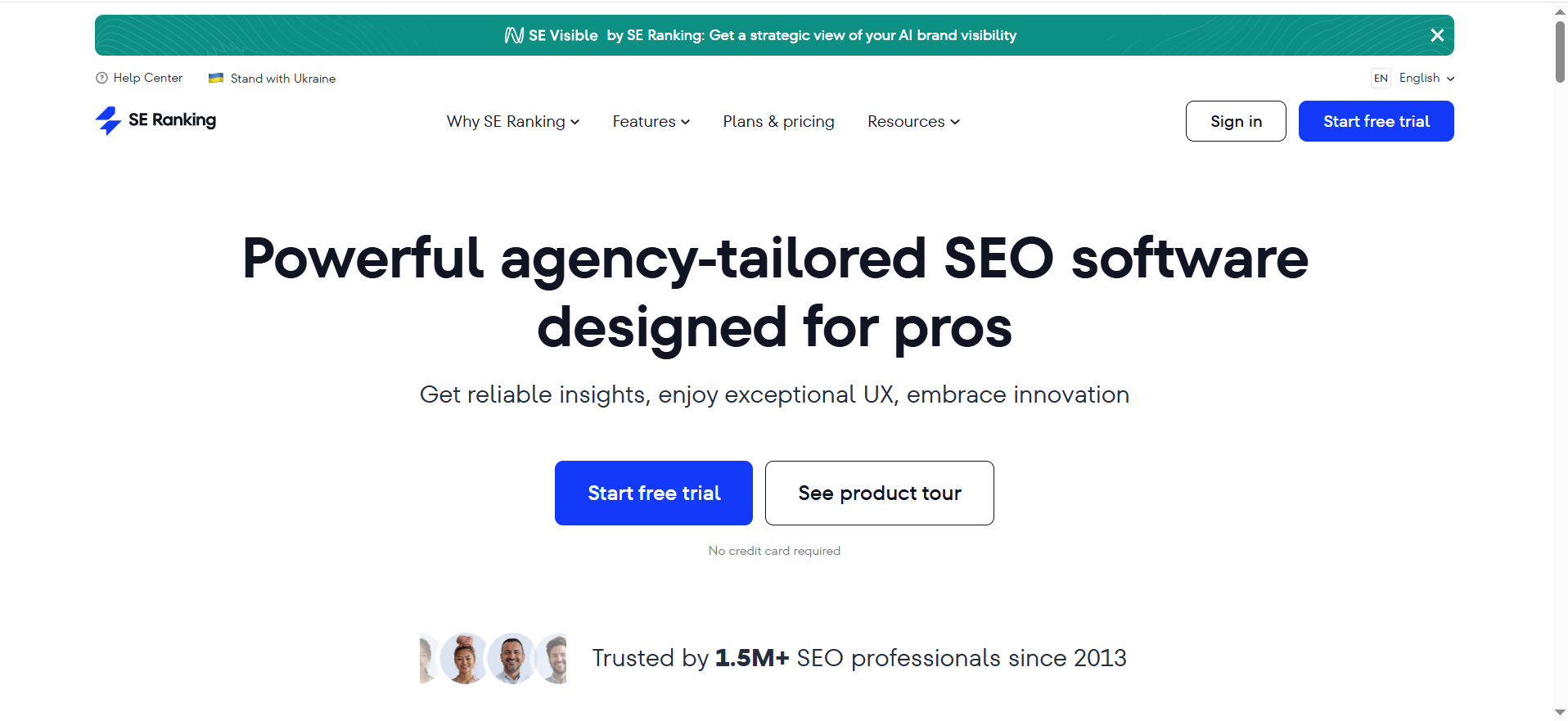
SE Ranking is a compelling Knowatoa alternative for SEO-led teams that do not want AI visibility isolated from the rest of search operations, which is why some buyers also compare it with other SE Ranking alternatives.
That is its biggest strength.
Instead of buying a totally separate platform, teams can manage AI visibility inside a broader SEO environment. For many organizations, that is more practical than adopting another standalone specialist tool.
Why teams use it
Teams choose SE Ranking because they want consolidation.
The reality inside many marketing organizations is that too many tools create friction. You get one platform for rank tracking, one for content, one for reporting, one for technical audits, and then another for AI visibility. Over time, that stack becomes harder to manage than the actual work.
SE Ranking becomes attractive when the buyer says:
- “We want AI visibility, but we do not want another disconnected system.”
- “Our team already works inside SEO tooling,”which is why the best SEO automation tools are a sensible internal link here.
- “We need AI tracking to fit into a familiar workflow.”
What it’s good for
SE Ranking is best for:
- SEO managers
- agencies with broader SEO operations
- in-house search teams
- growth teams that want AI visibility connected to existing workflows
It is especially strong for teams that want practical adoption rather than category-pure specialization, which is why some buyers also compare the best enterprise SEO tools.
When it’s a good fit
SE Ranking is a good fit if:
- you already work inside SEO platforms every day
- you want to reduce tool sprawl
- you need AI visibility alongside traditional search workflows, especially those already reviewing SE Ranking vs Semrush
- you prefer a broader stack over a specialist point solution
This is often the right choice when the organization values convenience and integration as much as raw specialization, which is why some teams also compare AI SEO tools.
When it’s not a good fit
SE Ranking may not be the best option if you want a deeply specialized platform with a more aggressive answer-engine optimization roadmap.
That does not mean it lacks useful AI visibility features. It means its value is partly in integration, not just category depth.
How to use it
The best way to use SE Ranking is to treat AI visibility as another part of your broader search operation, not a standalone experiment, which is why best SEO strategies for AI visibility is a useful companion read.
That means:
- setting up tracked prompts
- monitoring brand mentions and competitor visibility
- comparing AI search movement with broader SEO patterns
- using the same environment for adjacent analysis and planning
For many teams, that alone is a major advantage.
Key capabilities
SE Ranking stands out for:
- AI visibility inside a broader SEO platform
- better fit for SEO teams
- easier adoption for agencies and in-house search functions
- reduced tool sprawl
- practical workflow alignment
Pricing
SE Ranking’s AI Search add-on starts at $89/month. Its standalone SE Visible product starts at $99/month.
Free tier?
SE Ranking doesn’t offer a full free tier for these paid AI visibility products, but it does offer a free trial. It also offers a free AI visibility checker with 5 free checks per day.
Downsides / limitations
The main limitation is that buyers who want the most specialized pure-play AI visibility platform may find a broader SEO suite less focused than dedicated category vendors.
But for many teams, that is a perfectly reasonable tradeoff. Practical fit often matters more than theoretical specialization.
Why teams look for an alternative to Knowatoa AI
Knowatoa sits in a fast-moving category. That makes it useful, but it also means buyers quickly become more demanding.
There are usually five reasons someone starts searching for a Knowatoa alternative.
1. They need broader coverage across AI engines
Many teams start by tracking one or two systems. Then they realize their audience behavior is fragmented. One segment uses ChatGPT. Another uses Perplexity. Another still leans on Google AI Overviews, which is why many teams evaluate dedicated Google AI Overviews tracking tools.
Once that happens, the buyer stops thinking in terms of AI search as one channel and starts thinking in terms of an ecosystem, which is why AI search visibility is a useful concept page to reference. The ideal platform needs to show how the brand appears across multiple models and answer engines, not just in isolated snapshots, which is why teams often research the best AI visibility tools for engine coverage.
2. They need stronger reporting
A lot of AI visibility tools can collect data. Fewer can turn that data into something leadership can understand without a long explanation.
This becomes a real issue when the SEO or content lead is stuck stitching together exports, screenshots, and manual commentary, which is why some teams also review the best SEO tool for keyword ranking reports. At that point, the tool may still be technically useful, but operationally weak.
Reporting matters because AI visibility is still new, and many teams need a clearer process for reporting AI visibility to leadership. If the dashboard doesn’t explain what changed, why it changed, and what should happen next, adoption slows down inside the company.
3. They want more than monitoring
Monitoring is only the first stage.
A mature team eventually wants:
- competitor benchmarking
- source analysis
- workflow recommendations
- content improvement direction
- page-level opportunity identification
- better internal communication
- clearer ties to business priorities
That is where some Knowatoa alternatives create more value, especially for teams comparing AI visibility tools for competitor benchmarking. They help teams act on it.
4. Their team or account structure has become more complex
What works for one brand, one region, or one use case often breaks down as complexity increases.
Agencies need multi-client workflows. Enterprise teams need stakeholder-specific reporting. Product-led teams may want visibility segmented by feature or funnel stage. International teams may want country- or market-specific prompt clusters, which makes the best AI visibility tools for bulk prompt upload and tagging a relevant follow-up read.
Once the operating model gets more complex, buyers usually want a platform that feels more scalable, especially if they are also comparing AI visibility tools with prompt templates.
5. They want AI visibility inside a broader stack
Not every team wants a standalone point solution.
Some buyers want AI visibility inside a wider SEO or analytics environment, and others want easier integration with reporting tools, dashboards, or existing planning systems, which is why AISO vs SEO vs AEO vs GEO is a useful framing. When tool sprawl becomes a problem, the best alternative is often the one that fits the rest of the stack, not necessarily the one with the most specialized feature list, especially if your team already has an AI marketing stack.
That is why this category is not a simple “best tool” conversation. The right alternative depends on what kind of maturity problem you are solving.
Which Knowatoa alternative is best for each use case
Here is the simplest way to choose.
Best overall for most growth-stage teams: Peec AI
Choose Peec if your team wants a better reporting experience and a more mature visibility workflow without going straight to enterprise software.
Best budget-friendly alternative: LLMrefs
Choose LLMrefs if your priority is value. It is especially good for smaller teams, lean operators, and companies still proving ROI.
Best for action-oriented teams: Scrunch AI
Choose Scrunch if you are no longer satisfied with monitoring alone and want a clearer path from visibility data to optimization work.
Best for enterprise brands: Profound
Choose Profound if your organization has multiple stakeholders, more complex reporting needs, and the budget for a platform built around scale.
Best for SEO-led teams: SE Ranking
Choose SE Ranking If your team wants AI visibility inside a broader search stack and does not want yet another standalone tool, it also helps to review the best tools for tracking brand visibility in AI search.
That is the clearest practical breakdown. The best tool depends on the bottleneck you are trying to remove.
What to look for in a Knowatoa replacement
When you evaluate alternatives, do not just compare features line by line. Compare operating models.
1. Reporting clarity
Ask yourself whether the platform helps you explain results to leadership, not just view them yourself, which is easier when you understand AI visibility metrics.
2. Coverage breadth
Make sure the tool tracks the engines your audience actually uses, not just the ones that are easiest to market, especially if you are comparing the best AI visibility tools for share of voice.
3. Workflow depth
Decide whether you need monitoring only, or whether you need a system that helps you act on the data, which is the same question behind the best AI visibility solutions for content optimization teams.
4. Fit for team size
A startup, a mid-market SaaS company, and an enterprise brand do not need the same type of platform.
5. Stack compatibility
Think about whether the best answer is a standalone platform or a tool that fits into your current SEO and reporting setup.
6. Scalability
Check whether the tool still works once you add more prompts, more stakeholders, more markets, or more brands, especially if you are evaluating AI visibility tools for bulk prompt upload and tagging.
This decision is not really about replacing one logo with another. It is about choosing the kind of workflow your team is ready for, especially if you are building a broader AI search visibility strategy for B2B SaaS.
Absolutely. Here’s content you can add as H2 sections for those fan-out queries.
Which Knowatoa alternative has broader engine coverage?
If broader engine coverage is your top priority, Profound and SE Ranking stand out most clearly, with LLMrefs also looking strong for teams that want wide coverage without moving into enterprise pricing.
This matters because AI visibility is no longer limited to one or two platforms. A serious buyer may want to monitor visibility across ChatGPT, Perplexity, Gemini, Claude, Google AI Overviews, AI Mode, and other answer engines depending on the market and use case. Once you start evaluating alternatives through that lens, the key question becomes less “Does this tool track AI search?” and more “How many of the engines my audience actually uses can I monitor from one place?”
For large organizations, Profound is the strongest answer. It is the most enterprise-oriented option in this list and is best suited for brands that need answer-engine visibility across a wide set of platforms and stakeholder groups. If your team wants the broadest strategic view of AI discovery, Profound is the alternative to evaluate first.
For SEO-led teams that want broad coverage without adopting a fully enterprise-only platform, SE Ranking is a compelling option. It is attractive because it brings AI visibility into a broader SEO workflow, which makes engine coverage more practical to operationalize across existing reporting and search processes.
For smaller teams or buyers that care about affordability, LLMrefs is also worth serious consideration. It is one of the strongest options for teams that want multi-engine tracking without the cost and complexity of a more heavyweight platform.
In practical terms, the best choice depends on your operating model:
- Choose Profound if you want the broadest enterprise-grade answer-engine coverage.
- Choose SE Ranking if you want broad coverage inside an SEO platform.
- Choose LLMrefs if you want broad coverage at a more accessible entry point.
Which Knowatoa competitor is best for enterprises?
The best Knowatoa competitor for enterprises is Profound, with Scrunch AI as another strong option for larger teams that want workflow depth and optimization support.
Enterprise buyers usually have different needs than smaller teams. They are rarely just looking for a prompt tracker. They want a platform that can support multiple stakeholders, more complex reporting requirements, broader coverage, and a longer-term answer-engine visibility strategy.
That is where Profound stands out. It is the most clearly enterprise-positioned alternative in this list. It makes the most sense for large brands that need a centralized platform for monitoring AI visibility at scale, comparing competitive presence, and reporting to multiple internal audiences. If Knowatoa feels too lightweight for the level of organizational complexity you are managing, Profound is the most obvious upgrade path.
Scrunch AI is another strong enterprise option, especially for teams that do not just want visibility reporting. Scrunch is better suited to organizations that want to turn visibility data into action. If your enterprise team is asking for page-level improvement opportunities, workflow support, or a more operational system, Scrunch may be a better fit than a reporting-first platform.
The simplest way to split the decision is this:
- Choose Profound if you want enterprise-scale visibility and platform depth.
- Choose Scrunch AI if you want enterprise-grade workflow and optimization support.
- Choose Peec AI only if your enterprise need is mostly around reporting clarity rather than full platform complexity.
For most enterprise buyers, Profound is the best answer because it aligns most directly with scale, complexity, and cross-functional usage.
Which Knowatoa alternative is best for SEO teams?
The best Knowatoa alternative for SEO teams is SE Ranking, followed by Peec AI for teams that care more about reporting and visibility storytelling.
SEO teams usually do not want AI visibility to live in isolation. They want it connected to the rest of their search workflow. That includes competitor tracking, content planning, performance reviews, and broader organic search analysis.
That is why SE Ranking is such a strong fit. It gives SEO teams a way to monitor AI visibility without forcing them to operate in a completely separate tool environment. For in-house SEO managers and agencies, this is often the most practical choice because it reduces tool sprawl and keeps AI visibility closer to everyday search operations.
Peec AI is also a strong option for SEO teams, especially if the challenge is communication. Some SEO teams are not struggling to find data. They are struggling to present it clearly to leadership or clients. In those cases, Peec may be the better fit because it appears more reporting-forward.
Here’s the cleanest way to decide:
- Choose SE Ranking if your SEO team wants AI visibility built into a broader search workflow.
- Choose Peec AI if your SEO team needs stronger reporting and source-level visibility.
- Choose LLMrefs if your SEO team is smaller and needs a more budget-friendly starting point.
For most SEO teams, SE Ranking wins because workflow fit matters just as much as feature depth.
Which Knowatoa replacement is easiest to scale?
The easiest Knowatoa replacement to scale depends on what you mean by scale.
If you mean scaling across a larger organization, Profound is the best fit.If you mean scaling a practical reporting workflow across a growing team, Peec AI is the strongest choice.If you mean scaling usage without overspending too early, LLMrefs is the easiest entry point.
This distinction matters because “scalable” can mean very different things depending on the buyer.
For enterprise brands, scale usually means more stakeholders, more reporting layers, more markets, and more cross-functional coordination. In that case, Profound is the most scalable replacement because it is designed for larger organizations and more complex visibility programs.
For growth-stage SaaS teams, scale often means moving from a lightweight dashboard to a more mature operating model. In that situation, Peec AI is the easiest tool to scale because it appears to improve reporting, source visibility, and team usability without forcing a huge leap in complexity.
For smaller teams, scale often means being able to track more prompts and more engines while keeping cost reasonable. That is where LLMrefs stands out. It is one of the easiest tools to grow into if your AI visibility program is still maturing.
So the best answer is:
- Profound for enterprise scale
- Peec AI for team and reporting scale
- LLMrefs for affordable early-stage scale
If you need one default answer for the article, use Peec AI. It is the easiest replacement to scale for most non-enterprise teams.
Which alternative includes workflow or optimization features?
The Knowatoa alternative with the strongest workflow or optimization angle is Scrunch AI.
This is where Scrunch separates itself from more monitoring-focused tools. A lot of AI visibility platforms are useful for tracking brand mentions, citations, prompts, and competitor presence. But once the report is in front of your team, the next question is usually, “What do we do now?”
Scrunch is the best answer for buyers who want that next step built into the product direction.
Instead of treating AI visibility as a passive reporting exercise, Scrunch is better suited to teams that want to connect visibility insights to actual optimization work. That could mean prioritizing content updates, improving page structure, identifying gaps in source inclusion, or supporting a more repeatable workflow between SEO, content, and growth teams.
This makes Scrunch especially attractive for:
- teams with dedicated SEO and content operations
- brands treating AI visibility as an active growth channel
- agencies that want more than client-facing dashboards
- organizations that need actionability, not just monitoring
Other tools on this list may support better reporting or better platform breadth, but Scrunch AI is the clearest fit if your buying criteria include workflow support, operational depth, or optimization direction.
The clean summary is:
- Choose Scrunch AI for workflow and optimization features.
- Choose Peec AI for reporting workflow.
- Choose Profound for enterprise platform depth.
- Choose SE Ranking for broader SEO workflow fit.
FAQs
What is the best Knowatoa AI alternative overall?
Is there a cheaper alternative to Knowatoa AI?
Which Knowatoa alternative is best for enterprise teams?
Which Knowatoa replacement is best for SEO teams?
Which tool is best if I want recommendations, not just tracking?
Which Knowatoa alternative is easiest for a smaller team to adopt?
Can I use one of these tools for agency reporting?
When should a team replace Knowatoa?
Final verdict
Knowatoa can still be a reasonable option for teams that want a focused, lightweight way to monitor AI visibility. But many buyers searching for alternatives are already beyond that stage.
They want broader engine coverage. They want better reporting. They want a workflow that feels more scalable and useful across the organization. That is exactly the angle the attached brief points to, and it is the real reason this category exists.
For most teams, Peec AI is the best overall Knowatoa alternative because it appears to offer the strongest upgrade in reporting quality and operational maturity without immediately becoming an enterprise-only purchase.
If budget is the priority, LLMrefs is the smartest place to start.
If your team needs more action and less passive monitoring, Scrunch AI is the strongest choice, especially for teams interested in the best AI tools for share of voice in AI answers.
If you are buying for a large organization, Profound is a serious enterprise contender, and some buyers at that stage also look at a generative engine optimization case study.
If your team lives inside SEO workflows and wants AI visibility as part of a broader stack, SE Ranking is the most practical fit, especially for teams reading about AEO-ready SaaS blogs.
That is the simplest version of the decision:
- choose Peec for reporting
- choose LLMrefs for affordability
- choose Scrunch for actionability
- choose Profound for scale
- choose SE Ranking for workflow integration
📋 Get Listed / Advertisement
We update this guide monthly. Want your tool featured? Contact: [email protected].