

If you like Rankscale AI because it is affordable and surprisingly capable, you are not wrong. Rankscale has become a credible option for teams that want AI visibility tracking without jumping straight into a heavy enterprise contract.Its pricing starts at $20 per month for Essentials, scales through Pro at $99, and includes features like competitor benchmarking, citation analysis, query fan-out tracking, page audits, and support for a wide range of AI engines, which is why it fits naturally alongside best AI visibility tools for URL-level citation tracking.
The catch is that many teams outgrow Rankscale once they need more predictable workflows across brands, cleaner reporting for clients or leadership, more mature integrations, or a product that better matches how their team already thinks about prompts, keywords, and content operations, which is where a stronger AI visibility platform buyer guide becomes useful. That is where the best Rankscale AI alternatives come in.
In this guide, I’ll walk through the five strongest alternatives for different kinds of buyers, some of which are better for budget-conscious teams that want more structure than Rankscale and others that fit larger SEO teams or brands investing in AI strategic visibility. LLMrefs, Peec AI, AthenaHQ, Otterly AI, and SE Ranking’s AI Search Toolkit, each one solves a different problem. Some are better for budget-conscious teams that want more structure than Rankscale. Others are better for agencies, larger SEO teams, or brands that need broader reporting and executive visibility.
📋 Get Listed / Advertisement
We update this guide monthly. Want your tool featured? Contact: [email protected].
Best Rankscale AI alternatives
| Tool | Best for | Starting price | Standout strength |
|---|---|---|---|
| LLMrefs | Lean SEO teams and agencies | $79/month | Keyword-first AI visibility tracking with 500 prompts and broad engine coverage |
| Peec AI | Content and SEO teams that want a polished AI visibility workflow | Contact sales | Clean UX, prompt tracking, multi-project structure, simple ongoing monitoring |
| AthenaHQ | Teams that want broader GEO workflow depth | Custom / plan-based | Visibility tracking plus optimization, executive reporting, and workflow support |
| Otterly AI | Buyers who want simple monitoring and flexible add-ons | $29/month | Easy entry point, daily tracking, unlimited team members, GEO audits |
| SE Ranking AI Search Toolkit | SEO teams that want AI tracking inside a broader SEO stack | Add-on from $89/month annually | AI visibility tracking tied to a mature SEO suite and competitor workflows |
If you want the closest substitute for Rankscale’s value-for-money feel, start with LLMrefs or Otterly AI. If you want a more mature operating layer for AI search visibility and optimization, look at Peec AI or AthenaHQ. If your team already lives inside an SEO platform and wants AI visibility as part of one broader workflow, SE Ranking is the easiest fit for teams also evaluating best SEO tools for small businesses.
1. LLMrefs
What it does
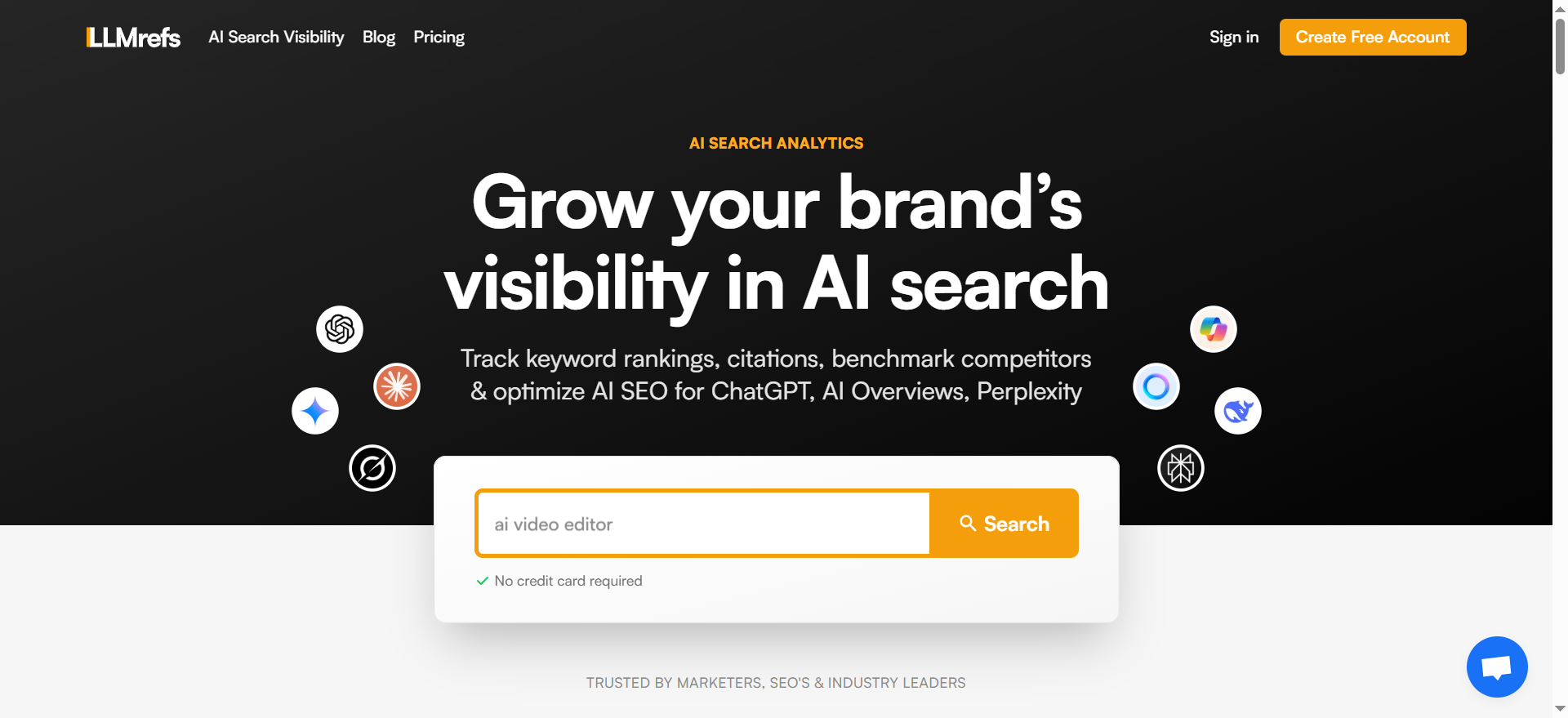
LLMrefs is an AI search visibility platform built for brands, agencies, and SEO teams that want to track how they appear across generative search engines, which makes it relevant for readers also researching best tools for tracking brand visibility in AI search. Its homepage and pricing page position it around keyword tracking, brand rankings, prompts, sources, and multi-engine monitoring.
Why teams use it
The biggest reason people choose LLMrefs over Rankscale is that it feels easier to operationalize for SEO-led teams. LLMrefs explicitly says you “track keywords, not prompts,” which is a subtle but important difference in product philosophy. If your team already works from keyword clusters, search themes, and content briefs, LLMrefs may feel more intuitive than a more experimental prompt-native workflow, especially for teams refining their keyword research workflow.
What it’s good for
It is especially strong for smaller SEO teams, in-house marketers, and agencies that want broad engine coverage without enterprise pricing, which overlaps nicely with the wider category of best AI visibility tools by engine coverage. The all-in-one plan is publicly listed at $79 per month and includes 500 prompts, access to all AI search engines with no additional fees, weekly refreshed reports, citation tracking, geo-targeting in 50+ countries and 20+ languages, unlimited team members, unlimited projects, CSV export, and API access.
When it’s a good fit
Choose LLMrefs if:
- you want a more SEO-native bridge into GEO
- you want transparent pricing
- you manage multiple domains or projects
- you care about citations and exports
- you do not want per-seat pricing complexity
Those are real advantages when compared with Rankscale’s credit-based model, because Rankscale gives you more flexibility on paper, but LLMrefs is often easier to budget and easier to explain internally for teams that already rely on keyword research best practices for SaaS.
When it’s not a good fit
LLMrefs is less ideal if you want a heavier executive dashboard layer, deep enterprise governance, or a broader command-center style GEO workflow, which is where AI strategic visibility becomes a better framing. In that case, AthenaHQ or a more enterprise-oriented system may fit better.
Key capabilities
LLMrefs includes:
- keyword-first AI visibility tracking
- source and citation tracking
- automatic weekly reporting
- broad AI engine coverage including ChatGPT, AI Overviews, AI Mode, Gemini, Perplexity, Claude, Grok, Copilot, and Meta
- geo-targeting across countries and languages
- unlimited users and projects
- CSV export and API access
Pricing
LLMrefs’ pricing starts at $79/month for its All in One plan.
Free tier?
LLMrefs offers a free account, and its paid plan also comes with a 7-day free trial.
Bottom line
If Rankscale feels inexpensive but slightly too raw for the way your SEO team works, LLMrefs is probably the cleanest upgrade path for teams comparing best AI SEO tools. It stays accessible on price, but the packaging and workflow are easier to adopt for teams that still think in search themes, keywords, and reporting cycles.
2. Peec AI
What it does
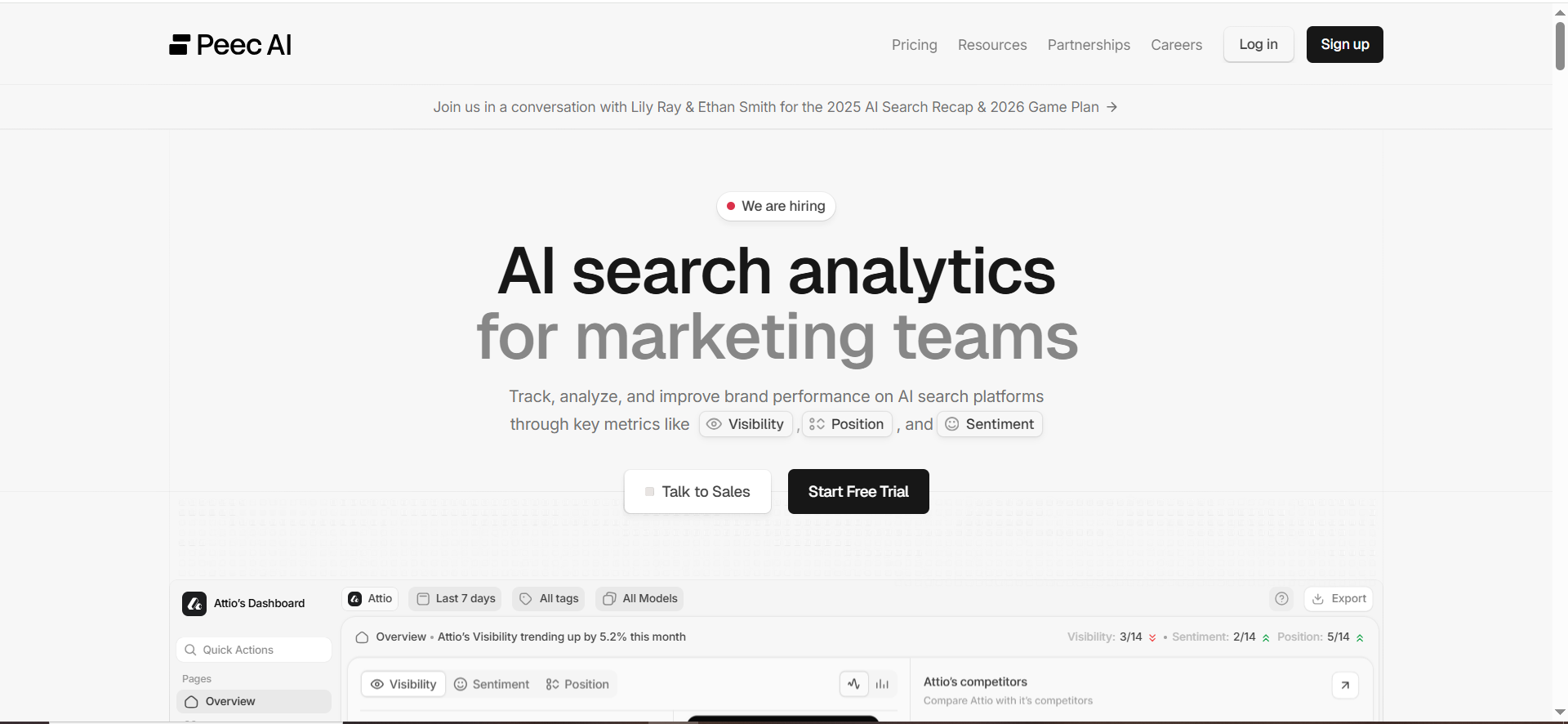
Peec AI is an AI search analytics platform for marketing teams. It focuses on tracking and improving brand visibility across AI platforms, with a product experience that is clearly designed to feel simple and usable for ongoing team workflows. Its pricing page emphasizes prompts, model selection, projects, daily tracking, and analytics that teams will actually enjoy using.
Why teams use it
Peec’s pitch is not just data depth. It is clear. That matters because a lot of GEO tools are trying to win on sheer feature count. Peec leans harder into usability and project structure, which makes it attractive for content and SEO teams that need people to actually log in and act on the data instead of letting another dashboard sit unused, especially in a broader AI marketing stack.
What it’s good for
Peec is a strong alternative for teams that have outgrown a cheap tracker but do not want an overly complex enterprise setup, which makes it relevant for buyers also researching the best AI visibility platform buyer guide. Its public plans show:
- Starter with 50 prompts, 3 models, unlimited users, daily tracking, 1 project
- Pro with 150 prompts, 3 models, unlimited users, daily tracking, 2 projects
- Advanced with 350 prompts, 3 models, unlimited users, daily tracking, 5 projects, multi-country support, and GSC/GA/Looker integrations
- Enterprise with custom prompt tracking, all models, unlimited projects, API access, and SSO
That mix makes Peec appealing when your buying criteria include project management, integrations, and cleaner ongoing workflows, particularly if you are comparing best SEO reporting software alongside GEO tools.
When it’s a good fit
Choose Peec AI if:
- you want a more polished UX than many budget GEO tools
- you need multiple projects
- you want analytics and prompt tracking without a messy interface
- you care about integrations such as GSC, GA, or Looker
- your team includes content marketers, not just technical SEOs
When it’s not a good fit
Peec may not be the best pick if your main priority is the lowest possible entry price. Rankscale and Otterly are easier entry points for that. It is also not the clearest option if you specifically want a keyword-first model, where LLMrefs has a more direct pitch.
Key capabilities
Peec highlights:
- prompt tracking
- model selection during onboarding
- daily tracking
- multi-country support
- project-based structure, which also makes it relevant for readers comparing AI visibility tools for prompt variation testing.
- integrations in higher tiers
- API and SSO at enterprise
- unlimited users across plans
Pricing
Peec AI’s pricing starts at $95/month for the Starter plan. Pricing scales up by plan, and enterprise pricing is custom.
Free tier?
Peec AI doesn’t offer a free tier, but it does offer a free trial.
Bottom line
Peec AI is one of the best Rankscale AI alternatives for teams that want a more polished day-to-day operating experience, which also makes it relevant for teams researching best AI visibility tools with prompt templates. It is less about getting the absolute cheapest tracking and more about getting a product your team will actually use consistently.
📋 Get Listed / Advertisement
We update this guide monthly. Want your tool featured? Contact: [email protected].
3. AthenaHQ
What it does
AthenaHQ positions itself as an AEO and GEO platform for AI search, which makes it a natural internal fit for readers who also need a primer on AEO tools for AI Overviews. It is not just a tracker. It is trying to be a broader platform.
Why teams use it
AthenaHQ stands out when buyers want more than monitoring, especially if they need executive oversight, ROI tracking, and real-time dashboards for leadership. Its positioning includes end-to-end GEO workflow management, cross-platform AI visibility tracking across 8+ LLMs, automated content optimization recommendations, citation source analysis, executive oversight, ROI tracking, and board-ready reporting. That is a very different value proposition from “cheap and capable tracker.”
What it’s good for
This is a strong fit for growth-stage and enterprise teams building a more formal AI search program, especially if they are still deciding on the best enterprise SEO tools to support it. It also makes sense for agencies that need better workflow depth, pitching support, and a stronger story for leadership or clients.
When it’s a good fit
Choose AthenaHQ if:
- you want tracking plus optimization support
- you need a command-center style product
- you want executive and board-ready reporting, especially if your team is building around AI strategic visibility.
- you expect GEO to become a serious cross-functional channel
- you need broader workflow support than Rankscale offers
When it’s not a good fit
If you just need lightweight monitoring for a small number of prompts, AthenaHQ may be more platform than you need, especially if you are still evaluating AI search visibility audit tools. Rankscale, LLMrefs, or Otterly AI can get you moving faster and more cheaply.
Key capabilities
AthenaHQ highlights:
- end-to-end GEO workflow management
- cross-platform AI visibility tracking across 8+ LLMs
- automated content optimization recommendations
- citation source analysis, which aligns with the AE SEO playbook for AI answers and citations
- prompt volume estimation and analysis
- competitor monitoring
- executive dashboards and ROI reporting
- options for agencies and ecommerce workflows
Pricing
AthenaHQ’s pricing starts at $95/month for its Self-Serve plan, with enterprise pricing available by quote.
Free tier?
AthenaHQ doesn’t appear to offer a free tier. It does offer a free audit, and its terms also reference free trials.
Bottom line
If Rankscale is a good starting point, AthenaHQ is a step toward a full operating system for teams investing in the most effective strategies for AI visibility enhancement. It is one of the best Rankscale AI alternatives when your problem is no longer “how do we track this?” but “how do we manage this channel seriously?”
4. Otterly AI
What it does
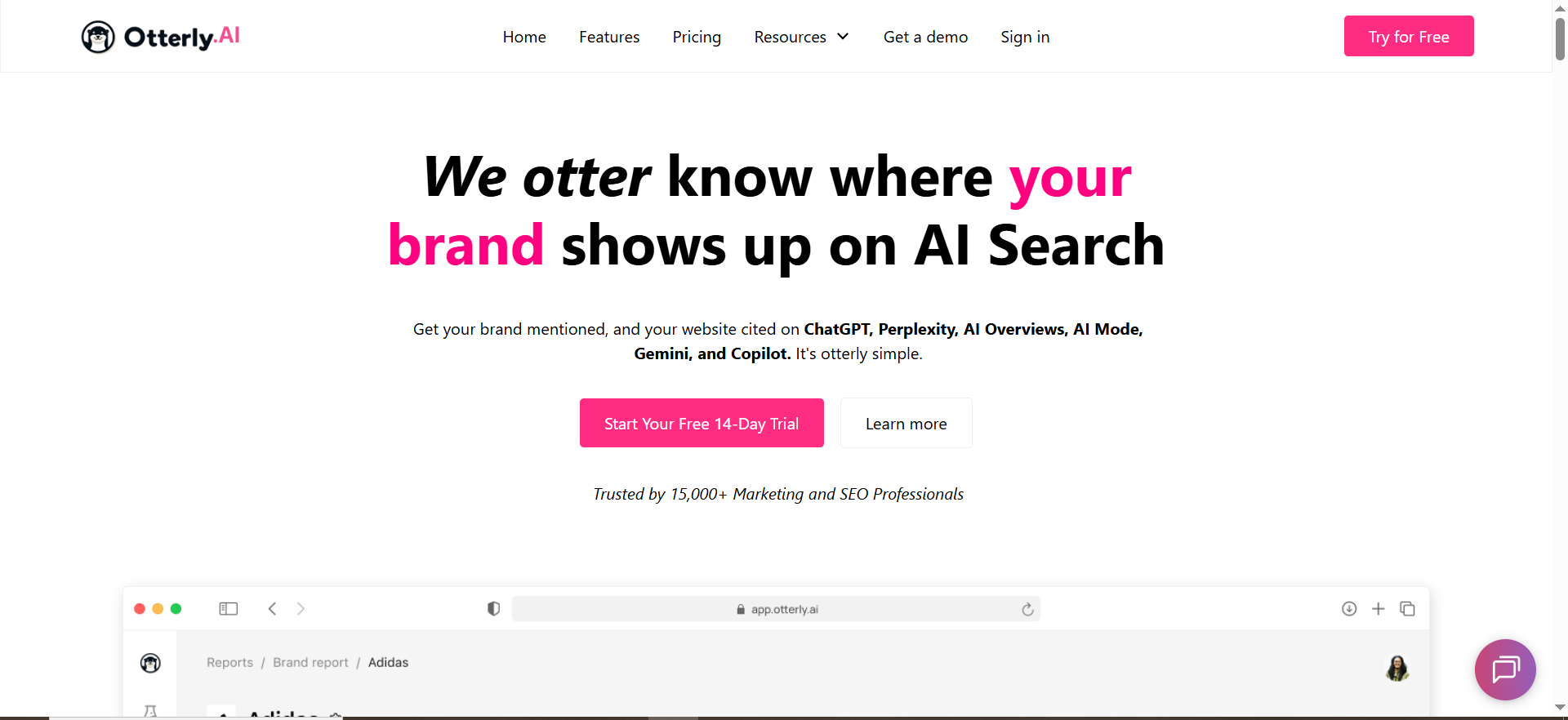
Otterly AI is an AI search monitoring platform with a simpler, more modular entry point than many competitors, making it relevant for buyers exploring GEO prompt monitoring tools. It tracks ChatGPT, Google AI Overviews, Perplexity, and Microsoft Copilot by default, with Google AI Mode and Gemini available as add-ons, which makes it a strong contextual fit for Google AI Overviews tracking tools.
It also emphasizes daily tracking, unlimited brand reports, unlimited team members, GEO audits, exports, and Looker Studio connectors at higher tiers.
Why teams use it
Otterly is appealing because it feels straightforward, and the jump from hobby-level experimentation to serious usage is gradual rather than abrupt, which makes it a sensible option for teams comparing best AI visibility tools for daily prompt runs. That makes it a sensible Rankscale alternative for teams that want simple monitoring with decent reporting and room to grow.
What it’s good for
Otterly is best for solo marketers, small teams, and agencies that want clear packaging:
- Lite: $29/month for 15 search prompts
- Standard: $189/month for 100 search prompts
- Premium: $489/month for 400 search prompts
- annual billing discounts are also available
Its plans also include unlimited team members and unlimited brand reports, which is attractive if you dislike user-based pricing friction and are comparing AI brand mention tracking tools.
When it’s a good fit
Choose Otterly AI if:
- you want an easy setup and easy pricing
- you need daily tracking
- you value unlimited team members
- you want GEO audits and exports
- you prefer simple packaging over credit systems
When it’s not a good fit
Otterly is not the strongest option if you want an extensive optimization layer or the most enterprise-like governance, which is where a dedicated AI visibility service may be a better fit. It is a monitoring-first product. If you want more strategic workflow depth, AthenaHQ or SE Ranking may be stronger.
Key capabilities
Otterly includes:
- tracking for ChatGPT, Google AI Overviews, Perplexity, and Copilot
- optional add-ons for AI Mode and Gemini
- daily tracking
- AI prompt or keyword research tools
- brand visibility index
- domain ranking
- link citations analysiss, which makes it a good fit for readers exploring best AI mention prominence tools.
- GEO audits
- detailed reports and exports
- Looker Studio connector on higher tiers
Pricing
Otterly AI’s pricing starts at $29/month for its Lite plan. Custom enterprise pricing is also available.
Free tier?
Otterly AI doesn’t appear to offer a free tier or a free trial on its pricing page.
Bottom line
Otterly AI is one of the best Rankscale AI alternatives if you want something simple, approachable, and easy to budget, which makes it relevant for readers also exploring best tools for tracking brand visibility in AI search.
5. SE Ranking AI Search Toolkit
What it does
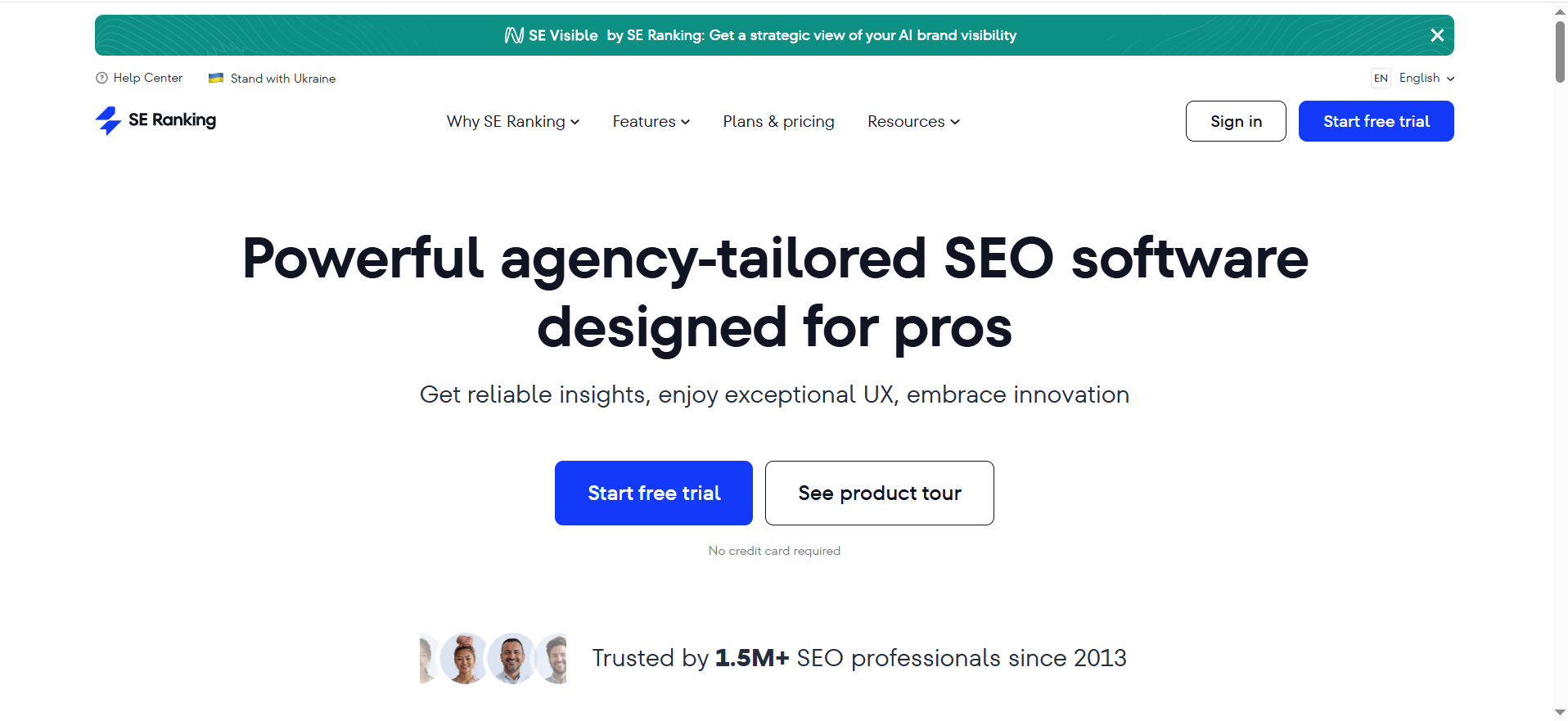
SE Ranking’s AI Search Toolkit brings AI visibility tracking into a broader SEO environment, which makes it especially relevant for teams already comparing SE Ranking alternatives. It tracks brand mentions and links across AI Overviews, AI Mode, ChatGPT, Gemini, and Perplexity, while also offering AI competitor research, source and coverage analysis, historical tracking, cached AI answers, and broader SEO context.
Why teams use it
The main reason to choose SE Ranking over Rankscale is consolidation, because using AI visibility tracking inside an existing SEO stack is often easier than adding a separate niche tool, especially if your team already evaluates SE Ranking vs Semrush. That is especially true for teams that want one platform for competitor research, reporting, source analysis, and AI answer monitoring.
What it’s good for
SE Ranking is strongest for SEO-led teams that want AI search monitoring without creating a separate GEO-only workflow, which makes it a natural fit for teams comparing broader SEO tools for SaaS. Its AI Search add-on starts at $89/month annually and includes 200 prompts, while public materials also highlight unlimited competitor research, an AI Results Tracker, and strategic dashboards for mentions, citations, and sentiment.
When it’s a good fit
Choose SE Ranking if:
- your team is already invested in SEO tooling
- you want AI visibility tracking inside a familiar platform
- you care about source analysis and competitor research
- you want to connect traditional SEO and AI search workflows
- you need broad reporting for marketers, not only GEO specialists
When it’s not a good fit
If you want a pure-play GEO tool with a narrower, more specialized product experience, SE Ranking may feel less focused than AthenaHQ, Peec, or even Rankscale, so it helps to compare it against an AI visibility platform showdown. It is best when AI visibility is part of a broader SEO stack, not a standalone motion.
Key capabilities
SE Ranking highlights:
- AI brand mention and link tracking
- AI competitor research
- source and coverage analysis
- historical data
- cached AI answer copies
- side-by-side competitor comparison, which fits naturally with content about AI visibility metrics.
- coverage across major AI answer engines
- a free AI visibility checker for quick audits
Pricing
SE Ranking’s AI Search Toolkit starts at $89/month with monthly billing, or $71.20/month with annual billing.
Free tier?
SE Ranking doesn’t offer a free tier for the AI Search Toolkit, but it does offer a free 14-day trial. It also has a free AI visibility checker with limited daily checks.
Bottom line
SE Ranking is the best Rankscale AI alternative for teams that do not want another standalone tool, especially if they are already comparing best tools for SEO in SaaS. If your SEO operation is already mature, folding AI visibility into a broader stack can be more efficient than managing separate systems.
Why teams look for a Rankscale AI alternative
Rankscale is attractive because it solves the first problem well: “Are we showing up in AI search, and where are we weak?” Its plans include broad AI engine support, unlimited search terms, citation analysis, competitor benchmarking, and even extras like Looker Studio integration and REST API access at higher tiers. For many startups and small agencies, that is a strong package for the money.
But software decisions rarely stay about price alone, especially once teams need to report across multiple stakeholders, split projects across brands, and connect AI visibility tracking to content execution inside a more formal AI search visibility strategy. Rankscale is still useful, but buyers begin comparing it against tools that are more opinionated about workflow.
In practice, most teams start searching for Rankscale AI alternatives for one of six reasons:
1. They want a clearer operating model
Some tools are built more like command centers, not just trackers, which is why teams evaluating AI visibility platforms often look beyond entry-level options. AthenaHQ leans into end-to-end GEO workflow management and executive reporting. SE Ranking bakes AI visibility into a wider SEO process. Those differences matter when the buyer is trying to build a repeatable team workflow, not just collect data.
2. They want easier stakeholder reporting
Rankscale offers shareable dashboards and Looker Studio integration at higher levels, which is useful, but some buyers prefer products that feel more immediately presentation-ready for weekly client reporting or internal reviews, especially when they are focused on reporting AI visibility to leadership.
3. They want a more familiar mental model
Rankscale is prompt- and engine-heavy in how it thinks about monitoring, but some SEO-led teams prefer a keyword-first bridge from traditional search into AI search, which is why this comparison also overlaps with the broader shift from SEO to GEO. LLMrefs explicitly positions itself that way, which is a big reason it resonates with SEO managers who are not ready to completely rebuild their workflow around prompts alone.
4. They need better multi-brand or multi-project management
As soon as you are managing several brands, sub-brands, or client accounts, project structure starts to matter more than raw feature count. Peec AI and AthenaHQ both emphasize broader project and brand management capabilities, while Otterly and SE Ranking have clearer packaging for teams that need multiple reporting motions.
5. They want broader optimization support
Tracking is only half the job, and AthenaHQ in particular leans beyond tracking into content action, optimization recommendations, and command-center style workflow that aligns with a broader AI visibility strategy. SE Ranking also pushes toward competitive analysis, source analysis, and broader SEO operations around AI search visibility.
6. They have outgrown the “cheap but good enough” stage
This is the most common reason teams switch: Rankscale is a smart buy for getting started, but “good enough” becomes a liability when your team needs more reliable governance, more usable outputs, or a tool that leadership can trust at scale, which is often when companies start comparing best AI visibility solutions for content optimization teams.
Rankscale AI vs these alternatives
The easiest way to compare these tools is by the kind of team each one serves best.
Rankscale AI is strongest when budget matters most and you still want surprisingly broad feature coverage. It is a good first buy.
LLMrefs is strongest when an SEO team wants a practical, keyword-first model with transparent pricing and broad engine support.
Peec AI is strongest when usability, project structure, and team adoption matter more than getting the absolute cheapest plan.
AthenaHQ is strongest when you need a broader AI search operating system, not just a tracker.
Otterly AI is strongest when you want simple, flexible monitoring with clear plans and unlimited team members.
SE Ranking is strongest when AI search tracking needs to sit inside a larger SEO workflow.
That means there is no single “best” alternative in absolute terms, which is why buyers often cross-check with a broader AI visibility platform buyer guide.
How to choose the right Rankscale AI alternative
A smart buying process starts with one question: What is the job you need the next tool to do that Rankscale does not do well enough today?
If the answer is “we need a cleaner SEO workflow”, look at LLMrefs.
If the answer is “we need a better team product with better structure”, look at Peec AI.
If the answer is “we need a broader GEO operating system”, look at AthenaHQ.
If the answer is “we just want simpler monitoring and pricing”, look at Otterly AI.
If the answer is “we need AI visibility inside our SEO stack”, look at SE Ranking, especially if your broader evaluation already includes compare AI SEO tools.
This is also where many teams make the wrong choice, because they compare feature grids instead of operating friction when choosing an AI visibility tool for GEO. In practice, the better product is usually the one your team will use every week, not the one with the longest list of capabilities, especially if you are thinking through the best AI tools for enterprise SaaS marketing.
Which tool is best for each use case
Best for startups and lean teams
LLMrefs or Otterly AI.
LLMrefs gives more breadth at a still-accessible price. Otterly gives simpler entry and clear packaging.
Best for SEO managers
LLMrefs or SE Ranking.
Choose LLMrefs if you want a dedicated AI visibility tool with a keyword-first model, especially if your team also cares about best AI tools for SaaS keyword clustering and topic maps.
Best for agencies
Peec AI or AthenaHQ.
Both are better suited than Rankscale when managing multiple projects, clients, or more formal reporting motions. AthenaHQ goes further into command-center territory; Peec is often more approachable.
Best for executive reporting
AthenaHQ.
Its product language is much more explicitly built around executive dashboards, ROI tracking, and board-ready visibility, which connects cleanly to best AI visibility tool for GEO.
Best for lowest-cost entry
Rankscale AI still deserves credit here, with Essentials at $20/month. If you want an alternative that remains relatively accessible without enterprise friction, LLMrefs is a good next step.
Best for broad SEO stack alignment
SE Ranking.
It is the best fit when AI visibility is part of a wider SEO program rather than a separate function, which also makes it relevant to readers evaluating best SEO rank tracking software.
📋 Get Listed / Advertisement
We update this guide monthly. Want your tool featured? Contact: [email protected].
Absolutely. Here are ready-to-paste H2 sections for those query fan-out items.
Which Rankscale AI alternative is best for agencies?
For agencies, the best Rankscale AI alternative is usually LLMrefs if your priority is managing multiple clients without running into project or seat limits. LLMrefs explicitly positions itself for agencies, with unlimited projects and seats, client dashboards, and API/export access, which makes it easier to standardize reporting across accounts. That structure is a strong fit for GEO retainers, recurring reporting, and multi-client visibility monitoring.
If your agency cares more about polished dashboards and analytics workflows, Peec AI is also a serious option. Peec highlights client-ready dashboards, a Looker Studio connector, CSV exports, and API access, which makes it attractive for agencies that need presentation-friendly reporting and easier stakeholder delivery.
That said, the best choice depends on your delivery model. Choose LLMrefs if you want transparent pricing, manage multiple domains or projects, and care about citations and exports, especially if your team is working to get cited in AI answers. Choose Peec AI if you want a more polished UX than many budget GEO tools and care about integrations such as GSC, GA, or Looker, especially if your team is also evaluating best marketing analytics tools.
If you run a more strategic consultancy or larger enterprise accounts, AthenaHQ may be the better fit because it leans further into executive visibility and workflow depth.
Which Rankscale AI alternative is best for startups?
For startups, the best Rankscale AI alternative is usually Otterly AI or LLMrefs, depending on what kind of startup team you are. Otterly AI is the better fit if you want a simple, low-friction way to start tracking AI visibility without committing to a heavier platform. Its entry plan starts at $29/month, which keeps it accessible for lean teams that just want to monitor prompts, brand mentions, and AI visibility trends across core platforms.
LLMrefs is the stronger startup pick if your team is already SEO-driven and wants more room to grow. Its public positioning emphasizes unlimited domains, unlimited projects, unlimited seats, exports, and API access, which can be unusually generous for smaller teams that expect to scale quickly or manage multiple properties without re-platforming too soon.
So the practical recommendation is simple. Choose Otterly AI if you want an easy setup, daily tracking, and GEO audits, especially if you are also comparing best AI visibility tools for daily prompt runs. Choose LLMrefs if you want a more scalable option that still feels affordable and SEO-friendly.
Rankscale itself remains cheaper at the very bottom end, but once a startup needs a little more structure, those two are usually the most sensible next steps.
Which Rankscale AI alternative is best for enterprise teams?
For enterprise teams, AthenaHQ is the strongest Rankscale AI alternative in this list because it is built more like a full GEO platform than a lightweight tracker. AthenaHQ emphasizes end-to-end workflow management, executive dashboards, ROI reporting, content optimization support, and broader AI search operations, which lines up better with how enterprise teams buy and use software.
Large organizations usually care less about just “tracking visibility” and more about governance, reporting, cross-functional workflows, and leadership visibility. That is where AthenaHQ stands apart from tools that are primarily monitoring layers. Its public positioning around executive oversight and platform-style management makes it a better fit for serious AI search programs than a budget-first tool like Rankscale.
If the enterprise team already has a mature SEO stack and wants AI visibility as part of that environment, SE Ranking can also be a good fit. But if the question is which alternative looks most purpose-built for enterprise AI search operations, AthenaHQ is the clearest answer.
Which alternative has the best reporting?
If reporting is the deciding factor, Peec AI and AthenaHQ stand out most, but for different reasons. Peec AI looks strongest for teams that want client-ready dashboards, Looker Studio connectivity, CSV exports, and API-based reporting workflows without making the product feel too heavy. That makes it especially attractive for marketing teams and agencies that need reporting people will actually look at.
AthenaHQ is the better choice if by “best reporting” you mean executive reporting. Its product messaging leans into executive dashboards, ROI visibility, and higher-level program oversight, which is usually more relevant for leadership reviews, board conversations, and larger internal stakeholder groups.
So the distinction is useful. Choose Peec AI for the best everyday team and client reporting experience. Choose AthenaHQ for the best executive-level reporting environment. If you want a simpler reporting layer with broad flexibility, LLMrefs is also worth considering because it includes exports and API access, but Peec and AthenaHQ are the clearest reporting leaders from different angles.
Which alternative is closest to Rankscale on pricing?
The alternative closest to Rankscale on entry pricing is Otterly AI. Rankscale starts at $20/month on its Essentials plan, while Otterly AI starts at $29/month, making Otterly the nearest match for buyers who want to stay in a relatively low-cost range.
That said, “closest on pricing” does not always mean “closest on value model.” Rankscale uses a credit-based structure, while Otterly’s pricing is tied more directly to prompt allowances and plan tiers. So while the starting numbers are similar, the way usage scales can feel different once a team expands its tracking program.
If you are looking for the closest alternative that still feels relatively affordable while offering more flexibility, LLMrefs is the next one to look at. Its public Pro plan is $79/month, which is not as close to Rankscale on paper, but it includes unlimited seats and projects, so the total cost can make more sense for teams with several stakeholders or multiple brands.
FAQs
What is the best Rankscale AI alternative overall?
Which Rankscale AI alternative is cheapest?
Which alternative is best for agencies?
Which tool is best for SEO teams moving into GEO?
Which tools track the major AI platforms?
Is Rankscale AI still worth it?
Final verdict
If you are currently on Rankscale AI and asking whether you need to switch, here is the practical answer:
Stay with Rankscale if your team is still early, price-sensitive, and mostly needs reliable visibility tracking, citations, benchmarking, and basic reporting. It is a strong low-cost starting point.
Move to LLMrefs if you want the smoothest upgrade for an SEO-led team.
Move to Peec AI if your team wants a cleaner product experience and stronger project structure.
Move to AthenaHQ if GEO is becoming a serious strategic channel and you need more than a tracker.
Move to Otterly AI if you want simple monitoring with flexible packaging.
Move to SE Ranking if AI visibility should live inside your broader SEO platform.
My overall pick for the widest set of buyers is LLMrefs, because it balances accessibility, breadth, transparency, and practical usability very well. My pick for teams with bigger ambition is AthenaHQ. My pick for teams that care most about product simplicity is Peec AI.
The best Rankscale AI alternative is the one that removes the next bottleneck in your workflow, not the one with the most features on a landing page.
📋 Get Listed / Advertisement
We update this guide monthly. Want your tool featured? Contact: [email protected].