
If you’re looking for a better alternative to Surfer AI Tracker, the best options right now are Peec AI, LLMrefs, AthenaHQ, Rankscale AI, and Profound. Surfer is useful if you already use it for content optimization, but dedicated AI visibility tools usually offer stronger prompt tracking, citation analysis, competitor benchmarking, and reporting. Peec AI is the best overall specialist option, LLMrefs is best for SEO teams, AthenaHQ is strong for full GEO workflows, Rankscale AI is best for broad coverage, and Profound is best for enterprise needs. This guide breaks down which tool fits different teams, budgets, and AI search goals best.
If you’re looking for a Surfer AI Tracker alternative, the main reason is usually simple: Surfer is still best known as a content optimization platform, while many teams now want a purpose-built tool for AI visibility tracking, citations, prompt monitoring, and competitor benchmarking. Surfer has expanded its AI Tracker with features like competitor comparison, mention gap analysis, sentiment analysis, exact AI responses, and Gemini support, but it still sits inside a broader SEO content suite rather than acting as a specialist AI visibility platform.
For most buyers, the strongest alternatives are Peec AI for marketing teams that want straightforward AI search analytics, LLMrefs for SEO teams that prefer a keyword-led transition into AI search, AthenaHQ for organizations that want a broader GEO workflow, Rankscale AI for wide engine and region coverage, and Profound for larger teams that need more enterprise-grade monitoring and operational depth, which also makes this a useful comparison for teams reviewing the best tools for SEO SaaS.
This guide gives you the shortlist first, then breaks down what each tool is good at, where Surfer still makes sense, and how to choose the right replacement based on your workflow, reporting needs, and budget, which is similar to how an AI visibility platform buyer guide helps teams evaluate their options
📋 Get Listed / Advertisement
We update this guide monthly. Want your tool featured? Contact: [email protected]
Table of Contents
Best Surfer AI Tracker alternatives at a glance
| Tool | Tracking style | Engines/coverage | Citation depth | Reporting strength | Best for |
|---|---|---|---|---|---|
| Peec AI | Prompt-first | Multi-engine AI visibility tracking | Strong | Strong | Marketing teams, agencies |
| LLMrefs | Keyword-first with AI visibility layer | ChatGPT, Google AI Mode, AI Overviews, Perplexity and more | Strong | Strong | SEO-led teams |
| AthenaHQ | Programmatic GEO workflow | 8+ LLMs | Strong | Strong | Growth and enterprise teams |
| Rankscale AI | Flexible, monitoring-heavy | 17+ engines, 240+ countries | Strong | Strong | Global brands, agencies |
| Profound | Structured prompt monitoring | Enterprise-oriented multi-platform monitoring | Strong | Very strong | Enterprise AI visibility programs |
Why people look for alternatives to Surfer AI Tracker
Surfer has done a good job of extending from traditional SEO into AI search, which is why some teams comparing options may also want to review other Surfer SEO alternatives. Its current AI Tracker messaging focuses on measuring and improving AI visibility, while recent updates added competitor comparison, mention gap analysis, sentiment analysis, exact AI responses, and Gemini support. It also bundles AI visibility into broader Surfer plans and markets the product as part of a larger workflow for winning AI search.
Still, there’s a real difference between a content optimizer that added AI monitoring and a dedicated AI visibility platform built around prompt sets, answer analysis, citations, share of voice, and operational reporting. That’s the core reason people search for alternatives.
Surfer started as a content optimization platform
Surfer’s core identity remains SEO content optimization, and its product ecosystem still centers on document creation, optimization, topical planning, and AI-assisted content workflows. AI Tracker is meaningful, but it lives inside that bigger environment.
That can be a plus if your team wants one platform for both content production and AI visibility. But it can feel limiting if your main job is now monitoring how your brand appears across ChatGPT, Perplexity, Gemini, Google AI experiences, and other answer engines.
AI visibility is a different job than on-page optimization
Traditional content optimization asks questions like:
- Does this page cover the topic well?
- Are we aligned to search intent?
- Is the page likely to rank?, which is closely related to broader SEO copywriting best practices
AI visibility tracking asks a different set of questions:
- Does our brand appear in AI-generated answers?
- Which competitors appear more often?
- Which sources are cited?
- Which prompts trigger a mention or a miss?
- Is sentiment positive, neutral, or negative?
- Which engines and regions show different results?
That’s why dedicated platforms like Peec AI, LLMrefs, AthenaHQ, Rankscale AI, and Profound are attractive, especially for teams comparing the best tools for tracking brand visibility in AI search.
Teams often need deeper reporting and multi-engine monitoring
A common buyer journey is this: an SEO or content team starts with Surfer because they already use it for content, then the AI search channel becomes important enough that they need better brand visibility audits, stronger competitor reporting, or wider engine coverage.
For example, Peec AI highlights AI visibility across ChatGPT, Perplexity, Gemini, and DeepSeek, plus competitor monitoring and citation opportunities. LLMrefs positions itself as a way to track visibility, share of voice, citations, and rankings across platforms like ChatGPT, Google AI Mode, AI Overviews, and Perplexity.
Rankscale emphasizes 17+ engines, global coverage, and technical checkpoints, making it relevant for teams comparing Google AI Overviews tracking tools. AthenaHQ leans into end-to-end AEO/GEO management, while Profound pitches deeper visibility into how brands appear in AI-generated answers, which is closely related to evaluating AI mention prominence tools.
Best 5 Surfer AI Tracker alternatives
1. Peec AI
What it does
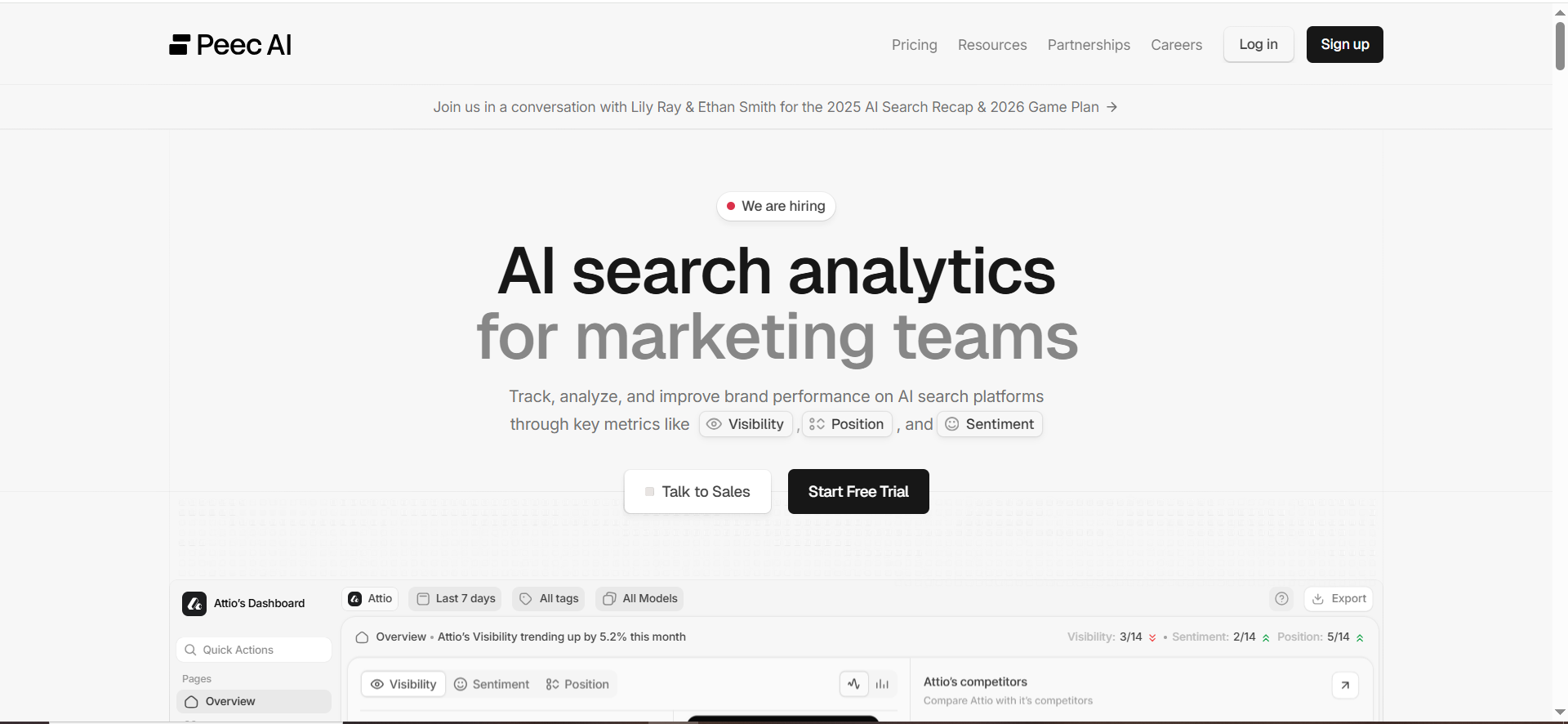
Peec AI is a specialist AI search analytics platform for marketing teams, which makes it relevant for readers comparing the broader AI marketing stack. It focuses on monitoring how brands perform across AI platforms, including ChatGPT, Perplexity, Gemini, and others, while helping teams identify prompt opportunities, benchmark competitors, and understand source citations.
Why teams use it
Peec feels like one of the cleanest “dedicated AI visibility” replacements for Surfer. If Surfer AI Tracker feels attached to a bigger SEO workflow you don’t need, Peec is appealing because the product story is much more focused. It is built around AI search analytics itself, not around optimizing content documents first.
What it’s good for
Peec is a strong fit for teams that want:
- clear AI visibility dashboards
- cross-engine monitoring
- prompt-level tracking
- competitor monitoring
- citation opportunity discovery
- a product that makes sense to marketers without a lot of setup
Its docs specifically call out tracking AI visibility, monitoring competitors, finding citation opportunities, spotting content gaps, and tracking changes over time, which overlaps with what buyers look for in AI strategic visibility.
When it’s a good fit
Peec is usually the best pick when your priority is marketing analytics for AI search, especially if you want to operationalize daily prompt runs quickly.
When it’s not a good fit
If your team is still heavily keyword-led and wants AI search tracked in a more SEO-native structure, LLMrefs may feel more intuitive. And if you need the broadest technical auditing or global coverage, Rankscale may be stronger, especially for teams benchmarking AI visibility prompt variation testing.
Pricing
Peec AI’s pricing starts at $95/month for the Starter plan. Enterprise pricing is custom.
Free tier?
Peec AI doesn’t offer a free tier, but it does offer a free trial.
Bottom line
Peec AI is probably the most straightforward specialist upgrade from Surfer AI Tracker for teams that mainly care about AI visibility analytics.
2. LLMrefs
What it does
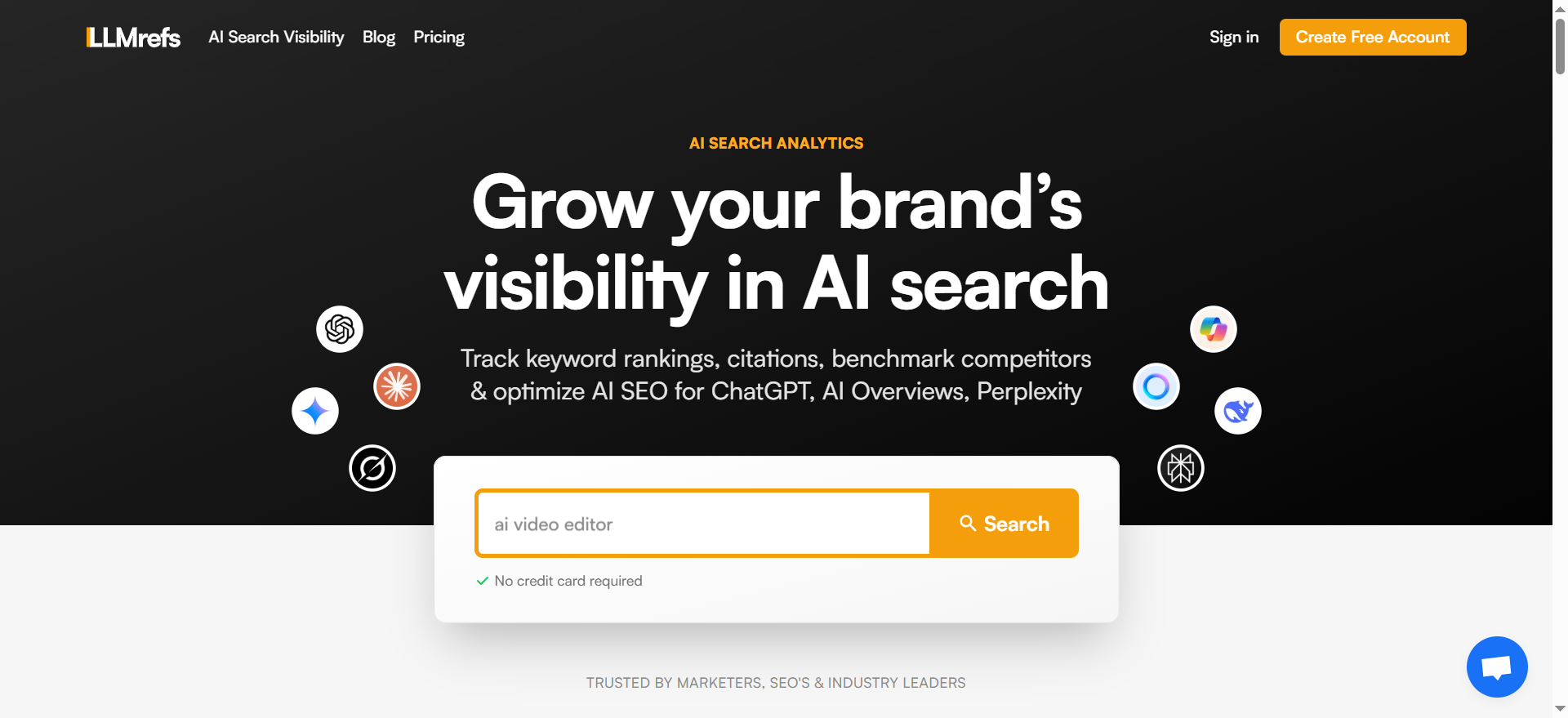
LLMrefs is an AI search analytics platform that positions itself as a bridge between traditional SEO and GEO, which is a useful context for teams exploring AISO vs SEO, AEO, and GEO.
Why teams use it
This is the best fit for SEOs who don’t want to throw away everything they already know. If your team is used to keyword clusters, search themes, and ranking reports, LLMrefs makes the move into AI visibility less disruptive, especially for teams already using keyword clustering and topic maps.
What it’s good for
LLMrefs is strong for:
- keyword-led AI visibility tracking
- share of voice measurement
- citation tracking
- competitor benchmarking
- multi-engine visibility reporting
- starter-friendly adoption
Its platform pages describe tracking brand visibility, share of voice, citations, and rankings across AI search engines including ChatGPT, Google AI Mode, AI Overviews, and Perplexity, which lines up closely with AI visibility metrics.
When it’s a good fit
Choose LLMrefs if your current motion is still anchored in SEO and you want a tool that makes AI search feel like a logical extension rather than a whole new discipline.
When it’s not a good fit
If your organization already works with structured prompt libraries and advanced prompt taxonomies, a more prompt-native platform may be better, especially if prompt workflows are central to your evaluation of prompt templates.
Pricing
LLMrefs’ pricing starts at $79/month for its All in One plan. Custom pricing may apply for higher-volume enterprise needs.
Free tier?
LLMrefs does offer a free tier, and its paid plan also includes a 7-day free trial.
Bottom line
LLMrefs is one of the best Surfer AI Tracker alternatives for SEO-led teams that want familiar logic, cleaner reporting, and a lighter learning curve.
3. AthenaHQ
What it does
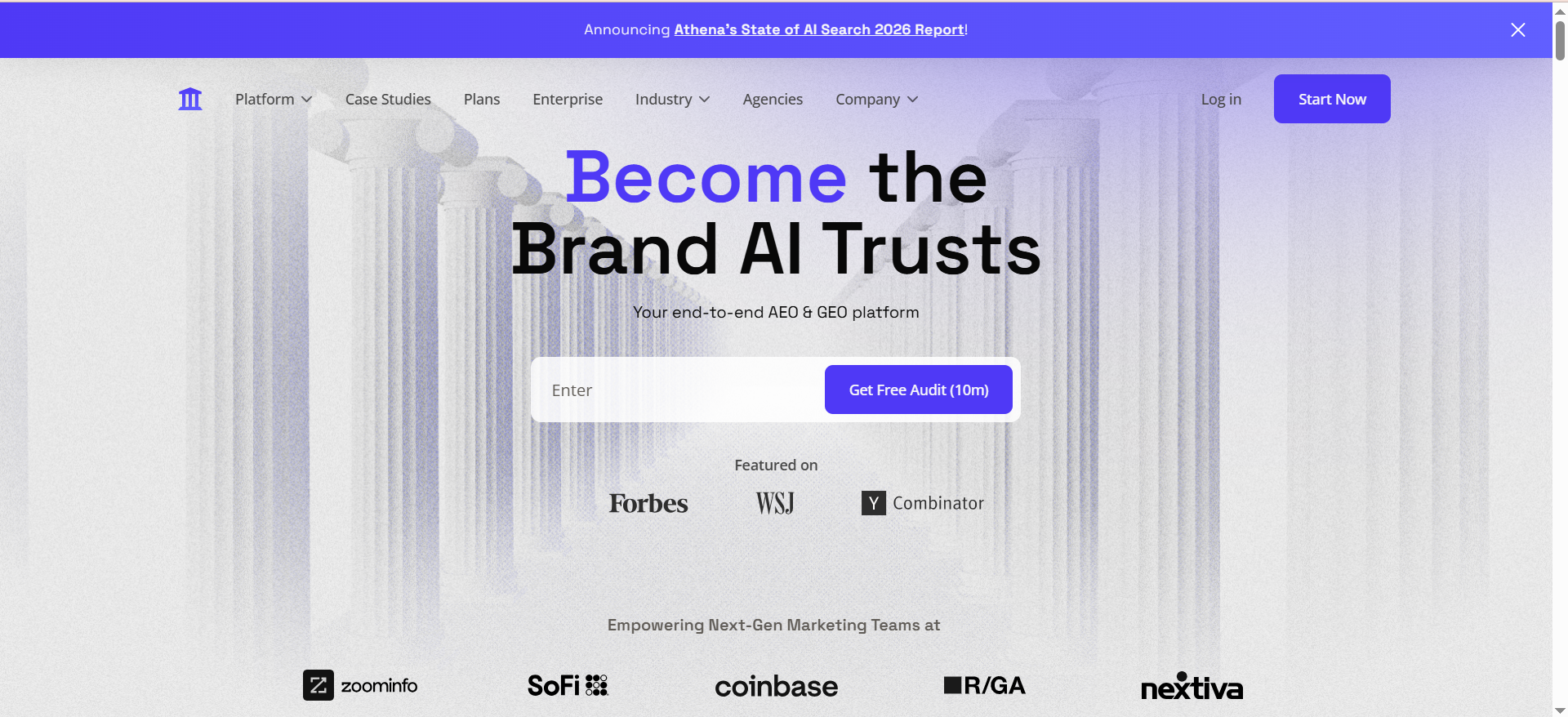
AthenaHQ is an AEO/GEO platform designed to help brands become the answer AI gives and the brand AI trusts, making it a natural fit for readers researching AEO-ready SaaS blogs. It pitches itself as an end-to-end platform rather than just a monitor. The company highlights cross-platform visibility tracking across 8+ LLMs, automated content optimization recommendations, competitor monitoring, and citation intelligence, which makes AthenaHQ relevant to buyers comparing AI visibility solutions for content optimization teams.
Why teams use it
AthenaHQ appeals to teams that don’t just want a dashboard. They want workflow support for acting on the data. That makes it attractive if Surfer AI Tracker feels too narrow on the monitoring side but you still want more operational guidance than pure reporting tools offer.
What it’s good for
AthenaHQ looks strongest for:
- AEO/GEO program management
- cross-platform visibility tracking
- competitor monitoring
- citation intelligence
- optimization recommendations
- teams building an actual AI search operating process
When it’s a good fit
It’s a good fit for growth-stage and enterprise teams that want a platform connecting visibility tracking to optimization actions.
When it’s not a good fit
If you only need lightweight visibility snapshots, AthenaHQ may be more platform than you need.
Pricing
AthenaHQ’s pricing starts at $295/month for the Self-Serve plan. Enterprise pricing is custom.
Free tier?
AthenaHQ doesn’t publicly list a free tier or free trial. It does offer a discounted first month on its Self-Serve plan.
Bottom line
AthenaHQ is one of the best alternatives when your team wants more than monitoring and is ready for a fuller GEO workflow.
4. Rankscale AI
What it does
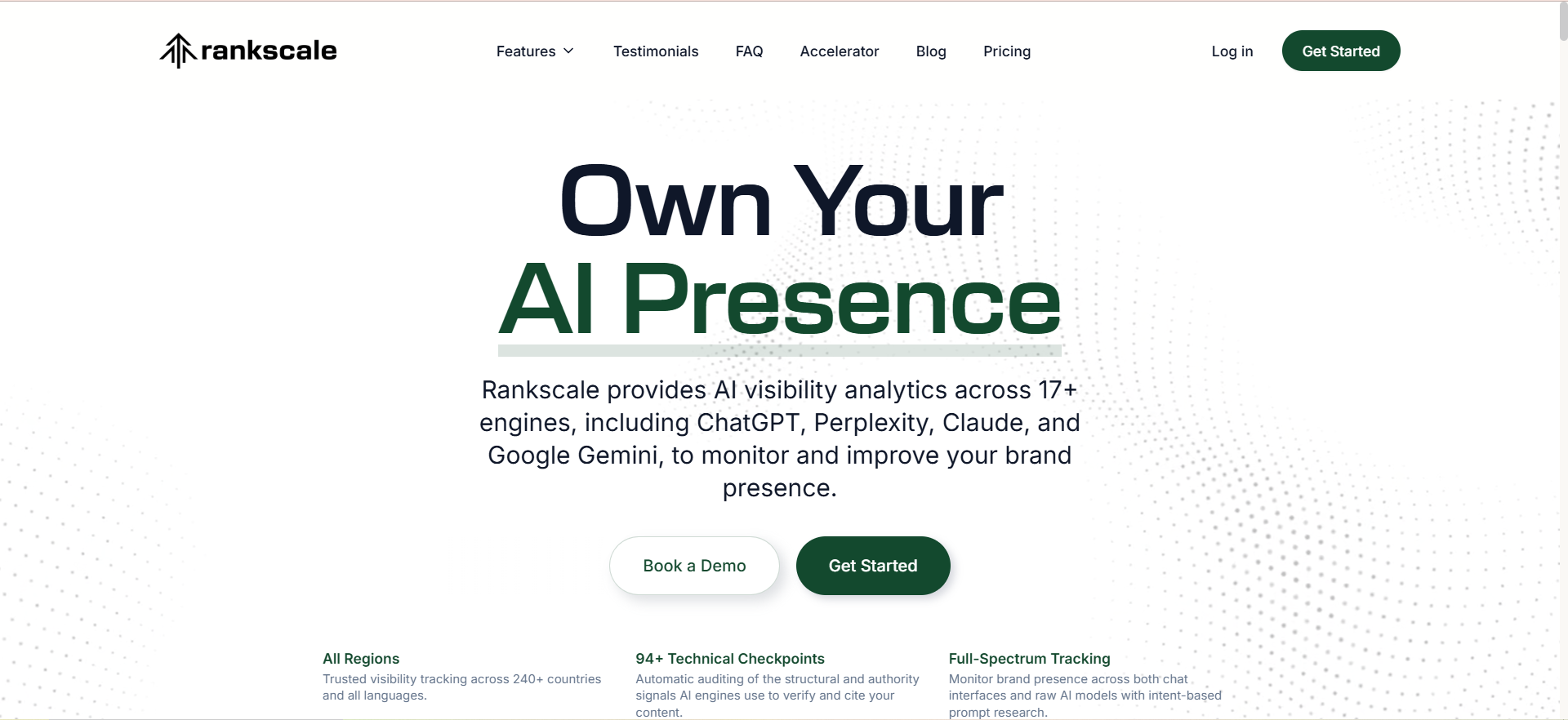
Rankscale AI emphasizes breadth, which is why it can appeal to teams evaluating the best AI visibility tools for engine coverage. It tracks visibility across 17+ engines, supports 240+ countries, includes extensive technical checkpoints, and offers flexible scheduling from hourly to monthly. It also highlights citation analysis, competitor benchmarking, sentiment trends, sources box analysis, and shareable dashboards, which makes it relevant to comparisons around AI visibility platform showdowns.
Why teams use it
If Surfer feels too limited in scope, Rankscale’s value is coverage. This is the alternative for teams that care about engine breadth, geographic breadth, or more technical analysis of how AI systems can access and interpret their content.
What it’s good for
Rankscale stands out for:
- wide engine coverage
- global and multilingual tracking
- flexible monitoring cadence
- technical AI visibility audits
- citation and source-box analysis
- agency sharing workflows
When it’s a good fit
This is a strong choice for agencies, international brands, and teams that want to monitor AI visibility as a broader search intelligence layer.
When it’s not a good fit
If you want the simplest possible product and fewer moving parts, Rankscale may be more system than you need.
Pricing
Rankscale AI’s pricing starts at $20/month for the Essentials plan. Higher tiers go up to $99/month for Pro, and Enterprise starts at $780/month.
Free tier?
Rankscale AI doesn’t offer a free tier, but it does offer a free trial for its Pro plan.
Bottom line
Rankscale AI is one of the best Surfer AI Tracker alternatives if your priority is scale, flexibility, and broad monitoring coverage.
5. Profound
What it does
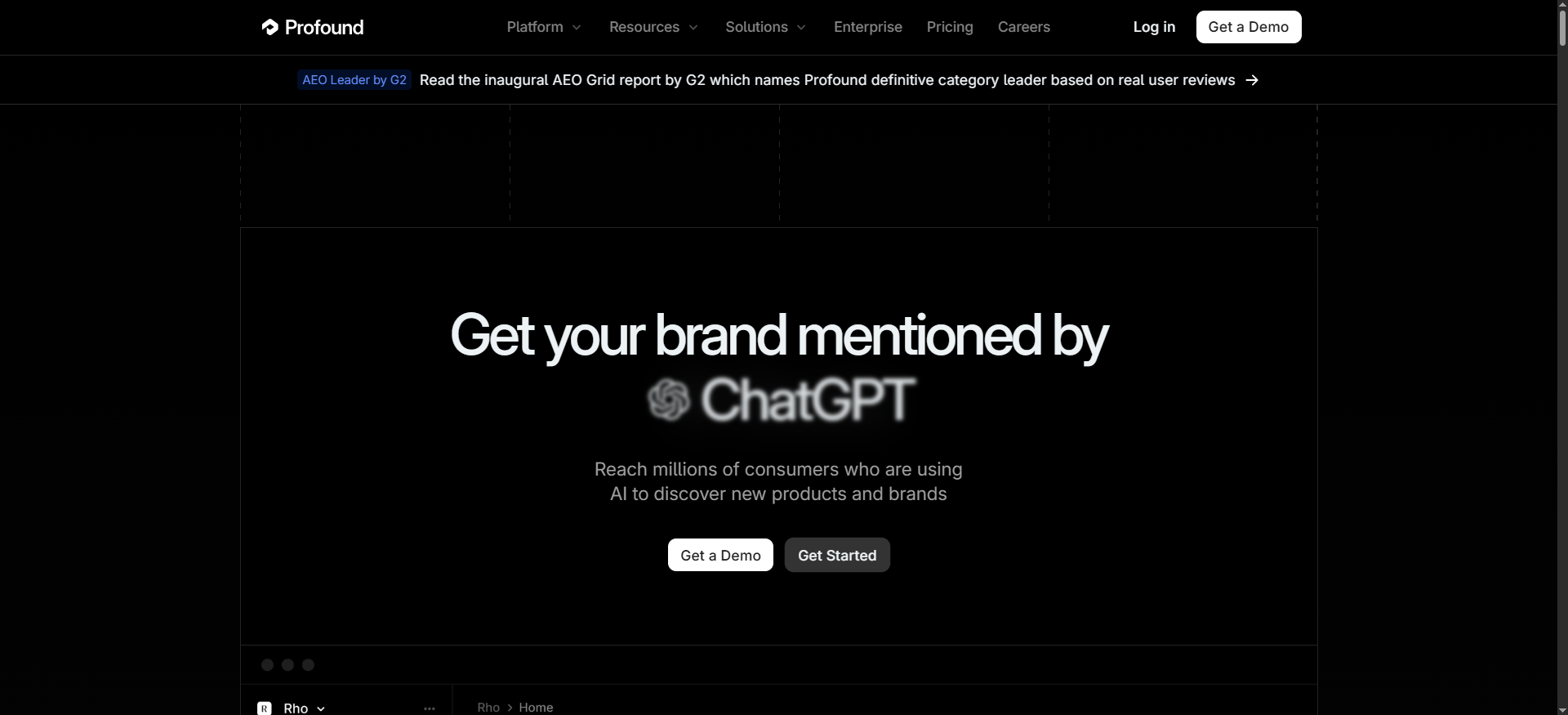
Profound positions itself as a platform to help brands gain visibility in AI-generated answers, optimize their presence in answer engines, and stay competitive in zero-click search environments, which connects well to generative engine optimization case studies. Its pricing and blog materials describe daily structured prompts, tracking for visibility, citations, sentiment, and enterprise-oriented workflows. It also highlights agent analytics, which lets teams see which AI crawlers are visiting websites and what content they analyze.
Why teams use it
Profound is often the answer when the buyer is not asking “what’s the easiest tool?” but “what platform can support a serious AI visibility program?”, which is a similar question to choosing the best LLMs for business growth.
What it’s good for
Profound looks strongest for:
- enterprise AI visibility monitoring
- structured prompt execution
- citation and sentiment analysis
- deeper operational reporting
- AI crawler and agent intelligence
- larger B2B teams
When it’s a good fit
Profound is best for teams with more mature reporting needs, more stakeholders, and a desire to tie visibility efforts to larger growth or brand programs.
When it’s not a good fit
For small teams that just want a lightweight dashboard, it may feel like too much platform.
Pricing
Pricing: Profound’s pricing starts at $99/month for the Starter plan. Its Growth plan is $399/month, and Enterprise pricing is custom.
Free tier?
Profound doesn’t offer a free tier, but it does offer a 7-day free trial on at least some paid plans.
Bottom line
Profound is a strong Surfer AI Tracker alternative for enterprise buyers and serious AI search programs.
What to look for in a Surfer AI Tracker alternative
Before you swap tools, be clear about what you actually need, especially if you are comparing platforms for AI search visibility audits. A lot of buyers say they want “better AI tracking,” but that can mean five very different things, which is why it helps to understand which platform excels in AI visibility metrics.
Prompt tracking
Some tools are prompt-first. Others are keyword-first. That distinction matters.
If your team thinks in brand questions, buyer prompts, category prompts, and comparison prompts, a prompt-first tool usually feels more natural. Peec AI and Profound lean strongly in that direction. Surfer AI Tracker also tracks prompts, with official pricing examples tied to tracked prompts.
If your team still works from classic SEO keyword sets and wants a smoother transition into GEO, LLMrefs may feel easier because it explicitly says it helps brands track keywords, not prompts, as they move from traditional search into GEO.
Citation capture
For many teams, citations matter more than raw visibility. Getting mentioned is useful. Knowing which pages, domains, or sources AI systems trust is what makes the data actionable, especially if you are evaluating AI citation tools at the URL level.
Peec AI explicitly emphasizes citation opportunities and source discovery, which makes it relevant for teams comparing AI brand mention tracking tools. AthenaHQ highlights citation intelligence. Rankscale focuses on citation analysis and source box analysis. Profound also tracks citations and sentiment in its pricing and product materials.
Competitor benchmarking
A serious AI visibility workflow is not just “are we showing up?” It is “who shows up instead of us, for which prompts, on which engines, and with which sources?’’
Surfer has improved here with competitor comparison and mention gap analysis, but dedicated alternatives often go deeper because competitor benchmarking is central to their product story. Peec AI, LLMrefs, AthenaHQ, Rankscale AI, and Profound all emphasize competitive visibility in one way or another.
Reporting and exports
This is where tool choice gets practical. The best product is often the one you can report from easily.
If you need to show trendlines, cross-engine comparisons, source patterns, or client-ready dashboards every week, reporting becomes a buying criterion. Rankscale calls out shareable dashboard links. Peec AI’s positioning is very analytics-forward. Surfer’s AI Tracker reporting has gotten stronger, but many buyers still want a more dedicated visibility dashboard.
Workflow fit
Ask who will actually use the product:
- SEO manager
- content lead
- growth leader
- demand gen team
- agency strategist
- RevOps or analytics
Surfer fits well when the same team owns content optimization and AI search. A specialist platform often fits better when AI visibility is becoming a standalone reporting stream.
Pricing model and scalability
Pricing models vary a lot:
- Surfer publishes plan-level AI Tracker access and prompt limits.
- Peec prices based on tracked prompts and models analyzed.
- AthenaHQ uses credits.
- Rankscale uses credits and flexible scheduling.
- Profound’s pricing is partially visible through its own materials and broader product pages, but tends to be oriented toward more serious usage.
- LLMrefs positions itself as accessible, with a free plan and paid tiers starting at a lower entry point according to its own site content.
📋 Get Listed / Advertisement
We update this guide monthly. Want your tool featured? Contact: [email protected]
Which Surfer AI Tracker alternative is best for each use case
Best overall specialist replacement: Peec AI
Pick Peec if you want the cleanest move from “AI tracking as a feature” to “AI visibility as a core workflow.”
Best for SEO teams: LLMrefs
Pick LLMrefs if your team still thinks in keywords and wants AI search reporting to fit naturally into SEO planning.
Best for full GEO workflow: AthenaHQ
Pick AthenaHQ if monitoring alone is not enough and you want a platform that also supports optimization actions and program management.
Best for broad coverage: Rankscale AI
Pick Rankscale if international monitoring, technical auditing, and wide engine coverage matter most.
Best for enterprise depth: Profound
Pick Profound if you need more structured monitoring, richer operational reporting, and enterprise-oriented visibility workflows.
When Surfer AI Tracker is still a good fit
Despite this alternatives list, Surfer AI Tracker is still a sensible choice in a few situations.
First, it makes sense if you already live inside Surfer for content optimization and don’t want another tool.Second, it is a reasonable fit if your AI visibility program is still early and you want AI tracking bundled with the broader content workflow.
Third, Surfer has clearly invested in improving the product through exact response views, sentiment analysis, competitor comparison, mention gap analysis, and Gemini support. So this is not a case of Surfer being weak. It is more a question of fit.
If your team now wants a specialist AI visibility platform, the alternatives above usually make more sense.
How to switch from Surfer AI Tracker without losing momentum
If you’re moving off Surfer AI Tracker, don’t start by importing every possible prompt. Start with a compact decision set:
- Brand prompts: Track direct brand questions and obvious comparison prompts.
- Category prompts: Add prompts buyers use before they know your brand.
- Competitor prompts: Track where rivals win mentions, citations, or source authority.
- Citation review: Look for domains and pages that get cited repeatedly.
- Weekly reporting: Report on visibility, citations, competitor share, and prompt wins or losses.
The biggest mistake is treating AI visibility like rank tracking, because AI search is probabilistic and answer-based, so you need trendlines, coverage, and source patterns, not just a single position. LLMrefs’ own educational content makes this point clear: AI search is non-deterministic, so the right way to measure performance is often through visibility frequency and share of voice rather than old-school rank logic alone.
📋 Get Listed / Advertisement
We update this guide monthly. Want your tool featured? Contact: [email protected]
Which Surfer alternative is best for agencies?
For agencies, the best Surfer AI Tracker alternative is usually Peec AI, with Rankscale AI as a strong second option depending on client mix.
Peec AI makes the most sense for agencies that want a cleaner, marketing-friendly workflow for tracking AI visibility across multiple brands. It is well suited for agencies because the platform focuses on prompt tracking, competitor monitoring, citation opportunities, and cross-engine visibility without forcing teams into a much broader SEO content suite.
That matters when an agency needs to move quickly across several accounts and show clients clear results without too much setup or operational overhead.
Another reason Peec AI stands out for agencies is reporting, which matters even more if you are comparing SEO reporting software for client delivery. Most agencies do not just need raw data. They need data they can explain.
They need something that helps them answer questions like: Where is the client being mentioned? Which competitors are appearing more often? Which prompts are driving visibility? Which sources are getting cited? A tool that makes those answers easy to surface is usually more valuable than one with a longer feature list.
That said, Rankscale AI can be a better fit for agencies with more technical needs or international clients. If an agency manages brands across multiple markets, languages, or regions, Rankscale’s broader engine coverage and geographic reach may be more useful. It is also a strong option for agencies that want more technical visibility analysis, flexible monitoring schedules, and dashboard sharing.
So the simplest recommendation is:
- Choose Peec AI if your agency wants the best all-around client reporting and a straightforward AI visibility workflow.
- Choose Rankscale AI if your agency handles global brands, multilingual campaigns, or more technical monitoring requirements.
For most agencies, Peec AI is the safer default because it feels easier to operationalize across multiple client accounts, especially for teams comparing the best AI marketing tools for agencies.
Which Surfer AI Tracker competitor is best for enterprise teams?
The best Surfer AI Tracker competitor for enterprise teams is usually Profound, with AthenaHQ also worth serious consideration.
Profound is the strongest fit for enterprise buyers because larger teams usually need more than simple tracking. They need structure, consistency, and reporting depth. Enterprise teams often care about things like standardized prompt sets, citation analysis, sentiment monitoring, executive reporting, and workflows that can support multiple stakeholders across brand, SEO, content, and growth.
Profound is better aligned with that kind of environment than lighter-weight tools built mainly for smaller marketing teams.
What makes Profound especially attractive at the enterprise level is its broader operational feel. Enterprise buyers are not usually looking for a lightweight dashboard they log into once a week. They want a platform that helps them understand brand presence across AI-generated answers in a repeatable, scalable way, which is why enterprise teams often care about stronger author expertise signals in SaaS content. They also tend to care more about structured monitoring, more formal reporting, and stronger internal visibility into what is changing over time.
AthenaHQ is another strong option for enterprise teams, especially those that want a fuller GEO or AEO workflow rather than just monitoring. If the goal is not only to measure visibility but also to connect that visibility to content optimization, competitor movement, and broader AI search strategy, AthenaHQ may be a better fit. In some companies, that broader workflow matters more than pure monitoring depth.
A simple way to think about it:
- Choose Profound if your enterprise team wants deeper monitoring, more structured reporting, and a platform that supports a mature AI visibility program.
- Choose AthenaHQ if your enterprise team wants a broader end-to-end GEO platform with more optimization support.
For most enterprise organizations, Profound is the stronger answer when the main priority is visibility intelligence at scale, especially if they are also reviewing the best AI tools for enterprise SaaS marketing.
Is there a cheaper alternative to Surfer AI Tracker?
Yes. If cost is a major concern, LLMrefs is usually the most obvious cheaper alternative to Surfer AI Tracker, especially for smaller SEO-led teams comparing cheap SEO tools.
This comes down to how you define value.Surfer AI Tracker can be appealing because it is bundled into a broader SEO and content platform, which may be cost-effective if you already use Surfer heavily, especially if you are also comparing best free SEO tools. But if you do not need the full Surfer ecosystem and only want AI visibility tracking, then paying for a specialist tool with a lower entry point can make more sense.
LLMrefs stands out here because it appears to offer a more accessible starting point while still covering the core needs many teams care about: visibility tracking, citations, share of voice, and competitor monitoring. It is particularly appealing for teams that already think in terms of keywords, clusters, and SEO reporting. Instead of paying for a larger all-in-one workflow, they can use a tool that focuses more directly on AI visibility, which is a useful lens when comparing AI visibility case studies on mentions, citations, and conversions.
This is especially helpful for:
- smaller SaaS teams
- solo SEO consultants
- In-house marketers testing GEO before committing to a bigger platform
- teams that want reporting without enterprise complexity
That said, “cheaper” does not always mean “better value.” A lower-cost tool is only the right choice if it fits your workflow. For example, if your team wants a prompt-first experience or agency-ready reporting, Peec AI may still be the better choice, and if you want broader global tracking, Rankscale may justify the extra spend. If you already use Surfer across content operations, staying with Surfer may actually be more efficient than adding another subscription, especially if your team is already running content audits in GA4 and GSC.
So the practical answer is:
- LLMrefs is the best cheaper alternative if you want a lower-cost entry into AI visibility tracking.
- It is the strongest fit for SEO-led teams that do not need a heavyweight platform, which also makes it relevant for readers comparing the best SEO tools for small businesses.
- It may not be the best value if your needs are more agency-focused, enterprise-focused, or highly technical.
FAQs
The strongest current options are Peec AI, LLMrefs, AthenaHQ, Rankscale AI, and Profound, and readers comparing that shortlist may also want to review AI SEO tool comparisons. They all focus more directly on AI visibility than Surfer, though each takes a slightly different approach to prompts, reporting, citations, and workflow depth.
Most teams switch when they want a dedicated AI visibility platform rather than an AI monitoring feature inside a larger content optimization suite.Common reasons include better competitor reporting, stronger citation analysis, wider engine coverage, or a workflow that fits GEO/AEO more directly.
Yes, especially If you already use Surfer heavily for content optimization and want AI visibility data in the same platform, it can still make sense to keep it alongside other site audit tools. Its AI Tracker has improved with exact AI responses, mention gap analysis, sentiment analysis, and Gemini support, but some teams still compare it against newer AEO tools for AI Overviews.
Peec AI and Rankscale AI both look strong for agency workflows, which makes them relevant for teams reviewing the best AI marketing tools for agencies. Peec has agency pricing and marketing-friendly analytics, while Rankscale emphasizes shareable dashboards, broad coverage, and flexible monitoring, which matters if you also evaluate broader marketing analytics tools.
LLMrefs is probably the best fit for SEO-led teams because it explicitly frames AI visibility in a keyword-led model, making the move from classic rank tracking to GEO easier, which aligns with broader comparisons of AI SEO tools.
Profound and AthenaHQ look the strongest for enterprise buyers, so readers evaluating them may also want to compare other enterprise SEO tools.Profound leans into deeper operational monitoring and agent analytics, while AthenaHQ positions itself as a full AEO/GEO platform with optimization workflows, which also ties into broader AI visibility tracking services.
Yes. Content optimization tools help improve pages before or during publishing, while AI visibility tools measure how brands, pages, and sources appear inside AI-generated answers after the fact, across prompts, engines, and competitor sets.
Final verdict
The best Surfer AI Tracker alternative depends on what you’re replacing.
If you’re replacing a bundled feature with a specialist product, Peec AI is the cleanest upgrade, especially for teams building stronger SEO strategies with AI visibility tools. If you want a more SEO-native bridge into AI search, LLMrefs is the most comfortable fit. If you need a broader AEO/GEO operating system, AthenaHQ is compelling.If scale and global coverage matter most, Rankscale AI stands out, especially for teams comparing platforms built for category tracking. And if you need deeper enterprise monitoring and operational visibility, Profound is the strongest heavyweight option.
For most growth-stage marketing teams, the real decision is not “which tool has the most features?” It is “which tool helps us turn AI visibility data into actions we can trust?” That usually means choosing the platform whose tracking model, reporting style, and workflow match how your team already works, especially if you are building a stronger AI search visibility strategy.
📋 Get Listed / Advertisement
We update this guide monthly. Want your tool featured? Contact: [email protected].