

If you want the closest step up from Writesonic GEO for a serious AI visibility program, start with AthenaHQ or Profound, especially if you are already comparing the best AI visibility tools for GEO. If you want a cleaner, marketer-friendly specialist tool, look at Peec AI.If you want the most affordable keyword-first option, LLMrefs is one of the easiest recommendations for teams also exploring the best cheap SEO tools. If your team cares most about enterprise experimentation, visibility by segment, and AI-search conversion workflows, xFunnel AI stands out for teams investing in AI strategic visibility. Writesonic still makes sense for teams that specifically want GEO plus content creation under one roof, but If your priority is reporting depth, vendor neutrality, or AI visibility as its own operating system, one of these alternatives will usually fit better for teams building structured AI-era AEO content.
📋 Get Listed / Advertisement
We update this guide monthly. Want your tool featured? Contact: [email protected].
Best Writesonic GEO alternatives (quick comparison)
| Tool | Best for | Notable strength | Pricing signal |
|---|---|---|---|
| AthenaHQ | Teams that want a serious AEO/GEO platform with enterprise posture | Unlimited topics, prompt volume estimation, enterprise workflow | Self-guided and custom plans available |
| Peec AI | Marketers who want simplicity and fast actionability | Clear prompt setup, citation-led visibility workflows, multi-country pricing model | Usage-based pricing; annual discount available |
| LLMrefs | Cost-conscious SEO teams and agencies | $79/month entry point, multi-engine access, exports/API | Starts at $79/month, free account/trial messaging available |
| Profound | Brands that want deeper AI visibility reporting and enterprise options | AI search visibility specialization and multi-plan ladder | Starter from $99/month and Growth from $399/month via Profound’s public materials |
| xFunnel AI | Enterprise teams tying AI visibility to strategic optimization and scale | Persona-level analysis, share of voice, enterprise services | Free starter audit and enterprise pricing |
1. AthenaHQ
What it does
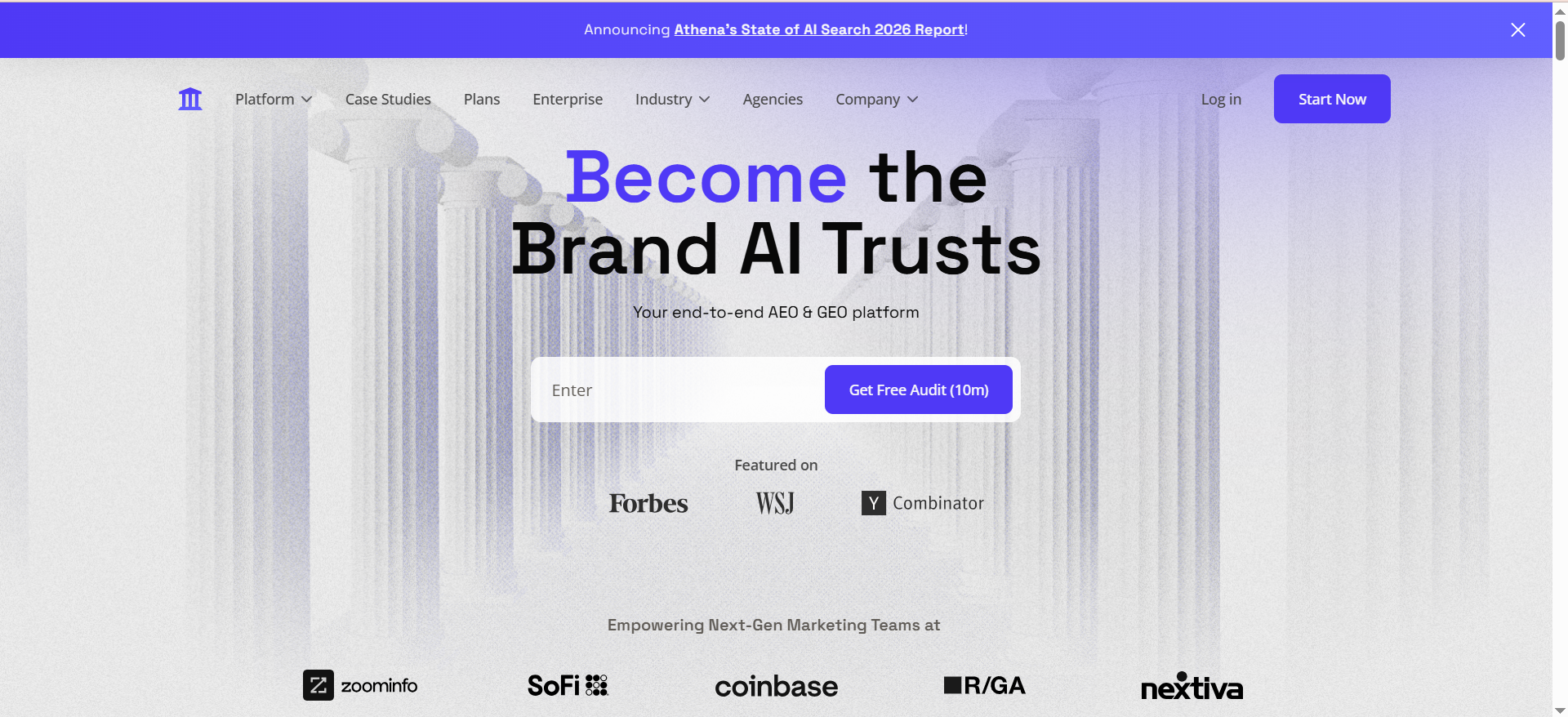
AthenaHQ positions itself as an AEO and GEO platform for AI search and explicitly frames its mission around helping brands become “the answer AI gives” and “the brand AI trusts.” Its pricing page emphasizes unlimited topics, prompt volume estimation and analysis, and both self-guided and enterprise-oriented options.
Why teams use it
AthenaHQ is a good Writesonic GEO alternative for teams that feel ready for a more dedicated answer-engine platform and want a more serious approach to AEO tools. The biggest appeal is not that it does something radically different from every other AI visibility tool. It is that the product is packaged like a system for teams that take AI visibility seriously as an ongoing function, not just an add-on to content production.
What it’s good for
AthenaHQ looks strongest for:
- B2B teams building a formal AI visibility program
- Brands that need recurring prompt analysis at scale, especially teams evaluating AI visibility tools for category tracking.
- Companies that want a more platform-specific AEO/GEO identity than Writesonic’s bundled model often end up comparing providers that support AEO-ready SaaS blogs.
- Teams that want a path from self-serve into enterprise usage without switching products
When it’s a good fit
Choose AthenaHQ over Writesonic GEO if your team is saying things like:
- “We need a platform for AI visibility itself, not just AI visibility inside a content suite.”
- “We need something leadership can take seriously as a reporting system.”
- “We want broader operational maturity around answer-engine search,” which is closely related to building a stronger AI search visibility program.
When it’s not a good fit
AthenaHQ may be overkill if you are still early, only tracking a small handful of prompts, or mainly want a lightweight tool that lives close to your content creation workflow, in which case a broader AI content generator tool for SaaS might feel more practical.
Key capabilities
Publicly visible strengths include:
- Unlimited topics
- Prompt volume estimation and analysis
- Credit-based response tracking
- Self-guided and enterprise routes for teams comparing AI visibility tools with bulk prompt upload and tagging.
Pricing
AthenaHQ’s self-serve plan starts at $295/month. It also offers a custom-priced plan for enterprises and agencies.
Free tier?
AthenaHQ doesn’t appear to offer a free tier. Its site shows paid plans and a sales-led/demo path instead.
Downsides / limitations
The main tradeoff is that AthenaHQ is less obviously a content-production hub than Writesonic. If you specifically want one platform that writes, optimizes, audits, and tracks AI visibility, Writesonic still has a cleaner all-in-one story. AthenaHQ looks stronger when AI visibility itself is the center of gravity.
2. Peec AI
What it does
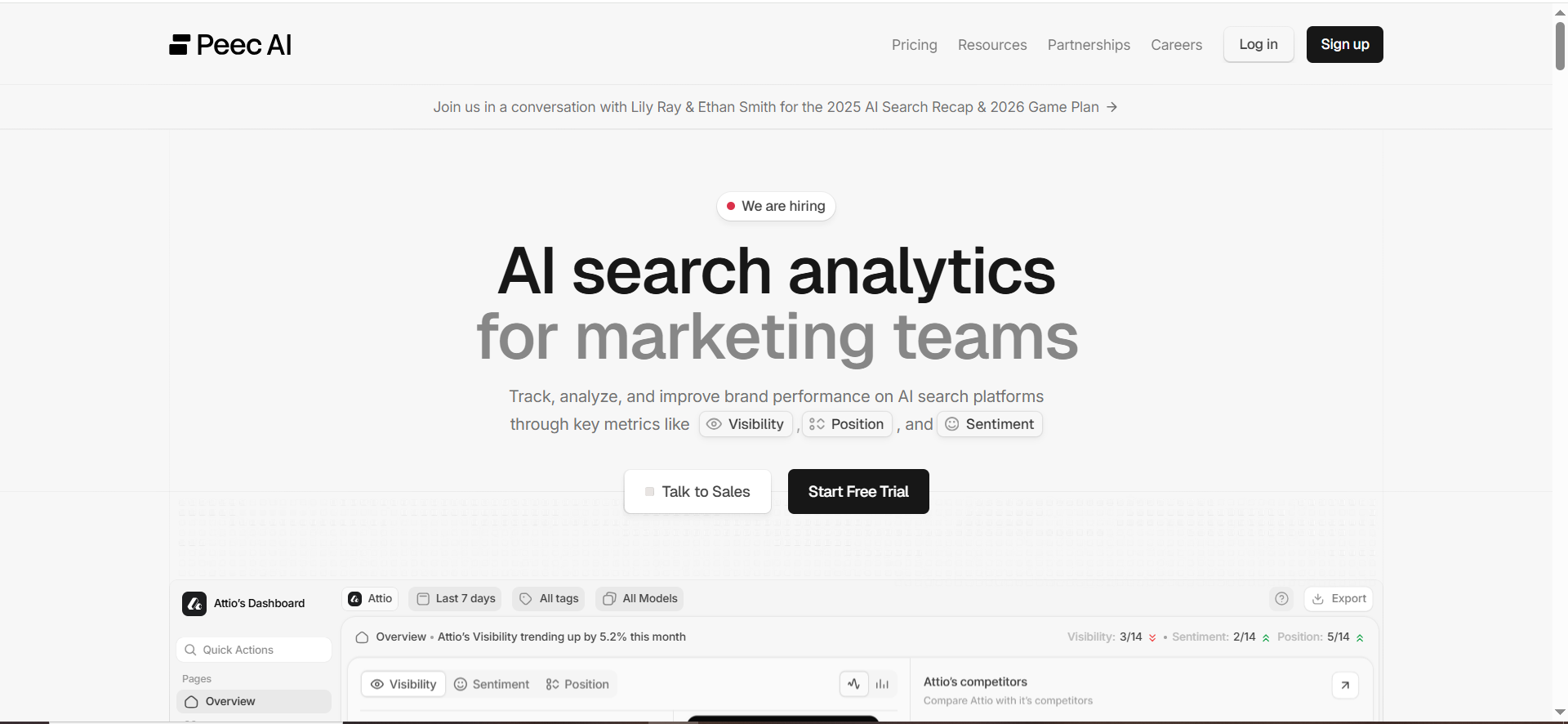
Peec AI positions itself as AI search analytics for marketing teams. Its messaging is straightforward: identify the prompts that matter, monitor rankings, and act before competitors do. Customer quotes on the site focus on clarity, visibility into surfaced content, and the ability to act on citations rather than drowning in extra features.
Why teams use it
Peec is appealing to buyers who want a dedicated AI visibility product without enterprise-software heaviness, especially if they need prompt monitoring tools. It sits in a nice middle ground. It feels more specialist than Writesonic but often simpler and more immediately usable than the more enterprise-coded platforms.
What it’s good for
Peec is especially compelling for:
- Marketing teams that want a clean UI and simple setup
- Teams prioritizing actionable prompt and citation insights, particularly if they care about prompt variation testing.
- Buyers who want AI visibility focus without a giant bundled suite
- Organizations that care about multi-country and multi-language flexibility, because Peec says pricing is tied to prompt usage rather than extra region or language charges
When it’s a good fit
Choose Peec over Writesonic GEO if your team wants less “content platform” and more “AI visibility workstation,” especially if you are exploring GEO prompt monitoring tools. If your biggest frustration with bundled platforms is that they can feel crowded or unfocused, Peec’s positioning around simplicity is a real plus for teams evaluating best AI visibility tools with prompt templates.
Its own customers explicitly describe it as avoiding feature overload and keeping the workflow centered on prompts, visibility, and citations.
When it’s not a good fit
If you want deep in-platform content generation, SEO audits, and broader SEO tooling rolled into one subscription, Writesonic is still better aligned with that need, especially for teams evaluating the best content optimization tools.
Key capabilities
Publicly surfaced strengths include:
- Prompt-focused setup
- Visibility tracking across major AI-driven discovery workflows
- Citation-oriented insights
- Competitor-aware positioning
- Usage-based flexibility across countries and languages, which fits teams comparing AI visibility tools for prompt templates.
Pricing
Peec AI’s pricing is not publicly listed as a fixed starting price. Its pricing is based on the number of tracked prompts and models analyzed, with higher tiers getting lower per-prompt pricing.
Free tier?
Peec AI doesn’t appear to offer a free tier. It does offer a free trial.
Downsides / limitations
Peec may not be the best fit if you need a huge all-in-one SEO/content stack or if procurement prefers the deepest enterprise sales-and-support structure from day one. Its biggest strength is also its tradeoff: focus and simplicity over total suite breadth.
📋 Get Listed / Advertisement
We update this guide monthly. Want your tool featured? Contact: [email protected].
3. LLMrefs
What it does
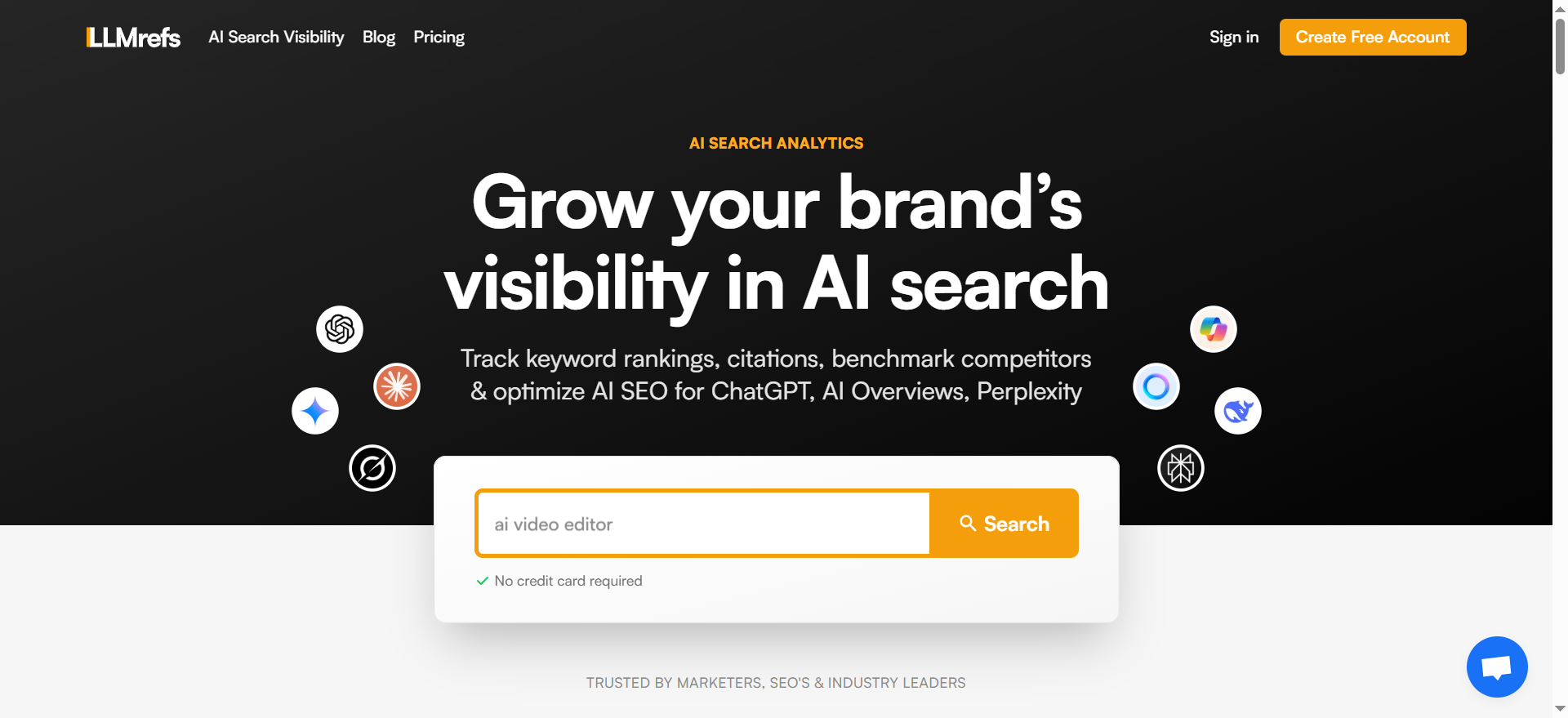
LLMrefs is one of the clearest specialist alternatives to Writesonic GEO, and it fits naturally into a shortlist of the best AI visibility tools by engine coverage. The platform positions itself as generative AI search analytics and an LLM SEO tracker, with public emphasis on keyword rankings, citations, competitor benchmarking, geo-targeting, and exports. It also publicly lists broad engine coverage, including ChatGPT, AI Overviews, AI Mode, Gemini, Perplexity, Claude, Grok, Copilot, Meta, and DeepSeek.
Why teams use it
The big reason teams move to LLMrefs is simple: it looks purpose-built for search and AI visibility people. The product language is keyword-first, reporting-first, and operationally clear. It does not try to be your content writer, SEO auditor, and brand tracker all at once.For a lot of SEO managers, that is a feature, not a bug, especially if they are already comparing SEO rank tracking software.
What it’s good for
LLMrefs is especially strong for:
- SEO teams that want AI visibility in a familiar reporting logic
- Agencies managing multiple domains or projects
- Buyers who need exports or API access
- Cost-sensitive teams that still want broad engine coverage
- Teams that value geo-targeting and multi-language support, which makes it relevant to buyers comparing bulk prompt upload and tagging tools
When it’s a good fit
Choose LLMrefs over Writesonic GEO if your primary question is, “How do we measure and benchmark AI visibility cleanly?” rather than, “How do we combine AI visibility with content generation?” It is also a strong fit for agencies because the public plan includes unlimited team members and unlimited projects in a single subscription.
When it’s not a good fit
LLMrefs is less suitable if you want a built-in content engine and broader SEO workflow inside the same product. It is also probably not the final answer for very large enterprises that want extensive managed support, custom onboarding, or service-heavy engagement.
Key capabilities
Publicly listed features include:
- 500 prompts tracked
- Brand mentions, source tracking, and fan-out queries
- Weekly automated reporting
- Citation tracking
- Geo-targeting in 50+ countries and 20+ languages
- Unlimited team members
- Unlimited projects
- CSV export and API access, which makes LLMrefs relevant to teams evaluating the best SEO reporting software
- A set of free AI SEO tools such as crawlability checker and llms.txt generator
Pricing
LLMrefs’ pricing starts at $79/month for its All in One plan.
Free tier?
LLMrefs doesn’t offer a free tier. It does offer a 7-day free trial.
Downsides / limitations
The tradeoff with LLMrefs is that it is a specialist. That is what makes it appealing, but it also means it will not replace your broader content or technical SEO stack. If you want one platform to track AI visibility and also generate, refresh, and optimize content inside the same workflow, Writesonic still has the stronger all-in-one case.
4. Profound
What it does
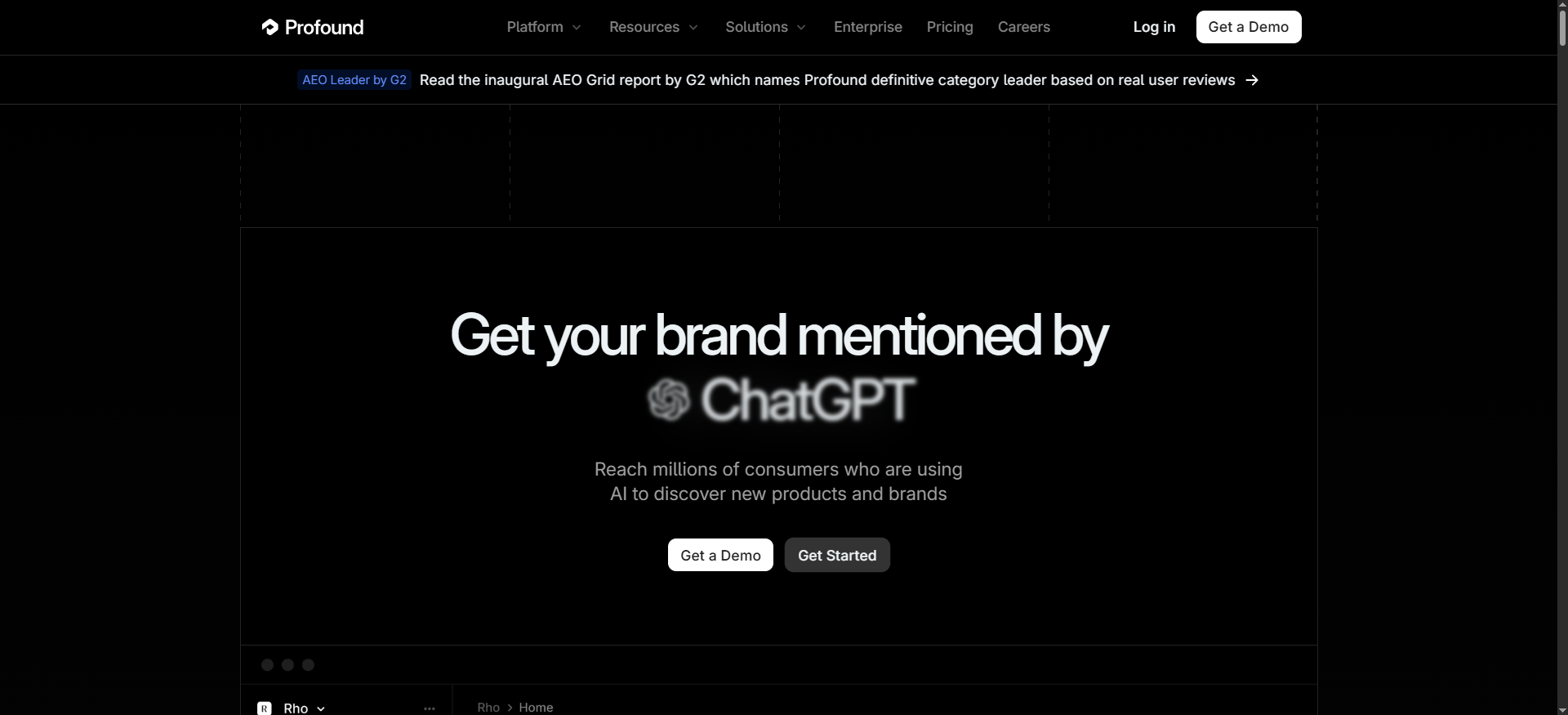
Profound positions itself around helping brands gain visibility in AI-generated answers and compete in the zero-click environment of answer engines. It is one of the better-known specialist names in the category and is often referenced as a more enterprise-facing AI visibility product.
Why teams use it
Profound is attractive when a team wants a standalone AI visibility platform with stronger category identity and a more developed plan ladder than a lightweight tool, which is why buyers often look at an AI visibility platform showdown. It is especially relevant for buyers who think Writesonic’s strength in content and SEO bundling is not actually their top priority.
What it’s good for
Profound is a strong fit for:
- Brands treating AI search as a formal growth channel, especially if they are learning how to get cited in AI answers.
- Teams that want specialist software rather than a broader content platform
- Companies that need clearer upgrade paths from early-stage to enterprise
- Buyers who want a tool with more obvious AEO/GEO category depth than Writesonic’s bundled offer
When it’s a good fit
Choose Profound over Writesonic GEO if reporting depth and AI visibility specialization matter more than having an AI article writer built in, especially if your team is comparing AI strategic visibility approaches. It is a natural alternative for teams that want a product whose brand, roadmap, and story are all centered around AI-answer visibility.
When it’s not a good fit
Profound may be less attractive if you are a small team trying to keep software spend down while also consolidating tools. In that scenario, Writesonic or LLMrefs may look more practical.
Key capabilities
From public materials and Profound’s own positioning, the product focuses on:
- AI visibility in answer engines
- AI bot tracking
- Answer-engine insights
- Specialized AEO workflows, which connects closely with broader interest in answer engine optimization
- Broader plan options from starter through enterprise
Pricing
Profound’s pricing is not publicly listed as a fixed starting price on its current pricing page. Its pricing is available through a customized enterprise plan.
Free tier?
Profound doesn’t appear to offer a free tier. Its site points users to a demo instead.
Downsides / limitations
Profound’s main downside relative to Writesonic is the same as with most specialist tools: it is not trying to be your full content engine. If you want to “track, diagnose, write, optimize, and publish” in a single workspace, Writesonic may still feel more convenient. Profound makes more sense when specialized AI visibility control matters more than convenience.
5. xFunnel AI
What it does
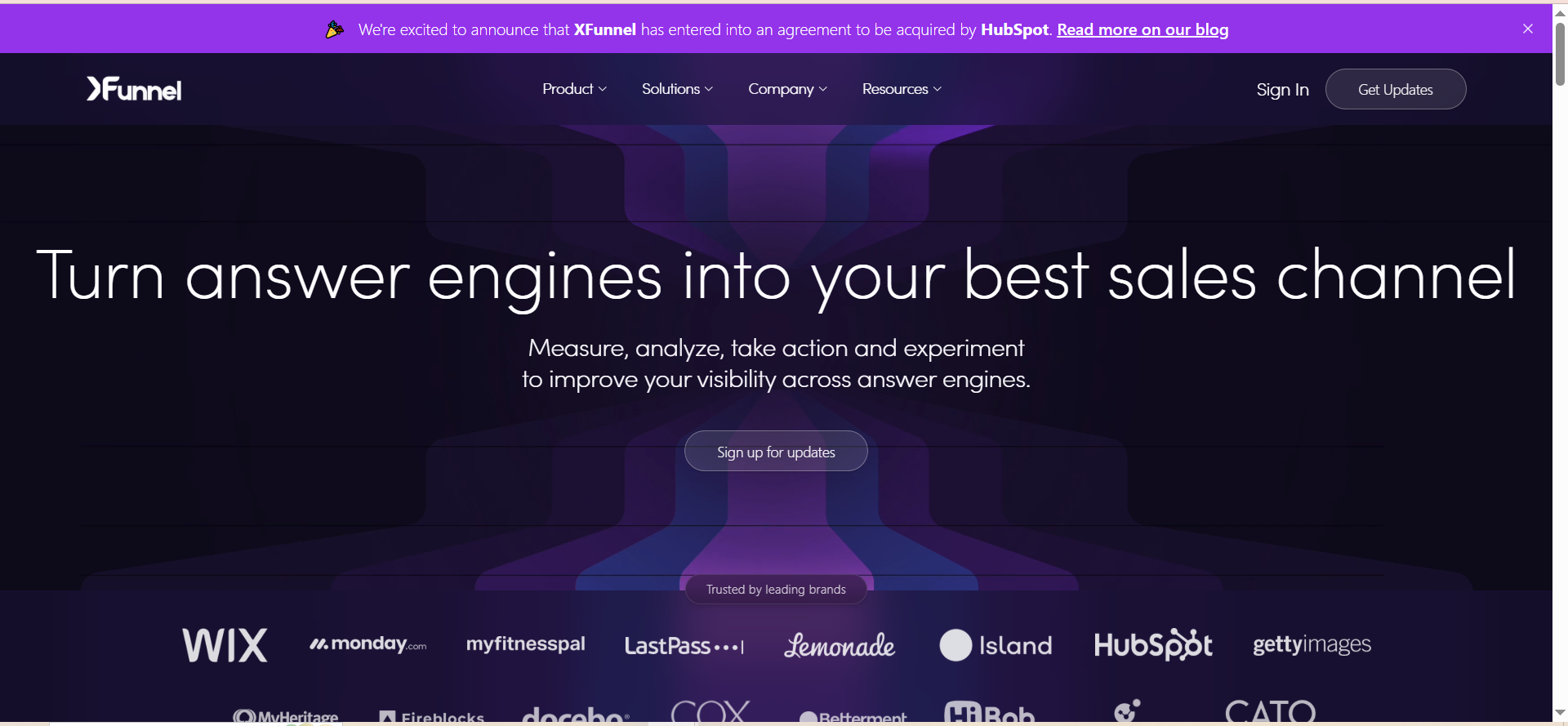
xFunnel positions itself as an AI search optimization platform focused on helping brands improve visibility across AI search systems and connect that visibility to business outcomes, making it relevant for teams comparing share of voice tools for AI answers. Its public site emphasizes share of voice, sentiment, competitor comparisons, persona-level analysis, and enterprise support. It also offers a Free Starter one-time audit and an Enterprise plan with daily monitoring and broader coverage.
Why teams use it
xFunnel is not just selling “see your AI visibility,” since it is selling a more strategic optimization layer for teams interested in the most effective strategies for AI visibility enhancement. That makes it especially interesting for enterprise marketing teams and revenue organizations that care about how AI search visibility maps to segments, personas, and conversion.
What it’s good for
xFunnel is strongest for:
- Enterprise teams
- Revenue-led marketing orgs
- Companies that want strategic guidance, not just dashboards, which overlaps with the broader topic of most effective strategies for AI visibility enhancement
- Teams that want AI visibility framed around business outcomes and scale
- Brands that need more structured support and services
When it’s a good fit
Choose xFunnel over Writesonic GEO if your team wants a more enterprise consultative model, broader managed-service feel, and visibility analysis by segment or persona. That is not how Writesonic is primarily packaged.
When it’s not a good fit
If you want a quick self-serve tool with content production in the same UI, xFunnel is probably less aligned. It appears more enterprise and service-heavy.
Key capabilities
Publicly surfaced features include:
- Tracking across ChatGPT, Perplexity, Gemini, Claude, Google AI Overviews, AI Mode, Copilot, and Grok, which makes xFunnel relevant to buyers comparing the best AI visibility tools by engine coverage.
- Share of voice and sentiment analysis
- Persona-level analysis
- Unlimited queries in the enterprise plan
- Daily monitoring
- Multi-language and multi-region support in enterprise
- Slack, email, and phone support for enterprise customers
Pricing
xFunnel AI offers a $0 one-time audit as its entry option. Its full platform is available on custom enterprise pricing.
Free tier?
xFunnel AI doesn’t offer a full free tier. It does offer a free starter audit.
Downsides / limitations
The biggest downside is fit. xFunnel looks excellent for larger organizations, but it may be too much for smaller teams that just want reliable prompt tracking at a manageable monthly cost. It also will not satisfy buyers who want an integrated AI writing environment.
Why teams look for a Writesonic GEO alternative
Writesonic’s pitch is clear, since it is an AI search visibility and optimization layer inside a broader platform that also includes SEO, content creation, and workflow features, which puts it close to broader conversations around best AI SEO tools. On its pricing page, Writesonic positions GEO as part of a larger “complete AI search optimisation platform,” with daily tracking, prompt diversification, sentiment analysis, and action-oriented recommendations.
Depending on plan, public pricing starts at $99/month for Starter and $249/month for Basic before annual discounts, with lower annualized rates shown on the page.
That is attractive for smaller teams because it reduces tool sprawl, which is part of why many SaaS marketers evaluate the best tools for SaaS SEO. Instead of buying one platform for content, one for SEO workflow, and another for AI visibility, you can keep a lot of it in one place if your broader goal is content marketing for SaaS.
Writesonic also ties GEO to adjacent workflows like content creation and AI optimization, which is useful if your main goal is to move from prompt tracking into action quickly with AI content generator tools for SaaS.
But here is where alternatives enter the picture.
1. You may want a specialist, not a bundle
All-in-one products are great until one function becomes strategically important enough to deserve its own system, which is exactly how many teams now think about answer engine optimization. Once leadership wants recurring reports on citations, share of voice, model-by-model trends, competitor movement, or geography-level visibility, a specialist platform often feels cleaner than a bundled tool, especially if you are already focused on AI visibility metrics.
2. You may want broader platform neutrality
Writesonic lives in a wider content and SEO ecosystem that naturally influences how the product is packaged.Some buyers prefer a platform whose entire value proposition is AI visibility itself, which is why this decision often overlaps with understanding AISO vs SEO vs AEO vs GEO.Tools like Profound, AthenaHQ, and LLMrefs are marketed more directly around becoming visible in AI-generated answers rather than bundling that outcome into a writing-led suite, which makes them relevant for teams studying AE SEO playbooks for AI answers and citations.
3. You may need more reporting depth
If your team needs dashboards for leadership, exported data, competitor benchmarking, or flexible analysis by country, model, or project, the quality of reporting becomes the deciding factor, especially when reporting AI visibility to leadership. LLMrefs explicitly highlights CSV export and API access in its public plan details. XFunnel leans into voice, persona-level analysis, and enterprise support. AthenaHQ emphasizes prompt volume estimation and enterprise-scale usage.
4. You may need a different pricing logic
Writesonic prices GEO as part of a broader product stack, while other vendors use very different pricing models that appeal to teams comparing best AI visibility solutions for content optimization teams. Peec AI uses a usage-oriented model based on tracked prompts and analyzed models. LLMrefs publicly advertises a straightforward $79/month plan.
XFunnel offers a free starter audit plus enterprise pricing. Those models appeal to very different buyers, especially teams deciding between specialist platforms and best enterprise SEO tools.
What to look for in a GEO platform instead
Before you switch, define what “better” actually means for your team, because most buyers end up comparing the same core AI visibility metrics. In practice, most buyers are choosing among five criteria, which is why many teams first review the best tools for tracking brand visibility in ChatGPT and Perplexity.
Tracking coverage
At minimum, most teams now expect coverage for ChatGPT, Google AI Overviews or AI Mode, Gemini, and Perplexity, which is why many buyers start by reviewing Google AI Overviews tracking tools. LLMrefs publicly lists ChatGPT, Google AI Overviews, AI Mode, Gemini, Perplexity, Claude, Grok, Copilot, Meta, and DeepSeek. XFunnel lists ChatGPT, Claude, Perplexity, Google AI Overviews, AI Mode, Gemini, Copilot, and Grok on its pricing and product pages. Writesonic publicly names ChatGPT, Google AI Overviews, Gemini, and, on its broader site, 10+ AI platforms.
Citation visibility
Seeing whether you are visible is useful, but seeing why you are visible is better, especially if your team is doing citation gap analysis. Citation tracking is where a lot of specialist tools separate themselves from lighter dashboards.
LLMrefs explicitly includes citation tracking in its plan, while other teams may care more about tools built for URL-level AI citation tracking. Peec AI’s positioning and customer quotes are heavily oriented around identifying what content is surfaced and cited in LLMs, which makes it relevant to teams trying to audit brand visibility on LLMs. Writesonic also highlights citation gaps and content opportunities, which ties naturally into work on evergreen content visibility in AI search.
Competitor benchmarking
You are rarely optimizing AI visibility in a vacuum, so you need to know which competitors are winning and where through competitor benchmarking.LLMrefs, Writesonic, Peec AI, and xFunnel all publicly position competitor comparison or ranking-vs-competitor workflows as part of the product story, which fits naturally with software focused on AI brand mention tracking.
Workflow and actionability
Some platforms are primarily measurement tools, while others help you turn insights into content or optimization moves, which is why teams also compare AI content optimization tools. Writesonic leans especially hard into “track plus act” because it connects AI search visibility to content creation and SEO workflows, which is why some teams also compare AI content optimization tools for search visibility.
XFunnel also pushes beyond passive reporting by framing its product around improving conversion and optimization across AI platforms.
Pricing fit by stage
The right tool for a seed-stage SaaS company is not automatically the right tool for a multi-brand enterprise team, so this choice often sits inside a wider AI search visibility strategy for B2B SaaS. LLMrefs is clearly accessible for smaller teams. AthenaHQ and Profound give stronger enterprise signals. XFunnel is more openly enterprise-oriented. Peec sits in the middle by offering usage-based growth paths.
How these tools compare to Writesonic GEO
Writesonic is still a good product. It deserves that much clarity. Its public offering is stronger than a lot of people assume because it does not just stop at “show me where I rank in AI answers.” It layers on prompt diversification, action recommendations, AI search volume signals, and close ties to content and SEO workflows. For teams that want one vendor to cover a lot of adjacent work, that is a real advantage, especially if they are thinking beyond GEO and into marketing automation.
Where alternatives win is focus, and that is why teams often compare features like daily prompt runs before they switch.
- AthenaHQ wins on answer-engine platform seriousness.
- Peec AI wins on simplicity and marketer usability.
- LLMrefs wins on price-to-capability and search-team friendliness.
- Profound wins on specialist category positioning and upgrade path.
- xFunnel AI wins on enterprise optimization and strategic depth.
That means your decision should not be framed as “Is Writesonic bad?” It should be framed as, “What job do we need the platform to do?”
If you need a GEO-plus-content suite, Writesonic remains one of the more interesting options because it combines AI search tracking with a wider SEO and writing stack, but many teams still compare it against the best AI visibility tool for GEO.If you need a pure AI visibility operating system, one of the specialist alternatives will often be the better buy for teams evaluating AI visibility platform showdowns.
Which Writesonic GEO alternative is best for each use case?
Best for enterprise AI visibility teams: AthenaHQ or xFunnel AI
AthenaHQ looks strongest when you want a formal AEO/GEO platform with room to scale. xFunnel stands out if the organization wants a more strategic, enterprise-services feel, especially around segmentation and business impact.
Best for marketing teams that want clarity: Peec AI
Peec is the best fit if your team wants to move quickly without getting trapped in overly complex software. Its positioning is direct, and the product story is built around prompt visibility and actionability.
Best for affordability: LLMrefs
At $79/month with broad engine access, citation tracking, exports, and unlimited team members/projects, LLMrefs is one of the most accessible serious alternatives in the category.
Best for AI visibility specialists: Profound
Profound makes the most sense for teams that want a specialist category player and do not mind buying separate tools for content production or adjacent SEO work.
Best if you still want all-in-one convenience: stay with Writesonic
This is the uncomfortable but useful conclusion. Some people looking for alternatives should not switch at all. If your team genuinely values the fact that Writesonic combines AI search tracking, AI content creation, SEO workflows, and optimization actions, moving to a specialist tool may increase operational complexity instead of reducing it, especially if you rely on safe AI writing tools for SaaS SEO.
How to switch from Writesonic GEO without losing momentum
Changing platforms can create more confusion than value if you do it badly, so the safest way to switch is to treat the first 30 days like an AI search visibility audit. The safest way to switch is to treat the first 30 days as a validation period, not a full migration, which is similar to how teams approach how to audit brand visibility on LLMs.
Step 1: Keep your core prompt set stable
Start with the prompts you already care about, and do not change your tracked topic universe and your tool at the same time if you are relying on prompt monitoring tools.
Step 2: Compare visibility and citation patterns, not just a single score
Every vendor calculates and surfaces performance a little differently, so the key is not to expect perfect one-to-one parity when you audit brand visibility on LLMs. Which tool gives you clearer citation signals? Which one shows better competitor movement? Which one helps you prioritize work?
Step 3: Test reporting output with real stakeholders
The platform your SEO manager likes is not automatically the platform your CMO will trust, which is why strong SEO reporting software matters during evaluation. Before you commit, export a monthly-style report or dashboard view and see if it actually works for leadership conversations, especially if you are building real-time dashboards for AI-first search.
Step 4: Decide whether you want a suite or a specialist
This is the most important decision of all. If your current workflow depends on Writesonic’s content and SEO ecosystem, replacing GEO with a specialist may mean adding other products to cover the gap, especially if you also rely on AI SEO tools. That can still be the right move, but only if the extra depth is worth the extra complexity.
Which Writesonic GEO alternative is best for agencies?
The best Writesonic GEO alternative for agencies is usually LLMrefs, with Peec AI as another strong option depending on client mix and reporting needs, especially for firms reviewing AI marketing tools for agencies.
LLMrefs stands out for agencies because its public positioning is friendly to multi-client workflows, which makes it relevant for teams comparing the best AI marketing tools for agencies. It includes unlimited team members, unlimited projects, and access to CSV exports and API support, which matters if your agency needs to manage multiple brands, build recurring reports, or pipe data into client dashboards. It is also one of the more affordable specialist tools in the space, which helps agencies protect margin while still offering AI visibility reporting as a service.
Peec AI is also worth considering for agencies that want a cleaner interface and a more marketer-friendly workflow, which makes it a sensible fit for teams reviewing best AI marketing tools for agencies. Its pricing model is tied to tracked prompts and analyzed models, and the platform allows prompts to be allocated across different projects or brands. That flexibility can work well for boutique agencies handling a focused set of client accounts.
AthenaHQ and xFunnel AI are less obvious agency picks unless you are serving larger enterprise clients that need more strategic support, custom setups, or a heavier AI visibility operating model. Writesonic GEO can still work for agencies that want content and GEO in one place, but if the agency’s priority is multi-client reporting, scalability, and specialist AI visibility measurement, LLMrefs is the safest recommendation.
Which alternative has the best AI visibility reporting?
If AI visibility reporting is the main priority, the strongest options are AthenaHQ, Profound, and xFunnel AI, with LLMrefs offering a very practical reporting-first option for leaner teams.
AthenaHQ looks strong for teams that want a serious AEO and GEO reporting layer, especially when prompt volume, recurring analysis, and more structured visibility tracking matter. It feels suited to teams that want AI visibility treated as a formal reporting function instead of just an add-on feature.
Profound is another strong choice because it is positioned as a dedicated AI visibility platform rather than a broader content suite. That usually appeals to brands that want reporting depth, clearer category specialization, and a platform built around AI-generated answer visibility from the ground up.
xFunnel AI is especially compelling for enterprise reporting because it emphasizes share of voice, sentiment, competitor comparisons, and persona-level analysis, which is why some teams also review best AI visibility tools for share of voice. That makes it useful when reporting needs to go beyond simple rankings and support broader strategic decision-making.
For teams that want reporting clarity without enterprise complexity, LLMrefs is a very solid option, especially if you need real-time dashboards for AI-first search. It is more straightforward and SEO-team friendly, with exports and API access that help turn AI visibility tracking into something operational.
So the short answer is:
- Best for enterprise-grade reporting: xFunnel AI or AthenaHQ
- Best specialist reporting platform: Profound
- Best practical reporting value: LLMrefs
Which Writesonic GEO alternative is cheapest?
The cheapest serious Writesonic GEO alternative in this list is LLMrefs, and it also belongs in broader roundups of the best cheap SEO tools.
LLMrefs publicly advertises a plan starting at $79 per month, which makes it more affordable than many specialist AI visibility platforms and also cheaper than Writesonic’s public starter pricing. For that price, it still offers a meaningful feature set, including prompt tracking, citation tracking, competitor visibility, geo-targeting, exports, and API access. That makes it one of the strongest budget-friendly options for teams that want dedicated AI visibility software without a high monthly commitment.
Writesonic GEO itself is still reasonably accessible compared with some enterprise-first vendors, but it is priced as part of a broader SEO and content platform. That can be a plus if you want the bundle, but if your only goal is specialist GEO reporting, LLMrefs gives you a lower-cost entry point.
Peec AI may also be cost-efficient depending on how many prompts and models you actually need, because its pricing is usage-based. But for a simple, publicly visible lowest starting point among the alternatives listed, LLMrefs is the clearest answer.
Which GEO platform has the best citation tracking?
For citation tracking, the strongest contenders are Peec AI, LLMrefs, and Writesonic GEO itself, with xFunnel AI also appealing for more advanced strategic use cases.
Peec AI looks particularly strong if your team wants citation tracking presented in a way that is easy to act on, which is why this category overlaps with the best AI visibility tools for citation tracking. Its positioning is closely tied to understanding what content LLMs surface and where brands are being cited, which makes it attractive for marketing teams that want a clean, actionable workflow rather than a technical reporting environment.
LLMrefs is another strong option because citation tracking is explicitly part of its public feature set. It also combines citation visibility with brand mentions, source tracking, geo-targeting, and exports, which makes it useful for teams that want to analyze citations in a broader reporting framework.
Writesonic GEO should not be ignored here either, because one of its public strengths is identifying citation gaps and surfacing optimization opportunities that support efforts to get cited in AI answers. So if your team wants citation tracking plus a built-in content workflow, Writesonic still has a strong case.
xFunnel AI becomes especially interesting when citation tracking needs to be tied to share of voice, sentiment, and persona-level analysis, which is why some enterprise teams also evaluate AI mention prominence tools. That is less about basic citation visibility and more about strategic interpretation at scale.
So the best answer depends on what you mean by “best”:
- Best for clean, marketer-friendly citation insights: Peec AI
- Best for structured citation reporting and exports: LLMrefs
- Best for citation tracking tied to content action: Writesonic GEO
- Best for strategic enterprise analysis: xFunnel AI
FAQs
What is the best alternative to Writesonic GEO?
Is Writesonic GEO good for small teams?
Which Writesonic GEO alternative is cheapest?
Which alternative is best for agencies?
Which tool has the best enterprise features?
Should I choose an all-in-one tool or a specialist GEO platform?
Final verdict
The best Writesonic GEO alternative depends on what you are unhappy with.
If you want a more serious AEO/GEO posture, go with AthenaHQ.
If you want cleaner, easier AI visibility management, choose Peec AI.
If you want the best budget-friendly specialist option, start with LLMrefs.
If you want a more specialist platform with stronger category depth, look at Profound.
If you want enterprise optimization tied to segmentation and strategic support, shortlist xFunnel AI.
But there is one more honest answer: if your team values having GEO, SEO, and content workflows in one product, Writesonic may still be the right fit. Its public feature set is broader than many specialist competitors, and that breadth is exactly why some teams stay. The real question is whether breadth is more valuable to you than depth.
📋 Get Listed / Advertisement
We update this guide monthly. Want your tool featured? Contact: [email protected].