

The best Conductor alternative depends on what your team actually needs, and teams making that decision often also want to know how to get cited in AI answers. seoClarity is the strongest direct replacement for enterprise SEO teams that want deep technical and content workflows, Semrush is the best all-around option for teams that want classic SEO plus AI visibility in one platform, Search Atlas is a strong fit for faster-moving teams that want AI-era workflows with lower starting costs, Profound is best if AI visibility is your main priority, and SE Ranking is the best value option for teams that want practical SEO and AI tracking without enterprise-level spend. This guide compares all five so you can choose the right fit based on reporting depth, AI search coverage, workflow style, and budget, and if you need a broader framework, it also helps to understand which platform excels in AI visibility metrics.
📋 Get Listed / Advertisement
We update this guide monthly. Want your tool featured? Contact: [email protected].
Best Conductor alternatives at a glance
| Tool | Best for | Core strength | Pricing signal | Free tier? |
|---|---|---|---|---|
| seoClarity | Enterprise SEO teams that need depth | Enterprise SEO plus fast-growing ArcAI layer | Starts at $2,500/month for Research & Content and $4,500/month for Enterprise | No free tier listed |
| Semrush | Teams that want broad marketing coverage | SEO toolkit plus AI Visibility Toolkit / Semrush One | AI Visibility Toolkit is $99/month; Semrush One bundles broader access | Trial available |
| Search Atlas | Fast-moving teams and agencies | All-in-one SEO suite with LLM visibility and automation | Platform starts at $99/month; higher tiers expand AI/LLM capabilities | Trial available |
| Profound | Brands buying primarily for AI visibility | AI answer engine analytics, citations, prompt volumes, enterprise controls | Custom/demo-led pricing | No public free tier |
| SE Ranking | Cost-conscious teams that still want AI coverage | Solid SEO stack plus AI Results Tracker and AI add-on options | Core from $129/month; AI Search add-on from $89/month | 14-day trial |
Why teams look for a Conductor alternative
Conductor is no longer just a classic enterprise SEO platform, and teams comparing vendors should understand how answer engine optimization changes the evaluation criteria. It now pitches itself as an all-in-one AI visibility platform with AI mention and citation tracking, sentiment analysis, AI engine coverage, tracking customization, and the ability to connect AI visibility to traffic and conversions. That means teams rarely replace Conductor because it lacks awareness of the AI shift, and many teams making that shift are really working through a broader AI search visibility strategy.
Usually, the pain falls into one of five buckets, which is why this article also works well alongside a broader AI strategic visibility framework.
First, some teams want deeper enterprise SEO operations than Conductor gives them, especially around technical SEO, automation, and large-scale analysis, which is why articles on the best enterprise SEO tools can be useful alongside this comparison. That is where seoClarity tends to win attention, because it combines content, technical SEO, automation, and ArcAI within a more overtly enterprise-heavy setup.
Second, some teams want broader marketing coverage and more modular buying. Semrush is attractive here because it blends classic SEO data with AI visibility and lets teams build around toolkits rather than one enterprise suite.
Third, some buyers mainly want AI visibility and answer engine intelligence, not a heavyweight traditional SEO platform, which is why a dedicated AI visibility platform buyer guide can help narrow the shortlist faster. In that case, specialist platforms like Profound can make more sense than replacing one broad enterprise suite with another.
Fourth, some teams want more transparent starting costs. Conductor says publicly that it does not publish specific list prices because quotes vary by configuration, while tools like Search Atlas and SE Ranking do publish entry pricing, which is why this topic fits well with a broader look at best AI visibility tools for share of voice.
Fifth, some mid-market teams want faster deployment and less enterprise overhead. Conductors are still very enterprise-oriented. If you want something your team can trial quickly and expand later, Search Atlas, Semrush, or SE Ranking often feel lighter.
1. seoClarity
What it does
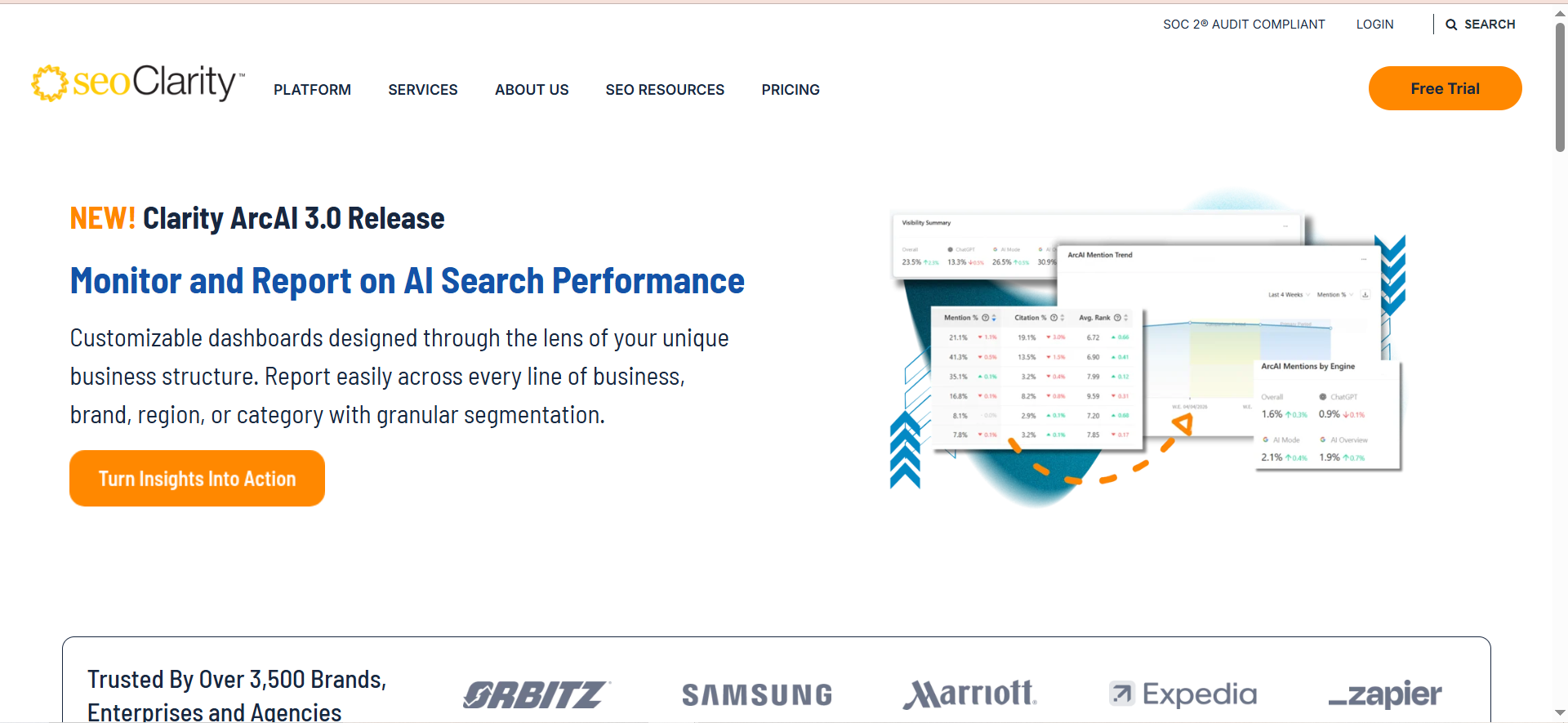
seoClarity is the strongest direct alternative if your team wants an enterprise SEO platform first, with a serious AI search layer attached. The company’s public materials position it as an AI-driven, enterprise-ready SEO platform, and its ArcAI product now covers AI search visibility, citations and mentions, prompt research, sentiment, traffic and conversion measurement, bot activity, hallucination monitoring, and API or MCP access for deeper workflows, which also makes this relevant to readers comparing AI citation tools at the URL level.
Why teams use it
Teams pick seoClarity when they want more operational depth than a dashboard-first tool can offer, which is often the same reason buyers also compare best site audit tools. Its pitch is not just “see how you show up in AI.” It is “measure, optimize, and operationalize AI search inside an enterprise SEO system.” That matters if your search org already thinks in terms of governance, large site footprints, multiple domains, technical dependencies, and executive reporting, which is often the same audience looking for real-time dashboards for AI-first search reporting.
What it’s good for
seoClarity is especially good for large organizations that want one home for rankings, research, content, technical SEO, and AI search visibility. Its published pricing page also makes it clear that it is built for bigger programs: Research & Content starts at $2,500 per month, Technical SEO starts at $3,200 per month, and Enterprise starts at $4,500 per month. That is not cheap, but it does signal the product category clearly, especially for teams comparing vendors against other best AI visibility solutions for content optimization teams.
When it’s a good fit
Pick seoClarity over Conductor if your biggest concern is depth. It is a good fit when your team needs enterprise search operations, not just visibility reporting. It is also a good fit if AI search has become important enough that you want it tightly connected to technical SEO, content optimization, and measurement rather than tracked in a lighter adjacent tool, which is exactly the kind of shift covered in AISO vs SEO, AEO, and GEO.
When it’s not a good fit
It is not the right fit if your team wants a faster self-serve buying motion, easier adoption for non-specialists, or a lower-cost starting point, and those teams are often better served by exploring best SEO tools for small businesses. seoClarity is clearly positioned as enterprise software, and that can be overkill for lean growth teams or smaller in-house programs.
How to use it
The best way to use seoClarity is to treat it like a command center, not just a reporting layer, especially if your team already runs mature content optimization workflows. Start by benchmarking AI visibility for priority topics and prompts, then connect that to citation monitoring, traffic or conversion measurement, and content actions, which pairs naturally with AI tools for SaaS keyword clustering and topic maps. If you already run large content and technical programs, that workflow maps well to how the platform is designed.
Key capabilities
Its differentiators are the breadth of enterprise SEO tooling plus the newer ArcAI layer, which is why it also belongs in comparisons of best AI content optimization tools for search visibility. Public pages highlight AI search visibility tracking across ChatGPT, Gemini, and Perplexity, competitive benchmarking, citation monitoring, prompt generation at scale, AI content recommendations, bot visibility, AI traffic measurement, and real-time intelligence via ArcAI 3.0.
Pricing
seoClarity’s pricing starts at $2,500/month for Research & Content. Its higher-tier plans start at $3,200/month for Technical SEO and $4,500/month for Enterprise.
Free tier?
seoClarity doesn’t offer a free tier. It uses a quote-based sales model, and no free trial is listed on its pricing page.
Downsides / limitations
The downside is obvious: cost, complexity, and likely implementation time, so teams weighing that tradeoff may also want to look at best SEO automation tools. If you want something lighter or more modular, this can feel like replacing enterprise weight with different enterprise weight. But if your search org is mature, that is also why it is the best direct Conductor alternative.
2. Semrush
What it does
Semrush has become a much stronger Conductor alternative now that it bundles classic SEO and AI visibility more tightly. The official Semrush One materials describe it as a unified solution that combines the SEO Toolkit and AI Visibility Toolkit, covering Google AI Overviews, AI Mode, ChatGPT, Perplexity, and Gemini. The AI Visibility Toolkit itself tracks AI visibility, mentions, cited pages, prompt opportunities, competitor gaps, and AI crawler blockers through site audit.
Why teams use it
Teams use Semrush because it is a broad ecosystem, not just an SEO platform, which makes it relevant to companies building a more complete AI marketing stack. If your organization already uses Semrush for keyword research, backlinks, site audit, content workflows, or competitive research, adding AI visibility is much easier than replacing the entire stack with a new enterprise suite, especially if your team already has a defined SaaS keyword research workflow. That makes it especially attractive to growth-stage and mid-market teams that want “enough enterprise” without the full enterprise buying process.
What it’s good for
Semrush is good for multi-surface visibility, and that is often exactly what teams want when they start comparing best website traffic analysis tools. It gives you classic SEO research plus AI visibility in one environment, and that kind of blended workflow often overlaps with guides on best AI marketing tools for content marketing.
When it’s a good fit
Choose Semrush over Conductor if you want a wider marketing toolkit, more pricing modularity, and a platform your team can often adopt faster. It is a smart pick for companies that care about AI visibility but do not want their entire vendor decision to revolve around enterprise SEO governance. It is also strong if agencies or multi-function teams need one platform people already know how to use.
When it’s not a good fit
It is less ideal if you want the deepest enterprise SEO operating system possible or if your buying committee wants a platform purpose-built around enterprise search operations, which is why some buyers also review the best enterprise SEO tools. Semrush has become much stronger at AI visibility, but it still serves a wider market, which can mean tradeoffs in enterprise specificity. That is an inference based on its pricing and packaging, not a flaw in the product itself.
How to use it
The practical way to use Semrush is to connect the SEO Toolkit with AI Visibility workflows, then prioritize fixes using the same kind of process outlined in a strong AI search visibility strategy. Start with your keyword and competitor baseline, then layer in AI Prompt Tracking and Competitor Research to see where your brand is present in AI answers and where it is absent. From there, use content and audit workflows to prioritize fixes, which is exactly where AI content audit tools for GA4 and GSC can support execution.
Key capabilities
Semrush One combines SEO and AI visibility, and teams comparing this category may also want to explore the best AI visibility tools for daily prompt runs. Official docs say it covers AI analysis, Brand Performance, Prompt Tracking, AI Visibility Score, mentions, cited pages, prompt research, competitor analysis, AI-ready Site Audit checks, and tracking across Google AI Overviews, AI Mode, ChatGPT, Perplexity, Gemini, and more.
Pricing
Semrush’s AI Visibility Toolkit starts at $99/month. Semrush One is a bundled product, but its plan pricing isn’t clearly listed in the official docs reviewed.
Free tier?
Semrush doesn’t offer a free tier for Semrush One. It offers a free 7-day trial for Semrush One, while the AI Visibility Toolkit itself does not include a free trial.
Downsides / limitations
Semrush can become expensive as you stack more limits, more users, and more toolkits, which is one reason some teams also compare best SEO tools for keyword ranking reports. It also has a broad interface, which some teams love and others find noisy. If your goal is pure enterprise SEO governance or pure AI visibility specialization, another option may feel tighter.
📋 Get Listed / Advertisement
We update this guide monthly. Want your tool featured? Contact: [email protected].
3. Search Atlas
What it does
Search Atlas is the aggressive “new school” alternative in this list, which makes it a natural fit alongside content about best AI visibility tools for bulk prompt upload and tagging. Its published pages position it as an all-in-one SEO platform with AI automation and LLM Visibility.
The LLM Visibility product tracks brand mentions, response placement, sentiment, share of voice, competitor comparisons, and query-level visibility across major AI systems, which makes it a strong contextual fit for content about AI visibility tools for category tracking. Public product pages also show daily updates and action recommendations tied to visibility gaps, which is exactly the kind of capability buyers look for in GEO prompt monitoring tools.
Why teams use it
Teams use Search Atlas when they want one platform that feels built for the AI era rather than adapted to it, which is a priority that also comes up in guides to best SEO strategies for AI visibility tools. The appeal is speed: lower starting prices, trial access, broad feature coverage, and a product narrative centered on doing the work, not just reporting the work, which overlaps with what buyers usually want in best AI visibility tools for prompt variation testing.
That can be especially attractive if Conductor feels too enterprise-heavy or if your team wants stronger AI-era language around share of voice, sentiment, placement, and recommended actions, which also connects well to PR and brand messaging for AI visibility.
What it’s good for
It is good for teams that want SEO plus AI visibility in one modern workflow, especially teams already evaluating an AI visibility platform buyer guide. The official pricing page starts at $99/month and scales through Growth, Pro, and Agency. The Growth plan explicitly mentions higher quotas plus LLM visibility tracking, while the LLM Visibility product page details cross-LLM monitoring, sentiment analysis, competitor benchmarking, and placement in AI answers.
When it’s a good fit
Search Atlas is a good fit if you want more pricing transparency than Conductor offers, want faster time to value, and are comfortable betting on a platform that is pushing hard into AI-led workflows. It is also appealing for agencies and performance-minded teams that want to combine tracking, content action, and automation without stitching together multiple vendors.
When it’s not a good fit
It is not the safest choice for buyers who want the most established enterprise procurement pattern, the biggest legacy footprint in enterprise SEO, or the most conservative vendor posture. Some enterprise committees will still feel more comfortable with Conductor, seoClarity, or Semrush for that reason. That is a buyer-trust issue, not strictly a feature issue.
How to use it
The strongest workflow is to set up your brand and competitors, track cross-LLM visibility, and then use the action recommendations to decide whether to refresh an existing page, create new assets, or strengthen entity signals, which lines up with this guide on how to audit brand visibility on LLMs. Search Atlas is not subtle about this workflow, and teams leaning into that approach may also want to review best AI visibility tools with prompt templates. Its LLM Visibility documentation explicitly leans into analysis plus action.
Key capabilities
Official pages mention tracking, sentiment, share of voice, competitor benchmarking, position inside AI responses, daily updates, query-level analysis, and tracking across ChatGPT, Gemini, Perplexity, and SearchGPT, which maps closely to what buyers want in AI brand mention tracking tools. Search Atlas also positions AI automation and OTTO SEO as part of the wider platform.
Pricing
Search Atlas’s pricing starts at $99/month. Its public plans go up to $199/month, $399/month, and $999/month, with some enterprise options priced custom.
Free tier?
Search Atlas doesn’t offer a free tier. It does offer a 7-day free trial.
Downsides / limitations
The biggest limitation is fit for highly conservative enterprise buyers, which is why some teams still prefer a more structured AI visibility platform showdown before choosing. Search Atlas looks compelling on speed, AI positioning, and price transparency, but some large organizations may still prefer vendors with longer enterprise buying histories and more formalized governance narratives.
4. Profound
What it does
Profound is the specialist in this list. If your real reason for replacing Conductor is that you want a platform built around answer engines first, Profound deserves serious attention.The company’s official product pages center on Answer Engine Insights, prompt volumes, agent analytics, and enterprise controls, which also makes this sentence a natural place to link to the best AI search engines.
It tracks AI visibility, share of voice, citations, sentiment, top citation domains and pages, platform-level differences, and performance across consumer answer engines such as ChatGPT, Perplexity, Claude, Gemini, Copilot, Grok, Amazon Rufus, Google AI Overviews, and others.
Why teams use it
Teams buy Profound when AI visibility is the main event, not a side module, and that is the same mindset behind researching best AI tools to monitor SaaS brand visibility in ChatGPT and Perplexity. The platform goes deeper than many broad SEO suites into how AI talks about your brand, which sources drive those answers, what prompts matter, and how to operationalize insight into content or visibility gains, making it a natural fit for AI tools for rewriting old blog posts for AI search visibility.
Case studies on Profound’s site also show the brand pushing hard on business outcomes, including visibility lifts and attribution to pipeline, which aligns well with this SaaS AI visibility case study on mentions, citations, and conversions.
What it’s good for
It is especially good for brand-level answer engine intelligence. Profound’s documentation goes into unusually specific detail on citation share, citation categories, top citation domains, watched pages, raw exports, and prompt-level analytical controls. That makes it a strong choice for sophisticated AI visibility programs, brand and comms teams, or search teams that want deeper answer-engine diagnostics than a traditional SEO suite usually provides.
When it’s a good fit
Choose Profound over Conductor if the question inside your org is no longer “Which enterprise SEO platform should we run?” and has become “How do we measure and influence AI-native discovery?” It is also a good fit if you want an enterprise-grade AI visibility platform with security, API access, and a more specialized data model around prompts, answers, citations, and engines, which is why teams at this stage often compare best tools for tracking brand visibility in AI search.
When it’s not a good fit
It is not ideal if you need a broad classic SEO platform replacement. Profound is not trying to be your all-in-one legacy SEO suite in the same way Conductor, seoClarity, or Semrush are. If rank tracking, technical audits, and keyword workflows are still the center of your search operation, you may need Profound alongside another tool, not instead of one. That is an inference from the published product focus.
How to use it
Profound is strongest when used around a focused set of categories, prompts, assets, and competitors, and teams building that workflow may also benefit from reviewing prompt monitoring tools. Configure your brand and competitor profiles, define citation tags and name matching, then analyze visibility, citations, platforms, and regional breakdowns, which is a strong use case for AI tools that identify zero-click queries. From there, use prompt and citation insights to decide what content, PR, or product pages deserve action.
Key capabilities
Official pages highlight Answer Engine Insights, Prompt Volumes, citation authority, visibility scores, platform comparisons, sentiment, trends over time, AI crawler analytics, content performance tracking, enterprise security, SSO, API access, and support for multiple answer engines, which also lines up well with a comparison of best AI mention prominence tools.
Pricing
Profound’s pricing is not publicly listed. It appears to be available by demo or quote.
Free tier?
Profound doesn’t offer a public free tier for its main platform, and teams comparing specialist vendors often also review AI citation gap analysis tools. It does offer a demo, and it also has some free entry points like a free AEO report and a no-cost agent trial.
Downsides / limitations
The limitation is scope, which is why Profound often makes more sense for teams already prioritizing AI search visibility audit tools over broader SEO suites. If you are searching for a straight Conductor replacement and need traditional SEO platform depth, Profound may be too specialized by itself. But if AI visibility is now strategic enough to deserve its own stack owner, that specialization is exactly the point.
5. SE Ranking
What it does
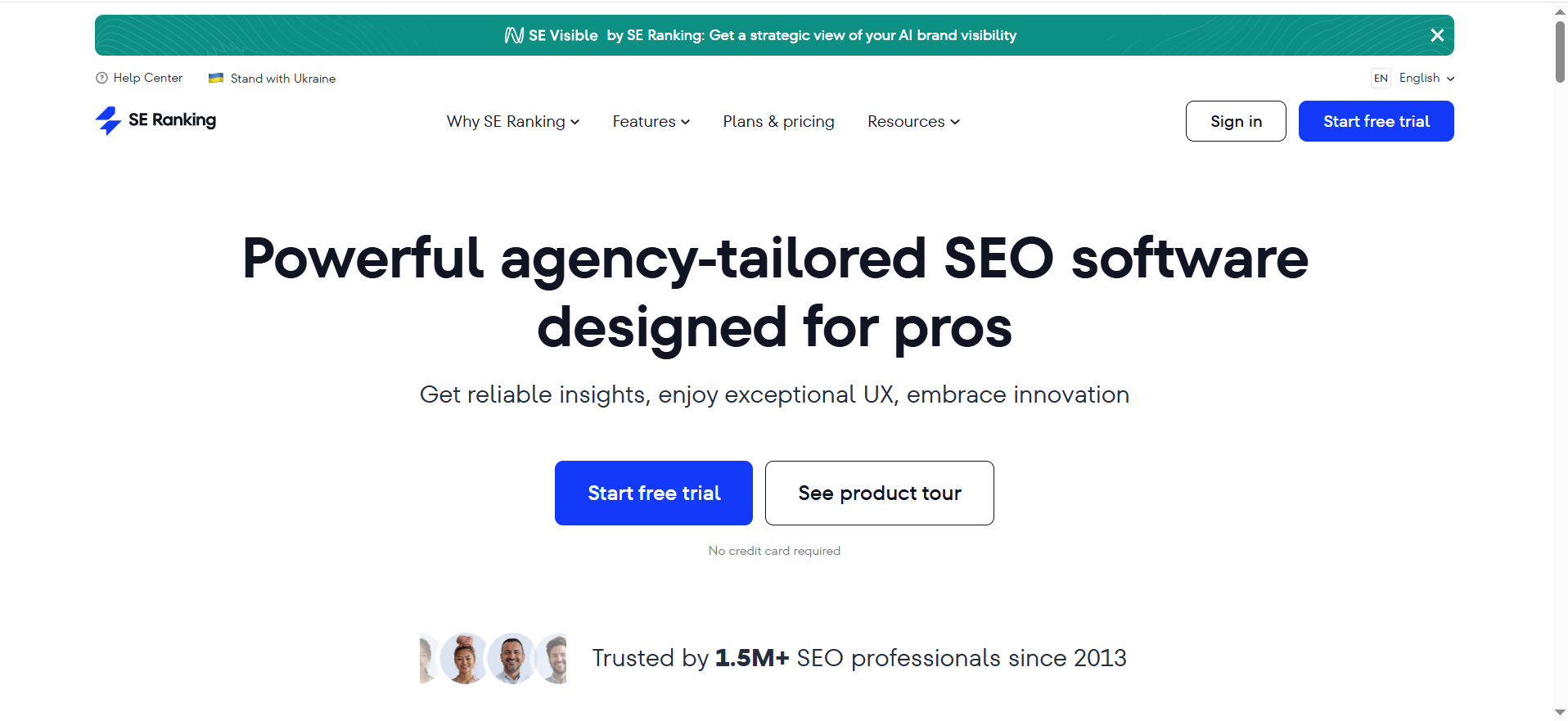
SE Ranking is the most practical value play in this list, which is why it also makes sense in roundups of the best cheap SEO tools. The platform positions itself as an AI-ready SEO suite with AI Visibility, AI Overviews Tracker, ChatGPT Tracker, AI Mode Tracker, and an AI Results Tracker, which is why this sentence pairs well with AEO tools for AI Overviews.
Its help docs say AI Results Tracker is available on trial and on current Core, Growth, and Enterprise plans, and the tool tracks Google AI Overviews, Google AI Mode, Gemini, ChatGPT, and Perplexity.
Why teams use it
Teams choose SE Ranking when they want practical coverage, transparent pricing, and a less intimidating adoption path. It may not carry the same enterprise-brand weight as Conductor or seoClarity, but it offers a lot of functionality for the money and now speaks more directly to AI visibility than many mid-market SEO platforms used to.
What it’s good for
SE Ranking is good for teams that want one SEO platform with a credible AI layer, especially if they need to keep costs under control, and that same profile often overlaps with readers comparing best SEO tools for small businesses. Public pricing starts at $129/month for Core and $279/month for Growth, while the AI Search add-on starts at $89/month and includes AI Results Tracker plus access to SE Visible for mentions, citations, and sentiment trends.
When it’s a good fit
Pick SE Ranking if your team wants Conductor-like categories of functionality without Conductor-like buying friction. It is a strong fit for growth teams, agencies, and pragmatic in-house teams that care about AI visibility but still need the classic SEO basics handled in the same platform.
When it’s not a good fit
It is less ideal for very large enterprise teams that need the deepest governance, internal stakeholder management, or enterprise support structure. SE Ranking does offer Enterprise plans and demos, but the product posture still feels more approachable and mid-market than Conductor’s. That is a fit observation, not a statement that it cannot serve larger teams.
How to use it
The smartest workflow is to run your daily SEO monitoring and AI tracking side by side, which is why SE Ranking buyers often also compare platforms in SE Ranking vs Semrush. Set up your projects, add prompts and AI engines, review mention and link presence, then use the source and competitor views to see who AI systems prefer. Because the platform also handles standard rank tracking, you can compare what wins in traditional SERPs against what gets surfaced in AI answers, which is a useful angle if you are also reading about Google AI Overviews tracking tools.
Key capabilities
Official materials highlight AI Results Tracker, AI Overviews tracking, AI Mode tracking, ChatGPT and Perplexity tracking, top-three presence, source presence, mention and link presence, overlap with organic performance, SEO research, audits, reporting, and APIs, which makes this a strong fit for best AI visibility tools for citation tracking.
Pricing
SE Ranking’s pricing starts at $129/month for Core and $279/month for Growth. Enterprise pricing is custom.
Free tier?
SE Ranking doesn’t offer a free tier. It does offer a 14-day free trial.
Downsides / limitations
Its downside is mostly ceiling, not floor. SE Ranking is of great value, but organizations replacing Conductor because they need very heavy enterprise operating depth may still want seoClarity or Semrush higher on the shortlist.
Which Conductor alternative is best for your team?
Here is the simplest way to make the decision.
Choose seoClarity if you want the closest enterprise SEO substitute and you care about technical scale, AI search visibility, and operational depth, especially if you are also evaluating keyword research best practices for SaaS.
Choose Semrush if you want the most balanced mix of classic SEO, AI visibility, and broader marketing-tool flexibility.
Choose Search Atlas if you want a more aggressive AI-era workflow with transparent entry pricing and a faster-feeling operating model, especially if your team is already evaluating the best AI visibility tools for daily prompt runs.
Choose Profound if your real purchase category is AI visibility intelligence, not just “enterprise SEO software,” which is why this article also complements a guide to auditing brand visibility on LLMs.
Choose SE Ranking if budget discipline matters and you still want solid SEO plus meaningful AI tracking.
That is really the heart of the Conductor alternatives query, and teams that want a wider market view may also benefit from reading an AI visibility platform showdown. The best replacement is not the tool with the biggest feature page, and teams that want a more structured comparison framework can also review the best AI competitive analysis tools for marketing. It is the one that matches the job you actually need done.
When Conductor is still the better choice
A fair comparison also means saying when not to switch.
Conductor remains a strong choice if your organization wants one enterprise platform that unifies traditional search, website performance, AI mentions, citations, sentiment, customizable AI tracking, and AI traffic or conversion reporting, especially with unlimited user licenses included across plans. If your internal blockers are adoption, stakeholder access, and proving business impact rather than raw feature availability, Conductor may still be the best fit.
In other words, do not move just because the market is noisy, especially if your team still needs a clear AEO-ready SaaS blogs guide before changing platforms. Move if there is a clear mismatch in budget, workflow, reporting depth, AI-specialization needs, or implementation style.
How to switch from Conductor without losing momentum
If you do switch, treat migration like an operating-model change, not just a vendor swap, especially if your team is also working through a formal content audit checklist for B2B SaaS.
Start with your executive requirements, and if that process involves revisiting your broader content foundation, it can help to review how to perform a content audit. Decide what your next platform must preserve: stakeholder dashboards, tracked competitors, reporting cadence, content workflows, AI visibility baselines, or technical monitoring.
Then map your highest-value use cases into the trial or demo process, which becomes much easier when paired with a practical AE SEO playbook for AI answers and citations. You do not need every workflow on day one, and teams simplifying rollout often benefit from a clear content pruning guide for SaaS. You need the two or three that justify the move.
Next, keep your success metrics consistent during transition, especially if your reporting model is evolving toward real-time dashboards for AI visibility leadership reporting. If you are replacing Conductor with an AI-heavy tool like Profound, for example, do not lose your ability to track classic SEO business outcomes.
If you are moving to a broader platform like Semrush or SE Ranking, make sure AI visibility does not become an add-on nobody owns. The mistake most teams make is buying for the trend and implementing for the past, which is why it helps to read about structuring AI-era AEO content before making the switch.
Finally, ask the boring questions early: user seats, exports, APIs, audit limits, prompt limits, domain limits, support model, and migration help, and if that process gets messy, a content audit consultant can help bring structure. Those are not glamorous, but they decide whether the tool actually sticks.
Conductor pricing alternatives
One common reason teams look for a Conductor alternative is pricing transparency. Conductor uses a custom quote model, which can slow down early vendor comparisons for teams that need faster budgeting decisions.
If pricing clarity matters, SE Ranking, Search Atlas, and seoClarity are easier to assess. SE Ranking starts at $129/month with an AI Search add-on from $89/month. Search Atlas starts at $99/month. seoClarity is still enterprise-focused, but it publishes starting prices from $2,500/month.
That makes SE Ranking and Search Atlas the better fit for teams that want lower-cost, easier-to-compare options, while seoClarity works better for buyers who want enterprise depth with a clearer pricing signal, especially if they are also researching the best free SEO tools.
Conductor alternative for agencies
For agencies, the best Conductor alternative is usually the one that makes multi-client work easier, which is why this comparison can pair well with a guide to the best AI marketing tools for agencies.That means flexible pricing, client reporting, white-label options, and strong SEO plus AI visibility features, all of which also matter when choosing a B2B SaaS SEO agency.
Search Atlas is one of the best fits here because its higher tiers include white-label reporting, client dashboards, and larger limits that suit agency workflows, which makes it relevant to teams evaluating best AI visibility solutions for content optimization teams.SE Ranking is also a good option for agencies that want more predictable costs and simpler packaging, especially for teams comparing best SEO rank tracking software.
Conductor can work for large agencies serving enterprise clients, but for most agencies, Search Atlas is the more natural fit because it aligns better with scalable client delivery, and that decision often sits alongside evaluating the best AI marketing tools for agencies.
Conductor alternative for mid-market teams
Mid-market teams often want strong SEO and AI visibility features without enterprise-level cost or complexity, which is why many of them start with guides to the best tools for SEO SaaS. That is where the conductor can sometimes feel too heavy.
For these teams, Search Atlas, SE Ranking, and Semrush are usually better fits, and that same buyer set often compares vendors in posts like comparing AI SEO tools. Search Atlas offers a strong mix of AI-era functionality and approachable pricing, which is why it also fits naturally alongside content about best AI visibility tools for daily prompt runs.
SE Ranking is a smart choice for teams that want solid SEO and AI tracking on a tighter budget, especially if they are also looking at the best SEO tools for small businesses. Semrush works well for teams that want broader marketing and SEO coverage in one platform, which is often the same audience researching best marketing analytics tools.
For most mid-market buyers, Search Atlas offers the best balance, while SE Ranking is the strongest value option, which mirrors the tradeoffs covered in best AI visibility tools by engine coverage.
Conductor alternative with clearer pricing
If your team wants a Conductor alternative with clearer pricing, a few tools stand out right away, and this kind of evaluation is similar to how buyers compare the best cheap SEO tools. Conductor’s custom quote model can make early comparison harder, especially for teams with fixed budgets.
The clearest options are Search Atlas and SE Ranking because both publish straightforward pricing on their websites, which makes them useful examples in a broader AI visibility platform showdown. seoClarity also helps by showing enterprise starting prices, even though it still targets larger teams, which is why it belongs in conversations about the best enterprise SEO tools.
So if pricing transparency is a top priority, SE Ranking is the best value pick, Search Atlas is a strong flexible option, and seoClarity is the better fit for enterprise teams that still want a visible starting point, much like the tradeoffs covered in best AI visibility tools by engine coverage.
FAQ
What is the best Conductor alternative overall?
Which Conductor alternative is best for AI visibility?
Which Conductor competitor has the clearest pricing?
Is Semrush a real Conductor replacement for enterprise teams?
Is SE Ranking too lightweight compared with Conductor?
Why would someone leave Conductor if Conductor already supports AI visibility?
Final verdict
If you want the closest enterprise-level replacement for Conductor, seoClarity is the best overall choice. It is the strongest fit for large teams that need deep SEO workflows, technical capabilities, and strong reporting. Semrush is the best all-around alternative for teams that want a broader platform with both traditional SEO and AI visibility in one place.If your main focus is AI visibility and answer engine tracking, Profound is the better pick, but teams still weighing categories may want to compare it against the best AI visibility tools by engine coverage. And if you want a more affordable option that still covers core SEO and AI tracking well, SE Ranking offers the best value.
📋 Get Listed / Advertisement
We update this guide monthly. Want your tool featured? Contact: [email protected].