

If you’re looking for the best LLMrefs alternative, the right choice depends on what you need beyond basic AI visibility tracking. Peec AI is the best pick for cleaner reporting and marketer-friendly dashboards, AthenaHQ is strongest for teams that want deeper optimization workflows, Profound is built for enterprise buyers, Scrunch AI is ideal for prompt management and audit-driven workflows, and Ziptie is a solid option for teams that want transparent pricing and simple tracking across key AI search surfaces. In this guide, we compare all five options, explain where LLMrefs still holds up well, and help you choose the best fit based on reporting needs, workflow maturity, and budget.
If you like LLMrefs but need deeper reporting, stronger team workflows, or a platform that fits a larger AI search program, there are several good alternatives worth shortlisting. LLMrefs is a strong entry point because it combines keyword tracking, citations, competitor benchmarking, and broad engine coverage in one package, which is why readers often compare it with AI visibility tools for competitor benchmarking. But teams that need executive reporting, workflow depth, broader operational controls, or more prescriptive optimization often end up comparing it with Peec AI, AthenaHQ, Profound, Scrunch AI, and Ziptie.
📋 Get Listed / Advertisement
We update this guide monthly. Want your tool featured? Contact: [email protected].
Top LLMrefs Alternatives Compared: Pricing, Features, and Best Fits
| Tool | Best for | Standout strength | Tradeoff |
|---|---|---|---|
| Peec AI | Marketing and SEO teams that want clean dashboards | Strong visibility, position, sentiment, source views, API, and simple UX | Public pricing is not very transparent |
| AthenaHQ | Teams building a more operational GEO workflow | Cross-platform tracking plus optimization recommendations | Higher starting price than LLMrefs |
| Profound | Large enterprise brands | Enterprise-grade positioning and workflow depth | No public self-serve pricing |
| Scrunch AI | Teams that want prompt management plus actionable audits | Prompt Manager, citation tracking, page audits, personas, agent traffic monitoring | More expensive than entry-level tools |
| Ziptie | Teams focused on core AI search surfaces with simpler usage limits | Clear plans, straightforward checks, practical optimization support | Narrower engine coverage than broader platforms |
Which tool is best for which team
Use Peec AI if you want something that feels closer to a modern analytics layer for AI visibility, especially if you are comparing which platform excels in AI visibility metrics. Use AthenaHQ if you want a more complete execution environment, not just a reporting screen. Choose Profound if you are a large enterprise that wants a platform positioned around governance, support, and customization. Pick Scrunch AI if your team needs prompts, personas, citations, audits, and AI-driven traffic monitoring in one workflow. Pick Ziptie if you want simpler, more transparent plans and your real decision surface is mostly ChatGPT, Perplexity, and Google AI Overviews.
1. Peec AI
What it does
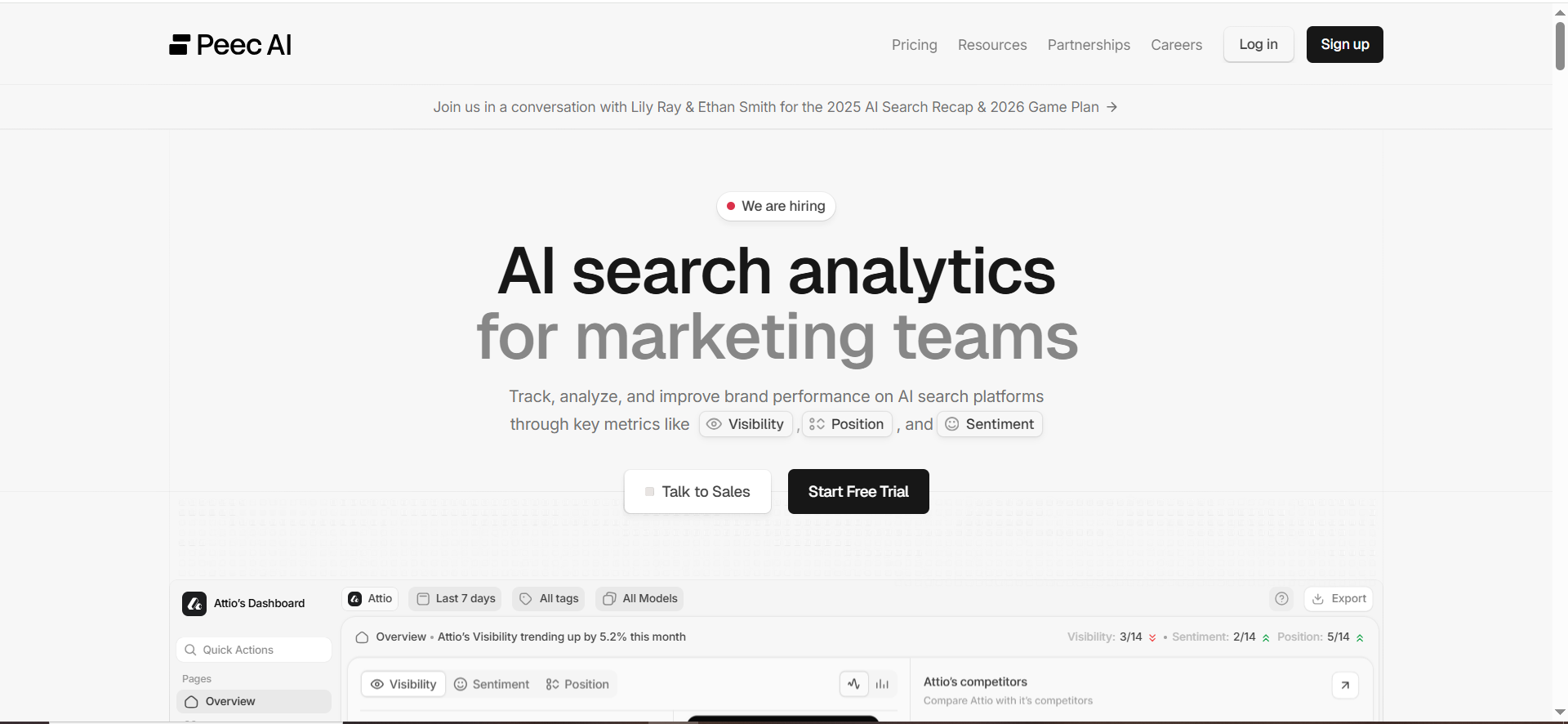
Peec AI is built around AI search analytics for marketing teams. It focuses on helping brands understand how they appear across AI search surfaces through metrics like visibility, position, sentiment, and sources.
In practical terms, that makes Peec AI feel like a marketing analytics product rather than a pure technical tracker, which is useful context for teams evaluating an AI marketing stack. Instead of overwhelming users with dense or overly technical workflows, Peec presents AI visibility in a way that is easier for content teams, growth teams, and leadership stakeholders to digest.
Why teams use it
The biggest reason teams choose Peec AI is usability. A lot of AI visibility products still feel like they were designed for analysts first and everyone else second. Peec looks more polished and more approachable for recurring business use.
That matters because AI search reporting is rarely consumed by one person, especially for teams thinking about author expertise in SaaS blogs. An SEO manager may be inside the tool every week, but the content lead, growth team, and executive team still need to understand the output. Peec’s appeal is that it appears easier to explain and easier to present, which makes it a useful option for teams comparing best AI visibility solutions for content optimization teams.
What it’s good for
Peec AI is especially useful for teams that want a strong bridge between AI visibility tracking and broader marketing decision-making, which is why it fits well alongside a modern AI visibility platform buyer guide. If your workflow is to review visibility, inspect citations, compare performance against competitors, and turn those findings into content priorities, Peec is well aligned for teams also evaluating best AI tools for competitive analysis in marketing.
It also makes sense for teams that want an analytics layer they can use repeatedly without too much process overhead, particularly if they are comparing best marketing analytics tools. The product’s appeal is less about enterprise control and more about clarity, usability, and recurring insight, which makes it relevant to teams comparing best AI tools for digital marketing.
When it’s a good fit
Peec AI is a good fit for in-house marketing teams, SEO teams, and agencies that want a practical reporting and analysis layer without overcomplicating the process, which also makes it relevant for teams exploring best AI marketing tools for content marketing.It is also a strong fit for companies that want a platform their non-SEO stakeholders can actually understand, especially if they are trying to improve reporting AI visibility to leadership with real-time dashboards.
When it’s not a good fit
It may be less ideal if your buying process depends on transparent public pricing from the start. It may also be less ideal if your team needs a deeper operational environment with workflow management, optimization systems, and more explicit execution support, which is where best AI visibility tools with bulk prompt upload and tagging become more relevant.
How to use it
A smart way to use Peec is to track three core layers of prompts, which makes it relevant to teams evaluating the best AI visibility tools for daily prompt runs.
- Branded prompts so you can see how your company is framed in AI answers
- Category prompts so you can understand broader market visibility
- Commercial prompts so you can connect AI presence to buying intent
From there, you can review visibility and sentiment weekly, inspect sources monthly, and feed those patterns into content planning. The real value is not just knowing whether your brand appears, but understanding how it appears and what sources support that visibility, which is central to AI citation gap analysis tools.
Key capabilities
- Visibility tracking
- Position tracking
- Sentiment analysis
- Source and citation views
- Brand comparison
- Export support
- API access
Pricing
Peec AI’s pricing is publicly listed in tiered plans, but the exact current starting price is not clearly readable in the official page text I could verify. Its official pricing page shows Starter, Pro, Advanced, and custom Enterprise plans.
Free tier?
Peec AI doesn’t appear to offer a free tier, but it does offer a free trial.
Downsides / limitations
The main limitation is pricing transparency. The second is that if you want deep workflow management or heavier enterprise controls, other tools like AthenaHQ, Profound, or Scrunch AI may be a better fit.
2. AthenaHQ
What it does
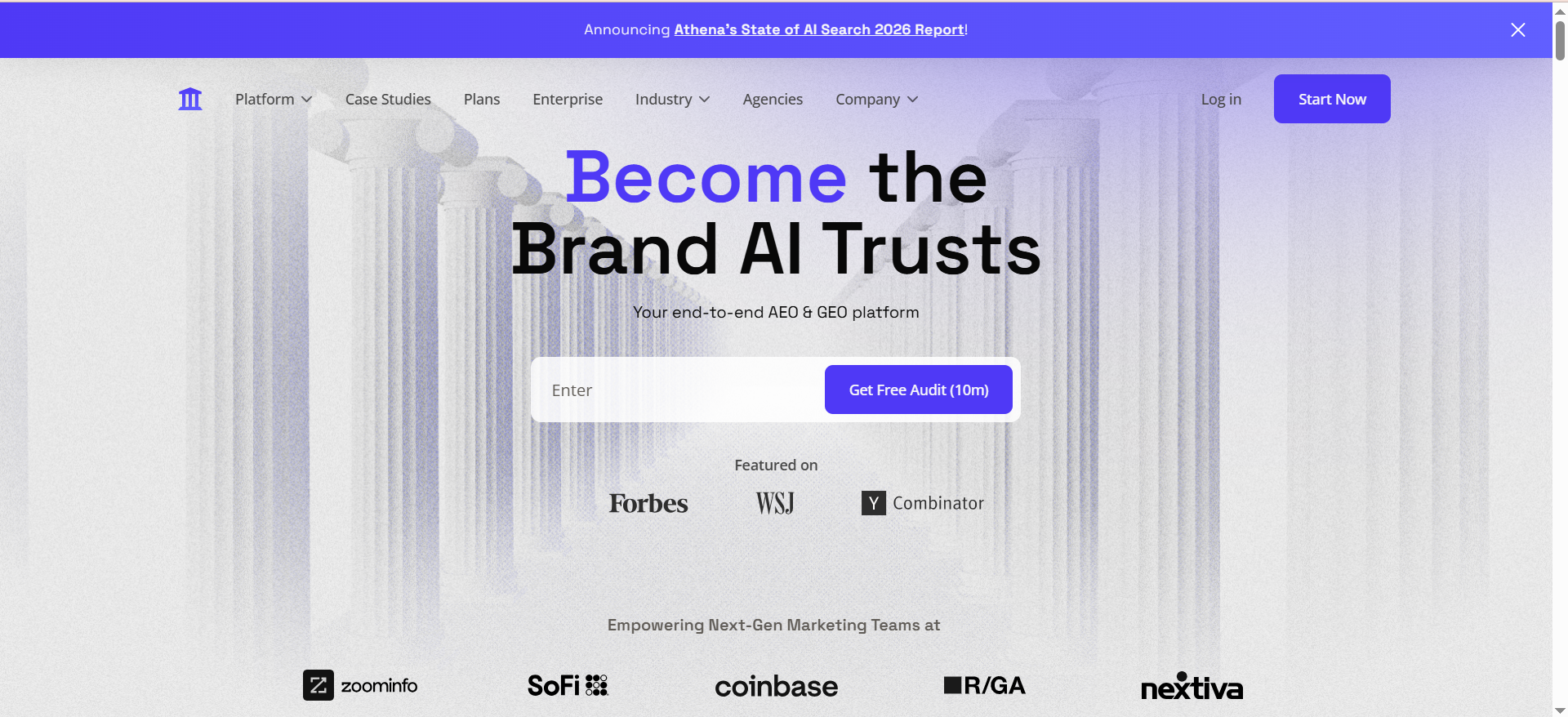
AthenaHQ positions itself as a GEO and AEO platform rather than just a monitoring tool. That distinction matters. It is not only trying to tell you where you appear. It is trying to help you manage and improve your AI search presence through structured workflows.
It is clearly aimed at teams that want more than dashboards. It leans into cross-platform AI visibility tracking, content optimization support, and citation analysis, which makes it a natural fit alongside the AEO SEO playbook for AI answers and citations.
Why teams use it
AthenaHQ stands out because it looks more action-oriented than many alternatives. LLMrefs is strong as a tracker. AthenaHQ is easier to frame as an operating layer.
That matters for teams whose AI visibility efforts are no longer experimental. Once you move from observation to repeated execution, the product needs to support not just visibility checks, but prioritization, decision-making, and optimization, which is why some teams also look at best AI tools for marketing research.
What it’s good for
AthenaHQ is good for brands that want AI visibility tracking tied more directly to action, which is why it fits well with content on the best AI visibility tools for citation tracking. It is particularly compelling for in-house SEO and content teams managing multiple engines, multiple prompt sets, and multiple stakeholders.
If your internal question is not just “Where do we rank?” but “What should we do next?”, AthenaHQ is one of the stronger answers for teams exploring content engineers driving AI search visibility.
When it’s a good fit
It is a good fit when your AI search program is growing quickly and needs structure. It is also a good fit for companies that want recommendation layers, citation analysis, and workflow depth in the same platform, especially if they are investing in best SEO strategies for AI visibility.
When it’s not a good fit
AthenaHQ is probably not the best choice for the smallest teams or for buyers who only want a cheap way to watch a small set of prompts. It asks for more budget, and it makes the most sense when your team is ready to use that added depth.
How to use it
A practical AthenaHQ workflow looks like this:
- Group prompts by funnel stage or topic cluster
- Track visibility across multiple AI engines
- Review source and citation patterns
- Use recommendations to prioritize content or SEO updates
- Feed findings into content, link building, and reporting workflows
This is where AthenaHQ differentiates itself, because it is built for teams that want a system, not just a report, much like brands following an AI visibility platform showdown.
Key capabilities
- Cross-platform AI visibility tracking
- Optimization recommendations
- Citation source analysis
- Workflow-oriented GEO support
- Multi-engine monitoring
- Content planning support
Pricing
AthenaHQ’s pricing starts at $295/month for its Self-Serve plan. It also offers a custom-priced Enterprise plan.
Free tier?
AthenaHQ doesn’t offer a free tier. Its site promotes a free audit, but I did not verify a public free trial on the official pricing page.
Downsides / limitations
The biggest drawback is budget.The second is that some smaller teams may end up paying for process depth they are not yet ready to use, especially if they have not yet defined the best SaaS keyword research workflow. If your workflow is still very lightweight, AthenaHQ may feel like more platform than you need.
3. Profound
What it does
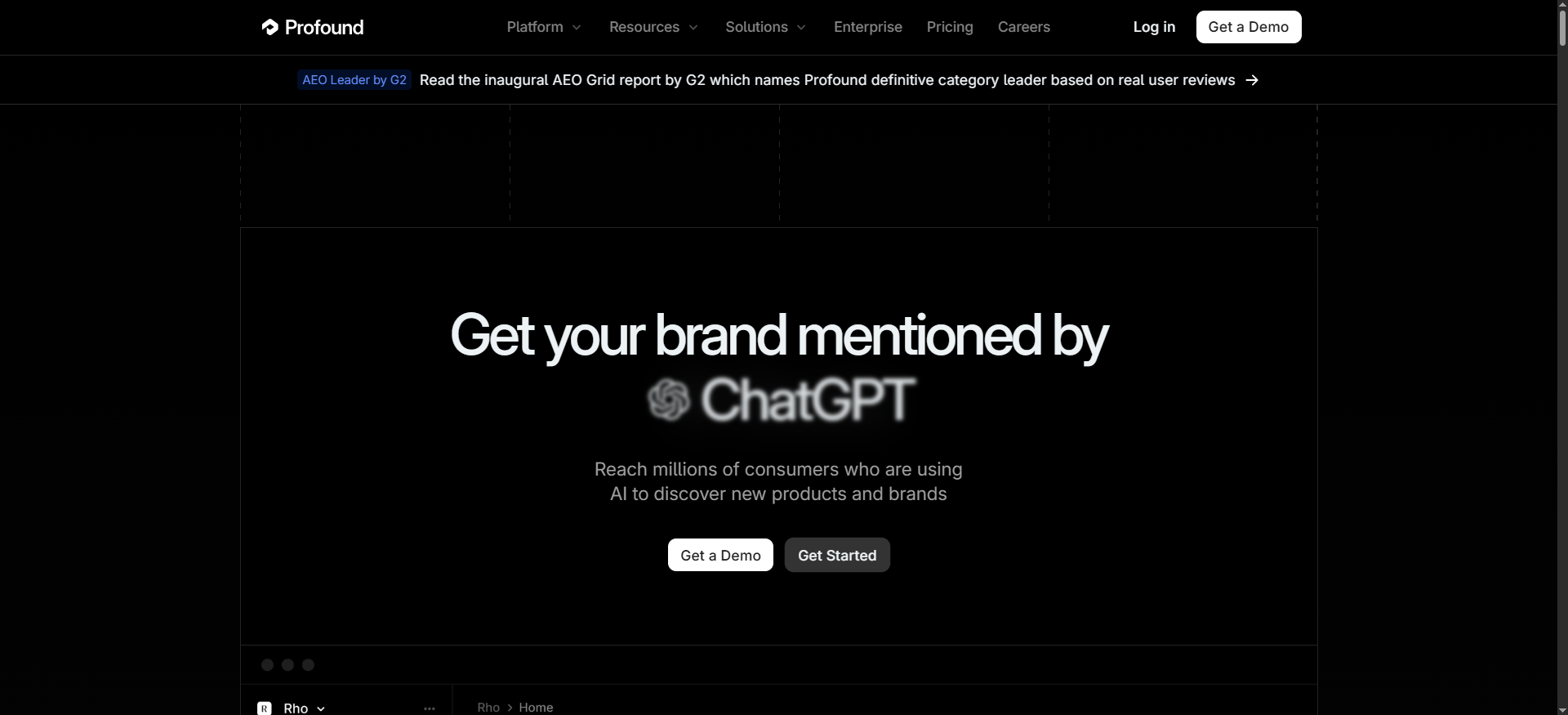
Profound is positioned much more clearly toward enterprise buyers. It is less about low-friction self-serve monitoring and more about becoming part of a larger strategic AI visibility program.
That means the product should be thought of less like a simple tool and more like an enterprise platform choice.
Why teams use it
Teams consider Profound when AI search visibility has become important enough to justify a serious vendor relationship. This usually happens when multiple stakeholders are involved, reporting expectations are high, and AI visibility is treated as a strategic brand and demand issue rather than an SEO experiment, which is why enterprise teams often care about PR and brand messaging for AI visibility.
What it’s good for
Profound is strongest for larger brands that want an enterprise-grade posture, particularly those exploring the best enterprise SEO tools. It is likely best suited to organizations that want structured support, internal buy-in, formal evaluation, and a platform that can credibly sit inside a wider martech or analytics environment, much like teams reviewing best AI tools for enterprise SaaS marketing.
When it’s a good fit
It is a good fit If your company already knows AI search matters strategically and you want a vendor positioned for enterprise adoption, it helps to understand AI strategic visibility. It is also a good fit if your buying process naturally includes demos, approvals, stakeholder alignment, and custom scoping, especially for teams reviewing the CEO guide to content marketing for SaaS.
When it’s not a good fit
It is not the best fit for buyers who want transparent public pricing, quick onboarding, or a low-risk monthly test. Teams that want to move fast on a smaller budget will usually find LLMrefs, Ziptie, or possibly Peec easier to evaluate.
How to use it
Profound should be evaluated like an enterprise platform purchase, especially by teams comparing best enterprise SEO tools. Start by mapping your use cases clearly:
- Executive reporting
- Category visibility tracking
- Competitor monitoring
- Content prioritization
- Multi-market AI visibility
- Stakeholder alignment
Then assess whether the platform supports those goals well enough to justify the added buying complexity.
Key capabilities
Profound’s public positioning emphasizes AI-generated answer visibility and enterprise support. Even without as much public feature detail as some competitors, the signal is clear: this is for serious organizational adoption, not lightweight solo use.
Pricing
Profound’s pricing is not publicly listed in plan detail on its official pricing page; it is available by quote for enterprise buyers.
Free tier?
Profound doesn’t appear to offer a free tier or free trial. Its site pushes buyers toward a demo.
Downsides / limitations
The main limitations are lack of transparent pricing, a likely longer buying cycle, and a platform posture that may feel excessive for smaller teams. If your goal is simply “LLMrefs but slightly stronger,” Profound may be too enterprise-heavy.
4. Scrunch AI
What it does
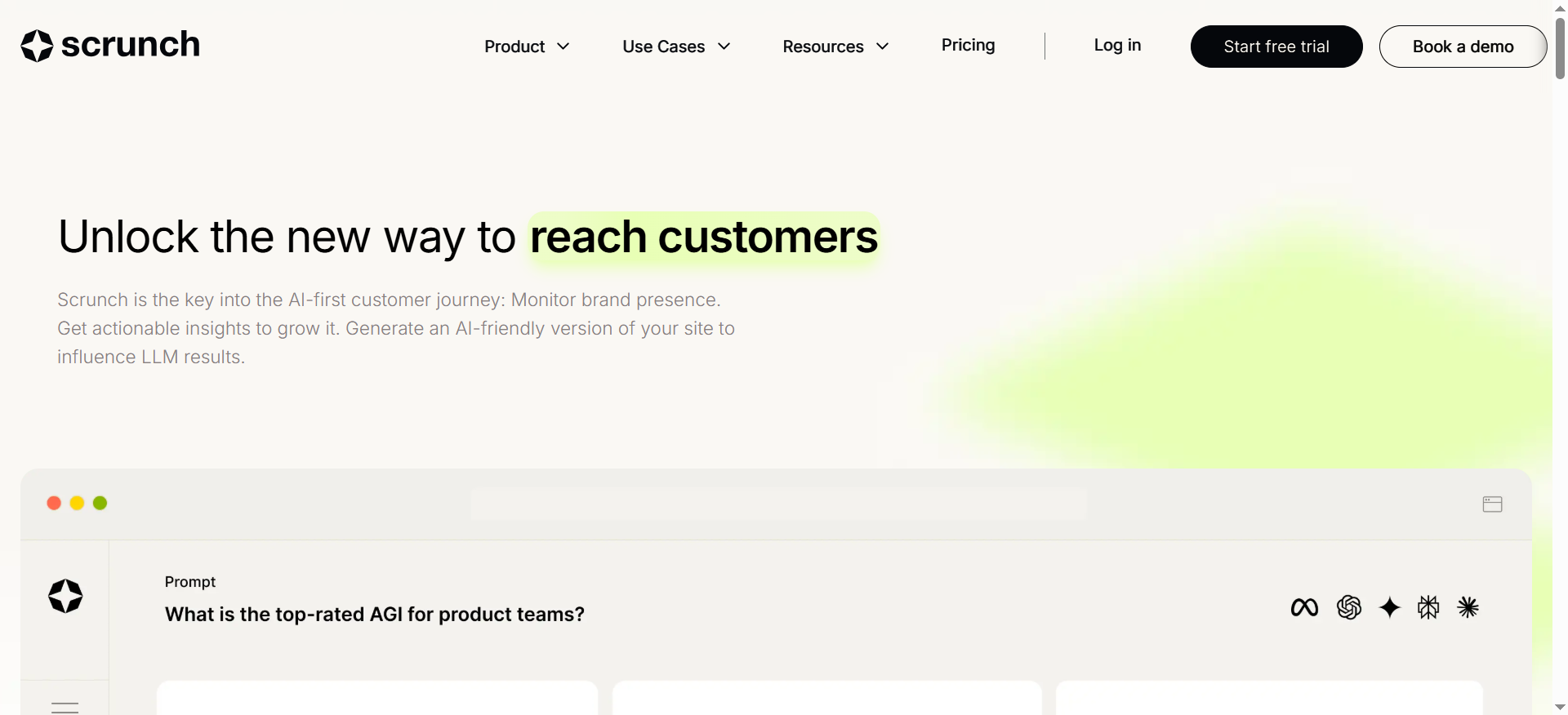
Scrunch AI is one of the more operationally interesting alternatives in this category, especially for teams exploring AI visibility tools for prompt variation testing. It goes beyond visibility tracking and leans into prompt management, citations, page audits, persona monitoring, and agent traffic visibility.
That makes it feel closer to a workflow platform than a pure analytics layer.
Why teams use it
Teams use Scrunch AI because it connects insight to action more explicitly than many lighter tools, which is a useful lens for anyone comparing the best AI tools for CRO. Instead of only showing AI visibility results, it supports prompt workflows, audit-style optimization, and more structured content opportunity analysis.
That matters if your team is not just tracking outcomes but trying to build a repeatable AI search operating system, which is why some teams also look at best SEO automation tools.
What it’s good for
Scrunch AI is especially useful for teams that want to manage prompts more intentionally and tie those prompt sets to content gaps, page audits, personas, and traffic outcomes, which makes it relevant for teams comparing best AI visibility solutions for content optimization teams.
When it’s a good fit
It is a good fit when your AI search workflow needs more structure than a lightweight tracker can provide, which is why some teams also compare AI visibility tools for prompt templates. It is also a strong fit for teams that want visibility into how AI agents are influencing traffic and performance, especially if they care about AI visibility metrics.
When it’s not a good fit
Scrunch AI may not be the best fit for highly price-sensitive buyers. It also may be too complex for teams that are still early in their AI visibility journey and only need simple monitoring.
How to use it
A practical Scrunch workflow might include:
- Defining high-value prompt sets
- Grouping prompts by audience or persona
- Monitoring citations and appearance trends
- Running page audits on underperforming pages
- Identifying content gaps
- Tracking AI-driven traffic patterns over time
For teams that want a more hands-on improvement loop, that is a strong proposition if they are also researching AI search visibility audit tools.
Key capabilities
- Prompt Manager
- Citation tracking
- Page audits
- Persona monitoring
- Reporting dashboards
- Content opportunity insights
- Agent traffic monitoring
- Integrations
Pricing
Scrunch AI’s pricing starts at $250/month when billed annually, or $300/month month-to-month, for the Starter plan. It also offers Growth plans and custom Enterprise pricing.
Free tier?
Scrunch AI doesn’t offer a free tier, but it does offer a 7-day free trial for Starter and a demo for higher plans.
Downsides / limitations
The main downside is budget. The second is that teams with lightweight use cases may find the added workflow depth unnecessary. If you just want a clean AI visibility tracker, Scrunch may feel like too much of a system.
5. Ziptie
What it does
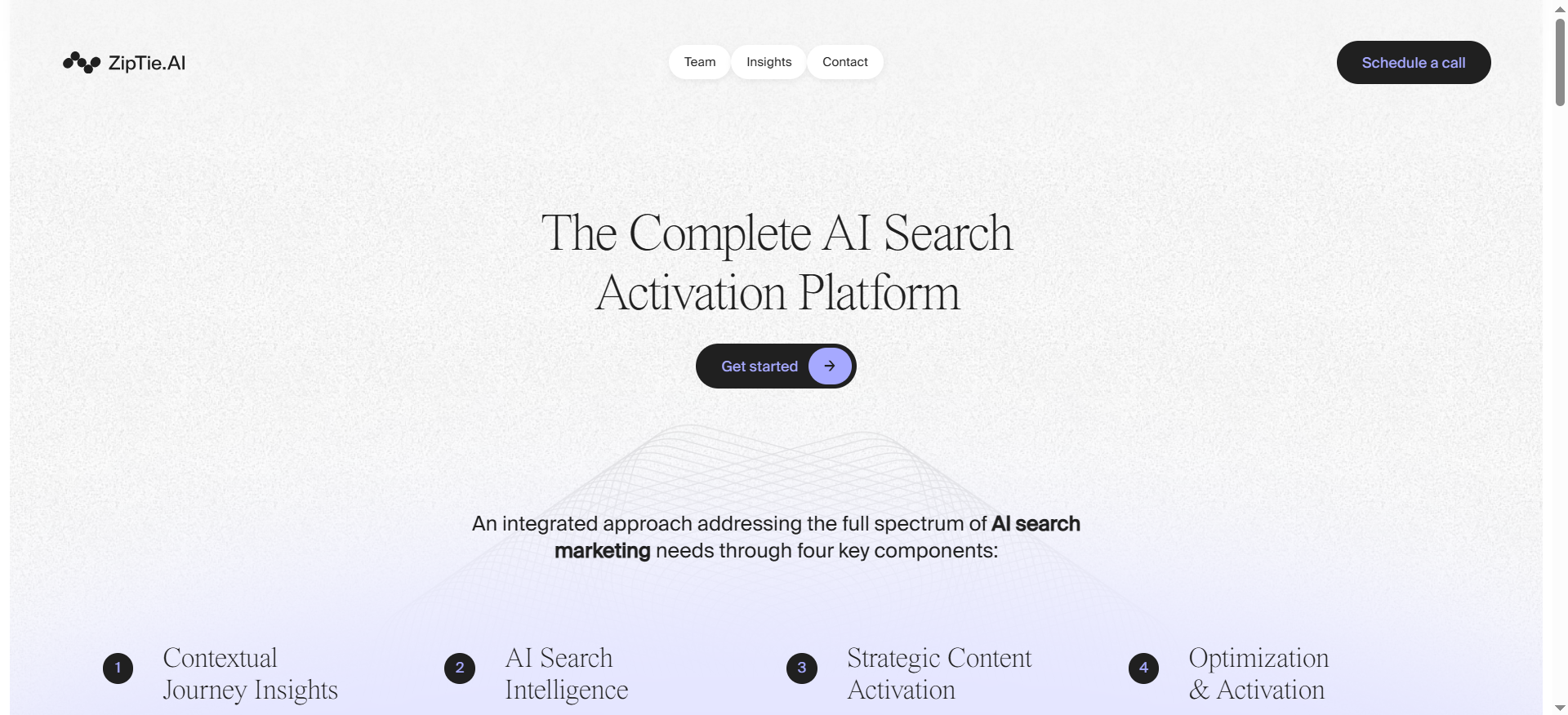
Ziptie focuses on a narrower set of highly relevant AI search surfaces, especially Google AI Overviews, ChatGPT, and Perplexity, which makes it relevant to readers comparing AEO tools for AI Overviews. It is designed to help teams track visibility across those environments and improve performance with practical optimization support.
Why teams use it
The biggest reason teams like Ziptie is clarity, which makes it a useful benchmark for readers exploring the best AI visibility tools for bulk prompt upload and tagging. It is easier to understand, easier to compare, and easier to price than many alternatives in the category. That matters a lot in a market where some tools still make buyers work too hard just to understand what they are getting.
What it’s good for
Ziptie is good for teams that mainly care about the AI search surfaces most likely to matter commercially in day-to-day use, especially if they are evaluating the best tools for tracking brand visibility in AI search. It is also a smart choice for smaller in-house teams, consultants, or agencies that want simple setup and transparent packaging.
When it’s a good fit
It is a good fit if you want a self-serve evaluation path, clear plans, and a practical feature set without jumping straight into an enterprise workflow platform, which also makes it relevant to readers comparing best SEO tools for small businesses.
When it’s not a good fit
It may be less ideal if you want the widest possible engine coverage or deeper workflow orchestration, which is why some buyers compare it with guides to best AI visibility tools for sharing voice in AI answers. Teams that care about broader model coverage, governance, or more complex operational systems may find AthenaHQ, Scrunch, or Profound more aligned.
How to use it
A practical Ziptie workflow is fairly straightforward:
- Monitor high-intent prompts
- Review AI visibility trends monthly
- Use optimization suggestions to prioritize updates
- Compare performance across your most important AI search surfaces, which makes it a natural fit alongside AI brand mention tracking tools.
That makes Ziptie a good fit for teams that want clear signal without a heavy process layer, especially if they are comparing the best AI tools to monitor SaaS brand visibility in ChatGPT and Perplexity.
Key capabilities
- AI visibility checks
- AI data summaries
- Content optimization support
- Prompt generation support
- Multi-country coverage
- Straightforward usage tiers
Pricing
Ziptie’s pricing starts at $69/month for the Basic plan. Its higher paid plans start at $99/month for Standard and $159/month for Pro.
Free tier?
Ziptie doesn’t offer a free tier, but it does offer a 14-day free trial.
Downsides / limitations
The main tradeoff is narrower engine coverage and likely less workflow depth than more enterprise-oriented platforms. That is not necessarily bad. It just means Ziptie is best when clarity and focus matter more than breadth.
Why teams look for an alternative to LLMrefs
Where LLMrefs is strong
LLMrefs gets a lot right, especially for buyers who want to start tracking AI visibility without going through a heavy enterprise sales process, which is why it fits naturally alongside guides to the best AI visibility tools for voice. Its appeal is straightforward: broad engine coverage, keyword rankings, citations, competitor benchmarking, and geo-targeting in one package. For SEO-led teams that want a clean entry point into AI visibility tracking, that makes a lot of sense.
Another strength is accessibility, and that matters for teams still learning how to audit brand visibility on LLMs. LLMrefs feels more concrete. You can understand the core use case quickly, and that matters in a category where buyers are still figuring out what AI search visibility should even look like in practice.
Where teams outgrow it
The issue is not that LLMrefs is weak. The issue is that many teams eventually want more than a solid tracker.
Once AI visibility becomes a recurring reporting stream instead of an experiment, teams start asking different questions, especially as they build a broader AI strategic visibility program. Can this platform support recurring executive reporting? Can multiple team members collaborate smoothly? Can it turn insight into action, not just show rankings and mentions? Can it support structured workflows across SEO, content, and growth?
That is where a lot of lighter tools begin to feel limited, especially for teams comparing the best AI mention prominence tools. Teams move from asking, “Are we showing up?” to asking, “How do we improve this in a repeatable way?” At that point, a platform’s operational depth starts to matter more than simple visibility dashboards.
What to prioritize when switching
When comparing alternatives, do not obsess over prompt counts alone. The better questions are:
- Which engines matter most to your buyers?
- How strong is the tool’s citation tracking?
- How easy is it to export, explain, and operationalize findings?
- Does it help turn patterns into optimization decisions?
- Can it support your team’s actual workflow, not just a demo workflow?
Those questions usually matter more than long feature lists, especially for teams using an AI visibility metrics framework to evaluate vendors. The best tool is not the one with the most boxes checked, which is why many buyers also review which platform excels in AI visibility metrics. It is the one that best fits the maturity and structure of your AI search program.
📋 Get Listed / Advertisement
We update this guide monthly. Want your tool featured? Contact: [email protected].
How to choose the right LLMrefs alternative
The biggest mistake buyers make is evaluating AI visibility tools as if they were just another rank tracker. They are not. These platforms sit between analytics, content strategy, brand monitoring, and AI search optimization, so the right tool depends less on the feature checklist and more on how your team actually works within a broader generative engine optimization case study.
Best for lean teams
If you are a lean team that wants to move fast, Peec AI and Ziptie are the strongest alternatives on this list. Peec looks more polished for recurring business use, while Ziptie is easier to compare quickly because of its transparent packaging, which is useful when reviewing best cheap SEO tools.
Best for reporting-heavy teams
If reporting is the main reason you are switching, Peec AI is probably the strongest option, especially for teams evaluating best SEO tools for keyword ranking reports. It appears built for clarity, recurring stakeholder use, and a cleaner marketing-facing reporting layer.
Best for enterprise workflows
If your team needs a real operating layer, AthenaHQ, Profound, and Scrunch AI stand out, especially for buyers researching the best AI visibility tool for GEO. AthenaHQ is the clearest action-oriented option. Profound is the most clearly enterprise-positioned. Scrunch is strongest when prompt workflows, audits, and content operations matter.
Best for budget-conscious buyers
If budget is the main concern, ask whether you need to leave LLMrefs at all, especially if you are already reviewing best AI visibility tools by engine coverage. It remains one of the more accessible tools in the category. If you do need an alternative, Ziptie is one of the easiest places to start, especially if your real use case is focused on a smaller set of high-priority AI search surfaces and geo prompt monitoring tools.
LLMrefs vs alternatives: Key buying criteria
Engine coverage
Do not assume the broadest engine list automatically makes a tool better, especially if you are already comparing best AI visibility tools for category tracking. What matters is whether it covers the engines that actually influence your buyers. If your audience mostly uses ChatGPT, Perplexity, and Google AI Overviews, a narrower tool can still be the right tool, especially if you are also comparing Google AI Overviews tracking tools.
Citation tracking
Citation tracking is one of the most important features in the whole category, and it matters even more for teams researching best AI visibility tools for citation tracking. Rankings alone do not tell you enough, which is why teams that care about source visibility often also look at AI citation tools at the URL level. Source visibility helps explain why a brand appears, what content is being referenced, and where optimization opportunities exist, which makes it a natural fit with getting cited in AI answers.
Reporting and exports
This is where many teams hit the ceiling of lighter tools. As soon as executive reporting, internal performance reviews, or client reporting enter the picture, the ability to export and explain findings becomes critical, which is why many teams start looking at reporting AI visibility to leadership.
Workflow depth
AthenaHQ and Scrunch AI stand out here. They are not just showing data. They are trying to help teams act on it. That makes them more suitable for companies building structured AI search processes.
Pricing model
Transparent pricing can be a real advantage, especially early in the buying process, which is one reason buyers often compare these tools with broader guides to best AI visibility platforms. LLMrefs and Ziptie are easier to compare quickly. Enterprise-led tools like Profound make more sense once your use case is already serious enough to justify demos and custom scoping.
Time-to-value
This often matters more than feature depth. If you need to start quickly, tools like LLMrefs, Ziptie, and likely Peec AI make more sense. If you need a deeper operating layer for long-term use, AthenaHQ and Scrunch AI become more attractive.
📋 Get Listed / Advertisement
We update this guide monthly. Want your tool featured? Contact: [email protected].
Which LLMrefs alternative is cheapest?
If price is your main deciding factor, Ziptie is one of the most budget-friendly LLMrefs alternatives to consider, especially for teams that want transparent self-serve plans and a simpler entry point. It works well for smaller teams that mainly care about visibility across core AI search surfaces like ChatGPT, Perplexity, and Google AI Overviews without paying for deeper workflow layers they may not need yet.
That said, the answer depends on how you define “cheapest.” Some tools may look cheaper at the entry level, but become more expensive once usage limits, additional seats, or reporting needs increase, which is why buyers often pair this evaluation with best AI visibility tools for daily prompt runs. Others may cost more upfront but save time by offering stronger reporting, better optimization workflows, or easier collaboration. In that sense, the cheapest tool is not always the best-value tool.
For buyers comparing LLMrefs alternatives on cost alone, it helps to split the category into two groups. The first group includes simpler, more accessible platforms built for self-serve adoption and lighter monitoring workflows. The second includes more advanced products like AthenaHQ, Scrunch AI, and Profound, which are built for deeper execution, team collaboration, and enterprise use cases. If your main priority is affordability, you’ll usually get the best fit from the first group.
The more important question is whether you actually need to switch from LLMrefs in the first place.If your team is still in the early stages of AI visibility tracking, LLMrefs may already be cost-effective enough, particularly for teams benchmarking best AI visibility tools for daily prompt runs. But if you want a cheaper-feeling alternative in terms of setup friction, plan clarity, and simpler ongoing use, Ziptie is one of the strongest options to evaluate first.
Which LLMrefs alternative is best for agencies?
The best LLMrefs alternative for agencies depends on the kind of client work you do and how you package reporting. For most agencies, Peec AI is one of the strongest options because it appears better suited for clean, marketer-friendly reporting that clients can understand quickly. Agencies often need more than raw visibility data. They need something that looks polished, is easy to explain, and helps turn AI search performance into clear client-facing insight.
That reporting layer matters more than many teams expect. A tool may be powerful internally, but if the output is hard to present, agencies lose time translating platform data into decks, updates, and strategic recommendations. That is where a platform like Peec AI feels especially useful. It looks more aligned with recurring reporting workflows and stakeholder communication rather than just internal technical use.
That said, not every agency has the same need. If your agency is more operational and wants to actively manage prompts, page audits, content gaps, personas, and optimization workflows, then Scrunch AI may be the better fit for agencies evaluating best AI marketing tools for agencies. It is stronger for agencies that are not just reporting on AI visibility, but also building AI search optimization services around content execution and workflow depth.
So the practical answer is this:
- Choose Peec AI if your agency needs cleaner client reporting and easier presentation.
- Choose Scrunch AI if your agency needs more operational depth and structured optimization workflows.
- Choose Ziptie if your agency wants a simpler, more affordable self-serve option for straightforward monitoring.
For most client-service teams, the winning tool is the one that makes reporting easier without making delivery harder.
Which LLMrefs alternative is best for enterprise teams?
For enterprise teams, the strongest LLMrefs alternatives are Profound, AthenaHQ, and Scrunch AI, but they solve slightly different problems.
Profound is the clearest enterprise-first option. It is best suited for large organizations that want a platform built for stakeholder-heavy environments, formal evaluation processes, and long-term vendor relationships. If your company is already treating AI visibility as a strategic category, not just a reporting experiment, Profound is one of the most natural tools to shortlist.
AthenaHQ is a strong option for enterprise teams that want more than monitoring, especially if they are building a broader AI search visibility strategy. Its positioning suggests a more action-oriented platform, with deeper support for optimization workflows, citation analysis, and cross-platform AI search visibility. This makes AthenaHQ especially appealing for enterprise SEO, content, and growth teams that want a system they can operationalize across multiple teams or markets as part of a larger answer engine optimization program.
Scrunch AI is also compelling for enterprise organizations, especially those that want workflow structure around prompts, personas, content gaps, audits, and AI-driven traffic insights. It is a good fit when the enterprise need is not just executive visibility, but a more hands-on AI search operating model.
In practical terms:
- Choose Profound for enterprise-grade positioning and strategic vendor fit.
- Choose AthenaHQ for enterprise teams that want execution and optimization depth.
- Choose Scrunch AI for enterprise teams that want more operational workflow control.
For most enterprise buyers, the decision comes down to whether the priority is vendor maturity, optimization workflows, or internal process design, which is exactly the kind of choice explored in an AI visibility platform buyer guide.
Is LLMrefs good enough for serious reporting?
Yes, LLMrefs can be good enough for serious reporting, but only up to a point.
For many teams, LLMrefs is more than enough to get started with AI visibility reporting, especially if they are also learning how to report AI visibility to leadership with real-time dashboards. It covers the core things most teams care about early on: rankings, citations, competitor monitoring, and broad AI engine coverage.
If your reporting needs are mainly focused on understanding where your brand appears, how often it is cited, and how you compare to competitors, LLMrefs can already do meaningful work for teams benchmarking SaaS AI visibility case studies on mentions, citations, and conversions.
Where the question gets more complicated is when reporting becomes more cross-functional or more executive-facing. Serious reporting is not just about collecting data. It is about making that data easy to interpret, share, and turn into decisions. Once stakeholders expect polished recurring reports, easier exports, stronger narrative framing, or tighter collaboration across content, SEO, and leadership, LLMrefs may start to feel limited, especially for teams studying real-time dashboards for AI-first search.
This is why many teams continue using LLMrefs successfully in the early and mid stages of their AI visibility program, but begin exploring alternatives once the reporting burden increases, especially after reading about AI visibility metrics. At that point, tools like Peec AI become more attractive because they feel more presentation-friendly, while AthenaHQ and Scrunch AI become stronger options for teams that want reporting tied more directly to workflow and optimization, which is a theme that also comes up in best AI content optimization tools for search visibility.
So the honest answer is: LLMrefs is good enough for serious reporting if your team mainly needs strong visibility tracking and clear baseline reporting. But If “serious reporting” means broader stakeholder communication, repeatable business reporting, and insight-to-action workflows, then one of the stronger alternatives may be a better long-term fit, especially for teams benchmarking against best SEO reporting software.
FAQs
Is LLMrefs still worth it in 2026?
What is the best LLMrefs alternative for agencies?
Which LLMrefs alternative is best for enterprise teams?
Which tool has the most transparent pricing?
What should I prioritize when comparing AI visibility tools?
Are AI visibility tools replacing traditional SEO tools?
Final verdict
The best LLMrefs alternative depends on why you are switching.
If you want a cleaner reporting experience for marketers, choose Peec AI.
If you want deeper GEO workflow and optimization support, choose AthenaHQ, especially if your team is investing in best AI visibility tools for share of voice.
If you want an enterprise-first platform with custom support, choose Profound.
If you want prompt workflows, audits, and operational depth, choose Scrunch AI, particularly if you are also reviewing how to audit brand visibility on LLMs.
If you want transparent self-serve pricing focused on major AI search surfaces, choose Ziptie, especially if you are also reviewing the best AI search engines.
For many teams, though, the honest answer is more nuanced: LLMrefs is still a very good choice if affordability, broad engine coverage, and simple setup are the priority. You should only switch when your process maturity clearly demands more reporting depth, workflow structure, or enterprise support than LLMrefs is built to provide, which is exactly the kind of decision explored in which platform excels in AI visibility metrics.
📋 Get Listed / Advertisement
We update this guide monthly. Want your tool featured? Contact: [email protected].